Green Card Holder ICE Detention in Florida: Your Rights & Defense
Green card holders in Florida face ICE detention risks for certain criminal convictions or immigration violations. Understanding your rights, the detention process, and having skilled legal representation are crucial to fighting deportation. This comprehensive guide covers who is at risk, the step-by-step detention process, essential documents, timelines, and cost factors. Learn about common mistakes to avoid and when to immediately contact a lawyer to protect your permanent residency status. Florida Immigration Lawyers offers expert defense for LPRs throughout Florida.
Green card holders, or Lawful Permanent Residents (LPRs), can face ICE detention in Florida for certain criminal convictions or immigration violations, despite their legal status. This often leads to removal proceedings. Understanding your rights, the detention process, and seeking immediate legal counsel are crucial for a strong defense against deportation.
- LPRs are not immune to ICE detention or deportation.
- Criminal convictions, especially aggravated felonies, are primary triggers.
- You have rights, including the right to counsel and to remain silent.
- Immediate legal representation is vital for a strong defense strategy.
- Bond hearings offer a chance for release during proceedings.
Green Card Holder ICE Detention in Florida: Your Rights & Defense
For many, obtaining a green card represents the culmination of a long journey, providing stability and a sense of belonging in the United States. However, even with this cherished status, Lawful Permanent Residents (LPRs) in Florida can find themselves in the unsettling position of facing ICE detention. This can be a terrifying experience, often leading to confusion, fear, and uncertainty about the future.
If you or a loved one is a green card holder facing ICE detention in Florida, it is critical to understand your rights and the complex legal landscape. This article will guide you through the intricacies of ICE detention, explain why LPRs may be detained, and outline the steps you can take to protect your status. Do not face this challenge alone. Call Florida Immigration Lawyers at 1-844-967-3536 for a free consultation to discuss your specific situation and explore your defense options.
Understanding Green Card Holder ICE Detention in Florida
Many green card holders believe their status grants them absolute immunity from immigration enforcement. While LPRs certainly have more rights than undocumented individuals, they are not entirely exempt from detention or even deportation. U.S. Immigration and Customs Enforcement (ICE) has the authority to detain LPRs under specific circumstances, particularly if they are deemed removable.
In Florida, a state with significant immigration activity and a robust ICE presence, understanding these risks is paramount. An LPR can be detained if ICE believes they have committed certain criminal offenses or violated immigration laws. These actions can trigger removal proceedings, placing your green card status in jeopardy.
Who is at Risk of Detention and Deportation in Florida?
Several factors can put a green card holder at risk of ICE detention and subsequent deportation from Florida. The most common triggers involve criminal convictions. Certain crimes, especially those classified as “aggravated felonies” under immigration law, can lead to mandatory detention and almost certain deportation, regardless of how long you have held your green card.
Even minor offenses, or a series of less serious crimes, can accumulate and lead to significant immigration consequences. Other risks include committing marriage fraud, misrepresenting facts on immigration applications, or violating the terms of your permanent residency. It is crucial to remember that immigration law defines crimes differently than state criminal law, meaning a conviction that seems minor in a Florida court could have severe immigration repercussions.
Common Misconceptions about LPR Rights
A prevalent misconception is that a green card is permanent and cannot be taken away. While a green card grants permanent residency, it is not absolute. Your status can be revoked, and you can be deported if you commit certain offenses or violations. Another common belief is that only recent immigrants are at risk. In reality, individuals who have held a green card for decades can still face detention and deportation if they violate immigration laws.
Some LPRs also mistakenly believe they do not need a lawyer if they are detained, thinking their green card will protect them. This is a dangerous assumption. The immigration system is highly complex, and having experienced legal counsel is essential to navigate it effectively and protect your rights. Our immigration lawyers are here to help.
The ICE Detention Process for Green Card Holders: A Step-by-Step Guide
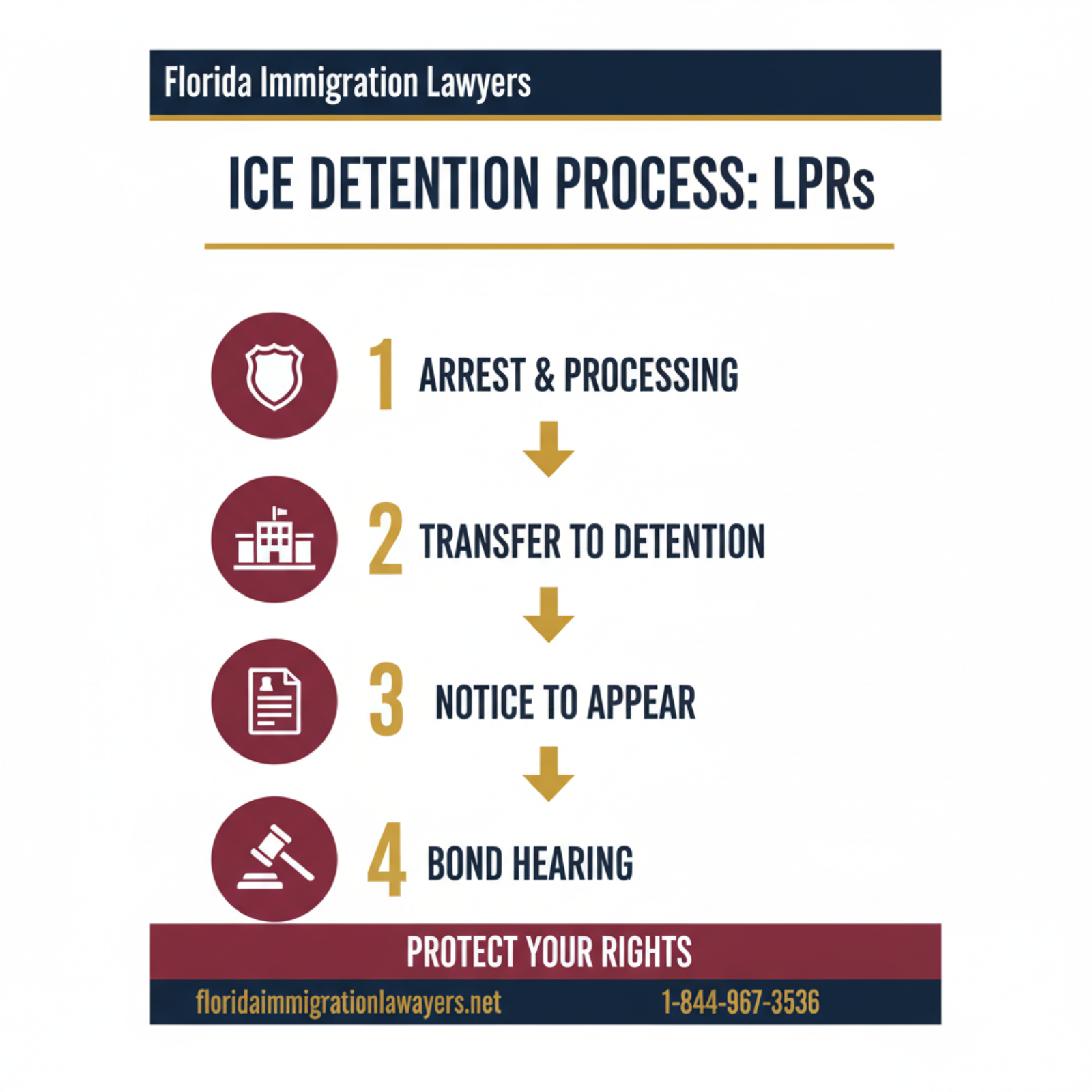
Understanding the steps involved in ICE detention can help you prepare and react appropriately if you or a loved one is detained. The process typically unfolds as follows:
-
Initial Encounter and Arrest: An LPR may be encountered by ICE officers at home, work, or even after being released from state or local custody for a criminal offense. If ICE has probable cause to believe an individual is deportable, they can be arrested without a warrant in many situations, though warrants are common. In Gainesville, Florida, and surrounding areas, ICE operates from various field offices, including those covering central and northern Florida.
-
Processing and Transfer to a Detention Facility: Following an arrest, the individual will be transported to an ICE processing center. Here, their identity will be verified, and an immigration detainer may be placed. They will then typically be transferred to an immigration detention facility, such as Glades County Detention Center or Baker County Detention Center in Florida, which contract with ICE.
-
Notice to Appear (NTA): Once detained, ICE will issue a Form I-862, Notice to Appear (NTA). This document formally initiates removal proceedings by alleging the reasons why the government believes you are deportable. The NTA will also specify the immigration court where your case will be heard, such as the Orlando Immigration Court or the Miami Immigration Court.
-
Custody Determination and Bond Hearing: In some cases, LPRs may be eligible for a bond hearing before an immigration judge. This hearing determines if you can be released from detention while your removal proceedings are pending, usually by paying a bond. The judge will consider factors like flight risk and danger to the community. Having a deportation defense lawyer is crucial at this stage.
-
Removal Proceedings: If a bond is not granted or paid, the LPR remains in detention throughout their removal proceedings. These proceedings involve multiple hearings before an immigration judge, where the government must prove deportability, and the LPR has the opportunity to present a defense and apply for various forms of relief from removal, if eligible.
-
Decision and Appeal: After hearings, the immigration judge will issue a decision. If ordered removed, the LPR may have the right to appeal the decision to the Board of Immigration Appeals (BIA). Further appeals may be possible in federal courts. This entire process can be lengthy and emotionally taxing.
Essential Documents for Your Green Card Holder ICE Detention Case
When facing green card holder ICE detention, having immediate access to critical documents can significantly aid your defense. These documents help establish your identity, immigration history, and eligibility for relief from removal. It is advisable to keep copies of these documents in a safe, accessible place, and to inform trusted family members of their location.
Here is a list of documents typically required:
- Your Permanent Resident Card (Green Card)
- Passport and birth certificate
- Any Notices to Appear (NTAs) or other immigration court documents
- Marriage certificates, birth certificates of U.S. citizen children or spouses
- Employment records, tax returns, and proof of financial stability
- Proof of property ownership or other significant ties to the U.S. in Florida
- Medical records, especially if you have serious health conditions
- Records of any past criminal convictions, dispositions, and sentences
- Affidavits from family members, employers, or community leaders attesting to your good moral character
Navigating Timelines and Processing Expectations in Florida Immigration Courts
The timeline for green card holder ICE detention cases in Florida can vary dramatically, influenced by numerous factors. These include the complexity of your case, the specific immigration court handling it (e.g., Orlando, Miami, Pompano Beach), the judge's docket, and the availability of evidence. Immigration courts, like federal courts, often face significant backlogs, which can lead to prolonged detention periods.
Bond hearings, if granted, typically occur relatively early in the process, often within a few weeks of detention. However, the full removal proceedings can stretch for months or even years. This extended timeline underscores the importance of prompt legal action and consistent advocacy. While awaiting a decision, you may be held in detention facilities across Florida, making family communication and legal visits challenging without experienced counsel. Visit justice.gov/eoir for more information on immigration courts.
Understanding Cost Factors and Legal Fees for Your Defense
The financial implications of a green card holder ICE detention case can be substantial. These costs typically include legal fees for your immigration attorney, potential bond amounts, and various administrative fees. Investing in skilled legal representation is crucial, as it can significantly impact the outcome of your case and your ability to remain in the U.S.
Legal fees will vary based on the complexity of your case, the experience of your attorney, and the amount of work required. Bond amounts, set by an immigration judge, can range from a few thousand dollars to tens of thousands, depending on the specifics of the case and the judge's assessment of flight risk and public safety. While these costs can be daunting, consider them an investment in your future and your ability to live freely in Florida. Remember, a qualified immigration attorney can often negotiate for a lower bond or argue for release without bond.
Do not navigate this process alone. Contact Florida Immigration Lawyers today. Our team understands the urgency and complexity of green card holder ICE detention cases and is ready to provide the dedicated legal support you need.
Common Mistakes to Avoid
-
Lying or Misrepresenting Facts to ICE or Immigration Officials: Any false statements can be used against you, lead to additional charges, and severely jeopardize your immigration case, potentially resulting in permanent bars from the U.S.
-
Signing Documents Without Understanding Them: Never sign any document presented by ICE or other officials without fully understanding its contents and implications. You have the right to have a lawyer review documents before signing.
-
Not Carrying Your Green Card: LPRs are required by law to carry proof of their immigration status (Form I-551, Green Card) at all times. Failure to do so can lead to detention for identity verification.
-
Resisting Arrest or Obstructing Justice: Resisting an ICE officer can lead to criminal charges, making your immigration case much more difficult to defend. Always remain calm and comply with lawful orders, while asserting your rights.
-
Failing to Disclose Past Criminal History: Attempting to hide criminal convictions, even minor ones, can be viewed as an attempt to defraud the government and can lead to severe penalties, including deportation.
-
Not Seeking Legal Counsel Immediately: Delaying legal representation can significantly weaken your defense. An experienced attorney can intervene early, protect your rights, and develop a robust strategy. This is especially true for citizenship cases that might be impacted by detention.
-
Abandoning Your Case: Giving up hope or failing to appear for scheduled court hearings will almost certainly result in an order of removal in absentia, making it extremely difficult to return to the U.S. legally.
When to Call a Lawyer
The moment you or a family member who is a green card holder faces an encounter with ICE, or if you are arrested by any law enforcement agency in Florida, it is imperative to contact an immigration attorney immediately. Early intervention by legal counsel can make a profound difference in the outcome of your case. Do not wait until you are formally detained or served with a Notice to Appear.
You should also seek legal advice if you have any past criminal convictions, even if they seem minor or occurred many years ago. Criminal records are a primary trigger for green card holder ICE detention and deportation proceedings. If you have questions about your eligibility for family immigration or other benefits, legal counsel is also wise.
Warning signs that you may need an attorney include receiving any official communication from ICE or USCIS questioning your status, being asked to attend an interview without clear reasons, or if you believe your rights have been violated during an encounter. Florida Immigration Lawyers are dedicated to defending the rights of LPRs in Gainesville and throughout Florida, offering strategic legal defense against detention and deportation. We understand the specific nuances of Florida's legal landscape and ICE enforcement policies.
About Florida Immigration Lawyers
Florida Immigration Lawyers is a leading law firm dedicated to providing comprehensive immigration legal services across the entire state of Florida. Our team of experienced attorneys understands the complexities and challenges of U.S. immigration law, especially when it involves the detention of green card holders.
We are committed to protecting your rights and fighting for your ability to remain in the United States. Our services include deportation defense, bond hearings, assistance with appeals, and guidance through all stages of removal proceedings. We pride ourselves on offering compassionate, client-focused representation, ensuring you receive the personalized attention your case deserves.
When your future in Florida is at stake, you need a legal team you can trust. Florida Immigration Lawyers is available 24/7 to address urgent matters and provide free consultations. Contact us today at 1-844-967-3536 or visit our website at https://www.floridaimmigrationlawyers.net to learn how we can help you navigate the challenges of green card holder ICE detention.
Sources and References
- U.S. Citizenship and Immigration Services (USCIS)
- Executive Office for Immigration Review (EOIR)
- U.S. Immigration and Customs Enforcement (ICE)
- 8 U.S.C. Chapter 12 - Immigration and Nationality Act (INA)
- Immigration and Nationality Act (INA) § 237 (8 U.S.C. § 1227) - Deportable Aliens
- Immigration and Nationality Act (INA) § 212 (8 U.S.C. § 1182) - Inadmissible Aliens
This article provides general legal information and is not intended as legal advice. Every case is unique, and outcomes depend on specific facts and circumstances. Contact an attorney for advice about your particular situation.
If you or a loved one is facing green card holder ICE detention in Florida, time is of the essence. Do not delay in seeking expert legal assistance. Our dedicated team at Florida Immigration Lawyers is here to provide the compassionate and effective representation you need. Call us now at 1-844-967-3536 for a free, confidential consultation. Se Habla Español - Estamos aquí para ayudarle.
Need help with Immigration?
Our Florida immigration attorneys offer free consultations. Call today or schedule online.
Frequently Asked Questions
Florida Immigration Lawyers
Legal Team
Our experienced attorneys at Florida Immigration Lawyers have been serving clients across Florida for over 20 years. We specialize in immigration, personal injury, criminal defense, workers compensation, and family law.