Exclusive Citizenship Act of 2025: Florida Immigration Impact
The proposed Exclusive Citizenship Act of 2025 could significantly redefine U.S. citizenship, impacting dual nationals and birthright citizens across Florida. This federal legislation aims to establish a more singular form of American citizenship, potentially requiring individuals to choose between nationalities or altering birthright provisions. For Florida residents, especially in diverse areas like Hollywood, Miami, and Orlando, these changes could affect legal status, voter registration, and pathways to naturalization. Understanding your current status, gathering documents, and consulting with an experienced Florida immigration lawyer are crucial steps to prepare. Florida Immigration Lawyers offers expert guidance to navigate these complex legal challenges and protect your rights.
The Exclusive Citizenship Act of 2025 is a proposed federal legislation that aims to redefine or restrict U.S. citizenship, potentially impacting individuals with dual nationality or birthright citizenship. For Florida residents, this could mean significant changes to their legal status, voting rights, and pathways to naturalization. Understanding its implications is crucial for protecting your rights.
- Potential restrictions on dual citizenship.
- Changes to birthright citizenship interpretations.
- Impact on voter registration and verification in Florida.
- Increased need for legal counsel for status evaluation.
- Uncertainty requires proactive legal planning.
Imagine waking up to news that your citizenship status, or that of a loved one, could be fundamentally altered by a new law. For many immigrants and naturalized citizens in Florida, the prospect of the Exclusive Citizenship Act of 2025 has introduced a profound sense of uncertainty and concern. This proposed federal legislation aims to significantly redefine what it means to be a U.S. citizen, with potential far-reaching consequences for individuals across the nation, especially in diverse states like Florida.
At Florida Immigration Lawyers, we understand the anxieties these legislative changes can create. Our mission is to provide clear, actionable guidance to help you protect your rights and navigate complex immigration laws. This comprehensive guide will explore the Exclusive Citizenship Act of 2025, its potential impact on Florida's vibrant immigrant communities, and the steps you can take to prepare. Call Florida Immigration Lawyers at 1-844-967-3536 for a free consultation to discuss your specific situation and understand how this act might affect you.
Understanding the Exclusive Citizenship Act of 2025 in Florida
The Exclusive Citizenship Act of 2025 represents a significant legislative effort to reshape the landscape of U.S. citizenship. While the exact text of the bill may evolve, its core intent, as indicated by various proposals and discussions, is to establish a more singular, unequivocal form of American citizenship. This could involve stricter interpretations of birthright citizenship or requirements for individuals to choose between U.S. citizenship and any other nationality they may hold.
For residents of Florida, a state with a rich tapestry of immigrant communities, these changes carry particular weight. From the bustling streets of Hollywood to the diverse neighborhoods of Miami, Orlando, and Tampa, many individuals and families could find their legal standing under scrutiny. Understanding the specifics of this act is the first step in preparing for its potential implementation.
What is the Exclusive Citizenship Act of 2025?
At its heart, the Exclusive Citizenship Act of 2025, as proposed, seeks to amend existing immigration and nationality law. This federal bill, often associated with efforts to strengthen national identity and security, could introduce new criteria for acquiring or maintaining U.S. citizenship. Key areas of focus typically include revisiting the 14th Amendment's birthright citizenship clause for children born in the U.S. to non-citizens, or imposing mandates for the renunciation of dual citizenship for naturalized citizens or those seeking naturalization.
Such legislation would mark a dramatic shift from current legal interpretations and practices. The implications extend beyond individual status, potentially influencing voter registration processes and the overall integration of immigrant populations. It is crucial to stay informed about the exact provisions of any enacted law.
Potential Impact on Florida's Immigrant Community
Florida is home to millions of immigrants and naturalized citizens, contributing significantly to the state's economy and culture. The potential changes brought by the Exclusive Citizenship Act of 2025 could have a profound impact on these communities. For instance, any reinterpretation of birthright citizenship could affect families with children born in the U.S. but whose parents are not citizens, creating immediate questions about their children's future.
Furthermore, if the act mandates the renunciation of dual citizenship, countless Floridians who currently hold citizenship in two countries would face a difficult choice. This could affect their ability to travel, own property abroad, or maintain cultural ties. The legal complexities arising from such a requirement would be immense, necessitating expert legal guidance.
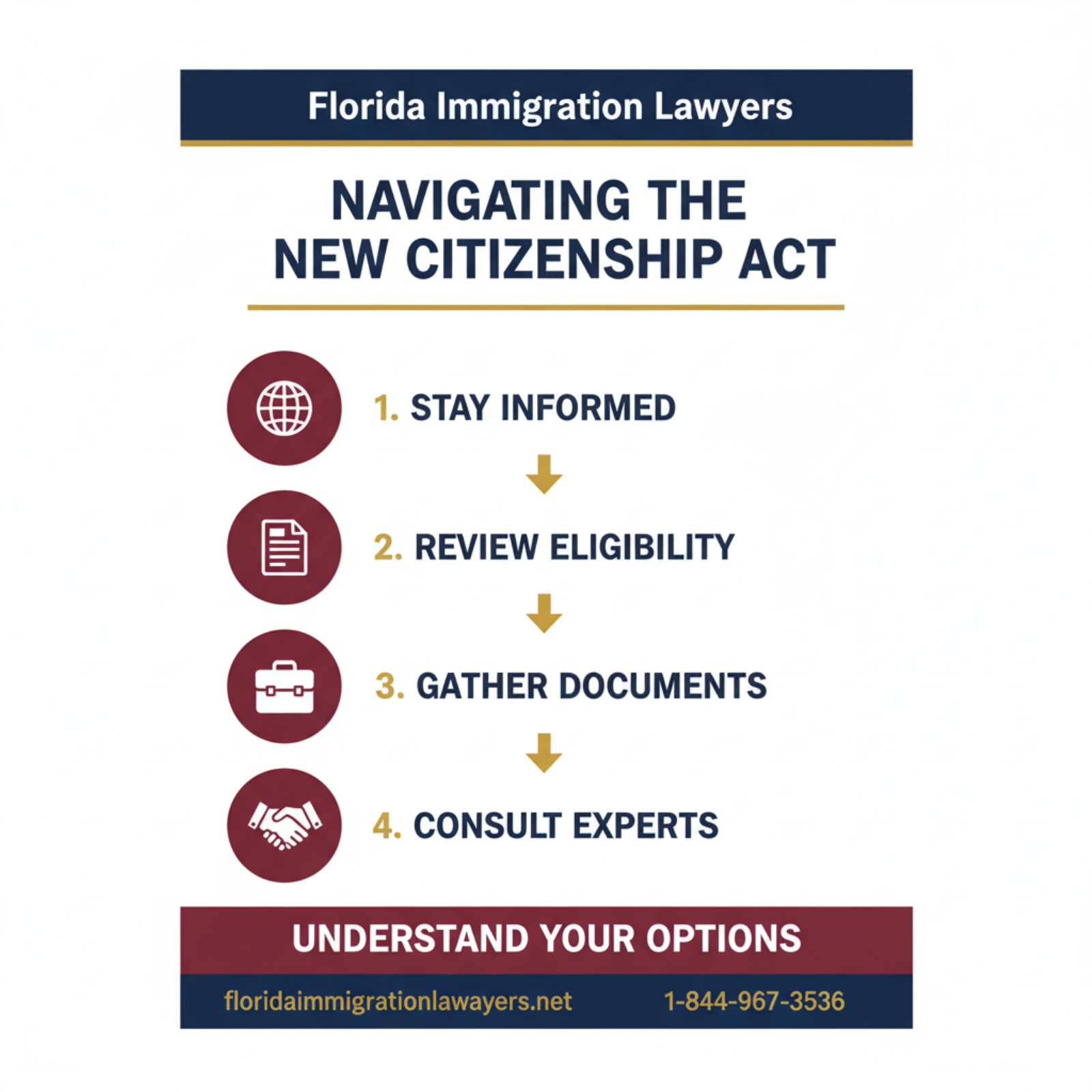
Navigating Potential Changes: A Step-by-Step Guide
Preparing for the potential changes introduced by the Exclusive Citizenship Act of 2025 requires a proactive and informed approach. While the specifics of the law may still be debated, understanding general steps can help you protect your interests.
- Assess Your Current Citizenship Status: Understand whether you are a U.S. citizen by birth, naturalization, or derivation. If you hold dual citizenship, identify both nationalities. This initial assessment is crucial for determining how potential changes might affect you.
- Gather Essential Documents: Collect all documents related to your birth, immigration, and naturalization. This includes birth certificates, passports, Certificates of Naturalization, green cards, and any other official records. Having these readily accessible will be vital for any legal review.
- Consult with an Immigration Lawyer: Seek advice from a qualified Florida immigration lawyer. An attorney can review your specific situation, explain the nuances of the proposed or enacted law, and advise you on the best course of action. This is particularly important given the complex nature of citizenship law.
- Monitor Legislative Developments: Stay informed about the progress and final text of the Exclusive Citizenship Act of 2025. Immigration laws are subject to change, and the specific details of the bill will dictate its exact impact. Reliable sources include government websites and reputable legal news outlets.
- Prepare for Potential Application Processes: Depending on the final provisions, you may need to undertake new application processes, such as re-affirming your U.S. citizenship or formally renouncing another nationality. Your attorney can guide you through these procedures, ensuring compliance with all requirements.
- Understand Your Rights: Familiarize yourself with your rights as an individual in the U.S., regardless of your citizenship status. Knowing your rights can empower you during any interactions with immigration authorities or when navigating new legal requirements.
Preparing for New Requirements: Document Checklist
Should the Exclusive Citizenship Act of 2025 become law, or if related state-level legislation in Florida is enacted, you may be required to present specific documents to verify or affirm your citizenship status. Having these documents organized and readily available can significantly streamline any necessary legal processes. This list is general and may vary based on your specific circumstances and the final details of the law.
- U.S. Birth Certificate (if born in the U.S.)
- Certificate of Naturalization (if naturalized)
- U.S. Passport (current and expired)
- Foreign Passport(s) (if holding dual citizenship)
- Certificate of Citizenship (if acquired through parents)
- Alien Registration Card (Green Card) (if applicable)
- Social Security Card
- Driver's License or State ID (Florida)
- Marriage Certificate(s) and Divorce Decree(s) (if applicable)
- Proof of Residence in Florida (utility bills, lease agreements)
- School records (for children, especially if birthright citizenship is challenged)
- Military records (if applicable)
- Affidavits from witnesses (in specific cases)
Expected Timelines and Processing Considerations
The implementation of any major legislative change like the Exclusive Citizenship Act of 2025 typically involves several phases, each with its own timeline. The legislative process itself, from proposal to enactment, can take months or even years. Once enacted, there is usually a period before the law takes full effect, allowing government agencies like USCIS and the Department of State to establish new regulations and procedures.
For individuals, the timeline for compliance or resolution of status issues will depend on the specifics of their case and the volume of applications or inquiries received by immigration authorities. USCIS processing times, which are often lengthy, could become even more extended. For instance, if large numbers of Floridians are required to affirm their citizenship or renounce dual nationality, the workload on agencies would increase significantly. It is always wise to begin preparing as soon as possible, especially by consulting with an attorney.
Understanding Potential Cost Factors and Fees
Navigating new immigration laws, especially those as impactful as the Exclusive Citizenship Act of 2025, can involve various costs. These typically include government filing fees, legal consultation fees, and potential costs for obtaining necessary documents.
Government filing fees, set by USCIS, are subject to change and vary depending on the specific application or petition. For example, applying for a Certificate of Citizenship or renouncing U.S. citizenship (if an option under the new law) would likely incur a fee. These fees are non-refundable, regardless of the outcome of your case. Legal fees for an experienced immigration lawyer are an investment in ensuring your case is handled correctly and efficiently. A lawyer can provide invaluable assistance, from advising on the best course of action to preparing and submitting complex documentation. Additionally, you might incur costs for translations, notarizations, travel, or expert witness fees if your case requires them.
Do not navigate this process alone. Contact Florida Immigration Lawyers today to understand how we can help you with the complexities of immigration law.
Common Mistakes to Avoid When Facing Immigration Law Changes
Facing significant changes like those potentially brought by the Exclusive Citizenship Act of 2025 can be daunting. Avoiding common pitfalls is essential for protecting your legal standing. Here are some mistakes to steer clear of:
- Ignoring the News and Updates: Failing to stay informed about legislative changes can leave you unprepared. Immigration laws evolve, and ignorance is not a defense. This could lead to missed deadlines or incorrect assumptions about your status.
- Assuming Your Current Status is Permanent: Even if you have been a citizen or permanent resident for years, new laws can introduce unexpected requirements or challenges. Always verify how new legislation might apply to you.
- Providing Inaccurate or Incomplete Information: Any application or declaration to USCIS or other government agencies must be entirely truthful and complete. Misinformation, even accidental, can lead to delays, denials, or even accusations of fraud.
- Failing to Seek Legal Counsel: Attempting to interpret complex federal laws like the Exclusive Citizenship Act of 2025 without legal expertise is a significant risk. An attorney can provide accurate advice tailored to your situation.
- Delaying Action: Procrastination can be detrimental. If new requirements or deadlines are introduced, acting swiftly is often critical to securing your status.
- Relying on Unofficial Sources for Information: Social media or non-legal advice from friends can be misleading. Always consult official government websites (like USCIS.gov) or a qualified immigration attorney for accurate information.
- Not Keeping Copies of All Submitted Documents: Maintain a detailed record of every document you submit and every communication you have with immigration authorities. This can be vital if disputes arise.
- Traveling Internationally Without Understanding New Restrictions: If the act impacts dual citizenship or travel, ensure you understand any new limitations before planning international trips, especially if you hold foreign passports.
- Underestimating the Importance of State-Level Laws: While the Exclusive Citizenship Act is federal, Florida may pass complementary legislation, such as stricter voter ID laws or residency requirements related to citizenship. Stay informed about state laws as well.
- Not Updating Contact Information with USCIS: If your address changes, inform USCIS promptly. Failure to receive important notices can lead to missed appointments or critical deadlines, jeopardizing your case.
When to Seek Legal Guidance from a Florida Immigration Lawyer
The complexities surrounding the Exclusive Citizenship Act of 2025, and immigration law generally, make legal representation invaluable. If you find yourself in any of the following scenarios, it is highly advisable to consult with a dedicated Florida immigration lawyer:
- You hold dual citizenship and are concerned about potential renunciation requirements.
- Your U.S. citizenship status is being questioned or challenged.
- You are a naturalized citizen and need to understand how new laws affect your rights.
- You have children born in the U.S. and their birthright citizenship may be impacted.
- You receive any official notice from USCIS or other government agencies regarding your citizenship or immigration status.
- You are considering applying for naturalization or other immigration benefits in light of new laws.
- You need assistance gathering and organizing the necessary documentation for any citizenship-related process.
- You are unsure about your eligibility for specific immigration pathways under new regulations.
- You are facing deportation proceedings in Florida, potentially due to new interpretations of citizenship or lawful presence.
Our experienced team at Florida Immigration Lawyers is well-versed in the nuances of federal immigration policy and its application in Florida. We serve clients throughout the state, including Hollywood, Miami, Orlando, and Tampa, offering comprehensive legal support for citizenship, deportation defense, and family immigration matters. We can help you navigate the ever-changing landscape of immigration law, ensuring your rights are protected and your case is handled with the utmost care. Learn more about our citizenship services.
About Florida Immigration Lawyers
Florida Immigration Lawyers is a leading law firm dedicated to providing exceptional immigration legal services across the entire state of Florida. Our team of compassionate and knowledgeable attorneys is committed to guiding individuals and families through the intricate U.S. immigration system. We understand the profound impact immigration matters have on our clients' lives and approach each case with the personalized attention it deserves.
We specialize in a broad range of immigration services, including visa applications, naturalization, family-based petitions, business immigration, asylum claims, and deportation defense. Our firm prides itself on its strategic approach, deep understanding of immigration law, and unwavering dedication to achieving the best possible outcomes for our clients.
Why choose Florida Immigration Lawyers? We offer free consultations, are available 24/7, and provide bilingual services (English and Spanish) to ensure effective communication. Our commitment to our clients extends throughout Florida, ensuring that no matter where you are in the state, expert legal assistance is within reach. Your journey through immigration law is our priority.
Sources and References
- U.S. Citizenship and Immigration Services (USCIS)
- Executive Office for Immigration Review (EOIR)
- 8 U.S.C. Chapter 12 - Immigration and Nationality Act (INA)
- INA § 101(a)(22) - Definition of "National" and "Citizen"
- INA § 301 - Nationals and Citizens of United States at Birth
- U.S. Department of State - Dual Nationality
This article provides general legal information and is not intended as legal advice. Every case is unique, and outcomes depend on specific facts and circumstances. Contact an attorney for advice about your particular situation.
The potential changes brought by the Exclusive Citizenship Act of 2025 underscore the critical need for informed legal counsel. Do not leave your future or your family's future to chance. Our dedicated team at Florida Immigration Lawyers is ready to provide the expert guidance and representation you need. Contact us today for a free consultation at 1-844-967-3536. Se Habla Español - Estamos aquí para ayudarle.
Need help with Immigration?
Our Florida immigration attorneys offer free consultations. Call today or schedule online.
Frequently Asked Questions
Florida Immigration Lawyers
Legal Team
Our experienced attorneys at Florida Immigration Lawyers have been serving clients across Florida for over 20 years. We specialize in immigration, personal injury, criminal defense, workers compensation, and family law.