DACA Renewal Florida 2026: Essential Guide for Dreamers
For DACA recipients in Florida, the DACA renewal process for 2026 requires careful attention to detail. This essential guide covers eligibility, step-by-step procedures, crucial documents, and processing timelines. Learn how to avoid common mistakes and understand the associated costs. Whether you're in Hialeah or elsewhere in Florida, staying informed and seeking expert legal counsel is vital to maintaining your deferred action status and work authorization. Florida Immigration Lawyers are here to provide the support and guidance you need.
Renewing your DACA in Florida for 2026 involves careful preparation and timely filing. While DACA's future remains subject to legal challenges, eligible Dreamers can generally continue to renew their deferred action status and work authorization. It is crucial to submit your application well in advance of your expiration date, typically 120 to 150 days prior, to avoid any lapse in protection.
- File your DACA renewal application 120-150 days before expiration.
- Gather all necessary documents, including proof of continuous residence.
- Pay the required USCIS fees (or apply for a fee waiver if eligible).
- Consult an experienced immigration attorney for personalized guidance.
- Stay informed about any legal or policy changes affecting DACA recipients.
DACA Renewal Florida 2026: Essential Guide for Dreamers
As a DACA recipient in Florida, you understand the constant uncertainty surrounding your immigration status. The year 2026 brings new considerations and continued vigilance for thousands of Dreamers across our state, from Miami to Orlando, and especially in communities like Hialeah. Your ability to live, work, and contribute to Florida hinges on successfully renewing your Deferred Action for Childhood Arrivals (DACA) status.
This comprehensive guide is designed to empower you with the knowledge needed to navigate the DACA renewal process in Florida for 2026. We will cover critical updates, step-by-step procedures, essential documents, and common pitfalls to avoid. Our goal is to ensure you are well-prepared, helping you maintain your protected status with confidence.
The landscape of immigration law is complex and ever-changing. For personalized advice and to ensure your application is submitted correctly, we urge you to seek professional legal assistance. Call Florida Immigration Lawyers at 1-844-967-3536 for a free consultation today. Our dedicated team is here to support Florida's Dreamers.
Understanding DACA Renewal in Florida for 2026
Deferred Action for Childhood Arrivals (DACA) has provided temporary relief from deportation and work authorization to eligible young immigrants who came to the U.S. as children. Established in 2012, DACA offers a renewable two-year period of deferred action. For many, this program represents stability and the opportunity to build a life in the only country they have ever known.
In Florida, a state with a significant Dreamer population, understanding the nuances of DACA renewal is paramount. While ongoing legal challenges continue to impact new DACA applications, USCIS generally permits current DACA recipients to apply for renewal. This guide focuses specifically on the renewal process for those already holding DACA status.
The legal framework governing DACA is primarily administrative, deriving its authority from prosecutorial discretion. This means that while DACA is not a pathway to permanent residency or citizenship, it provides crucial temporary protections. The program's existence is constantly debated and subject to judicial review, making timely and accurate renewals even more critical for your continued peace of mind.
We understand the concerns that arise from news headlines, such as recent reports regarding Florida's Attorney General and discussions around immigration policies. These developments underscore the importance of staying informed and seeking expert legal counsel to protect your status. Our firm, Florida Immigration Lawyers, is deeply committed to assisting individuals with their immigration needs across the state, including Hialeah and surrounding communities.
For Dreamers in Florida, your DACA status allows you to work legally and provides a measure of security against deportation. However, it is temporary and requires diligent renewal. Being proactive is key to avoiding any lapse in your deferred action status, which could have serious consequences for your employment and residency.
The U.S. Citizenship and Immigration Services (USCIS) is the agency responsible for processing DACA renewal applications. Their guidelines and requirements must be meticulously followed. Any error or omission could lead to delays or even denial of your application, putting your future at risk. This is why understanding each step is so vital.
Legal Basis: DACA operates under the executive branch's authority to exercise prosecutorial discretion in immigration enforcement. While not codified into statute, its implementation has been guided by various memoranda and court decisions. For instance, the ability to grant deferred action is inherent in the discretionary authority of the Secretary of Homeland Security. You can find more information about USCIS policies and forms on their official website, uscis.gov.
Step-by-Step DACA Renewal Process Guide
The DACA renewal process requires careful attention to detail and adherence to specific timelines. Missing a deadline or submitting an incomplete application can jeopardize your status. Follow these steps to ensure a smooth renewal for 2026.
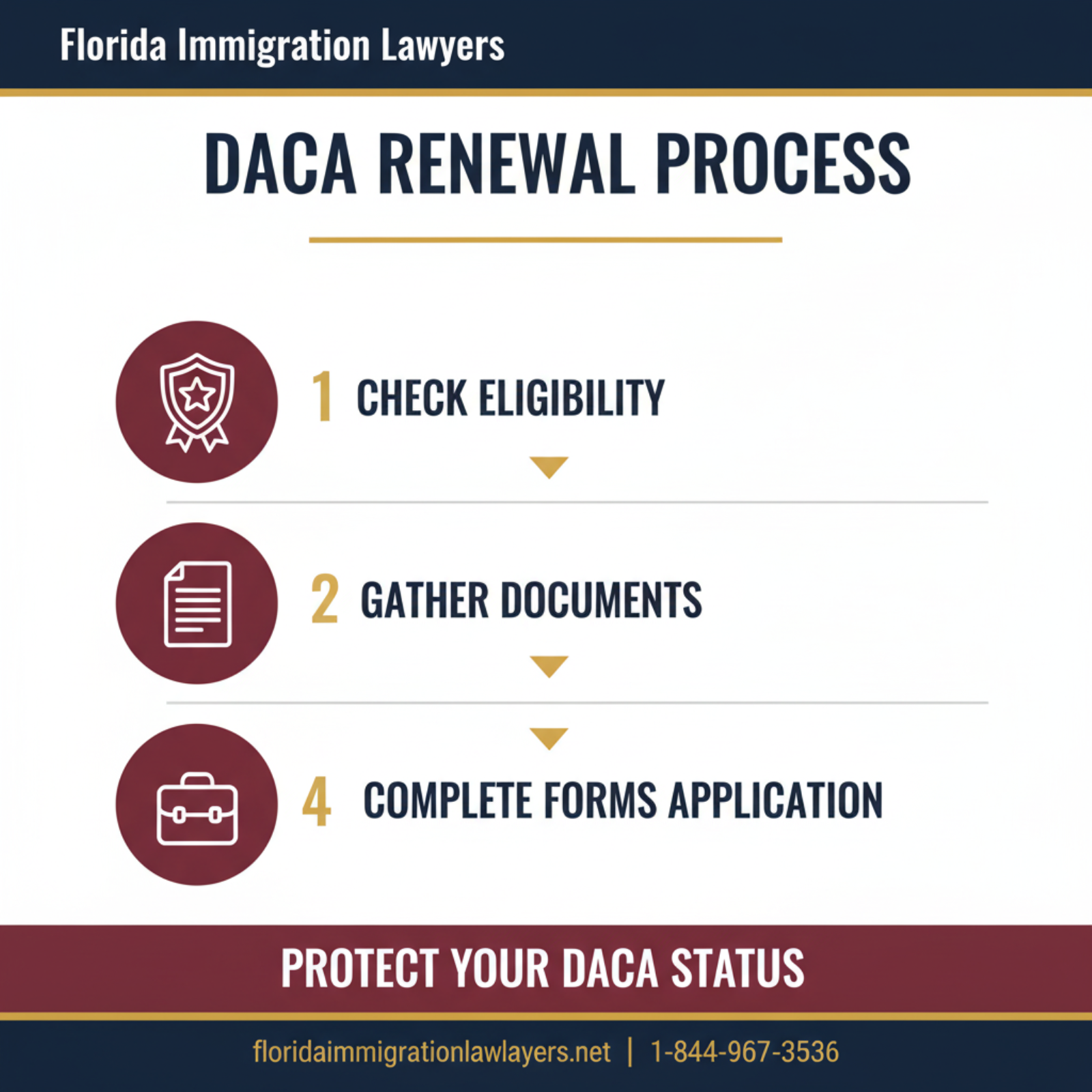
- Determine Your Eligibility: You must meet the initial DACA criteria and have not departed the U.S. without advance parole since August 15, 2012. You must also not have been convicted of a felony, a significant misdemeanor, or three or more other misdemeanors, and not pose a threat to national security or public safety. Your original DACA grant generally confirms your eligibility for renewal, assuming no new disqualifying events have occurred.
- Know Your Filing Window: USCIS recommends filing your DACA renewal application between 120 and 150 days before your current DACA and Employment Authorization Document (EAD) expire. Filing too early (more than 150 days) may result in rejection, while filing too late risks a lapse in your work authorization and deferred action.
- Gather Necessary Documents: Collect all required supporting documents. This includes copies of your previous DACA approval notices, EAD, and any new identity documents or evidence of continuous residence if your circumstances have changed. A detailed checklist is provided in the next section.
- Complete Required Forms: You will need to accurately fill out Form I-821D, Consideration of Deferred Action for Childhood Arrivals; Form I-765, Application for Employment Authorization; and Form I-765 Worksheet. Ensure all sections are completed, signed, and dated. Pay close attention to consistency with previous applications.
- Prepare Your Biometrics Fee: The application requires a biometric services fee. You must include the correct fee payment with your application package. USCIS does not typically offer fee waivers for DACA renewals, but always check the latest guidance on USCIS.gov.
- Submit Your Application Package: Mail your completed forms, supporting documents, and payment to the correct USCIS lockbox facility. The specific address depends on your state of residence. For Florida residents, you will typically mail to the USCIS Chicago Lockbox. Double-check the current filing addresses on the USCIS website.
- Attend Biometrics Appointment: After USCIS accepts your application, you will receive a notice to attend a biometrics (fingerprinting) appointment at an Application Support Center (ASC). This appointment is mandatory. Ensure you attend on the scheduled date with the required identification.
- Respond to Requests for Evidence (RFE): USCIS may send you an RFE if they need additional information or clarification. Respond promptly and thoroughly to any such requests. Failing to do so can lead to delays or denial of your application.
- Receive Decision: USCIS will mail you a written decision regarding your DACA renewal. If approved, you will receive a new Form I-797, Approval Notice, and a new Employment Authorization Document (EAD). Keep these documents safe.
Navigating the DACA renewal process can be daunting, especially with the potential for deportation defense implications if your status lapses. Our experienced attorneys at Florida Immigration Lawyers can guide you through each step, ensuring accuracy and timeliness.
Essential Documents for Your DACA Renewal Application
A complete and well-organized application package is critical for a successful DACA renewal. Gathering these documents ahead of time will streamline your process. Always make copies of everything you submit for your own records.
- Form I-821D, Consideration of Deferred Action for Childhood Arrivals: Ensure all questions are answered truthfully and completely.
- Form I-765, Application for Employment Authorization: This form requests your work permit.
- Form I-765 Worksheet: This accompanies Form I-765 and provides additional necessary details.
- Copies of Previous DACA Approval Notices: Include copies of all Form I-797, Approval Notices, for your previous DACA grants.
- Copy of Your Current Employment Authorization Document (EAD): Front and back.
- Copies of Identity Documents: Such as your passport, birth certificate with photo ID, or state-issued ID.
- Proof of Continuous Residence (if applicable): If you have traveled or your residence has changed significantly, you may need to provide additional evidence to show continuous residence in the U.S. since your last DACA approval. This could include school records, employment records, bank statements, or utility bills.
- Two Passport-Style Photos: Taken within 30 days of filing, according to USCIS specifications.
- Payment for Fees: Check or money order payable to "U.S. Department of Homeland Security" for the correct amount.
- Any New Criminal History Documents: If you have had any encounters with law enforcement since your last DACA approval, you must include certified copies of court dispositions and arrest records, even for minor incidents.
It is important to provide exact copies, not originals, unless specifically requested by USCIS. Missing or incorrect documents are among the most common reasons for delays or rejections. Our team can help you compile a robust and accurate application.
DACA Renewal Timeline and Processing Expectations
Understanding the typical timeline for DACA renewals can help manage your expectations and plan effectively. While USCIS strives for efficiency, processing times can vary significantly.
Recommended Filing Window: As mentioned, USCIS advises filing between 120 and 150 days before your current DACA and EAD expire. This window allows ample time for processing without a lapse in your work authorization or deferred action.
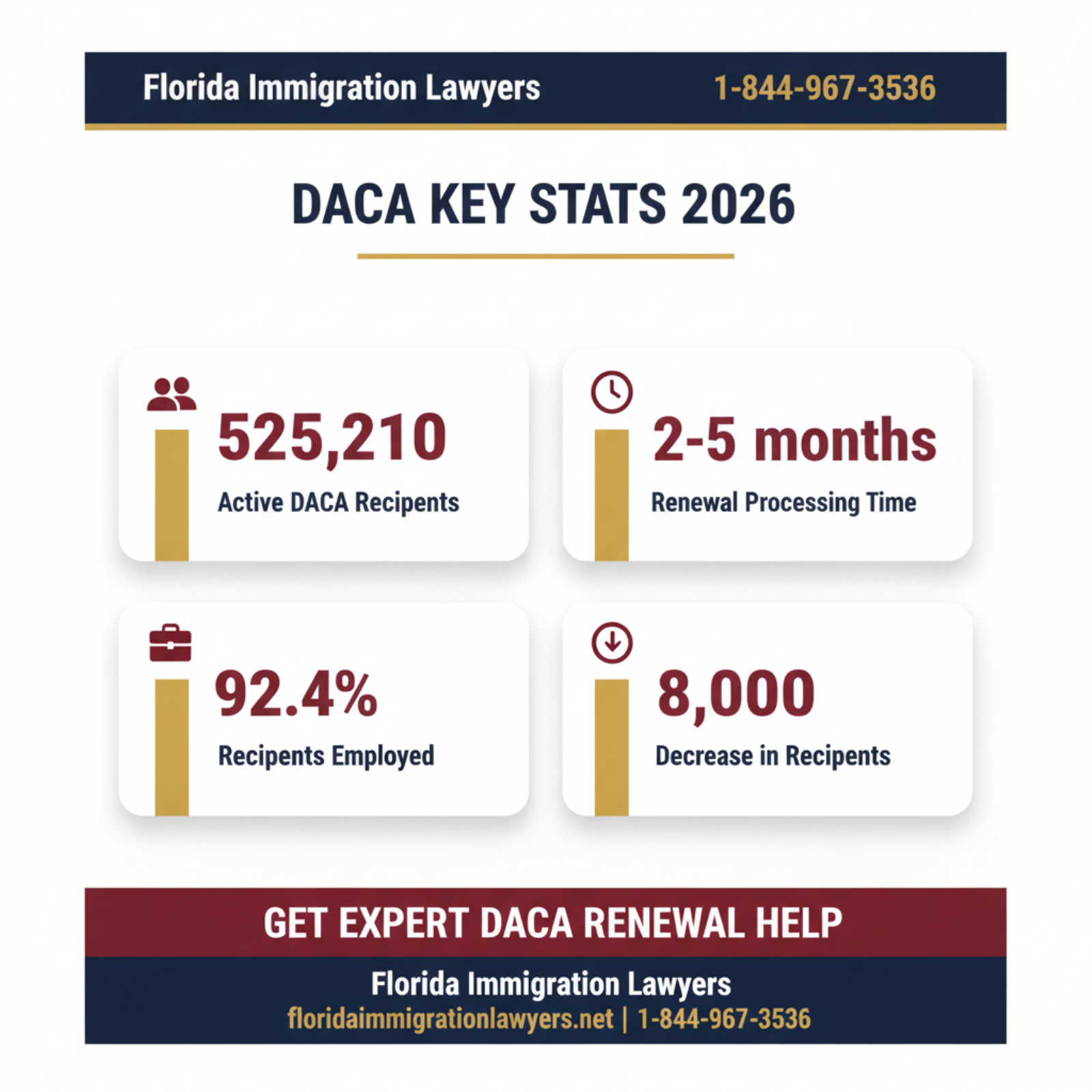
Processing Times: USCIS processing times for DACA renewals typically range from 2 to 5 months. However, these times are estimates and can fluctuate based on factors such as the volume of applications, specific service center workloads, and any requests for evidence. You can check the current processing times for Form I-821D and Form I-765 on the USCIS website by selecting your form type and service center.
Biometrics Appointment: After submitting your application, you will usually receive a biometrics appointment notice within 3-5 weeks. The appointment itself is typically scheduled for 2-4 weeks after the notice is sent.
Potential Delays: Common reasons for delays include incomplete applications, errors in forms, missing documents, or the need for a Request for Evidence (RFE). Legal challenges to DACA can also introduce uncertainty and sometimes affect processing speeds. Remaining patient and proactive in responding to USCIS communications is crucial.
Avoiding a Lapse: The most significant risk of delayed processing is a lapse in your DACA status and work authorization. If your EAD expires before your renewal is approved, you will not be authorized to work until the new EAD arrives. This can impact your employment and financial stability. Filing early is your best defense against such a lapse.
We closely monitor USCIS updates and legal developments affecting DACA. Our attorneys can provide realistic expectations for your timeline and help you track your application status. Keeping your information current with USCIS, including any address changes, is also vital to receiving timely notices.
Understanding DACA Renewal Cost Factors and Fees
The cost associated with DACA renewal includes government filing fees and potentially legal fees if you choose to hire an attorney. It's important to budget for these expenses to ensure a smooth application process.
USCIS Filing Fees: As of the date of this article, the total USCIS fee for DACA renewal includes the Form I-765 (Application for Employment Authorization) fee and the biometric services fee. USCIS fees are subject to change, so always verify the current amounts on the official USCIS website before submitting your application. There is generally no separate fee for Form I-821D.
Payment Method: You must submit the fees in the form of a check or money order made payable to "U.S. Department of Homeland Security." Do not send cash. Ensure the amount is exact; incorrect payments can lead to rejection of your entire application. Using multiple checks for different forms is acceptable, but a single check for the total amount is often simpler.
Fee Waivers: USCIS typically does not grant fee waivers for DACA renewal applications. While fee waivers are available for some other immigration benefits, DACA has specific guidelines. Always consult the latest USCIS policy on fee waivers to confirm current eligibility. If you are facing significant financial hardship, discussing your options with an attorney is advisable.
Legal Fees: Hiring an experienced immigration attorney to assist with your DACA renewal can provide invaluable peace of mind and significantly reduce the risk of errors. Legal fees vary depending on the complexity of your case and the services provided. An attorney can help you gather documents, accurately complete forms, prepare for biometrics, and respond to any RFEs. Investing in legal counsel is often a wise decision to protect your status.
At Florida Immigration Lawyers, we believe in transparent pricing and will discuss all potential costs upfront during your initial consultation. We are committed to making quality legal representation accessible. Don't let financial concerns prevent you from securing your future. Contact us to discuss your options and how we can assist you with your DACA renewal.
Do not navigate this process alone. Contact Florida Immigration Lawyers today. Our experienced team is ready to provide the guidance and support you need for a successful DACA renewal in Florida.
Common Mistakes to Avoid During DACA Renewal
The DACA renewal process, while seemingly straightforward for repeat applicants, is filled with potential pitfalls. Avoiding these common mistakes can save you time, stress, and prevent a lapse in your status.
- Filing Too Late: This is arguably the most critical mistake. Filing your application less than 120 days before expiration significantly increases the risk of your DACA and EAD expiring before renewal. This means a temporary loss of work authorization and deferred action, potentially leading to job loss and vulnerability to deportation.
- Filing Too Early: While less common, submitting your application more than 150 days before expiration can lead to rejection. USCIS may return your application, requiring you to re-file and causing unnecessary delays.
- Incomplete or Incorrect Forms: Any missing information, unanswered questions, or inconsistent data across forms can lead to an RFE or outright denial. Double-check every field for accuracy and completeness.
- Incorrect Fees or Payment Method: Sending the wrong amount or an improper payment method (e.g., cash instead of check/money order) will result in your application being rejected. Always verify the current fees and acceptable payment methods on USCIS.gov.
- Missing Supporting Documents: Failing to include copies of previous DACA approvals, EADs, or required identity documents will cause delays. If new criminal history or residence proofs are needed, ensure they are included.
- Failure to Disclose New Criminal History: Even minor arrests or citations since your last DACA approval must be disclosed, along with certified court dispositions. Hiding this information is a serious offense and will likely lead to denial and potential legal trouble.
- Not Attending Biometrics Appointment: This appointment is mandatory. Missing it without rescheduling can lead to denial of your application. Ensure you receive and respond to the notice.
- Ignoring Requests for Evidence (RFEs): If USCIS sends an RFE, you must respond within the specified timeframe with all requested information. Failure to do so will result in a denial.
- Using Outdated Forms: USCIS frequently updates its forms. Always download the latest versions directly from the USCIS website to ensure you are using the correct edition.
- Incorrect Mailing Address: Sending your application to the wrong USCIS lockbox facility can cause significant delays or loss of your application. Verify the correct filing address for Florida residents on the USCIS website.
- Not Keeping Copies: Always make a complete copy of your entire application package, including forms, documents, and proof of payment, before mailing it. This is your record in case of issues.
- Not Updating Address with USCIS: If you move, you must update your address with USCIS within 10 days using Form AR-11. Failure to do so means you might miss important notices regarding your DACA application.
Avoiding these common errors requires diligence and attention to detail. When in doubt, consulting with a knowledgeable immigration attorney can provide the clarity and confidence you need.
Frequently Asked Questions About DACA Renewal in 2026
Many DACA recipients have similar questions about the renewal process, especially given the program's evolving legal status. Here are answers to some common concerns for 2026.
Will I be able to renew my DACA in 2026?
Yes, as of early 2026, USCIS continues to accept and process DACA renewal applications from eligible individuals. While new initial DACA applications remain on hold due to court orders, those who previously held DACA status are generally able to renew. It is essential to stay informed about any new legal developments that might impact this.
Is USCIS denying DACA renewals?
USCIS processes DACA renewals on a case-by-case basis. Denials typically occur due to specific reasons such as eligibility issues (e.g., new criminal convictions), incomplete applications, or failure to respond to Requests for Evidence. If you meet all eligibility criteria and submit a complete, accurate application, your renewal has a good chance of approval. Consulting an attorney can help mitigate risks leading to denial.
How far in advance should you renew DACA?
USCIS strongly recommends filing your DACA renewal application between 120 and 150 days (approximately 4 to 5 months) before your current DACA and Employment Authorization Document (EAD) expire. This timeframe allows for adequate processing without a lapse in your status. Filing outside this window can lead to rejection or a gap in your work authorization.
Is ICE arresting DACA recipients?
Generally, individuals with active DACA status are considered low-priority for immigration enforcement and are not typically targeted for arrest by ICE (U.S. Immigration and Customs Enforcement) unless they have committed serious crimes or pose a national security threat. However, if your DACA status lapses, you lose this protection. It is crucial to maintain continuous DACA status to avoid becoming vulnerable to enforcement actions. Seek legal counsel immediately if you or someone you know is a DACA recipient facing an encounter with ICE.
When to Call a Lawyer for Your DACA Renewal
While some DACA renewals may seem straightforward, certain situations warrant the immediate attention of an experienced immigration attorney. Florida Immigration Lawyers are here to help you navigate complex scenarios and protect your future.
- Any Criminal History: If you have been arrested, charged, or convicted of any crime, no matter how minor, since your last DACA approval, you absolutely need legal counsel. Even dismissed charges or traffic infractions can impact your eligibility.
- Travel Outside the U.S.: If you have traveled outside the U.S. without advance parole since August 15, 2012, your eligibility for renewal may be affected. An attorney can assess your situation and advise on potential risks.
- Prior Denials or RFEs: If your previous DACA application or renewal was denied, or if you have received a Request for Evidence, a lawyer can help you understand the issues and prepare a stronger application.
- Concerns About Continuous Residence: If you have gaps in your residency records or concerns about proving continuous residence, an attorney can help you gather sufficient evidence.
- Uncertainty About Forms or Documents: If you feel overwhelmed by the paperwork, are unsure about specific questions, or need help organizing your supporting documents, legal assistance can prevent costly errors.
- Facing a USCIS Interview (Rare for Renewals): Although rare for renewals, if USCIS requests an interview, you should attend with an attorney.
- Fear of a Lapse in Status: If your DACA is close to expiring and you haven't filed, or if you anticipate delays, an attorney can explore all possible avenues to mitigate the risks of a lapse.
At Florida Immigration Lawyers, we specialize in helping Dreamers across Florida, including Hialeah, secure their DACA status. Our team stays current with all legal developments and USCIS policies. We can provide the expert guidance you need to ensure your DACA renewal is handled with precision and care. Don't take chances with your future; let us advocate for you.
About Florida Immigration Lawyers
Florida Immigration Lawyers is a leading immigration law firm dedicated to serving individuals and families across the entire state of Florida. With years of experience and a deep understanding of U.S. immigration law, our compassionate attorneys are committed to providing exceptional legal representation and personalized service.
We understand the profound impact immigration matters have on your life and your family's future. Our firm offers a comprehensive range of immigration services, including DACA renewals, asylum applications, deportation defense, citizenship and naturalization, family immigration petitions, and business immigration solutions. We pride ourselves on our client-focused approach and our unwavering dedication to achieving the best possible outcomes for our clients.
Why choose Florida Immigration Lawyers? We offer free, confidential consultations, are available 24/7 to address your urgent concerns, and our team is fully bilingual, providing services in both English and Spanish. We are your trusted advocates, ready to stand by your side through every step of your immigration journey.
Contact us today for a free consultation: 1-844-967-3536.
Visit our website: https://www.floridaimmigrationlawyers.net
Sources and References
- U.S. Citizenship and Immigration Services (USCIS)
- USCIS - Consideration of Deferred Action for Childhood Arrivals (DACA)
- USCIS - Filing Fees
- USCIS - Fee Waiver Information
- USCIS - Check Processing Times
- 8 U.S.C. § 1101 et seq. - Immigration and Nationality Act (INA)
- 8 C.F.R. § 274a.12(c)(33) - Employment Authorization for Deferred Action Recipients
- USCIS Policy Manual, Volume 1, Part A, Chapter 2 - Adjudicative Principles
This article provides general legal information and is not intended as legal advice. Every case is unique, and outcomes depend on specific facts and circumstances. Contact an attorney for advice about your particular situation.
Your future as a Dreamer in Florida is too important to leave to chance. Ensure your DACA renewal is handled with the expertise it deserves. Contact Florida Immigration Lawyers today for a free consultation at 1-844-967-3536. Se Habla Español - Estamos aquí para ayudarle.
Need help with Immigration?
Our Florida immigration attorneys offer free consultations. Call today or schedule online.
Frequently Asked Questions
Florida Immigration Lawyers
Legal Team
Our experienced attorneys at Florida Immigration Lawyers have been serving clients across Florida for over 20 years. We specialize in immigration, personal injury, criminal defense, workers compensation, and family law.