USCIS Processing Times Florida 2026: Your Guide to Navigating Delays
For immigrants in Florida, understanding USCIS processing times in 2026 is vital. This guide from Florida Immigration Lawyers provides comprehensive insights into the expected wait times for key applications like I-130, Green Cards, and naturalization, with a focus on Tampa and other Florida areas. We delve into factors influencing delays, a step-by-step application guide, and common mistakes to avoid. Learn how to track your case, prepare thoroughly, and when to seek expert legal assistance to navigate the complex immigration system efficiently. Our firm offers free consultations to help you achieve your immigration goals.
USCIS processing times in Florida for 2026 are subject to continuous change, influenced by application volume, staffing, and policy shifts. While some forms like I-130 and I-485 may take months to years, specific wait times vary significantly by form type and service center. It is crucial to monitor official USCIS resources and prepare a comprehensive application.
- Processing times vary by form, service center, and individual case factors.
- Official USCIS tools provide the most current estimates.
- Tampa and other Florida residents should expect potential delays.
- Thorough application preparation is key to avoiding setbacks.
- Consulting an immigration lawyer can help navigate complexities.
USCIS Processing Times Florida 2026: Your Guide to Navigating Delays
Are you an immigrant in Florida anxiously awaiting news on your USCIS application? Understanding the current USCIS processing times in Florida for 2026 is crucial for managing your expectations and planning your future. From family petitions to naturalization applications, the wait can be lengthy and often unpredictable.
This comprehensive guide from Florida Immigration Lawyers will demystify the complexities of USCIS processing, specifically focusing on what residents in Tampa and across Florida can expect in 2026. We will cover key forms, influencing factors, and how you can proactively address potential delays. Navigating the immigration system can be daunting, but you don't have to do it alone. Call Florida Immigration Lawyers at 1-844-967-3536 for a free consultation today.
Understanding USCIS Processing Times in Florida for 2026
USCIS processing times refer to the period it takes for U.S. Citizenship and Immigration Services to process an immigration application or petition from the date of receipt to the date of a decision. These times are not static; they fluctuate based on various factors, including the volume of applications, staffing levels, and policy changes within the agency.
For Florida residents, understanding these dynamics in 2026 is especially important due to the state's large and diverse immigrant population. While national trends apply, the specific workload at service centers and field offices serving Florida, such as the Tampa Field Office, can influence local processing speeds. Our goal is to provide you with insights into these crucial USCIS processing times Florida 2026.
USCIS regularly updates its processing time charts online, providing estimates based on historical data. However, these are averages, and your individual case may fall outside the reported ranges. It is essential to use these as a general guide and understand that specific circumstances can alter your personal timeline.
Factors Influencing Your USCIS Processing Time in Florida
Several variables can significantly impact how long your USCIS application takes to process. Being aware of these factors can help you better prepare and potentially avoid unnecessary delays in your USCIS processing times Florida 2026.
USCIS Workload and Resource Allocation
The sheer volume of applications USCIS receives plays a major role. When there's a surge in filings for certain forms, or when resources are diverted to other priorities, processing times can extend. This is a common challenge that affects applicants nationwide, including those in Florida.
Additionally, the efficiency and staffing levels at specific USCIS service centers – where many forms are processed – directly influence wait times. Different service centers may have varying backlogs for the same form type.
Completeness of Your Application
One of the most significant factors within your control is the completeness and accuracy of your application. Submitting an incomplete application or one with errors will almost certainly lead to delays, as USCIS may issue a Request for Evidence (RFE) or even deny the application. This directly impacts your USCIS processing times Florida 2026.
Missing documents, inconsistent information, or failure to follow instructions precisely can add months to your wait. It is paramount to double-check every detail before submission.
Type of Application and Priority Dates
Different types of immigration benefits have inherently different processing complexities and legal requirements. For example, a simple visa extension generally has a shorter processing time than a complex Green Card application that involves multiple stages and background checks.
For visa categories subject to annual limits, like many employment-based and some family-sponsored Green Cards, a 'priority date' is assigned. Your application cannot be approved until your priority date becomes current, regardless of how quickly USCIS processes your petition. This is a critical consideration for many seeking permanent residency in Florida.
Navigating Your USCIS Application: A Step-by-Step Guide
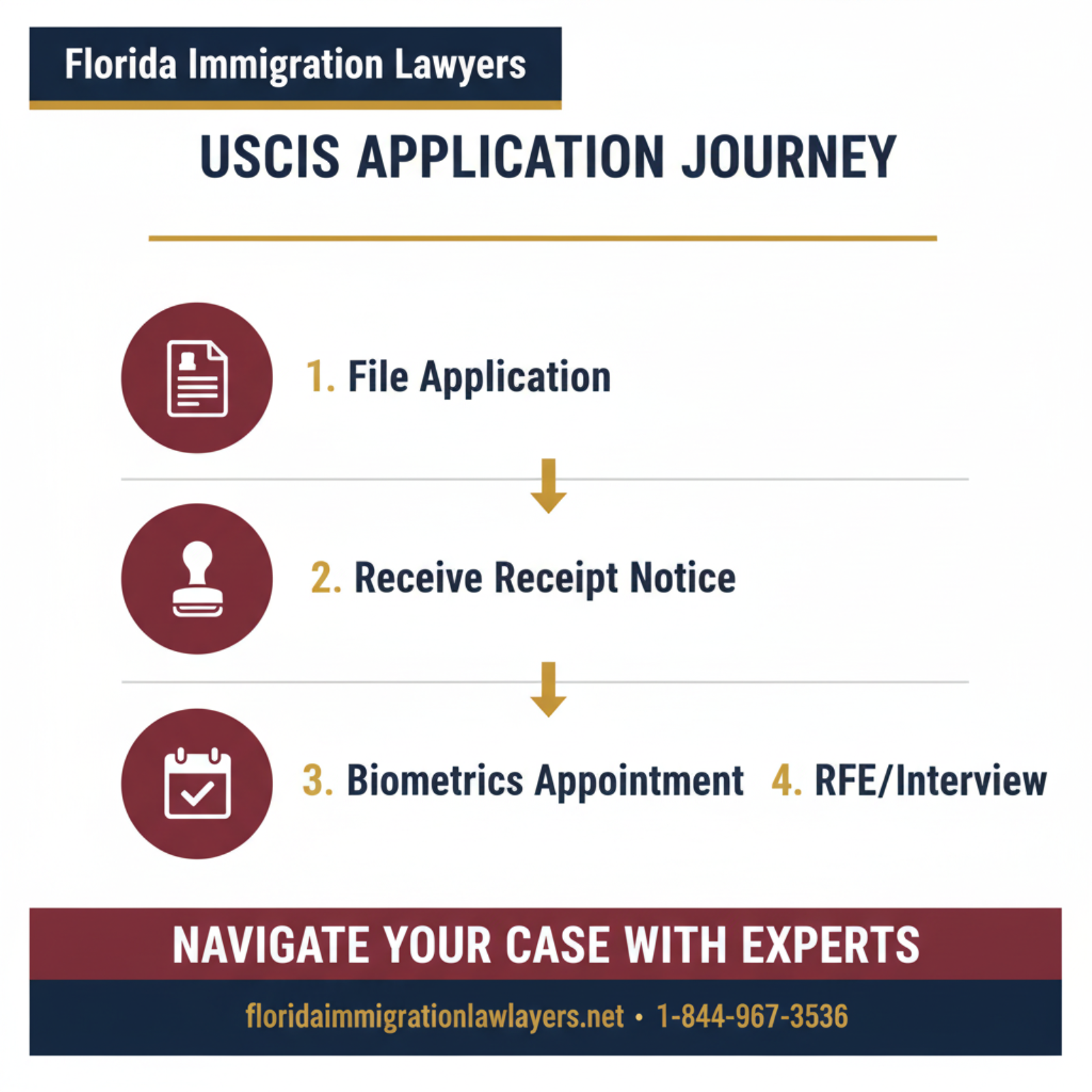
Understanding the general flow of a USCIS application can help you anticipate the journey ahead and prepare for each stage. While specific steps vary by form, here is a typical progression:
-
Preparation and Filing: This initial step involves gathering all necessary documents, completing the appropriate forms (e.g., Form I-130, Form I-485, Form N-400), and paying the required fees. Accuracy and completeness here are vital to avoid delays in your USCIS processing times Florida 2026.
Ensuring every field is filled correctly and all supporting evidence is included from the outset can save significant time later. Our firm, Florida Immigration Lawyers, emphasizes meticulous preparation.
-
Receipt Notice: After USCIS receives your application, they will mail you a Form I-797C, Notice of Action, confirming receipt. This notice will include your case receipt number, which you will use to track your case online. This usually arrives within a few weeks of mailing your application.
Keep this notice in a safe place, as it is your primary reference for all future communications with USCIS regarding your USCIS processing times Florida 2026.
-
Biometrics Appointment: Most applicants will receive an appointment notice for biometrics (fingerprints, photos, and signature) at an Application Support Center (ASC) in Florida. This data is used for background checks and identity verification. This typically occurs a few weeks to a few months after receiving your receipt notice.
It is crucial to attend this appointment, as failure to do so can lead to significant delays or even denial of your application.
Step-by-Step Process Guide -
Request for Evidence (RFE) or Interview (if applicable): Depending on your application type and the initial review, USCIS may send an RFE if they need more information or documents. Many Green Card and naturalization applicants will also be scheduled for an interview at a local USCIS field office, such as the one in Tampa.
Responding promptly and thoroughly to an RFE is critical. Interviews are your opportunity to clarify information and confirm your eligibility. Our attorneys can help you prepare for these critical stages.
-
Decision: Once USCIS has reviewed all evidence and conducted any necessary interviews and background checks, they will issue a decision. This could be an approval, a denial, or a request for further action. The final decision time significantly varies depending on the form and complexity.
An approval means you have been granted the requested immigration benefit. A denial often comes with an explanation and may provide options for appeal or reapplication, which our firm can assist with.
Essential Documents for Common USCIS Applications
While the exact documents required vary by the specific form and immigration benefit you seek, here is a general checklist of commonly requested items for many USCIS applications in Florida:
- Government-issued identification (passport, driver's license)
- Birth certificates (for all applicants and beneficiaries)
- Marriage certificates (if applicable)
- Divorce decrees or death certificates of previous spouses (if applicable)
- Financial documents (tax returns, employment letters, bank statements, affidavits of support)
- Medical examination results (Form I-693, Report of Medical Examination and Vaccination Record)
- Photographs meeting USCIS specifications
- Proof of lawful entry and immigration status (I-94, visa stamps)
- Police clearance certificates (if required by your country of origin or residence)
- Educational degrees and transcripts (for employment-based petitions)
- Any other documents specifically requested in the form instructions or by an RFE
What to Expect: USCIS Processing Timelines in Florida for Key Forms
In 2026, USCIS processing times Florida for various forms continue to be a primary concern for applicants. While exact predictions are impossible, we can outline typical ranges and address common questions regarding specific applications.
You can check the most current estimates for your specific form and field office (e.g., Tampa Field Office) on the official USCIS Processing Times website. Remember these are estimates and can change frequently.
I-130 Processing Time for Spouses in 2026
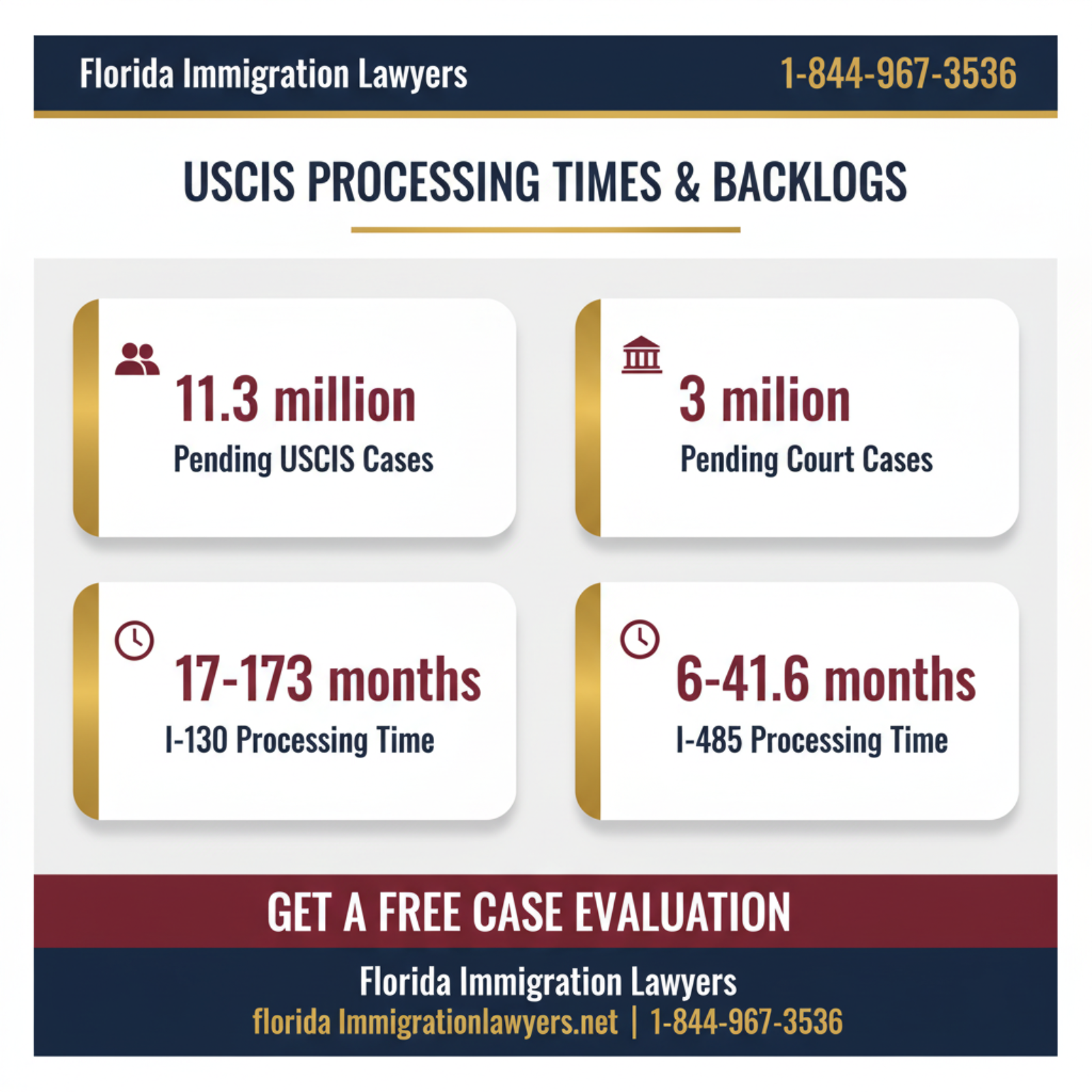
The Form I-130, Petition for Alien Relative, is often the first step in family-based immigration. For U.S. citizens petitioning for their spouses, children under 21, or parents, the I-130 processing time can range from **6 to 18 months**, and sometimes longer, depending on the service center. For lawful permanent residents petitioning for spouses and children, the wait is typically longer due to visa bulletin availability.
It is important to note that the I-130 approval is just one step; the overall Green Card process (Form I-485 or consular processing) will add to the total wait. Many ask, "What is the processing time for I-130 in 2026?" The answer remains variable, but careful preparation can prevent unnecessary extensions.
Green Card and Adjustment of Status Timelines
For those already in the U.S. seeking to adjust their status to a lawful permanent resident (Green Card) via Form I-485, the USCIS processing times Florida 2026 can be substantial. These cases often involve interviews at local field offices like Tampa. Typical I-485 processing time can range from **8 to 24 months or more**, highly dependent on the category (family-based, employment-based) and the specific field office workload.
The overall Green Card processing time in Florida also depends on the underlying petition (e.g., I-130 or I-140) and visa availability. For employment-based Green Cards, the priority date can significantly extend the wait.
Naturalization Wait Times in Florida
Becoming a U.S. citizen through naturalization (Form N-400) is a significant milestone. "How long is the wait for naturalization in Florida?" is a common question. In 2026, naturalization wait times in Florida, including at the Tampa Field Office, generally range from **6 to 18 months**, from application submission to the oath ceremony. This includes processing, interview, and background checks.
Factors like the complexity of your case, your residency history, and any potential issues can impact this timeline. The N-400 processing time can be influenced by the efficiency of your local field office.
Other Common Forms: I-765 and I-601 Waiver Processing Times 2026
Form I-765, Application for Employment Authorization, typically processes faster, often within **3 to 10 months**, but this can vary. For those needing waivers, such as Form I-601, Application for Waiver of Grounds of Inadmissibility, the I-601 waiver processing times 2026 can be lengthy, ranging from **12 to 36 months or more**, due to the complex nature of these applications and the detailed review required.
These forms are critical for many immigrants in Florida, and understanding their individual processing speeds is essential for planning work and travel.
Do not navigate this process alone. Contact Florida Immigration Lawyers today for personalized guidance.
Understanding USCIS Fees and Associated Costs
Applying for immigration benefits involves various fees that are crucial to understand. USCIS fees are subject to change, and it is vital to always consult the official USCIS website for the most current fee schedule before filing. Our firm does not provide specific fee amounts as they frequently update.
Typically, each application form has a filing fee. For many applications, a separate biometrics services fee is also required. These fees are non-refundable, regardless of the outcome of your application. In some cases, you may be eligible for a fee waiver, which requires submitting a separate application, Form I-912, Request for Fee Waiver.
Beyond USCIS filing fees, applicants in Florida should also budget for other associated costs. These may include fees for medical examinations (Form I-693), translation services for foreign-language documents, postage, and attorney fees if you choose to hire legal representation. Investing in professional legal assistance can often be cost-effective in the long run by preventing costly mistakes and delays.
Common Mistakes to Avoid
-
Submitting Incomplete or Incorrect Forms: This is perhaps the most common error. Missing signatures, unanswered questions, or outdated forms will lead to RFEs or outright rejections, significantly extending your USCIS processing times Florida 2026.
Consequence: Delays, RFEs, or even denial, requiring re-filing and additional fees.
-
Not Including All Required Supporting Documents: Failing to provide all necessary evidence, such as birth certificates, marriage licenses, or financial records, will halt your application's progress.
Consequence: RFEs, prolonged processing, or denial.
-
Failing to Disclose All Information Truthfully: Any misrepresentation or omission of material facts can lead to serious legal consequences, including accusations of fraud and permanent bars from immigration benefits.
Consequence: Denial, deportation, and potential future inadmissibility.
-
Missing Deadlines or Appointment Dates: Failing to respond to RFEs by the deadline, missing biometrics appointments, or not appearing for an interview can jeopardize your case.
Consequence: Application abandonment or denial.
-
Not Keeping Copies of All Submitted Documents: It's vital to maintain a complete record of everything you send to USCIS. This includes forms, supporting documents, and correspondence.
Consequence: Inability to verify submissions, difficulty responding to inquiries or RFEs.
-
Assuming USCIS Has All Your Information: Even if you have filed previous applications, USCIS may not cross-reference your new application with old files. Always provide complete information for each new filing.
Consequence: RFEs, confusion, and delays.
-
Using Incorrect Filing Fees: USCIS fees change periodically. Submitting an incorrect fee will cause your application to be rejected and returned to you, delaying your case significantly.
Consequence: Application rejection and delays until correct fees are paid.
-
Not Updating USCIS of Address Changes: If you move, you must inform USCIS promptly using Form AR-11, Alien's Change of Address Card. Failure to do so means you might miss important notices or appointments.
Consequence: Missing critical communications, leading to delays or denial due to non-appearance.
-
Traveling Internationally While Your Application is Pending Without Authorization: Depending on your application type (e.g., Adjustment of Status), leaving the U.S. without advance parole can be considered an abandonment of your application.
Consequence: Application abandonment and potential inadmissibility upon return.
-
Not Seeking Legal Advice for Complex Cases: While some cases seem straightforward, immigration law is intricate. What appears simple can have hidden complexities or inadmissibility grounds.
Consequence: Unforeseen legal issues, delays, or denial of benefits that could have been approved with proper legal guidance.
When to Call a Lawyer
While some individuals successfully navigate the USCIS process independently, many situations warrant the expertise of an immigration attorney, especially given the variability of USCIS processing times Florida 2026. Florida Immigration Lawyers are here to provide the guidance you need.
You should consider contacting us if you encounter any of the following scenarios:
- Complex Case History: If you have previous immigration violations, criminal records, or prior denials, your case is likely more complicated and requires professional review.
- Received a Request for Evidence (RFE) or Notice of Intent to Deny (NOID): These notices indicate that USCIS has concerns about your application. A lawyer can help you formulate a strong and timely response.
- Unusual Delays: If your USCIS processing times Florida 2026 significantly exceed the posted processing times for your form and service center, there might be an issue. An attorney can inquire with USCIS on your behalf.
- Facing Deportation or Removal Proceedings: If you or a family member are in removal proceedings, immediate legal intervention is critical. Our deportation defense attorneys can help protect your rights.
- Changes in Personal Circumstances: Marriage, divorce, birth of a child, or changes in employment status can impact your application. A lawyer can advise on how to update USCIS correctly.
- Applying for Waivers: Waivers of inadmissibility (like I-601 waivers) are highly complex and require strong legal arguments and extensive documentation.
- Confusion About Forms or Eligibility: If you are unsure which forms to file, what documents are needed, or if you even qualify for a benefit, a Florida immigration lawyer can provide clarity.
Florida Immigration Lawyers has extensive experience with all types of immigration cases, including family-based immigration, business immigration, asylum claims, and citizenship applications. We serve clients throughout Florida, including Tampa, Orlando, Miami, and Jacksonville. Our attorneys are dedicated to providing clear, empathetic, and effective legal representation.
About Florida Immigration Lawyers
Florida Immigration Lawyers is a leading immigration law firm dedicated to serving individuals and families across the entire state of Florida. With years of experience and a deep understanding of U.S. immigration law, our team provides comprehensive legal services tailored to your unique needs.
We pride ourselves on our client-focused approach, offering compassionate and strategic guidance through every step of the immigration process. Whether you are seeking a Green Card, fighting deportation, or pursuing U.S. citizenship, our skilled attorneys are here to advocate for your best interests.
Our services include family-based petitions, employment visas, adjustment of status, naturalization, asylum, and deportation defense. We understand the challenges immigrants face and are committed to delivering favorable outcomes for our clients.
Why Choose Florida Immigration Lawyers?
- Experienced Advocates: Our attorneys possess in-depth knowledge of immigration law and stay updated on the latest policy changes.
- Personalized Attention: We treat every client's case with the individual attention and care it deserves.
- Bilingual Services: Our team offers services in both English and Spanish to ensure clear communication.
- Statewide Coverage: We serve clients in all Florida cities and counties, providing accessible legal support.
- Free Consultations: Start your journey with a no-obligation, free consultation to discuss your case.
We are available 24/7 to answer your urgent questions and provide support. For reliable and effective immigration legal assistance, contact Florida Immigration Lawyers at 1-844-967-3536 or visit our website at https://www.floridaimmigrationlawyers.net. Let us help you achieve your American dream.
Sources and References
- U.S. Citizenship and Immigration Services (USCIS)
- USCIS Check Case Processing Times
- U.S. Department of State - Visa Law and Policy
- 8 U.S.C. Chapter 12 - Immigration and Nationality Act (INA)
- 8 CFR (Code of Federal Regulations) - Aliens and Nationality
- INA Section 245 - Adjustment of Status of Nonimmigrant to That of Person Admitted for Permanent Residence
- INA Section 316 - Requirements for Naturalization
This article provides general legal information and is not intended as legal advice. Every case is unique, and outcomes depend on specific facts and circumstances. Contact an attorney for advice about your particular situation.
Navigating the complexities of USCIS processing times in Florida for 2026 requires diligence and often, expert legal guidance. Do not let uncertainty or delays deter you from pursuing your immigration goals. The dedicated team at Florida Immigration Lawyers is ready to assist you with every aspect of your case, from initial application to appeals. Call us today at 1-844-967-3536 for a free consultation. Se Habla Español - Estamos aquí para ayudarle.
Need help with Immigration?
Our Florida immigration attorneys offer free consultations. Call today or schedule online.
Frequently Asked Questions
Florida Immigration Lawyers
Legal Team
Our experienced attorneys at Florida Immigration Lawyers have been serving clients across Florida for over 20 years. We specialize in immigration, personal injury, criminal defense, workers compensation, and family law.