Deportation Defense Lawyer Orlando: Fight Removal
Facing deportation in Orlando can be a terrifying experience, threatening your life in Florida and separation from loved ones. The U.S. government initiates removal proceedings for various reasons, making expert legal representation essential. This guide explains the complex deportation process, from receiving a Notice to Appear to navigating court hearings and potential appeals. We detail the critical documents needed for your defense, outline the typical timelines, and discuss the cost factors involved. A skilled deportation defense lawyer in Orlando can identify eligible relief options, challenge allegations, and build a robust case to protect your right to remain in the U.S. Learn how Florida Immigration Lawyers can fight for your future.

A deportation defense lawyer Orlando specializes in representing individuals facing removal proceedings in U.S. immigration courts, including the Orlando Immigration Court. They work to protect your rights, explore all available legal avenues for relief, and build a strong case to prevent deportation, helping you maintain your legal status in Florida. Their expertise is crucial for navigating complex immigration laws.
- Legal representation is essential for navigating complex removal proceedings.
- An attorney can identify eligible defenses and forms of relief from deportation.
- Timely action and proper documentation are critical for a successful defense.
- Florida Immigration Lawyers offer experienced defense in Orlando and across Florida.
Facing deportation can be one of the most frightening and stressful experiences imaginable, threatening to separate you from your family, your home, and your life in Florida. The thought of being removed from the country you have come to know can feel overwhelming and leave you searching for answers.
Many individuals in Orlando and across Florida find themselves in this challenging situation, often unsure of their rights or the legal options available to them. Understanding the complexities of immigration law and the specific procedures of the Orlando Immigration Court is crucial for anyone facing removal proceedings.
This comprehensive guide will walk you through the deportation process, highlight key defense strategies, and explain how a skilled deportation defense lawyer Orlando can make a decisive difference in your case. We will cover everything from initial notices to court hearings and potential appeals, providing you with the knowledge you need.
You do not have to face this battle alone. The stakes are incredibly high, and expert legal guidance is not just beneficial, it is often essential. Call Florida Immigration Lawyers at 1-844-967-3536 for a free consultation. Our dedicated team is ready to help you fight for your future.
Understanding Deportation (Removal) Proceedings in Florida
Deportation, also known as removal, is the formal process by which the U.S. government seeks to expel a foreign national from the country. These proceedings are initiated for various reasons, including visa overstays, criminal convictions, or violations of immigration laws.
In Florida, like the rest of the U.S., these cases are heard in immigration courts, which fall under the Executive Office for Immigration Review (EOIR) within the Department of Justice. The Orlando Immigration Court is a primary venue for cases originating in Central Florida.
The process begins when U.S. Immigration and Customs Enforcement (ICE) issues a Notice to Appear (NTA) to an individual. This document formally charges the individual with being removable from the United States and specifies the legal grounds for their potential deportation. Understanding the NTA is your first critical step.
Once you receive an NTA, your case is placed on the docket of an immigration judge. This marks the beginning of formal removal proceedings, governed by the Immigration and Nationality Act (INA), specifically INA § 240, codified at 8 U.S.C. § 1229a. This section outlines the procedures for removal proceedings.
Navigating these legal waters requires a deep understanding of immigration statutes, regulations, and court procedures. An experienced deportation defense lawyer Orlando is vital to challenge the government's allegations, present defenses, and apply for forms of relief that could allow you to remain in the U.S.
The consequences of a removal order can be severe, including separation from family, loss of employment, and potential bars from future re-entry into the U.S. This is why a robust defense strategy is paramount from the very beginning of your case.
Common Grounds for Deportation in Florida
Several actions or statuses can lead to removal proceedings. These often include:
- Visa Overstays: Remaining in the U.S. beyond the authorized period of admission.
- Criminal Convictions: Certain criminal offenses, particularly aggravated felonies or crimes involving moral turpitude, can trigger deportation.
- Immigration Fraud: Misrepresentation or fraud in seeking a visa or other immigration benefit.
- Illegal Entry: Entering the U.S. without inspection or proper authorization.
- Violation of Visa Terms: Engaging in activities inconsistent with the terms of your visa, such as working without authorization.
Available Relief from Deportation
Even if you are found deportable, various forms of relief may be available to you. These options depend on your specific circumstances, immigration history, and eligibility criteria. A skilled deportation defense lawyer Orlando can assess your case and determine the best strategy.
- Cancellation of Removal: Available for certain long-term residents with U.S. citizen or LPR family members who would suffer extreme hardship.
- Asylum and Withholding of Removal: For individuals who fear persecution in their home country. Learn more about asylum claims.
- Adjustment of Status: If you are eligible for a green card through a family petition or employment, you might be able to adjust your status while in removal proceedings.
- Waivers: Various waivers exist for certain grounds of inadmissibility or deportability.
- Prosecutorial Discretion: In some cases, ICE may agree to close or terminate removal proceedings.
- Voluntary Departure: Allows you to leave the U.S. voluntarily, potentially avoiding the negative consequences of a formal deportation order.
The Deportation Process: A Step-by-Step Guide
Understanding the stages of removal proceedings can help you prepare and work effectively with your deportation defense lawyer Orlando. The process is complex and can be lengthy, often taking years to resolve.
-
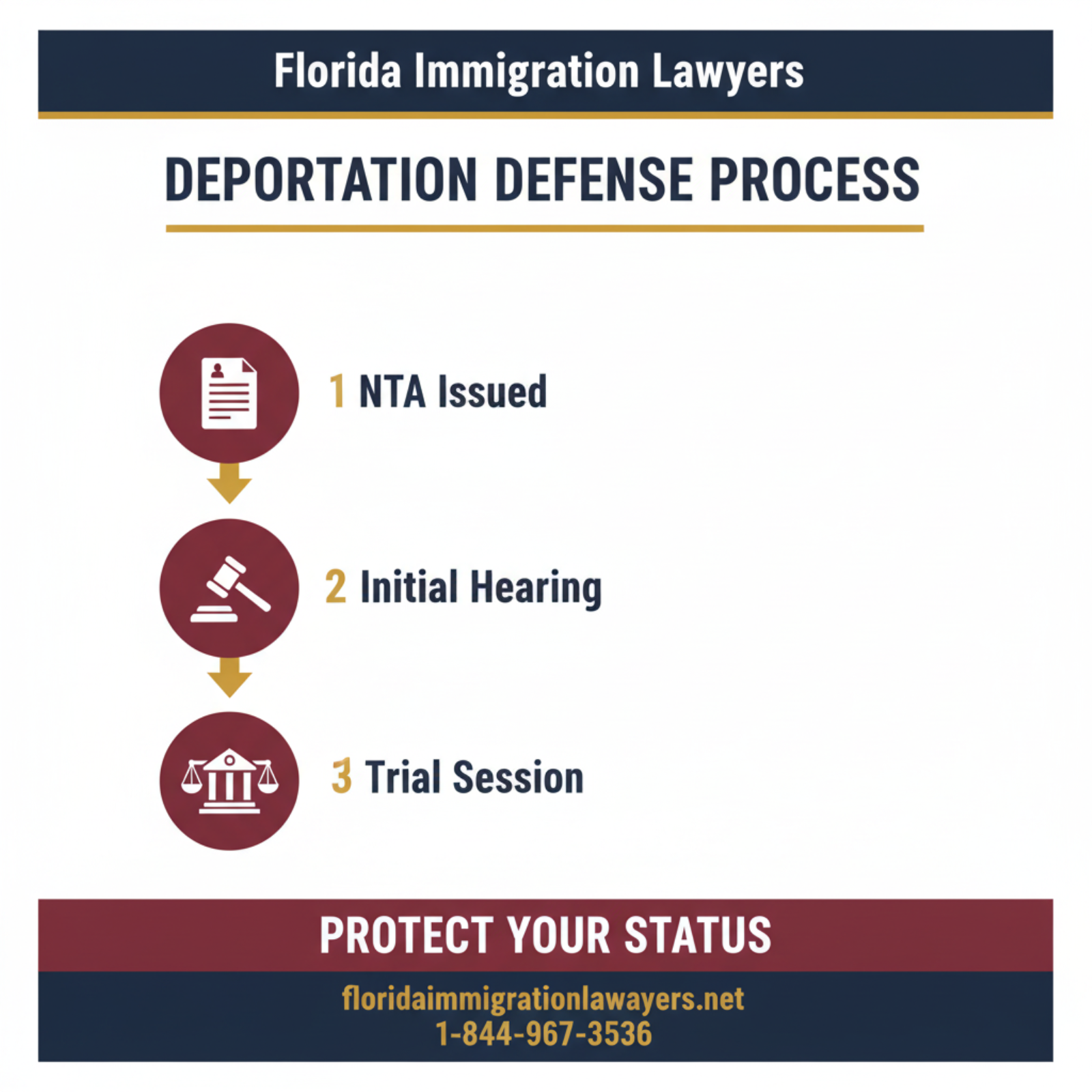
Issuance of Notice to Appear (NTA): This is the official document initiating removal proceedings. It states the charges against you and schedules your first court appearance, known as a Master Calendar Hearing. It is crucial not to ignore this document and to seek legal counsel immediately upon receipt.
-
Master Calendar Hearings (MCH): These are preliminary hearings where you appear before an Immigration Judge (IJ) to acknowledge receipt of the NTA, admit or deny the charges, and state your intention to seek relief from removal. Your attorney will help you prepare for these hearings and file necessary motions. Multiple MCHs may occur to address preliminary matters.
-
Filing Applications for Relief: If you are eligible for a form of relief, your attorney will help you prepare and file the appropriate application, such as for asylum, cancellation of removal, or adjustment of status. These applications require extensive documentation and evidence to support your claim.
-
Individual Hearing (Merits Hearing): This is the main trial where you and your attorney present your case for relief from deportation. You will testify, present witnesses, and submit evidence to the Immigration Judge. The government attorney will also present their arguments and evidence. This hearing is critical and requires thorough preparation.
-
Immigration Judge's Decision: After the Individual Hearing, the Immigration Judge will issue a decision. If relief is granted, you may be allowed to remain in the U.S. If relief is denied, the judge will issue an order of removal. This decision is subject to appeal.
-
Appeals Process: If the Immigration Judge orders your removal, you have the right to appeal the decision to the Board of Immigration Appeals (BIA). If the BIA upholds the removal order, further appeals may be possible to a U.S. Circuit Court of Appeals. This appeals process can be lengthy and requires specialized legal expertise, as outlined in 8 CFR Part 1003.
Key Documents for Your Deportation Defense Case
A strong defense in removal proceedings relies heavily on comprehensive and well-organized documentation. Your deportation defense lawyer Orlando will guide you through gathering these critical documents. Starting this process early is essential for building a robust case.
- Proof of Identity and Nationality: Passports, birth certificates, national identity documents.
- Immigration History Documents: I-94 arrival/departure records, previous visa petitions, green card, old passports with visas, any correspondence from USCIS or ICE.
- Proof of Residence in the U.S.: Lease agreements, utility bills, school records, employment records, tax returns demonstrating continuous presence.
- Family Relationship Documents: Marriage certificates, birth certificates of U.S. citizen or LPR children/spouses, divorce decrees, adoption papers. These are vital for family-based relief.
- Financial Records: Bank statements, pay stubs, tax returns, property deeds, evidence of financial support for dependents.
- Character References and Affidavits: Letters from family, friends, employers, and community leaders attesting to your good moral character and contributions to the community.
- Medical Records: Especially if you or a family member has a serious medical condition that would be exacerbated by deportation.
- Criminal Records (if applicable): Certified copies of all court dispositions, police reports, and evidence of rehabilitation. Transparency is crucial, even if records seem minor.
- Evidence of Hardship: Documents demonstrating the extreme hardship your U.S. citizen or LPR family members would face if you were deported. This could include medical reports, psychological evaluations, and financial dependency statements.
- Evidence for Asylum/Withholding: If seeking asylum, provide detailed affidavits, country condition reports, photos, and news articles supporting your claim of persecution.
Timeline and Processing Expectations for Removal Cases
The timeline for deportation (removal) proceedings can vary significantly, often extending over several months to multiple years. There is no fixed duration, as each case is unique, and various factors influence its speed and complexity.
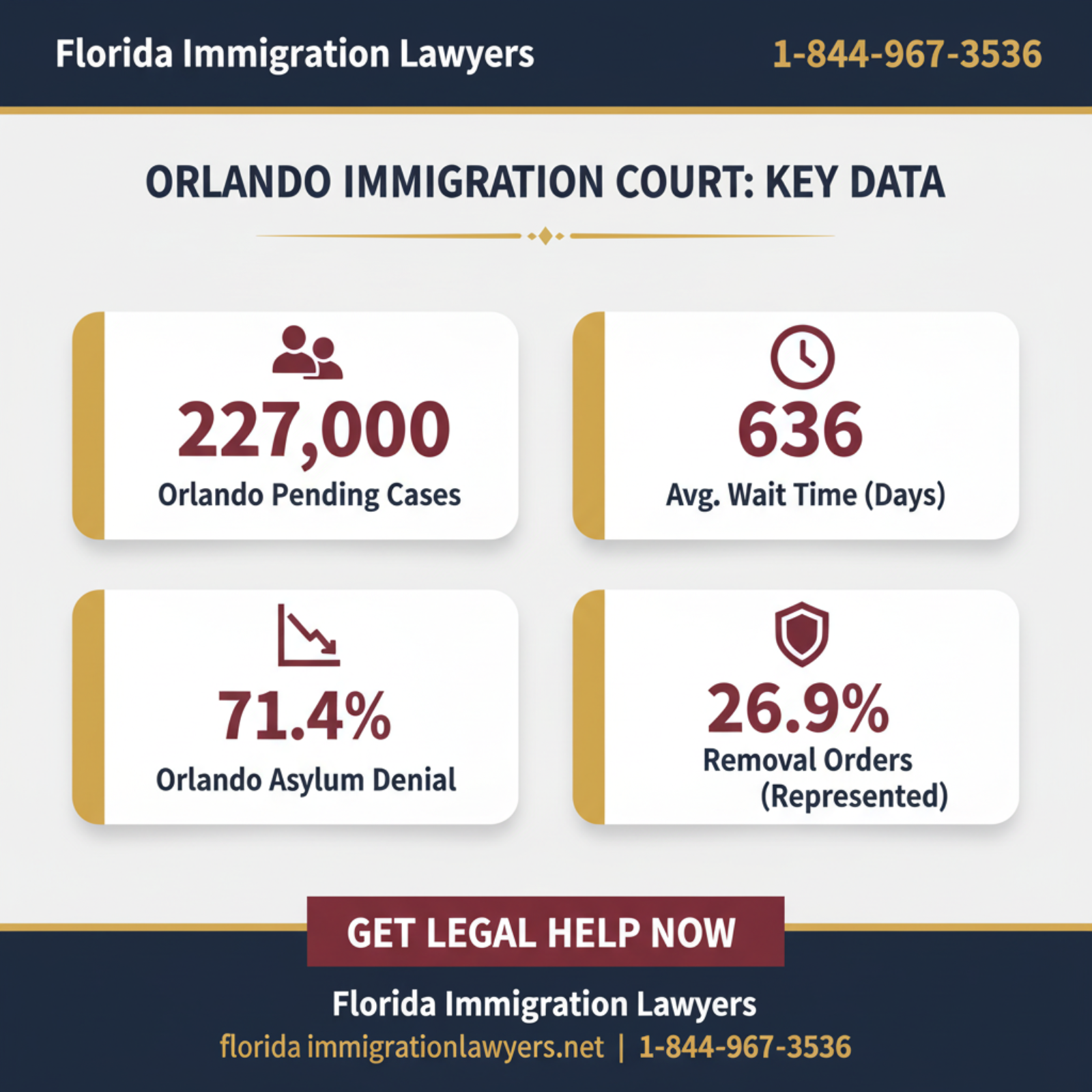
Factors that can affect your case timeline include the backlog at the Orlando Immigration Court, the complexity of your case, the number of witnesses, the type of relief you are seeking, and the availability of the Immigration Judge and government attorney. The volume of cases filed in Florida immigration courts can also cause delays.
Initial Master Calendar Hearings typically occur within a few months of receiving the NTA. However, securing an Individual Hearing date for a full trial can take much longer, sometimes well over a year or even several years, due to court scheduling demands. This means you might be in proceedings for an extended period.
If an appeal to the Board of Immigration Appeals (BIA) is necessary, that process alone can add another year or more to the overall timeline. Further appeals to a U.S. Circuit Court of Appeals would extend it even further. Your deportation defense lawyer Orlando will keep you informed of realistic expectations.
While the lengthy process can be stressful, it also provides time for your legal team to gather robust evidence and develop the strongest possible defense. Patience and consistent communication with your attorney are key throughout this extended period.
Cost Factors and Legal Fees for Deportation Defense
Understanding the financial aspects of hiring a deportation defense lawyer Orlando is an important part of preparing for your case. Legal fees for removal proceedings can vary based on the complexity of your case, the experience of your attorney, and the amount of work required.
Attorney fees are typically structured as either a flat fee for specific stages of the process or an hourly rate for the time spent on your case. A flat fee provides predictability, while an hourly rate reflects the actual time invested. During your free consultation, Florida Immigration Lawyers will discuss our fee structure transparently.
Beyond attorney fees, there are other potential costs. These can include government filing fees for applications for relief (such as for asylum or cancellation of removal), which are subject to change by USCIS and EOIR. Your lawyer will inform you of any applicable fees, but they are paid directly to the government.
Additional expenses might include fees for obtaining certified court documents, translation services for foreign language documents, expert witness fees if specialized testimony is needed, and travel costs for witnesses. These costs can add up, so it is important to budget accordingly.
Investing in a qualified deportation defense lawyer Orlando is an investment in your future and your ability to remain in the U.S. While the costs may seem significant, the potential consequences of facing removal without expert legal representation are far greater. Our firm offers flexible payment options to help manage these expenses.
Do not navigate this process alone. Contact Florida Immigration Lawyers today. Our experienced team is ready to provide the dedicated legal defense you need to protect your future in Florida.
Common Mistakes to Avoid in Deportation Proceedings
Facing removal proceedings is daunting, and missteps can have severe consequences. Avoid these common mistakes to strengthen your defense:
- Ignoring the Notice to Appear (NTA): Failing to appear in court as scheduled will almost certainly result in an immediate order of deportation (in absentia). Always respond promptly to any official notices from immigration authorities.
- Misrepresenting Facts or Lying to Authorities: Providing false information or concealing relevant facts can lead to charges of immigration fraud, making it much harder to obtain any form of relief and potentially incurring criminal penalties. Honesty and transparency are paramount.
- Attempting Self-Representation: Immigration law is incredibly complex and constantly evolving. Representing yourself without legal training significantly reduces your chances of success and can lead to missed deadlines or overlooked legal arguments.
- Failing to Gather Sufficient Evidence: A strong defense requires compelling evidence to support your claims for relief. Not collecting necessary documents, affidavits, or expert testimony can weaken your case considerably.
- Missing Deadlines for Filing Applications: Immigration courts have strict deadlines for filing applications for relief and supporting documents. Missing these deadlines can result in the forfeiture of your right to apply for relief.
- Not Disclosing Past Criminal History: Even minor arrests or convictions from many years ago must be disclosed to your attorney. Failure to do so can jeopardize your case, as immigration authorities will likely uncover this information.
- Voluntarily Departing Without Legal Advice: Accepting voluntary departure without fully understanding the implications can prevent you from applying for certain types of relief in the future or re-entering the U.S. for a significant period. Always consult a lawyer first.
- Not Understanding All Available Relief Options: There are many forms of relief from deportation. Without an attorney, you might not be aware of all the options you qualify for, potentially missing a critical opportunity to remain in the U.S.
- Failing to Update Contact Information: Moving or changing your phone number without updating the immigration court and your attorney can lead to missed notices, hearings, and potentially an in absentia removal order.
- Speaking to ICE or Police Without an Attorney: Anything you say can be used against you in immigration court. You have the right to remain silent and to speak with an attorney before answering questions from immigration officers or law enforcement.
When to Call a Deportation Defense Lawyer in Orlando
The moment you suspect you might be facing deportation or removal proceedings is the moment to seek legal counsel. Early intervention by a skilled deportation defense lawyer Orlando is crucial for protecting your rights and building the strongest possible defense.
You should immediately contact Florida Immigration Lawyers if you:
- Receive a Notice to Appear (NTA): This is the official start of your removal proceedings. Do not delay in seeking legal advice.
- Are Detained by ICE: If you or a loved one is taken into custody by Immigration and Customs Enforcement, an attorney can work to secure release on bond and represent you in court.
- Are Facing Criminal Charges: Certain criminal convictions can lead to deportation, even for lawful permanent residents. A lawyer can advise on the immigration consequences of criminal charges.
- Have Been Denied an Immigration Benefit: If your visa, green card, or other immigration application has been denied, it could potentially lead to removal proceedings.
- Are Seeking Asylum or Other Forms of Relief: Applying for complex forms of relief like asylum or cancellation of removal requires extensive legal knowledge and precise application.
- Have a Complex Immigration History: If your immigration record has any irregularities, previous orders, or complicated entries, professional guidance is essential.
- Are a Lawful Permanent Resident (Green Card Holder) and Have Been Questioned by Immigration Authorities: Even green card holders can face deportation for certain offenses. Never assume your status is entirely secure.
Florida Immigration Lawyers has extensive experience representing clients in the Orlando Immigration Court and across Florida. We understand the specific nuances of Florida immigration courts and are committed to fighting for your right to remain in the U.S. We offer dedicated representation in all aspects of deportation defense, including bond hearings, master calendar hearings, individual hearings, and appeals. Our goal is to help you explore every possible avenue for relief, from family-based petitions to waivers and asylum claims.
About Florida Immigration Lawyers
Florida Immigration Lawyers is a premier immigration law firm dedicated to serving individuals and families across all of Florida, including Orlando, Tampa, Miami, and Jacksonville. Our mission is to provide compassionate, effective, and results-driven legal representation in all areas of immigration law.
We understand the profound impact immigration matters have on your life and your family's future. Our team of experienced attorneys is committed to upholding your rights and guiding you through the often-complex U.S. immigration system. We pride ourselves on our client-focused approach, ensuring you receive personalized attention and clear communication at every stage of your case.
Our comprehensive services include general immigration matters, deportation defense, asylum applications, citizenship and naturalization, family-based immigration, and business immigration. We leverage our deep legal knowledge and extensive experience to achieve the best possible outcomes for our clients.
Choose Florida Immigration Lawyers because we are available 24/7 to address your urgent needs, offer free consultations to discuss your situation without obligation, and our team is fully bilingual (English and Spanish) to ensure effective communication. We are your trusted partners in navigating U.S. immigration law. Visit our attorneys page to learn more about our dedicated team, or contact us directly.
Sources and References
- U.S. Citizenship and Immigration Services (USCIS)
- Executive Office for Immigration Review (EOIR)
- U.S. Immigration and Customs Enforcement (ICE)
- 8 U.S.C. Chapter 12 - Immigration and Nationality Act (INA)
- 8 U.S.C. § 1229a - Removal proceedings
- 8 CFR Part 240 - Proceedings to Determine Deportability or Inadmissibility
- 8 CFR Part 1003 - Executive Office for Immigration Review
This article provides general legal information and is not intended as legal advice. Every case is unique, and outcomes depend on specific facts and circumstances. Contact an attorney for advice about your particular situation.
Your future in the U.S. is too important to leave to chance. If you are facing removal proceedings or have questions about your immigration status, do not hesitate to seek professional legal help. A dedicated deportation defense lawyer Orlando from Florida Immigration Lawyers can provide the strong advocacy you need.
Contact Florida Immigration Lawyers today for a free consultation. Call us at 1-844-967-3536. Se Habla Español - Estamos aquí para ayudarle.
Do Not Navigate This Process Alone
Our experienced immigration attorneys are ready to fight for you. Get a free, confidential consultation today.
Se Habla Español
Or leave your details and we’ll call you:
Free Evaluation in 24 Hours
Or talk to us right now

AI voice assistant — available 24/7
FreeFrequently Asked Questions

William J. Vásquez
Founding Attorney · Vasquez Law Firm
U.S. Air Force veteran and immigration attorney with years of hands-on U.S. immigration experience. J.D., NCCU School of Law. AILA member. Admitted to the 4th, 5th, and 11th Circuit Courts.
Available 24/7 - Free Evaluations
Reviewed for legal accuracy by William J. Vásquez
Licensed in North Carolina; U.S. immigration is federal practice.
Related Legal Services
Our Florida immigration attorneys can help you with business immigration, asylum protection and deportation defense. Call today at 1-844-967-3536 for a free consultation.
Related Links
Related Topics
Free Legal Consultation
Discuss your case with our experienced attorneys. We're available 24/7.
Se Habla Español - Estamos aquí para ayudarle.
Related Articles
I-360 Widow Petition: Guide for Surviving Spouses
For non-citizen surviving spouses of U.S. citizens in Florida, the I-360 Widow Petition offers a vital pathway to permanent residency. This self-petition allows eligible individuals to apply for a green card independently, without requiring another sponsor. You must generally file within two years of your spouse's death, prove a bona fide marriage, and ensure you have not remarried. As of 2026, understanding the strict eligibility criteria, detailed filing process, and potential costs is crucial. Florida Immigration Lawyers provides expert guidance, helping you gather necessary documentation, navigate USCIS requirements, and address any complexities, ensuring your application is strong and complete for a secure future in Florida.
Immigration Lawyer Orlando Free Consultation in 2026
Navigating U.S. immigration law in Orlando, Lakeland, and Polk County requires expert legal guidance. Florida Immigration Lawyers offers a free consultation to help you understand your options for visas, Green Cards, citizenship, or deportation defense. This comprehensive guide covers the typical process, essential documents, processing timelines for 2026, and cost factors associated with an immigration lawyer in Orlando. Learn about common mistakes to avoid and when it's crucial to seek legal assistance. Our firm provides personalized, empathetic, and strategic representation across Central Florida, ensuring you have dedicated support for your immigration journey.
I-140 Premium Processing Timeline in Florida 2026
Expediting an I-140 immigrant petition through premium processing can significantly shorten your wait time for an employment-based green card in Florida. As of 2026, USCIS guarantees a decision within 15 calendar days for eligible EB-1, EB-2, and EB-3 cases, provided Form I-907 and the associated fee are correctly filed. This guide explores the detailed timeline, eligibility requirements, necessary documents, and cost factors involved in I-140 premium processing. We also highlight crucial mistakes to avoid and underscore the importance of professional legal counsel. For employers and skilled workers in West Palm Beach and across Florida, understanding these nuances is key to a successful and timely immigration process. Florida Immigration Lawyers offers expert guidance to navigate these complex procedures effectively.
Public Charge Rule Florida: Immigrant Eligibility & Public
The public charge rule is a critical aspect of U.S. immigration law affecting non-citizens seeking green cards or visas, particularly in Florida. This rule assesses whether an individual is likely to become primarily dependent on specific government benefits, such as cash assistance for income maintenance or long-term institutional care. While many essential non-cash benefits are excluded, understanding the nuances is crucial. USCIS employs a "totality of the circumstances" test, evaluating factors like age, health, education, and financial resources. For immigrants in Tampa and across Florida, navigating this complex regulation requires careful preparation and often the guidance of an experienced attorney. This guide provides a detailed overview, common mistakes to avoid, and when to seek legal help to ensure a successful immigration journey.