DACA News 2026 Florida: Essential Updates for Dreamers &
Stay current with DACA news 2026 in Florida. This comprehensive guide from Florida Immigration Lawyers provides essential updates for Dreamers, covering the DACA renewal process, ongoing legal challenges, and critical steps to maintain your status. Learn about required documents, processing times, and cost factors. We also highlight common mistakes to avoid and when to seek legal assistance. With the program's future in constant flux, understanding the nuances of DACA is vital. Our firm offers expert legal counsel across Florida, ensuring you receive the support needed to navigate these complex immigration matters. Contact us for a free consultation.

In 2026, DACA continues to face legal challenges, meaning new applications are generally not being processed. However, current DACA recipients in Florida are typically still eligible to apply for renewal. It is crucial to renew your DACA status promptly to maintain protection from deportation and work authorization. Consulting with an experienced immigration attorney is highly recommended to navigate these complex and evolving policies.
- New DACA applications are largely halted due to court orders.
- DACA renewals are generally still permitted for eligible individuals.
- Timely renewal is essential to maintain benefits and protection.
- Legal consultation is vital for understanding your specific situation.
- The DACA program's future remains subject to ongoing litigation.
Are you a DACA recipient in Florida, particularly in areas like Pembroke Pines, worried about the latest developments regarding your immigration status? The landscape of Deferred Action for Childhood Arrivals (DACA) is constantly shifting, and staying informed is critical for Dreamers across the Sunshine State.
Many individuals like yourself rely on DACA for work authorization and protection from deportation. Understanding the current legal environment and what to expect in 2026 can be overwhelming. This comprehensive guide from Florida Immigration Lawyers aims to provide clarity on DACA news 2026 in Florida, helping you navigate these uncertain times.
We will cover everything from renewal processes to legal challenges and common mistakes to avoid. Do not face these complexities alone. Call Florida Immigration Lawyers at 1-844-967-3536 for a free consultation today. Our team is here to provide the guidance you need.
DACA News 2026 Florida: Understanding the Current Landscape
The DACA program, established in 2012, has provided a lifeline for hundreds of thousands of undocumented young people who arrived in the U.S. as children. However, its legal standing has been under continuous challenge, particularly in federal courts. As of 2026, the program's ability to accept new applications remains largely paused due to various court injunctions, notably from the Southern District of Texas.
Despite these challenges, U.S. Citizenship and Immigration Services (USCIS) generally continues to accept and process DACA renewal requests. This means that if you are a current DACA recipient, you typically have the opportunity to maintain your status. The legal battles, however, create an atmosphere of uncertainty, making it imperative for Dreamers in Florida to stay updated and seek expert legal advice.
Impact of Legal Challenges on Florida Dreamers
Florida is home to a significant population of DACA recipients, many of whom reside in urban centers like Pembroke Pines, Miami, Orlando, and Tampa. The ongoing legal challenges have a direct impact on their lives, affecting their ability to plan for the future, pursue higher education, and maintain stable employment. The Eleventh Circuit Court of Appeals, which covers Florida, has been involved in some aspects of these legal proceedings, reinforcing the need for local legal counsel.
These legal developments highlight the precarious nature of DACA. While renewals are generally proceeding, the long-term future of the program and the possibility of new applications remain subject to judicial review and potential legislative action. It is essential for you to understand that while DACA provides temporary relief, it does not offer a pathway to permanent residency or U.S. citizenship.
Navigating the DACA Renewal Process in Florida: A Step-by-Step Guide
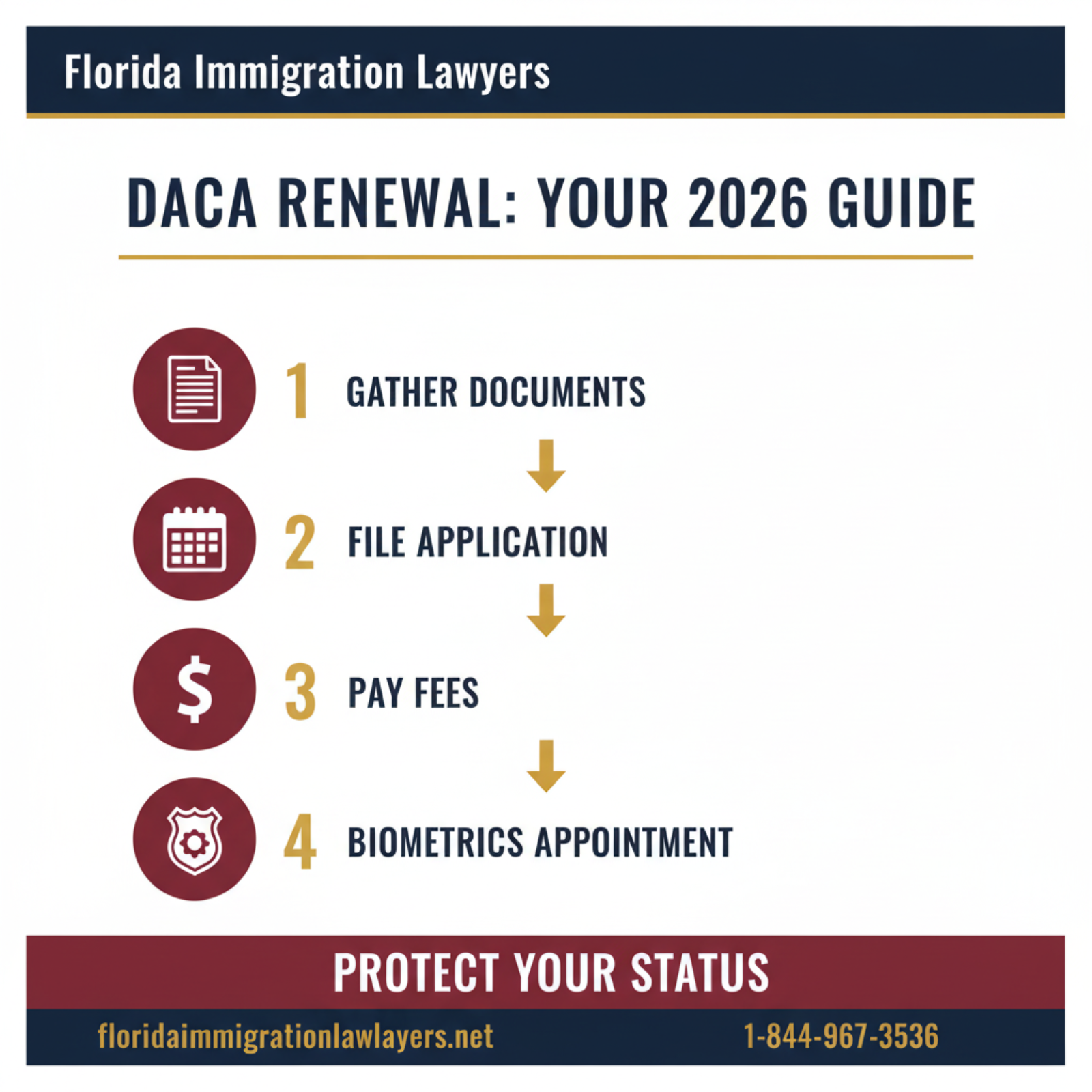
For DACA recipients in Florida, renewing your status is a critical step to maintain your protections. The process requires careful attention to detail and timely submission. Here is a general step-by-step guide:
-
Determine Your Eligibility: You must still meet the initial DACA guidelines, including having continuously resided in the U.S. since June 15, 2007, and not having been convicted of a felony or certain misdemeanors. Ensure you have not departed the U.S. without advance parole since August 15, 2012.
-
Gather Necessary Documents: Collect all required supporting documentation. This includes previous DACA approval notices, identity documents, and any new evidence related to your continuous presence or education since your last application. We will detail this in the next section.
-
Complete the Forms: You will need to accurately complete Form I-821D, Consideration of Deferred Action for Childhood Arrivals; Form I-765, Application for Employment Authorization; and Form I-765 Worksheet. Pay close attention to all questions and provide truthful answers. Any discrepancies can lead to delays or denials.
-
Prepare the Filing Fees: As of 2026, USCIS fees for DACA renewal and employment authorization are subject to change. Do not include specific fee amounts as they can fluctuate, but be prepared to pay the required fee for Form I-821D and Form I-765, which includes the biometrics service fee. Fee waivers are rarely available for DACA renewals. You can find the most current fees on the USCIS website.
-
Submit Your Application: Mail your complete application package to the correct USCIS lockbox facility. The specific address depends on your state of residence, so always verify the correct mailing address on the USCIS website. We recommend sending it via certified mail with a return receipt.
-
Attend Biometrics Appointment: After USCIS receives your application, you will typically receive a notice for a biometrics appointment at an Application Support Center (ASC). This appointment is mandatory for fingerprinting and photographs. Be sure to attend this appointment or reschedule if absolutely necessary.
-
Monitor Your Case Status: You can track the status of your application online using the receipt number provided by USCIS. Be prepared for potential processing delays, especially given the current legal climate and high volume of applications.
Essential Documents for Your DACA Application or Renewal
Having all your documents in order is crucial for a successful DACA renewal. A missing document can significantly delay your application or even lead to a denial. Here is a checklist of documents you will generally need:
- A copy of your previous DACA approval notice (Form I-797).
- A copy of your current Employment Authorization Document (EAD).
- Proof of identity (e.g., passport, birth certificate with photo ID, school ID).
- Evidence of continuous residence in the U.S. since June 15, 2007 (e.g., school records, medical records, employment records, utility bills, tax returns).
- Proof of entry into the U.S. before your 16th birthday (e.g., passport with entry stamp, I-94 arrival/departure record).
- School records (transcripts, diplomas, GED certificates) if applicable.
- Military records (DD-214) if applicable.
- Any police records or court dispositions for any arrests or convictions, even if expunged or dismissed.
- Marriage certificate if your name has changed.
- Two passport-style photos taken within 30 days of filing.
DACA Processing Times and Expectations for 2026 in Florida
One of the most common questions from DACA recipients in Florida is, "How long is it taking to renew DACA in 2026?" Processing times can vary significantly based on USCIS workload, the specific service center handling your case, and any ongoing policy changes. Generally, USCIS aims to process DACA renewals within a few months, but delays are not uncommon.
Factors Affecting Processing Delays
Several factors can influence how long your DACA renewal takes. These include incomplete applications, requests for additional evidence (RFEs), background check delays, and the sheer volume of applications USCIS receives. In Florida, applications are typically processed through the Nebraska or California Service Centers, which have their own backlogs.
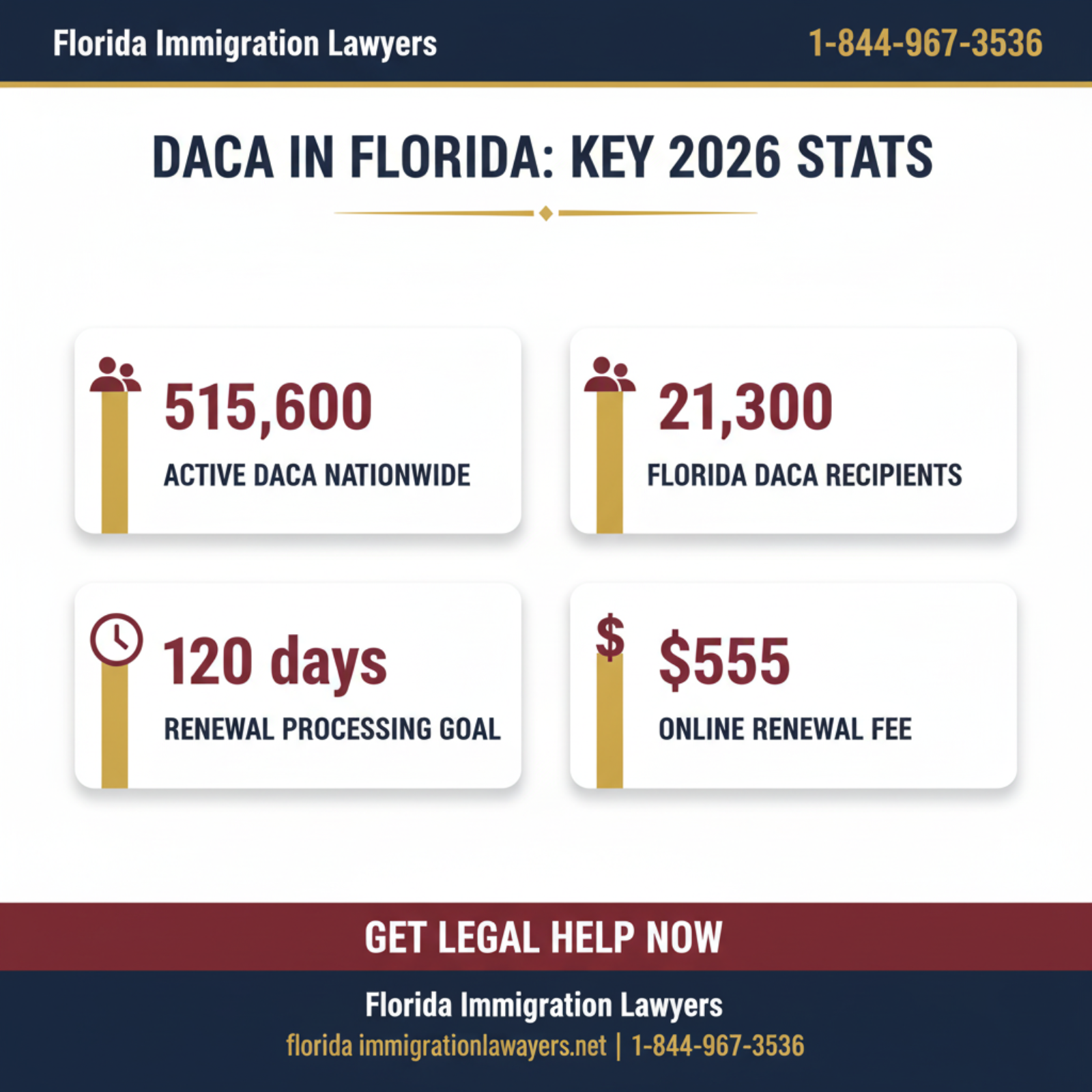
It is highly advisable to submit your DACA renewal application well in advance of your current EAD's expiration date. USCIS recommends filing between 120 and 150 days (approximately 4-5 months) before expiration. This proactive approach helps prevent any lapse in your work authorization and protection from deportation. You can check current processing times on the USCIS website, but remember these are estimates and not guarantees.
DACA Cost Factors and Fee Breakdown
Understanding the financial aspects of DACA renewal is essential for planning. The primary costs associated with renewing DACA include USCIS filing fees and potential legal fees if you choose to work with an attorney. It is important to remember that USCIS fees are subject to change, so always verify the current amounts on their official website.
USCIS Filing Fees
As of early 2026, the USCIS fees for DACA renewal typically include a fee for Form I-821D and Form I-765, which also covers the biometrics service fee. These fees are non-refundable, even if your application is denied. It is crucial to submit the correct payment amount and method, as incorrect payments can lead to your application being rejected. USCIS accepts checks, money orders, and sometimes credit card payments using Form G-1450, Authorization for Credit Card Transactions.
Legal Fees and Financial Assistance
While not mandatory, retaining an experienced immigration attorney can significantly increase your chances of a successful DACA renewal, especially if your case has complexities. Legal fees vary depending on the firm and the specifics of your situation. Some non-profit organizations offer assistance or reduced fees for DACA renewals. Always inquire about fee structures during your initial consultation. Florida Immigration Lawyers offers free consultations to discuss your DACA renewal needs and associated costs.
Do not let fear or confusion prevent you from taking action. Do not navigate this process alone. Contact Florida Immigration Lawyers today to ensure your DACA renewal is handled correctly and efficiently.
Common Mistakes DACA Applicants in Florida Must Avoid
Renewing DACA can be a straightforward process for many, but certain mistakes can lead to significant delays or even denial. Being aware of these pitfalls can help you avoid unnecessary complications:
-
Failing to Renew on Time: The most critical mistake is letting your DACA status expire. USCIS recommends filing 120-150 days before expiration. A lapse can result in loss of work authorization and potential exposure to deportation. If your DACA expires, you may lose continuous presence and could be subject to removal proceedings.
-
Incomplete or Incorrect Forms: Submitting forms with missing information, incorrect answers, or outdated addresses can lead to an RFE (Request for Evidence) or outright denial. Double-check every field for accuracy.
-
Not Disclosing All Criminal History: Even minor arrests, expunged records, or dismissed charges must be disclosed. Failure to do so can be considered misrepresentation and lead to severe immigration consequences, including denial and potential deportation proceedings.
-
Submitting Incorrect Filing Fees: USCIS fees change periodically. Always verify the current fee amounts on the official USCIS website. Sending an incorrect amount will cause your application to be rejected and returned.
-
Mailing to the Wrong Address: USCIS has specific lockbox facilities for different types of applications and states. Mailing your DACA renewal to the wrong address will delay processing. Confirm the correct mailing address on the USCIS website.
-
Not Responding to RFEs or NOIDs: If USCIS sends a Request for Evidence (RFE) or a Notice of Intent to Deny (NOID), you must respond promptly and thoroughly. Ignoring these notices will almost certainly lead to a denial.
-
Traveling Internationally Without Advance Parole: DACA does not inherently grant the right to travel abroad. Leaving the U.S. without an approved advance parole document (Form I-131) can result in being unable to re-enter the country and the automatic termination of your DACA status.
-
Assuming Eligibility Remains Unchanged: Your eligibility for DACA can be affected by new criminal convictions, periods of unauthorized travel, or changes in your residence. Always re-evaluate your eligibility criteria before renewal.
-
Not Keeping Copies of Everything: Always make copies of your entire application package, including all forms, supporting documents, and the payment method, before mailing it. This serves as proof of submission and helps if documents are lost.
-
Failing to Seek Legal Advice for Complex Cases: If you have any criminal history, prior immigration violations, or an expired DACA, attempting to renew without legal counsel can be very risky. An attorney can assess your situation and advise on the best course of action.
When to Call a Florida Immigration Lawyer for DACA Assistance
While some DACA renewals may seem straightforward, the evolving legal landscape and the potential for severe consequences make legal counsel invaluable. Here are specific scenarios where contacting Florida Immigration Lawyers is highly recommended:
-
Any Criminal History: Even minor arrests, traffic violations that resulted in an arrest, or interactions with law enforcement can impact your DACA eligibility. An attorney can analyze your record and advise on disclosure and potential impact.
-
Prior Immigration Issues: If you have ever been in deportation or removal proceedings, had a prior visa overstay, or any other immigration violation, your DACA renewal becomes complex. Our attorneys can help you understand these intricacies.
-
Expired DACA Status: If your DACA has already expired, especially for an extended period, the renewal process can be more challenging. We can assess if you can still renew and guide you through the necessary steps.
-
Requests for Evidence (RFEs) or Notices of Intent to Deny (NOIDs): Receiving one of these from USCIS indicates a problem with your application. A lawyer can help you formulate a comprehensive and timely response.
-
Travel History Outside the U.S.: If you have traveled outside the U.S. without advance parole, or if your advance parole was for a reason other than humanitarian, educational, or employment, your DACA status might be jeopardized.
-
Considering Other Immigration Pathways: If you are exploring options beyond DACA, such as family-based immigration, employment-based visas, or even citizenship, an attorney can help you understand how DACA interacts with these processes.
-
General Confusion or Anxiety: The DACA process can be stressful. If you feel overwhelmed or simply want peace of mind that your application is perfect, our team at Florida Immigration Lawyers is here to help.
Is DACA accepted in Florida? Yes, DACA is a federal program, and its protections are recognized in Florida. However, state-specific laws and policies can sometimes affect DACA recipients in other areas, such as professional licensing. For legal assistance on federal immigration matters, including DACA, our firm serves all of Florida, including Pembroke Pines and surrounding communities.
Can DACA recipients get deported by ICE? While DACA provides temporary protection from deportation, it is not absolute. DACA status can be terminated if an individual commits certain crimes, poses a public safety threat, or violates other DACA terms. In such cases, DACA recipients can indeed be subject to deportation by ICE. This underscores the importance of adhering to all laws and seeking legal counsel if you have any contact with law enforcement.
About Florida Immigration Lawyers
Florida Immigration Lawyers is a leading immigration law firm dedicated to serving individuals and families across the entire state of Florida. With years of experience and a deep understanding of complex U.S. immigration laws, we are committed to providing compassionate, effective, and personalized legal representation.
Our firm specializes in a wide range of immigration services, including DACA renewals, family-based petitions, deportation defense, asylum claims, naturalization, and business immigration. We pride ourselves on our client-focused approach, ensuring that every individual receives the attention and expert advice they deserve. We understand the unique challenges faced by immigrants in Florida and strive to be a trusted resource for our community.
Why Choose Florida Immigration Lawyers?
- Experience: Our attorneys have extensive experience in all facets of immigration law.
- Client-Centered: We prioritize your needs and work tirelessly to achieve the best possible outcomes.
- Accessibility: We are available 24/7 to address your urgent concerns.
- Free Consultations: We offer free, no-obligation consultations to discuss your case.
- Bilingual Services: Our team is fluent in English and Spanish, ensuring clear communication.
- Statewide Service: We represent clients in Pembroke Pines and all other Florida cities.
Visit us at https://www.floridaimmigrationlawyers.net or call us anytime at 1-844-967-3536.
Sources and References
- U.S. Citizenship and Immigration Services (USCIS)
- Executive Office for Immigration Review (EOIR)
- 8 U.S.C. Chapter 12 - Immigration and Nationality Act (INA)
- INA Section 235(b)(1)(A)(iii) - Expedited Removal
- 8 CFR § 274a.12(c)(14) - Employment Authorization for DACA Recipients
- USCIS DACA Information Page
This article provides general legal information and is not intended as legal advice. Every case is unique, and outcomes depend on specific facts and circumstances. Contact an attorney for advice about your particular situation. Immigration laws are subject to change.
Navigating DACA news 2026 in Florida requires vigilance and accurate information. Whether you are renewing your DACA status or have questions about your future, Florida Immigration Lawyers is here to support you every step of the way. Our commitment is to provide expert legal guidance and peace of mind.
Do not leave your future to chance. Contact Florida Immigration Lawyers today at 1-844-967-3536 for a free, confidential consultation. Se Habla Español - Estamos aquí para ayudarle.
Do Not Navigate This Process Alone
Our experienced immigration attorneys are ready to fight for you. Get a free, confidential consultation today.
Se Habla Español
Frequently Asked Questions
Florida Immigration Lawyers
Immigration Attorney | Founder, Vasquez Law Firm
U.S. Air Force veteran and immigration attorney with thousands of cases resolved. J.D., NCCU School of Law. AILA member. Admitted to the 4th, 5th, and 11th Circuit Courts.
Available 24/7 - Free Evaluations
Related Legal Services
Our Florida immigration attorneys can help you with business immigration, asylum protection and deportation defense. Call today at 1-844-967-3536 for a free consultation.
Related Links
Related Topics
Free Legal Consultation
Discuss your case with our experienced attorneys. We're available 24/7.
Se Habla Español - Estamos aquí para ayudarle.
Related Articles
Immigration Rights in Florida: Know Your Legal Protections
Navigating immigration law in Florida can be complex, especially when facing potential encounters with Immigration and Customs Enforcement (ICE). This comprehensive guide empowers you with essential immigration rights, detailing your legal protections and what to do if you or a loved one are stopped or detained. Learn how to protect yourself, avoid critical mistakes, and understand the crucial role of legal counsel in safeguarding your future in Florida. From Homestead to Miami, knowing your rights is your first line of defense against deportation and legal challenges. Contact Florida Immigration Lawyers for a free consultation.
Unlawful Presence Waiver in Florida: A Guide | VLF Florida
Discover how the unlawful presence waiver can help immigrants in Florida. Learn about eligibility, application steps, and common mistakes to avoid. Contact Florida Immigration Lawyers for a free consultation.
Citizenship Test Preparation Florida: Your Guide to
Preparing for the U.S. citizenship test in Florida is a critical step towards naturalization. This comprehensive guide from Florida Immigration Lawyers covers understanding the English and civics tests, a step-by-step application process, essential documents, and effective preparation strategies. Learn about common mistakes to avoid and when to seek legal counsel for complex cases. Our experienced attorneys serve clients across Florida, including Gainesville, providing personalized support to help you achieve your dream of becoming a U.S. citizen. Contact us for a free consultation and navigate your naturalization journey with confidence and expert guidance.
Immigration Lawyer Sarasota Bradenton Florida | VLF Florida
Discover how an immigration lawyer in Sarasota and Bradenton, Florida, can help you navigate complex immigration processes. Contact Florida Immigration Lawyers for expert guidance.