DACA News 2026 Florida: Essential Updates for Dreamers
Stay current on DACA news 2026 and its impact on Dreamers in Florida. This guide covers the latest legal updates, step-by-step DACA renewal processes, essential documents, and expected processing times. Learn about the federal court injunctions affecting new applications while renewals generally proceed. Understand common mistakes to avoid and when it's crucial to seek legal assistance. Florida Immigration Lawyers offers comprehensive support for DACA recipients, providing expert guidance through complex immigration laws. We are dedicated to helping you protect your status and plan for your future. Contact us for a free consultation and personalized advice on your DACA case.
DACA faces ongoing legal challenges in 2026, affecting new applications but generally permitting renewals. While federal courts have paused initial DACA requests, existing recipients in Florida can typically renew their status, preserving work authorization and deportation protection. Staying informed about DACA news 2026 is crucial, as policies can change. Consult an immigration lawyer for personalized guidance.
- New DACA applications remain paused due to litigation.
- Current DACA recipients in Florida are generally eligible for renewal.
- DACA provides work authorization and deportation protection.
- Federal court decisions continue to shape DACA's future.
- Legal counsel is vital for navigating DACA complexities.
For thousands of young people in Florida, the Deferred Action for Childhood Arrivals (DACA) program represents hope and stability. However, the program has been embroiled in legal battles, creating significant uncertainty for Dreamers across the state and the nation. If you are a DACA recipient or have a family member relying on this program, understanding the latest DACA news 2026 is absolutely critical.
This comprehensive guide from Florida Immigration Lawyers will walk you through the current legal landscape, renewal processes, and what you can expect as a DACA recipient in Florida in 2026. We understand the anxieties you face, and our goal is to provide clear, actionable information. We are here to help you navigate these complex federal immigration laws.
Do not face these challenges alone. For personalized advice and to discuss your specific situation, call Florida Immigration Lawyers at 1-844-967-3536 for a free consultation. Our experienced team is ready to assist you in Tallahassee, Miami, Orlando, and across all of Florida. You can also explore our general immigration services for more information.
Understanding DACA in 2026: A Florida Perspective
The Deferred Action for Childhood Arrivals (DACA) program was established in 2012 to provide certain young undocumented immigrants who came to the U.S. as children with protection from deportation and a renewable two-year work permit. While DACA is a federal program, its impact on Florida's vibrant immigrant communities is profound.
In 2026, the DACA program continues to operate under the cloud of ongoing litigation. A federal court ruling has largely prevented USCIS from approving new DACA applications. This means that if you have never received DACA before, you are generally unable to apply for it at this time. This is a critical piece of DACA news 2026 for aspiring Dreamers.
However, for current DACA recipients in Florida, the good news is that USCIS is generally still accepting and processing DACA renewal applications. This allows eligible individuals to maintain their protected status and work authorization. It is essential to stay updated on any judicial decisions or legislative efforts that could alter this situation.
Florida is home to one of the largest populations of DACA-eligible individuals and recipients in the country. Our state's unique demographics mean that any changes to DACA policy have significant ripple effects, from our schools to our economy. Understanding your rights and responsibilities under DACA is paramount.
The legal framework surrounding DACA is complex, often referencing sections of the Immigration and Nationality Act (INA). For example, DACA eligibility often involves demonstrating no unlawful presence prior to June 15, 2012, and meeting other specific criteria, as outlined in USCIS policy. While DACA offers temporary relief, it does not provide a pathway to U.S. citizenship.
Navigating DACA Renewal in 2026: Your Step-by-Step Guide
If you are a current DACA recipient in Florida, renewing your status is vital to maintain your protection from deportation and your work authorization. The renewal process in 2026 generally follows established USCIS procedures. Here is a step-by-step guide to help you:
-
Check Your Eligibility: Ensure you continue to meet DACA guidelines. You must not have departed the U.S. without advance parole since August 15, 2012, and must not have been convicted of a felony, a significant misdemeanor, or three or more other misdemeanors, and not pose a threat to national security or public safety.
-
Gather Required Documents: Collect all necessary paperwork. This includes your previous DACA approval notices, any documentation of new addresses, updated biographical information, and passport-style photos. Having all documents ready streamlines your application.
-
Complete the Forms: You will need to accurately fill out Form I-821D (Consideration of Deferred Action for Childhood Arrivals), Form I-765 (Application for Employment Authorization), and Form I-765 Worksheet. Pay close attention to all questions and provide truthful, complete answers.
-
Prepare Your Filing Fees: As of 2026, USCIS fees are subject to change, so always check the most current fee schedule on the USCIS website. The DACA renewal application typically includes a fee for Form I-821D, Form I-765, and the biometrics services fee. Do not send cash; use a money order, personal check, cashier's check, or pay by credit card using Form G-1450.
-
Submit Your Application: Mail your completed forms and supporting documents to the correct USCIS lockbox facility. The mailing address depends on your state of residence. For Florida residents, ensure you send it to the appropriate lockbox. Keep a copy of your entire application package for your records.
-
Attend Biometrics Appointment: After USCIS accepts your application, you will receive a notice for a biometrics appointment at an Application Support Center (ASC). This appointment is mandatory for fingerprinting, photographs, and signature collection. Be sure to attend on time at your assigned Florida ASC location.
-
Monitor Your Case Status: You can track the status of your DACA renewal application online using the receipt number provided by USCIS. Stay vigilant for any requests for additional evidence (RFEs) and respond promptly. Understanding these steps is crucial for a smooth renewal process.
Timing is Everything: When to File Your DACA Renewal
USCIS recommends filing your DACA renewal application 120 to 150 days (approximately four to five months) before your current DACA and Employment Authorization Document (EAD) expire. Filing within this window helps prevent any lapse in your work authorization and protection from removal. Filing too early might result in rejection, while filing too late could leave you vulnerable.
Understanding Advance Parole for DACA Recipients
While DACA protects you from deportation within the U.S., international travel requires Advance Parole. This document allows DACA recipients to travel abroad and lawfully return to the U.S. without jeopardizing their DACA status. Traveling outside the U.S. without approved Advance Parole can lead to serious immigration consequences, including being barred from re-entry and potential loss of DACA. Always consult an attorney before planning international travel.
Essential Documents for Your DACA Application or Renewal
A complete and accurate application package is vital for a successful DACA renewal. Missing or incorrect documents can lead to delays or even denial. Here is a checklist of documents you will typically need to submit:
- Copies of your previous DACA approval notices (Form I-797C, Notice of Action).
- Copy of your current Employment Authorization Document (EAD).
- Proof of identity, such as a copy of your passport, birth certificate with photo ID, or school ID with photo.
- Proof of continuous residence in the U.S. since June 15, 2007. This can include school records, employment records, tax returns, utility bills, or medical records.
- Proof that you came to the U.S. before your 16th birthday, such as school transcripts, medical records, or a birth certificate.
- Proof of your presence in the U.S. on June 15, 2012, and at the time of filing your DACA request.
- Proof of your education (e.g., school transcripts, diplomas) or military service (e.g., DD Form 214).
- Two identical passport-style photographs taken within 30 days of filing.
- The exact filing fees (check USCIS website for current amounts).
- Any court dispositions or police records if you have had any arrests or convictions since your last DACA approval.
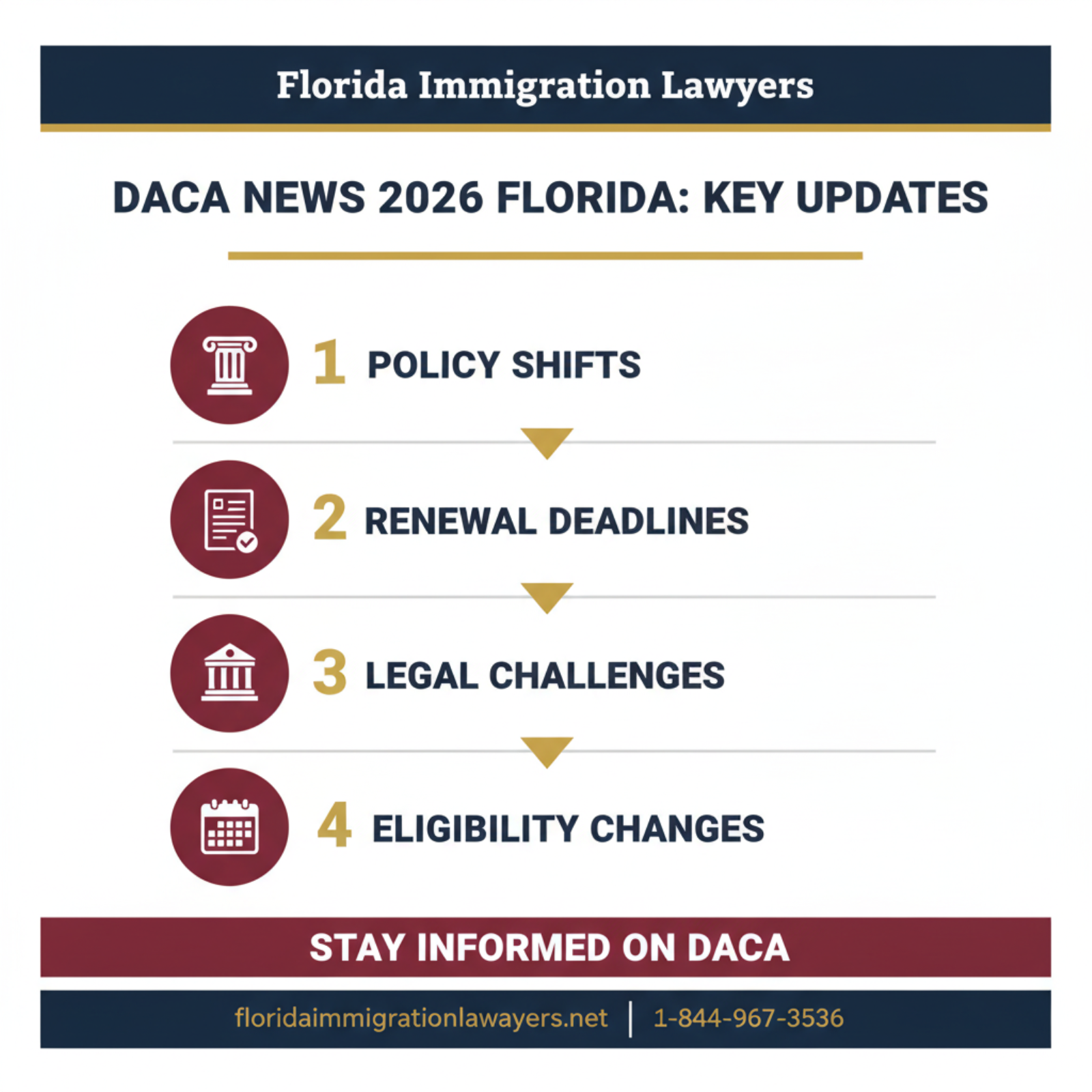
Organizing these documents meticulously will greatly assist your application process. Remember to send copies, not original documents, unless specifically requested by USCIS. Keeping a personal copy of your entire submission is also a best practice.
DACA Processing Times and What to Expect in Florida
Understanding processing times is key to managing expectations for your DACA renewal. USCIS processing times can vary significantly based on the service center workload, the complexity of your case, and whether you respond promptly to any requests for evidence. This is important DACA news 2026 for all applicants.
Generally, DACA renewal applications can take anywhere from a few weeks to several months to process. USCIS provides estimated processing times on their website, which you should consult regularly. For Florida residents, your application will typically be handled by a national service center, but your biometrics appointment will be at a local Application Support Center (ASC) in cities like Miami, Orlando, or Tampa.
Factors Affecting DACA Processing Times:
- Volume of Applications: High numbers of applications can create backlogs and extend processing times.
- Completeness of Application: Incomplete applications or those requiring additional evidence (RFEs) will take longer.
- Background Checks: Security checks are a mandatory part of the process and can vary in duration.
- Policy Changes: Legal or administrative changes to the DACA program can impact processing.
You will receive a receipt notice from USCIS after they accept your application. This notice contains a receipt number that allows you to check your case status online. If your case goes beyond the posted processing times, you may be able to submit an inquiry with USCIS. However, patience is often required.
Understanding DACA Fees and Costs in 2026
The financial aspect of DACA renewal is a significant consideration for many Dreamers. USCIS fees for DACA applications and renewals are subject to change. It is crucial to always check the official USCIS website for the most current fee schedule before preparing your application.
Typically, the DACA renewal fee includes the Form I-821D fee, the Form I-765 (Application for Employment Authorization) fee, and a biometrics services fee. These fees are combined into a single payment. It is important to note that these fees are non-refundable, even if your application is denied.
Beyond the government filing fees, you may also incur other costs. These can include fees for obtaining supporting documents (such as birth certificates or school transcripts), passport-style photos, and mailing costs. While not mandatory, many DACA recipients choose to hire an immigration attorney to assist with their application.

Legal fees for professional assistance can vary, but the value of expert guidance is often immeasurable. An attorney can help ensure your application is complete, accurate, and submitted correctly, potentially saving you from delays or denials. Many non-profit organizations also offer low-cost or free legal services for DACA renewals, and some may provide financial assistance for filing fees.
Do not let the complexities of the DACA renewal process overwhelm you. Do not navigate this process alone. Contact Florida Immigration Lawyers today. We are here to provide the experienced legal support you need.
Common Mistakes to Avoid in Your DACA Application or Renewal
Navigating the DACA process requires meticulous attention to detail. Avoiding common pitfalls can save you significant time, stress, and potential adverse outcomes. Here are some frequent mistakes DACA applicants and renewers should be aware of:
-
Filing Too Late: Submitting your renewal application after the recommended 120-150 day window before expiration can lead to a lapse in your work authorization and protection from deportation. This could severely impact your employment and daily life.
-
Incomplete Application: Failing to fill out every required section of Forms I-821D, I-765, and the I-765 Worksheet, or missing crucial supporting documents, will result in a Request for Evidence (RFE) or outright rejection. This significantly delays processing.
-
Incorrect Filing Fees: Sending an incorrect payment amount or an expired payment method will cause your application to be rejected. Always verify the current fees on the USCIS website and ensure your payment is valid.
-
Not Disclosing Criminal History: Any past arrests, charges, or convictions, no matter how minor, must be fully disclosed. Failure to do so can be considered misrepresentation and lead to a denial, potentially jeopardizing your immigration future.
-
Failing to Update Address: USCIS must always have your current mailing address. If you move, you must notify USCIS within 10 days using Form AR-11. Missing important notices, such as RFEs or appointment letters, can lead to case abandonment.
-
Traveling Internationally Without Advance Parole: Leaving the U.S. without an approved Form I-131, Application for Travel Document (Advance Parole), can result in being denied re-entry and the automatic termination of your DACA status. This is a severe consequence.
-
Not Keeping Copies of Everything: Always make and keep a complete copy of your entire application package, including all forms, supporting documents, and the check or money order used for payment. This is essential for your records and if USCIS requests duplicates.
-
Ignoring Requests for Evidence (RFEs): If USCIS sends an RFE, it means they need more information. Failing to respond fully and on time will almost certainly lead to a denial of your application, requiring you to start the process over.
-
Assuming Eligibility: DACA eligibility criteria can be complex, especially with legal challenges. Do not assume you meet all requirements without a thorough review. Changes in your personal circumstances might affect your eligibility.
-
Using Outdated Forms: USCIS frequently updates its forms. Always download the latest version directly from the USCIS website. Using an outdated form will lead to rejection of your application.
-
Not Seeking Legal Advice for Complex Cases: If you have any criminal history, prior immigration issues, or questions about your eligibility, attempting to navigate the process alone can be risky. An attorney can identify potential problems and offer solutions.
When to Call a Lawyer for Your DACA Case in Florida
While some DACA renewals may seem straightforward, the program's unstable legal status and the complexities of immigration law mean that seeking legal counsel is often the wisest course of action. Florida Immigration Lawyers are here to provide the expertise you need, especially concerning DACA news 2026 and its implications.
You should strongly consider contacting an attorney if any of the following scenarios apply to you:
- You are a first-time applicant: Although new DACA applications are currently paused, the legal landscape could change. An attorney can advise you on potential future opportunities and prepare you.
- You have any criminal history: Even minor arrests or convictions can impact your DACA eligibility. An attorney can assess your record and advise on the best strategy.
- You have a prior deportation order or removal proceedings: These situations are highly complex and require specialized legal intervention. Do not attempt to address them without legal representation.
- You have traveled outside the U.S. without Advance Parole: This can have severe consequences for your DACA status. An attorney can help evaluate your situation and potential remedies.
- You have received a Request for Evidence (RFE) or Notice of Intent to Deny (NOID): These notices indicate a problem with your application that needs a precise and timely legal response.
- Your DACA application was denied: An attorney can help you understand the reasons for denial and explore options for appeal or re-filing.
- You need to apply for Advance Parole: Navigating the Advance Parole application process (Form I-131) requires careful planning to ensure you meet all criteria for travel and re-entry.
- You have questions about potential pathways to citizenship or other relief: While DACA itself does not lead to a green card, an attorney can assess if you qualify for other immigration benefits, potentially through family immigration or other avenues.
Our attorneys at Florida Immigration Lawyers stay abreast of all federal court decisions and USCIS policy updates related to DACA. We serve clients throughout Florida, including Tallahassee, Miami, and Orlando, providing dedicated and compassionate representation. Our goal is to protect your rights and help you secure your future.
About Florida Immigration Lawyers
Florida Immigration Lawyers is a leading immigration law firm dedicated to serving individuals and families across the entire state of Florida. With years of experience and a deep understanding of complex U.S. immigration laws, our team is committed to providing exceptional legal representation and compassionate support to our clients. We pride ourselves on our client-focused approach, ensuring that your unique needs are met with personalized strategies.
Our firm offers a wide range of immigration services, including DACA renewals, family-based petitions, employment visas, asylum claims, deportation defense, and naturalization assistance. We understand the profound impact immigration matters have on your life and future, which is why we fight tirelessly for the best possible outcomes. Our attorneys are not just legal professionals; they are advocates who truly care about your journey.
When you choose Florida Immigration Lawyers, you gain a trusted partner who will stand by you every step of the way. We offer free consultations to discuss your case and explain your options clearly. Our firm is available 24/7, because we know that immigration issues do not adhere to a 9-to-5 schedule. Contact us today to learn how our dedicated attorneys can help you achieve your immigration goals.
Phone: 1-844-967-3536
Website: https://www.floridaimmigrationlawyers.net
Serving: All of Florida
Sources and References
- U.S. Citizenship and Immigration Services (USCIS) - Deferred Action for Childhood Arrivals (DACA)
- U.S. Citizenship and Immigration Services (USCIS) - Check Case Processing Times
- U.S. Department of Justice - Executive Office for Immigration Review (EOIR)
- 8 U.S.C. Chapter 12 - Immigration and Nationality Act (INA)
- INA Section 101(a)(49) - Definition of Unlawful Presence
- 8 CFR 274a.12(c)(33) - Employment Authorization for DACA Recipients
This article provides general legal information and is not intended as legal advice. Every case is unique, and outcomes depend on specific facts and circumstances. Contact an attorney for advice about your particular situation.
The future of DACA can be uncertain, but your path forward doesn't have to be. Stay informed about DACA news 2026 and take proactive steps to protect your status. Our dedicated team at Florida Immigration Lawyers is committed to assisting you through every challenge. We offer free, confidential consultations to discuss your DACA renewal or any other immigration concerns you may have. Your peace of mind is our priority.
Call Florida Immigration Lawyers today at 1-844-967-3536 for your free consultation. Se Habla Español - Estamos aquí para ayudarle.
Need help with Immigration?
Our Florida immigration attorneys offer free consultations. Call today or schedule online.
Florida Immigration Lawyers
Legal Team
Our experienced attorneys at Florida Immigration Lawyers have been serving clients across Florida for over 20 years. We specialize in immigration, personal injury, criminal defense, workers compensation, and family law.