Citizenship Test Questions 2026 Florida: Your Essential
Navigating the U.S. citizenship test questions for 2026 in Florida can be challenging, but with the right preparation, you can succeed. This comprehensive guide from Florida Immigration Lawyers covers what to expect from the civics test, the naturalization process steps, essential documents, and common pitfalls to avoid. Learn about the 2008 civics test version, eligibility requirements, and how to prepare for your interview. Our firm provides legal assistance to ensure your application is strong and your path to U.S. citizenship is smooth. Contact us for a free consultation.
The U.S. citizenship test for 2026 in Florida primarily involves the civics test, which consists of 100 questions from which you will be asked 10-20. You must answer 60% correctly to pass. While the 2020 civics test version was rescinded, applicants generally take the 2008 version. Preparation is key for this crucial step in becoming a U.S. citizen.
- Applicants typically take the 2008 version of the civics test.
- You must correctly answer 6 out of 10 questions to pass.
- The test covers U.S. history, government, and civics.
- Study materials are available from USCIS to help you prepare.
- An experienced immigration lawyer can guide you through the naturalization process.
Are you a green card holder in Florida, dreaming of becoming a U.S. citizen? The path to naturalization culminates with the citizenship test, a pivotal step that can seem daunting. Understanding the citizenship test questions 2026 is crucial for anyone in Pembroke Pines, Miami, Orlando, or anywhere across Florida preparing for this significant milestone. This guide from Florida Immigration Lawyers will demystify the process, offer valuable study tips, and highlight how our dedicated team can support your journey.
The thought of facing an immigration officer and answering questions about U.S. history and government can be intimidating. However, with proper preparation and reliable legal guidance, you can approach your naturalization interview with confidence. We are here to help you navigate every aspect of the process, ensuring you understand what to expect.
Do not let uncertainty delay your citizenship dreams. For personalized advice and comprehensive support, call Florida Immigration Lawyers at 1-844-YO-PELEO for a free consultation. Our team is ready to assist you.
Understanding the Citizenship Test Questions 2026 in Florida
The U.S. citizenship test, often referred to as the civics test, is a standardized oral examination administered by U.S. Citizenship and Immigration Services (USCIS) during your naturalization interview. For 2026, the general expectation is that applicants will continue to be tested on the 2008 version of the civics test. This version consists of 100 questions covering American history, government, and civics principles.
During your interview, a USCIS officer will ask you up to 10 questions from this list of 100. To pass the civics test, you must correctly answer at least 6 of the 10 questions. If you are 65 years or older and have been a lawful permanent resident for at least 20 years, you may be eligible to take a simpler version of the test, asked in English or your native language with an interpreter.
It is important to note the history of the test. A revised 2020 civics test was introduced but was later rescinded. This means that for applicants filing Form N-400, Application for Naturalization, on or after March 1, 2021, the 2008 civics test is the standard. Florida's diverse population, including many residents in areas like Pembroke Pines, benefits from clear guidance on these requirements.
Beyond the civics portion, the citizenship interview also includes an English test. This part assesses your ability to read, write, and speak basic English. The officer will evaluate your speaking ability throughout the interview, and you will be asked to read one out of three sentences correctly and write one out of three sentences dictated to you correctly.
Preparing for these citizenship test questions 2026 is a crucial step. USCIS provides official study materials, including the list of 100 civics questions and their answers, as well as vocabulary lists for the English reading and writing tests. Utilizing these resources is highly recommended for all applicants.
The Naturalization Process: A Step-by-Step Guide for Florida Residents
Becoming a U.S. citizen involves several distinct stages, each requiring careful attention to detail and adherence to specific legal requirements. Understanding this process is vital for successful naturalization, especially for those in Florida.
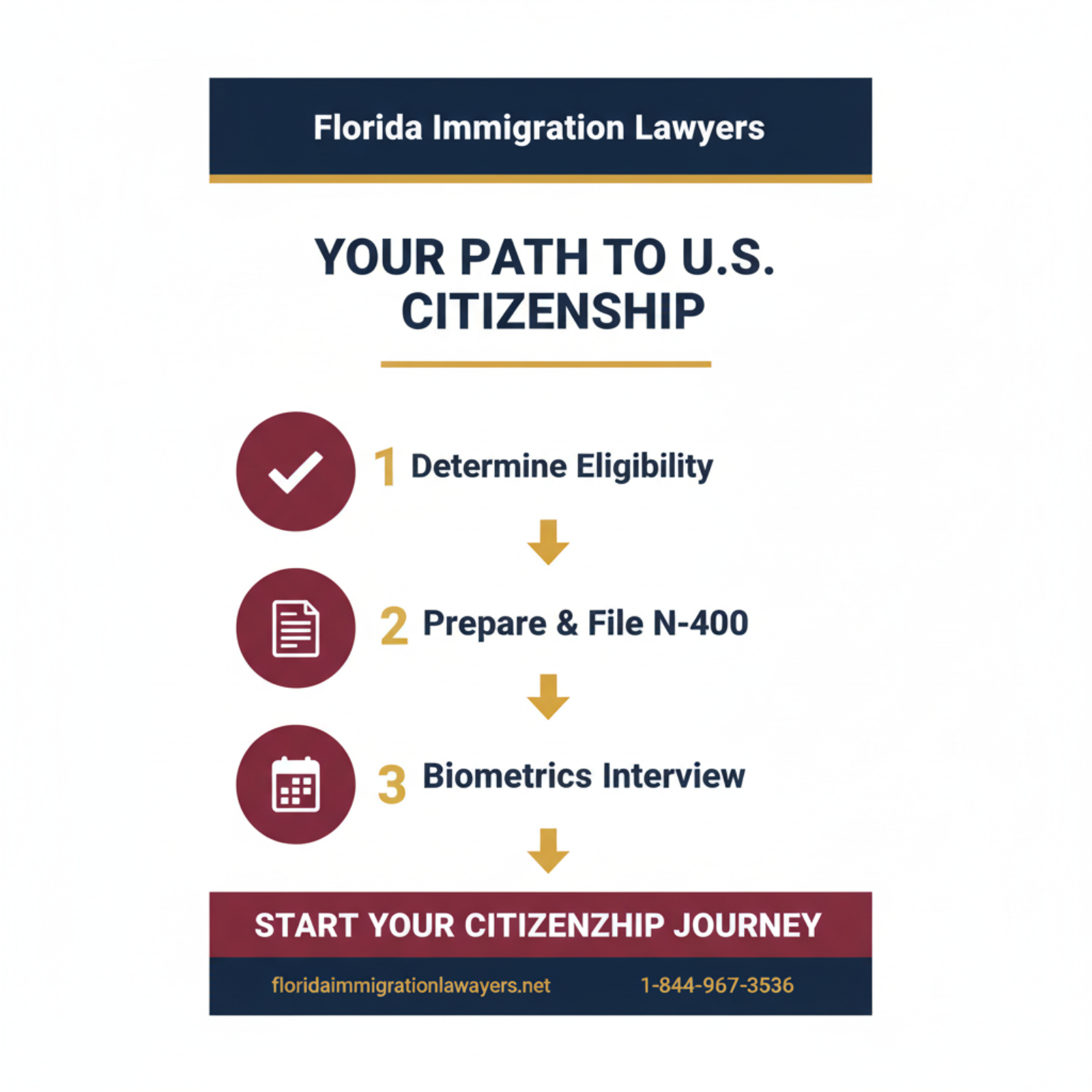
- Determine Eligibility: Before you begin, ensure you meet the basic requirements for naturalization. Generally, you must be at least 18 years old, be a lawful permanent resident (green card holder) for at least five years (or three years if married to a U.S. citizen), demonstrate good moral character, and have continuous residence and physical presence in the U.S. (refer to 8 U.S.C. § 1427 and 8 U.S.C. § 1430 for specifics).
- Prepare and File Form N-400: This is the official application for naturalization. It requires extensive personal information, details about your residency, travel history, marital status, and good moral character. Accuracy and completeness are paramount. An experienced immigration lawyer can help you meticulously prepare this form.
- Attend Biometrics Appointment: After filing, USCIS will send you an appointment notice for biometrics collection. This typically involves fingerprinting, photographs, and a signature, used for background checks and identity verification.
- Attend the Naturalization Interview: This is where you will face the USCIS officer and undergo the English and civics tests, including the citizenship test questions 2026. The officer will also review your N-400 application and ask questions about your eligibility. Being prepared for both the factual questions and the interview environment is key.
- Receive a Decision: After the interview, the USCIS officer will issue a decision. This could be an approval, a continuance (request for more evidence or a second interview), or a denial.
- Take the Oath of Allegiance: If your application is approved, you will receive a notice for your Oath of Allegiance ceremony. This is the final step where you formally pledge loyalty to the United States and officially become a U.S. citizen.
Eligibility Requirements for Naturalization
To be eligible for U.S. citizenship, applicants must meet several criteria. These generally include being a Lawful Permanent Resident (LPR) for a specified period, typically five years, or three years if married to a U.S. citizen and living with them during that time. You must also be at least 18 years old at the time of filing your N-400 application.
Demonstrating good moral character is a continuous requirement, meaning you must have maintained it for the statutory period leading up to your application and until the Oath of Allegiance. This involves adhering to U.S. laws and not committing certain crimes. Additionally, you must show continuous residence and physical presence in the United States, which means not spending too much time outside the country.
Lastly, you must demonstrate an attachment to the principles and ideals of the U.S. Constitution and be willing to take the Oath of Allegiance. While English and civics test requirements apply to most, certain age and residency conditions may provide exemptions or modifications, such as the 50/20 or 55/15 exceptions for the English test.
Preparing for Your Citizenship Interview
Effective preparation is the cornerstone of a successful naturalization interview. Start by thoroughly reviewing your N-400 application to ensure all information is accurate and you remember the details you provided. Any discrepancies can raise concerns during the interview.
For the civics test, diligently study the 100 official questions and answers provided by USCIS. Practice answering these questions aloud, perhaps with a family member or friend, to simulate the interview environment. For the English test, practice reading and writing simple sentences in English, focusing on the vocabulary provided in USCIS study materials. Consider taking practice tests online or through community programs.
Gather all original documents you submitted with your N-400, along with any other supporting evidence like marriage certificates, tax returns, or travel records. Organize these documents clearly so you can present them easily to the officer. Finally, consider seeking guidance from an experienced attorney who can conduct mock interviews and help you prepare for specific questions related to your application.
Essential Document Checklist for Your Naturalization Application
A well-organized set of documents is critical for your naturalization application and interview. Missing or incorrect documentation can lead to delays or even a denial. Here is a general checklist of documents you should prepare:
- Your Permanent Resident Card (Green Card)
- Your state-issued identification (driver's license or state ID)
- All valid and expired passports
- Two passport-style photos (if required, check N-400 instructions)
- Form N-400, Application for Naturalization (your copy)
- Proof of marital status (marriage certificate, divorce decrees, spouse's death certificate, if applicable)
- Your spouse's birth certificate or U.S. passport (if applying based on marriage to a U.S. citizen)
- Tax returns for the past five (or three) years
- Proof of selective service registration (for males aged 18-26)
- Certified court dispositions for any arrests, citations, or convictions, even if expunged
- Travel records, including dates of all trips outside the U.S.
- Child support/alimony payment records (if applicable)
- Evidence of employment history and financial support
Ensure you bring original documents to your interview, not just copies, unless specifically instructed otherwise. Having all your documents neatly organized will demonstrate your thoroughness and readiness to the USCIS officer.
Timeline and Processing Expectations for Florida Applicants
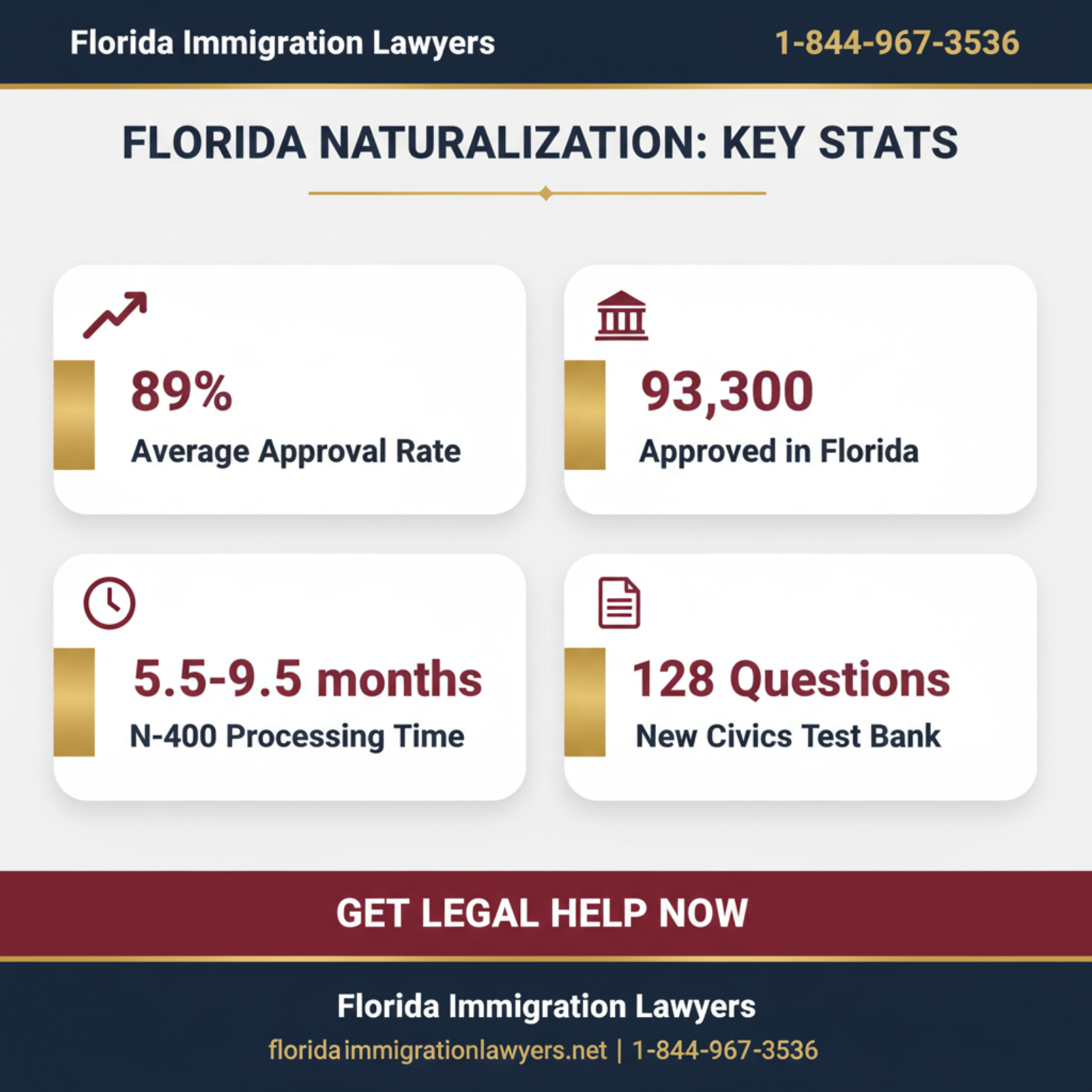
The processing time for naturalization applications can vary significantly, influenced by factors such as the volume of applications, the specific USCIS field office, and the complexity of your individual case. In Florida, processing times for naturalization applications at offices like Miami, Orlando, and Tampa can fluctuate.
Typically, after you file Form N-400, you can expect to receive a receipt notice within a few weeks. The biometrics appointment usually follows within 1-2 months. The longest part of the process is often the wait for the naturalization interview, which can take several months to over a year, depending on the current backlog at your local field office.
You can check the current processing times for your specific USCIS field office on the official USCIS website. It is important to remember that these are estimates, and individual cases may proceed faster or slower. Factors such as a need for additional evidence, travel history issues, or criminal records can prolong the process.
After a successful interview, the Oath of Allegiance ceremony might occur on the same day or within a few weeks. In some cases, if the ceremony is judicial (conducted by a court), it may take longer. Staying informed and patient throughout this period is crucial, but an immigration lawyer can help you monitor your case status and address any unusual delays.
Cost Factors and Fee Breakdown for Naturalization
Applying for U.S. citizenship involves several costs, primarily the USCIS filing fees and potentially legal fees if you choose to hire an attorney. It is important to budget for these expenses as part of your naturalization journey.
The main government fee is for filing Form N-400, Application for Naturalization. This fee typically includes the cost for biometrics services. USCIS fees are subject to change, so always check the most current fee schedule on the official USCIS website before filing. Do not send incorrect fees, as this can lead to your application being rejected or delayed.
In certain circumstances, applicants with limited income may be eligible for a fee waiver. You can apply for a fee waiver by submitting Form I-912, Request for Fee Waiver, along with your N-400 application. Eligibility for fee waivers depends on specific income guidelines or receipt of means-tested benefits. Discussing your eligibility with a legal professional can be beneficial.
Beyond government fees, consider the investment in legal representation. While not mandatory, hiring an immigration lawyer provides invaluable assistance, ensuring your application is correctly prepared, your documents are in order, and you are thoroughly prepared for the interview, including the citizenship test questions 2026. Legal fees vary depending on the complexity of your case and the services provided, but the peace of mind and increased chances of success often outweigh the cost.
The journey to U.S. citizenship is a significant undertaking, and it often comes with complex legal requirements and potential challenges. Do not navigate this process alone. Contact Florida Immigration Lawyers today to ensure your application is strong and your preparation for the citizenship test questions 2026 is thorough. Our experienced team is ready to provide the guidance you need.
Common Mistakes to Avoid During Your Naturalization Process
The naturalization process can be complex, and even minor errors can lead to significant delays or even denial. Being aware of common pitfalls can help you avoid them.
- Failing to Disclose All Arrests or Citations: Even minor infractions, expunged records, or incidents that did not lead to conviction must be disclosed. Concealing information can be seen as a lack of good moral character and lead to denial or accusations of misrepresentation.
- Submitting an Incomplete or Inaccurate Form N-400: Every question on the N-400 must be answered truthfully and completely. Missing information or inconsistencies with previous immigration records can cause delays or raise red flags during the interview.
- Not Meeting Residency Requirements: Applicants must meet specific continuous residence and physical presence requirements. Spending too much time outside the U.S. can break continuous residence, making you ineligible for naturalization.
- Failing the English or Civics Test: Underestimating the difficulty of the tests is a common mistake. Inadequate preparation for the English comprehension (reading, writing, speaking) or the civics questions can result in failure and a delayed path to citizenship.
- Lack of Good Moral Character: Certain criminal offenses, immigration fraud, or other actions during the statutory period can disqualify an applicant based on a lack of good moral character. It is crucial to understand what constitutes good moral character.
- Traveling Excessively Outside the U.S.: While some travel is permitted, extended trips outside the United States can disrupt your continuous residence. Trips of six months or more are particularly scrutinized and can lead to a presumption of abandonment of residence.
- Missing Deadlines or Appointments: Failing to respond to Requests for Evidence (RFEs) or missing scheduled biometrics or interview appointments without proper rescheduling can lead to your application being denied.
- Not Updating USCIS with Address Changes: You are legally required to inform USCIS of any change in your mailing address within 10 days. Failing to do so can result in missed notices and important communications, potentially jeopardizing your application.
- Underestimating the Importance of the Interview: The naturalization interview is not just about passing tests; it is a comprehensive review of your entire application and eligibility. Your demeanor, honesty, and preparedness are all evaluated.
- Not Seeking Legal Counsel for Complex Cases: If you have any criminal history, previous immigration issues, long absences from the U.S., or other complicating factors, attempting to navigate the process alone can be a serious mistake. An attorney can help address these complexities.
When to Call a Lawyer for Your Citizenship Application
While some individuals may successfully navigate the naturalization process independently, many situations warrant the expertise of an immigration lawyer. Florida Immigration Lawyers are here to provide the guidance you need, ensuring your application is robust and your rights are protected.
You should consider contacting an attorney if you have any criminal history, regardless of how minor or old it is. Even expunged records can impact your good moral character assessment. Similarly, if you have had previous immigration violations, such as overstaying a visa or prior deportation proceedings, legal counsel is essential to understand the potential implications for your citizenship application.
Long absences from the United States or difficulties proving continuous residence can also complicate your case. An attorney can help you gather necessary evidence and argue your eligibility. Furthermore, if you are applying based on marriage to a U.S. citizen and have experienced marital issues, divorce, or separation, legal advice is critical to ensure you still meet the three-year residency requirement.
Applicants with disabilities requiring accommodations for the English or civics test, or those with significant difficulty understanding the application or interview process, will greatly benefit from legal assistance. If your application has been denied, or you receive a Request for Evidence (RFE) or Notice of Intent to Deny (NOID), it is imperative to seek legal help immediately. Our team also focuses on deportation defense and other complex immigration matters.
At Florida Immigration Lawyers, we focus on helping individuals throughout Florida achieve their dream of U.S. citizenship. We can review your eligibility, prepare your N-400 application, help you prepare for the citizenship test questions 2026 and interview, and represent you if any issues arise. Our goal is to make your path to citizenship as smooth and stress-free as possible. Contact us today for a free consultation to discuss your specific situation.
About Florida Immigration Lawyers
Florida Immigration Lawyers is an immigration law firm dedicated to serving individuals and families across the entire state of Florida. With offices conveniently located and a commitment to accessible legal services, we pride ourselves on providing compassionate, effective, and results-driven representation for a wide range of immigration matters.
Our experienced attorneys focus on various practice areas, including naturalization and citizenship, family immigration, business immigration, asylum, and deportation defense. We understand the complexities of U.S. immigration law and are passionate about helping our clients achieve their American dream. Whether you are in Orlando, or any other part of Florida, our team is here to support you.
We believe in personalized attention and open communication. When you choose Florida Immigration Lawyers, you gain a dedicated advocate who will tirelessly work to protect your rights and advance your case. We offer free consultations to discuss your unique situation and provide clear, honest assessments of your legal options.
Do not navigate the intricate immigration system alone. Trust the knowledge and experience of Florida Immigration Lawyers. We are available 24/7 to answer your questions and provide timely assistance. Visit our website at https://www.floridaimmigrationlawyers.net or call us directly at 1-844-YO-PELEO to schedule your free consultation today.
Sources and References
- U.S. Citizenship and Immigration Services (USCIS)
- USCIS Civics Test Study Materials
- USCIS Form N-400, Application for Naturalization
- Executive Office for Immigration Review (EOIR)
- 8 U.S.C. Chapter 12 - Immigration and Nationality Act (INA)
- 8 U.S.C. § 1427 - Requirements for naturalization (INA Section 316)
- 8 U.S.C. § 1430 - Naturalization of spouses of citizens (INA Section 319)
- 8 CFR Part 316 - General Requirements for Naturalization
This article provides general legal information and is not intended as legal advice. Every case is unique, and outcomes depend on specific facts and circumstances. Contact an attorney for advice about your particular situation.
Are you ready to take the next step towards U.S. citizenship? Do not leave your future to chance. Let the experienced attorneys at Florida Immigration Lawyers guide you through the complexities of the naturalization process, including thorough preparation for the citizenship test questions 2026. We are committed to providing exceptional legal support to our community throughout Florida.
Call us today for a free consultation at 1-844-YO-PELEO. Se Habla Español - Estamos aquí para ayudarle.
Do Not Navigate This Process Alone
Our experienced immigration attorneys are ready to fight for you. Get a free, confidential case review today.
Se Habla Español
Or leave your details and we’ll call you:
Free Evaluation in 24 Hours
Or talk to us right now
AI voice assistant — available 24/7
FreeFrequently Asked Questions

William J. Vásquez
Founding Attorney · Vasquez Law Firm
U.S. Air Force veteran and immigration attorney with years of hands-on U.S. immigration experience. J.D., NCCU School of Law. AILA member. Admitted to the 4th, 5th, and 11th Circuit Courts.
Available 24/7 - Free Evaluations
Reviewed for legal accuracy by William J. Vásquez
Licensed in North Carolina; U.S. immigration is federal practice.
Related Legal Services
Our Florida immigration attorneys can help you with experienced immigration attorneys, asylum protection and citizenship and naturalization. Call today at 1-844-YO-PELEO for a free case review.
Related Links
Related Topics
Free Legal Case Review
Discuss your case with our experienced attorneys. We're available 24/7.
Se Habla Español - Estamos aquí para ayudarle.
Related Articles
DUI Immigration Consequences in Florida 2026
A DUI conviction in Florida can have severe immigration consequences, potentially leading to inadmissibility, deportation, or denial of immigration benefits. For non-citizens, a DUI is not just a traffic offense but a serious criminal matter that federal immigration law scrutinizes closely. Factors like multiple offenses, injury, or property damage can escalate a simple DUI to a Crime Involving Moral Turpitude (CIMT) or even an aggravated felony, triggering mandatory detention and removal proceedings. Understanding the specific nature of your Florida conviction and its interpretation under the Immigration and Nationality Act (INA) is crucial. This article outlines how DUIs impact immigration status, the grounds for inadmissibility and deportation, a step-by-step guide to navigating the process, essential documentation, and expected timelines for 2026. We also highlight common mistakes to avoid and when to seek legal counsel from an experienced immigration attorney. Florida Immigration Lawyers offers comprehensive support for individuals facing these challenging situations, providing expert guidance through complex legal landscapes.
Dual Citizenship Lawyer in Florida: What You Need to Know
For Florida residents, the concept of dual citizenship, or holding two passports, offers a compelling blend of opportunities and challenges. While the U.S. generally permits dual nationality, the path to achieving this status requires a meticulous understanding of both U.S. immigration laws and the citizenship policies of your country of origin. This guide explores the definition of dual citizenship, the detailed step-by-step process for U.S. naturalization, and the significant benefits and potential pitfalls involved. We cover essential documentation, typical timelines, and cost considerations for 2026, providing crucial insights for anyone in Orlando, Miami, or across Florida considering this important legal step. Learn about common mistakes to avoid and understand when to seek professional legal counsel to navigate this complex process successfully. Florida Immigration Lawyers is here to provide expert, bilingual support for your dual citizenship journey.
Immigration Lawyer Orlando Free Consultation in Florida
For individuals and families in Orlando, Florida, navigating the complexities of U.S. immigration law requires expert guidance. An immigration lawyer in Orlando offers crucial support for everything from visa applications and green card processes to naturalization and deportation defense. This comprehensive guide details what a free consultation covers, providing a step-by-step overview of immigration pathways, essential document checklists, and expected timelines in 2026. We also highlight common mistakes to avoid, discuss the critical role of legal counsel in deportation and asylum cases, and explain why choosing a local Orlando immigration attorney is beneficial. Florida Immigration Lawyers is dedicated to serving the diverse community of Orlando with compassionate, effective legal solutions, ensuring you receive personalized advice and robust representation for a successful immigration journey.
EAD Advance Parole Combo Card in Florida: What You Need
An EAD advance parole combo card allows individuals with pending adjustment applications to both work and travel abroad without jeopardizing their green card application. Learn how to apply in Florida, what documents you need, and common mistakes to avoid.