Florida Citizenship Delay: Understanding N-400 Processing in 2026
Experiencing a citizenship delay in Florida can be incredibly frustrating. This comprehensive guide from Florida Immigration Lawyers explores the common reasons for N-400 processing delays in 2026, including USCIS backlogs and increased application volumes. Learn about the step-by-step naturalization process, essential documents, and how to check your case status. We also highlight critical mistakes to avoid and when to seek legal assistance to overcome processing challenges. Our expert team serves all of Florida, offering free consultations to help you navigate your journey to U.S. citizenship.

A citizenship delay in Florida can stem from increased N-400 processing volumes, USCIS backlog issues, complex individual cases, or policy changes. Processing times often exceed initial estimates. Understanding these factors is key to managing expectations for your naturalization application in 2026.
- USCIS backlogs significantly impact N-400 processing in Florida.
- Individual case complexity can lead to longer citizenship delay.
- Policy changes and high application volume contribute to extended timelines.
- Proactive monitoring and legal assistance are crucial.
- Expect variable U.S. citizenship processing time for naturalization.
The dream of U.S. citizenship is a powerful aspiration for countless individuals and families. For many in Florida, applying for naturalization represents the culmination of years of hard work and dedication to building a new life. It is a significant and life-changing step.
However, facing a citizenship delay can be incredibly frustrating and confusing. When your hopes are tied to a specific timeline, unexpected delays in the N-400 processing can cause significant stress and uncertainty. Understanding why these delays occur and what steps you can take is crucial.
This comprehensive guide explains the common reasons for N-400 processing delays in Florida, what applicants can expect in 2026, and how to effectively address these challenges. We aim to provide clear, actionable information to help you navigate the complexities of the naturalization process.
If you are experiencing a citizenship delay or have concerns about your application, do not hesitate to seek professional guidance. Call Florida Immigration Lawyers at 1-844-967-3536 for a free consultation. Our experienced team is here to help you understand your options.
Navigating Citizenship Delay in Florida: An Overview
The path to U.S. citizenship through naturalization is governed by specific laws and procedures. Generally, applicants must meet requirements related to age, continuous residence, physical presence, good moral character, and English and civics knowledge. These requirements are outlined in the Immigration and Nationality Act (INA), specifically INA § 316 (8 U.S.C. § 1427).
Florida, with its diverse population and high volume of immigrants, experiences unique challenges within the immigration system. USCIS field offices across the state, including those serving areas like Coral Springs, Miami, Orlando, Tampa, and Jacksonville, process thousands of naturalization applications annually. This high demand often contributes to extended processing times.
Understanding the Naturalization Process
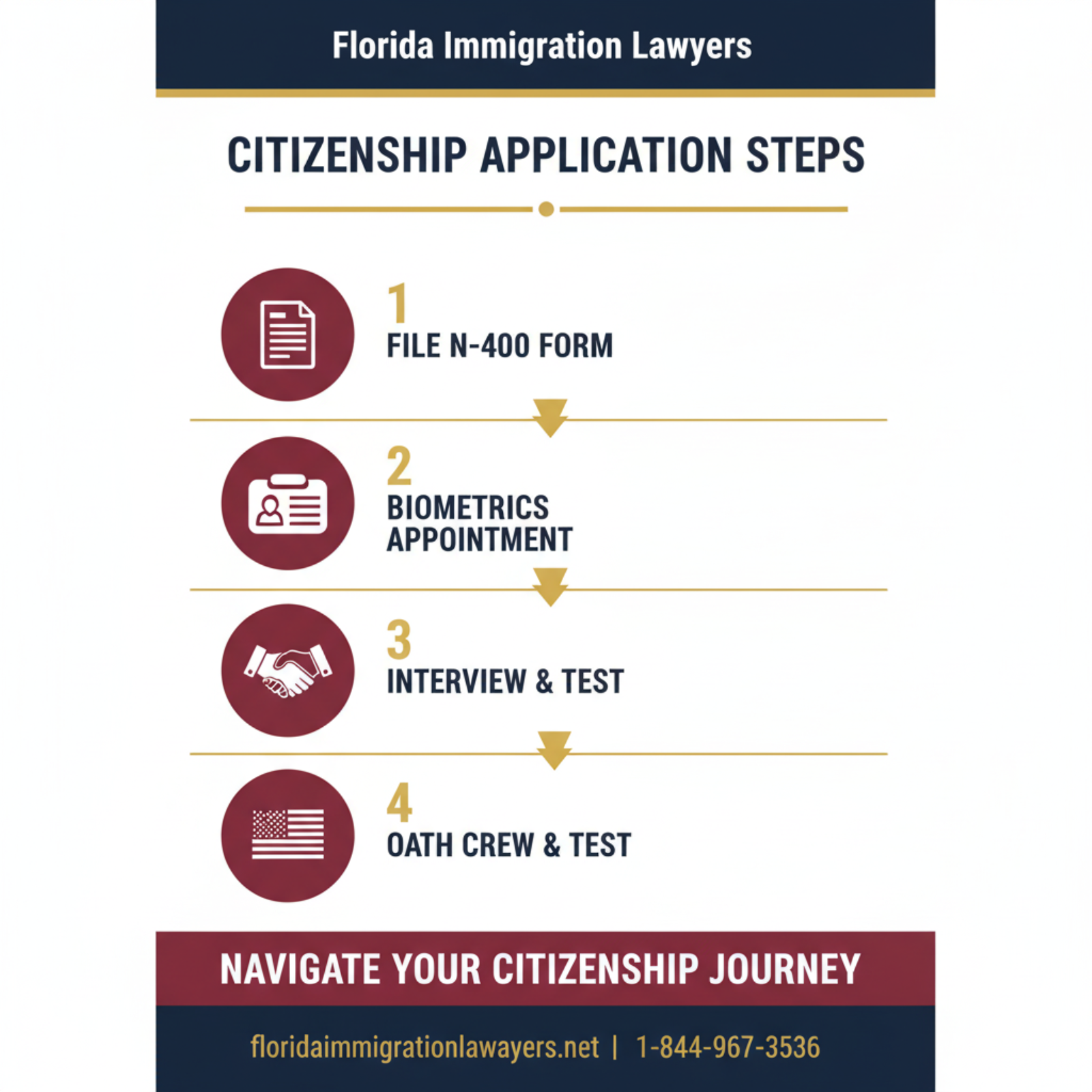
The naturalization process typically begins with filing Form N-400, Application for Naturalization, with U.S. Citizenship and Immigration Services (USCIS). After submission, applicants undergo a series of steps, including biometric appointments, interviews, and ultimately, an Oath of Allegiance ceremony. Each stage presents potential points where a citizenship delay can occur.
The journey to becoming a U.S. citizen is a detailed and often lengthy one. It requires careful preparation and adherence to all legal requirements. Understanding each phase is essential for managing expectations and proactively addressing any issues that may arise.
Why Delays Occur in Florida and Why USCIS is Slow Right Now
Many applicants ask, "Why is my U.S. citizenship application taking so long?" and "Why is USCIS so slow right now?" Several factors contribute to a citizenship delay in Florida and nationwide. A primary reason is the sheer volume of applications USCIS receives. Increased submissions, combined with resource constraints, can lead to significant backlogs.
Staffing shortages within USCIS, often exacerbated by budget fluctuations, also play a role. Furthermore, changes in immigration policies or security protocols can necessitate additional vetting, slowing down the entire N-400 processing pipeline. Global events or national emergencies can divert resources, further impacting processing times.
Individual case complexities are another common cause. If an applicant has a complicated travel history, past legal issues, or incomplete documentation, their case may require more extensive review, leading to a longer U.S. citizenship processing time. This can significantly extend the period before a final decision is made.
Step-by-Step Guide: What Happens After You File Your N-400 Application
Understanding the stages of the naturalization process can help you anticipate potential delays and stay informed about your application's progress. While the exact timeline varies, the sequence of events generally remains consistent. For more detailed guidance on this journey, visit our citizenship practice area page.
- File Form N-400, Application for Naturalization: Your journey begins when you submit your completed Form N-400 and all required supporting documents to USCIS. Ensure every section is filled accurately and completely to prevent an immediate citizenship delay.
- Receive Receipt Notice (Form I-797C): Within a few weeks of filing, USCIS will send you a Form I-797C, Notice of Action, acknowledging receipt of your application. This notice will contain your receipt number, which is crucial for tracking your case status online.
- Biometrics Appointment: Next, you will receive an appointment notice for biometrics collection. This involves providing fingerprints, photographs, and a signature. These biometrics are used for background checks and identity verification. Delays in scheduling this appointment can contribute to overall processing time.
- Interview Scheduling: After your biometrics are processed, USCIS will schedule you for a naturalization interview. This is a critical step where an officer will review your application, test your English and civics knowledge, and assess your eligibility. Waiting for this interview can be a major source of citizenship delay, especially in high-volume offices.
- The Naturalization Interview: During the interview, a USCIS officer will ask questions about your application, background, and eligibility for naturalization. They will also administer the English and civics tests. Be prepared to answer truthfully and provide any requested additional documentation.
- Decision and Oath Ceremony: Following a successful interview, USCIS will issue a decision. If approved, you will receive a notice for your Oath of Allegiance ceremony, where you officially become a U.S. citizen. Sometimes, the oath ceremony can be scheduled much later, adding to the overall U.S. citizenship processing time.
Essential Documents for Your Naturalization Application Checklist
A complete and accurate submission of documents is vital to avoid any unnecessary citizenship delay. Missing or incorrect paperwork is a leading cause of requests for evidence (RFEs) or even denials, prolonging your N-400 processing. Always make copies of everything you submit.
- Form N-400, Application for Naturalization: The primary application form, filled out completely and signed.
- Copy of Your Green Card (Form I-551): Provide copies of both sides of your Permanent Resident Card.
- Marriage Certificate (if applicable): If you are applying based on marriage to a U.S. citizen, include your marriage certificate and evidence of your spouse's citizenship.
- Tax Returns: Provide copies of federal income tax returns for the past five years (or three years if applying based on marriage to a U.S. citizen).
- Travel History Documentation: Details of all trips outside the U.S. since becoming a permanent resident.
- Proof of Selective Service Registration (for males 18-26): If applicable, provide documentation of your registration.
- Certified Court Records (if applicable): Any arrest records, court dispositions, or probation documents, even if charges were dismissed or expunged.
- Passport-Style Photographs: Two identical color photographs if required by USCIS instructions.
- Child Support/Alimony Orders (if applicable): Proof of compliance with any child support or alimony obligations.
Understanding N-400 Processing Times and Expectations in 2026
One of the most common questions applicants have is, "How long does it take to get citizenship after applying in Florida?" The answer is not always straightforward. While USCIS provides estimated processing times on its website, these are averages and can vary significantly based on the specific field office and individual case factors. For residents of Coral Springs, applications are typically handled by the Miami or Orlando USCIS field offices, which can have different backlogs.
Average Processing Times vs. Reality
In 2026, the average U.S. citizenship processing time for an N-400 application can range from several months to over two years. This variability is largely due to the ongoing USCIS backlog and the fluctuating number of applications received. Factors like the complexity of your case, the completeness of your application, and whether you receive a Request for Evidence (RFE) can all extend your timeline.
It is important to remember that these published times are estimates. Your personal experience may differ. The best approach is to prepare for a potentially longer wait and plan accordingly. The regulations governing naturalization processing times are found in 8 CFR Part 316.
How to Check Your Case Status
You can monitor the status of your naturalization application online using the receipt number provided on your Form I-797C. Visit the USCIS website and enter your receipt number into the "Case Status Online" tool. This tool provides real-time updates on your application's progress, including when biometrics were processed, when an interview was scheduled, and any actions taken by USCIS.
While the online tool is helpful, it may not always provide detailed explanations for a citizenship delay. If your case is outside the normal processing times for your field office, you may be able to submit an "e-request" to USCIS to inquire about the delay. However, direct contact with an attorney can often yield more effective results.
Cost Factors and Fee Breakdown for Naturalization in Florida
Applying for U.S. citizenship involves several costs, primarily the USCIS filing fees. These fees are subject to change, so it is crucial to check the most current amounts on the USCIS website before filing your application. The main components of the cost typically include the N-400 filing fee and the biometrics services fee.
USCIS periodically adjusts its fee schedule, so relying on outdated information can lead to your application being rejected. Always refer to Form N-400 instructions or the USCIS website for the latest fee information. These fees are non-refundable, even if your application is denied.
Understanding Filing Fees and Waivers
The filing fee for Form N-400 is a significant part of the overall cost. There is also a separate biometrics services fee, which covers the cost of fingerprinting and background checks. For some applicants, a fee waiver may be available if they meet specific income or public benefit criteria. You can apply for a fee waiver by submitting Form I-912, Request for Fee Waiver.

Beyond the government fees, you should also consider potential legal fees if you choose to hire an immigration attorney. While not mandatory, legal representation can be invaluable, especially if you anticipate complications or are experiencing a citizenship delay. An attorney can help ensure your application is accurate and complete, potentially saving you time and money in the long run.
Do not navigate this process alone. Contact Florida Immigration Lawyers today for expert assistance with your naturalization application.
Common Mistakes to Avoid During Your Citizenship Application
Navigating the N-400 processing can be complex, and even minor errors can lead to significant delays or even denial of your application. Avoiding these common pitfalls is essential for a smooth process and to prevent a prolonged citizenship delay.
- Incomplete or Inaccurate Forms: Filing Form N-400 with missing information or incorrect details is a primary reason for RFEs or outright rejections. Every question must be answered truthfully and completely.
- Missing Supporting Documents: Failing to include all required supporting evidence, such as copies of your green card, marriage certificate, or tax returns, will inevitably lead to requests for evidence, extending your U.S. citizenship processing time.
- Failure to Update Address with USCIS: If you move, you must inform USCIS of your new address within 10 days. Failure to do so can result in missed notices, interview appointments, or even a denial due to perceived abandonment.
- Undisclosed Criminal History: Attempting to conceal any arrests, charges, or convictions, even if expunged or dismissed, is a serious offense. USCIS conducts thorough background checks, and dishonesty can lead to a finding of lack of good moral character and denial.
- Insufficient Continuous Residence or Physical Presence: Not meeting the strict requirements for continuous residence and physical presence in the U.S. can make you ineligible for naturalization. Carefully calculate your time spent outside the country.
- Poor Moral Character Issues: Certain actions, such as tax evasion, false claims of U.S. citizenship, or repeated minor offenses, can demonstrate a lack of good moral character, which is a fundamental requirement for naturalization.
- Failing the English or Civics Test: Applicants must demonstrate a basic understanding of English and U.S. history and government. While there are exceptions, failure in these tests will require retesting and can cause a delay.
- Not Responding to RFEs (Requests for Evidence): If USCIS sends an RFE, you must respond within the specified timeframe with the requested information. Ignoring an RFE will almost certainly lead to a denial.
- Traveling Excessively Outside the U.S.: Extended trips abroad can disrupt your continuous residence requirement or demonstrate a lack of intent to reside permanently in the U.S., potentially impacting your eligibility.
- Lying During the Interview: Providing false information or misrepresenting facts during your naturalization interview is a severe misstep that can lead to immediate denial and potentially other immigration consequences.
- Not Preparing for the Interview: Underestimating the importance of the naturalization interview can be detrimental. Failing to review your application, study for the civics test, or practice English can lead to a poor performance and further delays.
- Missing Deadlines: Whether it's for an RFE response, a biometrics appointment, or an interview, missing any USCIS deadline without proper notice or justification can result in the abandonment or denial of your application.
When to Call Florida Immigration Lawyers for Your Citizenship Delay
While many naturalization applications proceed smoothly, certain situations warrant the expertise of an immigration attorney. If you are experiencing a significant citizenship delay, or if your case presents unique challenges, legal guidance can be invaluable. Our team at Florida Immigration Lawyers is dedicated to assisting clients throughout Florida, including those in Coral Springs and surrounding areas.
You should consider contacting an attorney if your N-400 processing time significantly exceeds the published USCIS averages for your field office. We can help you inquire about your case status, identify the cause of the delay, and strategize the best course of action. This might involve submitting an inquiry, following up on an e-request, or even pursuing more formal legal remedies if necessary.
Other scenarios where legal help is crucial include receiving a Request for Evidence (RFE) or a Notice of Intent to Deny (NOID). These documents indicate that USCIS has concerns about your eligibility or requires additional information. An attorney can help you craft a comprehensive and persuasive response, significantly improving your chances of approval. For complex cases, such as those involving criminal history or past immigration issues, an attorney can assess your eligibility and represent you effectively.
Florida Immigration Lawyers offers comprehensive services for all aspects of immigration law, including naturalization applications. We can help you prepare for your interview, gather necessary documentation, and address any unforeseen complications. Do not let a citizenship delay jeopardize your dream of becoming a U.S. citizen. Contact us today for personalized legal assistance.
About Florida Immigration Lawyers
Florida Immigration Lawyers is a leading law firm dedicated to providing exceptional immigration legal services across the entire state of Florida. With a deep understanding of complex immigration laws and a commitment to our clients, we strive to achieve the best possible outcomes for individuals and families pursuing their American dream. Our firm offers a wide range of services, including family immigration, business immigration, asylum claims, and deportation defense.
We understand that navigating the U.S. immigration system can be overwhelming and stressful. That's why we pride ourselves on offering compassionate, client-focused representation. Our experienced attorneys are available 24/7 to answer your questions and provide the support you need. We offer free consultations to discuss your unique situation and develop a tailored legal strategy.
At Florida Immigration Lawyers, your success is our priority. We are committed to transparency, integrity, and proactive communication. Whether you are facing a citizenship delay, seeking a green card, or defending against deportation, we are here to advocate for your rights and guide you every step of the way. We serve clients in Coral Springs, Miami, Orlando, Tampa, and throughout Florida.
Sources and References
- U.S. Citizenship and Immigration Services (USCIS)
- USCIS Policy Manual, Volume 12, Part D, Chapter 2 - Naturalization Eligibility
- USCIS Processing Times
- Form N-400, Application for Naturalization
- 8 U.S.C. Chapter 12 - Immigration and Nationality Act (INA)
- 8 U.S.C. § 1427 - Requirements for Naturalization
- 8 CFR Part 316 - General Requirements for Naturalization
This article provides general legal information and is not intended as legal advice. Every case is unique, and outcomes depend on specific facts and circumstances. Contact an attorney for advice about your particular situation.
Do not let a citizenship delay derail your dream of becoming a U.S. citizen. The path to naturalization can be complex, but you do not have to walk it alone. Our dedicated team at Florida Immigration Lawyers is ready to provide the expert legal support you need.
Call Florida Immigration Lawyers at 1-844-967-3536 for a free consultation today. Se Habla Español - Estamos aquí para ayudarle.
Frequently Asked Questions
Florida Immigration Lawyers
Legal Team
Our experienced attorneys at Florida Immigration Lawyers have been serving clients across Florida for over 20 years. We specialize in immigration, personal injury, criminal defense, workers compensation, and family law.