Citizenship Delay in Florida: Navigating N-400
Experiencing a citizenship delay in Florida for your N-400 naturalization application can be disheartening. This comprehensive guide from Florida Immigration Lawyers explores common reasons for these delays in 2026, including USCIS backlogs and complex background checks. We provide a step-by-step overview of the N-400 processing journey, a detailed document checklist, and insights into current processing times. Learn how to check your case status, address excessive delays, and understand associated costs. Crucially, we highlight common mistakes to avoid and explain when legal counsel is essential to safeguard your application. Don't let uncertainty define your path to U.S. citizenship; reach out to our experts for support.

A citizenship delay in Florida for your N-400 naturalization application can occur due to various factors, including USCIS backlogs, extensive background checks, or issues with your application. While processing times fluctuate, applicants in Fort Lauderdale and across Florida may experience waits beyond typical estimates. It is crucial to monitor your case status and understand your options to address prolonged delays, potentially with legal assistance.
- USCIS processing times are estimates and can vary significantly.
- Common reasons for delays include background checks and high application volume.
- You can submit a case inquiry if your N-400 application exceeds normal processing times.
- Consulting an immigration lawyer can help identify issues and expedite your case.
- Florida applicants should be aware of local USCIS office backlogs, especially in areas like Fort Lauderdale.
Are you an aspiring U.S. citizen in Florida, perhaps in Fort Lauderdale, eagerly awaiting a decision on your naturalization application? The journey to U.S. citizenship is a significant milestone for many immigrants. However, encountering a citizenship delay can be incredibly frustrating and create uncertainty about your future.
You have diligently prepared your N-400 application, attended your biometrics appointment, and perhaps even completed your interview. Yet, weeks turn into months, and your case status remains unchanged. This article from Florida Immigration Lawyers is designed to illuminate the complexities of N-400 processing delays in Florida for 2026. We will explore common reasons for these delays, outline steps you can take, and explain how our experienced team can assist you.
Do not let a prolonged wait derail your American dream. Understanding the process and your rights is the first step toward resolution. Call Florida Immigration Lawyers at 1-844-967-3536 for a free consultation to discuss your specific citizenship delay concerns today.
Understanding Citizenship Application Delays in Florida
The path to becoming a U.S. citizen through naturalization is a rigorous process managed by U.S. Citizenship and Immigration Services (USCIS). While many applications proceed smoothly, a significant number of individuals experience a citizenship delay. In Florida, with its large immigrant population, these delays can be particularly prevalent.
Our state is home to diverse communities, from Miami to Orlando and Fort Lauderdale, all navigating the same federal immigration system. The sheer volume of applications submitted to USCIS offices in Florida, combined with national processing backlogs, contributes to extended waiting periods for many applicants.
Why Do Citizenship Applications Get Delayed?
Several factors can contribute to a citizenship delay. Understanding these common culprits can help you anticipate potential issues or identify why your N-400 processing is taking longer than expected. It is rarely a single cause but often a combination of administrative hurdles.
One primary reason is the **USCIS backlog**. The agency often faces overwhelming numbers of applications, leading to increased processing times across all form types. This can impact your N-400 processing significantly. Another common factor is the **background check** process.
All naturalization applicants undergo thorough security checks by various government agencies. If any information requires additional verification or raises flags, these checks can extend for months or even years. This is a critical step that USCIS cannot bypass.
Additionally, **incomplete or inaccurate applications** are a frequent cause of delays. Minor errors, missing documents, or inconsistencies in your N-400 application can lead to Requests for Evidence (RFEs) or even denials. These issues prolong the process considerably as USCIS requires perfect compliance.
Changes in **USCIS policies or procedures** can also impact processing times. New directives, resource reallocations, or even natural disasters can disrupt normal operations, leading to temporary or long-term delays. These are often beyond the control of individual applicants.
Finally, your **interview performance** can play a role. If the interviewing officer requires more information, or if there are any doubts about your eligibility, your case might be put on hold for further review. This is why thorough preparation for your naturalization interview is paramount.
Navigating the N-400 Processing Journey: A Step-by-Step Guide
Understanding the typical N-400 processing journey can help you identify where a citizenship delay might occur. While individual cases vary, the general steps remain consistent. This guide outlines the standard progression of a naturalization application.
-
File Form N-400, Application for Naturalization: This is the initial step where you submit your completed application to USCIS, along with all required supporting documents and fees. Ensure every section is accurate and complete to avoid immediate delays. The date USCIS receives your application is your filing date.
-
Receive Receipt Notice (Form I-797C): Within a few weeks, USCIS will send you a confirmation that they have received your application. This notice will include your receipt number, which is crucial for tracking your case status online. Keep this document safe.
-
Attend Biometrics Appointment: USCIS will schedule an appointment for you to provide fingerprints, photographs, and a signature. These biometrics are used for background checks. Missing this appointment without rescheduling can significantly delay your case.
-
Complete Naturalization Interview: An immigration officer will interview you to verify the information on your N-400, assess your English proficiency, and test your knowledge of U.S. history and government (civics). Be prepared to answer questions about your application and eligibility. This is a crucial stage in N-400 processing.
-
Receive Decision on Application: After your interview, USCIS will issue a decision. This could be an approval, a request for more evidence, or a denial. Sometimes, a decision is not immediate, leading to a further citizenship delay while your case is under review.
-
Receive Oath Ceremony Notice: If your application is approved, USCIS will schedule you for an Oath of Allegiance ceremony. This is the final step where you take the oath and officially become a U.S. citizen. The notice will provide details on the date, time, and location of your ceremony.
-
Attend Oath Ceremony: At the ceremony, you will take the Oath of Allegiance and receive your Certificate of Naturalization. This document is proof of your U.S. citizenship. Congratulations, you have completed the naturalization process!
Essential Documents for Your Naturalization Application
A complete and accurate submission of documents is vital to prevent a citizenship delay. Missing or incorrect paperwork is a common reason for RFEs and extended processing. Ensure you gather all necessary items before filing your N-400 application. This meticulous preparation is key to smooth N-400 processing.
- Copy of your Green Card (both sides)
- Copy of your current and expired passports
- Copies of marriage certificates and divorce decrees (if applicable)
- Copies of birth certificates for your children (if applicable)
- Copies of tax returns for the past five years (or three years if married to a U.S. citizen)
- Proof of selective service registration (for male applicants aged 18-25)
- Certified court dispositions for any arrests or convictions (even if expunged)
- Proof of payment of child support or alimony (if applicable)
- Travel records, including dates of all trips outside the U.S. since becoming a permanent resident
- Form I-94 arrival/departure records (if applicable)
- Evidence of continuous residence and physical presence (e.g., utility bills, leases, employment records)
- Two passport-style photos (if filing by mail)
- Check or money order for the application fee (unless filing for a fee waiver)
Current N-400 Processing Times and Expectations for 2026
Understanding USCIS processing times is critical when anticipating your naturalization journey. While USCIS provides estimated processing times online, these are subject to change and can vary significantly by service center and local field office. For applicants in Florida, offices like those in Miami, Orlando, and Tampa, including the Fort Lauderdale sub-office, often have their own specific backlogs and processing patterns.
As of 2026, many applicants are still experiencing extended waits. A typical N-400 processing time might range from 8 to 14 months, but a citizenship delay pushing it to 18-24 months or even longer is not uncommon, especially in high-volume areas. Factors like the complexity of your case, the thoroughness of your background checks, and the current workload of the specific USCIS office all play a role.
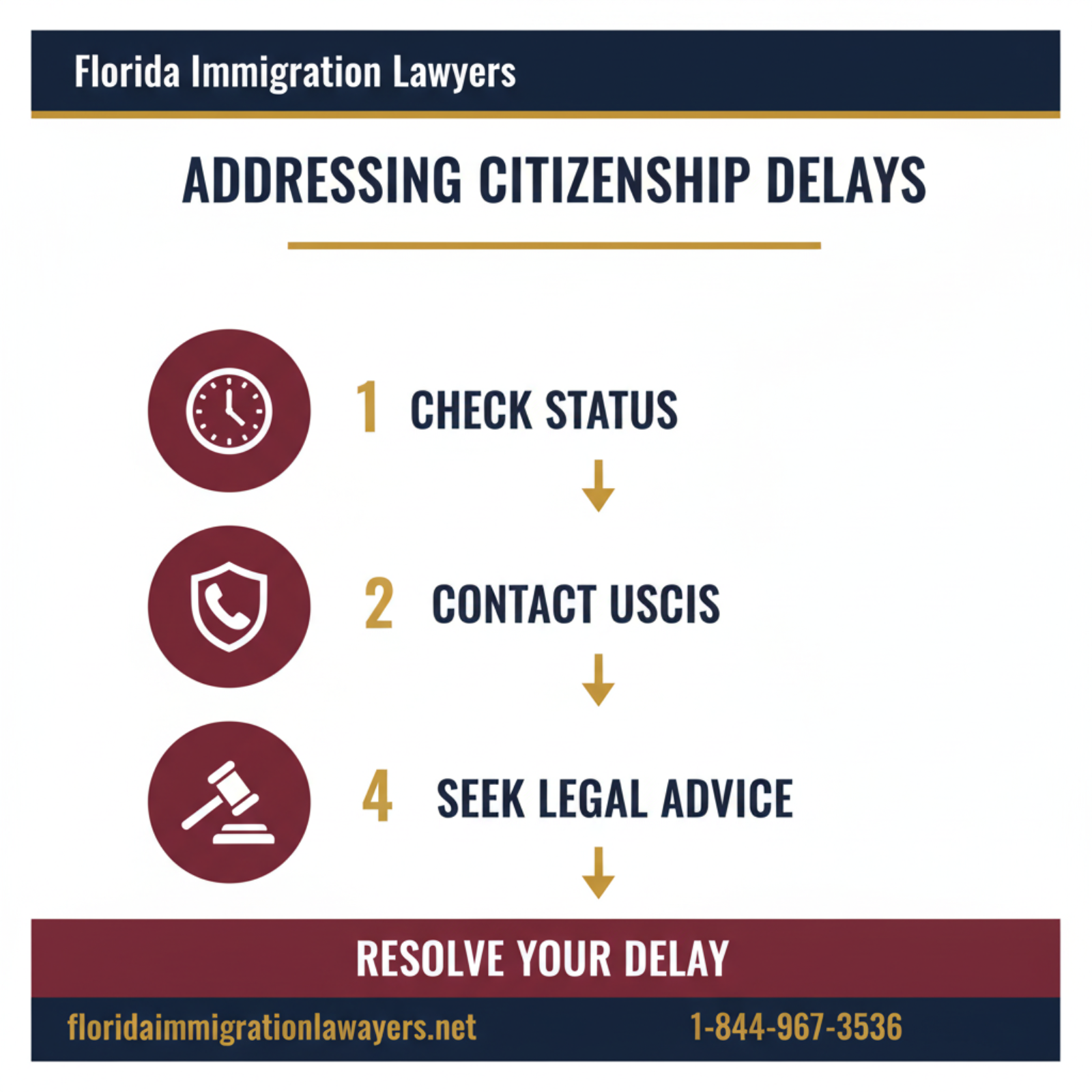
How to Check Your Case Status
Monitoring your case status is essential. You can check the status of your N-400 application online using your receipt number on the USCIS Case Status Online tool. This tool provides real-time updates on your application's progress. Regularly checking can help you identify if your case has moved beyond the estimated processing times, indicating a potential citizenship delay.
You can also sign up for email and text message notifications for your case. This proactive approach ensures you are immediately aware of any updates or actions required from you. Do not rely solely on mail notices, as they can sometimes be delayed.
Requesting Assistance for Excessive Delays
If your N-400 application has been pending for an unreasonable amount of time, exceeding the posted processing times for your service center, you have options to inquire about the delay. You can submit an e-Request outside normal processing times through the USCIS website. This formal inquiry prompts USCIS to review your case and provide an update.
Another avenue is to contact the USCIS Contact Center directly. While helpful, these calls often provide general information. For more persistent delays, especially those exceeding 24 months, you may consider contacting your U.S. Senator or Representative's office. Their constituent services staff can often make congressional inquiries on your behalf, which sometimes helps to move cases forward. This is a common strategy when facing a significant citizenship delay.
Costs Associated with Your Citizenship Application
The financial aspect of applying for naturalization is an important consideration. While USCIS fees are subject to change, understanding the typical costs involved can help you prepare financially and avoid unexpected burdens. These fees are a significant part of the N-400 processing.
Understanding USCIS Fees and Waivers
The primary cost for your N-400 application is the filing fee, which includes the biometrics fee. USCIS periodically adjusts these fees, so it is crucial to check the most current fee schedule on the USCIS website for Form N-400 before filing. Do not send incorrect payment, as this will result in your application being rejected and returned, causing a significant citizenship delay.
In some cases, you may be eligible for a fee waiver. USCIS offers fee waivers for applicants who meet specific poverty guidelines or receive certain public benefits. If you believe you qualify, you must submit Form I-912, Request for Fee Waiver, along with your N-400 application and supporting documentation. Approving a fee waiver can take time, but it can alleviate financial stress.
Beyond USCIS fees, you might incur other expenses. These can include costs for obtaining necessary supporting documents, such as certified court records or birth certificates. Translation services for foreign language documents are also an additional expense if required. You may also consider legal fees if you choose to hire an immigration attorney to assist with your N-400 processing, which can be invaluable.
Navigating a citizenship delay or any complex immigration matter can be overwhelming. Do not navigate this process alone. Contact Florida Immigration Lawyers today to ensure your case is handled efficiently and effectively.
Common Mistakes to Avoid During Your Naturalization Process
Avoiding common pitfalls can significantly reduce the likelihood of a citizenship delay or even a denial. Many applicants, especially those in areas like Fort Lauderdale, inadvertently make errors that prolong their N-400 processing. Being aware of these mistakes is your first line of defense.
-
Submitting an Incomplete or Inaccurate Application: Failing to answer all questions, providing incorrect information, or omitting required documents is a leading cause of RFEs or outright rejections. This immediately triggers a delay and requires re-submission or additional evidence.
-
Not Disclosing All Criminal History: Even minor arrests, citations, or expunged records must be disclosed. USCIS will find out during background checks. Failure to disclose can lead to a finding of lack of good moral character and denial, a severe citizenship delay.
-
Failing to Maintain Continuous Residence: Leaving the U.S. for extended periods (typically six months or more) can break your continuous residence requirement. This can make you ineligible for naturalization and significantly set back your N-400 processing.
-
Not Updating USCIS of Address Changes: You are legally required to inform USCIS of any address change within 10 days. Missing notices due to an outdated address can lead to missed appointments, RFEs, or even case abandonment. This is a simple but critical step to avoid a citizenship delay.
-
Poor Preparation for the Civics and English Test: Failing either the English language or civics test during your interview can result in a re-test, which adds months to your processing time. Thorough preparation is essential for a smooth interview.
-
Not Being Truthful or Consistent During the Interview: Any misrepresentation or inconsistency between your application and interview answers can raise serious doubts about your credibility. This can lead to further investigation or denial, resulting in a significant citizenship delay.
-
Ignoring USCIS Notices: Whether it's an RFE, an interview notice, or a request for additional information, ignoring official communication from USCIS will inevitably lead to delays or denial. Always respond promptly and thoroughly.
-
Filing Too Early: While rare, filing your N-400 before meeting the continuous residence or physical presence requirements (e.g., 4 years and 9 months for 5-year residents, 2 years and 9 months for 3-year residents) will result in rejection. Double-check your eligibility dates.
-
Not Seeking Legal Advice for Complex Cases: If you have any criminal history, prolonged absences, or other eligibility concerns, attempting to navigate the process alone is risky. Legal guidance can prevent critical errors and a potential citizenship delay.
When to Seek Legal Counsel for Your Citizenship Application
While many naturalization applications are straightforward, certain situations warrant the expertise of an immigration attorney. If you are experiencing a significant citizenship delay or encounter specific challenges, legal guidance can be invaluable. Florida Immigration Lawyers is here to help residents across the state, including Fort Lauderdale, navigate these complex waters.
You should consider contacting us if your N-400 application has been pending significantly longer than the posted USCIS processing times. If you have submitted an e-Request or contacted USCIS directly without a satisfactory response, it might be time for legal intervention. We can assess your case, identify potential issues, and strategize the best course of action, which might include filing a Writ of Mandamus in federal court for unreasonable delays.
Furthermore, if you have any criminal history, even minor infractions from years ago, consulting an attorney is crucial. Criminal records, regardless of their severity or expungement status, can impact your good moral character requirement for naturalization. We can analyze your record and advise on the best approach to present your case to USCIS.
Other warning signs include receiving a Request for Evidence (RFE) or a Notice of Intent to Deny (NOID). These documents indicate that USCIS has concerns about your eligibility or requires more information. Responding to an RFE or NOID correctly is critical; an attorney can help you compile a comprehensive and persuasive response to prevent a citizenship delay or denial.
If you have had prolonged absences from the U.S. that might affect your continuous residence or physical presence requirements, or if you have any doubts about your eligibility, our experienced attorneys can provide clarity. We can help you understand the nuances of immigration law, including specific sections of the 8 U.S.C. Chapter 12 - Immigration and Nationality Act, and ensure your application is as strong as possible. Our firm specializes in citizenship applications, general immigration matters, and deportation defense.
About Florida Immigration Lawyers
Florida Immigration Lawyers is a leading immigration law firm dedicated to serving individuals and families across the entire state of Florida. With a deep understanding of U.S. immigration law and a compassionate approach, we provide comprehensive legal services to assist you with every aspect of your immigration journey, including navigating a citizenship delay.
Our experienced attorneys are committed to delivering personalized and effective legal solutions. We pride ourselves on our client-focused approach, ensuring that you receive the attention and support you deserve. From initial consultations to complex litigation, we stand by our clients every step of the way.
We offer a wide range of services, including family-based immigration, business immigration, asylum applications, and naturalization. Our firm is equipped to handle challenging cases, such as those involving deportation defense, providing robust representation to protect your rights and future. Our team of dedicated attorneys is highly knowledgeable and always up-to-date with the latest immigration policies and procedures.
Choosing Florida Immigration Lawyers means choosing a partner who understands the complexities and sensitivities of immigration law. We are available 24/7 to answer your questions and offer **free consultations** to help you understand your options. Let us put our expertise to work for you. Visit our website at https://www.floridaimmigrationlawyers.net or call us at 1-844-967-3536.
Sources and References
- U.S. Citizenship and Immigration Services (USCIS) - Form N-400, Application for Naturalization
- USCIS Case Status Online
- 8 U.S.C. Chapter 12 - Immigration and Nationality Act (INA)
- 8 CFR Part 316 - General requirements for naturalization
- INA Section 316 (8 U.S.C. § 1427) - Requirements for Naturalization
This article provides general legal information and is not intended as legal advice. Every case is unique, and outcomes depend on specific facts and circumstances. Contact an attorney for advice about your particular situation.
Do not let a citizenship delay or the complexities of the naturalization process overwhelm you. Our dedicated team at Florida Immigration Lawyers is here to provide the expert legal guidance and support you need. We serve clients throughout Florida, including Fort Lauderdale, Miami, Orlando, and Tampa, ensuring that your journey to U.S. citizenship is as smooth as possible.
Take the proactive step towards resolving your immigration matter. Call Florida Immigration Lawyers today at 1-844-967-3536 for a free, confidential consultation. Se Habla Español - Estamos aquí para ayudarle.
Do Not Navigate This Process Alone
Our experienced immigration attorneys are ready to fight for you. Get a free, confidential consultation today.
Se Habla Español
Frequently Asked Questions
Florida Immigration Lawyers
Immigration Attorney | Founder, Vasquez Law Firm
U.S. Air Force veteran and immigration attorney with thousands of cases resolved. J.D., NCCU School of Law. AILA member. Admitted to the 4th, 5th, and 11th Circuit Courts.
Available 24/7 - Free Evaluations
Related Legal Services
Our Florida immigration attorneys can help you with immigration practice areas, free immigration consultation and experienced immigration attorneys. Call today at 1-844-967-3536 for a free consultation.
Related Links
Related Topics
Free Legal Consultation
Discuss your case with our experienced attorneys. We're available 24/7.
Se Habla Español - Estamos aquí para ayudarle.
Related Articles
Expungement Effect on Immigration in Florida | VLF Florida
Discover how expungement impacts immigration in Florida. Learn about eligibility, the process, and potential consequences. Contact Florida Immigration Lawyers at 1-844-967-3536 for a free consultation.
Immigration Services in Kissimmee Florida | VLF Florida
Discover essential immigration services in Kissimmee, Florida. Learn about the resources available for immigrants, including Puerto Rican residents in Osceola County. Contact Florida Immigration Lawyers at 1-844-967-3536 for expert guidance and a free consultation.
Child Status Protection Act (CSPA) Florida: Preventing 'Aging
Understand the Child Status Protection Act (CSPA) in Florida and how it prevents 'aging out' for derivative beneficiaries. Navigate complex immigration laws
I-360 Widow Self-Petition in Florida: A Complete Guide
Learn how to navigate the I-360 widow self-petition process in Florida. This comprehensive guide covers eligibility, documentation, and common mistakes. Call Florida Immigration Lawyers for expert assistance.
