Cancellation of Removal Florida Guide: Stay in the U.S.
Facing deportation in Florida can be an incredibly stressful experience, but for many, a path to remain in the U.S. exists through cancellation of removal. This legal relief allows eligible individuals to apply for a Green Card while in removal proceedings before an immigration judge. Our comprehensive guide explains the two main types of cancellation of removal, detailing the strict eligibility requirements for both lawful permanent residents and non-permanent residents. We cover the step-by-step process, essential documents needed, typical timelines, and associated costs. Understanding these critical aspects is vital for anyone seeking to defend against deportation in Florida. We also highlight common mistakes to avoid and emphasize when it's crucial to consult an experienced Florida immigration lawyer to navigate this complex legal journey.

Cancellation of removal in Florida is a form of immigration relief allowing certain non-citizens facing deportation to apply for a Green Card and remain in the United States. It requires meeting strict eligibility criteria, including continuous physical presence, good moral character, and demonstrating exceptional and extremely unusual hardship to qualifying relatives. The process involves presenting your case before an immigration judge in a Florida immigration court.
- Cancellation of removal offers a path to a Green Card for those in removal proceedings.
- Eligibility depends on factors like continuous presence and good moral character.
- It requires proving exceptional hardship to a U.S. citizen or LPR spouse, parent, or child.
- The application is filed with an immigration judge, often in Florida courts like Miami or Orlando.
- Seeking legal counsel from an experienced Florida immigration lawyer is crucial.
Are you living in Florida and facing the daunting prospect of deportation? The thought of being separated from your family and life in the U.S. can be overwhelming. Fortunately, for some individuals, a powerful form of relief known as cancellation of removal Florida offers a potential path to remain lawfully in the country. This complex legal process can be your chance to fight for your future.
Understanding cancellation of removal Florida is crucial if you find yourself in removal proceedings. This comprehensive guide from Florida Immigration Lawyers will walk you through the intricacies of this relief, explaining who is eligible, what the process entails, and how to build a strong case. We understand the stakes are incredibly high for you and your family here in West Palm Beach and across Florida. Do not face this challenge alone. Call Florida Immigration Lawyers at 1-844-967-3536 for a free consultation today.
Understanding Cancellation of Removal Florida: An Overview
Cancellation of removal Florida is a discretionary form of relief granted by an immigration judge. It essentially allows an eligible non-citizen, who is already in removal (deportation) proceedings, to apply for lawful permanent resident (Green Card) status. This relief is critical for many families across Florida, from Miami to Jacksonville, seeking to keep their loved ones united in the United States.
The immigration judge considers various factors when deciding whether to grant cancellation of removal. These factors include the positive equities of your case, such as family ties, employment, and community contributions, balanced against any negative factors, like immigration violations or criminal history. The decision rests heavily on the judge's discretion and your ability to meet stringent legal requirements.
Types of Cancellation of Removal in Florida Immigration Courts
There are two primary types of cancellation of removal, each with distinct eligibility criteria. It is important to understand which type might apply to your specific situation as you navigate the Florida immigration court system. Both forms require you to be in removal proceedings before an immigration judge.
The first type is for certain lawful permanent residents (LPRs), often referred to as "LPR cancellation." The second type is for certain non-permanent residents, known as "non-LPR cancellation" or "10-year cancellation of removal." Each category addresses different circumstances and has unique hurdles to overcome. Learn more about general immigration law.
Eligibility Requirements for Non-LPR Cancellation of Removal in Florida (INA § 240A(b))
To be eligible for non-LPR cancellation of removal Florida, you must meet several strict requirements. These criteria are outlined in the Immigration and Nationality Act (INA) and are rigorously applied by immigration judges in courts like those in Orlando and West Palm Beach. Failing to meet even one requirement can result in denial.
Specifically, you must demonstrate:
- Ten Years of Continuous Physical Presence: You must have been physically present in the U.S. for a continuous period of at least 10 years immediately preceding the date of your Notice to Appear (NTA). Certain short, authorized departures do not break continuous presence.
- Good Moral Character: You must establish that you have been a person of good moral character for the 10-year period preceding your application. This involves a thorough review of your criminal record, if any, and other aspects of your conduct.
- No Disqualifying Criminal Offenses: You must not have been convicted of certain criminal offenses, including aggravated felonies or particular drug offenses. These convictions automatically bar you from eligibility.
- Exceptional and Extremely Unusual Hardship: This is often the most challenging requirement. You must prove that your removal would result in "exceptional and extremely unusual hardship" to your U.S. citizen or lawful permanent resident spouse, parent, or child. This standard is very high and goes beyond normal hardship.
- Discretionary Factors: Even if you meet all statutory requirements, the immigration judge must use their discretion to grant cancellation. They weigh positive factors (e.g., family ties, community service, employment) against negative factors (e.g., immigration violations, minor criminal history).
Eligibility Requirements for LPR Cancellation of Removal in Florida (INA § 240A(a))
Lawful permanent residents (Green Card holders) in Florida who are facing deportation may also be eligible for cancellation of removal Florida. The requirements for LPR cancellation are different from those for non-LPRs and are typically related to criminal convictions or other grounds of deportability. This form of deportation defense is vital for many.
For LPR cancellation, you must establish:
- Lawful Permanent Resident Status for Five Years: You must have been a lawful permanent resident for at least five years. This period begins on the date you were granted LPR status.
- Seven Years of Continuous Residence: You must have resided continuously in the U.S. for seven years after being admitted in any status. This period can include time spent as a non-LPR before becoming a Green Card holder.
- No Aggravated Felony Conviction: You must not have been convicted of an aggravated felony. An aggravated felony conviction is a serious bar to almost all forms of immigration relief, including LPR cancellation.
- Discretionary Factors: Similar to non-LPR cancellation, the immigration judge will exercise discretion. They will consider your ties to the U.S., family responsibilities, employment, and any rehabilitation efforts, balanced against the severity of your deportability grounds.
The Step-by-Step Process for Cancellation of Removal in Florida
Navigating the cancellation of removal Florida process requires meticulous attention to detail and adherence to strict deadlines within the immigration court system. Here is a general step-by-step guide to what you can expect if you are pursuing this critical form of deportation defense Florida.
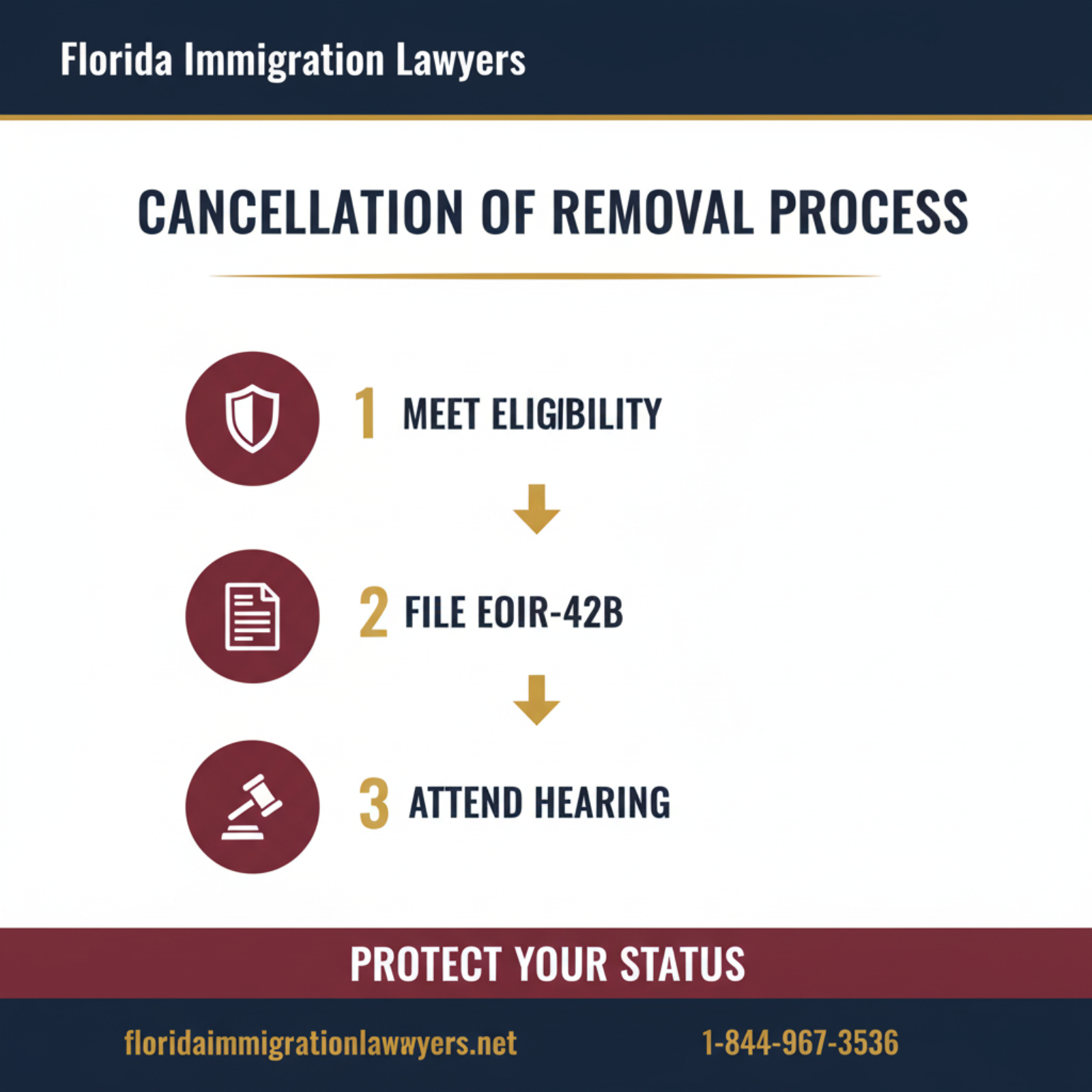
- Receive a Notice to Appear (NTA): The process begins when the Department of Homeland Security (DHS) issues you an NTA, formally placing you in removal proceedings. This document will specify the charges against you and the date of your initial master calendar hearing.
- Attend Master Calendar Hearings: These are preliminary hearings where you and your attorney appear before an immigration judge. During these hearings, you will admit or deny the allegations in the NTA, designate countries of removal, and identify forms of relief you intend to pursue, such as cancellation of removal Florida.
- File Form EOIR-42B or EOIR-42A: If you are eligible for non-LPR cancellation, your attorney will file Form EOIR-42B, Application for Cancellation of Removal and Adjustment of Status for Certain Nonpermanent Residents. If you are an LPR, you will file Form EOIR-42A. This application must be submitted within the deadline set by the immigration judge.
- Gather Supporting Documentation: Begin compiling all necessary evidence to support your application. This includes proof of continuous physical presence, good moral character, and, most importantly for non-LPRs, evidence of exceptional and extremely unusual hardship to your qualifying relatives.
- Submit Evidence and Briefs: Your attorney will submit your application along with all supporting documents, affidavits, and a legal brief to the immigration court. This brief will argue how you meet all statutory and discretionary requirements for cancellation of removal Florida.
- Attend an Individual Merits Hearing: This is your trial before the immigration judge. You and your witnesses will testify, and the DHS attorney will have an opportunity to cross-examine. Your attorney will present your case, highlighting all positive equities and demonstrating why you deserve cancellation of removal.
- Judge's Decision: After the individual hearing, the immigration judge will issue a decision. If granted, you will become a lawful permanent resident. If denied, your attorney can discuss options for appeal to the Board of Immigration Appeals (BIA).
Essential Document Checklist for Cancellation of Removal in Florida
Preparing a robust application for cancellation of removal Florida hinges on submitting comprehensive and compelling documentation. A well-organized packet of evidence can significantly strengthen your case before the immigration judge. This checklist outlines the types of documents typically required.
- Application Forms:
- Form EOIR-42B (for non-LPRs) or Form EOIR-42A (for LPRs)
- Biographic Information (Form G-325A, if required)
- Fingerprint (biometrics) fee payment
- Proof of Identity and Nationality:
- Passport, birth certificate, national ID card
- Proof of Continuous Physical Presence (Non-LPRs):
- Tax returns (10 years)
- Utility bills, rent receipts, mortgage statements
- School records, transcripts, diplomas
- Employment records, pay stubs, letters from employers
- Medical records, vaccination records
- Bank statements, credit card statements
- Affidavits from friends, family, or community members
- Proof of Good Moral Character:
- FBI background check (required through USCIS biometrics)
- Police clearance certificates from all places you have lived
- Court dispositions for any arrests or convictions
- Letters of recommendation from employers, community leaders, religious figures
- Evidence of community involvement, volunteer work
Step-by-Step Process Guide - Evidence of Hardship (Non-LPRs):
- Medical records, therapy reports, psychological evaluations for qualifying relatives
- Financial hardship documents (e.g., mortgage, rent, bills, income statements)
- School records for children, demonstrating special needs or integration
- Letters from doctors, teachers, counselors, or community leaders attesting to hardship
- Evidence of spouse's, parent's, or child's U.S. citizenship or LPR status (birth certificates, Green Cards, naturalization certificates)
- Affidavits from qualifying relatives detailing the specific hardship they would face
- Marriage and Birth Certificates:
- Your marriage certificate (if applicable)
- Birth certificates of your U.S. citizen or LPR children
- Financial Documents:
- Proof of financial support for your family
- Bank statements, savings accounts
- Property deeds or leases
Cancellation of Removal Florida: Timeline and Processing Expectations
The timeline for a cancellation of removal Florida case can vary significantly, often spanning several years. This is due to the high volume of cases in Florida immigration courts, the complexity of the legal issues, and the scheduling demands of the Executive Office for Immigration Review (EOIR). Understanding these delays is crucial for managing expectations.
Typically, after your initial Notice to Appear, it can take months or even a year for your first master calendar hearing. Once your application is filed, the individual merits hearing, where your case is fully presented, might be scheduled a year or more after that. The immigration courts in Miami, Orlando, and other Florida locations are often backlogged.
After your individual hearing, the immigration judge may issue a decision immediately or take several weeks to provide a written decision. If the decision is appealed to the Board of Immigration Appeals (BIA), that process can add another one to three years to the overall timeline. The entire journey for deportation defense Florida through cancellation of removal can easily take three to five years, or even longer in some instances.
Cost Factors and Fee Breakdown for Cancellation of Removal Cases
Pursuing cancellation of removal Florida involves various costs, which can include government filing fees and attorney's fees. It is important to understand these financial commitments upfront. While specific filing fees can change, attorney's fees will vary based on the complexity of your case and the experience of your legal counsel.
Government filing fees for the Application for Cancellation of Removal (Form EOIR-42B or EOIR-42A) are typically required. Additionally, a fee for fingerprinting (biometrics) is necessary for background checks. These fees are set by the Department of Justice and are subject to change, so it's always best to check the most current fee schedule on the EOIR website or consult with your attorney.
Attorney's fees for cancellation of removal Florida cases often involve significant legal work. This includes preparing the application, gathering extensive documentation, conducting legal research, preparing briefs, and representing you in multiple hearings before the immigration judge. Many firms, including Florida Immigration Lawyers, offer payment plans to help manage these costs. A free consultation can help you understand the potential fees involved in your specific case.
Do not navigate this complex and high-stakes process alone. The success of your cancellation of removal Florida case can determine your future in the United States. Contact Florida Immigration Lawyers today for dedicated legal representation. We are here to protect your rights and help you fight for the opportunity to remain with your family.
Common Mistakes to Avoid in Florida Cancellation of Removal Cases
The cancellation of removal Florida process is fraught with potential pitfalls. Making even a small error can jeopardize your entire case and lead to a denial of relief. Being aware of these common mistakes can help you avoid them and strengthen your deportation defense Florida.
- Missing Deadlines: Failing to submit your application or required documents by the judge's deadline is a critical error. Missing a deadline can result in your application being rejected or your case being closed.
- Insufficient Evidence of Hardship: For non-LPRs, not providing enough compelling evidence to meet the "exceptional and extremely unusual hardship" standard is a frequent reason for denial. Vague statements are not enough; detailed, objective evidence is crucial.
- Lack of Good Moral Character Documentation: Failing to address any past issues or not providing sufficient proof of good moral character for the required period can be detrimental. Every aspect of your past behavior will be scrutinized.
- Inaccurate or Incomplete Application Forms: Errors or omissions on Form EOIR-42B or EOIR-42A can lead to delays, requests for evidence, or outright denial. Ensure all information is accurate and fully disclosed.
- Failing to Disclose All Travel: Not accurately listing all departures and entries to the U.S. can lead to questions about continuous physical presence. Any misrepresentation can severely harm your credibility.
- Ignoring Minor Criminal History: Believing that minor arrests or convictions are irrelevant is a mistake. All interactions with law enforcement must be disclosed and properly addressed with certified court dispositions.
- Representing Yourself Without Legal Counsel: Cancellation of removal Florida is one of the most complex forms of immigration relief. Attempting to navigate the immigration court system without an experienced attorney dramatically reduces your chances of success.
- Not Preparing for Testimony: Your testimony is vital. Failing to prepare adequately for direct examination and cross-examination by the DHS attorney can weaken your case and create inconsistencies.
- Failing to Understand "Stop-Time" Rule: The "stop-time" rule, which can halt the accrual of continuous physical presence, is complex. Not understanding how it applies to your NTA or criminal offenses can lead to miscalculation of eligibility.
When to Call a Florida Immigration Lawyer for Cancellation of Removal
The moment you receive a Notice to Appear (NTA) placing you in removal proceedings, it's time to seek legal counsel. Cancellation of removal Florida is an advanced form of deportation defense Florida that requires specialized knowledge of immigration law and court procedures. An experienced attorney from Florida Immigration Lawyers can be your strongest advocate. We also assist with asylum claims and citizenship applications.
You should especially contact a lawyer if:
- You have received a Notice to Appear (NTA): This is the first and most critical sign that you need immediate legal representation. Do not attend your first hearing without consulting an attorney.
- You are unsure about your eligibility: The criteria for both LPR and non-LPR cancellation are highly specific. An attorney can assess your unique situation and determine if you meet the complex requirements.
- You have a criminal history: Even minor arrests or convictions can impact your eligibility for cancellation of removal. A lawyer can analyze your criminal record and advise on potential bars to relief.
- You need to gather extensive evidence: Proving continuous presence, good moral character, and exceptional hardship requires a significant amount of documentation. An attorney can guide you through this process and help organize a compelling case.
- You need to appeal a denial: If your application for cancellation of removal Florida is denied by an immigration judge, a lawyer can assess the grounds for appeal and represent you before the Board of Immigration Appeals.
- You are facing a complex legal issue: Many cases involve nuanced interpretations of immigration law, such as the "stop-time" rule or specific hardship definitions. A skilled attorney understands these complexities.
Florida Immigration Lawyers specializes in deportation defense Florida and has extensive experience with cancellation of removal Florida cases in West Palm Beach, Miami, Orlando, and throughout the state. We can help you navigate the immigration court system, prepare a robust application, and vigorously represent your interests. Protecting your right to remain in the U.S. with your family is our priority. Visit our attorneys page to learn more.
About Florida Immigration Lawyers
Florida Immigration Lawyers is a leading immigration law firm dedicated to serving individuals and families across the entire state of Florida. Our team of experienced attorneys is committed to providing compassionate, effective, and results-driven legal representation for all immigration matters, including complex deportation defense Florida cases. We understand the profound impact immigration issues have on your life and your family.
We offer a comprehensive range of immigration services, including family-based immigration, business immigration, asylum claims, citizenship applications, and aggressive defense against removal proceedings. Our firm prides itself on its deep understanding of U.S. immigration law and our unwavering dedication to our clients. When you choose Florida Immigration Lawyers, you gain a powerful advocate who will fight tirelessly for your rights and your future.
We offer free consultations to help you understand your options without financial commitment. Our team is available 24/7 to address your urgent immigration concerns. We serve all Florida residents, from West Palm Beach to Tallahassee, and are ready to provide the expert legal guidance you deserve.
Phone: 1-844-967-3536
Website: https://www.floridaimmigrationlawyers.net
Sources and References
- U.S. Citizenship and Immigration Services (USCIS)
- Executive Office for Immigration Review (EOIR)
- 8 U.S.C. § 1229b - Cancellation of removal; adjustment of status
- Immigration and Nationality Act (INA) § 240A - Cancellation of removal; adjustment of status
- 8 C.F.R. § 1240.61 - Cancellation of removal for certain nonpermanent residents
This article provides general legal information and is not intended as legal advice. Every case is unique, and outcomes depend on specific facts and circumstances. Contact an attorney for advice about your particular situation.
If you or a loved one is facing deportation in Florida, do not delay. Your future in the U.S. depends on swift and knowledgeable legal action. For expert deportation defense Florida and guidance on cancellation of removal Florida, contact Florida Immigration Lawyers for a free, confidential consultation. Call us now at 1-844-967-3536. Se Habla Español - Estamos aquí para ayudarle.
Do Not Navigate This Process Alone
Our experienced immigration attorneys are ready to fight for you. Get a free, confidential consultation today.
Se Habla Español
Or leave your details and we’ll call you:
Free Evaluation in 24 Hours
Or talk to us right now

AI voice assistant — available 24/7
FreeFrequently Asked Questions

William J. Vásquez
Founding Attorney · Vasquez Law Firm
U.S. Air Force veteran and immigration attorney with years of hands-on U.S. immigration experience. J.D., NCCU School of Law. AILA member. Admitted to the 4th, 5th, and 11th Circuit Courts.
Available 24/7 - Free Evaluations
Reviewed for legal accuracy by William J. Vásquez
Licensed in North Carolina; U.S. immigration is federal practice.
Related Legal Services
Our Florida immigration attorneys can help you with asylum protection, deportation defense and citizenship and naturalization. Call today at 1-844-967-3536 for a free consultation.
Related Links
Related Topics
Free Legal Consultation
Discuss your case with our experienced attorneys. We're available 24/7.
Se Habla Español - Estamos aquí para ayudarle.
Related Articles
SIJS Process for Minors in Florida: What You Need to Know
Special Immigrant Juvenile Status (SIJS) offers a path to legal residency for minors in Florida who have been abused, abandoned, or neglected. This comprehensive guide covers eligibility requirements, application steps, and common mistakes to avoid. Our expert team at Florida Immigration Lawyers is here to assist you through this complex process. Learn more about how SIJS can help secure your future.
BIA Remand Order: Your 2026 Guide in Florida
A BIA remand order means the Board of Immigration Appeals has sent your immigration case back to an Immigration Judge for further review. This crucial development requires immediate and strategic action, as it indicates a need to address legal errors, consider new evidence, or develop the factual record. For individuals in Florida, navigating a BIA remand can be complex, involving new hearings, strict deadlines, and the potential need for updated documentation. Understanding the reasons for the remand, preparing comprehensive evidence, and securing experienced legal representation are vital steps to achieving a favorable outcome. This guide explains the process, potential outcomes, and common mistakes to avoid in 2026, emphasizing the importance of professional legal assistance from Florida Immigration Lawyers.
I-360 Widow Petition: Guide for Surviving Spouses
For non-citizen surviving spouses of U.S. citizens in Florida, the I-360 Widow Petition offers a vital pathway to permanent residency. This self-petition allows eligible individuals to apply for a green card independently, without requiring another sponsor. You must generally file within two years of your spouse's death, prove a bona fide marriage, and ensure you have not remarried. As of 2026, understanding the strict eligibility criteria, detailed filing process, and potential costs is crucial. Florida Immigration Lawyers provides expert guidance, helping you gather necessary documentation, navigate USCIS requirements, and address any complexities, ensuring your application is strong and complete for a secure future in Florida.
Immigration Lawyer Orlando Free Consultation in 2026
Navigating U.S. immigration law in Orlando, Lakeland, and Polk County requires expert legal guidance. Florida Immigration Lawyers offers a free consultation to help you understand your options for visas, Green Cards, citizenship, or deportation defense. This comprehensive guide covers the typical process, essential documents, processing timelines for 2026, and cost factors associated with an immigration lawyer in Orlando. Learn about common mistakes to avoid and when it's crucial to seek legal assistance. Our firm provides personalized, empathetic, and strategic representation across Central Florida, ensuring you have dedicated support for your immigration journey.