Asylum Interview Preparation Florida: Your 2026 Guide
Preparing for your asylum interview in Florida is a critical step towards securing your future. This comprehensive guide from Florida Immigration Lawyers provides essential insights into the process, helping you understand what to expect and how to prepare. We cover everything from reviewing your I-589 application and gathering supporting documents to anticipating USCIS asylum interview questions and avoiding common mistakes. Learn about the timeline, potential costs, and when professional legal assistance can make a significant difference in your case. Our goal is to empower you with the knowledge needed for a successful asylum claim.

Quick Answer: Preparing for Your Asylum Interview
Preparing for your asylum interview in Florida involves thorough documentation, understanding your narrative, and practicing your testimony. You must demonstrate a credible fear of persecution based on specific protected grounds. Working with an experienced immigration attorney significantly enhances your chances of a successful outcome.
- Gather all supporting evidence and personal documents.
- Practice answering potential USCIS asylum interview questions clearly and consistently.
- Understand the legal grounds for asylum under U.S. law.
- Prepare to articulate your fear of persecution in detail.
- Seek legal counsel to review your I-589 application and strategy.
Are you seeking safety and a new beginning in the United States? The asylum interview is a pivotal moment in your journey, especially here in Florida. This interview with a USCIS Asylum Officer determines the strength of your claim for protection. It can feel overwhelming, but with the right preparation, you can approach it with confidence.
Understanding the process and knowing what to expect is crucial for applicants in areas like Homestead and across Florida. This comprehensive guide will walk you through every step, from gathering essential documents to mastering your narrative. We will help you understand how to best present your case. For personalized guidance, call Florida Immigration Lawyers at 1-844-967-3536 for a free consultation. Our team is ready to assist you.
Understanding the Asylum Interview Process in Florida
The asylum interview is a non-adversarial meeting with an Asylum Officer from U.S. Citizenship and Immigration Services (USCIS). In Florida, this typically occurs at the Miami Asylum Office. The officer's role is to determine if you meet the legal definition of an asylee under U.S. immigration law. This means establishing a well-founded fear of persecution.
Your fear must be based on one of five protected grounds: race, religion, nationality, membership in a particular social group, or political opinion. The interview is your primary opportunity to explain your story and provide evidence. It is a critical step in your application for asylum.
The Importance of Your I-589 Application
Your Form I-589, Application for Asylum and for Withholding of Removal, is the foundation of your case. It contains your personal information and the narrative of your persecution. The Asylum Officer will use this document as a roadmap during your interview.
Ensuring your I-589 is accurate, complete, and consistent with your testimony is paramount. Any inconsistencies can raise doubts about your credibility. We recommend reviewing your application thoroughly before your asylum interview.
What to Expect During the Interview
The interview typically lasts between one and four hours. It is conducted in a private setting, often with an interpreter if you are not fluent in English. You will be asked to affirm the truthfulness of your testimony under oath.
The Asylum Officer will ask detailed questions about your past experiences, your fear of returning to your home country, and the specifics of your I-589 application. Your spouse and any unmarried children under 21 included in your application must also attend.
Step-by-Step Guide to Asylum Interview Preparation
Effective asylum interview preparation is key to a successful outcome. Follow these steps to build a strong and compelling case. This guide provides a structured approach for applicants in Florida.
- Review Your I-589 Application Thoroughly: Re-read every section of your Form I-589. Familiarize yourself with the dates, events, and details you provided. Ensure you remember the exact narrative you submitted to USCIS.
- Gather All Supporting Documents: Collect every piece of evidence that supports your claim. This includes personal identification, birth certificates, marriage certificates, police reports, medical records, news articles, and affidavits from witnesses. Organize these documents clearly.
- Prepare Your Personal Narrative: Practice telling your story chronologically and consistently. Focus on the core elements of your fear of persecution and how it relates to one of the five protected grounds. Be ready to provide specific dates, locations, and details.
- Anticipate USCIS Asylum Interview Questions: Think about the types of questions an Asylum Officer might ask. These often cover your background, the persecution you experienced, why you fear returning, and your activities since arriving in the U.S. Prepare concise yet thorough answers.
- Conduct a Mock Asylum Interview: Practicing with an attorney or trusted individual can significantly boost your confidence. A mock asylum interview helps you refine your answers, identify weak points, and get comfortable speaking about sensitive topics. This is an invaluable step for preparation.
- Understand Credibility: Credibility is fundamental in asylum cases. Be honest, consistent, and provide as much detail as you can. If you forget something or need to correct a previous statement, explain why clearly.
- Prepare for the Interview Day: Know the location of the Miami Asylum Office and plan your travel. Dress professionally, arrive early, and bring all original documents plus copies. Remember your asylum interview notice.
Essential Document Checklist for Your Asylum Interview
Bringing a complete set of documents is vital for your asylum interview. Organize these items carefully before your appointment. This checklist helps ensure you have everything needed.
- Your Asylum Interview Notice (Form I-797C, Notice of Action).
- All original passports, travel documents, and birth certificates for yourself and any family members included in your application.
- Original marriage certificate (if applicable).
- Original birth certificates for all children included in your application.
- Original Form I-94, Arrival/Departure Record (if applicable).
- Any other identification documents you possess.
- Copies of your Form I-589, Application for Asylum and for Withholding of Removal, and any supplements.
- All supporting evidence you submitted, plus any new evidence acquired since filing. This may include:
- Police reports, court documents, or arrest warrants.
- Medical records or psychological evaluations documenting harm.
- News articles, human rights reports, or country condition reports relevant to your claim.
- Affidavits or sworn statements from witnesses.
- Photographs, videos, or audio recordings related to your persecution.
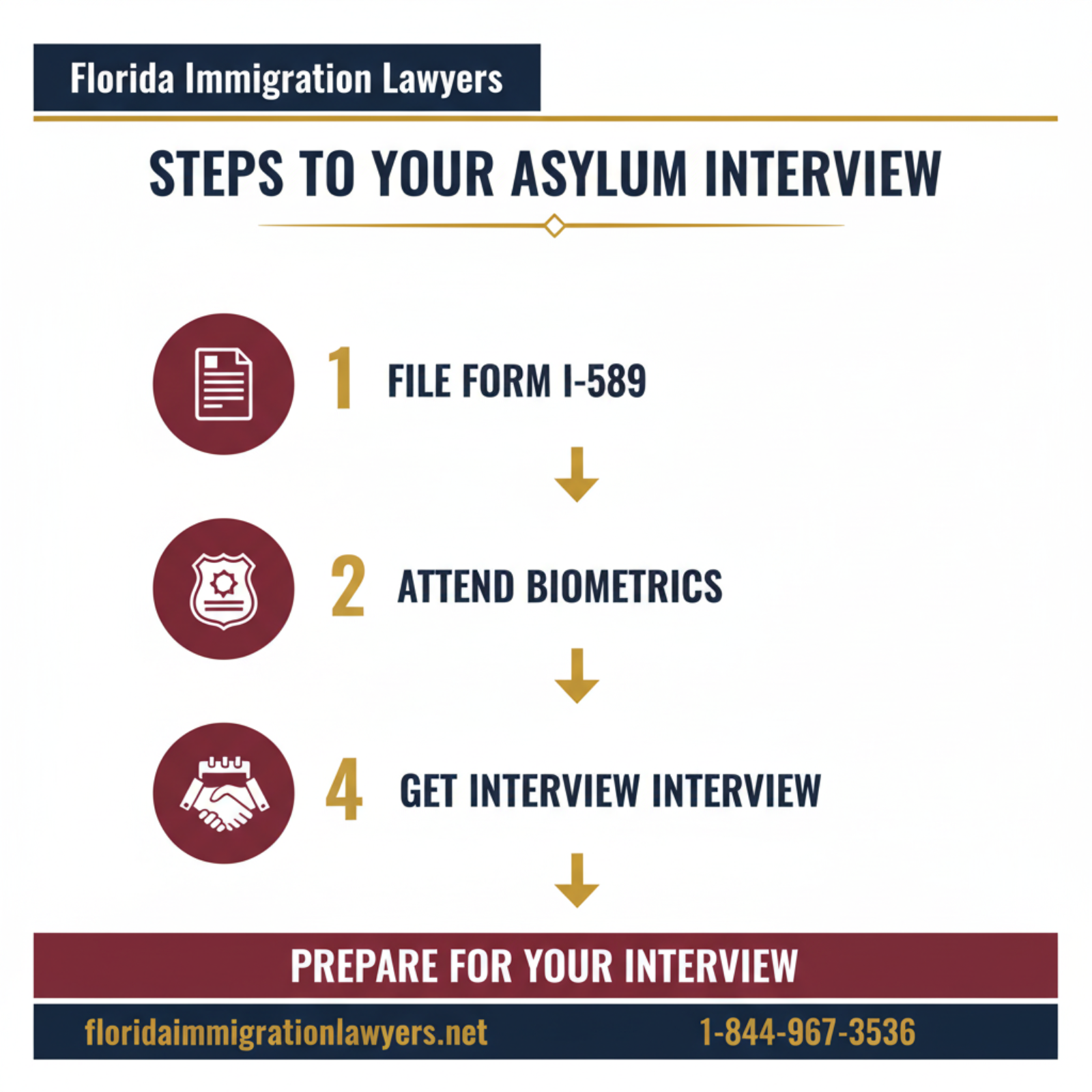
Step-by-Step Process Guide - A list of all your addresses since arriving in the U.S.
- A list of all your employers and schools attended since arriving in the U.S.
- Any criminal records, if applicable, along with disposition documents.
Timeline and Processing Expectations for Asylum Seekers
The timeline for an asylum interview can vary significantly. USCIS generally prioritizes newer affirmative asylum applications. However, backlogs can still lead to delays. After filing your I-589, you will typically receive an interview notice within a few weeks to several months.
Waiting for Your Asylum Interview Date
Many applicants experience a waiting period before receiving their asylum interview notice. This wait can sometimes extend for years, especially for cases filed before January 2018. While waiting, it is crucial to keep USCIS updated on any change of address. This ensures you receive your important notices.
What Happens After an Asylum Interview?
Immediately following your interview, the Asylum Officer may inform you that a decision will be mailed. You will typically receive a decision by mail within two weeks. If your application is approved, you will be granted asylum status. If it is not approved, your case may be referred to an immigration judge for removal proceedings.
If your case is referred, you will have another opportunity to present your asylum claim in Immigration Court. This is where the importance of having legal counsel from Florida Immigration Lawyers becomes even more critical. We can help you navigate this complex next step.
Cost Factors and Fee Breakdown for Asylum Applications
One of the beneficial aspects of seeking asylum is that there is generally no filing fee for Form I-589. This makes the initial application accessible to individuals fleeing persecution. However, other associated costs may arise during the process.
Potential Expenses to Consider
While the I-589 itself is free, you might incur costs for:
- Document Translation: Any document not in English must be translated by a certified translator. This can range from tens to hundreds of dollars per document, depending on length and complexity.
- Evidence Gathering: Obtaining police reports, medical records, or country condition reports might involve fees from the issuing authorities.
- Travel Expenses: You will need to travel to the USCIS Asylum Office in Miami for your interview. Consider transportation, accommodation, and food costs.
- Legal Fees: Hiring an experienced immigration attorney is an investment in your case. While not mandatory, legal representation significantly improves your chances of success. Florida Immigration Lawyers offers free consultations to discuss your options.
- Biometrics Fee: There may be a fee for biometric services (fingerprints, photograph, signature), though this is often waived for asylum applicants. Always check the latest USCIS fee schedule.
It is important to budget for these potential expenses. Always consult the official USCIS website for the most current fee information, as fees are subject to change.
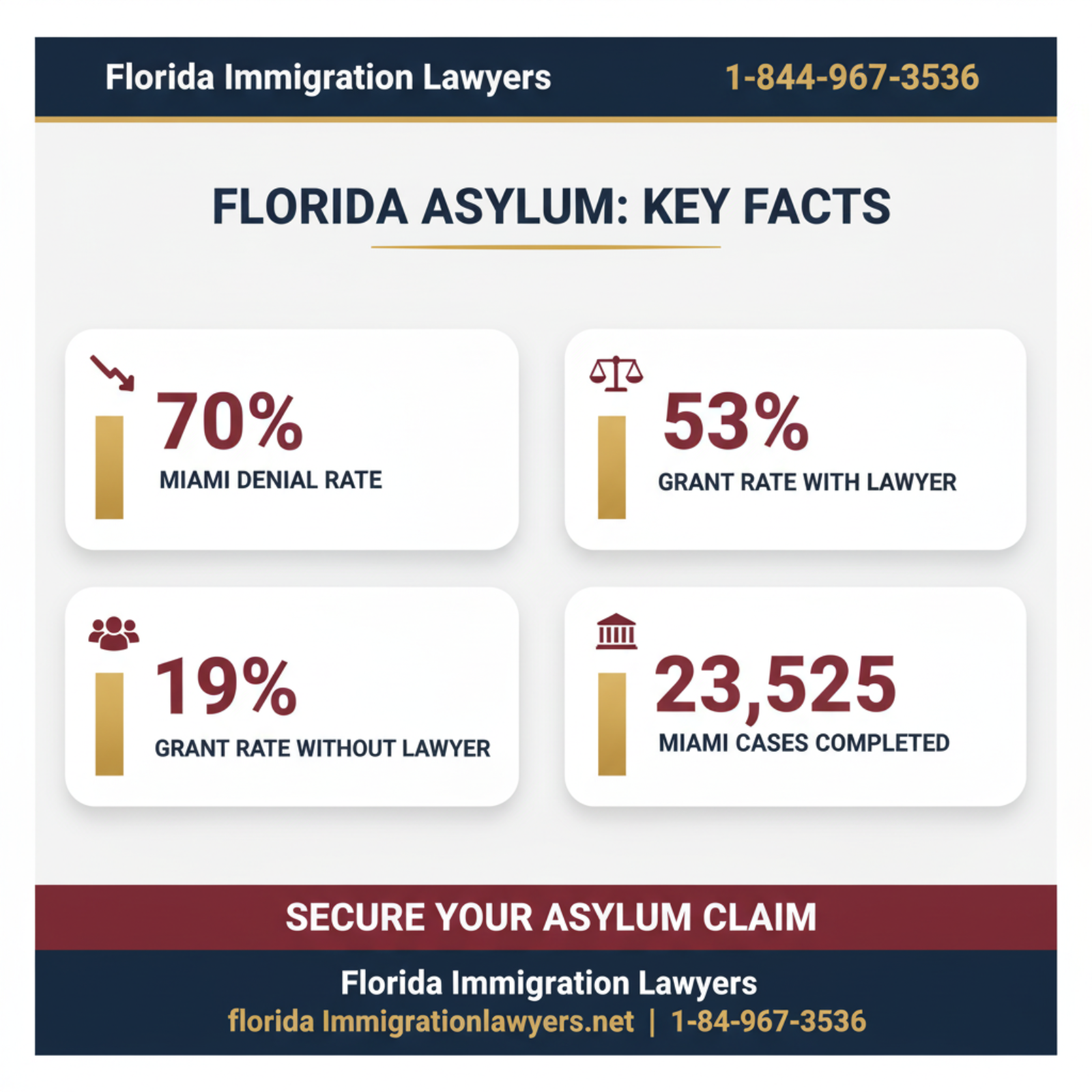
Common Mistakes to Avoid During Your Asylum Interview
Avoiding common pitfalls can significantly strengthen your asylum claim. Be mindful of these errors during your asylum interview preparation and the interview itself. Many of these issues can raise credibility concerns with the Asylum Officer.
- Inconsistencies in Your Story: Providing details that contradict your I-589 application or previous statements can severely damage your credibility. Consequences: May lead to denial or referral to Immigration Court.
- Lack of Specificity: General statements without specific dates, locations, or names make your story less convincing. Consequences: Your claim may appear vague or fabricated.
- Failing to Disclose All Relevant Information: Hiding negative information, such as past arrests or prior immigration history, can be detrimental if discovered later. Consequences: Can be seen as an attempt to mislead, leading to denial.
- Not Understanding Your Own Application: If you appear unfamiliar with the details of your I-589, it suggests you did not prepare adequately or did not provide the information yourself. Consequences: Raises credibility issues.
- Poor Document Organization: Presenting a messy or incomplete set of documents can frustrate the officer and delay the process. Consequences: May lead to requests for evidence (RFEs) or further delays.
- Emotional Outbursts Without Explanation: While emotions are natural, uncontrolled outbursts without context can sometimes be misinterpreted. Consequences: Focus on clearly articulating your experiences, even when emotional.
- Bringing Prohibited Items: Can I bring my phone to an asylum interview? Generally, no. Most USCIS facilities prohibit cell phones and other electronic devices in interview rooms. Consequences: You may be asked to leave your phone in your car or a locker, causing unnecessary stress.
- Not Seeking Legal Counsel: Attempting to navigate the complex asylum process without an attorney. Consequences: You might miss critical legal arguments or fail to present your case effectively.
When to Call a Lawyer for Your Asylum Case
While you have the right to represent yourself, the complexity of asylum law makes legal representation highly advisable. Florida Immigration Lawyers is dedicated to serving individuals throughout Florida, including Homestead, Miami, and beyond. We understand the nuances of asylum interview preparation.
You should contact an attorney if:
- You are unsure how to complete Form I-589 or articulate your fear of persecution.
- You have experienced significant trauma and find it difficult to discuss your past.
- Your case involves complex legal issues, such as past criminal convictions or prior immigration denials.
- You received an asylum interview notice and want to ensure you are fully prepared.
- You need assistance gathering country condition reports or expert affidavits.
- Your interview is approaching, and you want to conduct a mock asylum interview with a professional.
- You are concerned about what happens after an asylum interview if your case is not approved.
Our experienced attorneys can help you craft a compelling narrative, gather crucial evidence, and prepare for potential USCIS asylum interview questions. We also provide robust deportation defense services if your case is referred to Immigration Court.
About Florida Immigration Lawyers
Florida Immigration Lawyers is a leading law firm dedicated to providing exceptional immigration services across the entire state of Florida. From the vibrant communities of Miami and Homestead to the panhandle, we are here to serve you. Our mission is to provide compassionate, effective, and results-oriented legal representation. We understand the profound impact immigration matters have on individuals and families, including those seeking family-based immigration.
We offer a comprehensive range of immigration services, including asylum applications, family-based immigration, business immigration, naturalization, and deportation defense. Our skilled attorneys are committed to protecting your rights and achieving the best possible outcome for your case. We pride ourselves on our deep understanding of U.S. immigration law and our unwavering client advocacy.
Choosing Florida Immigration Lawyers means partnering with a team that genuinely cares about your future. We offer free consultations, are available 24/7, and our bilingual staff ensures that language is never a barrier to quality legal assistance. Let us be your trusted guide through the complexities of the U.S. immigration system.
Sources and References
- U.S. Citizenship and Immigration Services (USCIS) - Asylum
- Executive Office for Immigration Review (EOIR) - U.S. Department of Justice
- Immigration and Nationality Act (INA) § 208, 8 U.S.C. § 1158 (Asylum)
- 8 CFR § 208 (Asylum and Withholding of Removal)
This article provides general legal information and is not intended as legal advice. Every case is unique, and outcomes depend on specific facts and circumstances. Contact an attorney for advice about your particular situation.
Your journey to safety and stability is important. Do not face the complexities of the asylum process alone. Florida Immigration Lawyers is here to provide the expert legal support you deserve. Call us today at 1-844-967-3536 for a free, confidential consultation. Se Habla Español - Estamos aquí para ayudarle.
Do Not Navigate This Process Alone
Our experienced immigration attorneys are ready to fight for you. Get a free, confidential consultation today.
Se Habla Español
Frequently Asked Questions
Florida Immigration Lawyers
Immigration Attorney | Founder, Vasquez Law Firm
U.S. Air Force veteran and immigration attorney with thousands of cases resolved. J.D., NCCU School of Law. AILA member. Admitted to the 4th, 5th, and 11th Circuit Courts.
Available 24/7 - Free Evaluations
Related Legal Services
Our Florida immigration attorneys can help you with deportation defense, citizenship and naturalization and family immigration services. Call today at 1-844-967-3536 for a free consultation.
Related Links
Related Topics
Free Legal Consultation
Discuss your case with our experienced attorneys. We're available 24/7.
Se Habla Español - Estamos aquí para ayudarle.
Related Articles
Expungement Effect on Immigration in Florida | VLF Florida
Discover how expungement impacts immigration in Florida. Learn about eligibility, the process, and potential consequences. Contact Florida Immigration Lawyers at 1-844-967-3536 for a free consultation.
Immigration Services in Kissimmee Florida | VLF Florida
Discover essential immigration services in Kissimmee, Florida. Learn about the resources available for immigrants, including Puerto Rican residents in Osceola County. Contact Florida Immigration Lawyers at 1-844-967-3536 for expert guidance and a free consultation.
Child Status Protection Act (CSPA) Florida: Preventing 'Aging
Understand the Child Status Protection Act (CSPA) in Florida and how it prevents 'aging out' for derivative beneficiaries. Navigate complex immigration laws
I-360 Widow Self-Petition in Florida: A Complete Guide
Learn how to navigate the I-360 widow self-petition process in Florida. This comprehensive guide covers eligibility, documentation, and common mistakes. Call Florida Immigration Lawyers for expert assistance.