Asylum Interview Preparation Florida: Your Guide to Success
The asylum interview in Florida is a crucial step for individuals seeking protection. This guide covers understanding asylum, a step-by-step preparation process, essential documents for your I-589 application, and what to expect regarding timelines and costs. We also highlight common mistakes to avoid and when it's vital to consult a Florida immigration lawyer. For comprehensive support with your USCIS asylum process, Florida Immigration Lawyers offers expert guidance and free consultations.
Preparing for your asylum interview in Florida involves understanding the process, gathering crucial evidence, and practicing your testimony. Success hinges on a clear, consistent narrative and strong documentation. Seeking legal guidance from a Florida immigration lawyer is highly recommended to navigate the complexities of your I-589 application and the USCIS asylum process.
- Thoroughly prepare your personal narrative and supporting evidence.
- Consult with an experienced Florida immigration lawyer early.
- Understand the USCIS interview process and potential questions.
- Practice telling your story clearly and consistently.
- Ensure all documents are translated and properly organized.
Asylum Interview Preparation Florida: Your Guide to Success
The journey to seek asylum in the United States is often filled with hope, uncertainty, and significant challenges. For individuals and families in Florida, particularly in areas like Pembroke Pines and throughout Broward County, the asylum interview is a pivotal moment. This interview with U.S. Citizenship and Immigration Services (USCIS) is your primary opportunity to explain your fear of persecution and why you qualify for protection.
Understanding the gravity of this step, many applicants feel overwhelmed. The prospect of recounting traumatic experiences to an asylum officer can be daunting. However, thorough asylum interview preparation in Florida can significantly increase your chances of a positive outcome.
At Florida Immigration Lawyers, we understand the profound importance of this process to your future. Our experienced team is dedicated to guiding you through every stage, ensuring you are well-prepared and confident. Call Florida Immigration Lawyers at 1-844-967-3536 for a free consultation and let us help you build a strong case.
This comprehensive guide will walk you through the essential aspects of preparing for your asylum interview, offering actionable advice and insights tailored to the Florida context. We will cover everything from understanding the legal framework to gathering your documents and mastering your testimony.
Understanding Asylum and Your USCIS Interview in Florida
Asylum is a form of protection granted to individuals who have fled their home country and are unable or unwilling to return because of a well-founded fear of persecution. This fear must be based on one of five protected grounds: race, religion, nationality, membership in a particular social group, or political opinion. The legal framework for asylum is found in Section 208 of the Immigration and Nationality Act (INA), codified at 8 U.S.C. § 1158.
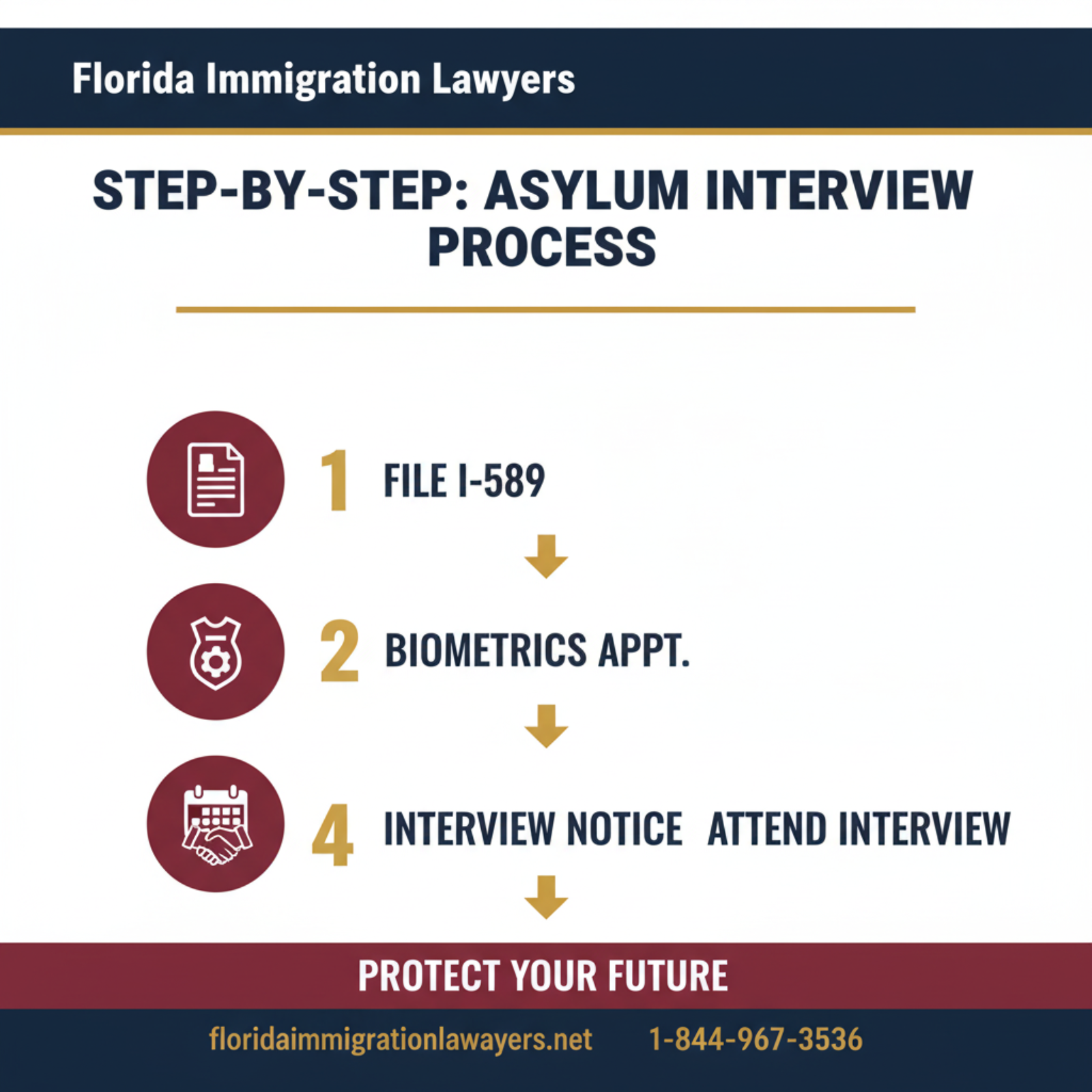
For asylum seekers in Florida, the process typically begins with filing Form I-589, Application for Asylum and for Withholding of Removal, with USCIS. After filing, applicants are generally scheduled for an interview with an asylum officer. This interview is not an adversarial proceeding; rather, it is an opportunity for you to present your case and for the officer to gather information to determine your eligibility.
Florida is home to a large and diverse immigrant population, with many individuals seeking refuge from various countries. USCIS asylum offices serving Florida are located in areas such as Hialeah and Orlando, with interviews potentially conducted at these or other designated locations. The specific office handling your case can impact scheduling and local procedures, making local legal insight invaluable.
During the interview, the asylum officer will ask detailed questions about your past experiences, your fear of persecution, and the conditions in your home country. They will also inquire about your personal history, including family, education, and any past interactions with authorities. Your ability to provide clear, consistent, and credible testimony is paramount to a successful outcome. Learn more about the asylum process by visiting our asylum practice area page.
Step-by-Step Guide to Asylum Interview Preparation in Florida
Preparing for your USCIS asylum process interview requires meticulous attention to detail and a strategic approach. Here is a comprehensive step-by-step guide to help you get ready for this crucial meeting:
-
Consult with an Experienced Florida Immigration Lawyer: The first and most critical step is to seek legal counsel. A skilled Florida immigration lawyer can assess your case, identify potential challenges, and help you gather the necessary evidence. They can also prepare you for the types of questions an asylum officer might ask, particularly concerning the unique aspects of Florida's immigration landscape and USCIS offices. Our team at Florida Immigration Lawyers is ready to assist you.
-
Gather All Supporting Evidence: Your testimony alone may not be enough. You need to corroborate your story with strong evidence. This includes personal documents, affidavits from witnesses, medical records, police reports, and country condition reports from credible sources. Ensure all documents are original or certified copies, and that any foreign language documents are accompanied by certified English translations.
-
Prepare Your Personal Narrative: Work with your attorney to develop a clear, consistent, and detailed account of your experiences. This narrative should explain your fear of persecution, connecting it directly to one of the five protected grounds. Practice telling your story aloud to ensure it flows logically and covers all essential details without unnecessary digressions. Consistency across your I-589 application and your testimony is vital.
-
Practice Your Testimony: Your lawyer will conduct mock interviews to help you feel comfortable answering questions, even difficult or sensitive ones. This practice will help you maintain composure, articulate your experiences effectively, and avoid common pitfalls like inconsistencies or vague answers. Focus on being truthful, specific, and concise.
-
Understand Interview Day Logistics: Know the exact date, time, and location of your interview, whether it's at the Hialeah, Kendall, or Orlando USCIS Asylum Office. Plan your travel to arrive early. If you need an interpreter, ensure you have a reliable, neutral one, or confirm USCIS will provide one. Dress professionally and bring all original documents and copies.
-
Anticipate Potential Questions: Asylum officers are trained to ask questions designed to evaluate the credibility of your claim. These may include specific details about dates, locations, names of persecutors, and your emotional state during traumatic events. Your attorney will help you prepare for these inquiries, ensuring you understand why certain questions are asked and how to respond effectively.
-
Follow-Up After the Interview: After the interview, you may receive a decision, a Request for Evidence (RFE), or a referral to an immigration court. Your attorney can help you understand the next steps, including how to respond to an RFE or prepare for deportation defense if your case is referred to an immigration judge in Miami or Orlando.
Essential Document Checklist for Your I-589 Application
A well-organized set of supporting documents is crucial for your asylum interview preparation Florida. Bring originals and copies of everything. Here is a comprehensive list of documents you should consider:
- Form I-589, Application for Asylum and for Withholding of Removal: Ensure all sections are accurately completed and signed.
- Identification Documents: Passport, national identity card, birth certificate, marriage certificate (if applicable), driver's license, or any other government-issued ID.
- Evidence of Persecution: Police reports, medical records (detailing injuries, psychological evaluations), photographs of injuries or events, witness affidavits, newspaper articles, or human rights reports documenting the events you experienced or fear.
- Country Condition Reports: Reports from organizations like Human Rights Watch, Amnesty International, or the U.S. Department of State that describe the human rights situation in your home country, especially concerning your protected ground.
- Personal Statements: Your detailed written declaration outlining your asylum claim.
- Proof of Relationship: Birth certificates, marriage certificates for any family members included in your family immigration application.
- Travel Documents: Any passports, visas, or other documents used to enter the U.S.
- Translation Certificates: Certified English translations for all foreign language documents, along with the original documents.
- Proof of U.S. Entry: I-94 Arrival/Departure Record, if applicable.
Asylum Interview Timeline and Processing Expectations in Florida
The timeline for the USCIS asylum process can vary significantly, often depending on the caseload of the specific asylum office and national priorities. While USCIS aims to interview asylum applicants within 45 days of filing Form I-589, this is rarely the reality, especially for defensive asylum cases. Many applicants in Florida, including those in Pembroke Pines, experience waiting periods that can extend for years.
Several factors influence the processing time for your asylum interview in Florida:
- Asylum Office Caseload: The volume of applications at the Hialeah, Kendall, or Orlando asylum offices can impact scheduling.
- Date of Filing: USCIS often prioritizes newer filings, but older cases may still be pending.
- Complexity of Your Case: Cases requiring extensive review or additional evidence may take longer.
- Security Checks: Background and security checks are mandatory and can sometimes cause delays.
After your interview, the asylum officer will typically inform you that a decision will be mailed. This can take weeks or even months. If your case is not granted by USCIS, it will generally be referred to an Immigration Judge at an Executive Office for Immigration Review (EOIR) court, such as the Miami Immigration Court or the Orlando Immigration Court, for defensive asylum proceedings. This referral does not mean your case is over; it simply moves to a different forum where you will have another opportunity to present your claim.
It is important to note that asylum applicants are generally eligible to apply for an Employment Authorization Document (EAD) 150 days after filing their I-589 application, provided their case is still pending and not subject to certain bars. This EAD allows you to work legally in the U.S. while your asylum application is being processed.
Cost Factors and Fee Breakdown for Asylum Seekers
One critical piece of information for all asylum seekers is that there is **no filing fee for Form I-589, Application for Asylum and for Withholding of Removal**. This is a significant relief for many individuals fleeing persecution, as outlined in INA 208(d)(3) (8 U.S.C. § 1158(d)(3)) and further detailed in 8 CFR 208.6.
However, while the application itself is free, there are other costs associated with pursuing asylum that you should anticipate:
- Legal Fees: Hiring a qualified Florida immigration lawyer is often the most significant expense. Legal fees can vary depending on the complexity of your case, the attorney's experience, and their fee structure (hourly vs. flat fee). Investing in legal representation from Florida Immigration Lawyers can be crucial for a successful outcome.
- Translation Services: Any document not in English must be accompanied by a certified English translation. The cost of these services can add up, especially if you have many documents. Ensure translators are reputable and provide proper certification.
- Document Retrieval Fees: You may incur costs for obtaining official records from your home country, medical reports, or police records.
- Travel Expenses: You will need to travel to the USCIS asylum office for your interview, which could be in Hialeah, Kendall, or Orlando, depending on your residence in Florida. Consider transportation, and potentially accommodation if you are traveling from a distant part of Florida like Pembroke Pines.
- Medical Examinations: While not typically required for the asylum interview itself, if you later apply for adjustment of status (a green card) based on asylum, you will need to undergo a medical examination by a USCIS-approved civil surgeon.
While these costs can seem daunting, the investment in proper asylum interview preparation in Florida, particularly legal assistance, can be invaluable for securing your future in the United States. Many firms, including Florida Immigration Lawyers, offer flexible payment plans.
Do not navigate this process alone. Contact Florida Immigration Lawyers today to discuss your case and understand the financial aspects involved in seeking asylum.
Common Mistakes to Avoid During Asylum Interview Preparation in Florida
Avoiding common pitfalls can significantly strengthen your USCIS asylum process application. Be aware of these mistakes:
-
Not Seeking Legal Counsel: Attempting to navigate the complex asylum laws and procedures without an experienced Florida immigration lawyer is a major risk. Legal guidance is critical for proper case development and interview preparation, especially with the nuances of Florida's immigration courts and USCIS offices.
-
Inconsistent Story: Providing different details or a changed narrative from your I-589 application during your interview can severely damage your credibility. Ensure your testimony is consistent with all prior statements and documents.
-
Lack of Sufficient Evidence: Relying solely on your verbal testimony without corroborating documents can weaken your claim. Gather all possible evidence, including personal records, witness affidavits, and country condition reports.
-
Missing Deadlines: The one-year filing deadline for asylum (from your last arrival in the U.S.) is strictly enforced, with limited exceptions. Missing this or other deadlines can lead to denial. Always be aware of and adhere to all deadlines.
-
Failing to Disclose Criminal History: Hiding any criminal record, no matter how minor, can lead to a denial for misrepresentation and potentially severe immigration consequences. Always be truthful and disclose all relevant information to your attorney.
-
Not Updating Contact Information: Moving without notifying USCIS of your new address can result in missed interview notices or decisions, potentially leading to a denial without your knowledge. File Form AR-11 promptly.
-
Poor Interview Demeanor: While stressful, maintaining a respectful and composed demeanor is important. Avoid interrupting the officer, showing anger, or being evasive. Answer questions truthfully and directly.
-
Not Preparing for Tough Questions: Be ready for challenging questions about inconsistencies, the timeline of events, or why you didn't seek protection elsewhere. Your lawyer will help you anticipate and practice responses.
-
Failing to Translate Documents Properly: All foreign language documents must have certified English translations. Poor translations or lack of certification can cause delays or even lead to documents not being considered.
-
Bringing Unauthorized Individuals: Only your attorney and a qualified interpreter (if needed) should accompany you. Do not bring friends or family members unless specifically requested or allowed by USCIS.
-
Not Understanding the Basis of Your Claim: You must clearly articulate why you fear persecution based on race, religion, nationality, particular social group, or political opinion. Vague reasons or a lack of understanding of these grounds will hurt your case.
When to Call a Lawyer for Your Asylum Interview in Florida
While some individuals attempt to navigate the asylum process alone, the complexities of immigration law often make legal representation indispensable. For anyone undergoing asylum interview preparation in Florida, consulting a lawyer is highly advisable. There are specific scenarios where legal assistance becomes not just beneficial, but critical:
- Complex Persecution Claims: If your claim involves intricate details, multiple forms of persecution, or legal ambiguities, an attorney can help articulate your narrative effectively and ensure all legal requirements are met.
- Prior Denials or Immigration History: If you have previously been denied asylum, have a history of immigration violations, or have been in removal proceedings, an attorney can assess your situation and strategize the best approach.
- Criminal History: Any past arrests or convictions, even minor ones, can significantly complicate your asylum case. A lawyer can determine if any bars to asylum apply and advise on potential waivers or defense strategies.
- One-Year Filing Deadline Issues: If you filed your I-589 application more than one year after arriving in the U.S., you must demonstrate an exception to this deadline. An attorney can help establish these exceptional circumstances.
- Credibility Concerns: If there are any perceived inconsistencies in your story or documents, an attorney can help you address these proactively and prepare you to explain them to the asylum officer.
- Referral to Immigration Court: If your asylum claim is not granted by USCIS, it will be referred to an Immigration Judge. At this stage, legal representation is absolutely essential for deportation defense and presenting your case in a formal court setting, such as the Miami or Orlando Immigration Courts.
- Any Uncertainty or Anxiety: The emotional toll of recounting traumatic experiences is immense. Having an attorney by your side provides invaluable support, reduces stress, and ensures your rights are protected throughout the process.
Florida Immigration Lawyers has a proven track record of assisting asylum seekers throughout Florida, including Pembroke Pines and surrounding communities. Our dedicated attorneys are here to provide the expert guidance you need. We specialize in all aspects of immigration law, including asylum, and are committed to helping you achieve a favorable outcome.
About Florida Immigration Lawyers
Florida Immigration Lawyers is a leading immigration law firm dedicated to serving individuals and families across the entire state of Florida. With years of experience and a deep understanding of U.S. immigration law, we provide comprehensive legal services designed to meet the diverse needs of our clients. Our mission is to offer compassionate, effective, and results-driven representation.
We specialize in a wide range of immigration matters, including asylum and refugee claims, family-based immigration, business immigration, citizenship, green cards, visa applications, and deportation defense. Our attorneys are known for their meticulous preparation, strategic thinking, and unwavering commitment to client success.
Why choose Florida Immigration Lawyers? We pride ourselves on offering personalized legal solutions, ensuring every client receives the attention and dedicated advocacy they deserve. We understand the stakes involved in immigration cases and work tirelessly to protect your rights and help you achieve your American dream. Our firm is available 24/7 for consultations, providing peace of mind when you need it most.
For expert legal guidance and a free consultation, contact Florida Immigration Lawyers today. Call us at 1-844-967-3536 or visit our website at https://www.floridaimmigrationlawyers.net. We are here to help you every step of the way.
Sources and References
- U.S. Citizenship and Immigration Services (USCIS) - Asylum
- U.S. Citizenship and Immigration Services (USCIS) - Form I-589
- Executive Office for Immigration Review (EOIR)
- 8 U.S.C. Chapter 12 - Immigration and Nationality Act (INA) - Specifically 8 U.S.C. § 1158 (INA 208) - Asylum
- 8 CFR Part 208 - Asylum and Withholding of Removal
This article provides general legal information and is not intended as legal advice. Every case is unique, and outcomes depend on specific facts and circumstances. Contact an attorney for advice about your particular situation.
Preparing for your asylum interview in Florida is a critical step towards securing your future. Do not leave your fate to chance. With the right preparation and expert legal representation from Florida Immigration Lawyers, you can approach your interview with confidence and clarity. Our team is committed to providing the comprehensive support you need to navigate this journey successfully. We serve clients across Florida, including Pembroke Pines, Miami, Orlando, and beyond.
Take the first step towards protection and peace of mind. Contact Florida Immigration Lawyers today for a free, confidential consultation at 1-844-967-3536. Se Habla Español - Estamos aquí para ayudarle.
Need help with Immigration?
Our Florida immigration attorneys offer free consultations. Call today or schedule online.
Frequently Asked Questions
Florida Immigration Lawyers
Legal Team
Our experienced attorneys at Florida Immigration Lawyers have been serving clients across Florida for over 20 years. We specialize in immigration, personal injury, criminal defense, workers compensation, and family law.