Annual Asylum Fee in Florida: Your 2026 Guide to USCIS
For asylum seekers in Florida, understanding the 2026 <b>annual asylum fee</b> is crucial. This guide explains who must pay, how to comply with USCIS and EOIR requirements, and common mistakes to avoid. Learn about the payment process, essential documents, and what to expect regarding timelines. The fee helps cover administrative costs for pending asylum applications. Our firm, Florida Immigration Lawyers, monitors these regulations closely. We offer expert legal assistance to ensure your application remains active and compliant. Do not risk your asylum status by navigating these complex rules alone. Contact us for a free consultation and personalized guidance.

The annual asylum fee is a mandatory charge for certain asylum applicants in Florida and across the U.S., typically applicable to those with pending applications for over a year. This fee, often managed by USCIS or EOIR, helps cover processing costs and is crucial for maintaining your application's active status. Understanding the requirements and payment methods is vital to avoid delays or adverse outcomes in your immigration journey.
- Certain asylum applicants with pending cases must pay an annual fee.
- The fee is administered by USCIS or EOIR.
- Failure to pay can impact your asylum application status.
- Payment methods and deadlines are critical for compliance.
- Consulting an immigration lawyer in Florida is highly recommended.
Navigating the complexities of immigration law can be overwhelming, especially when new requirements like the annual asylum fee are introduced. For asylum seekers in Florida, particularly those in areas like Hollywood, understanding these fees is crucial for the success of your application.
Many individuals arrive in the United States seeking safety and protection, embarking on a challenging asylum process. The prospect of an additional annual fee can add to this stress. This comprehensive guide will demystify the annual asylum fee for 2026, outlining who needs to pay, how to pay, and what to expect.
Our goal is to provide clear, actionable information to help you manage this important aspect of your asylum claim. We understand the stakes are high, and ensuring compliance with all USCIS and EOIR requirements is paramount. For personalized guidance on your specific situation, call Florida Immigration Lawyers at 1-844-967-3536 for a free consultation. We are here to help you every step of the way.
Understanding the Annual Asylum Fee: Background and Purpose
The annual asylum fee is a relatively recent development in U.S. immigration policy. It was implemented to help cover the administrative costs associated with processing asylum applications, particularly those that remain pending for extended periods.
This fee applies to certain individuals who have filed an I-589, Application for Asylum and for Withholding of Removal. The specific criteria for who must pay this fee can vary based on legislative updates and policy changes. It is essential to stay informed about the latest regulations from USCIS and the Executive Office for Immigration Review (EOIR).
For asylum seekers in Florida, this fee is a critical component of maintaining your application's active status. Failure to pay can lead to serious consequences, including potential dismissal of your asylum claim. Our firm, Florida Immigration Lawyers, closely monitors these changes to provide our clients with accurate and timely advice.
Who is Required to Pay the Annual Asylum Fee?
Typically, the annual asylum fee applies to individuals whose asylum applications have been pending for a specified duration, often exceeding one year. This generally includes those who filed their I-589 and have not yet received a final decision from USCIS or an immigration judge.
The exact eligibility criteria, including the specific dates and application types, are determined by official government directives. It is not a fee for *filing* the I-589 itself, but rather an ongoing charge for applications that remain unresolved. This distinction is important for understanding your obligations.
Certain categories of asylum seekers, such as unaccompanied minors, may be exempt from this fee. However, these exemptions are specific and require careful review of your individual circumstances. We recommend consulting with an experienced asylum lawyer in Florida to determine your exact obligations.
Legal Basis for the Annual Asylum Fee
The authority to impose fees for immigration benefits, including asylum applications, stems from various sections of the Immigration and Nationality Act (INA) and federal regulations. Congress has granted agencies like USCIS the power to establish fees to recover the costs of adjudicating applications and petitions.
Specifically, the framework for such fees can be found in 8 U.S.C. § 1356, which outlines the Immigration Examinations Fee Account. This account funds USCIS operations, and fee adjustments are often made to ensure its solvency. The annual asylum fee is part of this broader system of cost recovery.
Further details regarding fee schedules and specific requirements are typically codified in the Code of Federal Regulations (CFR), particularly 8 CFR Part 103 and 8 CFR Part 106. These regulations provide the legal backbone for the collection of the annual asylum fee and other immigration-related charges.
Step-by-Step Guide to Paying Your Annual Asylum Fee
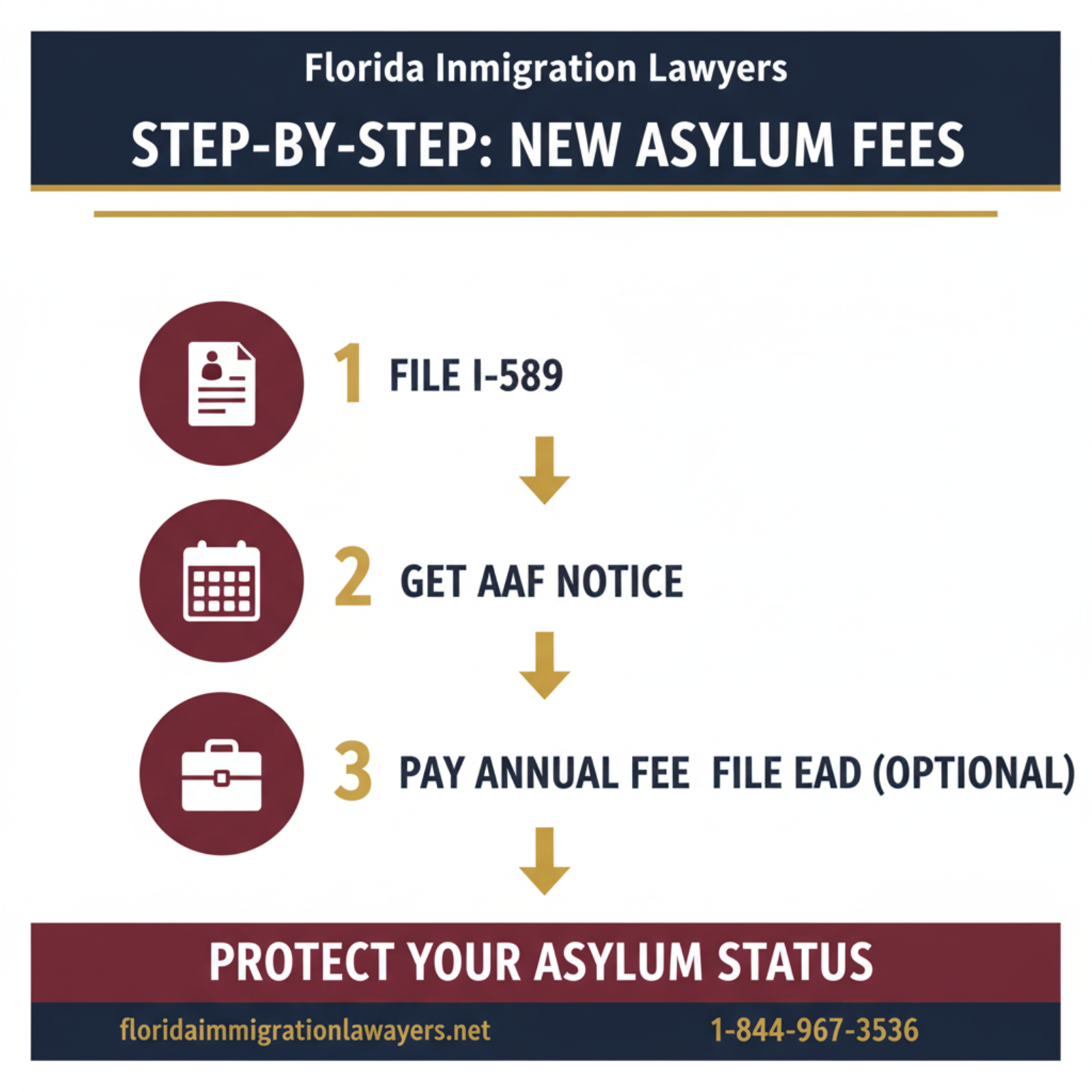
Paying the annual asylum fee requires careful attention to detail. Following the correct procedure is essential to ensure your payment is processed accurately and on time. Here is a general step-by-step guide for applicants in Florida:
-
Identify Your Obligation: First, determine if you are required to pay the fee. You typically receive a notification from USCIS or EOIR if your application falls under the annual asylum fee requirement. Check your mail and online accounts regularly.
This notification will specify the amount due and the deadline for payment. Do not assume you are exempt; always verify your status.
-
Locate Your Case Information: You will need your Alien Registration Number (A-Number) and potentially your case receipt number. These identifiers are crucial for ensuring your payment is correctly linked to your asylum application.
Keep all correspondence from USCIS and EOIR organized for easy access to this information. If you have misplaced it, contact our Florida immigration law firm for assistance.
-
Choose Your Payment Method: USCIS and EOIR offer various payment options. These typically include online payments through their respective portals, mail-in payments via check or money order, or sometimes in-person payments at designated locations.
Online payment is often the most convenient and trackable method. Ensure you use the official government payment portal, such as the USCIS online payment system or the EOIR Payment Portal.
-
Complete the Payment Process: If paying online, follow the instructions on the government website carefully. Double-check all entered information, especially your A-Number and payment amount, before finalizing the transaction. For mail-in payments, ensure your check or money order is made out to the correct entity (e.g., U.S. Department of Homeland Security).
Include your A-Number on the payment instrument. Send it to the specified address via certified mail with a return receipt requested for proof of delivery.
-
Retain Proof of Payment: After your payment is complete, immediately save or print a copy of your payment confirmation or receipt. This document is your proof that the annual asylum fee has been paid.
Keep this record with your other important immigration documents. It will be invaluable if any questions or discrepancies arise regarding your payment.
Essential Document Checklist for Annual Asylum Fee Payment
When preparing to pay your annual asylum fee, having the right documents and information readily available will streamline the process. A comprehensive checklist can help prevent errors and delays for applicants in Florida.
Here’s what you should have on hand:
- Official Fee Notification: The letter or notice from USCIS or EOIR informing you of the annual asylum fee requirement. This document contains critical details like the fee amount and payment deadline.
- Alien Registration Number (A-Number): Your unique identifier with USCIS and EOIR. This number must be accurately provided with your payment.
- Case Receipt Number: If applicable, the receipt number from your I-589 application. This helps further link your payment to your specific asylum case.
- Valid Payment Method: A credit/debit card for online payments, or a check/money order for mail-in payments. Ensure funds are available if using a checking account.
- Personal Identification: While not always directly submitted with the payment, having your ID handy can be useful for verification purposes, especially if contacting USCIS or EOIR customer service.
- Proof of Previous Filings: Copies of your I-589 application and any other relevant immigration forms. These can help clarify your case status if needed.
- Mailing Address (if paying by mail): The exact address provided by USCIS or EOIR for fee submission. Do not send payments to a general office address.
Annual Asylum Fee Timeline and Processing Expectations for Florida Applicants
Understanding the timeline for the annual asylum fee is crucial for applicants in Florida. Missing a deadline can have severe repercussions for your asylum case. The process generally involves specific notification, payment, and processing periods.
Typically, USCIS or EOIR will send a notification letter detailing the requirement to pay the fee. This letter will include the specific due date. It is imperative to pay the fee well in advance of this deadline to account for any processing delays, especially if mailing a payment.
When to Expect Notifications and Deadlines
Asylum applicants whose cases have been pending for the qualifying period will generally receive a notice from the relevant agency. For the 2026 annual asylum fee, these notifications are typically issued several months before the payment due date. Keep a close eye on your mail and check your online USCIS or EOIR account regularly.
The deadline for payment is strict. If you miss the deadline, you may be given a grace period to submit the payment, often accompanied by a warning about the consequences of non-compliance. However, relying on a grace period is risky and should be avoided. Prompt payment is always the best approach.
Processing Your Payment and Case Status Updates
Once you submit your annual asylum fee, the agency will process your payment. Online payments are usually processed faster, often within a few days, and you will receive an immediate confirmation. Mail-in payments can take longer, sometimes several weeks, to be reflected in your case status.
It is important to monitor your case status online through the USCIS Case Status Online tool or the EOIR Case Information System. Look for an update indicating that your fee has been received and processed. If you do not see an update within a reasonable timeframe, contact the agency with your proof of payment.
Paying the annual asylum fee helps maintain the active status of your application. It does not, however, guarantee a faster decision on your asylum case. The processing times for asylum applications can vary significantly depending on factors such as interview backlogs, security checks, and caseloads at the Miami Asylum Office or Orlando Immigration Court.
Cost Factors and Fee Breakdown for the Annual Asylum Fee
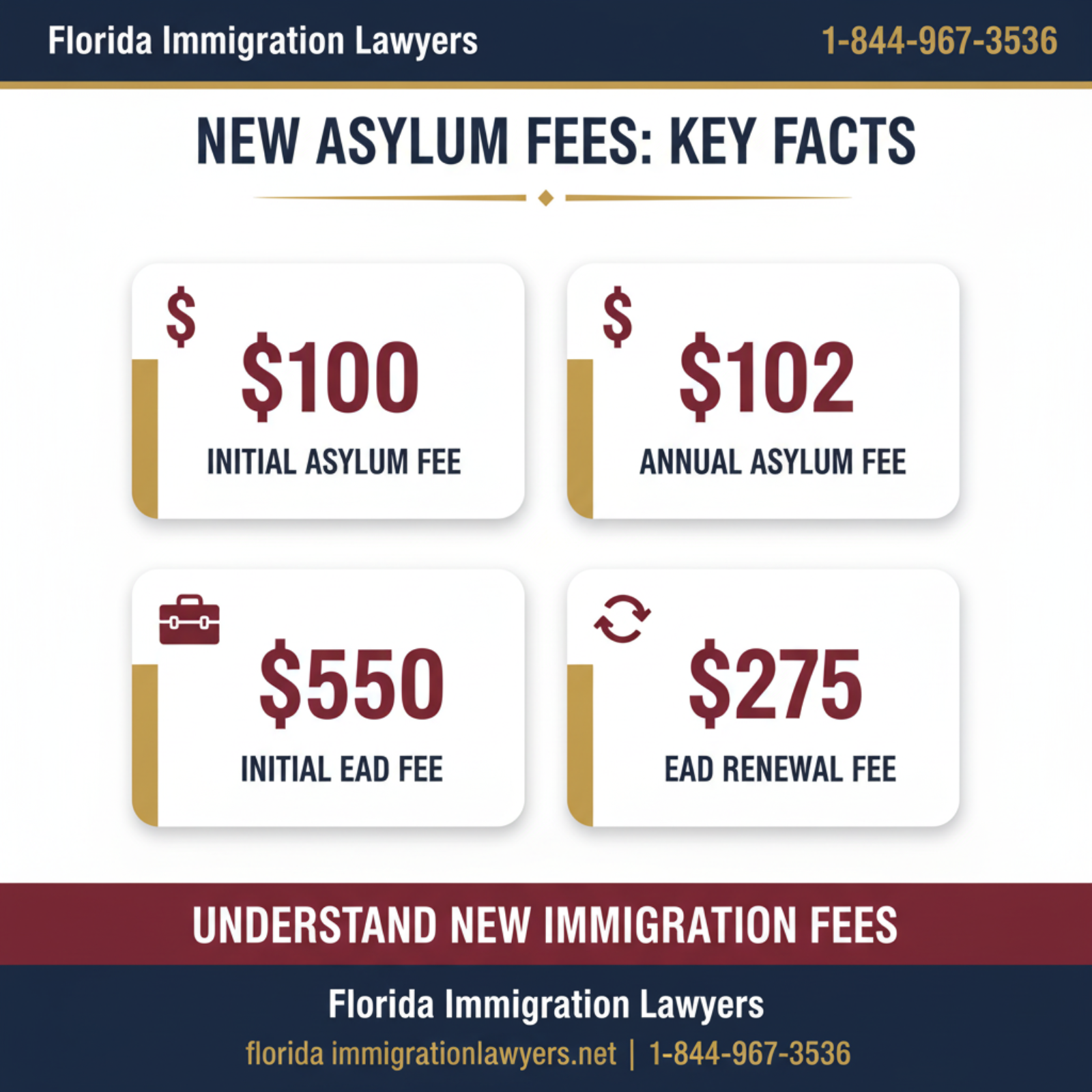
The annual asylum fee is a standardized charge, meaning the amount is generally fixed for all eligible applicants. However, it is crucial to understand that this fee is separate from other potential costs associated with your asylum case. These might include fees for work permits (Form I-765) or other immigration benefits.
The specific amount of the annual asylum fee is subject to change based on legislative action or regulatory updates by USCIS and EOIR. Therefore, it is always best to refer to the most current official fee schedule published on their websites. Our firm, Florida Immigration Lawyers, can help you verify the latest fee amounts.
What the Annual Asylum Fee Covers
The funds collected from the annual asylum fee are primarily intended to support the operational costs of the asylum system. This includes resources for adjudicating applications, conducting interviews, and maintaining the infrastructure necessary for processing a large volume of asylum claims.
It is important to note that this fee is an administrative charge, not a payment for legal services or a guarantee of a positive outcome. It is a cost associated with the privilege of having your asylum application remain active and processed by the U.S. government. Understanding this distinction can help manage expectations.
Fee Waivers and Exemptions
Unlike some other immigration fees, the annual asylum fee typically has very limited options for fee waivers or reductions. In many cases, fee waivers are not permitted for this specific charge. This means that most eligible applicants are expected to pay the full amount.
However, specific exemptions may apply to certain vulnerable populations, such as unaccompanied minors or individuals meeting very strict poverty guidelines. These exemptions are rare and require explicit documentation and approval from the government agency. Always consult official USCIS or EOIR guidance, or speak with an experienced Florida immigration attorney to determine if you qualify for any exemptions.
Do not navigate this process alone. Contact Florida Immigration Lawyers today. Our team is ready to provide the support and legal expertise you need to protect your future in Florida.
Common Mistakes to Avoid When Paying the Annual Asylum Fee
Paying the annual asylum fee seems straightforward, but many applicants make critical errors that can jeopardize their asylum claims. Avoiding these common pitfalls is vital for a smooth process.
-
Missing the Deadline: One of the most severe mistakes is failing to pay the fee by the specified deadline. Consequences can range from a notice of intent to dismiss your application to outright dismissal. Always prioritize timely payment.
Set reminders and aim to submit your payment well before the due date to account for any unforeseen delays.
-
Incorrect Payment Amount: Paying less than the required amount, even by a small sum, will result in your payment being rejected. The agency will not process partial payments.
Always verify the current annual asylum fee amount on the official USCIS or EOIR websites before submitting your payment.
-
Using an Unacceptable Payment Method: Not all payment methods are accepted. For instance, cash payments are generally not allowed, and personal checks might be rejected if not properly formatted or if drawn on an account with insufficient funds.
Stick to approved methods like credit cards, money orders, or cashier's checks. Check the specific instructions provided by the agency.
-
Failing to Include A-Number: Your Alien Registration Number (A-Number) is essential for USCIS or EOIR to correctly link your payment to your case. Omitting it or providing an incorrect one will lead to significant processing delays.
Always write your A-Number clearly on any check or money order, and double-check it during online transactions.
-
Sending Payment to the Wrong Address: USCIS and EOIR have specific addresses for fee payments, which may differ from general correspondence addresses. Sending your payment to the wrong location will delay processing and could lead to missed deadlines.
Always use the exact lockbox or processing center address provided in your fee notification letter.
-
Not Keeping Proof of Payment: After submitting your fee, it is crucial to retain verifiable proof of payment. This could be a confirmation email, a receipt number, or a certified mail receipt.
Without proof, it can be very difficult to resolve any disputes or demonstrate compliance if your payment is lost or misapplied.
-
Assuming an Exemption: Do not assume you are exempt from the annual asylum fee without official confirmation. Exemptions are typically very narrow and require specific criteria to be met.
If you believe you qualify for an exemption, seek legal advice and obtain official confirmation before foregoing payment.
-
Ignoring Notifications: Failing to open and read official mail from USCIS or EOIR can lead to you missing critical information about the annual asylum fee. These notices are your primary source of official instructions.
Always open all government mail promptly and thoroughly. If you move, update your address with the agency immediately.
-
Not Understanding the Fee's Purpose: Confusing the annual asylum fee with other fees, or thinking it guarantees a positive outcome, is a misconception. This fee is for administrative processing, not a case approval.
Recognize that this fee is part of the overall cost of maintaining your application's active status, separate from legal fees or other application costs.
When to Call a Lawyer for Your Annual Asylum Fee Questions
While this guide provides general information, the complexities of immigration law, especially regarding fees and deadlines, can be daunting. An experienced immigration lawyer in Florida can offer invaluable assistance.
Consider contacting Florida Immigration Lawyers if you encounter any of the following scenarios:
- Uncertainty About Your Obligation: If you are unsure whether the annual asylum fee applies to you, or if you believe you might qualify for an exemption.
- Difficulty Interpreting Official Notices: Government notices can be complex. We can help you understand exactly what is required and what steps to take.
- Missed Deadlines or Payment Issues: If you have missed a payment deadline, or if your payment was rejected, immediate legal intervention may be necessary to mitigate potential damage to your case.
- Complex Case History: If your asylum case has a complicated history, involves previous denials, or you are in removal proceedings, an attorney can provide tailored advice.
- Concerns About Consequences: If you are worried about the impact of non-payment on your asylum status or potential deportation defense, seeking legal counsel is paramount.
- Language Barriers: If English is not your primary language and you need assistance understanding official documents or communicating with immigration authorities.
Our firm, Florida Immigration Lawyers, serves clients throughout Florida, including Hollywood. We are dedicated to protecting the rights of asylum seekers and ensuring compliance with all immigration regulations. Do not risk your future by navigating these intricate rules alone.
Frequently Asked Questions (FAQs) About the Annual Asylum Fee
Do I need to pay the $100 asylum fee?
The exact amount of the annual asylum fee is subject to change. However, if you receive an official notification from USCIS or EOIR stating that you are required to pay this fee for your pending asylum application, then yes, you generally must pay it to maintain the active status of your case. Always confirm the current fee amount on official government websites.
Do asylum seekers have to pay $100 per year?
Asylum seekers whose applications have been pending for a certain period, as defined by USCIS or EOIR policy, are typically required to pay an annual asylum fee. The specific amount and frequency are determined by current regulations. It is not necessarily $100, and the amount can change. This fee is usually required each year your application remains pending after an initial qualifying period.
What is the $600 asylum program fee?
The term "$600 asylum program fee" may refer to a proposed fee or a different type of immigration charge. It is important to distinguish the annual asylum fee from other fees associated with immigration applications, such as the fee for an Employment Authorization Document (EAD) or other proposed surcharges. Always refer to official USCIS and EOIR fee schedules for the most accurate and up-to-date information regarding any fees related to asylum applications. If you encounter this specific fee, consult an attorney to understand its applicability.
Do you have to pay a yearly fee for an LLC in Florida?
Paying a yearly fee for an LLC in Florida is entirely unrelated to the annual asylum fee. LLCs (Limited Liability Companies) are business entities, and their annual fees are state-mandated charges for maintaining business registration. The annual asylum fee is a federal immigration charge for asylum applicants. These two types of fees operate under entirely different legal frameworks and purposes.
About Florida Immigration Lawyers
Florida Immigration Lawyers is a leading law firm dedicated to providing exceptional legal representation to immigrants across Florida. With deep expertise in U.S. immigration law, we proudly serve clients in Hollywood, Miami, Orlando, Tampa, and throughout the state, offering compassionate and strategic guidance.
Our comprehensive services cover a wide range of immigration matters, including asylum applications, deportation defense, family-based visas, business immigration, and citizenship. We understand the unique challenges faced by immigrants and are committed to achieving the best possible outcomes for our clients.
Choosing Florida Immigration Lawyers means partnering with a team that genuinely cares about your future. We offer personalized attention, clear communication, and aggressive advocacy. Our attorneys are available 24/7 for urgent matters and provide free, confidential consultations to discuss your case.
Let us be your trusted advocates in your immigration journey. Contact us today at 1-844-967-3536 or visit our website at https://www.floridaimmigrationlawyers.net to schedule your free consultation. We are here to make a difference in your life.
Sources and References
- U.S. Citizenship and Immigration Services (USCIS)
- Executive Office for Immigration Review (EOIR)
- 8 U.S.C. Chapter 12 - Immigration and Nationality Act (INA)
- 8 U.S.C. § 1356 - Immigration Examinations Fee Account
- 8 CFR Part 103 - Adjudication of Applications and Petitions
- 8 CFR Part 106 - Fees for Immigration Services
This article provides general legal information and is not intended as legal advice. Every case is unique, and outcomes depend on specific facts and circumstances. Contact an attorney for advice about your particular situation.
The journey through the U.S. immigration system can be complex, but you do not have to face it alone. Understanding and complying with requirements like the annual asylum fee is critical. Let Florida Immigration Lawyers guide you through every step, ensuring your application is handled with precision and care.
Our experienced team is ready to provide the dedicated legal support you need. For a free, confidential consultation, call us today at 1-844-967-3536. Se Habla Español - Estamos aquí para ayudarle.
Do Not Navigate This Process Alone
Our experienced immigration attorneys are ready to fight for you. Get a free, confidential consultation today.
Se Habla Español
Frequently Asked Questions
Florida Immigration Lawyers
Immigration Attorney | Founder, Vasquez Law Firm
U.S. Air Force veteran and immigration attorney with thousands of cases resolved. J.D., NCCU School of Law. AILA member. Admitted to the 4th, 5th, and 11th Circuit Courts.
Available 24/7 - Free Evaluations
Related Legal Services
Our Florida immigration attorneys can help you with business immigration, asylum protection and deportation defense. Call today at 1-844-967-3536 for a free consultation.
Related Links
Related Topics
Free Legal Consultation
Discuss your case with our experienced attorneys. We're available 24/7.
Se Habla Español - Estamos aquí para ayudarle.
Related Articles
Immigration Lawyer Cape Coral: Your SW Florida Guide
Navigating immigration law in Cape Coral, Lee County, and Southwest Florida demands expert legal guidance. An experienced immigration lawyer in Cape Coral is crucial for understanding complex visa applications, green card processes, and defense against deportation. This comprehensive guide details common immigration pathways, essential documentation, and critical mistakes to avoid. Our firm, Florida Immigration Lawyers, offers dedicated assistance, ensuring your case is handled with precision and care. We serve clients across Florida, providing personalized advice and strategic representation for family-based immigration, asylum, and citizenship. Understand the timelines, costs, and the importance of professional legal support for your immigration journey. Contact us for a free consultation to secure your future.
Understanding Immigration Lawyer Cost in Florida 2026
Discover how much it costs to hire an immigration lawyer in Florida in 2026. Understand the factors influencing fees and why consulting with a professional is essential for your immigration journey. Contact Florida Immigration Lawyers today for expert guidance.
Immigration Services in Naples, Collier County | VLF Florida
Explore comprehensive immigration services in Naples, Collier County. Learn about visa processes, legal assistance, and how to avoid common pitfalls. Contact Florida Immigration Lawyers for expert guidance and a free consultation.
OPT STEM Extension for Florida Graduates: Your 2026 Guide
For F-1 international students graduating from Florida universities with a STEM degree, the OPT STEM extension is a vital pathway to extend work authorization by 24 months. This guide from Florida Immigration Lawyers details the 2026 application process, including eligibility, a step-by-step walkthrough, essential documents like Form I-983, and critical timelines. We highlight the importance of consulting your DSO, securing an E-Verify employer, and avoiding common mistakes that can lead to delays or denials. Understanding these requirements is key to leveraging Florida's robust job market. Contact our firm for a free consultation to navigate this complex process effectively.
