Adjustment of Status Florida Guide 2026: Your Path to a Green Card
Seeking a green card without leaving the U.S.? Adjustment of status offers a pathway to permanent residency for eligible individuals already in Florida. This comprehensive 2026 guide from Florida Immigration Lawyers details the Form I-485 application process, key requirements, necessary documents, and typical timelines. We also cover potential challenges, common mistakes to avoid, and how our experienced immigration attorneys can assist you. Understand the steps to secure your future in the U.S. and learn why expert legal guidance is crucial for a successful application in Tampa and across Florida.
Adjustment of status allows eligible individuals in the U.S. to apply for lawful permanent residency, or a green card, without leaving the country. This process involves filing Form I-485 with USCIS, proving eligibility through an immigrant visa petition, and attending an interview. It's a critical pathway for many seeking to establish permanent roots in Florida.
- Apply for a green card from within the U.S.
- Requires an approved immigrant petition (e.g., family or employment-based).
- Involves submitting Form I-485 and supporting documents.
- Typically includes a biometrics appointment and an interview.
- Legal guidance is highly recommended for a smooth process.
Are you currently residing in Florida and dreaming of making your stay permanent? The path to a green card can often seem complex and daunting. Fortunately, for many individuals, the process of adjustment of status offers a vital opportunity to become a lawful permanent resident without having to leave the United States.
This comprehensive guide from Florida Immigration Lawyers will walk you through everything you need to know about navigating the adjustment of status process in 2026, especially for those in Tampa and other Florida communities. We will cover the specific requirements, the step-by-step application process for Form I-485, essential documents, and what to expect regarding timelines and costs. Understanding each stage is crucial for a successful outcome.
Do not attempt this intricate process alone. For personalized guidance and to ensure your application is handled correctly, call Florida Immigration Lawyers at 1-844-967-3536 for a free consultation. Our team is dedicated to helping you achieve your immigration goals.
Understanding Adjustment of Status in Florida
Adjustment of status is the process that allows certain eligible foreign nationals physically present in the United States to apply for lawful permanent resident status, commonly known as a green card. This means you can obtain your green card without returning to your home country for visa processing at a U.S. embassy or consulate.
For individuals in Florida, understanding this pathway is essential. Whether you are in Tampa, Orlando, Miami, or anywhere across the state, the requirements for adjustment of status are generally consistent nationwide. However, local processing centers and specific field offices, like the USCIS Tampa Field Office, can influence timelines and procedures.
Who is Eligible for Adjustment of Status?
Eligibility for adjustment of status hinges on several key factors. Generally, you must have an immigrant visa immediately available to you at the time of filing your Form I-485 application. This usually means you are the beneficiary of an approved immigrant petition, such as an I-130 Petition for Alien Relative or an I-140 Petition for Alien Worker.
Common categories include immediate relatives of U.S. citizens (spouses, unmarried children under 21, and parents), certain family-sponsored immigrants, employment-based immigrants, and asylum seekers or refugees. Each category has its own specific criteria and limitations. Maintaining lawful status or having an eligible waiver for any overstay is often a critical component of eligibility.
Adjustment of Status vs. Consular Processing
It is important to distinguish adjustment of status from consular processing. Consular processing is the alternative path where you apply for an immigrant visa at a U.S. embassy or consulate abroad. You must leave the U.S. to complete this process. Adjustment of status, by contrast, allows you to remain in the U.S. throughout the application period.
Choosing between these two paths depends on your individual circumstances, including your current immigration status, history, and whether an immigrant visa number is immediately available. Our attorneys at Florida Immigration Lawyers can help you determine the most suitable option for your specific situation. Learn more about family immigration and business immigration on our site.
The Step-by-Step Adjustment of Status Process (Form I-485)
The adjustment of status process, centered around filing Form I-485, Application to Register Permanent Residence or Adjust Status, involves several key stages. While the exact order can vary slightly based on your specific case, these are the general steps you can expect.
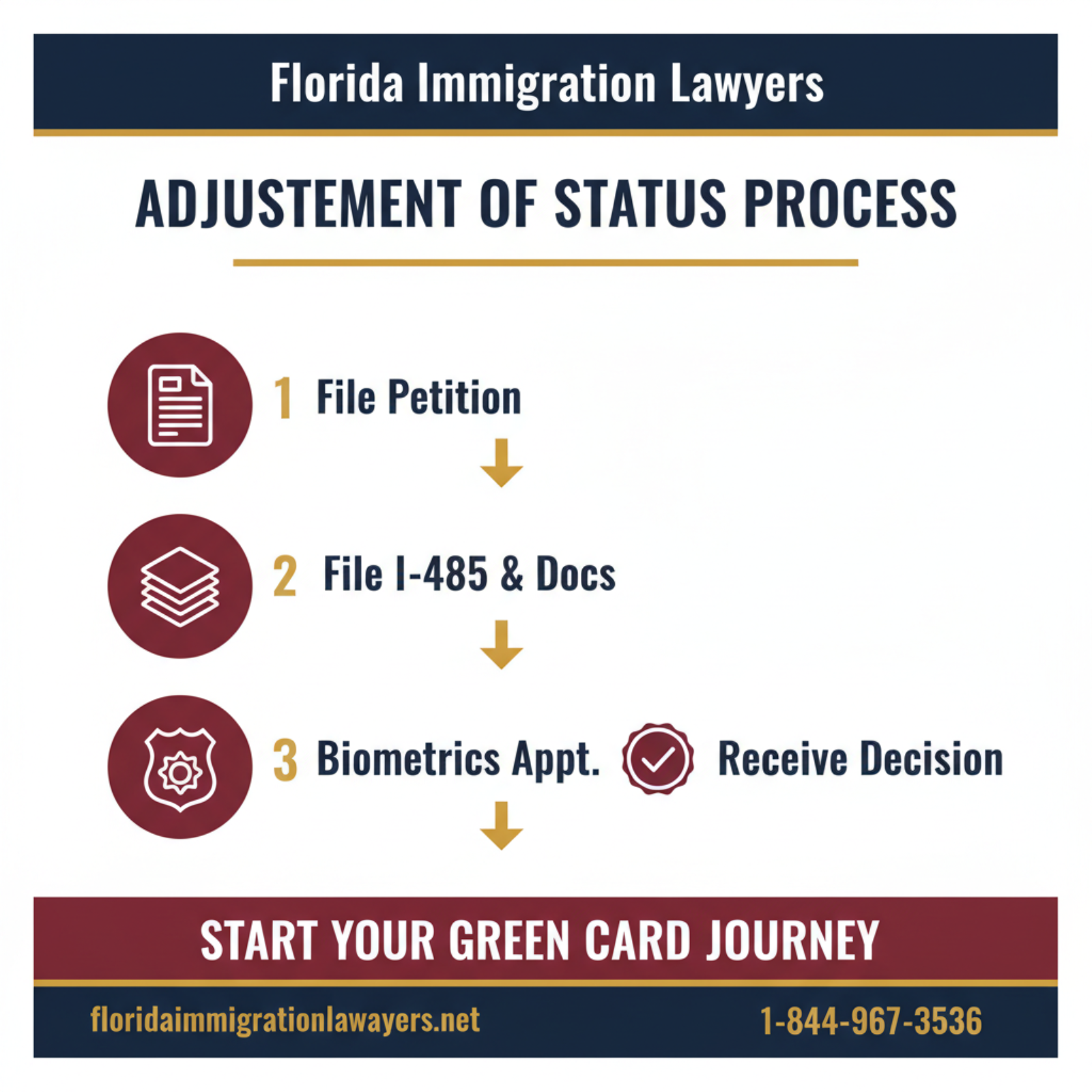
- Establish Eligibility and File Immigrant Petition: Before you can file Form I-485, an immigrant visa petition must generally be filed and approved on your behalf. For immediate relatives of U.S. citizens, the I-130 petition can often be filed concurrently with Form I-485. For other categories, you typically need an approved I-130 or I-140 and a current visa bulletin date.
- Prepare and File Form I-485 Package: Once eligibility is confirmed and a visa is available, you will prepare and submit a comprehensive application package to USCIS. This package includes Form I-485, along with various supporting documents, forms, and fees. It is crucial to be thorough and accurate to avoid delays.
- Attend Biometrics Appointment: After USCIS accepts your application, you will receive an appointment notice for biometrics. This appointment, typically held at a local Application Support Center (ASC) in Florida, involves collecting your fingerprints, photograph, and signature. These are used for background checks and identity verification.
- Receive Employment Authorization Document (EAD) and Advance Parole (AP): While your I-485 is pending, you may be eligible to apply for an Employment Authorization Document (Form I-765) and Advance Parole (Form I-131). These allow you to work legally and travel internationally, respectively, without abandoning your adjustment of status application.
- Attend Interview at a USCIS Field Office: In most adjustment of status cases, particularly those based on family relationships, you will be scheduled for an interview at a USCIS field office, such as the one in Tampa or Orlando. During the interview, a USCIS officer will review your application, verify information, and ask questions to confirm your eligibility and the bona fides of your relationship (if applicable).
- Decision on Your Application: Following the interview, USCIS will make a decision. If your application is approved, you will receive a welcome notice and your green card will be mailed to you. If there are issues, you may receive a Request for Evidence (RFE) or a Notice of Intent to Deny (NOID).
Each step requires careful attention to detail and adherence to USCIS guidelines. Our experienced immigration attorneys can guide you through each stage of this process, ensuring all forms are correctly filed and all deadlines are met. For assistance with your adjustment of status application in Florida, contact us.
Essential Documents for Your Adjustment of Status Application
A complete and accurate submission of documents is critical for a successful adjustment of status application. Missing or incorrect documents can lead to significant delays or even denial. Here is a general checklist of documents you will typically need for your Form I-485 package.
Required Forms and Supporting Documents
- Form I-485, Application to Register Permanent Residence or Adjust Status: The primary application form.
- Form I-864, Affidavit of Support: Required for most family-based adjustment of status applications, demonstrating the sponsor's financial ability.
- Form I-693, Report of Medical Examination and Vaccination Record: Completed by a USCIS-approved civil surgeon.
- Form I-765, Application for Employment Authorization: Optional, if you wish to work while your I-485 is pending.
- Form I-131, Application for Travel Document (Advance Parole): Optional, if you wish to travel internationally while your I-485 is pending.
- Photocopies of your birth certificate: For both the applicant and the petitioner (if applicable).
- Photocopies of your passport biographical page: And any visa pages.
- Two passport-style photos: Meeting USCIS specifications.
- Marriage Certificate (if applicable): Essential for adjustment of status after marriage.
- Divorce Decrees or Death Certificates (if applicable): For any prior marriages of both applicant and petitioner.
- Evidence of U.S. entry and current immigration status: Such as I-94 arrival/departure record, visa stamps, prior approval notices.
- Police clearances and court records (if applicable): For any arrests or convictions.
- Evidence of bona fide marriage (for marriage-based cases): Joint bank accounts, leases, utility bills, photos, affidavits from friends/family. This is strong evidence for adjustment of status.
This list is not exhaustive, and additional documents may be required depending on your specific eligibility category and personal history. Our attorneys at Florida Immigration Lawyers will help you gather and organize all necessary documentation for your adjustment of status requirements, ensuring your application is as strong as possible.
Adjustment of Status Timeline and Processing Expectations
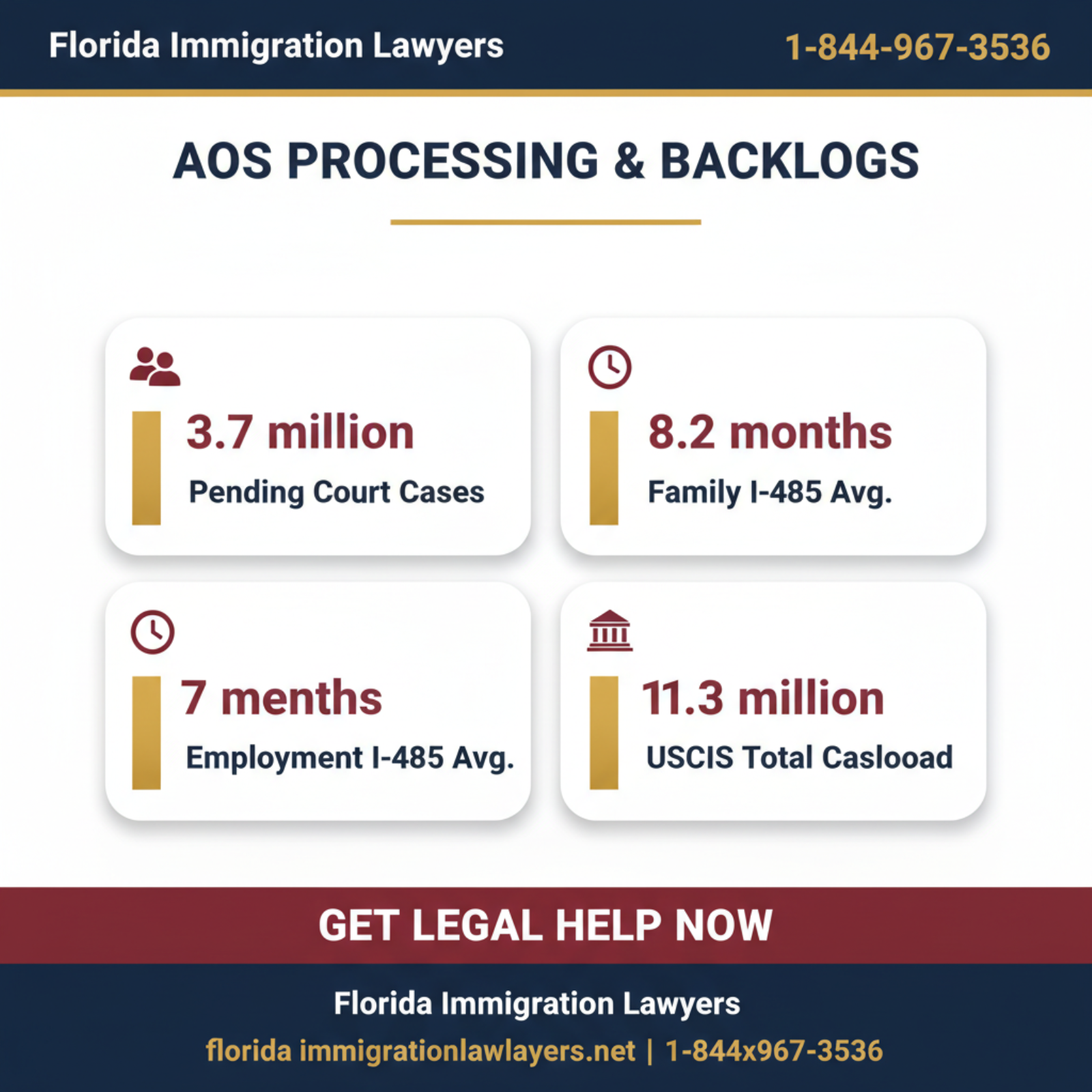
Understanding the adjustment of status processing time is a common concern for applicants in Florida. The time it takes for USCIS to process Form I-485 can vary significantly based on several factors, including the specific USCIS field office, the service center processing your case, your eligibility category, and the completeness of your application.
Current Processing Times in Florida
While exact times fluctuate, USCIS provides estimated processing times on its website. For applicants in Florida, cases are often processed by the National Benefits Center (NBC) and then forwarded to local field offices like Tampa, Orlando, or Miami for interviews. Processing times can range from several months to over two years, especially for family-based petitions that are not immediate relative cases.
For immediate relatives of U.S. citizens, concurrent filing of I-130 and I-485 can sometimes lead to faster processing. However, employment-based and other family-sponsored categories may face longer waits due to visa bulletin availability. You can check current estimates on the official USCIS website. This addresses how fast an I-485 can be approved.
Factors Influencing Processing Speed
- USCIS Workload: High volumes of applications can naturally extend processing times.
- Completeness of Application: Any missing documents or errors will lead to Requests for Evidence (RFEs), significantly delaying your case.
- Applicant's Category: Immediate relatives typically have shorter waits than preference categories.
- Interview Requirements: If an interview is required, scheduling can add to the timeline.
- Background Checks: Security and criminal background checks must be completed before approval.
It is important to manage expectations regarding the timeline. While some cases are approved quickly, others take longer. Our attorneys monitor your case status and can inquire with USCIS if your application falls outside normal processing times.
Cost Factors and Fee Breakdown for Adjustment of Status
Applying for adjustment of status involves various fees, which are subject to change. It is crucial to budget for these costs as part of your overall immigration plan. USCIS fees are non-refundable, even if your application is denied.
Typical Fees Associated with Form I-485
- Form I-485 Filing Fee: This is the primary fee for the adjustment of status application itself.
- Biometrics Services Fee: A separate fee for fingerprinting and background checks, typically included with the I-485 fee for most applicants.
- Form I-130 Filing Fee: If an immigrant petition (e.g., family-based) is filed concurrently or separately.
- Form I-765 Filing Fee: For Employment Authorization Document (EAD), though often waived if filed concurrently with Form I-485.
- Form I-131 Filing Fee: For Advance Parole (AP), also often waived if filed concurrently with Form I-485.
- Medical Examination Fee: Paid directly to the civil surgeon. This fee varies by provider.
It is important to consult the official USCIS website (uscis.gov/forms/our-fees) for the most current fee schedule. Fee waivers may be available for certain low-income applicants, but eligibility is strict.
Legal Fees for Immigration Representation
Beyond government fees, you should also consider the cost of legal representation. While not mandatory, hiring an experienced Florida immigration lawyer can significantly increase your chances of a successful outcome and reduce stress. Legal fees vary depending on the complexity of your case and the services required.
At Florida Immigration Lawyers, we offer transparent fee structures and discuss all costs upfront during your free consultation. Investing in legal expertise can save you time, prevent costly mistakes, and provide peace of mind throughout the intricate adjustment of status process.
Do not navigate this complex process alone. The stakes are too high to risk common errors or misunderstandings. Contact Florida Immigration Lawyers today to schedule your free consultation and let our dedicated team guide you through every step of your adjustment of status journey. Call us at 1-844-967-3536.
Common Mistakes to Avoid in Your Adjustment of Status Application
The adjustment of status process is highly detailed, and even minor errors can lead to significant delays, Requests for Evidence (RFEs), or even denial. Being aware of common pitfalls can help you avoid them.
- Filing Without Eligibility: Submitting Form I-485 when you are not truly eligible, such as not having an immigrant visa immediately available or having an unaddressed immigration violation. This will almost certainly lead to denial.
- Incomplete or Inaccurate Forms: Failing to fill out all sections of the forms, providing inconsistent information, or not signing documents. USCIS will reject or deny applications that are incomplete or contain critical errors.
- Missing or Incorrect Supporting Documents: Not including all required evidence, submitting uncertified translations, or failing to provide copies of original documents as requested. This often results in RFEs, prolonging the adjustment of status processing time.
- Failing the Medical Examination: Not completing Form I-693 with a USCIS-approved civil surgeon, or failing to disclose medical conditions or receive required vaccinations. This can render you inadmissible.
- Violating the "90-Day Rule": Marrying a U.S. citizen or applying for a green card too soon after entering the U.S. on a non-immigrant visa, which USCIS might interpret as misrepresentation of your original intent to visit. This addresses the "90 day rule for adjustment of status".
- Criminal History Issues: Not disclosing past arrests or convictions, or assuming minor offenses are irrelevant. Certain criminal records can make an applicant inadmissible without a waiver.
- Misrepresenting Facts: Providing false information or omitting material facts on your application. This can lead to accusations of fraud and a permanent bar from future immigration benefits.
- Traveling Without Advance Parole: Leaving the U.S. while your I-485 is pending without an approved Advance Parole document (Form I-131). This generally abandons your adjustment of status application.
- Missing Deadlines or Appointments: Failing to respond to RFEs, interview notices, or other USCIS communications by the specified deadline. This can result in denial.
- Lack of Bona Fide Marriage Evidence: In marriage-based cases, not providing sufficient evidence to prove your marriage is genuine and not solely for immigration purposes. This is a common reason for denial.
- Not Seeking Legal Counsel: Attempting to navigate the complex immigration system without the guidance of an experienced attorney. This significantly increases the risk of errors and missed opportunities.
Our team at Florida Immigration Lawyers has extensive experience identifying and preventing these common mistakes. We meticulously review every application to ensure accuracy and completeness.
When to Call a Florida Immigration Lawyer
While some individuals attempt to file their adjustment of status application independently, the complexities of immigration law often necessitate professional legal assistance. An experienced Florida immigration lawyer can be invaluable, especially when facing specific challenges or uncertainties.
Specific Scenarios Requiring Legal Help
- Complex Immigration History: If you have previous denials, overstays, unauthorized employment, or past deportation proceedings, a lawyer is crucial.
- Criminal Record: Any arrests, charges, or convictions, even minor ones, can significantly impact your eligibility and require expert legal analysis.
- Previous Visa Violations: If you entered the U.S. without inspection, overstayed a visa, or violated terms of a previous visa, you may need waivers or specific legal strategies.
- Issues with Petitioning Relative/Employer: If your petitioner has a criminal history, financial issues, or a complicated immigration past, it can affect your case.
- Marriage-Based Cases with Red Flags: If there's a significant age difference, cultural differences, prior divorces, or a short marriage duration, USCIS may scrutinize your application more heavily.
- Requests for Evidence (RFEs) or Notice of Intent to Deny (NOID): Receiving these from USCIS indicates a problem with your application that requires an expert response.
- Seeking Waivers of Inadmissibility: If you are found inadmissible for certain reasons, a lawyer can help determine if you are eligible for a waiver and prepare a strong application.
Florida Immigration Lawyers specializes in helping individuals and families throughout Florida navigate the intricate USCIS adjustment of status process. Our attorneys are well-versed in the latest immigration laws and policies, including those specific to Florida's immigration courts and USCIS field offices. We offer comprehensive immigration services.
We provide comprehensive legal services, from initial eligibility assessment and document preparation to interview representation and responding to complex issues. We work diligently to protect your rights and help you achieve your goal of obtaining a green card. Do not hesitate to reach out for expert guidance from our experienced attorneys.
About Florida Immigration Lawyers
Florida Immigration Lawyers is a leading law firm dedicated to providing exceptional immigration legal services across the entire state of Florida. Our experienced attorneys are passionate about helping individuals, families, and businesses achieve their immigration goals, offering compassionate and strategic representation.
We understand that navigating the U.S. immigration system can be overwhelming, which is why we commit to providing clear, honest, and effective legal counsel. Our services cover a wide range of immigration matters, including adjustment of status, family-based immigration, employment visas, asylum, deportation defense, and naturalization.
Why Choose Florida Immigration Lawyers?
- Experienced Attorneys: Our team possesses deep knowledge of U.S. immigration law and Florida-specific procedures.
- Client-Centered Approach: We prioritize your needs, offering personalized attention and tailored legal strategies.
- Bilingual Services: We proudly offer services in both English and Spanish to serve Florida's diverse community.
- Accessibility: Available 24/7, we are always here to answer your questions and provide support.
- Free Consultations: Start your journey with a no-obligation, free consultation to discuss your case.
Whether you are in Tampa, Miami, Orlando, Jacksonville, or any other part of Florida, our firm is equipped to assist you. Let us be your trusted partner in securing your future in the United States.
Contact us today:
- Phone: 1-844-967-3536
- Website: https://www.floridaimmigrationlawyers.net
Sources and References
- U.S. Citizenship and Immigration Services (USCIS)
- USCIS Fee Schedule Information
- Executive Office for Immigration Review (EOIR) - Immigration Courts
- 8 U.S.C. Chapter 12 - Immigration and Nationality Act (INA)
- 8 CFR Part 245 - Adjustment of Status to that of Person Admitted for Permanent Residence
- USCIS Policy Manual - Volume 7, Adjustment of Status
This article provides general legal information and is not intended as legal advice. Every case is unique, and outcomes depend on specific facts and circumstances. Contact an attorney for advice about your particular situation.
Your journey to permanent residency in Florida is a significant step, and having knowledgeable legal support can make all the difference. Do not leave your future to chance. Contact Florida Immigration Lawyers today for a free, confidential consultation. Call us at 1-844-967-3536 to discuss your adjustment of status case. Se Habla Español - Estamos aquí para ayudarle.
Florida Immigration Lawyers
Legal Team
Our experienced attorneys at Florida Immigration Lawyers have been serving clients across Florida for over 20 years. We specialize in immigration, personal injury, criminal defense, workers compensation, and family law.