Abrego Garcia Deportation: Florida Immigration Lawyer Insights 2026
The Abrego Garcia deportation case remains a critical reminder of due process in U.S. immigration law. For those in Florida facing similar challenges, understanding your rights and the complexities of removal proceedings is vital. This article, current for 2026, offers a comprehensive guide to deportation defense, including step-by-step processes, essential documents, timelines, and cost considerations. Learn how a Florida immigration lawyer can protect your future and ensure your voice is heard in court. We cover common mistakes to avoid and when to seek professional legal help, emphasizing the crucial role of experienced counsel in navigating the Florida immigration system. Contact Florida Immigration Lawyers for expert guidance.
The Kilmar Abrego Garcia case highlighted critical due process challenges within the U.S. immigration system. For individuals facing abrego garcia deportation or any removal proceedings in Florida, understanding your rights and securing expert legal defense is paramount. This case serves as a powerful reminder of the importance of diligent legal representation to protect against wrongful deportation.
- Due process rights are fundamental in all deportation cases.
- Expert legal representation is vital to navigate complex immigration laws.
- Florida's immigration courts handle a significant volume of removal proceedings.
- Seek immediate legal counsel if you receive a Notice to Appear or encounter ICE.
Imagine building a life, establishing roots in a vibrant community like Fort Lauderdale, Florida, only to face the daunting prospect of being removed from the country you call home. This unsettling scenario is a reality for many, and the complexities of immigration law can make it feel overwhelming. The Kilmar Abrego Garcia case, though a significant event from years past, remains a powerful reminder of the intricate challenges and potential missteps within the U.S. immigration system, especially concerning due process.
His widely publicized mistaken abrego garcia deportation brought national attention to the critical importance of proper legal procedure and robust defense. For individuals and families across Florida, from Miami to Orlando, understanding the lessons from this case is crucial. It underscores the necessity of expert legal guidance when navigating the intricate pathways of deportation defense.
This comprehensive article will explore the enduring relevance of the Abrego Garcia case, delve into your fundamental rights, and outline effective defense strategies for those facing removal proceedings in Florida. We will cover the step-by-step process, essential documentation, expected timelines, and cost considerations. Our goal is to empower you with knowledge and highlight how experienced legal counsel can be your strongest advocate.
If you or a loved one are facing abrego garcia deportation or any other immigration challenge in Florida, do not wait to seek help. Call Florida Immigration Lawyers at 1-844-967-3536 for a free consultation. Our dedicated team is ready to provide the guidance and representation you need.
Understanding the Abrego Garcia Deportation Case and its Relevance to Florida Immigrants
The case of Kilmar Abrego Garcia became a landmark example of the profound human impact when due process is challenged in immigration proceedings. Abrego Garcia, a Salvadoran national, was mistakenly deported despite having an active appeal. This error led to significant legal battles and ultimately his return to the U.S., highlighting severe systemic flaws.
His experience is a stark reminder of why every individual, regardless of their immigration status, possesses fundamental due process rights under U.S. law. These rights are designed to ensure fair treatment and a proper opportunity to present a case before an immigration judge. The absence of competent legal advice was a critical factor in his initial wrongful removal.
For immigrants in Florida, particularly in areas with high immigrant populations like Fort Lauderdale, Miami, and Tampa, the Abrego Garcia case resonates deeply. It underscores the aggressive enforcement actions sometimes taken by Immigration and Customs Enforcement (ICE) and the potential for errors in a system under immense pressure. Understanding your rights and having a strong legal team is your best defense.
The case emphasizes the importance of understanding complex legal provisions such as those outlined in 8 U.S.C. § 1229a, which governs removal proceedings. Without an attorney, navigating these statutes and ensuring your rights are protected can be nearly impossible. A Florida immigration lawyer can help ensure such miscarriages of justice are prevented in your case.
Navigating Deportation Proceedings in Florida: A Step-by-Step Guide
Facing deportation, also known as removal proceedings, can be one of the most stressful experiences for an immigrant. The process is complex, lengthy, and requires meticulous attention to detail. In Florida, these proceedings typically unfold in immigration courts located in cities such as Miami, Orlando, and Jacksonville. Understanding each stage is crucial for mounting an effective defense.
Initial Contact with Immigration Authorities in Florida
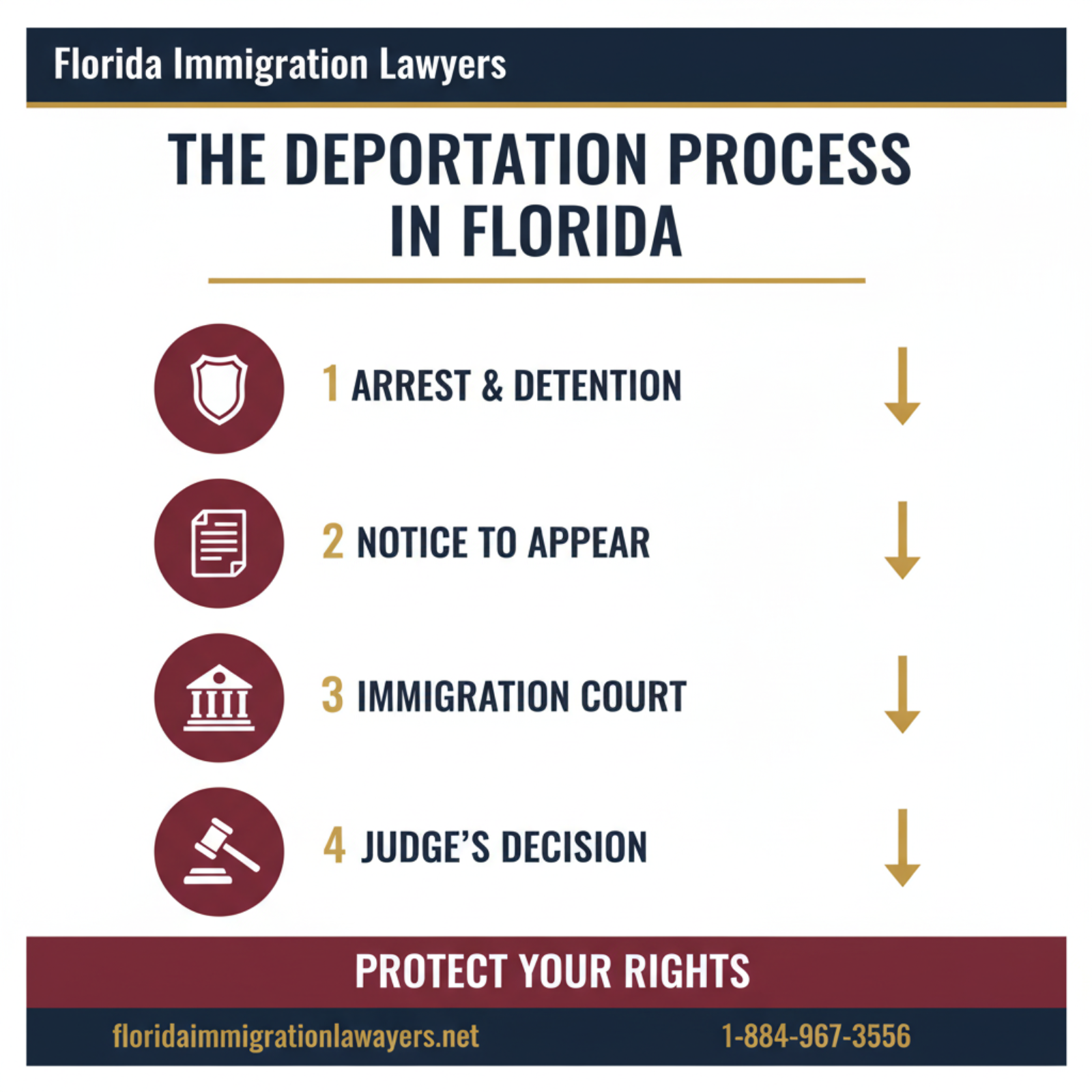
The process often begins with an encounter with immigration authorities, such as ICE or Customs and Border Protection (CBP). This could be during a routine traffic stop, an arrest for a separate offense, or targeted enforcement action. If detained, you will typically be issued a Notice to Appear (NTA).
The NTA is a formal document that charges you with being removable from the U.S. and orders you to appear before an immigration judge. It is critical to understand that you should never sign any document from immigration officials without first consulting with an attorney. Signing certain documents could waive your rights or even lead to voluntary departure, which has significant consequences.
The Immigration Court Process in Fort Lauderdale and Beyond
Once you receive an NTA, your case will proceed to immigration court. The journey through immigration court typically involves several key stages:
- Master Calendar Hearings (MCH): These are preliminary hearings where the immigration judge addresses administrative matters. You will formally acknowledge the charges, state whether you admit or deny them, and identify any forms of relief from removal you intend to pursue. It is essential to have legal representation at this stage to properly respond to the judge and set the foundation for your defense.
- Filing Applications for Relief: If you are eligible for a form of relief, such as asylum, cancellation of removal, or adjustment of status, your attorney will help you prepare and file the necessary applications and supporting evidence. Common forms of relief include asylum for those fearing persecution, or cancellation of removal for long-term residents with U.S. citizen relatives.
- Individual Hearings (IH): This is the main trial where you and your attorney present your case, including testimony, witnesses, and evidence, to the immigration judge. The Department of Homeland Security (DHS) attorney will also present their case. The judge will then make a decision regarding your eligibility for relief or whether you should be deported.
- Decision by Immigration Judge: Following the Individual Hearing, the judge will issue a decision. If relief is granted, you may be able to remain in the U.S. If the judge orders deportation, your attorney will discuss options for appeal.
Navigating these hearings without an experienced deportation defense lawyer is incredibly challenging. Florida Immigration Lawyers are adept at representing clients in Fort Lauderdale and throughout Florida, ensuring your voice is heard and your rights are protected.
Appeals and Reopening Cases
If an immigration judge orders your deportation, it is not necessarily the end of your legal journey. You generally have the right to appeal the decision to the Board of Immigration Appeals (BIA). The BIA reviews decisions made by immigration judges and can affirm, reverse, or remand a case for further proceedings. Beyond the BIA, appeals can sometimes be taken to a federal circuit court.
Furthermore, in certain circumstances, it may be possible to file a Motion to Reopen or a Motion to Reconsider with the immigration court or the BIA. These motions are typically filed when new evidence becomes available or if there was a legal error in the initial decision, much like the circumstances surrounding the Abrego Garcia case. Timeliness is crucial for all appeals and motions.
Essential Documents for Deportation Defense in Florida
A strong defense in removal proceedings Fort Lauderdale and other Florida courts relies heavily on comprehensive documentation. Gathering the right evidence can make a significant difference in the outcome of your case. Your attorney will guide you on what specific documents are needed, but here is a general checklist.
Key Evidence for Your Defense
- Personal Identification: Passport, birth certificate, national identity card, driver's license, or any U.S. immigration documents (I-94, visa, EAD, green card).
- Proof of Continuous Physical Presence: Rental agreements, utility bills, school records, employment records, tax returns (Form 1040), bank statements, medical records, or affidavits from friends and family.
- Family Ties in the U.S.: Marriage certificates, birth certificates of U.S. citizen children or spouses, divorce decrees, adoption papers, and evidence of financial support for dependents.
- Financial Stability: Employment letters, pay stubs, tax returns (going back several years), bank statements, property deeds, and evidence of any investments.
- Community Involvement: Letters from community leaders, religious institutions, volunteer organizations, school officials, or employers attesting to your good moral character and contributions.
- Criminal Records: Certified copies of all criminal court dispositions, even for minor offenses, and police clearance certificates. Full disclosure is vital for your attorney to assess eligibility for relief.
- Evidence of Hardship: Medical records (for yourself or family members), psychological evaluations, letters from doctors or therapists, school records demonstrating a child's special needs, or any documents showing extreme hardship if deported.
- Proof of Eligibility for Specific Relief: This could include an asylum application (Form I-589), documents supporting a U visa or VAWA petition, or records proving eligibility for Temporary Protected Status (TPS).
- Past Immigration Filings: Copies of all previous applications, petitions, and correspondence with USCIS or immigration courts.
Organizing these documents can be daunting, but our experienced immigration lawyers at Florida Immigration Lawyers will assist you every step of the way. We understand the specific requirements of Florida immigration courts and USCIS offices.
Typical Timelines and Processing Expectations in Florida Immigration Courts
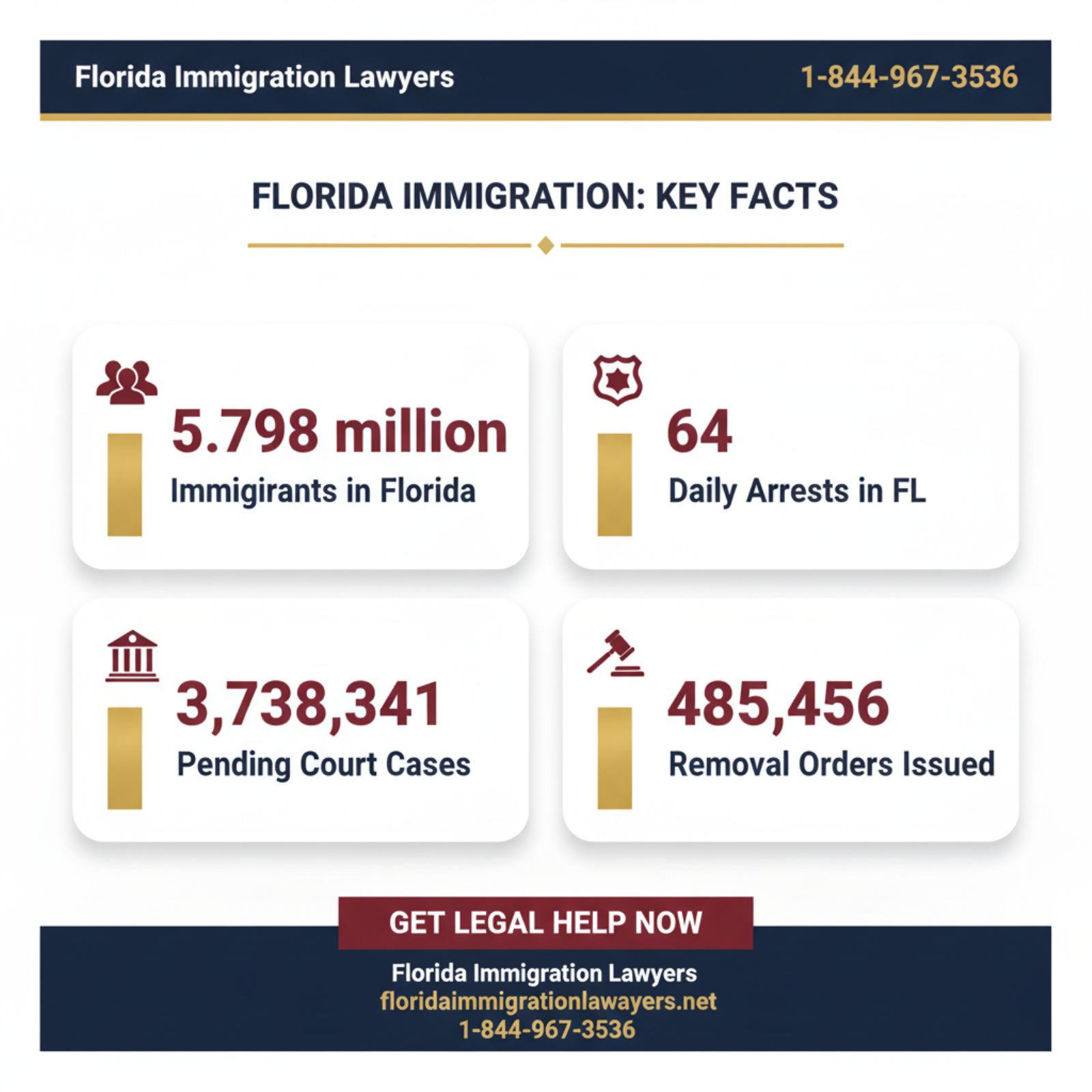
Immigration court timelines are notoriously unpredictable and can vary significantly based on the court's backlog, the complexity of your case, and your specific location within Florida. While there are no fixed schedules, understanding general expectations can help you prepare mentally and financially.
Master Calendar Hearings typically occur within a few weeks to several months after you receive your NTA. However, Individual Hearings, where the core arguments are made, can be scheduled anywhere from several months to two or more years after the initial Master Calendar. This extended period is due to heavy caseloads at immigration courts across the country, including those in Florida.
Appeals to the Board of Immigration Appeals (BIA) can take an additional 1-2 years to process. If a case proceeds to a federal circuit court, the process can extend even further. Motions to Reopen or Reconsider also have their own processing times, which can range from a few months to over a year. The U.S. Department of Justice's Executive Office for Immigration Review (EOIR) provides statistics on court backlogs, which reflect these extended timelines.
These timelines underscore the importance of early and consistent legal representation. Delays can be frustrating, but your attorney will ensure all deadlines are met and your case remains active and properly managed throughout its duration. Patience and preparedness are key when dealing with the U.S. immigration system.
Cost Factors and Fee Breakdown for Deportation Cases in Florida
Understanding the financial aspects of a deportation defense case is a critical part of planning. Legal fees for immigration defense Florida can vary widely depending on the complexity of the case, the experience of the attorney, and the amount of work required. It's an investment in your future and freedom.
- Attorney Fees: Lawyers typically charge either a flat fee for the entire deportation case or an hourly rate. Flat fees provide predictability, while hourly rates are common for complex cases with uncertain durations. During your free consultation with Florida Immigration Lawyers, we will discuss our fee structure transparently.
- Court Filing Fees: While there are no fees to appear in immigration court for the initial removal proceedings, you will incur fees for filing certain applications for relief (e.g., Form I-589 for asylum, Form EOIR-42B for cancellation of removal). These fees are set by USCIS or EOIR and are subject to change. Some individuals may be eligible for fee waivers based on financial hardship.
- Translation and Interpretation Costs: If your documents are not in English, certified translations will be required. You may also need an interpreter for court hearings if you are not fluent in English. These services incur additional costs.
- Expert Witness Fees: In some complex cases, such as those involving psychological evaluations for hardship claims or country condition reports for asylum, expert witnesses may be necessary. Their fees contribute to the overall cost.
- Administrative Costs: This includes expenses for photocopying, mailing, travel for court appearances (if outside the local area), and obtaining certified records.
While the costs may seem substantial, attempting to navigate a deportation case without legal representation often leads to a higher risk of an unfavorable outcome, which can have lifelong consequences. Investing in a knowledgeable immigration lawyer Florida is often the most cost-effective decision in the long run.
Do not navigate this process alone. The complexities of immigration law and the high stakes involved demand professional guidance. Contact Florida Immigration Lawyers today to discuss your case and learn how we can protect your future.
Common Mistakes to Avoid in Deportation Cases
Navigating deportation proceedings is fraught with potential pitfalls. Avoiding these common mistakes can significantly improve your chances of a positive outcome and protect your due process rights.
- Lying to Immigration Officials: Providing false information to ICE, CBP, or an immigration judge can lead to charges of misrepresentation, which can make you permanently inadmissible to the U.S. and severely damage your case. Honesty, guided by legal counsel, is always the best policy.
- Missing Court Dates: Failing to appear for a scheduled Master Calendar Hearing or Individual Hearing will almost certainly result in an in absentia order of deportation. This means you will be ordered deported without your presence, and it is extremely difficult to reverse such an order.
- Failing to Update Your Address: If you move, you are legally required to inform the immigration court and USCIS of your new address within five days. Failure to do so can mean you miss critical notices and court dates, leading to an in absentia order.
- Not Seeking Legal Counsel: Attempting to represent yourself in immigration court against trained DHS attorneys is a grave error. The law is complex, and immigration judges cannot provide legal advice. Without a lawyer, you are at a severe disadvantage.
- Signing Documents Without Understanding: Never sign any document presented by an immigration officer without fully understanding its contents and implications. Some documents could waive your rights, admit to removability, or lead to voluntary departure.
- Providing Insufficient or Inconsistent Evidence: A weak case is often characterized by a lack of credible, comprehensive evidence. Inconsistent statements or documents can also undermine your credibility with the judge.
- Discussing Your Case with Others in Detention: Information shared with fellow detainees or even guards can sometimes be used against you. It is best to discuss your case only with your attorney.
- Not Disclosing Past Criminal History: Even minor arrests or convictions, if not fully disclosed to your attorney, can resurface and make you ineligible for certain forms of relief from deportation. Full transparency is crucial.
- Delaying Action: Many forms of relief have strict filing deadlines. Delaying the hiring of an attorney or the submission of applications can cause you to miss crucial opportunities to fight your deportation.
- Believing Myths or Misinformation: Relying on advice from non-attorneys or internet rumors can lead you down a dangerous path. Immigration law is constantly evolving, and accurate information from a qualified professional is essential.
- Traveling Internationally During Proceedings: Leaving the U.S. while in removal proceedings can be considered a self-deportation and may prevent you from returning legally, even if your case was still ongoing. Always consult your attorney before any travel.
- Overlooking Potential Relief Options: An experienced immigration attorney can identify all potential avenues for relief, including lesser-known waivers or special programs that you might not be aware of. Self-representation often misses these critical opportunities.
When to Call a Florida Immigration Lawyer
The decision to hire an immigration lawyer is often one of the most critical choices you will make in your immigration journey. While general information is helpful, every case is unique, and specific legal advice is indispensable. Here are specific scenarios where contacting Florida Immigration Lawyers is highly recommended:
- Any Contact with ICE or CBP: If you are approached, detained, or questioned by immigration authorities, politely state that you wish to speak with your attorney before answering any questions.
- Receiving a Notice to Appear (NTA): This document is the formal start of deportation proceedings. You must respond appropriately, and an attorney can guide you through this initial, crucial step.
- Facing Criminal Charges: Even minor criminal offenses can have severe immigration consequences, potentially triggering deportation proceedings. A lawyer can help you understand the intersection of criminal and immigration law.
- Prior Deportation Orders: If you have a previous order of deportation or removal, fighting a new removal case becomes significantly more complex. An attorney can assess options for reopening or challenging old orders.
- Seeking Asylum or Other Relief: Applying for asylum, cancellation of removal, or other complex forms of relief requires detailed applications and compelling evidence.
- Complex Immigration History: If you have overstayed a visa, entered without inspection, or had previous immigration applications denied, your case will benefit immensely from expert legal analysis.
- Warning Signs and Red Flags: Any indication that your status is at risk, such as denial of a benefit, an interview notice that seems unusual, or information about a family member facing issues, should prompt a call to an attorney.
Do not gamble with your future. Our experienced attorneys at Florida Immigration Lawyers are here to provide the dedicated and knowledgeable representation you need. Contact us today for a comprehensive evaluation of your situation.
About Florida Immigration Lawyers
Florida Immigration Lawyers is a leading immigration law firm dedicated to serving individuals and families across the entire state of Florida. With a deep understanding of U.S. immigration laws and a compassionate approach, we provide unparalleled legal representation for a wide range of immigration matters. Our commitment is to protect your rights and help you achieve your immigration goals.
We offer a comprehensive suite of immigration services, including deportation defense, asylum applications, family-based immigration, business immigration, naturalization, and visa applications. Our team leverages extensive experience in dealing with USCIS, ICE, and immigration courts throughout Florida, including Fort Lauderdale and Miami.
Why choose Florida Immigration Lawyers? We are available 24/7 to address your urgent needs, offer free initial consultations, and provide personalized strategies tailored to your unique circumstances. Our firm is proud to offer bilingual services, ensuring that you can communicate comfortably in English or Spanish. We are here to be your trusted advocates, guiding you through every step of the immigration process with integrity and dedication.
For expert legal assistance with your immigration case, contact Florida Immigration Lawyers today. Call us at 1-844-967-3536 or visit our website at https://www.floridaimmigrationlawyers.net. Your future in Florida is our priority.
Sources and References
- U.S. Citizenship and Immigration Services (USCIS)
- Executive Office for Immigration Review (EOIR)
- U.S. Department of State - Bureau of Consular Affairs
- 8 U.S.C. Chapter 12 - Immigration and Nationality Act (INA)
- 8 CFR Part 240 - Proceedings to Determine Deportability or Inadmissibility
- USCIS Policy Manual
This article provides general legal information and is not intended as legal advice. Every case is unique, and outcomes depend on specific facts and circumstances. The information is current as of 2026-03-15 but laws are subject to change. Contact an attorney for advice about your particular situation.
Your future and your ability to remain in Florida are too important to leave to chance. If you are facing the complexities of an abrego garcia deportation issue or any other immigration challenge, our compassionate and skilled team is ready to assist you. We offer free, confidential consultations to help you understand your options and develop a strong defense strategy.
Take the first step towards securing your future. Call Florida Immigration Lawyers today at 1-844-967-3536. Se Habla Español - Estamos aquí para ayudarle.
Need help with Immigration?
Our Florida immigration attorneys offer free consultations. Call today or schedule online.
Frequently Asked Questions
Florida Immigration Lawyers
Legal Team
Our experienced attorneys at Florida Immigration Lawyers have been serving clients across Florida for over 20 years. We specialize in immigration, personal injury, criminal defense, workers compensation, and family law.