Abrego Garcia Deportation Florida: Lessons for Immigrants
The Abrego Garcia deportation case offers critical lessons for immigrants in Florida. This high-profile situation highlighted the complexities of U.S. immigration law, the importance of due process, and the potential for wrongful removal. For anyone facing deportation or navigating the intricate immigration system, understanding these lessons is paramount. This guide provides a detailed overview of deportation proceedings, essential documentation, timelines, and common mistakes to avoid. Florida Immigration Lawyers emphasizes the crucial role of expert legal representation to protect your rights and secure your future in the United States. Learn how to defend yourself and when to seek professional legal help.
The Abrego Garcia deportation case highlights the critical need for robust legal defense against removal orders. This complex situation, involving alleged mistaken identity and due process violations, underscores how crucial it is for immigrants in Florida to understand their rights and seek experienced legal counsel immediately. Proactive legal action can prevent wrongful deportation and protect your future.
- Deportation cases are highly complex and require expert legal help.
- Due process rights are fundamental, even in immigration proceedings.
- Mistaken identity or procedural errors can lead to wrongful removal.
- Seeking immediate legal counsel is vital for anyone facing deportation.
- Florida Immigration Lawyers can protect your rights in removal proceedings.
Imagine a life built over years in the United States, only to face the terrifying prospect of sudden deportation. The case of Kilmar Abrego Garcia, a Salvadoran man whose deportation garnered national attention, serves as a stark reminder of the complexities and potential injustices within the U.S. immigration system. For immigrants in Florida, understanding the nuances of such cases is not just academic; it is crucial for protecting your future.
This comprehensive guide delves into the lessons learned from the Abrego Garcia deportation, exploring the legal pathways, common pitfalls, and the critical importance of skilled legal representation. We will discuss what deportation means, how it typically unfolds in Florida, and what steps you can take to defend yourself. Your journey through the immigration system can be daunting, but you do not have to face it alone. Call Florida Immigration Lawyers at 1-844-967-3536 for a free consultation to discuss your specific immigration concerns.
Understanding Deportation Proceedings in Florida
Deportation, also known as removal, is the formal process by which the U.S. government orders an individual to leave the country. This process is initiated when an immigrant, whether documented or undocumented, is deemed to have violated immigration laws. For many in Florida, facing a Notice to Appear (NTA) can be a terrifying experience, often leading to confusion and despair.
Florida, with its diverse immigrant population, sees a significant number of deportation cases each year. Immigration courts across the state, including the busy Miami Immigration Court, handle these proceedings. Understanding the grounds for removal, which can range from visa overstays to criminal convictions, is the first step in mounting an effective defense.
The Immigration and Nationality Act (INA) outlines the specific grounds for removability. For instance, INA Section 237 (8 U.S.C. 1227) details deportable aliens, while INA Section 212 (8 U.S.C. 1182) covers inadmissible aliens. These legal frameworks govern who can be deported and why. Navigating these complex statutes requires specialized legal knowledge.
If you or a loved one receives an NTA, it is crucial to act swiftly. This document officially begins your removal proceedings before an immigration judge. Engaging an attorney specializing in deportation defense can make a significant difference in the outcome of your case, ensuring your rights are protected from the outset.
The Abrego Garcia Case: A Cautionary Tale for Immigrants
The highly publicized case of Kilmar Abrego Garcia, a Salvadoran national, serves as a powerful illustration of the challenges and potential injustices within the immigration system. His alleged mistaken deportation underscored critical issues surrounding due process, identity verification, and the profound impact of government error on an individual's life. This case, though unique in its specifics, offers universal lessons for all immigrants, especially those in Florida.
Abrego Garcia's situation highlighted how easily an individual can become entangled in the complexities of immigration enforcement. It brought to light the importance of every procedural step and the necessity of rigorous legal advocacy. The case demonstrated that even when an individual believes they have a lawful right to remain, without proper representation, their voice may not be heard effectively.
For immigrants in Miami and across Florida, this case emphasizes the need for constant vigilance regarding one's immigration status and documentation. It also highlights the critical role of legal counsel in challenging government actions. Understanding your rights and having a skilled immigration lawyer by your side can be your strongest defense against potential wrongful removal.
The U.S. Department of Justice's Executive Office for Immigration Review (EOIR) oversees immigration courts, where such cases are heard. The Abrego Garcia case underscored the need for these courts to ensure fair hearings and adherence to due process for all respondents, regardless of their background.
Navigating the Deportation Defense Process: A Step-by-Step Guide
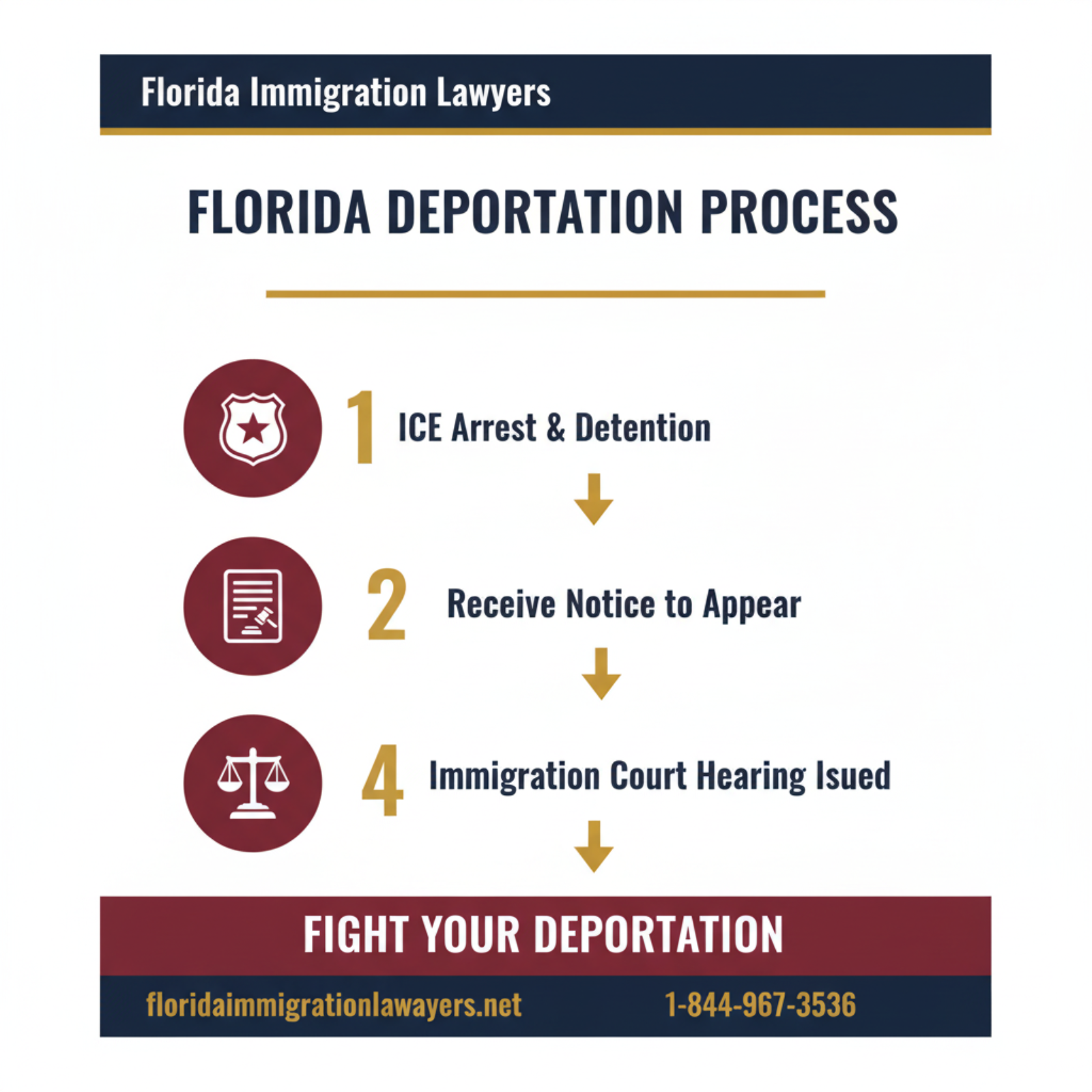
Facing deportation can feel overwhelming, but understanding the process can empower you. While every case is unique, removal proceedings generally follow a structured path. Here is a typical step-by-step guide for immigrants in Florida:
-
Receipt of a Notice to Appear (NTA): This official document from the Department of Homeland Security (DHS) outlines the reasons the government believes you are removable. It specifies the charges and the section of the INA you allegedly violated. It also schedules your first court appearance, known as a Master Calendar Hearing.
-
Master Calendar Hearing (MCH): This is your initial appearance before an immigration judge. During the MCH, the judge will confirm your identity, ensure you received the NTA, and ask you to admit or deny the charges of removability. You will also be asked to designate a country for deportation and inform the court if you intend to seek any forms of relief from removal, such as asylum or cancellation of removal. This is a critical stage where legal representation is invaluable.
-
Filing Applications for Relief: If you are eligible for relief from removal, your attorney will help you prepare and file the necessary applications and supporting documentation. Common forms of relief include asylum, withholding of removal, protection under the Convention Against Torture (CAT), adjustment of status, or cancellation of removal. Each form of relief has specific eligibility requirements and deadlines.
Step-by-Step Process Guide -
Individual Hearing (Merits Hearing): This is akin to a trial. During the Individual Hearing, you and your attorney will present your case for relief from removal. This involves testifying, presenting evidence, and calling witnesses. The government attorney will also present their case and cross-examine you and your witnesses. The immigration judge will then make a decision based on the evidence presented.
-
Decision and Appeals: After the Individual Hearing, the immigration judge will issue a decision. If the judge grants your application for relief, you may be allowed to remain in the U.S. If the judge denies your application, you may have the option to appeal the decision to the Board of Immigration Appeals (BIA). Further appeals may be possible to a U.S. Circuit Court of Appeals. The appeals process is highly complex and requires expert legal guidance.
Essential Documents for Your Deportation Defense
A strong deportation defense relies heavily on comprehensive and well-organized documentation. Collecting these documents proactively can significantly strengthen your case. While the exact list varies by individual circumstances and the type of relief sought, here is a general checklist:
- Personal Identification: Valid passport, birth certificate, national identity card from your home country.
- Proof of Entry/Status: I-94 arrival/departure record, visa stamps, previous USCIS approval notices (I-797s), employment authorization documents (EADs).
- Family Records: Marriage certificates, birth certificates of U.S. citizen or permanent resident children/spouses, divorce decrees, adoption papers.
- Financial Records: Tax returns (multiple years), pay stubs, bank statements, property deeds, mortgage statements, utility bills. These demonstrate financial stability and ties to the U.S.
- Community Ties: Letters from community leaders, religious figures, employers, or friends attesting to your good moral character and contributions to the community.
- Medical Records: If you or a family member has a serious medical condition that cannot be treated in your home country, or if deportation would cause extreme hardship.
- Educational Records: Diplomas, transcripts, enrollment verification.
- Police Records: Any arrest records, court dispositions, or certificates of rehabilitation, even if charges were dismissed. Full disclosure is crucial.
- Asylum-Specific Evidence: If seeking asylum, include affidavits, country condition reports, news articles, and any evidence of persecution or fear of persecution in your home country.
Timelines, Processing Expectations, and Cost Factors in Florida Immigration Cases
Immigration timelines can be notoriously lengthy and unpredictable, especially for deportation cases in Florida. Several factors influence how long your case will take, including the specific immigration court, the judge assigned, the complexity of your case, and the type of relief you are seeking. It is not uncommon for removal proceedings to span several months, or even years, from the initial NTA to a final decision.
The U.S. Citizenship and Immigration Services (USCIS) website provides general processing times for various forms and applications, but these do not directly reflect immigration court timelines. Court dockets are often backlogged, leading to significant delays between hearings. Patience and consistent follow-up with your attorney are essential.
Cost factors are another significant consideration. While Florida Immigration Lawyers offers a free consultation, the overall cost of a deportation defense case can vary widely. These costs typically include:
- Attorney Fees: These are for the legal services provided by your lawyer, covering court appearances, document preparation, legal research, and client communication. Fees can depend on the complexity of the case and the experience of the attorney.
- Filing Fees: Government agencies like USCIS charge fees for certain applications for relief (e.g., Application to Register Permanent Residence or Adjust Status, Application for Asylum and for Withholding of Removal). These fees are subject to change and vary by form.
- Ancillary Costs: These may include fees for obtaining certified copies of documents, translation services, expert witness fees, or travel expenses if applicable.
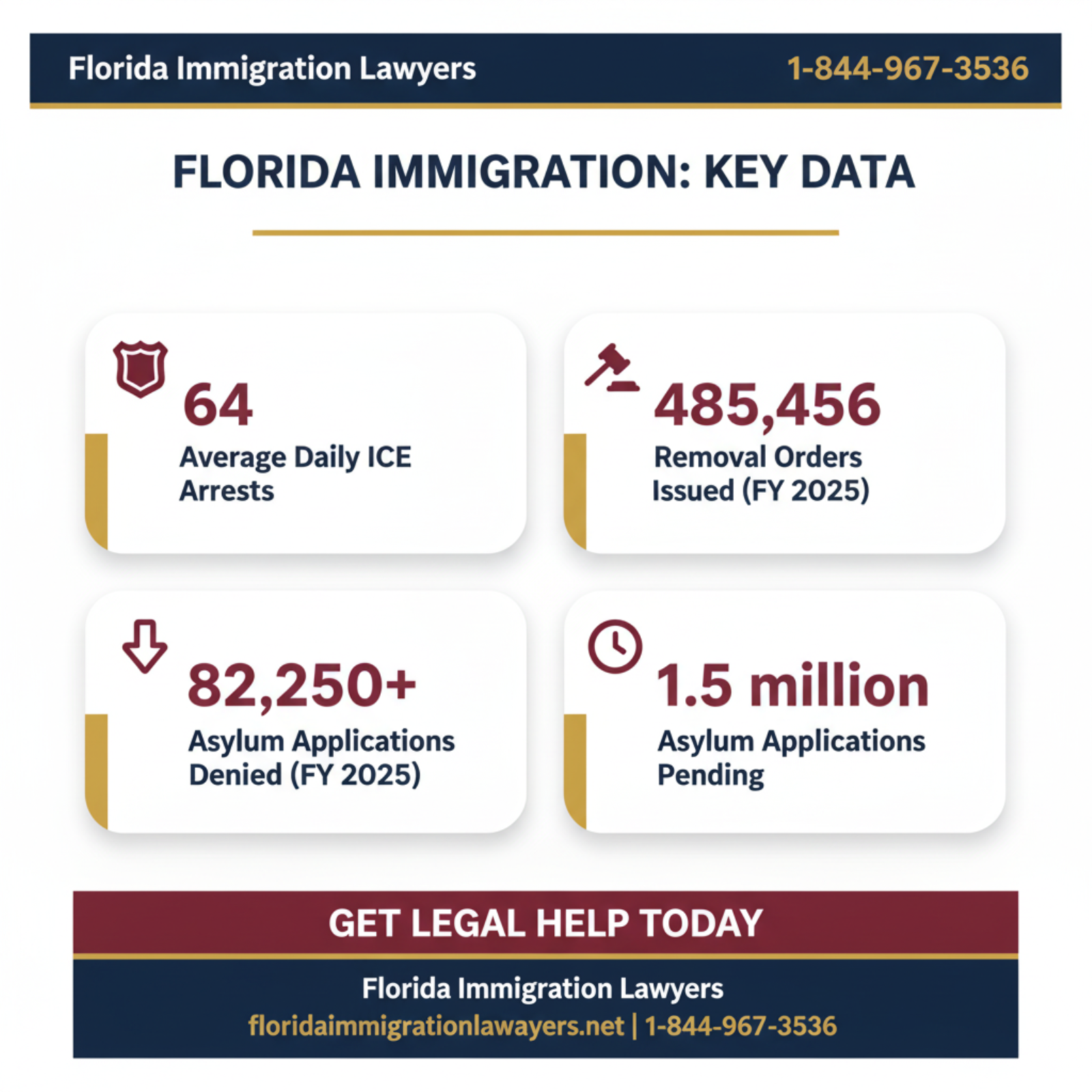
It is important to discuss all potential costs with your attorney upfront. While the financial investment can be substantial, the cost of not having expert legal representation in a deportation case can be far greater, potentially leading to removal from the U.S. and long-term bars to re-entry.
Do not navigate this complex and stressful process alone. The stakes in a deportation case are incredibly high, impacting your family, your livelihood, and your future in the United States. Contact Florida Immigration Lawyers today to ensure your rights are protected and to build a strong defense.
Common Mistakes to Avoid in Deportation Cases
Immigration proceedings are intricate, and even minor errors can have severe consequences. Avoiding these common pitfalls is critical for a successful defense:
-
Failing to Appear in Court: Missing a scheduled immigration court hearing can lead to an immediate Order of Deportation in absentia. This means you are ordered removed without even having a chance to present your case, and it can be very difficult to reopen.
-
Not Disclosing All Facts to Your Attorney: Withholding information, even if you believe it is minor or embarrassing, can severely hinder your lawyer's ability to prepare an effective defense. Full transparency is essential for building trust and strategy.
-
Falling for Notary Fraud: Notaries public are not attorneys and cannot provide legal advice or represent you in immigration court. Engaging unauthorized individuals for legal services often leads to incorrect filings, missed deadlines, and devastating outcomes.
-
Missing Deadlines: Immigration law is strict about deadlines for filing applications and documents. Missing these can result in the denial of relief or the inability to present your case. Your attorney will help you track and meet all critical dates.
-
Traveling Outside the U.S. Without Legal Advice: Leaving the country while in removal proceedings or with certain immigration statuses can trigger bars to re-entry, even if you have a valid visa or green card. Always consult an attorney before making travel plans.
-
Providing False Information: Lying or providing fraudulent documents to immigration authorities or the court can lead to permanent bars from receiving immigration benefits and even criminal charges. Honesty is always the best policy.
-
Not Having Legal Representation: While you have the right to represent yourself, immigration law is incredibly complex. An experienced immigration lawyer can identify potential relief, navigate procedural hurdles, and advocate effectively on your behalf, significantly increasing your chances of a favorable outcome.
When to Call a Florida Immigration Lawyer
The time to seek legal counsel is often earlier than you might think. Proactive engagement with an attorney can prevent minor issues from escalating into major problems. Here are specific scenarios where contacting Florida Immigration Lawyers is highly recommended:
- You Receive a Notice to Appear (NTA): This is the official start of deportation proceedings. Do not delay; contact an attorney immediately to understand the charges and prepare your defense.
- You or a Family Member is Detained by ICE: If you or a loved one is taken into custody by Immigration and Customs Enforcement (ICE) at a facility like the Krome Service Processing Center in Miami, legal intervention is urgent to explore release options like bond hearings.
- You Have a Criminal Record: Even minor offenses can have severe immigration consequences, potentially making you deportable or inadmissible. An attorney can assess your record and advise on potential waivers or defense strategies.
- You Fear Returning to Your Home Country: If you have a well-founded fear of persecution or torture in your home country, you may be eligible for asylum or other forms of protection. A lawyer can help you prepare and present your asylum claim.
- You Are Seeking to Adjust Your Status or Obtain a Green Card: While not directly a deportation scenario, errors in these applications can lead to removal proceedings. Proper legal guidance ensures accurate and timely submissions.
- You Have Received Any Official Correspondence from USCIS or ICE: Any document or letter from these agencies should be reviewed by an attorney to understand its implications and determine the appropriate response.
Florida Immigration Lawyers has a dedicated team of experienced attorneys ready to assist you. We understand the unique challenges faced by immigrants in Florida and are committed to providing compassionate and effective legal representation. Our goal is to protect your rights and help you achieve the best possible outcome.
About Florida Immigration Lawyers
Florida Immigration Lawyers is a leading law firm dedicated to serving the diverse immigration needs of individuals and families across the entire state of Florida. With a deep understanding of U.S. immigration law and a commitment to our clients, we provide expert legal guidance through every step of the immigration process.
Our firm offers a comprehensive range of immigration services, including family-based petitions, employment visas, deportation defense, asylum claims, naturalization, and citizenship applications. We pride ourselves on our empathetic approach, recognizing that behind every case is a person with hopes, dreams, and often, significant anxieties.
Why choose Florida Immigration Lawyers? We offer personalized attention, strategic advocacy, and a proven track record of success. Our attorneys are highly skilled and stay abreast of the ever-changing landscape of immigration law, ensuring our clients receive the most current and effective legal strategies. We are available 24/7 to address urgent concerns and provide a free consultation to help you understand your options without financial commitment.
We serve clients in Miami, Orlando, Tampa, Jacksonville, and all other communities throughout Florida. Your immigration journey is our priority.
Sources and References
- U.S. Citizenship and Immigration Services (USCIS)
- Executive Office for Immigration Review (EOIR)
- 8 U.S.C. Chapter 12 - Immigration and Nationality Act
- Immigration and Nationality Act (INA) Section 237 (8 U.S.C. 1227) - Deportable Aliens
- Immigration and Nationality Act (INA) Section 212 (8 U.S.C. 1182) - Inadmissible Aliens
- Code of Federal Regulations (CFR) Title 8 - Aliens and Nationality
This article provides general legal information and is not intended as legal advice. Every case is unique, and outcomes depend on specific facts and circumstances. Contact an attorney for advice about your particular situation.
Do not let uncertainty jeopardize your future in Florida. Take control of your immigration journey with expert legal support. For a free, confidential consultation, call Florida Immigration Lawyers at 1-844-967-3536 today. Se Habla Español - Estamos aquí para ayudarle.
Need help with Immigration?
Our Florida immigration attorneys offer free consultations. Call today or schedule online.
Frequently Asked Questions
Florida Immigration Lawyers
Legal Team
Our experienced attorneys at Florida Immigration Lawyers have been serving clients across Florida for over 20 years. We specialize in immigration, personal injury, criminal defense, workers compensation, and family law.