Abrego Garcia Deportation: Florida Defense & Your Rights in
Understanding the complexities of deportation defense in Florida is crucial for immigrants. This guide, inspired by the broader implications of cases like the Abrego Garcia deportation, details the process, common grounds for removal, and essential steps for a robust defense. Learn about immigration court proceedings, necessary documentation, and financial considerations. Discover common mistakes to avoid and when to seek professional legal counsel. Florida Immigration Lawyers offers expert guidance and compassionate representation across Florida. Contact us for a free consultation to protect your rights and future in the U.S.

The abrego garcia deportation case highlights the critical need for robust legal defense in removal proceedings. If you or a loved one face deportation in Florida, understanding your rights and available defenses is paramount. Seeking immediate legal counsel from an experienced immigration lawyer can significantly impact your case outcome and help protect your future in the United States.
- Deportation defense requires navigating complex immigration laws and court procedures.
- Various forms of relief from removal may be available, depending on your specific situation.
- Timely legal representation is crucial to present a strong case and avoid critical errors.
- Immigration courts in Florida handle numerous removal cases annually, underscoring the need for local expertise.
- Understanding the process can alleviate stress and empower you to make informed decisions.
Imagine receiving a Notice to Appear, suddenly facing the prospect of leaving the country you call home. This terrifying reality confronts thousands of individuals and families across Florida each year, often bringing immense stress and uncertainty. The complexities surrounding cases like the high-profile abrego garcia deportation underscore the urgent need for expert legal guidance when navigating removal proceedings.
This comprehensive guide from Florida Immigration Lawyers aims to demystify the deportation process in Florida. We will explore common grounds for removal, potential defenses, and crucial steps you can take to protect your rights. Our goal is to equip you with the knowledge needed to confront these challenges head-on.
Do not face this daunting journey alone. For immediate assistance and to understand your options, call Florida Immigration Lawyers at 1-844-967-3536 for a free consultation. Our dedicated team is here to help you.
Understanding Deportation Proceedings in Florida: An Overview
Facing deportation, also known as removal proceedings, can be one of the most stressful experiences for an immigrant and their family. In Florida, the immigration court system is busy, handling numerous cases ranging from minor infractions to serious criminal allegations. Understanding this process is the first step toward building a strong defense.
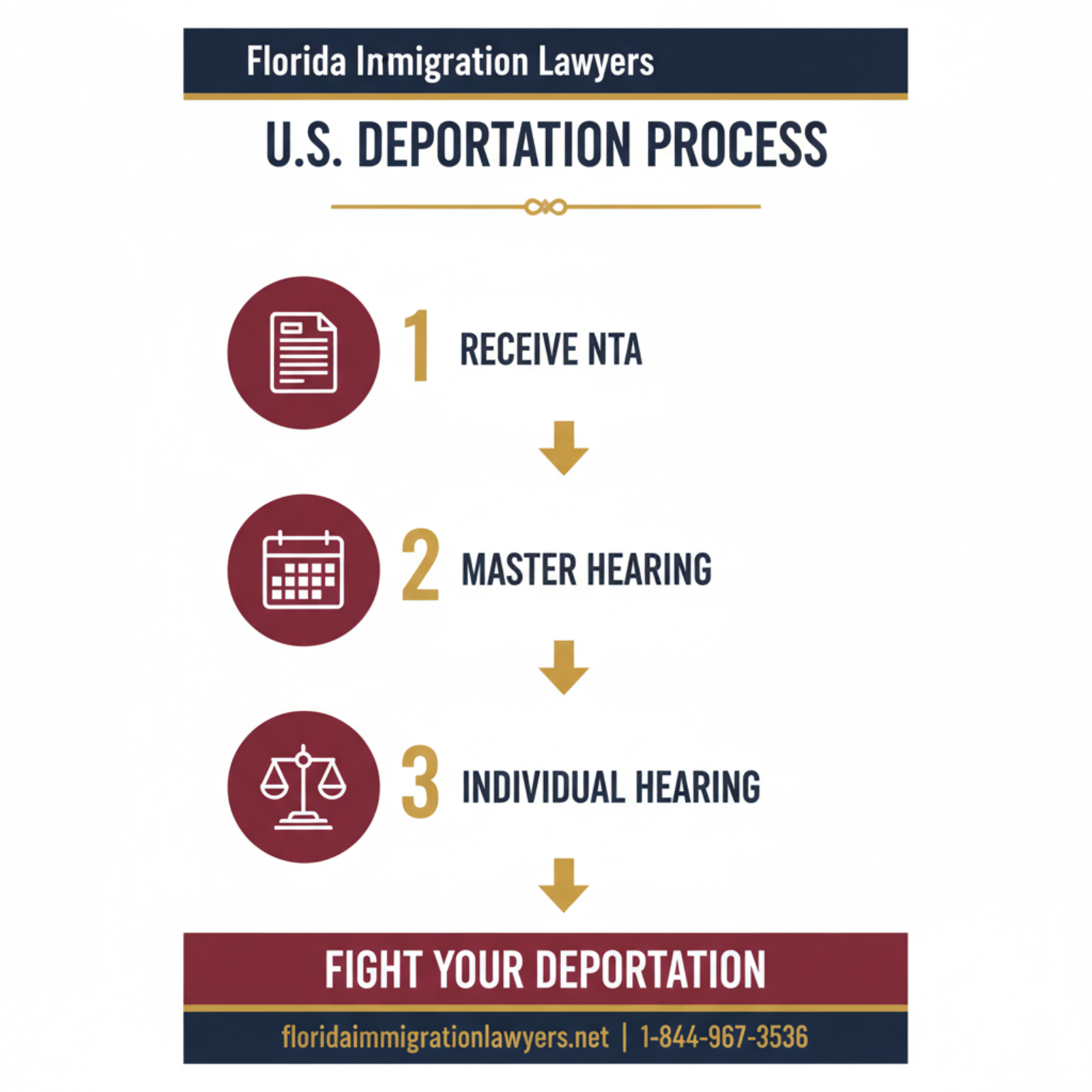
The U.S. government initiates deportation proceedings by issuing a Notice to Appear (NTA). This document formally charges an individual with being removable from the United States and orders them to appear before an Immigration Judge. Receiving an NTA means your case has begun in the Executive Office for Immigration Review (EOIR) system.
Grounds for Deportation under U.S. Law
U.S. immigration law, specifically the Immigration and Nationality Act (INA), outlines various reasons an individual may be subject to deportation. These grounds are broadly categorized into several areas. Knowing the specific charges against you is vital for mounting an effective defense.
Common grounds for removal include:
- Entry Without Inspection or Visa Overstay: Individuals who entered the U.S. without authorization or remained beyond their authorized period.
- Criminal Convictions: Certain criminal offenses, particularly aggravated felonies or crimes involving moral turpitude, can lead to deportation. (Refer to INA § 237, 8 U.S.C. § 1227).
- Violation of Visa Terms: Failing to comply with the conditions of your nonimmigrant visa, such as working without authorization.
- Fraud or Misrepresentation: Providing false information or misrepresenting facts to obtain immigration benefits.
- National Security Concerns: Engaging in activities deemed a threat to national security or public safety.
The Role of Immigration Courts in Florida
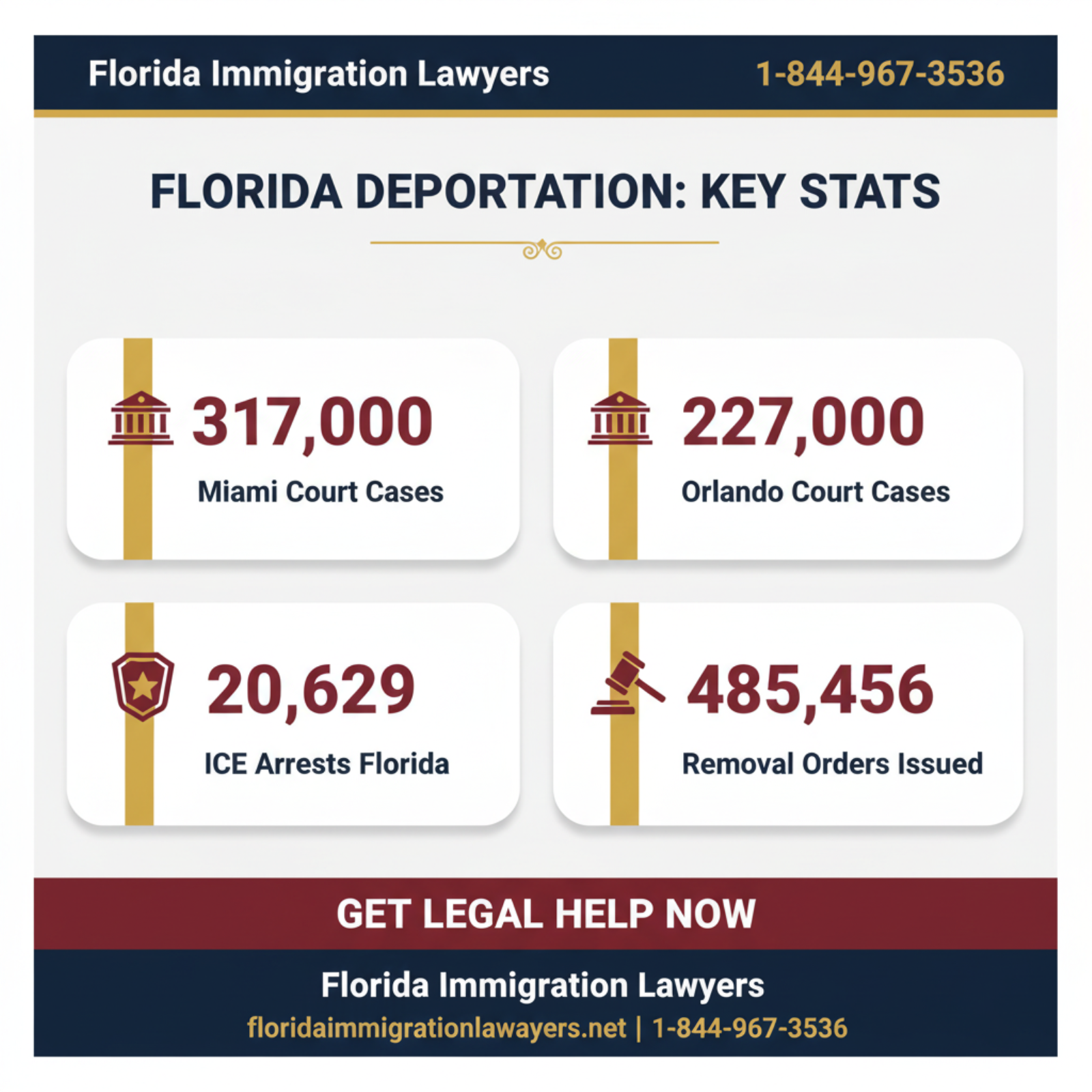
Florida is home to several immigration courts, including those in Orlando, Miami, and a dedicated detention court in Pompano Beach. These courts fall under the Department of Justice's Executive Office for Immigration Review. An Immigration Judge presides over removal proceedings, making decisions based on evidence and legal arguments presented.
The process often involves multiple hearings, including Master Calendar Hearings and Individual Hearings. During these proceedings, you have the right to legal representation. An experienced deportation defense Florida lawyer can advocate on your behalf, present evidence, and argue for forms of relief from removal.
Key Steps to Defend Against Deportation in Florida
Successfully navigating a deportation case requires a strategic approach and thorough preparation. While every case is unique, a general roadmap can help you understand the journey ahead. Florida Immigration Lawyers are here to guide you through each critical stage.
- Receive the Notice to Appear (NTA): This official document outlines the charges against you and the date of your first court hearing. Review it carefully with your attorney to understand the specific allegations.
- Attend Your Master Calendar Hearing: This initial hearing is where you formally respond to the charges. Your immigration lawyer will help you plead to the allegations and designate any countries of removal. You may also request forms of relief from deportation.
- Identify and Apply for Relief from Removal: Based on your eligibility, your attorney will determine if you qualify for any forms of relief. Common options include asylum, cancellation of removal, adjustment of status, or waivers. For example, individuals fearing persecution may pursue asylum.
- Prepare for Your Individual Hearing: This is essentially a trial where you and the government present evidence, call witnesses, and make legal arguments regarding your eligibility for relief. Thorough preparation is key, including gathering all necessary documentation.
- Decision by the Immigration Judge: After the Individual Hearing, the judge will issue a decision. If relief is granted, you may be able to remain in the U.S. If denied, the judge will order your removal.
- Consider an Appeal: If the Immigration Judge denies your case, you generally have 30 days to file an appeal with the Board of Immigration Appeals (BIA). Your attorney can advise you on the merits of an appeal and guide you through this complex process.
- Enforcement by ICE: If all appeals are exhausted and your removal order stands, U.S. Immigration and Customs Enforcement (ICE) will enforce the order. This may involve detention and physical removal from the United States.
Types of Relief from Removal
Many options exist to fight an abrego garcia deportation or any other removal case. Eligibility depends on factors like your length of stay, family ties, criminal history, and fear of persecution.
- Asylum/Withholding of Removal: For those who fear persecution in their home country.
- Cancellation of Removal: Available to certain long-term residents with qualifying family members and good moral character.
- Adjustment of Status: If you have an eligible family petition or employment-based petition, you may be able to adjust your status in court.
- Waivers of Inadmissibility: Overcoming certain grounds of inadmissibility, often related to past immigration violations or minor criminal issues.
- Prosecutorial Discretion: In some cases, ICE attorneys may agree to close or terminate your case based on humanitarian factors or low enforcement priorities.
Essential Documents for Your Deportation Defense
The success of your deportation defense Florida case often hinges on the strength and completeness of your documentation. Gathering and organizing these materials meticulously is a critical step. Your immigration lawyer will provide a tailored list, but here are common documents typically required.
- Notice to Appear (NTA) and any other court notices.
- Proof of identity and nationality (passport, birth certificate).
- Proof of continuous physical presence in the U.S. (utility bills, school records, employment history, tax returns).
- Evidence of good moral character (letters of support, community involvement, clean criminal record checks).
- Documents related to family ties in the U.S. (marriage certificates, birth certificates of U.S. citizen or LPR children/spouses).
- Financial documents (pay stubs, bank statements, tax returns).
- Medical records, especially if seeking asylum or humanitarian relief.
- Police reports and court dispositions for any arrests or convictions.
- Any previous immigration applications or correspondence with USCIS or ICE.
Organizing these documents can feel overwhelming. Our team at Florida Immigration Lawyers can help you systematically compile all necessary evidence to present a compelling case to the immigration court.
Navigating the Deportation Timeline & Processing Expectations
The timeline for removal proceedings Florida can vary significantly, ranging from a few months to several years. Factors influencing this duration include the complexity of your case, the specific immigration court's caseload, and the availability of judges. Gainesville and other Florida courts often experience heavy dockets.
- Initial Hearings (Master Calendar): Typically scheduled a few weeks to several months after the NTA is issued.
- Individual Hearings: Often set many months, or even over a year, after the initial hearings, due to court backlogs.
- Appeals: If an appeal to the Board of Immigration Appeals (BIA) is filed, it can add another 6-12 months, or more, to the process. Further appeals to federal circuit courts can extend this even longer.
During this time, if you are held in ICE detention Florida, the process might be expedited, but it is still lengthy. The wait can be emotionally taxing, highlighting the importance of having a steadfast legal advocate by your side.
Understanding Immigration Bond
If you or a loved one are detained by ICE, seeking an immigration bond may be possible. A bond allows an individual to be released from detention while their deportation case proceeds. The Immigration Judge determines the bond amount, considering factors such as flight risk and danger to the community.
Securing a bond can be challenging, but it allows individuals to fight their case from outside detention, often with better access to legal resources and family support. Your lawyer can argue for a reasonable bond amount or even for release without bond.
Cost Factors and Fee Breakdown in Deportation Cases
Understanding the financial aspects of a deportation defense is crucial for planning. The costs associated with an abrego garcia deportation defense or any other removal case typically involve legal fees, government filing fees, and other miscellaneous expenses. These can vary widely based on the complexity of the case, the type of relief sought, and the amount of legal work required.
- Legal Fees: This is generally the largest component. Attorneys may charge hourly rates or offer flat fees for specific stages of the process. Complex cases requiring extensive litigation or appeals will naturally incur higher fees.
- Government Filing Fees: While many forms of relief in deportation proceedings do not have direct filing fees (as they are part of the court process), some applications for relief, such as adjustment of status or certain waivers, may require fees payable to USCIS. (See USCIS Filing Fees for current rates, but note we do not provide specific amounts as they change).
- Miscellaneous Costs: These can include fees for obtaining certified copies of documents, translation services, expert witness fees, travel expenses for court appearances, and postage.
Florida Immigration Lawyers believes in transparent fee structures. During your free consultation, we will discuss potential costs and work with you to understand the financial commitment involved. Our priority is to provide exceptional legal representation without hidden surprises.
The path through deportation proceedings is fraught with legal complexities and emotional strain. Do not navigate this process alone. Contact Florida Immigration Lawyers today to discuss your specific situation and explore your best defense strategies. We are committed to protecting your rights and fighting for your future.
Common Mistakes to Avoid in Deportation Cases
Navigating the immigration system, especially during removal proceedings, is incredibly complex. Even minor errors can have significant, lasting consequences. Avoiding these common pitfalls is essential for a strong deportation defense Florida, especially when dealing with complex situations often highlighted by cases like the abrego garcia deportation.
- Missing Court Dates: Failing to appear for any scheduled immigration court hearing can result in an automatic "Order of Removal in Absentia." This means you are ordered deported without a chance to present your case. It is extremely difficult to reopen such a case.
- Providing False Information: Any form of misrepresentation or fraud to immigration officials or the court can lead to severe penalties, including a permanent bar from future immigration benefits. Honesty is always the best policy, even if it means admitting mistakes.
- Not Disclosing Criminal History: Attempting to hide past arrests or convictions will almost certainly backfire. Immigration judges and government attorneys have access to criminal records. Full disclosure allows your attorney to address these issues proactively.
- Traveling Outside the U.S. While in Proceedings: Unless explicitly authorized by the court or USCIS, leaving the U.S. during removal proceedings can be considered a self-deportation and may prevent your return. Always consult your attorney before making travel plans.
- Failing to Update Your Address: If you move, you must inform the immigration court and USCIS of your new address immediately. Failure to do so means you might miss critical notices, including hearing dates, leading to an in absentia removal order.
- Not Seeking Legal Counsel: Representing yourself in immigration court is highly risky. Immigration law is notoriously complex, and an attorney can identify defenses, navigate procedures, and present your case far more effectively than an unrepresented individual.
- Ignoring Deadlines: Strict deadlines apply to filing documents, appealing decisions, and requesting certain forms of relief. Missing a deadline can cause you to lose crucial opportunities to fight your deportation.
- Speaking to ICE or CBP Without an Attorney: Anything you say can be used against you. If approached by immigration enforcement, you have the right to remain silent and to request an attorney. Do not answer questions without legal representation present.
- Not Gathering Sufficient Evidence: A strong case relies on compelling evidence. Failing to collect all necessary documents, witness statements, or expert testimony can weaken your defense and reduce your chances of success.
- Underestimating the Seriousness of the Situation: A notice to appear is a grave legal matter. Treating it lightly or delaying action can lead to irreversible consequences, including actual deportation.
When to Call a Lawyer for Your Deportation Case
The moment you receive a Notice to Appear (NTA) or learn you are subject to removal proceedings Florida, perhaps even drawing parallels to the complexities seen in the abrego garcia deportation case, it is time to contact an experienced immigration attorney. Early intervention is often key to a successful defense. Delaying can limit your options and complicate your case significantly.
Specific scenarios where legal help from Florida Immigration Lawyers is critical include:
- Receiving a Notice to Appear (NTA): This is your official notification that deportation proceedings have begun.
- Being Detained by ICE: If you or a loved one are in ICE detention Florida, an attorney can help explore bond options and begin defense preparations immediately.
- Facing Criminal Charges: If you have been arrested or convicted of a crime, understanding the immigration consequences is vital. An attorney can advise on how criminal issues impact your immigration status.
- Considering Asylum or Other Relief: These applications are highly complex and require strong legal arguments and extensive documentation.
- Appealing a Judge's Decision: The appeals process to the Board of Immigration Appeals (BIA) and federal courts is specialized and requires experienced counsel.
- Any Uncertainty About Your Immigration Status: If you are unsure about your rights or potential vulnerabilities, a consultation can provide clarity and peace of mind.
At Florida Immigration Lawyers, we specialize in deportation defense Florida. Our attorneys possess deep knowledge of immigration law and the specific procedures of Florida's immigration courts. We are dedicated to providing aggressive and compassionate representation to protect your right to remain in the U.S.
About Florida Immigration Lawyers
Florida Immigration Lawyers is a leading law firm dedicated to providing exceptional immigration legal services across the entire state of Florida. With years of experience and a deep understanding of U.S. immigration law, our attorneys are passionate advocates for immigrants and their families. We understand the challenges you face and are committed to guiding you through every step of your legal journey.
Our Services: We offer a comprehensive range of immigration services, including but not limited to:
- Deportation Defense and removal proceedings
- Asylum and refugee claims
- Family-based immigration (visas, adjustment of status)
- Business immigration and investor visas
- Citizenship and naturalization
- Visa applications (non-immigrant and immigrant)
- Appeals to the BIA and federal courts
Why Choose Us:
- Expertise: Our attorneys are highly experienced in all facets of immigration law, including complex deportation cases.
- Client-Centered Approach: We treat every client with respect, empathy, and personalized attention. Your case is our priority.
- Proven Track Record: We have a history of successfully defending clients and achieving favorable outcomes.
- Bilingual Services: Our team offers services in English and Spanish, ensuring clear communication and understanding.
- Statewide Reach: We serve clients in Gainesville, Miami, Orlando, Tampa, and throughout all of Florida.
Contact Us Today:
Visit our website at https://www.floridaimmigrationlawyers.net or call us directly at 1-844-967-3536. We are available 24/7 for free consultations to discuss your specific immigration needs. Let our family protect yours.
Sources and References
- U.S. Citizenship and Immigration Services (USCIS)
- Executive Office for Immigration Review (EOIR)
- 8 U.S.C. Chapter 12 - Immigration and Nationality Act (INA)
- INA § 237 - Deportable Aliens (8 U.S.C. § 1227)
- 8 CFR Part 1240 - Proceedings to Determine Deportability or Inadmissibility
- U.S. Immigration and Customs Enforcement (ICE)
This article provides general legal information and is not intended as legal advice. Every case is unique, and outcomes depend on specific facts and circumstances. Contact an attorney for advice about your particular situation.
Your future in Florida is too important to leave to chance. If you are facing the possibility of deportation, or have questions about your immigration status, do not hesitate to seek professional legal help. Call Florida Immigration Lawyers at 1-844-967-3536 for a free, confidential consultation. We are ready to provide the experienced and compassionate legal representation you deserve. Se Habla Español - Estamos aquí para ayudarle.
Do Not Navigate This Process Alone
Our experienced immigration attorneys are ready to fight for you. Get a free, confidential consultation today.
Se Habla Español
Frequently Asked Questions
Florida Immigration Lawyers
Immigration Attorney | Founder, Vasquez Law Firm
U.S. Air Force veteran and immigration attorney with thousands of cases resolved. J.D., NCCU School of Law. AILA member. Admitted to the 4th, 5th, and 11th Circuit Courts.
Available 24/7 - Free Evaluations
Related Legal Services
Our Florida immigration attorneys can help you with immigration practice areas, free immigration consultation and experienced immigration attorneys. Call today at 1-844-967-3536 for a free consultation.
Related Links
Related Topics
Free Legal Consultation
Discuss your case with our experienced attorneys. We're available 24/7.
Se Habla Español - Estamos aquí para ayudarle.
Related Articles
Immigration Lawyer Cape Coral: Your SW Florida Guide
Navigating immigration law in Cape Coral, Lee County, and Southwest Florida demands expert legal guidance. An experienced immigration lawyer in Cape Coral is crucial for understanding complex visa applications, green card processes, and defense against deportation. This comprehensive guide details common immigration pathways, essential documentation, and critical mistakes to avoid. Our firm, Florida Immigration Lawyers, offers dedicated assistance, ensuring your case is handled with precision and care. We serve clients across Florida, providing personalized advice and strategic representation for family-based immigration, asylum, and citizenship. Understand the timelines, costs, and the importance of professional legal support for your immigration journey. Contact us for a free consultation to secure your future.
Understanding Immigration Lawyer Cost in Florida 2026
Discover how much it costs to hire an immigration lawyer in Florida in 2026. Understand the factors influencing fees and why consulting with a professional is essential for your immigration journey. Contact Florida Immigration Lawyers today for expert guidance.
Immigration Services in Naples, Collier County | VLF Florida
Explore comprehensive immigration services in Naples, Collier County. Learn about visa processes, legal assistance, and how to avoid common pitfalls. Contact Florida Immigration Lawyers for expert guidance and a free consultation.
OPT STEM Extension for Florida Graduates: Your 2026 Guide
For F-1 international students graduating from Florida universities with a STEM degree, the OPT STEM extension is a vital pathway to extend work authorization by 24 months. This guide from Florida Immigration Lawyers details the 2026 application process, including eligibility, a step-by-step walkthrough, essential documents like Form I-983, and critical timelines. We highlight the importance of consulting your DSO, securing an E-Verify employer, and avoiding common mistakes that can lead to delays or denials. Understanding these requirements is key to leveraging Florida's robust job market. Contact our firm for a free consultation to navigate this complex process effectively.