Abrego Garcia Deportation: Florida Immigration Defense &...
The Kilmar Abrego Garcia case underscores the critical importance of expert legal defense against deportation, particularly in Florida. This guide from Florida Immigration Lawyers details the complexities of removal proceedings, from understanding the initial Notice to Appear to navigating appeals. We cover essential documentation, typical timelines, and crucial mistakes to avoid, emphasizing the need for professional guidance. For residents in Hollywood and across Florida, having a knowledgeable immigration lawyer is indispensable to protect your rights and explore all possible relief options. Learn how our firm can help you challenge an Abrego Garcia deportation and secure your future in the United States.

The Kilmar Abrego Garcia case highlights the critical need for robust legal defense against deportation in Florida. Individuals facing similar situations, especially in Hollywood and surrounding areas, must understand their rights and available relief options. Seeking immediate legal counsel from an experienced immigration lawyer is crucial to challenging removal proceedings effectively and protecting your future.
- Deportation cases are complex and require expert legal intervention.
- You have rights, even when facing removal proceedings.
- Florida's immigration courts present unique challenges.
- Early legal representation significantly improves defense outcomes.
- Various forms of relief may be available to prevent deportation.
Facing the threat of deportation can be one of the most frightening experiences an individual or family can endure. The uncertainty, the fear of separation, and the complex legal landscape can feel overwhelming. In Florida, navigating immigration challenges requires a deep understanding of federal law and state-specific nuances. The well-publicized Kilmar Abrego Garcia case serves as a poignant reminder of how critical skilled legal defense is when facing deportation, especially when issues of mistaken identity or wrongful removal arise.
At Florida Immigration Lawyers, we understand the immense pressure you are under. Our firm is dedicated to providing compassionate and effective legal representation to individuals throughout Florida, including Hollywood and surrounding communities. We believe everyone deserves a fair chance to present their case and protect their right to remain in the United States.
This comprehensive guide will explore the intricacies of deportation defense in Florida, drawing lessons from the Abrego Garcia case. We will cover the process, essential documentation, potential timelines, and crucial mistakes to avoid. Our goal is to empower you with knowledge and demonstrate how a dedicated legal team can make a profound difference in your case. Call Florida Immigration Lawyers at 1-844-967-3536 for a free consultation to discuss your specific situation today.
Understanding Abrego Garcia Deportation and Florida's Immigration Landscape
The term "Abrego Garcia deportation" has become synonymous with the complexities and potential missteps within the U.S. immigration system. Kilmar Abrego Garcia's case involved a mistaken deportation, highlighting the profound impact of administrative errors and the necessity of rigorous legal challenges. For those in Florida facing similar removal proceedings, understanding this context is vital.
Florida is a state with a diverse immigrant population, and consequently, a busy immigration court system. The Executive Office for Immigration Review (EOIR) operates immigration courts in key Florida cities such as Miami, Orlando, and Bradenton. These courts handle a significant caseload of removal proceedings, making the process often lengthy and intricate.
The legal landscape in Florida can be challenging, with state policies sometimes intersecting with federal immigration enforcement. For instance, recent discussions regarding "sanctuary policies" underscore the political climate surrounding immigration in the state. This environment makes expert legal counsel even more indispensable for anyone facing the threat of deportation.
The Kilmar Abrego Garcia Case: A Precedent for Vigilance
Kilmar Abrego Garcia's legal battles, which unfolded over several years, underscored critical issues in immigration law. His initial deportation, later deemed mistaken, led to a complex series of legal challenges against re-detention and further removal. This case illustrates that even when a deportation order is issued, it may be challenged, especially if due process was violated or if there was an error in identity or law.
This high-profile situation emphasizes that fighting an Abrego Garcia deportation requires a comprehensive understanding of procedural law, appellate processes, and potential legal remedies. It demonstrates the importance of not giving up, even in seemingly dire circumstances. Your legal team must be prepared to scrutinize every detail and challenge every potential error.
Florida's Unique Immigration Environment and Removal Proceedings
For individuals in Hollywood, Florida, and across the state, removal proceedings are initiated when the Department of Homeland Security (DHS) issues a Notice to Appear (NTA). This document formally charges an individual with being removable from the U.S. and directs them to appear before an Immigration Judge.
Florida's immigration courts, particularly the Miami Immigration Court, are among the busiest in the nation. This means cases can take a considerable amount of time to resolve, and court dockets are often backlogged. Having a local deportation defense lawyer who understands these specific court dynamics is a significant advantage.
Our firm, Florida Immigration Lawyers, is well-versed in the local rules and procedures of these courts. We are committed to providing you with the best possible defense, leveraging our experience to navigate the complexities of removal proceedings Hollywood Florida residents often face.
Navigating Removal Proceedings: A Step-by-Step Guide for Florida Residents
Understanding the stages of removal proceedings is crucial for anyone facing an Abrego Garcia deportation situation. This process can be daunting, but knowing what to expect can help you prepare with your legal team.
-
Receipt of the Notice to Appear (NTA): This is the official document that begins your deportation case. It outlines the charges against you and specifies the date and location of your first hearing. It is critical to review the NTA immediately with an attorney. Do not ignore this document.
-
Master Calendar Hearing: This is the initial court appearance before an Immigration Judge. At this hearing, you or your attorney will acknowledge receipt of the NTA, admit or deny the allegations, and inform the judge of any forms of relief from removal you intend to pursue. This is a procedural hearing, but it sets the stage for your entire case.
-
Filing Applications for Relief: If you are eligible for relief from deportation, such as asylum, cancellation of removal, adjustment of status, or waivers, your attorney will help you prepare and file the necessary applications with the court. Each form of relief has specific eligibility requirements and deadlines. For example, some individuals may be eligible for asylum if they fear persecution in their home country.
-
Individual Hearing (Merits Hearing): This is the main hearing where evidence is presented, witnesses testify, and the Immigration Judge hears arguments for and against your removal. Your attorney will present your case for relief, cross-examine government witnesses, and argue on your behalf. This is your opportunity to demonstrate why you should be allowed to remain in the U.S.
-
Decision by the Immigration Judge: After the individual hearing, the Immigration Judge will issue a decision. If your application for relief is granted, you may be allowed to remain in the U.S. If it is denied, the judge will order your removal. Both parties have the right to appeal this decision.
-
Appeals Process: If either you or the government disagrees with the Immigration Judge's decision, an appeal can be filed with the Board of Immigration Appeals (BIA). Further appeals can be pursued in federal circuit courts. The appeals process is complex and time-sensitive, requiring specialized legal expertise.
Successfully navigating these steps requires meticulous preparation and strategic legal advice. An experienced immigration lawyer Florida can guide you through each stage, ensuring your rights are protected and your best interests are represented.
Essential Documents for Your Abrego Garcia Deportation Defense
A strong defense against an Abrego Garcia deportation relies heavily on compelling evidence and thorough documentation. Gathering the right documents is paramount, as they serve to establish your identity, demonstrate your eligibility for relief, and prove your ties to the U.S. Your Florida immigration defense attorney will help you identify and organize these critical materials.
- Proof of Identity and Nationality: Passport, birth certificate, national ID card. These documents confirm who you are and where you are from.
- Immigration Documents: Visa, I-94 arrival/departure record, previous USCIS notices, asylum application, green card (if applicable). All past and present immigration paperwork is vital.
- Evidence of Family Ties: Marriage certificates, birth certificates of U.S. citizen or legal permanent resident children/spouses, family photos, affidavits from family members. This helps establish hardship if you are removed.
- Financial Records: Bank statements, tax returns, employment letters, pay stubs, property deeds, mortgage statements. These demonstrate financial stability and contributions to the U.S. economy.
- Proof of Residence in the U.S.: Leases, utility bills, school records, medical records, mail addressed to you at your Florida address. This establishes your continuous presence.
- Character Affidavits: Letters from employers, community leaders, friends, and family attesting to your good moral character and positive contributions.
- Police Records and Court Dispositions: If you have any criminal history, even minor offenses, it is crucial to provide all related documents. Your lawyer can assess how these may impact your case.
- Medical Records: Especially if you or a family member has a serious medical condition that would be difficult to treat in your home country.
- Evidence for Specific Relief: Depending on the type of relief you are seeking (e.g., asylum, cancellation of removal), you will need specific evidence such as proof of persecution, extreme hardship, or rehabilitation.
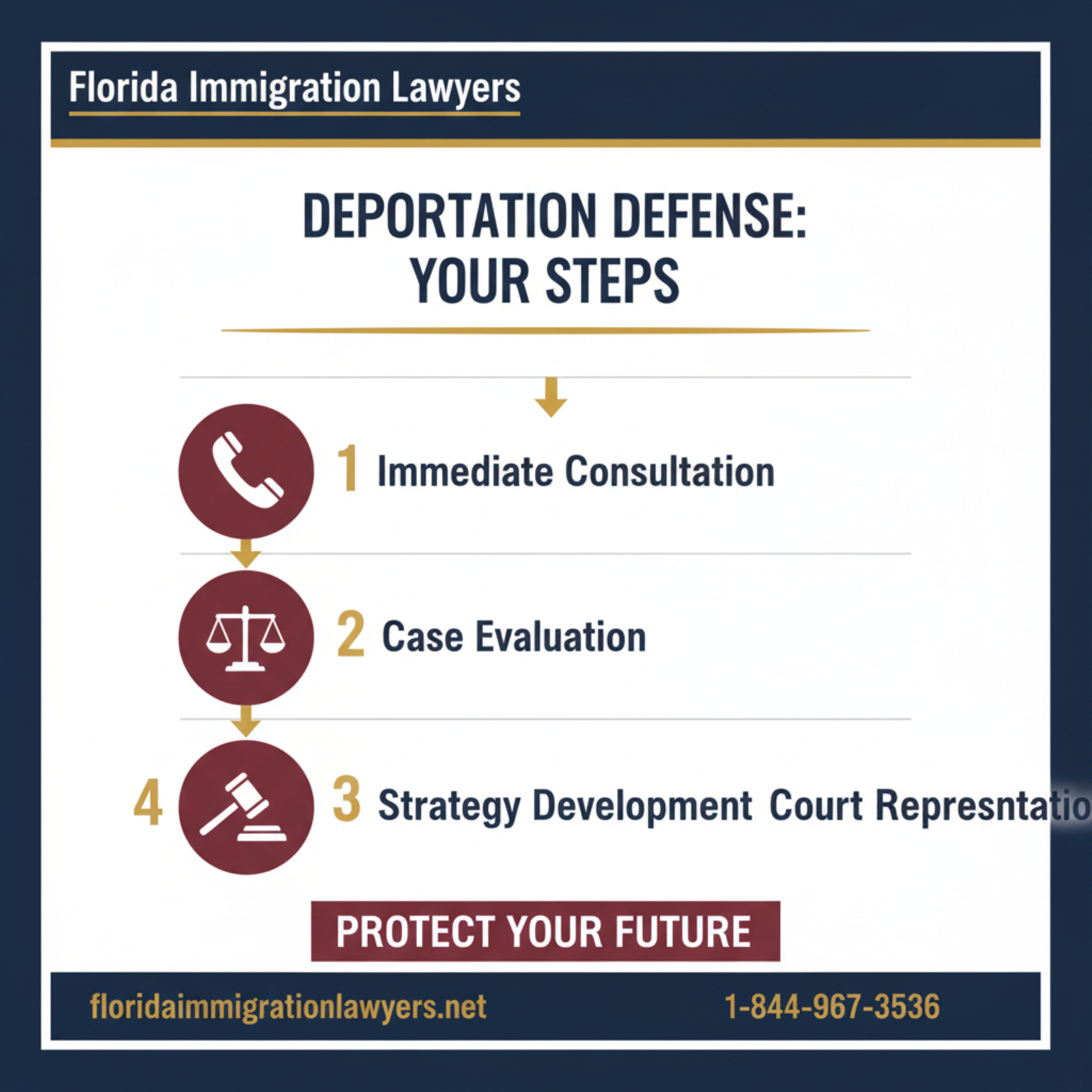
Organizing these documents thoroughly and accurately is a time-consuming but essential part of building a successful defense. Your attorney will meticulously review each item to ensure it supports your argument against deportation.
Timeline and Processing Expectations for Florida Deportation Cases
The timeline for an Abrego Garcia deportation defense in Florida can vary significantly, often extending over several months to multiple years. This variability is due to several factors, including the complexity of your case, the volume of cases in the specific immigration court, and the availability of judges.
For instance, the Miami Immigration Court consistently faces a substantial backlog. This means that after your initial Master Calendar Hearing, it could be many months before your Individual Hearing is scheduled. Appeals to the Board of Immigration Appeals (BIA) can add another year or more to the process. Federal court appeals can extend the timeline even further.
While frustrating, these extended timelines can sometimes offer strategic opportunities for your legal team to gather more evidence, prepare stronger arguments, or explore new avenues for relief. However, they also mean a prolonged period of uncertainty for you and your family.
Your immigration lawyer Florida will provide you with realistic expectations regarding your case's timeline. They will keep you informed of all developments and ensure you meet all deadlines, which are critical in these time-sensitive proceedings. Patience and persistence, coupled with expert legal guidance, are key.
Cost Factors and Fee Breakdown in Fighting Deportation in Florida
Understanding the financial aspects of an Abrego Garcia deportation defense is an important part of planning your legal strategy. While specific fees are not provided here (as they can change), it is crucial to be aware of the general categories of costs involved. These typically include attorney fees, government filing fees, and other miscellaneous expenses.
Attorney Fees for Immigration Defense
Legal fees constitute a significant portion of the total cost. These fees compensate your immigration lawyer for their expertise, time, and resources dedicated to your case. Attorney fees can be structured in various ways:
- Flat Fee: A single, agreed-upon fee for the entire case or specific stages of the process. This provides predictability.
- Hourly Rate: The attorney charges for the actual time spent working on your case. This is common for more complex or unpredictable cases.
- Retainer: An upfront payment that is held in trust and drawn upon as work is performed.
The total attorney fee will depend on the complexity of your case, the amount of work required, and the experience level of your legal team. For instance, fighting an Abrego Garcia deportation through multiple appeals will naturally incur higher costs than a simpler case resolved at the initial hearing.
Government Filing Fees and Other Expenses
In addition to attorney fees, you will typically encounter government filing fees. These are paid directly to USCIS or the Executive Office for Immigration Review (EOIR) for processing various applications for relief. While we do not list specific amounts, these fees are mandatory and can add up, depending on how many forms of relief you pursue.

Other potential expenses include:
- Translation Costs: For documents not in English.
- Expert Witness Fees: If expert testimony is required (e.g., psychological evaluations for asylum cases).
- Travel Expenses: For you or your attorney, if necessary for court appearances or evidence gathering.
- Copying and Postage: Administrative costs for preparing and mailing documents.
Florida Immigration Lawyers believes in transparent fee structures. We will discuss all anticipated costs with you during your free consultation, ensuring you have a clear understanding of the financial commitment involved in your defense. We are here to help you fight deportation USCIS challenges effectively.
Do not navigate this process alone. The stakes are too high. Contact Florida Immigration Lawyers today to secure the experienced legal representation you deserve. We are ready to stand by your side.
Common Mistakes to Avoid in Abrego Garcia Deportation Cases
Navigating deportation proceedings is fraught with potential pitfalls. Avoiding common mistakes can significantly impact the outcome of your case, especially when you are fighting an Abrego Garcia deportation. Being aware of these errors is the first step towards a stronger defense.
-
Ignoring a Notice to Appear (NTA): Failing to appear for a scheduled court hearing can result in an automatic deportation order (in absentia order). This is one of the most detrimental mistakes you can make, making it extremely difficult to reopen your case.
-
Providing False Information: Lying or submitting fraudulent documents to immigration authorities or the court can lead to severe penalties, including permanent bars to future immigration benefits and criminal charges. Honesty and integrity are paramount.
-
Missing Deadlines: Immigration law is highly deadline-driven. Missing a deadline for filing an application, submitting evidence, or appealing a decision can lead to your case being denied or dismissed without further review. Your Florida immigration defense team will ensure all deadlines are met.
-
Traveling Internationally Without Permission: If you are in removal proceedings, leaving the U.S. without explicit permission from an Immigration Judge or USCIS can be considered self-deportation and may prevent your return. Always consult your attorney before making travel plans.
-
Not Understanding the Charges Against You: Many individuals do not fully comprehend the specific reasons the government is seeking to deport them. Without this understanding, it is impossible to mount an effective defense. Your lawyer will explain the charges clearly.
-
Representing Yourself: While you have the right to self-representation, immigration law is incredibly complex. Individuals who represent themselves often miss crucial legal arguments, fail to present evidence correctly, or are unaware of available relief options. This significantly lowers their chances of success.
-
Failing to Update Your Address: If you move while in removal proceedings, you must inform the immigration court and USCIS of your new address. Failure to do so means you might miss important court notices, potentially leading to an in absentia deportation order.
-
Not Gathering Sufficient Evidence: A strong defense requires compelling evidence. Failing to collect and present all relevant documents, witness testimonies, and expert reports can weaken your case considerably. Your attorney will guide you on what evidence is needed.
-
Discussing Your Case with Others: Be cautious about discussing the specifics of your case with anyone other than your attorney. Information shared with non-legal personnel, including friends or non-attorney notaries, is not protected by attorney-client privilege and could potentially harm your defense.
-
Giving Up Hope Prematurely: The Abrego Garcia case itself is a testament to the fact that even seemingly lost causes can be fought and won with persistent legal effort. Do not lose hope. A dedicated immigration lawyer Florida can often find solutions where others see none.
When to Call an Immigration Lawyer in Florida for Deportation Defense
Given the high stakes involved in an Abrego Garcia deportation, knowing when to seek legal counsel is paramount. The simple answer is: the sooner, the better. Early intervention by an experienced immigration lawyer can often prevent escalation or provide more options for defense.
Consider contacting Florida Immigration Lawyers immediately if any of the following scenarios apply to you:
- You have received a Notice to Appear (NTA): This is your official notification of removal proceedings. Do not wait until your court date; consult an attorney right away to prepare your defense.
- You or a loved one is detained by ICE: If you are in ICE custody, legal representation is critical to explore bond options and begin preparing your defense while you are detained. Our firm can assist with deportation defense for individuals in detention facilities across Florida.
- You have a criminal conviction or charges: Criminal issues can have severe immigration consequences, often leading to mandatory detention or making you ineligible for certain forms of relief. An attorney can assess the immigration impact of your criminal record.
- You believe you were wrongfully detained or deported: Similar to the Abrego Garcia case, if you suspect an error in your detention or removal order, an attorney can help investigate and challenge the decision.
- You are seeking complex forms of relief: Options like cancellation of removal, asylum, or waivers require extensive documentation and legal arguments. An attorney ensures these applications are prepared meticulously.
- You are considering appealing an Immigration Judge's decision: Appeals are highly technical and time-sensitive. Expert legal guidance is essential to navigate the Board of Immigration Appeals and federal courts.
- You have a previous deportation order: If you have been previously deported and are now back in the U.S., you may face serious repercussions. An attorney can evaluate your options, if any, to challenge or mitigate the consequences.
Florida Immigration Lawyers stands ready to assist you with any aspect of your deportation defense. We offer free consultations to help you understand your options and develop a strategy. Our team is committed to fighting vigorously for your rights in Hollywood, across Florida, and before USCIS.
About Florida Immigration Lawyers
Florida Immigration Lawyers is a leading law firm dedicated to providing exceptional legal services to immigrants and their families throughout the state of Florida. With a deep understanding of the complexities of U.S. immigration law, our experienced attorneys are committed to achieving the best possible outcomes for our clients.
We offer a comprehensive range of immigration services, including family-based immigration, business immigration, asylum, citizenship and naturalization, visa applications, and robust deportation defense. Our firm prides itself on a client-centered approach, ensuring that each individual receives personalized attention and strategic legal counsel tailored to their unique circumstances.
Why choose Florida Immigration Lawyers? We combine legal expertise with genuine empathy, understanding the profound impact immigration matters have on your life. Our team is available 24/7 to address your urgent needs, and we offer free consultations to help you take the first step without financial commitment. We serve all of Florida, from Hollywood to Miami, Orlando, and beyond, and we are proud to offer bilingual services to effectively communicate with our diverse clientele.
Let us be your trusted advocates in your immigration journey. Your future in Florida is our priority. Call us today at 1-844-967-3536 or visit our website at https://www.floridaimmigrationlawyers.net to learn more about how we can help you.
Sources and References
- U.S. Citizenship and Immigration Services (USCIS)
- Executive Office for Immigration Review (EOIR) - U.S. Department of Justice
- U.S. Immigration and Customs Enforcement (ICE)
- 8 U.S.C. Chapter 12 - Immigration and Nationality Act (INA)
- 8 CFR Part 1003 - Executive Office for Immigration Review
- INA Section 240 - Removal Proceedings
This article provides general legal information and is not intended as legal advice. Every case is unique, and outcomes depend on specific facts and circumstances. Contact an attorney for advice about your particular situation. Immigration laws are subject to frequent change; always consult with a qualified legal professional for the most current information.
Do not face the complex challenges of an Abrego Garcia deportation alone. Your future in Florida depends on effective legal representation. Contact Florida Immigration Lawyers for a free consultation at 1-844-967-3536 today. Se Habla Español - Estamos aquí para ayudarle.
Do Not Navigate This Process Alone
Our experienced immigration attorneys are ready to fight for you. Get a free, confidential consultation today.
Se Habla Español
Frequently Asked Questions
Florida Immigration Lawyers
Immigration Attorney | Founder, Vasquez Law Firm
U.S. Air Force veteran and immigration attorney with thousands of cases resolved. J.D., NCCU School of Law. AILA member. Admitted to the 4th, 5th, and 11th Circuit Courts.
Available 24/7 - Free Evaluations
Related Legal Services
Our Florida immigration attorneys can help you with business immigration, asylum protection and deportation defense. Call today at 1-844-967-3536 for a free consultation.
Related Links
Related Topics
Free Legal Consultation
Discuss your case with our experienced attorneys. We're available 24/7.
Se Habla Español - Estamos aquí para ayudarle.
Related Articles
Free Immigration Consultation in Florida | VLF Florida
Facing immigration issues in Florida? Discover the importance of free consultations with experienced immigration lawyers in Coral Springs. Learn how to prepare for a consultation, avoid common mistakes, and explore when to seek legal help. Call Florida Immigration Lawyers today!
Child Status Protection Act: Florida Guide | VLF Florida
Learn how the Child Status Protection Act (CSPA) can protect your family's immigration status in Florida. This guide covers everything from understanding CSPA to calculating age and avoiding common mistakes. Call Florida Immigration Lawyers for expert help.
Immigration Medical Exam: Florida Doctors Guide | VLF Florida
If you're applying for a green card in Florida, understanding the immigration medical exam is crucial. This guide covers everything from choosing a civil surgeon to what the exam entails. Get a free consultation with Florida Immigration Lawyers.
Solutions for Immigration Backlog in Florida | VLF Florida
Facing immigration backlog in Florida can be daunting. Discover strategies to manage USCIS delays and learn when to seek legal assistance. Call Florida Immigration Lawyers for expert guidance.