2026 Winter Olympics Ice Hockey Immigration: Florida Guide for Athletes & Staff
Navigating immigration for athletes, coaches, and staff involved in the 2026 Winter Olympics ice hockey tournament, especially for those with ties to Florida, requires a thorough understanding of U.S. visa options. This comprehensive guide from Florida Immigration Lawyers explores specific visa categories like O-1 for extraordinary ability and P-1 for internationally recognized athletes, detailing the step-by-step application process with USCIS. We highlight essential documentation, timelines, and cost factors, emphasizing common mistakes to avoid. Whether you're in Gainesville or elsewhere in Florida, securing expert legal counsel is crucial for a smooth and successful immigration journey. Learn how to protect your status and achieve your goals.
For individuals involved with the 2026 Winter Olympics ice hockey, immigration to Florida often involves specific visa categories like O-1 for extraordinary ability or P-1 for internationally recognized athletes. Navigating these complex processes, especially with USCIS visa options and requirements, demands expert legal guidance. Florida Immigration Lawyers assist athletes, coaches, and support staff in Gainesville and across Florida.
- O-1 and P-1 visas are common for Olympic athletes and support personnel.
- USCIS processes are crucial for temporary and permanent residency paths.
- Family members may also require specific dependent visas to join you in Florida.
- Early planning with a Florida immigration lawyer is essential for success.
- Residents in Gainesville and surrounding areas can seek local expert help.
Imagine the thrill of the 2026 Winter Olympics ice hockey games, where athletes from around the globe showcase their talent and dedication. While the games themselves will be held in Milan and Cortina, Italy, the journey for many participants, coaches, support staff, and even devoted fans often has significant ties to the United States, particularly Florida. Whether you are a U.S.-based athlete with international family, an overseas professional seeking to train in Florida, or support personnel needing temporary entry, your connection to the Sunshine State brings unique immigration considerations.
Navigating the complexities of U.S. immigration law can be daunting, especially for those with demanding schedules and specific needs related to high-profile international events. This article explores the immigration pathways and potential challenges for individuals connected to the 2026 Winter Olympics ice hockey, focusing on how these processes impact those living in, training in, or moving to Florida, particularly cities like Gainesville. We will cover essential visa options, detailed application steps, and explain why expert legal guidance from a Florida immigration lawyer is indispensable.
Understanding the proper legal avenues is critical to ensuring a smooth experience, whether you are pursuing a temporary stay or a more permanent residency in Florida. We aim to provide clear, actionable information to help you prepare for your immigration journey. Call Florida Immigration Lawyers at 1-844-967-3536 for a free consultation to discuss your specific immigration needs.
Understanding Immigration for 2026 Winter Olympics Ice Hockey Participants in Florida
The 2026 Winter Olympics ice hockey tournament will draw thousands of international participants, including athletes, coaches, trainers, and support staff. Many of these individuals have existing ties to the U.S. or seek future opportunities in Florida. For instance, many international athletes choose Florida for its world-class training facilities and favorable climate, making it a crucial hub for sports-related immigration. Understanding the U.S. immigration landscape is vital for a successful journey.
Florida, with its diverse population and growing sports industry, often serves as a training ground, a temporary residence, or even a new home for international talent. Cities such as Gainesville, Orlando, and Miami host numerous sports organizations and events, attracting individuals who may require various USCIS visa options. Whether you are joining a professional team in Florida or simply training here, your immigration status must be carefully managed.
The immigration process for athletes and sports professionals is highly specialized. It requires a deep understanding of specific visa categories designed for individuals with extraordinary abilities or international recognition. These visas are distinct from standard tourist or work visas and come with their own set of stringent requirements and documentation. Proper classification under the correct visa category is the first critical step.
Specific Visa Categories for Athletes and Support Personnel
For individuals involved in the 2026 Winter Olympics ice hockey, several nonimmigrant visa categories are commonly utilized. These visas allow temporary stays in the U.S. for specific purposes related to their athletic or support roles. Each category has unique eligibility criteria and application processes that must be meticulously followed.
-
O-1 Visas: Individuals with Extraordinary Ability or Achievement. The O-1 visa is for individuals who possess extraordinary ability in the sciences, arts, education, business, or athletics, or who have a demonstrated record of extraordinary achievement in the motion picture or television industry. For ice hockey athletes or coaches, this means a high level of sustained national or international acclaim. This visa typically requires a U.S. employer or agent to file a petition on your behalf with USCIS, demonstrating your exceptional talents through extensive evidence.
-
P-1 Visas: Internationally Recognized Athletes and Entertainment Groups. The P-1 visa is specifically designed for internationally recognized athletes who are coming to the U.S. to participate in a specific athletic competition as part of a team or individually. This category also covers essential support personnel who are an integral part of the performance of a P-1 athlete or team. For Olympic ice hockey participants, the P-1 visa is frequently the most appropriate option, requiring evidence of international recognition and participation in events with a distinguished reputation.
-
P-2 Visas: Artists or Entertainers Under a Reciprocal Exchange Program. While less common for ice hockey, the P-2 visa is for artists or entertainers who perform individually or as part of a group under a reciprocal exchange program between organizations in the U.S. and one or more foreign countries. It is important to explore all potential categories to ensure the best fit for your situation.
Featured: 2026 Winter Olympics Ice Hockey Immigration: Florida Guide for Athletes & Staff -
P-3 Visas: Artists or Entertainers Under a Culturally Unique Program. Similarly, the P-3 visa is for artists or entertainers, individually or as a group, coming to the U.S. to perform, teach, or coach under a program that is culturally unique. Again, while not the primary choice for Olympic ice hockey, understanding the spectrum of options is beneficial.
-
H-2B Visas: Temporary Non-Agricultural Workers. For certain essential support personnel who do not qualify for O or P visas, the H-2B visa might be an option. This visa is for temporary, non-agricultural workers filling a temporary need for labor. This could apply to specialized equipment managers, physical therapists, or other essential staff whose services are temporary and crucial to the team's operations during their stay in Florida.
-
B-1/B-2 Visas: Business Visitors/Tourists. It is crucial to understand that a standard B-1 (business visitor) or B-2 (tourist) visa is generally not appropriate for competitive athletic participation or paid employment. These visas are for very short-term activities like attending meetings, conferences, or leisure travel. Engaging in professional athletic competitions or receiving payment for services under a B visa can lead to serious immigration violations and future inadmissibility.
Selecting the correct visa category is paramount and often requires the expertise of a Florida immigration lawyer. Incorrect classification can lead to delays, denials, and significant complications for your athlete immigration process. An attorney can assess your unique qualifications and the nature of your activities to recommend the most suitable path.
Step-by-Step Visa Application Guide for Olympic-Related Immigration to Florida
The athlete immigration process for participants in events like the 2026 Winter Olympics ice hockey involves several critical stages. Following these steps carefully, with attention to detail, is essential for a successful outcome. This guide outlines the typical process for obtaining an O-1 or P-1 visa, which are most relevant for athletes and their support staff.
-
Determine the Appropriate Visa Category: As discussed, identifying the correct visa (O-1, P-1, etc.) is the foundational step. This depends on your specific role, level of recognition, and the nature of your activities in the U.S. Consulting with a Florida immigration lawyer early in this stage can prevent significant issues later on.
-
Secure a Sponsoring U.S. Employer or Agent: Most athletic visas, particularly O-1 and P-1, require a U.S. employer or agent to file a petition on your behalf. This sponsor will typically be an athletic organization, a team, a league, or an agent representing you. They must demonstrate a legitimate need for your services and provide details about your itinerary and compensation.
-
File Form I-129, Petition for a Nonimmigrant Worker, with USCIS: Your U.S. sponsor will file Form I-129 with U.S. Citizenship and Immigration Services (USCIS). This petition must include extensive supporting documentation proving your eligibility for the chosen visa category. For athletes, this means evidence of extraordinary ability or international recognition. USCIS processes petitions at various service centers, and the specific location may depend on the type of petition and the petitioner's address. Florida field offices, such as those in Orlando or Miami, primarily handle interviews and specific local services, while service centers manage petitions.
-
Await USCIS Approval (Form I-797): Once the I-129 petition is filed, USCIS will review it. If approved, USCIS issues Form I-797, Notice of Action. This approval notice is crucial for the next stage of the visa application. Processing times can vary significantly, but premium processing is available for an additional fee to expedite the adjudication of the I-129 petition.
-
Apply for the Visa at a U.S. Embassy or Consulate Abroad (Form DS-160): After the I-129 petition is approved, foreign nationals typically apply for the actual visa stamp at a U.S. embassy or consulate in their home country. This involves completing Form DS-160, the Online Nonimmigrant Visa Application, and paying the required application fee. You will need your I-797 approval notice for this step.
-
Attend a Visa Interview: Most applicants are required to attend an in-person interview with a consular officer at the U.S. embassy or consulate. During the interview, you will answer questions about your background, your purpose for traveling to the U.S., and your intent to return to your home country after your authorized stay. It is important to be prepared and honest.
-
Enter the U.S. and Maintain Status: Upon successful interview and visa issuance, you can travel to the U.S. At the port of entry, a Customs and Border Protection (CBP) officer will review your documents and determine your period of admission. You must adhere to the terms of your visa and maintain your nonimmigrant status throughout your stay in Florida. This includes not overstaying your authorized period and only engaging in activities permitted by your visa category.
-
Consider Adjustment of Status or Extension (if applicable): If your circumstances change and you wish to extend your stay or adjust to a different immigration status while in Florida, you must file appropriate applications with USCIS before your current authorized stay expires. This could be relevant for athletes who find long-term opportunities with a Florida-based team or organization.
Each step in this USCIS visa options process is critical. Mistakes or omissions can lead to significant delays or even denial. Working with an experienced Florida immigration lawyer is highly recommended to ensure all requirements are met and to navigate any unforeseen challenges, especially for those with unique situations or prior immigration history.
Key Documents for Immigration Related to 2026 Winter Olympics Ice Hockey
Successfully navigating the athlete immigration process for the 2026 Winter Olympics ice hockey requires meticulous preparation of documentation. The specific documents needed will vary slightly depending on the visa category, but a core set of evidence is typically required to prove eligibility and intent. Gathering these documents well in advance is crucial for a smooth application.
- Valid Passport: Your passport must be valid for at least six months beyond your intended period of stay in the U.S. This is a fundamental requirement for all visa applications.
- Form I-129, Petition for a Nonimmigrant Worker: This is the primary petition filed by your U.S. sponsor (employer or agent) with USCIS. It must be accurately completed and accompanied by all necessary supporting evidence.
- Supporting Documentation for I-129: This includes extensive evidence of your extraordinary ability (for O-1) or international recognition (for P-1). Examples include:
- Awards, medals, and certifications of major national or international recognition in ice hockey.
- Published material about you in major newspapers, trade journals, or other significant media.
- Evidence of your participation on teams or in events with a distinguished reputation.
- High salary or other remuneration for services.
- Membership in associations requiring outstanding achievements.
- Testimonials or letters from experts in the field of ice hockey.
- Form I-797, Notice of Action: This is the official approval notice from USCIS for your I-129 petition. You will need this for your consular interview.
- Form DS-160 Confirmation Page: The confirmation page generated after you complete and submit your Online Nonimmigrant Visa Application.
- Visa Fee Payment Receipt: Proof that you have paid the non-refundable visa application fee.
- Photographs: Recent passport-style photographs that meet U.S. Department of State requirements.
- Itineraries and Contracts: Detailed itineraries of your activities in the U.S., including competition schedules, training locations (e.g., in Florida), and any contracts outlining your employment terms and compensation.
- Proof of Intent to Depart: Evidence demonstrating your ties to your home country and your intent to return after your temporary stay. This can include property ownership, family ties, or employment commitments abroad. This is a crucial element for temporary visas.
- Police Clearances and Medical Examination Results: Depending on your country of origin and specific circumstances, you may be required to provide police certificates or undergo a medical examination by an authorized physician. These are important for determining admissibility under INA Section 212.
- Sponsorship Letters or Employment Contracts for Support Staff: For coaches, trainers, or other essential support personnel, detailed letters from the sponsoring organization outlining their role, qualifications, and the temporary nature of their employment are required.
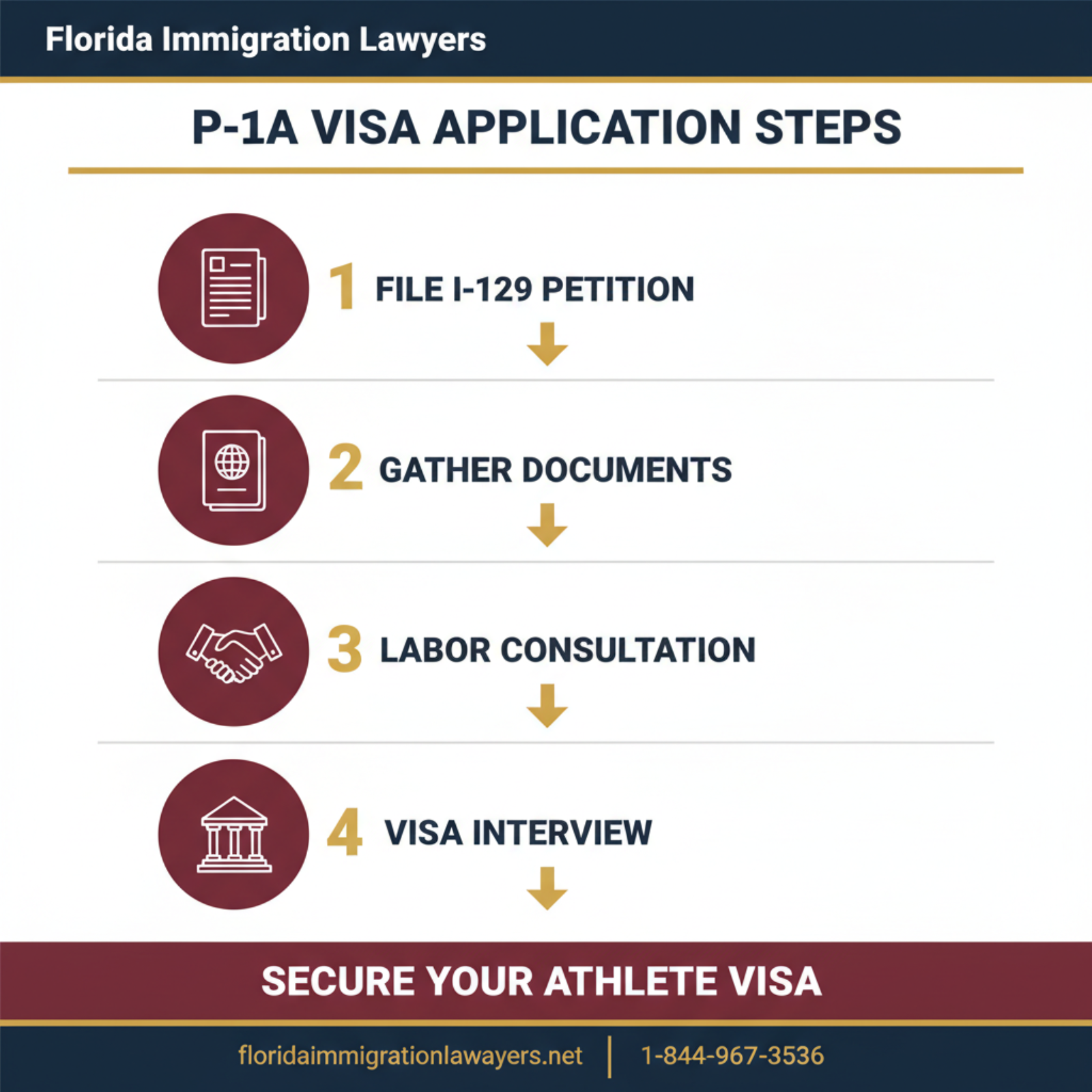
Organizing these documents can be complex, and any missing or incorrectly prepared item can cause significant delays or even lead to a denial. A Florida immigration lawyer can help you compile a comprehensive and compelling application package, ensuring all necessary evidence is included and properly presented to USCIS or the consular officer.
Timelines and Processing Expectations for Olympic-Related Visas in Florida
Understanding the timelines for USCIS visa options is crucial for anyone involved with the 2026 Winter Olympics ice hockey. Immigration processing times can vary widely based on several factors, including the specific visa category, the workload at USCIS service centers, the U.S. embassy or consulate where you apply, and the completeness of your application.
For O-1 and P-1 visas, the initial I-129 petition processing by USCIS can typically take several months. However, applicants have the option to utilize Premium Processing for an additional fee. This service guarantees that USCIS will take action on the I-129 petition within 15 calendar days. For athletes and staff with tight schedules related to the Olympics, premium processing is often a wise investment to ensure timely adjudication.
After USCIS approves the I-129 petition, the next step involves consular processing at a U.S. embassy or consulate abroad. Scheduling an interview and receiving the visa stamp can take additional weeks or even months, depending on the specific post's availability and local procedures. It is advisable to check the estimated wait times on the website of the relevant U.S. embassy or consulate.
If you are already in the U.S. and seeking to change or extend your nonimmigrant status, the processing takes place within the U.S. by USCIS. This is known as an adjustment of status or extension of stay. These applications are also subject to varying processing times. For individuals residing in Florida, applications are typically handled by national service centers, though some local inquiries or interviews might involve Florida field offices like those in Orlando, Miami, or Tampa. These offices serve a wide region, including Gainesville and North Florida.
Delays can occur due to Requests for Evidence (RFEs) from USCIS, which require applicants to submit additional documentation. Incomplete applications or those lacking sufficient evidence are prone to RFEs, prolonging the process. Furthermore, background checks and security clearances can add unforeseen delays. It is important to begin the immigration process as early as possible, ideally many months before your anticipated need, to account for these potential variations.
Keeping informed about current USCIS processing times and consulting with a Florida immigration lawyer can help manage expectations and strategize the application timeline effectively. An attorney can also help address any issues that arise during processing, such as RFEs or administrative processing delays, ensuring compliance with regulations like those found in 8 CFR Part 214.
Cost Factors and Fee Breakdown for Immigration Applications
The financial aspect of the athlete immigration process is an important consideration for anyone involved with the 2026 Winter Olympics ice hockey. There are several fees associated with applying for U.S. visas and immigration benefits. These costs can add up, so it is crucial to budget accordingly and understand where your money is going.
The primary costs typically include government filing fees. For example, there is a fee for filing Form I-129, Petition for a Nonimmigrant Worker, with USCIS. Additionally, there is a separate fee for the DS-160, Online Nonimmigrant Visa Application, which is paid to the Department of State for consular processing. Biometrics fees may also apply if you are required to provide fingerprints and photographs.
As mentioned, the option for Premium Processing for Form I-129 incurs a significant additional fee, but it guarantees expedited processing within 15 calendar days. This can be invaluable for athletes or staff with urgent deadlines related to training, competitions, or travel for the Olympics. While the cost is higher, the certainty it provides often outweighs the expense for critical cases.
Beyond government fees, you should also account for attorney fees. Engaging a qualified Florida immigration lawyer, especially one experienced in sports immigration, is a critical investment. Legal fees cover the lawyer's expertise in assessing your eligibility, preparing and filing all necessary petitions and applications, gathering compelling evidence, responding to RFEs, and representing you throughout the process. The value of expert legal guidance in navigating complex immigration laws cannot be overstated.
Other potential costs include travel expenses for interviews at U.S. embassies or consulates, translation services for foreign-language documents, and fees for obtaining necessary supporting documents such as educational transcripts, professional evaluations, or police certificates. Medical examination fees, if required, also contribute to the overall expense. While we cannot provide specific filing fee amounts as they are subject to change, a comprehensive consultation with Florida Immigration Lawyers can help you understand the current fee structure and plan your budget effectively.
Do not navigate this complex immigration process alone. Contact Florida Immigration Lawyers today to ensure your journey is smooth and successful.
Common Immigration Mistakes to Avoid for Olympic Participants in Florida
The athlete immigration process can be complex, and even minor errors can lead to significant delays, denials, or future immigration problems. For those involved with the 2026 Winter Olympics ice hockey and with ties to Florida, being aware of common pitfalls is crucial.
-
Filing Under the Wrong Visa Category: Applying for a visa that does not accurately reflect your purpose of travel or qualifications is a frequent mistake. For example, trying to compete professionally on a B-1/B-2 tourist visa can lead to immediate inadmissibility and future bans. Always ensure your chosen USCIS visa options align with your actual activities.
-
Inadequate or Insufficient Evidence: USCIS and consular officers require substantial evidence to prove extraordinary ability or international recognition. Submitting a weak petition without enough supporting documents, such as media coverage, awards, or expert testimonials, will likely result in a Request for Evidence (RFE) or a denial. A strong application package is key.
-
Missing Deadlines: Immigration processes are strict about deadlines. Failing to file petitions, respond to RFEs, or attend interviews on time can lead to automatic denials or the loss of opportunities. This is particularly critical for time-sensitive events like the 2026 Winter Olympics ice hockey.
-
Misrepresenting Facts or Providing False Information: Any deliberate misrepresentation or submission of fraudulent documents can have severe and long-lasting consequences, including permanent bars from entering the U.S. Honesty and accuracy are paramount in all immigration dealings.
-
Overstaying Your Authorized Period: Remaining in the U.S. beyond the date permitted on your I-94 record (Arrival/Departure Record) automatically voids your visa and can trigger bars to future re-entry. Always monitor your authorized stay and file for extensions or changes of status well in advance.
-
Engaging in Unauthorized Employment: Working or competing professionally without proper authorization from USCIS can lead to visa revocation, deportation, and future inadmissibility. Your visa category dictates what activities you are permitted to engage in while in the U.S.
-
Not Disclosing Prior Immigration Violations or Criminal History: Attempting to conceal past immigration issues or criminal convictions is a serious error. These issues will likely be discovered during background checks and can lead to immediate denial and accusations of fraud. Full disclosure is always the best policy, especially when dealing with inadmissibility grounds under INA Section 212.
-
Failing to Seek Legal Counsel: Many individuals try to navigate the complex immigration system alone, leading to avoidable errors. The nuanced requirements for athletic visas, especially for high-stakes events like the 2026 Winter Olympics ice hockey, make legal expertise invaluable. A qualified Florida immigration lawyer can identify potential issues and ensure compliance.
-
Ignoring Changes in Immigration Law or Policy: Immigration laws are dynamic and subject to frequent changes. What was true last year may not be true today. Relying on outdated information can lead to significant problems. Staying informed, ideally through an attorney, is vital.
-
Assuming Visa Waiver Program (ESTA) is Sufficient: For many foreign nationals, the Visa Waiver Program (VWP) allows short tourist or business trips without a visa. However, it explicitly prohibits engaging in professional work or competition. Using ESTA for Olympic-related professional activities is a mistake that can lead to entry denial or future bans.
When to Call a Florida Immigration Lawyer for Olympic-Related Immigration
The journey through U.S. immigration for individuals connected to the 2026 Winter Olympics ice hockey can present numerous challenges. While this article provides general information, every case is unique. Knowing when to seek professional legal assistance from a Florida immigration lawyer can make a significant difference in the outcome of your application. Florida Immigration Lawyers are here to help throughout the entire athlete immigration process.
You should consider contacting an attorney if you encounter any of the following scenarios:
- Complex Eligibility Questions: If you are unsure which visa category is right for you, or if your background includes multiple nationalities, prior immigration issues, or a unique professional history, an attorney can provide clarity and strategic advice on the best USCIS visa options.
- Visa Denials or Requests for Evidence (RFEs): Receiving an RFE or a denial from USCIS or a consular officer is a clear red flag. An experienced lawyer can help you understand the reasons for the decision, gather additional evidence, and craft a compelling response or appeal to address the issues raised.
- Expedited Processing Needs: If your participation in the 2026 Winter Olympics ice hockey or related activities in Florida requires urgent visa processing, an attorney can advise on premium processing and help ensure all documentation is perfectly prepared to avoid delays.
- Family Members Also Seeking Visas: Bringing family members to the U.S. often involves additional visa applications (e.g., O-3 or P-4 dependent visas). A lawyer can streamline this process, ensuring all family members receive appropriate status to join you in Florida.
- Previous Immigration Violations or Criminal History: If you have any past immigration violations, overstays, or criminal convictions, these can trigger grounds of inadmissibility under INA Section 212. An attorney can assess your situation, advise on potential waivers, and prepare a strong case to overcome these challenges.
- Desire for Long-Term Residency in Florida: If your temporary Olympic-related stay evolves into a desire for long-term residency or even a green card in Florida, an immigration lawyer can guide you through the complex pathways to permanent residency, such as employment-based green cards or adjustment of status.
- Uncertainty About Maintaining Status: If you are unsure about the rules for maintaining your nonimmigrant status, or if you need to travel internationally and re-enter the U.S., legal advice can prevent inadvertent violations.
Florida Immigration Lawyers has extensive experience assisting athletes, coaches, and support staff with their immigration needs across Florida, including Gainesville. We understand the specific requirements for sports-related visas and are dedicated to providing personalized, effective legal solutions. Do not risk your participation in the 2026 Winter Olympics ice hockey or your future immigration goals by navigating this alone.
About Florida Immigration Lawyers
Florida Immigration Lawyers is a leading immigration law firm dedicated to serving individuals and families across the entire state of Florida. With a deep understanding of U.S. immigration laws and policies, our experienced attorneys provide comprehensive legal services tailored to meet the diverse needs of our clients. We are committed to offering compassionate, client-focused representation, ensuring that every individual receives the highest quality legal counsel.
Our firm specializes in a wide range of immigration practice areas, including visa petitions, green cards, citizenship and naturalization, asylum claims, and aggressive deportation defense. Whether you are an athlete seeking to compete in the U.S., a family looking to reunite, or an individual facing complex immigration challenges, we are equipped to guide you through every step of the process. We pride ourselves on our proactive approach and our unwavering dedication to achieving the best possible outcomes for our clients.
Why choose Florida Immigration Lawyers? We offer a unique combination of expertise, empathy, and accessibility. We understand that immigration matters can be stressful and life-altering, which is why we provide personalized attention to each case. Our team is available 24/7 to address your concerns, and we offer free consultations to help you understand your options without financial obligation. Our commitment to serving all of Florida means that no matter where you are in the state, from Gainesville to Miami, expert legal help is within reach.
Contact Florida Immigration Lawyers today for a free consultation. Let us put our knowledge and experience to work for you. Call us at 1-844-967-3536 or visit our website at https://www.floridaimmigrationlawyers.net to learn more about how we can assist you with your immigration journey. Your future in Florida is our priority.
Sources and References
- U.S. Citizenship and Immigration Services (USCIS)
- U.S. Department of State - Bureau of Consular Affairs
- Executive Office for Immigration Review (EOIR) - U.S. Department of Justice
- 8 U.S.C. Chapter 12 - Immigration and Nationality Act (INA)
- INA Section 101(a)(15)(O) - Definition of O nonimmigrant
- INA Section 101(a)(15)(P) - Definition of P nonimmigrant
- INA Section 212 - General Classes of Aliens Ineligible for Visas and Admission
- 8 CFR Part 214 - Nonimmigrant Classes
This article provides general legal information and is not intended as legal advice. Every case is unique, and outcomes depend on specific facts and circumstances. Immigration laws are complex and subject to change. Contact an attorney for advice about your particular situation and to discuss your specific eligibility and options.
Securing your immigration future, especially when connected to a global event like the 2026 Winter Olympics ice hockey, requires careful planning and expert legal support. Do not leave your future to chance. Florida Immigration Lawyers is here to provide the dedicated and knowledgeable assistance you need. We are committed to helping you navigate the complexities of U.S. immigration law with confidence.
Take the first step towards a successful immigration journey in Florida. Call us today for a free, confidential consultation. Our team is ready to listen to your story and offer strategic advice tailored to your goals. You can reach Florida Immigration Lawyers at 1-844-967-3536. Se Habla Español - Estamos aquí para ayudarle.
Florida Immigration Lawyers
Legal Team
Our experienced attorneys at Florida Immigration Lawyers have been serving clients across Florida for over 20 years. We specialize in immigration, personal injury, criminal defense, workers compensation, and family law.