2026 Winter Olympics Ice Hockey: Florida Immigration Pathways
Prepare for the 2026 Winter Olympics ice hockey events by understanding crucial U.S. immigration requirements. This comprehensive guide from Florida Immigration Lawyers covers essential visa categories like P-1 and O-1 for athletes and support staff, details the step-by-step USCIS application process, and outlines critical documentation. Learn about timelines, costs, and common mistakes to avoid. Whether you're in Fort Lauderdale or elsewhere in Florida, our expert team helps navigate complex immigration challenges for international athletes and professionals. Secure your visa effectively with professional legal assistance.
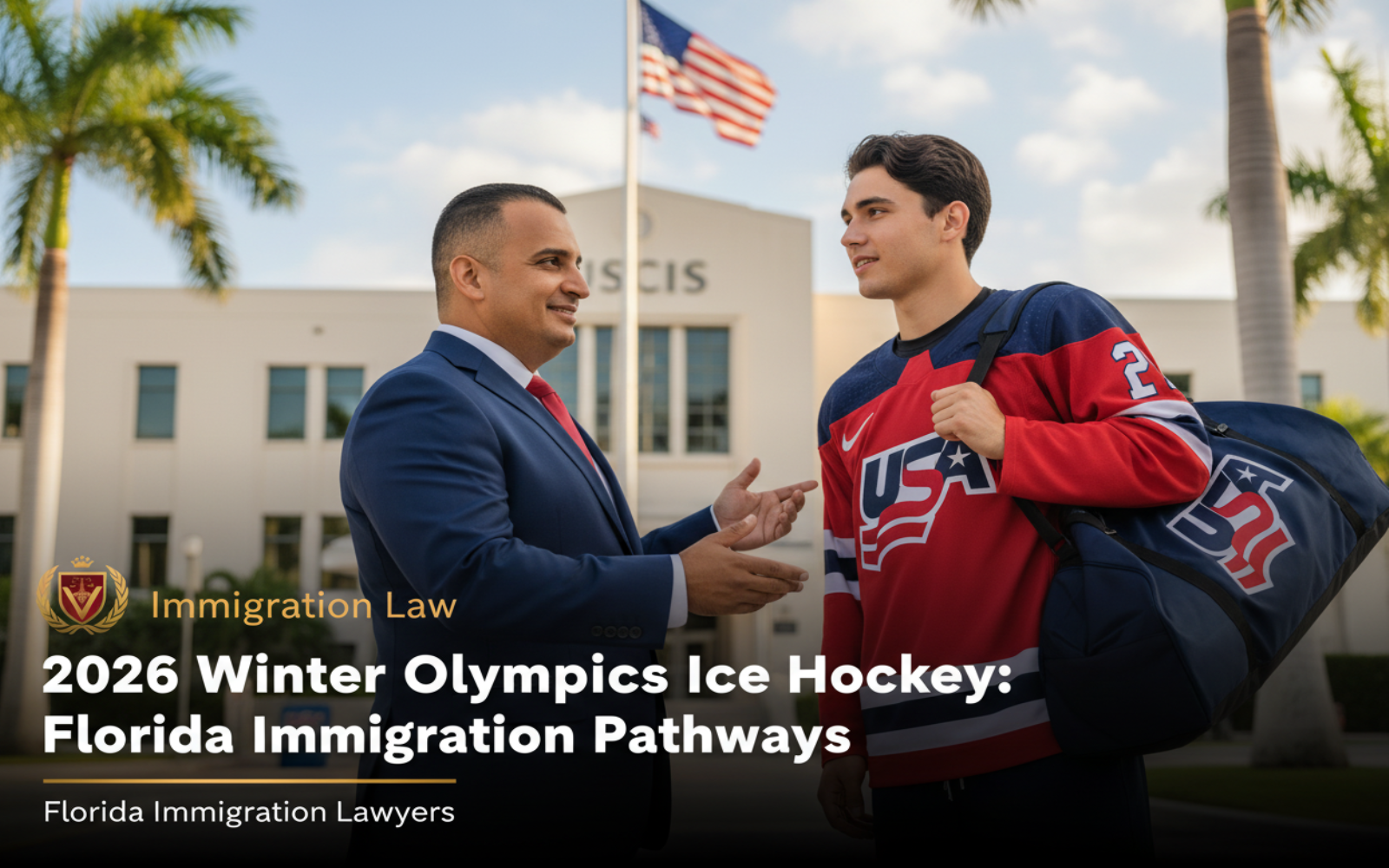
For individuals involved in the 2026 Winter Olympics ice hockey events, navigating U.S. immigration can be complex, especially if you reside or train in Florida. This includes athletes, coaches, support staff, and media personnel. Specialized visas like the P-1 (for athletes) or O-1 (for extraordinary ability) are often required. Understanding USCIS procedures and meeting strict deadlines are crucial for successful entry and participation.
- Specialized visas (P-1, O-1) are essential for Olympic participants.
- Early application and meticulous documentation are vital for success.
- Florida's diverse population and sports infrastructure connect many to the Olympics.
- Consulting an immigration lawyer is highly recommended for complex cases.
- Adhering to visa terms and U.S. immigration law is mandatory.
The excitement for the 2026 Winter Olympics is building, and while the ice hockey events will take place in Italy, the global nature of this sporting spectacle means its impact reaches far beyond the host cities. Florida, with its vibrant international community and strong ties to professional sports, plays a significant role in the lives of many athletes, coaches, and support staff who may be preparing for or involved with these prestigious games.
For individuals connected to the 2026 Winter Olympics ice hockey, whether as a player, coach, trainer, or media professional, understanding U.S. immigration laws is paramount. This guide from Florida Immigration Lawyers will help you navigate the complex visa processes, ensuring you are well-prepared for any immigration needs related to the Olympics. Call Florida Immigration Lawyers at 1-844-967-3536 for a free consultation to discuss your specific situation.
Navigating Immigration for 2026 Winter Olympics Ice Hockey Participants in Florida
Florida is a melting pot of cultures and a hub for international talent. Many aspiring Olympians, professional athletes, and their support teams live, train, or have significant connections here. As the 2026 Winter Olympics ice hockey approaches, the need for clear immigration guidance becomes increasingly important for those with U.S. ties.
The U.S. immigration system offers several visa categories that may be relevant to individuals participating in or supporting the Olympics. These include nonimmigrant visas designed for athletes, entertainment groups, and individuals with extraordinary abilities. Selecting the correct visa is the first critical step.
Understanding Key Visa Categories for Olympic Participation
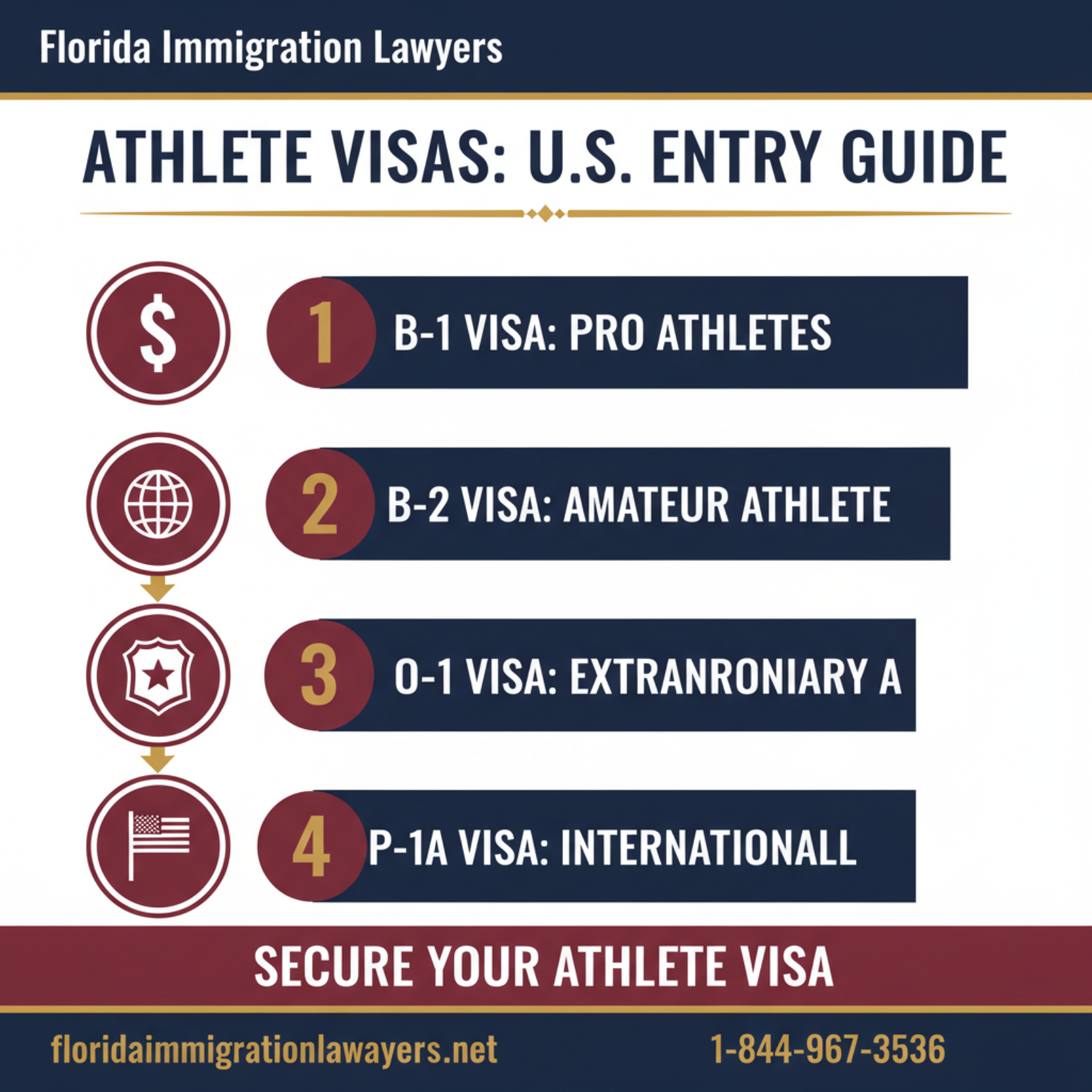
For athletes, coaches, and support personnel involved in international competitions like the 2026 Winter Olympics ice hockey, the P-1 visa is often the most appropriate. This visa is designated for internationally recognized athletes and essential support personnel coming to the U.S. temporarily to perform at a specific athletic competition.
Another crucial option is the O-1 visa, which is available for individuals with extraordinary ability in the arts, sciences, education, business, or athletics. This visa requires a higher standard of proof of sustained national or international acclaim. Coaches and highly acclaimed support staff may also qualify for an O-1 visa.
Media professionals covering the 2026 Winter Olympics ice hockey might require an I visa (for representatives of foreign media) or a B-1 (visitor for business) visa, depending on the nature and duration of their activities. Each visa category has specific eligibility criteria and documentation requirements that must be met precisely.
Florida's Role in International Sports Immigration
Florida's professional sports teams, world-class training facilities, and diverse population make it a frequent point of contact for international athletes. The presence of major NHL teams like the Florida Panthers in Sunrise (near Fort Lauderdale) and the Tampa Bay Lightning further highlights the state's connection to ice hockey. This creates a unique environment where many foreign nationals involved in sports may reside, train, or seek legal counsel.
USCIS offices in Florida, such as those in Miami, Orlando, and Tampa, process various immigration petitions. Understanding the local processing nuances and potential backlogs is vital for timely visa approvals. An experienced immigration lawyer Florida can provide invaluable assistance in navigating these local and national procedures.
Step-by-Step Guide to Securing Your Olympic-Related Visa
Applying for a U.S. visa related to the 2026 Winter Olympics ice hockey involves a structured process. Following these steps carefully can help ensure a smoother application and increase your chances of approval.
-
Determine the Appropriate Visa Category: The first and most critical step is to identify which visa best suits your role and qualifications. Are you an athlete, coach, essential support staff, or media? As discussed, P-1 and O-1 visas are common for sports professionals. B-1 visas might apply for short-term business visitors or specific media roles. An immigration lawyer can help you make this determination.
Misidentifying your visa type can lead to delays or denial. Consulting with a legal expert is highly recommended at this initial stage.
-
Gather Required Documentation: Each visa category demands a specific set of documents. This typically includes a valid passport, birth certificate, letters of invitation from the Olympic committee or relevant sports organization, contracts, evidence of international recognition (for P-1/O-1), and a detailed itinerary.
Ensure all documents are current, authentic, and translated into English if necessary. Incomplete submissions are a leading cause of delays.
-
File the Petition (Form I-129) with USCIS: For P-1 and O-1 visas, a U.S. employer, agent, or sponsor must file Form I-129, Petition for a Nonimmigrant Worker, with U.S. Citizenship and Immigration Services (USCIS). This petition must include all supporting evidence to prove eligibility.
The petition process occurs before you can apply for the visa stamp at a U.S. embassy or consulate abroad. USCIS processing times can vary significantly.
-
Attend Your Visa Interview at a U.S. Embassy or Consulate Abroad: Once the I-129 petition is approved (if applicable), you will schedule an interview at a U.S. embassy or consulate in your home country. You will need to complete Form DS-160, the Online Nonimmigrant Visa Application, and pay the visa application fee.
During the interview, a consular officer will review your application and ask questions about your purpose of travel and intent to return to your home country. Be prepared to clearly articulate your role related to the 2026 Winter Olympics ice hockey.
-
Receive Your Visa and Travel to the U.S.: If your interview is successful, your visa will be stamped in your passport. You can then travel to the United States. Remember, the visa allows you to seek entry; it does not guarantee entry. Customs and Border Protection (CBP) officers at the port of entry make the final decision.
Ensure your travel dates align with your visa validity period and the purpose of your entry. Keep all supporting documents accessible during your travel.
-
Maintain Your Visa Status: Once in the U.S., it is critical to adhere to the terms of your visa. Do not overstay your authorized period or engage in activities not permitted by your visa category. Violating your visa terms can lead to serious immigration consequences, including future inadmissibility to the U.S.
If you anticipate needing to extend your stay or change your status, consult with an immigration lawyer Florida well in advance of your current visa's expiration.
Essential Document Checklist for Your Visa Application
Preparing a thorough and accurate document package is crucial for a successful USCIS visa process. Here is a general checklist for Olympic-related visa applications:
- Valid Passport: Must be valid for at least six months beyond your intended period of stay in the U.S.
- Nonimmigrant Visa Application (Form DS-160): Confirmation page.
- Visa Application Fee Payment Receipt.
- One (1) 2x2 inch photograph: Meeting U.S. visa photo requirements.
- Form I-797 Approval Notice: For approved I-129 petitions (P-1, O-1 visas).
- Letters of Invitation: From the Olympic Committee, national sports federation, or other relevant organizations.
- Contracts and Agreements: Detailing your role, duration, and compensation related to the 2026 Winter Olympics ice hockey.
- Evidence of International Recognition (P-1/O-1): Awards, media clippings, testimonials, rankings, and other documentation proving your extraordinary ability or international acclaim.
- Detailed Itinerary: Outlining your activities, locations, and dates within the U.S.
- Proof of Financial Support: Evidence that you can support yourself during your stay.
- Proof of Intent to Depart the U.S.: Ties to your home country, such as property ownership, family obligations, or employment.
- For Support Personnel: Evidence of critical skills, experience, and the necessity of your presence.
Understanding Timelines and Processing Expectations for Olympic Visas
The USCIS visa process for P-1 and O-1 visas can take several months. It is imperative to begin your application process as early as possible. USCIS processing times vary by service center and the volume of applications.
For urgent cases, premium processing is available for Form I-129, which guarantees processing within a specific timeframe, typically 15 calendar days, for an additional fee. While this can expedite the petition approval, it does not guarantee an immediate visa interview slot at the embassy or consulate.
Interview wait times at U.S. embassies and consulates abroad can also fluctuate. It is wise to check the specific wait times for your country of residence well in advance. Factors like national holidays, security clearances, and administrative processing can all impact the overall timeline. Proactive planning is your best defense against delays.
Cost Factors and Fee Breakdown for Immigration Applications
Understanding the costs associated with your visa application is an important part of the planning process. Fees are subject to change, so always check the official USCIS and Department of State websites for the most current amounts. Generally, you can expect the following types of costs:
- USCIS Filing Fees: For petitions like Form I-129, there is a filing fee.
- Premium Processing Fee: An additional fee if you opt for expedited processing of your I-129 petition.
- Visa Application (MRV) Fee: Paid to the Department of State for the nonimmigrant visa application (DS-160).
- Biometrics Fee: Required for certain applications, covering fingerprinting and background checks.
- Attorney Fees: Legal fees for the services of an experienced immigration lawyer Florida. These fees vary based on the complexity of your case and the attorney's expertise.
- Translation and Document Preparation Costs: If documents need to be translated or certified.
It is important to budget for these expenses and understand that government fees are typically non-refundable, regardless of the outcome of your application. A detailed consultation with Florida Immigration Lawyers can help you understand the full scope of potential costs for your specific situation.
Do not navigate this process alone. The intricacies of U.S. immigration law can be overwhelming, especially when preparing for an event as significant as the 2026 Winter Olympics ice hockey. Contact Florida Immigration Lawyers today to ensure your application is handled professionally and efficiently.
Common Mistakes to Avoid in Your Immigration Journey
Navigating the U.S. immigration system, particularly for specialized visas, can be fraught with potential pitfalls. Avoiding these common mistakes is crucial for a smooth application process:
-
Late Application Submission: Waiting until the last minute is a frequent error. USCIS and consular processing times are unpredictable and can extend significantly. Submitting your application too close to your intended travel date for the 2026 Winter Olympics ice hockey can lead to missed deadlines and inability to participate. Always apply as early as possible.
Consequence: Missed opportunity to participate in the event due to lack of timely visa approval.
-
Incomplete or Inaccurate Documentation: Failing to provide all required documents, or submitting forms with errors, will almost certainly result in delays or a Request for Evidence (RFE). This prolongs the process and can even lead to denial.
Consequence: Significant processing delays, RFEs, or outright denial of your visa petition.
-
Misrepresenting Information: Any attempt to provide false or misleading information on your application can have severe and long-lasting consequences. This includes misrepresenting your qualifications, intent, or criminal history.
Consequence: Visa denial, future inadmissibility to the U.S., and potential accusations of fraud.
-
Choosing the Wrong Visa Category: Applying for a visa that does not match your specific role or purpose of travel is a common mistake. For instance, attempting to enter on a B-1 visitor visa when a P-1 or O-1 is required for professional activities.
Consequence: Immediate denial of the application and potential issues with future visa attempts.
-
Overstaying Your Authorized Period of Stay: Failing to depart the U.S. by the date indicated on your I-94 arrival record, even by a single day, can lead to serious penalties. This can include bars to re-entry for several years.
Consequence: Accrual of unlawful presence, future inadmissibility to the U.S., and potential deportation proceedings.
-
Failing to Disclose Past Immigration Violations or Criminal History: Attempting to hide any previous immigration issues or criminal convictions is a serious error. U.S. authorities have access to extensive databases.
Consequence: Denial of application, accusations of misrepresentation, and permanent bars from the U.S.
-
Not Seeking Professional Legal Counsel: The immigration process is complex, and laws are constantly evolving. Attempting to navigate it alone without the guidance of an experienced immigration lawyer Florida can lead to avoidable errors and missed opportunities.
Consequence: Increased risk of errors, delays, denials, and failure to present the strongest possible case.
When to Call a Florida Immigration Lawyer
While some immigration processes seem straightforward, the stakes for individuals involved in the 2026 Winter Olympics ice hockey are incredibly high. An experienced immigration attorney can be an invaluable asset in numerous scenarios, ensuring your immigration journey is smooth and successful. You should consider contacting Florida Immigration Lawyers if:
- Your Case is Complex: You have a unique situation, previous visa denials, or a complicated employment history.
- You Need Help Choosing the Right Visa: Determining the best visa category (P-1, O-1, B-1, etc.) can be confusing.
- You Require Expedited Processing: Navigating premium processing or advocating for faster review.
- You Have Concerns About Inadmissibility: Past criminal convictions, immigration violations, or health issues could impact your eligibility.
- You Need Assistance with Documentation: Ensuring all required documents are correctly prepared, translated, and submitted.
- You Face an RFE or Denial: Responding effectively to USCIS requests for additional evidence or appealing a denial.
- You are in Florida: If you reside or operate in Fort Lauderdale or anywhere in Florida, our local expertise is particularly beneficial.
Florida Immigration Lawyers has extensive experience with various visa types, including those for athletes and professionals. We understand the specific requirements of the USCIS visa process and can help you avoid common pitfalls. Our team is dedicated to providing personalized and strategic legal advice to individuals and organizations across Florida.
Frequently Asked Questions (FAQs) About 2026 Winter Olympics Immigration
Where is 2026 Winter Olympics hockey?
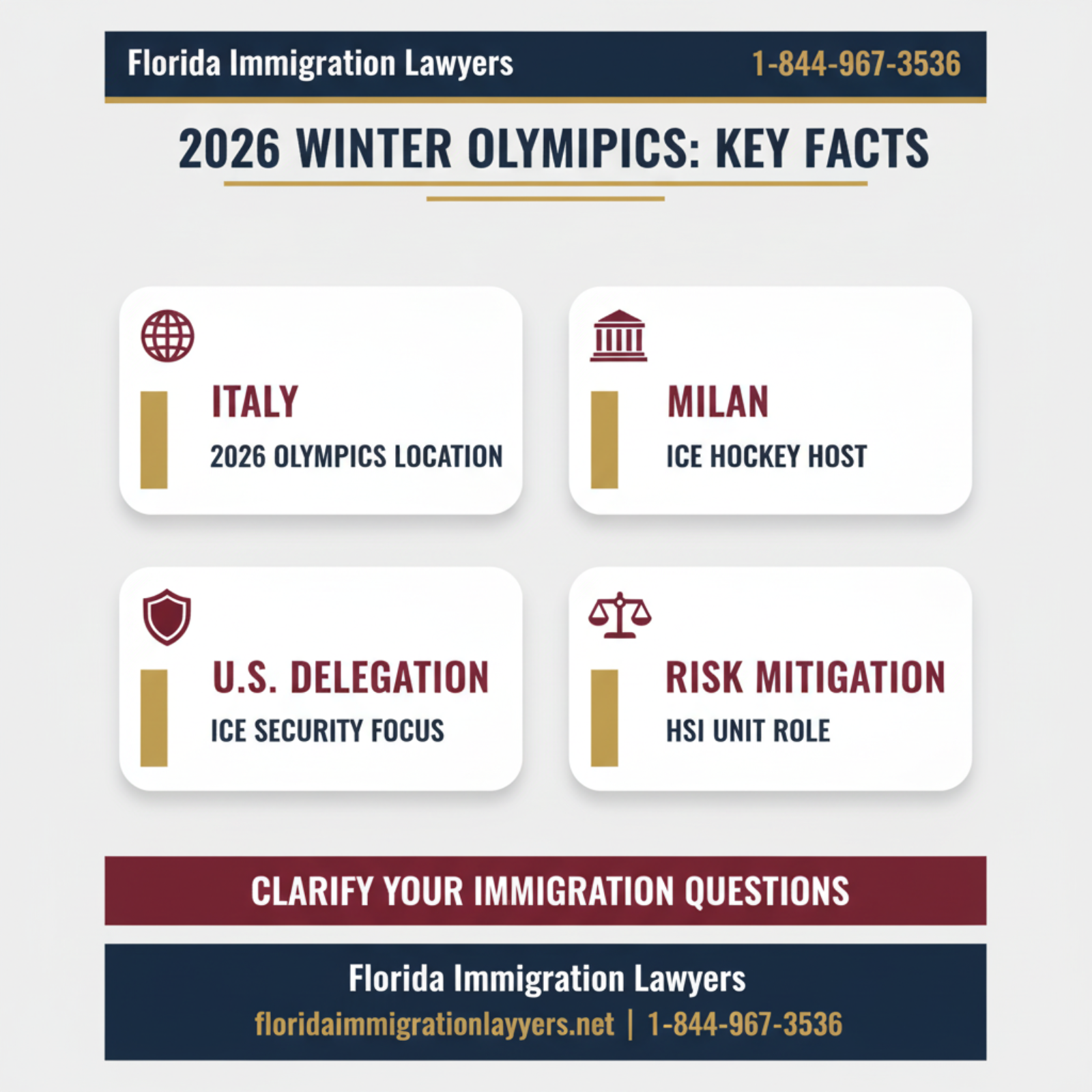
The ice hockey events for the 2026 Winter Olympics will be held in Italy, specifically in Milan and Cortina d'Ampezzo. These games are officially known as Milano Cortina 2026.
What teams will play in 2026 Olympic hockey?
The 2026 Winter Olympics ice hockey tournament is expected to feature top national teams from around the world. For the men's tournament, it is anticipated that NHL players will return to participate, which significantly raises the competitive level. The women's tournament will also showcase elite international teams, with qualification processes determining the final roster.
Where do NHL teams play in Florida?
Florida is home to two National Hockey League (NHL) teams. The Florida Panthers play their home games at the Amerant Bank Arena in Sunrise, Florida, which is part of the greater Fort Lauderdale area. The Tampa Bay Lightning play at the Amalie Arena in Tampa, Florida. Both teams contribute significantly to the state's vibrant hockey culture.
What are the general requirements for Olympic athlete visas?
Generally, Olympic athletes or those participating in high-level international competitions may be eligible for a P-1 nonimmigrant visa. Requirements typically include proof of international recognition, a contract with a major sports league or team, or an invitation to a recognized competition. Essential support personnel may also qualify. The O-1 visa is for individuals with extraordinary ability, requiring a higher threshold of sustained national or international acclaim.
For more detailed information or to discuss your specific eligibility, contact Florida Immigration Lawyers.
About Florida Immigration Lawyers
Florida Immigration Lawyers is a leading law firm dedicated to providing comprehensive immigration legal services across the entire state of Florida. Our team of experienced attorneys understands the complexities of U.S. immigration law and is committed to guiding our clients through every step of their legal journey.
We offer a wide range of services, including family-based immigration, business immigration, visa applications (including P-1 and O-1 for athletes and professionals), asylum, deportation defense, citizenship, and more. Our dedication to our clients is unwavering, and we strive to achieve the best possible outcomes for their cases.
Why choose us? We pride ourselves on our client-focused approach, deep legal knowledge, and unwavering commitment to excellence. We understand the unique challenges faced by immigrants in Florida and offer compassionate, effective representation. Our firm is available 24/7 for your convenience, and we offer free consultations to help you understand your options without financial obligation. Visit us at https://www.floridaimmigrationlawyers.net or call us at 1-844-967-3536.
Sources and References
- U.S. Citizenship and Immigration Services (USCIS)
- U.S. Department of State - Visas for Athletes, Artists, and Entertainers
- Executive Office for Immigration Review (EOIR)
- 8 U.S.C. Chapter 12 - Immigration and Nationality Act (INA) Sections 101(a)(15)(P) and 101(a)(15)(O)
- 8 CFR Part 214 - Nonimmigrant Classes
- USCIS Policy Manual - Volume 2, Part O - Nonimmigrants: Athletes and Artists
This article provides general legal information and is not intended as legal advice. Every case is unique, and outcomes depend on specific facts and circumstances. Contact an attorney for advice about your particular situation.
If you or someone you know is involved with the 2026 Winter Olympics ice hockey and needs immigration assistance in Florida, do not hesitate to seek professional help. The complexities of immigration law require expert guidance. Call Florida Immigration Lawyers today at 1-844-967-3536 for a free consultation. Se Habla Español - Estamos aquí para ayudarle.
Need help with Immigration?
Our Florida immigration attorneys offer free consultations. Call today or schedule online.
Frequently Asked Questions
Florida Immigration Lawyers
Legal Team
Our experienced attorneys at Florida Immigration Lawyers have been serving clients across Florida for over 20 years. We specialize in immigration, personal injury, criminal defense, workers compensation, and family law.