Voluntary Departure vs. Deportation in Florida: What You Need to Know
Facing potential removal from the U.S. in Florida can be an incredibly stressful experience. Understanding your options, particularly the distinction between voluntary departure and deportation, is crucial. Voluntary departure offers a chance to leave the country on your own terms, avoiding the severe penalties of a formal deportation order and potentially preserving future immigration opportunities. This guide details eligibility, the process, essential documents, timelines, and costs, emphasizing the importance of legal counsel. For residents of Jacksonville and throughout Florida, making an informed decision can profoundly impact your future. Learn how Florida Immigration Lawyers can assist you in navigating these complex legal waters and protecting your rights.
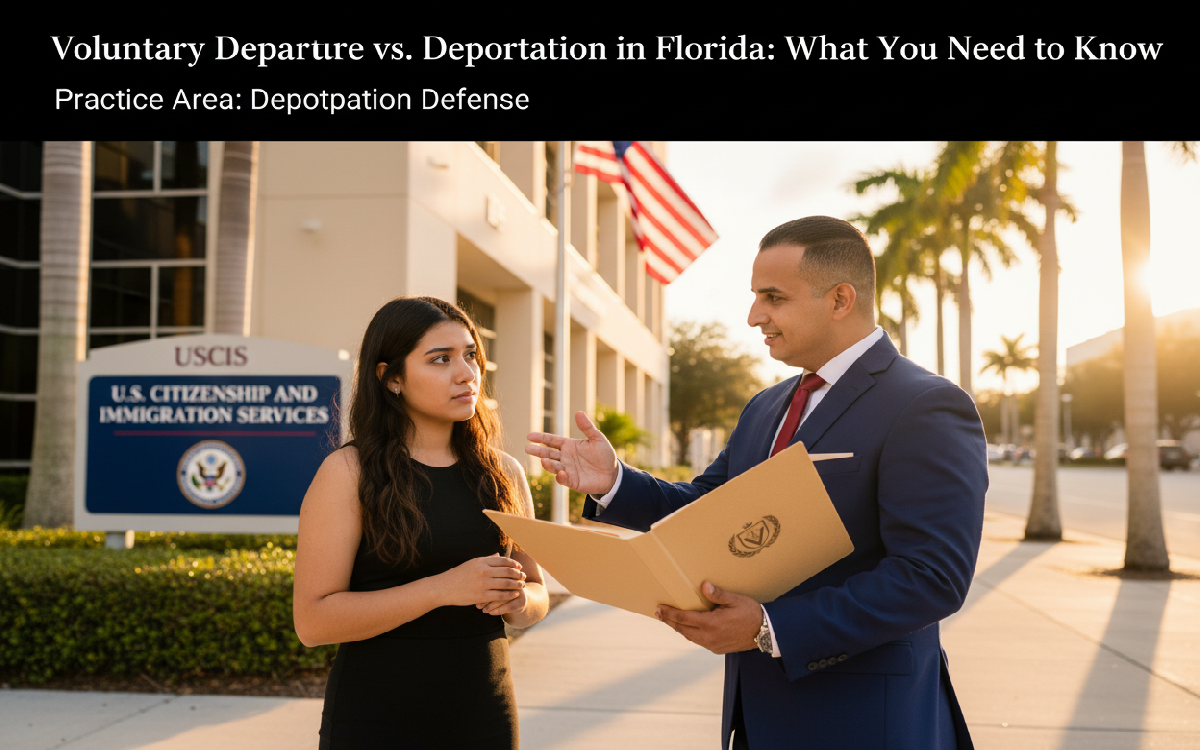
Voluntary departure allows eligible individuals to leave the U.S. at their own expense, avoiding the severe penalties of a formal deportation order. It offers a path to potential future reentry, unlike deportation which carries long-term bars. Understanding the nuances is crucial for immigrants in Florida facing removal proceedings.
- Avoids formal deportation order.
- May preserve future immigration options.
- Requires eligibility and timely departure.
- Strict deadlines apply.
- Legal counsel is highly recommended.
Imagine receiving a notice to appear in immigration court. The thought of deportation can be terrifying, bringing uncertainty about your future in the United States and separation from your loved ones. For many in Florida, this is a daunting reality.
However, you might have options. One crucial alternative to a formal removal order is voluntary departure. Understanding the critical differences between voluntary departure and deportation is essential for making informed decisions about your immigration case.
This comprehensive guide will explore eligibility, the process, potential consequences, and why legal representation is vital. We aim to equip you with the knowledge to navigate these complex challenges in Florida.
Do not face this complex legal challenge alone. For immediate assistance and to understand your specific situation, call Florida Immigration Lawyers at 1-844-967-3536 for a free consultation today. Our experienced team serves clients throughout Florida.
Understanding Voluntary Departure vs. Deportation in Florida
When facing immigration issues, the terms voluntary departure and deportation are often discussed, but their implications are vastly different. Knowing these distinctions is paramount for anyone in Florida navigating removal proceedings.
Deportation, officially known as "removal," is a formal order issued by an immigration judge requiring a non-citizen to leave the United States. This order carries severe, long-lasting consequences, including statutory bars to future reentry and a permanent mark on your immigration record. It significantly hinders any future attempts to legally return to the U.S.
Voluntary departure, on the other hand, is a discretionary form of relief that allows an eligible individual to leave the U.S. at their own expense by a specific date. The key benefit is avoiding a formal order of removal, which can preserve future immigration options and potentially allow for lawful reentry, if eligible, down the line. It is outlined in Section 240B of the Immigration and Nationality Act (INA).
For individuals in Jacksonville, Miami, Orlando, or anywhere else in Florida, understanding which path applies to you and its potential outcomes is critical. The decision can impact your life for decades to come.
Eligibility for Voluntary Departure in Florida Immigration Courts
Gaining approval for voluntary departure is not automatic; it requires meeting specific criteria set by immigration law. Eligibility can vary depending on whether you request it before or after your removal hearing begins.
Generally, to be eligible for voluntary departure, you must:
- Demonstrate Good Moral Character: You must show that you have been a person of good moral character for at least five years immediately preceding your application.
- Not Be an Aggravated Felon: Individuals with certain serious criminal convictions, particularly aggravated felonies, are typically ineligible.
- Possess Sufficient Funds: You must prove you have the financial means to purchase your own ticket and depart the U.S.
- Possess Valid Travel Documents: You need a valid passport or other travel document to ensure your departure.
- Not Have Failed to Depart Previously: If you were previously granted voluntary departure and failed to leave on time, you are generally ineligible for a new grant.
- Waive Appeals: You typically must waive your right to appeal the immigration judge's decision regarding your removal case.
The immigration courts in Florida, such as those in Orlando or Miami, will carefully review your case against these requirements. An immigration attorney can help you determine your eligibility and prepare a strong application.
Pre-Hearing vs. Post-Hearing Voluntary Departure
There are two main types of voluntary departure based on when it is requested during removal proceedings:
Pre-hearing Voluntary Departure: This is sought before a final decision is made in your removal case, often with the consent of the Department of Homeland Security (DHS). The requirements are generally less stringent, and you may be granted up to 120 days to depart. This is often an appealing option for those who qualify early in the process.
Post-hearing Voluntary Departure: This is requested at the conclusion of your removal hearing, after the immigration judge has found you removable. The requirements are stricter, including a five-year good moral character period and a waiver of appeal rights. If granted, you are typically given a shorter period, usually 60 days, to depart the U.S.
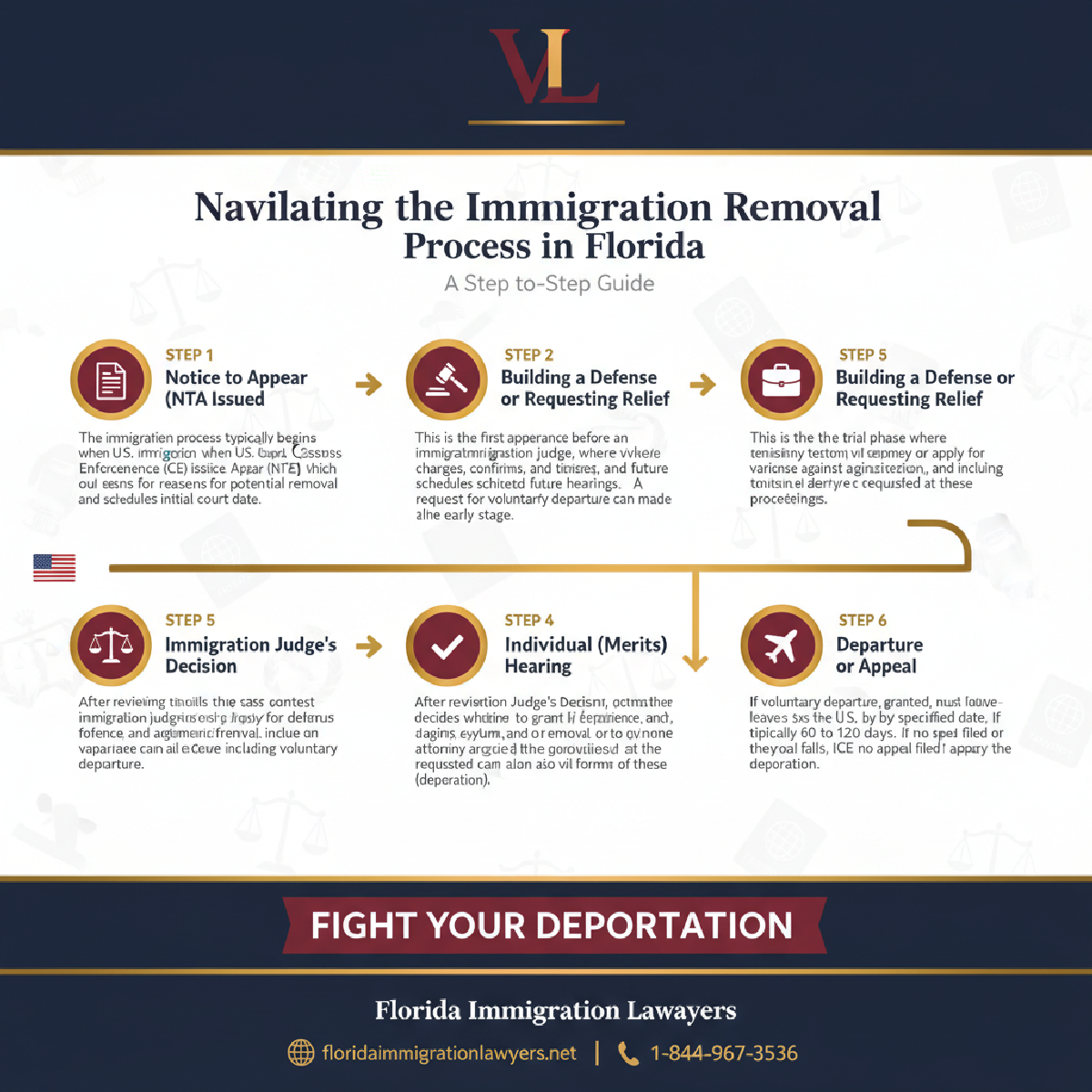
The Voluntary Departure Process: A Step-by-Step Guide
Navigating the process of requesting voluntary departure requires precision and a thorough understanding of immigration procedures. Here is a general overview of the steps involved:
- Facing Removal Proceedings: The process typically begins when you receive a Notice to Appear (NTA) from DHS, initiating removal proceedings against you in immigration court. This document outlines the reasons the government believes you are deportable.
- Seeking Legal Counsel: This is arguably the most critical step. An experienced Florida immigration lawyer will analyze your case, determine your eligibility for voluntary departure or other forms of relief, and help you strategize the best course of action.
- Requesting Voluntary Departure: Your attorney will formally request voluntary departure on your behalf. This can happen early in the proceedings (pre-hearing) or at the end of your merits hearing (post-hearing). The request is typically made to the immigration judge or, in some cases, directly to DHS counsel.
- Demonstrating Eligibility: You and your attorney will present evidence to the immigration judge or DHS counsel proving you meet all eligibility requirements. This includes documentation of good moral character, financial ability to depart, and valid travel documents.
- Immigration Judge's Decision: The judge will consider all the evidence, arguments from both sides (your attorney and DHS counsel), and your eligibility. If granted, the judge will specify a departure date, usually 60 or 120 days.
- Posting a Bond (if required): In some instances, the immigration judge may require you to post a bond to ensure your timely departure. This bond is returned to you upon proof of your departure.
- Timely Departure: The most crucial step. You must physically leave the United States by the exact date specified in the judge's order. Failure to do so results in severe penalties, including an automatic order of removal and a 10-year bar to certain forms of relief.
Essential Documents for Voluntary Departure
Gathering the correct documentation is a vital part of successfully applying for voluntary departure. A well-prepared application can significantly strengthen your case before a Florida immigration judge. Here is a checklist of commonly required documents:
- ✔ Proof of Identity and Nationality: Your birth certificate, national identity card, or other official documents establishing your identity and country of origin.
- ✔ Valid Passport: A current, unexpired passport from your home country, valid for at least six months beyond your intended departure date.
- ✔ Travel Itinerary/Tickets: Evidence of your ability to travel, such as purchased plane tickets or a detailed itinerary for your departure from the U.S.
- ✔ Proof of Financial Ability to Depart: Bank statements, affidavits of support from family members, or other financial records demonstrating you can cover your travel expenses.
- ✔ Evidence of Good Moral Character: This can include letters of recommendation, proof of employment, community involvement, tax records, and a clean criminal record.
- ✔ Affidavits from Witnesses: Statements from individuals who can attest to your good moral character and other relevant facts.
- ✔ Proof of No Prior Voluntary Departure Violations: Documentation showing you have not previously been granted voluntary departure and failed to leave on time.
- ✔ Any Other Documents Requested: The immigration judge or DHS counsel may request additional specific documents pertinent to your individual case.
Voluntary Departure Timelines and Expectations
Understanding the timeline for voluntary departure is critical, as strict deadlines apply. Missing your departure date can have dire consequences for your future immigration prospects.
If granted pre-hearing voluntary departure, you are typically given up to 120 days to leave the United States. For post-hearing grants, the period is usually shorter, often 60 days from the date of the immigration judge's order. These timeframes are non-negotiable and must be adhered to strictly.
Failure to depart by the specified date automatically converts your voluntary departure grant into a final order of removal. This means you will be considered deported, incurring all the severe penalties associated with a formal removal order. Furthermore, you will become ineligible for certain forms of immigration relief, including voluntary departure, for a period of 10 years, as per INA 240B(d).
The 10-Year Bar and Reentry After Voluntary Departure
A successful voluntary departure generally allows you to avoid the automatic 10-year bar to reentry that typically follows a formal deportation order under INA 212(a)(9)(A). This is a significant advantage, as it may preserve your ability to seek lawful reentry to the U.S. in the future, provided you meet all other eligibility criteria for a visa or immigration benefit.
However, if you violate the terms of your voluntary departure by failing to leave on time, the 10-year bar *will* apply. This makes it extremely difficult, if not impossible, to return to the U.S. legally for a decade. It is essential to ensure you depart well within the allotted timeframe and retain proof of your departure (e.g., airline boarding passes, passport stamps) to present to USCIS or a U.S. consulate if you seek to return later.
Understanding the Costs of Voluntary Departure
While voluntary departure can offer significant benefits over deportation, it does involve certain costs. It's important to understand these financial aspects to make informed decisions about your case in Florida.
The primary costs associated with voluntary departure typically include:
- Legal Fees: Hiring an experienced immigration attorney is an investment that can significantly improve your chances of success. Legal fees cover case assessment, document preparation, court representation, and strategic advice. While an upfront cost, it often prevents much higher long-term costs and consequences associated with deportation.
- Travel Expenses: You are responsible for the full cost of your travel from the U.S. to your home country. This includes airfare, ground transportation, and any necessary accommodations during transit.
- Bond Costs: In some cases, an immigration judge may require you to post a voluntary departure bond. This bond serves as a guarantee that you will depart the U.S. on time. The amount can vary, and it is fully refunded upon proof of your timely departure.
There are generally no specific filing fees for voluntary departure itself, but other associated immigration processes or appeals may have their own fees. Florida Immigration Lawyers can provide clear information regarding our fee structure and help you understand all potential expenses involved in your case.
Do not navigate this complex process alone. The stakes are incredibly high, and a single mistake can have lifelong repercussions. Contact Florida Immigration Lawyers today to discuss your options and secure expert legal guidance. We are here to help you protect your future.
Common Mistakes to Avoid in Voluntary Departure Cases
Seeking voluntary departure requires careful attention to detail and adherence to strict legal requirements. Making any of these common mistakes can jeopardize your case and lead to severe immigration consequences:
- Failing to Seek Legal Counsel: Attempting to navigate the complex immigration court system without an attorney is a significant risk. You may miss crucial deadlines, misunderstand eligibility requirements, or fail to present your case effectively, leading to a denial of voluntary departure.
- Missing the Departure Deadline: This is perhaps the most critical mistake. If you are granted voluntary departure but fail to leave the U.S. by the specified date, your grant automatically converts to a final order of removal, and you become subject to a 10-year bar to certain forms of relief.
- Not Proving Financial Ability to Depart: Immigration judges require clear evidence that you can cover your own travel expenses. Insufficient proof of funds can lead to a denial, as the court needs assurance you won't become a burden.
- Lying or Misrepresenting Facts: Any false statements or fraudulent documents submitted to immigration authorities can result in a denial of voluntary departure, a finding of inadmissibility or deportability, and potentially criminal charges. Honesty is always the best policy.
- Assuming Automatic Eligibility: Voluntary departure is a discretionary relief, not an automatic right. You must proactively demonstrate to the immigration judge that you meet all statutory and regulatory requirements and are deserving of the relief.
- Ignoring the Consequences of Violation: Many individuals underestimate the severity of failing to comply with a voluntary departure order. The automatic deportation and 10-year bar can devastate future immigration prospects.
- Traveling with Insufficient or Expired Documentation: Attempting to depart with an expired passport or without proper travel documents can lead to delays or issues at the port of exit, potentially causing you to miss your departure deadline.
- Not Retaining Proof of Departure: It is vital to keep boarding passes, passport stamps showing entry into your home country, and any other evidence that you left the U.S. on time. This proof is essential if you ever wish to apply for future immigration benefits.
When to Call a Lawyer for Voluntary Departure in Florida
The decision to seek voluntary departure is complex and highly individualized. The expertise of an immigration attorney, particularly one familiar with Florida immigration courts, can be invaluable.
You should contact Florida Immigration Lawyers immediately if:
- You have received a Notice to Appear (NTA) from immigration authorities.
- You are currently in removal proceedings in a Florida immigration court (e.g., Miami, Orlando).
- You have a criminal record, no matter how minor, which could impact your eligibility.
- You are unsure about your eligibility for voluntary departure or other forms of relief.
- You need assistance gathering the necessary documents and preparing your case effectively.
- You want to understand the potential long-term consequences of your choices.
Our firm specializes in deportation defense and other complex immigration matters. We can provide the strategic advice and vigorous representation you need to protect your rights and pursue the best possible outcome. Visit our attorneys page to learn more about our team.
Frequently Asked Questions About Voluntary Departure
Does voluntary departure count as deportation?
No, this is one of the primary advantages. Voluntary departure is permission to leave the U.S. on your own, avoiding a formal "order of removal" or "deportation." A deportation order carries much harsher penalties, including a mandatory 10-year or permanent bar to reentry, and can make it extremely difficult to obtain future immigration benefits. By contrast, a successful voluntary departure generally avoids these severe statutory bars, potentially preserving your ability to seek lawful reentry in the future, if eligible. It's a critical distinction for your immigration record.
What is the advantage of voluntary departure rather than being officially removed?
The main advantage of voluntary departure is avoiding the severe negative consequences of a formal deportation order. A deportation order typically triggers a 10-year or permanent bar to reentry under INA 212(a)(9)(A), making it very challenging, if not impossible, to legally return to the U.S. Voluntary departure, when successfully completed, usually avoids these specific bars. This means you might have a clearer path to seek legal reentry in the future, provided you meet other immigration requirements. It also offers a degree of dignity and control over your departure process.
What is the difference between deportation and departure?
"Deportation," officially known as "removal," is a forced expulsion from the U.S. by the government, typically due to immigration violations or criminal offenses. It results in a formal order that carries significant penalties, including long-term bars to re-entry. "Departure," in the context of voluntary departure, means leaving the U.S. willingly and at your own expense, with permission from immigration authorities. It's a choice to leave under specific conditions to avoid the harsher consequences of a deportation order, offering a more favorable outcome for future immigration goals.
Can I come back to the US after voluntary departure?
Yes, in many cases, you may be able to return to the U.S. after a successful voluntary departure, assuming you meet all other eligibility requirements for the visa or immigration benefit you seek. The key is that a successful voluntary departure generally does not impose the same severe bars to reentry that a formal deportation order does. However, you must still apply for and be granted a new visa or other immigration status, and any prior immigration violations or periods of unlawful presence might still affect your admissibility. Consulting an attorney is crucial for planning any future reentry.
Who is eligible for voluntary departure?
Eligibility for voluntary departure depends on several factors, including whether you request it before or after your removal hearing. Generally, you must demonstrate good moral character for a specified period (e.g., five years for post-hearing), not have certain criminal convictions (like aggravated felonies), show you have the financial means to leave the U.S. at your own expense, and not have previously failed to depart voluntarily. The specific requirements are outlined in the Immigration and Nationality Act (INA) Section 240B. An immigration attorney can assess your unique situation and help determine if you qualify.
What are the voluntary departure consequences if I fail to leave on time?
Failing to depart by the date specified in a voluntary departure order carries severe consequences. You will automatically be subject to a final order of removal (deportation) as of that date. Additionally, you will become ineligible for certain forms of relief from removal, including voluntary departure, for a period of 10 years. This means you would face the full weight of a deportation order, making future legal reentry into the U.S. extremely difficult and requiring an I-212 waiver for any return attempt.
Does voluntary departure trigger the 10-year bar to reentry?
A successful voluntary departure itself does not typically trigger the automatic 10-year bar to reentry that applies after a formal deportation order under INA 212(a)(9)(A). This is a significant benefit. However, if you fail to leave the U.S. by the specified date after being granted voluntary departure, then you *will* be subject to a 10-year bar to certain forms of relief (like adjustment of status, cancellation of removal) and also an automatic order of removal. It's crucial to understand this distinction and comply strictly with the terms of your voluntary departure to avoid the bar.
Can I seek adjustment of status after voluntary departure?
If you successfully complete a voluntary departure by leaving the U.S. on time, you generally avoid the statutory bars to adjustment of status that would typically apply after a formal deportation order. However, any period of unlawful presence you accumulated before your voluntary departure could still affect your eligibility for adjustment of status. You would typically need to be outside the U.S. to pursue adjustment through consular processing, and you would need to meet all other eligibility criteria for the specific visa category. Consulting an attorney is essential to understand your specific path forward.
About Florida Immigration Lawyers
Florida Immigration Lawyers is a leading law firm dedicated to providing comprehensive immigration legal services across the entire state of Florida. With offices located strategically to serve diverse communities, our team of experienced attorneys is committed to advocating fiercely for our clients' rights and futures.
We specialize in a broad range of immigration matters, including deportation defense, asylum, family immigration, business immigration, and citizenship applications. We understand the profound impact immigration issues have on individuals and families, and we approach every case with empathy, professionalism, and a deep knowledge of U.S. immigration law.
Our firm offers free consultations to help you understand your options without financial commitment. We are available 24/7 to address urgent concerns. When your future in Florida is at stake, choose the dedicated advocates at Florida Immigration Lawyers. Visit us at https://www.floridaimmigrationlawyers.net or call us at 1-844-967-3536.
This article is for general informational purposes only and does not constitute legal advice. Immigration laws change frequently. For advice specific to your situation, please consult with a qualified immigration attorney.
Understanding the difference between voluntary departure and deportation is critical for your immigration future in Florida. Do not face these complex challenges alone. Protect your rights and explore all available options.
Contact Florida Immigration Lawyers today at 1-844-967-3536 for a free, confidential consultation. Let our experienced team provide the guidance and representation you deserve.
Florida Immigration Lawyers
Legal Team
Our experienced attorneys at Florida Immigration Lawyers have been serving clients across Florida for over 20 years. We specialize in immigration, personal injury, criminal defense, workers compensation, and family law.