Visa News Today Florida: Essential Immigration Updates for 2026
Stay updated on the latest visa news today impacting Florida residents in 2026. This comprehensive guide from Florida Immigration Lawyers covers USCIS updates, processing times, essential documents, and common mistakes to avoid. Whether you're in Pembroke Pines or elsewhere in Florida, understanding these changes is vital for your immigration journey. Learn how to navigate complex regulations and when to seek expert legal assistance. Contact us for a free consultation to discuss your specific immigration needs.
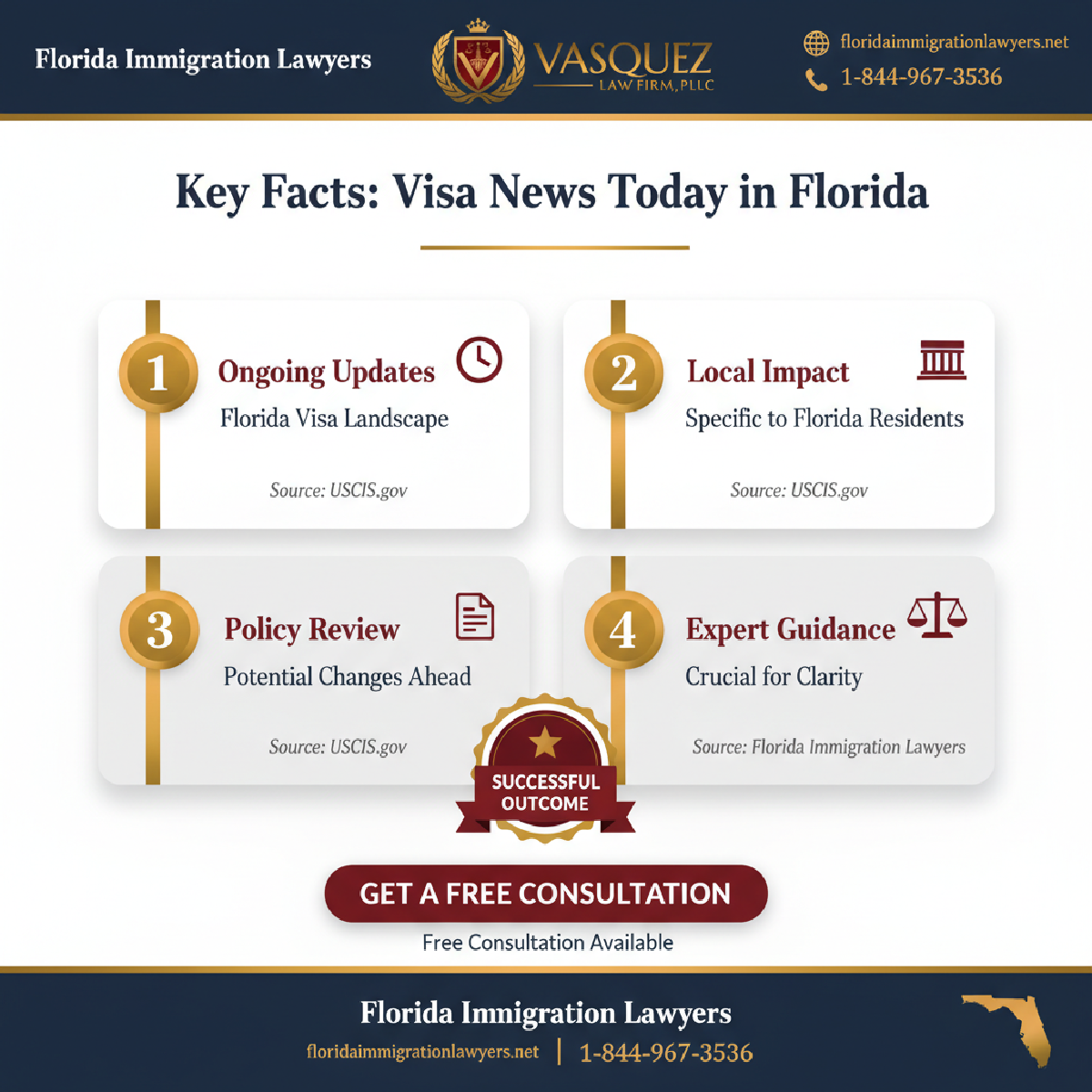
Staying informed about visa news today in Florida is crucial for immigrants and their families. As of 2026, the landscape continues to evolve with ongoing USCIS updates and policy adjustments. Understanding these changes can impact your application process, eligibility, and overall immigration journey in Florida.
- USCIS processing times and policies are subject to frequent changes.
- Florida specific immigration trends and enforcement actions may affect residents.
- Consulting official sources like uscis.gov and travel.state.gov is vital.
- Legal guidance from a Florida immigration lawyer can simplify complex updates.
Are you an immigrant in Florida, or do you have family members navigating the complex world of U.S. visas? The immigration landscape is constantly shifting, with new policies, procedures, and processing times emerging regularly. Staying on top of the latest visa news today in Florida is not just helpful-it's essential for your future.
At Florida Immigration Lawyers, we understand the anxieties and uncertainties that come with immigration processes. Our goal is to provide clear, actionable information to help you understand these changes, especially those impacting Florida residents. This comprehensive guide will break down the crucial updates for 2026, offering insights and a roadmap for your journey.
Do not navigate these complex waters alone. For personalized advice and a deeper understanding of how these updates affect your specific case, call Florida Immigration Lawyers at 1-844-967-3536 for a free consultation. We are here to help you every step of the way.
Navigating Visa News Today in Florida: An Overview for 2026
Florida, with its diverse population and strategic location, is a pivotal state for immigration. From the bustling port of Miami to the vibrant communities of Pembroke Pines and Orlando, countless individuals and families rely on current immigration news Florida to plan their lives. As we look at 2026, several key areas continue to dominate the discussion around visa processes.
The U.S. Citizenship and Immigration Services (USCIS) remains the primary agency for most visa applications and petitions. Their policies and processing speeds directly influence the lives of thousands of Floridians seeking to live, work, or reunite with family in the U.S. Understanding the general trends and specific announcements from USCIS is paramount.
In 2026, we anticipate continued focus on efficiency improvements, but also potential adjustments in visa categories and eligibility criteria. These changes can stem from new legislative acts or regulatory shifts, often reflecting national priorities. For instance, revisions to certain visa categories are often enacted under the authority of the Immigration and Nationality Act (INA), specifically sections like INA § 203 which outlines preference categories for family and employment-based visas.
Key Agencies and Their Role in Florida Immigration
Several federal agencies play a critical role in the immigration process within Florida:
- U.S. Citizenship and Immigration Services (USCIS): Handles most immigration benefits, including visa petitions, green cards, and naturalization. Florida has several USCIS field offices, including in Miami, Orlando, and Tampa.
- U.S. Customs and Border Protection (CBP): Manages entry into the U.S. at ports of entry, including Florida's international airports and seaports.
- U.S. Immigration and Customs Enforcement (ICE): Enforces immigration laws within the U.S., including arrests and deportations.
- Department of State (DOS): Responsible for issuing visas at U.S. embassies and consulates abroad, as well as providing travel advisories.
Staying updated on these agencies' announcements is a key part of monitoring USCIS updates and broader immigration policy shifts. The interplay between these entities shapes the overall experience for immigrants in Florida.
Step-by-Step Guide to Understanding Visa Updates
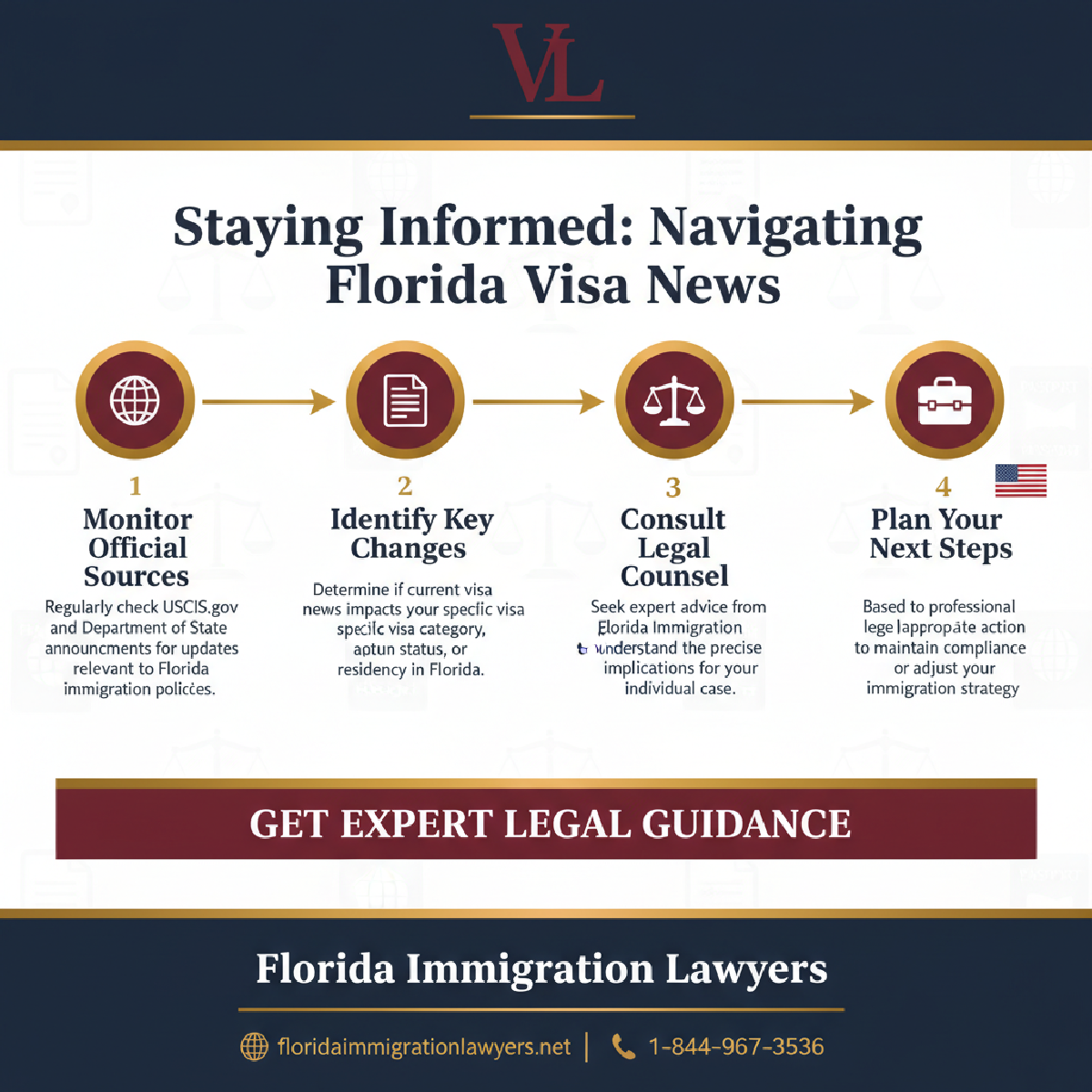
Navigating the flow of visa news today can feel overwhelming. Here's a structured approach to help you stay informed and assess the impact of new information:
-
Identify Official Sources: Always prioritize information from government websites. For U.S. immigration, the most reliable sources are USCIS.gov for domestic applications and Travel.State.Gov for visa processing at U.S. Embassies and Consulates abroad. Be wary of unofficial forums or social media as primary sources.
-
Subscribe to Alerts: Many official government websites offer email subscription services for news and updates. USCIS, for example, allows you to subscribe to alerts directly to your inbox. This ensures you receive timely notifications about policy changes, processing delays, or new guidance.
-
Understand the Scope: When you encounter a piece of news, determine if it's a proposed rule, a final rule, a policy memo, or a simple advisory. Proposed rules require public comment periods (often found in the Federal Register, 8 CFR), while final rules have immediate or specified effective dates. This distinction is crucial for understanding its current impact.
-
Assess the Impact on Your Case: Not all immigration news will affect every applicant. Determine if the update applies to your specific visa category (e.g., family-based, employment-based, student, visitor), your country of origin, or your current immigration status. A change to H-1B visas, for instance, may not affect those seeking K-1 fiancé visas.
-
Consult with a Florida Immigration Lawyer: The most effective way to understand complex updates and their specific implications for your situation is to speak with an experienced attorney. They can provide tailored advice, clarify legal jargon, and help you adjust your strategy if necessary. Florida Immigration Lawyers are experts in deciphering these changes.
Essential Documents for Florida Visa Applications
Regardless of the latest visa news today, a solid foundation of accurate documentation is always critical. While specific requirements vary by visa type, here is a general checklist of documents commonly required for various U.S. visa applications. Always refer to the official USCIS or Department of State instructions for your specific form and visa category.
- ✓ Valid Passport: Must be valid for at least six months beyond your intended period of stay in the U.S.
- ✓ Birth Certificates: Original or certified copies for all applicants.
- ✓ Marriage Certificates: If applicable, for spouses and dependent children.
- ✓ Financial Support Documents: Proof of sufficient funds (e.g., bank statements, affidavits of support like Form I-864, employment letters) to avoid becoming a public charge, as outlined in INA § 212(a)(4).
- ✓ Medical Examination Records: Completed by a USCIS-approved civil surgeon.
- ✓ Police Certificates/Criminal Records: From all countries where you have lived for a certain period.
- ✓ Photographs: U.S. visa-style photographs meeting specific requirements.
- ✓ Educational and Professional Credentials: For employment-based visas.
- ✓ Proof of Relationship: For family-based visas (e.g., birth certificates, marriage certificates, photos).
- ✓ Application Forms and Fee Receipts: Duly completed and signed forms, along with proof of fee payment.
Organizing these documents meticulously can prevent delays. Our team at Florida Immigration Lawyers can assist you in compiling a comprehensive and accurate application package.
Visa Processing Timelines and Expectations for Florida Applicants
One of the most common questions we hear at Florida Immigration Lawyers concerns visa processing Florida times. These timelines are notoriously variable and can be influenced by numerous factors, including the specific visa type, the USCIS service center or field office handling your case, and current caseloads.
For example, a family-based petition (Form I-130) may take several months to several years, depending on the preference category and the visa bulletin availability. Employment-based visas also have varying wait times. You can check estimated processing times directly on the USCIS website for specific forms and field offices, such as those serving Pembroke Pines and other Florida communities.
Factors Affecting Processing Times:
- Caseload Volume: High numbers of applications can lead to backlogs.
- Completeness of Application: Incomplete applications or Requests for Evidence (RFEs) will cause significant delays.
- Security Checks: Background and security checks are mandatory and can be unpredictable.
- Policy Changes: New policies or executive actions can sometimes shift priorities or procedures, affecting overall timelines.
While USCIS aims for efficiency, patience is often required. Regularly checking the USCIS processing times tool and consulting with a Florida immigration lawyer can help manage expectations and address potential issues proactively.
Cost Factors and Fee Breakdown for Visa Applications in Florida
Understanding the financial aspects of your immigration journey is as important as following the latest visa news today. U.S. visa applications involve several fees, and these costs can add up. It's crucial to budget appropriately to avoid interruptions in your application process.
USCIS fees are set by regulation, often found in 8 CFR § 103.7. These fees are subject to change, so always verify the current amounts on the official USCIS website before filing. Common fees include:
- Application Filing Fees: Each specific form (e.g., I-130, I-485, N-400) has its own filing fee. These can range from hundreds to over a thousand dollars per application.
- Biometrics Fees: Many applications require a biometrics appointment (fingerprints, photos, signature), which incurs a separate fee.
- Medical Examination Fees: Required for most green card applicants, these fees are paid directly to the civil surgeon and can vary.
- Attorney Fees: Retaining an experienced Florida immigration lawyer involves legal fees. While an additional cost, legal representation can save you time, stress, and potential costly mistakes, often proving to be a wise investment.
- Translation Fees: If any supporting documents are not in English, certified translations are required, incurring additional costs.
Do not let the financial complexities deter you. Florida Immigration Lawyers offers transparent fee structures and can help you understand the total cost involved in your specific case. We believe in providing accessible legal support to all Floridians.
Do not navigate this process alone. The complexities of immigration law, combined with constant changes in visa news today, require expert guidance. Contact Florida Immigration Lawyers today to secure your future.
Common Mistakes to Avoid in Your Florida Visa Application
Applying for a U.S. visa or immigration benefit is a detailed process where even small errors can lead to significant delays or even denials. Being aware of common pitfalls can save you time, money, and emotional distress. Here are some critical mistakes to avoid, especially for applicants in Florida:
-
Incomplete or Inaccurate Forms: Submitting forms with missing information or incorrect data is a primary reason for RFEs (Requests for Evidence) or outright rejections. Always double-check every field.
-
Missing Supporting Documents: Failing to include all required supporting documents, such as birth certificates, marriage licenses, or financial records, will halt your application. Ensure you have a comprehensive checklist.
-
Ignoring Deadlines: Missing a filing deadline, a response deadline for an RFE, or an appointment can lead to denial or the need to restart the entire process, potentially incurring new fees.
-
Providing False Information or Misrepresentation: Any attempt to provide fraudulent documents or false statements can result in a lifetime ban from the U.S. (INA § 212(a)(6)(C)(i)) and criminal penalties. Always be truthful.
-
Not Updating Your Address: If you move within Florida or to another state while your application is pending, failing to notify USCIS (via Form AR-11) can result in missed notices, interviews, or RFEs. This is crucial for residents of Pembroke Pines and other dynamic Florida communities.
-
Submitting Incorrect Filing Fees: USCIS fees change periodically. Submitting an outdated or incorrect fee amount will cause your application to be rejected and returned, delaying your process significantly.
-
Failing to Seek Legal Advice: Attempting to navigate complex immigration laws without legal counsel is a common and often costly mistake. An experienced Florida immigration lawyer can identify potential issues and ensure proper filing.
When to Consult a Florida Immigration Lawyer
While this guide provides valuable general information about visa news today and the application process, there are specific situations where professional legal counsel is not just recommended, but essential. Florida Immigration Lawyers are here to provide the expert guidance you need, especially if you encounter any of the following scenarios:
- Complex Case Scenarios: If your case involves a criminal record, previous immigration violations, or complex family situations, an attorney can assess eligibility and strategize the best approach.
- Visa Denials or Appeals: If your visa application has been denied, or if you need to file an appeal, an attorney can review the denial reason and represent you effectively. This could involve navigating the Board of Immigration Appeals (BIA) process.
- Deportation or Removal Proceedings: Facing deportation is a severe situation requiring immediate legal intervention. Our deportation defense attorneys can fight for your right to stay in the U.S.
- Specific Visa Categories: For intricate visa types like business immigration visas (e.g., H-1B, L-1) or certain family immigration petitions with unique requirements, legal expertise ensures compliance.
- Changes in Immigration Law or Policy: When significant USCIS updates or new laws are enacted, an attorney can explain their impact on your specific case and help you adapt your strategy.
- Difficulty Gathering Documents: If you are struggling to obtain necessary documents from abroad or facing challenges proving eligibility, a lawyer can guide you through the process.
Our experienced Florida Immigration Lawyers are dedicated to protecting your rights and helping you achieve your immigration goals. We serve clients throughout Florida, including Pembroke Pines, Miami, Orlando, and Tampa. Do not hesitate to reach out for assistance.
Frequently Asked Questions About Visa News Today in Florida
What is the new rule for U.S. visa?
As of 2026, specific "new rules" can vary widely depending on the visa category and legislative actions. There isn't a single overarching "new rule" for all U.S. visas at any given time. Recent changes often focus on areas like visa interview waivers for certain nonimmigrant categories, adjustments to public charge inadmissibility guidelines, or modifications to employment-based visa programs. It is essential to consult the official USCIS and Department of State websites for the most current regulations specific to the visa you are interested in. A Florida immigration lawyer can provide clarity on any recent changes impacting your situation.
What's happening with U.S. visas?
The U.S. visa landscape in 2026 is characterized by ongoing efforts to streamline processing while maintaining national security. There's often a balance between facilitating legal immigration and addressing concerns about border security and economic impact. We see continuous adjustments in processing times, interview backlogs at consulates, and policy clarifications from USCIS. Florida, as a major port of entry and diverse state, is particularly affected by these national trends. Keeping up with immigration news Florida and official announcements is key to understanding the current situation.
Is the U.S. visa update September 2, 2025?
Immigration policy updates are not typically confined to a single date like September 2, 2025. While specific regulations or policy memos might be issued or take effect on certain dates, the overall "U.S. visa update" is a continuous process. You should always refer to the effective dates mentioned in official USCIS or Department of State announcements. Any widespread rumors about a single, universal update on a specific date should be cross-referenced with official government sources to ensure accuracy and avoid misinformation. Our firm monitors these updates diligently.
How long can I stay in Florida without a visa?
The ability to stay in Florida (or anywhere in the U.S.) without a visa depends entirely on your nationality and the purpose of your visit. Citizens of countries participating in the Visa Waiver Program (VWP) can typically enter for tourism or business for up to 90 days without a visa, requiring an approved ESTA. For all other nationalities, a visa is generally required, and the duration of stay is determined by the specific visa issued and the immigration officer at the port of entry. Overstaying your authorized period can have serious immigration consequences, including future inadmissibility. Always check your I-94 record upon entry.
How do Florida state laws impact immigration?
While federal law primarily governs immigration, Florida state laws can impact immigrants in various ways, particularly concerning employment, public benefits, and local law enforcement interactions. For example, some state laws may affect how local agencies cooperate with federal immigration enforcement. It's crucial for immigrants in Florida to be aware of both federal and state regulations. A Florida immigration lawyer can provide advice on how state laws might affect your rights and status.
What are the most common types of visas sought in Florida?
In Florida, due to its diverse economy and population, a wide range of visas are common. These include family-based immigrant visas (for spouses, children, and other relatives), employment-based visas (such as H-1B for specialized occupations, L-1 for intracompany transfers, and O-1 for individuals with extraordinary ability), and various nonimmigrant visas for tourism, study (F-1), and temporary work (H-2B). The specific visa type you need depends on your purpose for coming to the U.S. and your qualifications.
Can I appeal a visa denial?
Whether you can appeal a visa denial depends on the type of visa and the specific reason for the denial. For nonimmigrant visas, direct appeals are often not available; instead, applicants may need to reapply and address the issues that led to the denial. For immigrant petitions (like I-130), an appeal can often be filed with the Board of Immigration Appeals (BIA). Understanding the grounds for appeal and the proper procedures is complex, making legal assistance from a Florida immigration lawyer highly advisable.
What should I do if my visa is expiring soon in Florida?
If your visa is expiring soon while you are in Florida, it's critical to act promptly. Depending on your situation, you may be able to apply for an extension of stay, a change of status to another nonimmigrant category, or, if eligible, adjust your status to a lawful permanent resident (green card holder). Overstaying your visa can lead to severe penalties, including bars to re-entry. Consult with Florida Immigration Lawyers immediately to explore your options and ensure you maintain legal status.
About Florida Immigration Lawyers
Florida Immigration Lawyers is a leading law firm dedicated to providing exceptional immigration legal services across the entire state of Florida. With years of experience and a deep understanding of U.S. immigration law, our compassionate and skilled attorneys are committed to helping individuals, families, and businesses achieve their immigration goals.
We handle a comprehensive range of immigration matters, including family-based visas, employment-based visas, asylum claims, deportation defense, citizenship and naturalization, and much more. Our firm is known for its client-centered approach, offering personalized strategies and diligent representation for every case.
We understand that immigration journeys can be challenging, which is why we offer bilingual services to effectively communicate with our diverse clientele. We are available 24/7 to address your urgent concerns and provide free consultations to help you understand your options without financial commitment.
For trusted legal advice and unwavering support, contact Florida Immigration Lawyers today. Visit our website at https://www.floridaimmigrationlawyers.net or call us at 1-844-967-3536.
This article is for general informational purposes only and does not constitute legal advice. Immigration laws change frequently. For advice specific to your situation, please consult with a qualified immigration attorney.
Staying informed about visa news today is a continuous effort, and having a trusted legal partner makes all the difference. Do not leave your immigration future to chance. Call Florida Immigration Lawyers at 1-844-967-3536 for a free consultation today and let us guide you with expertise and care.
Florida Immigration Lawyers
Legal Team
Our experienced attorneys at Florida Immigration Lawyers have been serving clients across Florida for over 20 years. We specialize in immigration, personal injury, criminal defense, workers compensation, and family law.