Visa News Today: Key Immigration Updates for Florida Residents in 2026
Navigating U.S. immigration laws can be challenging, especially with constant updates. For Florida residents, staying informed on the latest visa news today is critical for successful applications in 2026. This comprehensive guide from Florida Immigration Lawyers covers key updates for H-1B, H-2B, and family visas, along with USCIS processing changes. We detail a step-by-step application process, essential document checklists, and expected timelines. Learn about common mistakes to avoid and when professional legal assistance is indispensable. Our firm provides expert, compassionate, and bilingual support across all of Florida. Call us for a free consultation and ensure your immigration journey is handled with precision.
For Florida residents, visa news today in 2026 highlights significant updates across various categories, including H-1B and H-2B visas, family-based petitions, and USCIS processing changes. Staying informed is crucial for successful applications. These changes can impact eligibility, required documentation, and overall timelines for immigrants across the state, from Miami to Orlando.
- H-1B and H-2B visa policies are evolving, affecting seasonal and skilled workers.
- USCIS processing times and fee structures may see adjustments, impacting all applicants.
- Family-based immigration remains a priority, with potential procedural shifts.
- Compliance with new state-level immigration laws in Florida is essential.
- Consulting an experienced Florida immigration lawyer is vital for navigating complex rules.
Are you a Florida resident seeking to understand the latest shifts in immigration policy? The landscape of U.S. visas is constantly evolving, and staying informed about visa news today is paramount for anyone planning to live, work, or reunite with family in the Sunshine State. From new federal regulations to state-specific considerations, these changes can significantly impact your immigration journey.
This comprehensive guide from Florida Immigration Lawyers will break down the most recent and anticipated visa updates for 2026, focusing on their implications for individuals and families across Florida. We understand the complexities you face and aim to provide clarity and actionable insights. For personalized guidance on your specific situation, do not hesitate to Call Florida Immigration Lawyers at 1-844-967-3536 for a free consultation. Our team is ready to assist you.
Overview of Florida Visa News Today: What's Changing in 2026?
The year 2026 brings several notable developments in U.S. immigration, directly impacting individuals living in or moving to Florida. These updates span various visa categories, from employment-based petitions like H-1B and H-2B to family-sponsored visas and adjustments in USCIS procedures.
Florida, with its diverse population and vibrant economy, is particularly affected by these changes. Our state is a hub for tourism, agriculture, and skilled labor, all sectors deeply reliant on a clear and functional immigration system. Understanding these broader trends is the first step in preparing your application effectively.
Recent Federal Policy Adjustments Affecting Florida
Federal immigration policies often dictate the broader framework for visa applications. In 2026, we are seeing continued emphasis on border security, economic contributions of immigrants, and efficiency in processing. These directives from Washington D.C. have ripple effects down to local USCIS field offices in Miami, Orlando, and Tampa.
For instance, discussions around the future of the H-2B visa program have been prominent. This program is critical for Florida's seasonal industries, including hospitality and agriculture. Any changes to the cap or eligibility criteria can have a direct and immediate impact on businesses and workers throughout the state, affecting many who rely on this type of visa.
Similarly, the U.S. Department of State and USCIS (U.S. Citizenship and Immigration Services) frequently update their policies and guidance. These updates can affect interview procedures, required documentation, and even the criteria for certain waivers. Keeping track of these announcements is a full-time job, which is why many Floridians turn to experienced immigration lawyers for assistance.
Florida-Specific Immigration Landscape and Laws
Beyond federal changes, Florida has its own unique immigration considerations. State-level legislation, while not directly controlling federal visa issuance, can create additional layers of complexity for immigrants. For example, laws related to E-Verify or specific employment regulations can influence how businesses in Florida hire non-citizens.
Florida's economy relies heavily on both skilled and seasonal workers. The demand for H-1B visas in tech and healthcare, particularly in South Florida areas like Miami and Fort Lauderdale, remains high. Simultaneously, the state's agricultural sector in central and southern Florida often depends on H-2B visas for temporary workers. These specific needs mean that visa news today often has a magnified impact here.
Understanding the interplay between federal immigration law, such as the Immigration and Nationality Act (INA), and state regulations is crucial. Our firm specializes in navigating these intricate legal frameworks to protect your interests and ensure compliance with all applicable laws.
Navigating Key Visa Changes: A Step-by-Step Guide for Florida Applicants
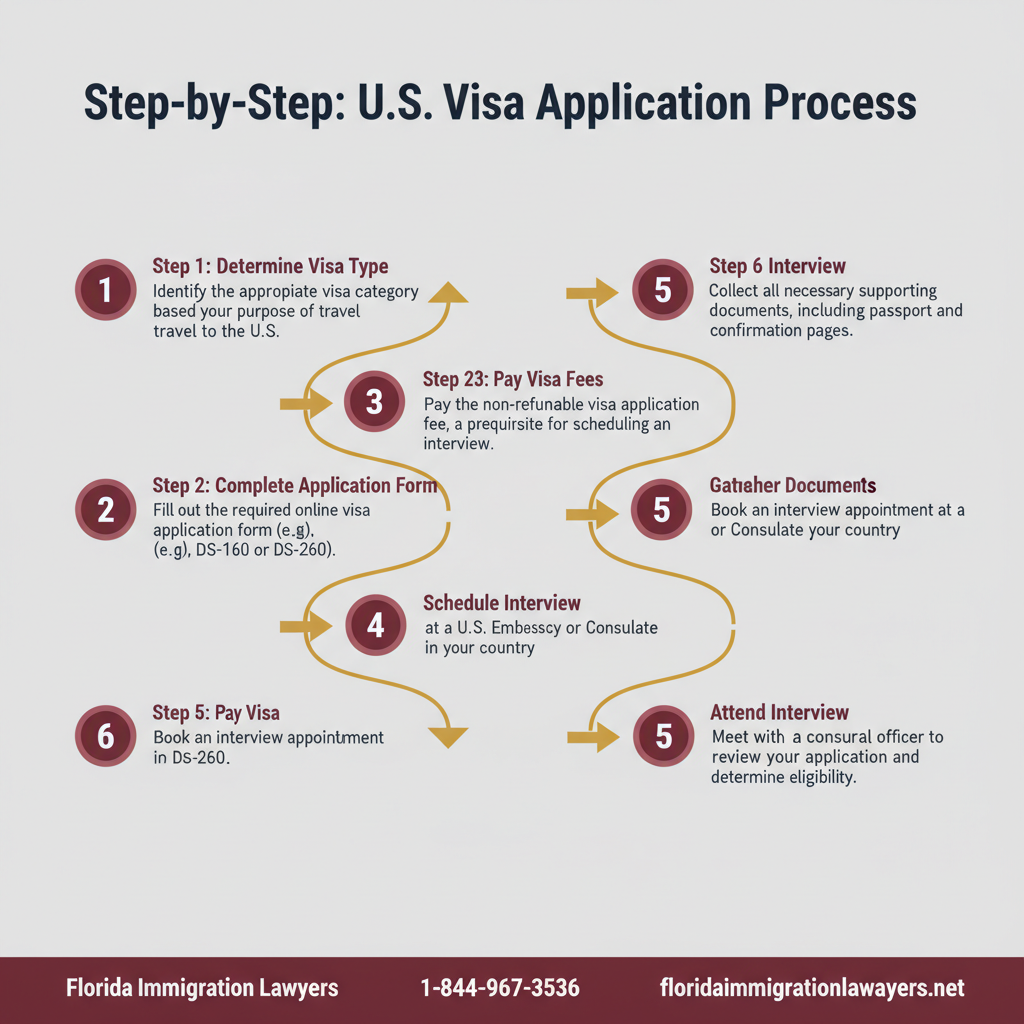
Applying for a U.S. visa or adjusting your status in Florida can be a daunting process, especially with ongoing changes. This step-by-step guide provides a general roadmap, but remember that individual circumstances vary greatly. Always consider professional legal advice to ensure accuracy and avoid potential pitfalls.
-
Stay Informed on Visa News Today
The first and most critical step is to remain updated on the latest immigration news. Subscribe to official USCIS and Department of State alerts, and follow reputable immigration law firms like Florida Immigration Lawyers. Changes can occur rapidly, impacting forms, fees, and eligibility. For example, the visa news today regarding H-2B cap increases for fiscal year 2026 was a significant development for many Florida employers and workers.
-
Determine Your Eligibility and Visa Category
Carefully assess which visa category best suits your purpose, whether it's for work, family, investment, or asylum. Each category has specific requirements and eligibility criteria. For instance, an H-1B visa is for specialty occupations, while an H-2B visa is for temporary non-agricultural workers. Understanding these distinctions is fundamental to your application's success, as incorrect categorization can lead to immediate rejection.
-
Gather Required Documentation
Begin collecting all necessary documents well in advance. This often includes passports, birth certificates, marriage certificates, educational transcripts, employment letters, financial statements, and police clearances. Missing or incorrect documents are a leading cause of delays and denials. We provide a detailed checklist later in this article to help you organize your materials effectively.
-
Complete and File Your Application Forms
Fill out all USCIS forms accurately and completely. Pay close attention to instructions, as even minor errors can lead to Requests for Evidence (RFEs) or outright rejections. Ensure all supporting documents are translated into English by a certified translator, if necessary. The integrity of your submission is paramount for a smooth process.
-
Attend Biometrics Appointments and Interviews
Many visa processes require biometrics appointments, typically at an Application Support Center (ASC) in Florida, such as the one in Miami or Orlando. Be prepared for a visa interview at a U.S. embassy or consulate abroad, or a USCIS interview if you are adjusting status within the U.S. Practice answering questions clearly and honestly. Legal counsel can help prepare you for this critical stage, ensuring you feel confident and ready.
-
Respond to RFEs or Notices of Intent to Deny (NOIDs)
If you receive an RFE or NOID, do not panic but act swiftly. These notices indicate that USCIS needs more information or intends to deny your application. A prompt and thorough response, often with legal assistance, is crucial to address the agency's concerns. Ignoring these notices will almost certainly lead to a denial, jeopardizing your immigration goals.
-
Await Decision and Next Steps
After all steps are completed, USCIS or the Department of State will issue a decision. If approved, follow the instructions for visa issuance or adjustment of status. If denied, consult with an experienced immigration attorney immediately to discuss potential appeals or other legal avenues. A denial is not always the end of the road, and an attorney can help you explore all available options.
Essential Documents for Florida Visa Applicants
Regardless of your visa type, a robust collection of documents is fundamental. Accuracy and completeness are key to avoiding delays. Here is a general checklist for common visa applications in Florida, but always verify specific requirements for your case.
- ✅ Valid Passport: Must be valid for at least six months beyond your intended period of stay.
- ✅ Birth Certificate: Original or certified copy, with certified English translation if applicable.
- ✅ Marriage Certificate (if applicable): For family-based petitions, proving your marital relationship is critical.
- ✅ Photographs: Recent passport-style photos meeting USCIS specifications.
- ✅ Application Forms: All required USCIS forms (e.g., I-130, I-485, I-765, I-140, I-129) correctly filled out.
- ✅ Financial Support Evidence: Bank statements, affidavits of support (Form I-864), employment verification letters.
- ✅ Educational and Professional Credentials: Diplomas, transcripts, professional licenses, letters of experience for employment-based visas.
- ✅ Medical Examination Report: Form I-693 completed by a USCIS-approved civil surgeon.
- ✅ Police Certificates/Criminal Records: From all countries where you have lived for six months or more since age 16.
- ✅ Travel History: Records of past entries and exits from the U.S.
- ✅ Proof of Relationship (for family visas): Photos, joint bank accounts, lease agreements, utility bills.
- ✅ Offer of Employment (for work visas): Approved Labor Condition Application (LCA) for H-1B, or temporary labor certification for H-2B.
This list is not exhaustive. The specific documents you need will depend heavily on your individual case and the specific visa you are applying for. Always refer to the official USCIS website or consult with a business immigration lawyer or family immigration lawyer for precise requirements to ensure no critical documents are overlooked.
Do not navigate this complex process alone. The stakes are too high. Contact Florida Immigration Lawyers today to ensure your application is handled with precision and expertise.
Visa Processing Timelines and Expectations in Florida for 2026
Understanding processing times is crucial for planning your immigration journey. USCIS and consular processing times can fluctuate significantly due to caseloads, policy changes, and specific office backlogs. For Florida residents, processing may occur at local field offices or national service centers, depending on the type of application.
Factors Influencing Processing Speed
- Visa Category: Some visas, like immediate relative petitions, typically process faster than preference categories, which are subject to annual quotas.
- Service Center/Field Office: Different USCIS service centers (e.g., California, Nebraska, Texas, Vermont) and local field offices (e.g., Miami, Orlando) have varying backlogs.
- Completeness of Application: Incomplete applications or those requiring RFEs will inevitably take longer, as they require additional review and submission of information.
- Background Checks: Security and identity checks are mandatory for all applicants and can sometimes extend processing times unpredictably, depending on individual history.
- Policy Changes: New regulations or directives from the government can temporarily speed up or slow down processing for certain categories, requiring constant monitoring.
While USCIS provides estimated processing times on its website, these are just estimates and can change. For example, for a family-based citizenship application, Form N-400, processing times in the Miami field office might differ from those in Tampa. It's essential to check the latest updates on the USCIS processing times page regularly.
Current Trends for 2026
As of early 2026, we observe a continued effort by USCIS to digitize processes, which may eventually lead to greater efficiency. However, high demand, especially for popular work visas like H-1B and H-2B, coupled with ongoing resource constraints, means that some categories may still experience extended waits. The recent visa news today regarding the temporary increase in H-2B visas for FY 2026, for instance, aims to alleviate some backlog but may also introduce new processing challenges as the volume of applications increases.
For individuals in deportation proceedings or seeking asylum, the timelines can be even more unpredictable, often involving immigration court schedules at facilities like the Krome Service Processing Center in Miami or the Orlando Immigration Court. These situations demand immediate and specialized legal intervention from an experienced attorney.
Understanding Visa Costs and Fees for Florida Applicants
The financial aspect of applying for a visa or immigration benefit is a significant consideration for many. Fees are subject to change and vary widely depending on the type of application, so accurate information is key.
USCIS Filing Fees
USCIS charges various fees for petitions, applications, and services. These can include:
- Application fees for forms like I-130 (Petition for Alien Relative), I-485 (Application to Register Permanent Residence or Adjust Status), I-129 (Petition for a Nonimmigrant Worker).
- Biometrics services fees, which cover the cost of fingerprinting and background checks.
- Fees for specific waivers or premium processing services, if available, which can expedite certain application types for an additional cost.
It is crucial to check the most current fee schedule on the USCIS website before submitting any application. Fees are non-refundable, even if your application is denied. Incorrect fee payments are a common reason for application rejection, leading to unnecessary delays.
Other Potential Costs
- Medical Examination Fees: Required for adjustment of status, these are paid directly to a USCIS-approved civil surgeon and vary by provider.
- Translation Services: If any documents are not in English, certified translations are required and incur a cost, typically per page or per document.
- Attorney Fees: Legal representation by an immigration lawyer is an investment that can significantly increase your chances of success and prevent costly mistakes, especially in complex cases.
- Travel Expenses: For interviews at consulates abroad or USCIS appointments within Florida, including transportation and accommodation.
- Shipping and Mailing Costs: For secure delivery of sensitive documents to USCIS or other government agencies, often requiring tracking services.
While some applicants may qualify for fee waivers, this is not universally available and depends on specific eligibility criteria based on income or public benefits received. Discussing all potential costs with your attorney at Florida Immigration Lawyers can help you budget effectively for your immigration journey and avoid unexpected expenses.
Common Mistakes to Avoid in Your Visa Application
Navigating the U.S. immigration system can be complex. Even minor errors can lead to significant delays or even denial of your application. Here are some common pitfalls Florida applicants should strive to avoid:
-
Submitting Incomplete or Inaccurate Forms
Consequence: This is perhaps the most frequent mistake. Missing information, unanswered questions, or incorrect data will result in a Request for Evidence (RFE) or outright rejection. This significantly prolongs the process and can be disheartening, requiring you to re-file or provide additional information.
-
Failing to Provide All Required Supporting Documentation
Consequence: Just like incomplete forms, missing documents (e.g., birth certificates, marriage licenses, financial statements) will trigger RFEs. Ensure you cross-reference your checklist with USCIS requirements specific to your visa type, as inadequate documentation is a common reason for delays.
-
Ignoring Deadlines and Expiration Dates
Consequence: Missing a filing deadline, overstaying a visa, or letting documents expire can have severe repercussions, including accrual of unlawful presence, visa overstays, and even future bars to re-entry. Always be mindful of timeframes and plan accordingly to meet all submission dates.
-
Providing Inconsistent Information Across Applications
Consequence: Any discrepancies between current and past applications, or between your application and other government records, can raise red flags for USCIS. This may lead to accusations of misrepresentation, potentially resulting in denial or even allegations of fraud, which carry severe penalties.
-
Not Disclosing All Criminal History
Consequence: Even minor arrests or convictions, including those expunged, must be disclosed. Failing to do so can be considered misrepresentation, leading to severe penalties, including inadmissibility. Honesty is always the best policy, and an attorney can help address past issues appropriately.
-
Using Uncertified or Poor Quality Translations
Consequence: If your supporting documents are not in English, they must be accompanied by a certified English translation. Uncertified translations or those of poor quality will not be accepted and will cause delays, as USCIS will require proper translations.
-
Paying Incorrect Fees or Using Expired Payment Methods
Consequence: USCIS fees change periodically. Submitting the wrong fee amount or using an outdated payment method (e.g., personal check with an old date) will cause your application to be rejected and returned. Always verify current fees on the USCIS website before sending any payment.
-
Failing to Update USCIS on Address Changes
Consequence: If you move within Florida or to another state, you must inform USCIS within 10 days using Form AR-11. Failure to do so can result in missed notices, interview appointments, or even denial of your application. This is especially critical for those with pending deportation defense cases, where timely communication is vital.
-
Attempting to Misrepresent Facts or Commit Fraud
Consequence: Any attempt to provide false information or engage in fraudulent activities (e.g., a sham marriage) carries severe criminal and immigration penalties. This includes permanent bars from the U.S. and even imprisonment. The legal system takes these matters very seriously, and such actions can have irreversible negative consequences.
-
Not Seeking Legal Counsel When Needed
Consequence: While some simple cases might be manageable, complex situations or any red flags warrant professional legal assistance. Trying to navigate intricate laws like INA Section 212 (8 U.S.C. § 1182) on your own can lead to irreversible mistakes. A Florida immigration lawyer can identify potential issues and guide you effectively, saving you time, money, and stress.
When to Call a Lawyer for Immigration Assistance in Florida
While general information is helpful, certain situations absolutely require the expertise of a qualified immigration attorney. Florida Immigration Lawyers is here to provide the dedicated support you need, ensuring your case is handled with the utmost care and professionalism.
Specific Scenarios Requiring Legal Help
- Previous Denials or Deportation Orders: If you have faced past immigration issues, including deportation defense, a lawyer can assess your options for waivers or appeals.
- Criminal History: Any arrests or convictions, even minor ones, can complicate your case and may render you inadmissible. An attorney can advise on waivers and strategies to mitigate negative impacts.
- Complex Visa Categories: Applying for visas like certain investor visas or those with stringent requirements (e.g., extraordinary ability visas) benefits greatly from legal precision.
- Asylum or Refugee Claims: These cases are highly sensitive and require deep legal understanding of international and domestic refugee law. Our firm has extensive experience in asylum claims.
- Family Petitions with Complications: If there are issues with the petitioner's status, divorce, or child custody, legal guidance is essential for family immigration.
- Business Immigration Challenges: For employers or foreign workers navigating H-1B, H-2B, or other work visas, an attorney ensures compliance and smooth processing. This is especially true with evolving visa news today regarding employment visas and their regulations.
- Changes in Immigration Law: With constant updates, understanding how new laws impact your specific case requires professional interpretation and strategic advice from an expert.
Warning Signs and Red Flags
If you encounter any of the following, it's a strong indicator to seek legal counsel without delay:

- You receive a Request for Evidence (RFE) or Notice of Intent to Deny (NOID) from USCIS, indicating issues with your application.
- You are placed in removal proceedings or receive a Notice to Appear (NTA) in immigration court, which requires immediate legal defense.
- You have been accused of immigration fraud or misrepresentation, which carries severe penalties.
- You have concerns about unlawful presence or visa overstays, which can lead to bars from re-entry.
- Your case involves complex legal issues, such as eligibility for a waiver under INA Section 212(a)(9)(B) (8 U.S.C. § 1182(a)(9)(B)), which demands specialized knowledge.
Our team at Florida Immigration Lawyers is dedicated to serving the diverse communities of Florida, from Miami-Dade to Duval County. We provide expert legal representation and compassionate support, ensuring your rights are protected throughout your immigration journey, no matter how challenging it may seem.
Frequently Asked Questions About Visa News Today
What is the new rule for U.S. visa in 2026?
While there isn't one singular "new rule" for all U.S. visas in 2026, several significant adjustments and policy shifts are underway. These include potential changes to the annual caps for employment-based visas like H-1B and H-2B, updates to USCIS filing fees, and revised guidance on family-based petitions. For instance, the Department of Labor and USCIS have been discussing reforms to protect temporary workers, which could affect the H-2B program. It's crucial to monitor official government announcements from USCIS and the Department of State, as well as consult with an immigration attorney, for the most accurate and up-to-date information relevant to your specific visa type and situation.
What's happening with U.S. visas in 2026?
In 2026, the U.S. visa landscape continues to be dynamic. We are observing efforts to streamline processing at USCIS and consular offices, alongside ongoing discussions in Congress regarding comprehensive immigration reform. Specific areas of focus include the allocation of H-2B visas for seasonal workers, a critical category for Florida's agriculture and tourism sectors, and potential modifications to the visa bulletin for family-sponsored and employment-based categories. Furthermore, changes to public charge rules or adjustments of status procedures are always possibilities. Staying informed via reliable sources is essential for all applicants in Florida to navigate these ongoing developments effectively.
What are the new immigration changes for 2026?
The new immigration changes for 2026 encompass various aspects. Federally, there's a push for increased efficiency in visa processing and adjudication, aiming to reduce backlogs. State-level initiatives in Florida, such as discussions around employment verification (E-Verify) and professional licensing for non-citizens, also contribute to the evolving environment. Additionally, there are ongoing efforts to enhance border security, which indirectly affects visa processing for those applying from outside the U.S. For those already in the U.S. seeking to adjust status, USCIS policy updates, including potential fee adjustments, are key considerations. Consulting an immigration lawyer is vital to understand how these changes apply to your unique situation and to ensure compliance.
Is there a U.S. visa update for September 2, 2026?
While specific daily or monthly updates are common, it's rare for a single date like "September 2, 2026" to signify a universal change across all U.S. visa categories. USCIS and the Department of State release updates periodically, with the Visa Bulletin typically updated monthly. Major policy shifts are usually announced with more lead time, often weeks or months in advance. Any specific update on that date would likely pertain to a particular visa category, a specific form, or a processing notice. It's always best to check the official USCIS news releases and the Department of State's Visa Bulletin directly for the most precise and timely information regarding any updates around that time, rather than relying on rumors.
How do H-1B and H-2B visa policies affect Florida's economy?
H-1B and H-2B visa policies have a profound impact on Florida's economy. H-1B visas bring highly skilled professionals, particularly in tech, healthcare, and engineering, bolstering innovation and filling critical labor gaps in cities like Miami and Orlando. H-2B visas are vital for seasonal industries such as tourism, hospitality, and agriculture, ensuring businesses can meet peak demand without labor shortages. Changes to these visa programs, such as cap adjustments or new regulations, directly influence Florida's workforce, business growth, and overall economic stability. Our firm helps many Florida businesses navigate these complex business immigration laws to maintain their operations and contribute to the state's prosperity.
Where are the main USCIS offices or processing centers relevant to Florida residents?
Florida residents primarily interact with several USCIS facilities. For interviews and specific services, there are field offices in Miami, Orlando, and Tampa. Biometrics appointments are conducted at Application Support Centers (ASCs) located throughout the state, including in areas like Jacksonville and Fort Myers. For petition processing, cases are generally routed to one of the national service centers (e.g., California, Nebraska, Texas, Vermont), depending on the form type. For immigration court proceedings, facilities like the Krome Service Processing Center in Miami and the Orlando Immigration Court are relevant. Your specific location in Florida and the type of application will determine which office handles your case, and your attorney can help clarify this.
Can recent Florida state laws impact my federal visa application?
Yes, recent Florida state laws can indirectly impact your federal visa application, even though immigration law is primarily federal. State laws, for example, regarding employment verification (like E-Verify mandates for certain employers) or restrictions on professional licenses for non-citizens, can affect your ability to secure qualifying employment or meet specific residency requirements in Florida. While they don't directly alter federal visa criteria, they can create practical challenges or additional compliance burdens that an applicant must navigate. Consulting with a Florida-based immigration attorney is crucial to understand these state-level nuances and how they might affect your overall immigration strategy, ensuring you remain compliant.
What should I do if my visa application is delayed or denied?
If your visa application experiences significant delays or is denied, it's imperative to act promptly. First, review any Request for Evidence (RFE) or Notice of Intent to Deny (NOID) carefully to understand the reasons. For delays, you can check the USCIS processing times online and submit an inquiry if your case is outside normal processing times. For a denial, you may have options such as filing a motion to reopen or reconsider, or even an appeal to the Administrative Appeals Office (AAO) or Board of Immigration Appeals (BIA). In such critical situations, immediately contact Florida Immigration Lawyers. Our firm can help you assess the reasons for the delay or denial and strategize the most effective next steps, potentially preventing adverse outcomes and protecting your future.
About Florida Immigration Lawyers
Florida Immigration Lawyers is a leading immigration law firm dedicated to serving individuals, families, and businesses across the entire state of Florida. With years of specialized experience, our compassionate and knowledgeable attorneys are committed to providing exceptional legal representation and personalized service.
We understand the complexities and emotional challenges of immigration law. Our services range from family-based visas, employment visas (H-1B, H-2B, L-1), asylum, deportation defense, to citizenship and naturalization. We pride ourselves on offering comprehensive, bilingual legal solutions tailored to your unique needs.
Why choose Florida Immigration Lawyers? We offer free consultations, are available 24/7 to address your urgent concerns, and possess an in-depth understanding of both federal and state-specific immigration nuances. Our mission is to guide you through every step of your immigration journey with clarity and confidence.
Visit our website at www.floridaimmigrationlawyers.net or call us anytime at 1-844-967-3536 to schedule your free consultation. Let us be your trusted partner in achieving your immigration goals in Florida.
This article is for general informational purposes only and does not constitute legal advice. Immigration laws change frequently. For advice specific to your situation, please consult with a qualified immigration attorney.
Don't let constantly evolving immigration laws jeopardize your future in Florida. For accurate, timely, and personalized legal advice on the latest visa news today, contact Florida Immigration Lawyers for a free consultation. Call us now at 1-844-967-3536.
Florida Immigration Lawyers
Legal Team
Our experienced attorneys at Florida Immigration Lawyers have been serving clients across Florida for over 20 years. We specialize in immigration, personal injury, criminal defense, workers compensation, and family law.