Visa Bulletin October 2025 Florida: Your Immigration Guide
The Visa Bulletin October 2025 is crucial for anyone seeking permanent residency in the U.S., especially in Florida. This guide breaks down how to interpret the bulletin's Final Action Dates and Dates for Filing Applications, which dictate visa availability for various categories. We cover essential documents, processing timelines, and cost factors involved in the application process. Learn about common mistakes to avoid and when to seek professional legal assistance. Florida Immigration Lawyers offers expert guidance to help you navigate these complexities. We provide free consultations and serve all of Florida, ensuring you have the support needed for a successful immigration journey.
The Visa Bulletin October 2025 outlines the availability of immigrant visas for the new fiscal year, crucial for those seeking permanent residency in the U.S. It provides "Final Action Dates" and "Dates for Filing Applications," dictating when applicants, particularly in Florida, can proceed with their petitions. Understanding this bulletin is vital for timely and successful immigration applications.
- The October bulletin marks the start of a new fiscal year for immigration.
- It differentiates between Final Action Dates and Dates for Filing.
- Applicants must match their priority date to the bulletin's dates for their category and country.
- Visa availability can impact eligibility for adjustment of status or consular processing.
- Consulting a Florida immigration lawyer is highly recommended for interpretation.
The arrival of a new fiscal year in October often brings significant changes to the immigration landscape. For countless individuals and families in Florida, the release of the Visa Bulletin October 2025 is a moment of great anticipation and importance. This official publication from the U.S. Department of State dictates the availability of immigrant visas, directly influencing when you can move forward with your dreams of permanent residency.
Navigating the complexities of the Visa Bulletin can be challenging. Its tables and dates determine eligibility for various visa categories, affecting everything from family-sponsored petitions to employment-based applications. This comprehensive guide will break down the Visa Bulletin October 2025, explain its implications for Florida residents, and provide actionable steps to help you understand your position.
We understand the anxiety and hope that come with these updates. Our goal is to demystify the process and empower you with the knowledge to make informed decisions. If you have questions about how the latest bulletin impacts your specific case, do not hesitate. Call Florida Immigration Lawyers at 1-844-967-3536 for a free consultation. We are here to help you understand your options.
Understanding the Visa Bulletin October 2025 and Its Impact on Florida Immigration
The Visa Bulletin is a monthly publication that summarizes the availability of immigrant visas for the upcoming month. It is issued by the U.S. Department of State and is absolutely critical for anyone applying for a green card, whether through adjustment of status in the U.S. or consular processing abroad. The October bulletin is particularly noteworthy as it kicks off the new federal fiscal year, which runs from October 1 to September 30.
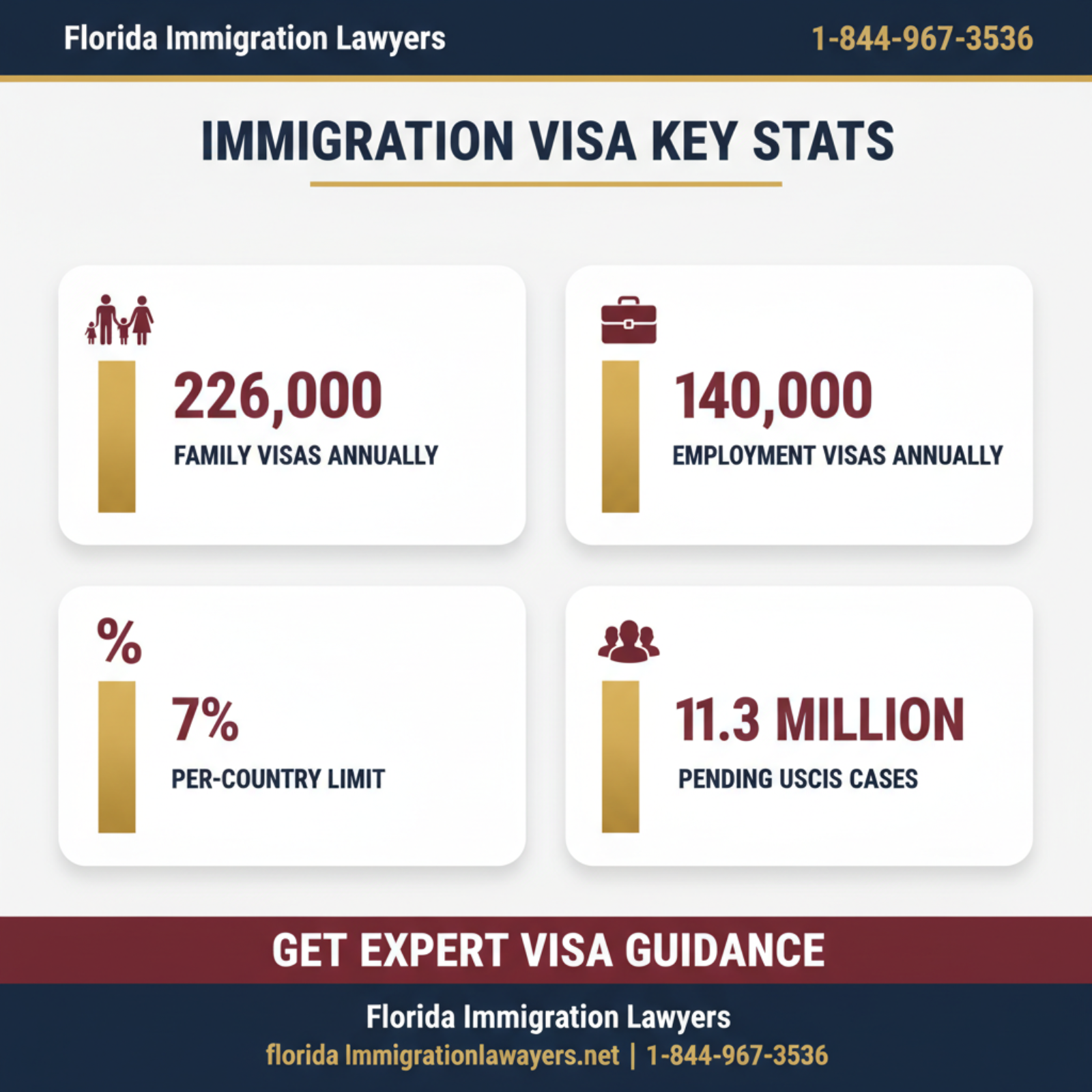
For individuals residing in Florida, including the vibrant community of Homestead, the **Visa Bulletin October 2025** can signal new opportunities or continued waiting. It allocates the limited number of immigrant visas available each year, as mandated by the Immigration and Nationality Act (INA) Section 203. This section establishes various preference categories for family-sponsored and employment-based immigrants, each with annual numerical limits.
The bulletin contains two crucial charts: "Final Action Dates" and "Dates for Filing Applications." The Final Action Dates indicate when a visa can actually be issued or when an applicant can be granted lawful permanent residence. The Dates for Filing Applications, on the other hand, show when applicants can submit their adjustment of status applications to USCIS or begin pre-processing with the National Visa Center (NVC). Understanding which chart to use is essential, as USCIS often specifies which chart is valid for a given month.
Florida's diverse population means that many different visa categories are relevant here. From family reunification efforts in cities like Miami and Orlando to employment-based opportunities across the state, the Visa Bulletin October 2025 will directly affect thousands of aspiring immigrants. We monitor these changes closely to provide the most current advice.
Navigating the Visa Bulletin: A Step-by-Step Guide for Florida Residents
Interpreting the Visa Bulletin October 2025 requires careful attention to detail. Follow these steps to determine your eligibility and next actions:
- Locate Your Immigrant Visa Category: First, identify your specific visa category. This could be family-sponsored (e.g., F1 for unmarried sons and daughters of U.S. citizens, F2A for spouses and minor children of LPRs) or employment-based (e.g., EB-1 for priority workers, EB-2 for professionals with advanced degrees). Each category has its own row in the bulletin.
- Find Your Country of Chargeability: Next, find your country of birth (or the country to which you are 'chargeable') in the bulletin's columns. Due to high demand, certain countries like China, India, Mexico, and the Philippines often have their own separate columns with more restrictive dates.
- Check "Final Action Dates" and "Dates for Filing Applications": Determine which chart USCIS has announced for use in October 2025 for adjustment of status applications. For consular processing, the Final Action Dates chart is typically used.
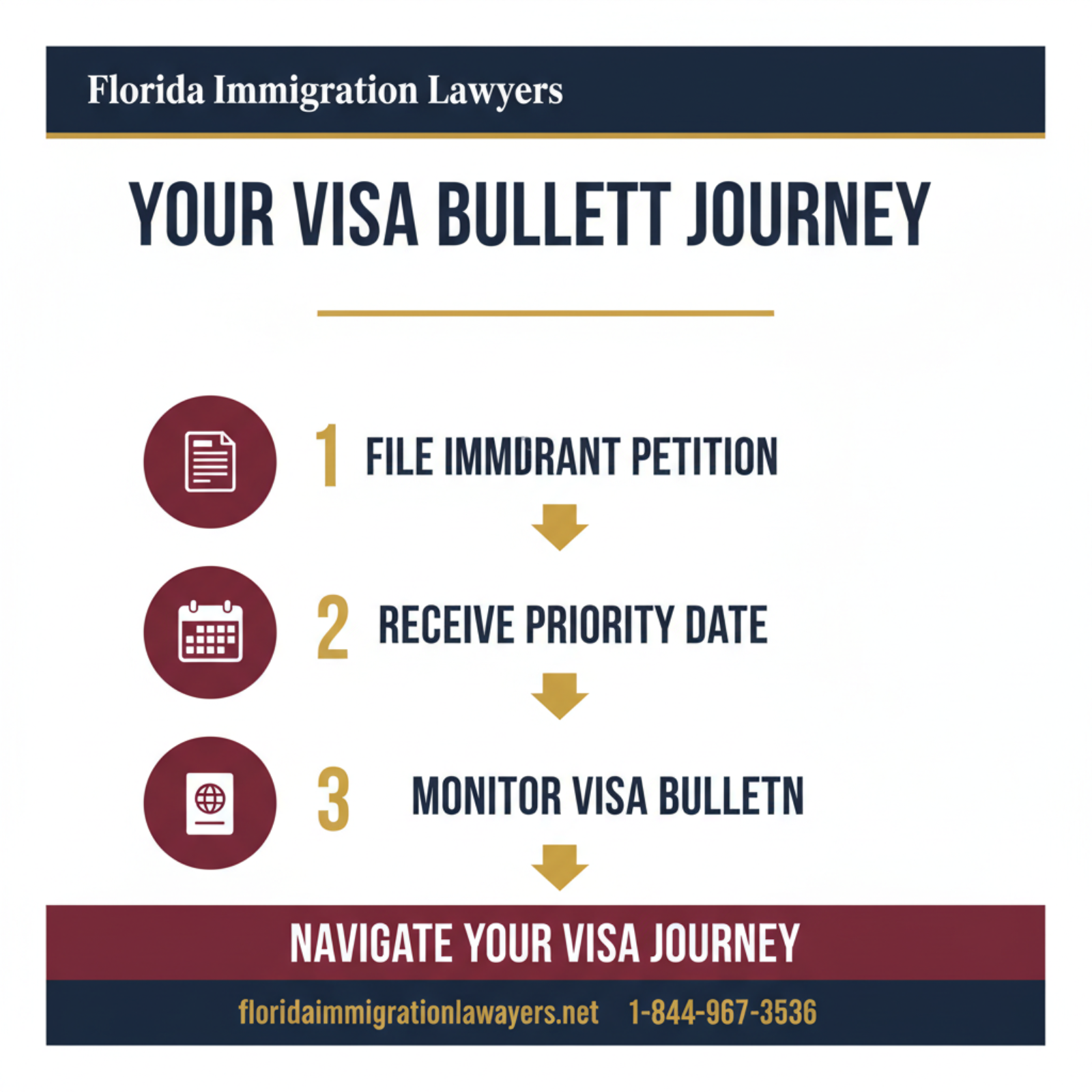
- Compare Your Priority Date: Your priority date is the date your petition (e.g., Form I-130 or I-140) was properly filed with USCIS. If your priority date is earlier than the date listed in the relevant chart for your category and country, your visa number is considered current or available.
- Determine Eligibility for Adjustment of Status or Consular Processing: If your priority date is current under the Dates for Filing chart, and you are physically present in the U.S., you may be eligible to submit your Form I-485, Application to Register Permanent Residence or Adjust Status. If your priority date is current under the Final Action Dates chart, and you are outside the U.S., your case can proceed to consular processing.
- Consult with a Florida Immigration Lawyer: The rules can be complex, and a single error can lead to significant delays or even denial. A knowledgeable Florida immigration lawyer can help you accurately interpret the bulletin and guide you through the next steps, ensuring your application is strong.
Navigating these dates and understanding their implications is a critical part of the immigration process. Our team at Florida Immigration Lawyers is dedicated to providing clarity and strategic advice to our clients.
Essential Documents Checklist for Visa Petitioners and Applicants in Florida
Regardless of whether you are adjusting status in Florida or undergoing consular processing, having your documents in order is paramount. This general checklist provides an overview of typically required documents. Specific requirements vary greatly by visa category and individual circumstances.
- Valid Passport (for applicant and any derivatives)
- Birth Certificates (for applicant, petitioner, and any derivatives)
- Marriage Certificates (if applicable)
- Divorce Decrees or Death Certificates (for prior marriages, if applicable)
- Form I-130, Petition for Alien Relative (for family-sponsored visas)
- Form I-140, Immigrant Petition for Alien Worker (for employment-based visas)
- Form I-485, Application to Register Permanent Residence or Adjust Status (if adjusting status in the U.S.)
- Form DS-260, Immigrant Visa Application (for consular processing)
- Medical Examination Report (Form I-693, completed by a USCIS-approved civil surgeon in Florida)
- Affidavit of Support (Form I-864), with supporting financial documents (tax returns, employment letters)
- Police Certificates from all countries where the applicant has resided for certain periods
- Court and prison records (if applicable)
- Military records (if applicable)
- Photographs (passport-style, meeting specific USCIS requirements)
- Certified English translations of any non-English documents
Organizing these documents can be overwhelming. A **Florida immigration lawyer** can assist you in compiling a complete and accurate package, avoiding common pitfalls that lead to delays.
Visa Bulletin October 2025: Timeline and Processing Expectations for Florida Applicants
Understanding the Visa Bulletin October 2025 is just one piece of the puzzle; the actual processing times for your application are another critical factor. While the bulletin indicates visa availability, USCIS and the National Visa Center (NVC) processing times dictate how long it takes for your petition to be reviewed and adjudicated.
Is USCIS moving faster in 2025? Processing times are dynamic and can fluctuate based on USCIS workload, policy changes, and the specific service center handling your case. While the start of a new fiscal year in October 2025 may bring some new visa number allocations, it does not automatically mean faster processing. Some categories may see movement, while others remain backlogged. You can check current processing times on the USCIS website.
Factors influencing your timeline include:
- Visa Category and Country of Chargeability: Highly backlogged categories and countries will naturally experience longer waits, even after your priority date becomes current.
- Specific USCIS Field Office or Service Center: Processing times can vary between the Florida USCIS field offices (e.g., Miami, Orlando, Tampa) and national service centers.
- Completeness of Your Application: Any missing documents or requests for evidence (RFEs) will significantly delay your case.
- Interview Scheduling: For adjustment of status, interview scheduling depends on the local field office's capacity. For consular processing, it depends on the U.S. Embassy or Consulate abroad.
For many family-sponsored immigration cases, the wait can be substantial. It is important to manage expectations and remain patient. Our firm helps clients in Florida stay informed about their case status and any relevant updates from USCIS.
Cost Factors and Fee Breakdown for Visa Applications in Florida
The cost of pursuing an immigrant visa in Florida involves several components. It is important to budget for these expenses, which are subject to change by government agencies. We cannot provide exact fee amounts as they frequently update, but we can outline the general cost categories.
- USCIS Filing Fees: These are fees for submitting various forms, such as the I-130, I-140, I-485, and biometric services. Each form has a separate fee.
- National Visa Center (NVC) Fees: For consular processing, you will pay an Immigrant Visa Application Processing Fee and an Affidavit of Support Fee to the NVC.
- Medical Examination Fees: All immigrant visa applicants must undergo a medical examination by a USCIS-approved civil surgeon. These fees are paid directly to the doctor and vary.
- Attorney Fees: Engaging a qualified Florida immigration lawyer is an investment in your case. Legal fees cover professional guidance, document preparation, representation, and communication with government agencies.
- Translation Costs: If any of your supporting documents are not in English, they must be translated by a certified translator, incurring additional costs.
- Travel Expenses: For consular processing, applicants must travel to a U.S. Embassy or Consulate abroad for their interview. This includes flights, accommodation, and local transportation.
Understanding these potential costs upfront can help you plan your immigration journey more effectively. Our team at Florida Immigration Lawyers can discuss the legal fees associated with your specific case during a free consultation.
Do not navigate this process alone. Contact Florida Immigration Lawyers today.
Common Mistakes to Avoid When Interpreting the Visa Bulletin and Applying for a Visa in Florida
The immigration process is unforgiving of errors. Avoiding these common mistakes can save you time, money, and emotional distress:
- Misinterpreting Priority Dates: Many applicants mistakenly believe their priority date automatically makes them eligible to apply. You must ensure your priority date is earlier than the date listed in the correct chart for your category and country. Filing too early will lead to rejection, while waiting too long might miss a window of opportunity.
- Ignoring the Difference Between Final Action Dates and Dates for Filing: USCIS often specifies which chart to use for adjustment of status. Using the wrong chart means your application could be rejected or deemed prematurely filed, wasting time and fees.
- Failing to Update Contact Information: Moving without notifying USCIS or the NVC can result in missed notices, RFEs, or interview appointments, severely jeopardizing your case. Always keep your address current.
- Submitting Incomplete or Incorrect Documentation: This is a leading cause of delays and denials. Every form must be filled out accurately, and all required supporting documents must be included. Missing a single signature or piece of evidence can set your case back months.
- Not Seeking Legal Counsel for Complex Cases: If your case involves previous immigration violations, criminal history, or unusual circumstances, attempting to navigate it alone is risky. An experienced immigration lawyer can identify potential issues and build a robust defense or strategy.
- Assuming the Bulletin Applies Universally: The Visa Bulletin is highly specific to visa categories and countries of chargeability. What applies to an EB-1 applicant from Germany will not apply to an F2A applicant from Mexico. Always double-check your specific details.
- Ignoring Changes in Immigration Law or Policy: Immigration laws are not static. New regulations, presidential proclamations, or court rulings can impact visa availability and eligibility. Staying informed, ideally through legal counsel, is crucial.
When to Call a Florida Immigration Lawyer: Expert Guidance for Your Visa Journey
While this guide provides general information about the Visa Bulletin October 2025, your individual situation is unique. There are specific scenarios where the expertise of a Florida immigration lawyer becomes invaluable:
- Complex Priority Date Issues: If you have multiple petitions, derivative beneficiaries, or a very old priority date, interpreting the bulletin can be tricky. A lawyer can clarify your exact standing.
- Changes in Visa Category or Eligibility: Life events like marriage, divorce, or a new job offer can impact your eligibility or even your visa category. An attorney can advise on the best course of action.
- Previous Denials or Immigration Complications: If you have a history of visa denials, overstays, or other immigration issues, legal guidance is essential to address these challenges proactively.
- Requests for Evidence (RFEs) or Notices of Intent to Deny (NOIDs): Receiving these from USCIS is a serious warning sign. A lawyer can help you formulate a strong, timely response to protect your application.
- Consular Processing Challenges: Navigating interviews at U.S. Embassies or Consulates abroad can be daunting, especially if there are security concerns or specific country-related issues.
- Specific Challenges at Florida USCIS Offices or Immigration Courts: Local procedures or common issues at the Miami, Orlando, or Tampa USCIS field offices, or the Miami Immigration Court, might require specialized knowledge.
At Florida Immigration Lawyers, our experienced legal team provides personalized advice and representation. We understand the nuances of the Visa Bulletin October 2025 and broader immigration law. We are committed to helping you achieve your immigration goals with confidence. Do not wait for a red flag; proactive legal consultation can prevent many problems.
Frequently Asked Questions About the Visa Bulletin October 2025
Is USCIS moving faster in 2025?
USCIS processing times are subject to constant change and vary widely by form type, service center, and individual case factors. While the start of a new fiscal year in October 2025 may bring new visa numbers, it does not guarantee faster processing across the board. USCIS continually works to improve efficiency, but backlogs can persist. Always check the official USCIS website for the most current processing times for your specific application.
Is the U.S. suspending immigrant visas?
Generally, no, the U.S. is not suspending all immigrant visas. However, specific presidential proclamations or policy changes have, at times, led to temporary suspensions or restrictions on certain categories of immigrant visas or for individuals from particular regions. It is crucial to stay informed about current immigration policies. The Department of State website is a reliable source for such updates.
What is the October Visa Bulletin?
The October Visa Bulletin is the first bulletin of the new federal fiscal year (October 1 to September 30). It is often closely watched because the new allocation of visa numbers for the year can sometimes lead to significant advancements in cutoff dates for certain visa categories and countries. It provides the initial outlook for visa availability for the upcoming year.
Is the Visa Bulletin changed in November 2025?
Yes, the Visa Bulletin is released monthly by the U.S. Department of State. This means that a new bulletin will be issued for November 2025, and subsequent months, outlining the visa availability for that specific period. The dates in the bulletin can advance, retrogress (move backward), or remain unchanged from month to month, depending on demand and visa number usage.
About Florida Immigration Lawyers
Florida Immigration Lawyers is a premier law firm dedicated to serving the diverse immigration needs of individuals and families across the entire state of Florida. With years of experience and a deep understanding of U.S. immigration law, we are committed to providing compassionate, effective, and results-driven legal representation.
Our firm specializes in a wide range of immigration services, including family-based petitions, employment visas, adjustment of status, consular processing, naturalization, and asylum. We pride ourselves on offering personalized attention to each client, understanding that every case has a unique story and requires a tailored approach. Whether you are in Homestead, Miami, Orlando, or anywhere else in Florida, our team is ready to assist you.
Choosing Florida Immigration Lawyers means partnering with a team that genuinely cares about your future. We offer free consultations, are available 24/7, and provide bilingual services (Se Habla Español) to ensure clear communication and support throughout your immigration journey. Let us be your trusted advocates in navigating the complexities of immigration law.
Sources and References
- U.S. Citizenship and Immigration Services (USCIS)
- U.S. Department of State - Visa Law and Policy
- Executive Office for Immigration Review (EOIR)
- 8 U.S.C. Chapter 12 - Immigration and Nationality Act (INA) Section 203 (Preference Categories)
- 22 CFR Part 42 - Visas: Documentation of Immigrants Under the Immigration and Nationality Act, as Amended
- USCIS Policy Manual - Volume 7, Adjustment of Status
This article provides general legal information and is not intended as legal advice. Every case is unique, and outcomes depend on specific facts and circumstances. Contact an attorney for advice about your particular situation.
The journey through U.S. immigration law can be complex and filled with uncertainties. Understanding the Visa Bulletin October 2025 is a critical step, but it is just one part of a larger process. Do not let confusion or fear prevent you from pursuing your immigration goals. Our dedicated team at Florida Immigration Lawyers is here to provide the expert guidance and support you need.
Whether you need help interpreting your priority date, preparing your application, or navigating an RFE, we are ready to assist. Take the proactive step towards securing your future in Florida. Call Florida Immigration Lawyers today at 1-844-967-3536 for a free consultation. Se Habla Español - Estamos aquí para ayudarle.
Florida Immigration Lawyers
Legal Team
Our experienced attorneys at Florida Immigration Lawyers have been serving clients across Florida for over 20 years. We specialize in immigration, personal injury, criminal defense, workers compensation, and family law.