USCIS Green Card Removal Proceedings in Florida: Your Guide
For conditional green card holders in Florida, understanding USCIS green card removal proceedings is critical. If your green card was based on a marriage less than two years old, you must file Form I-751 to remove conditions. Failure to file on time or a petition denial can lead to deportation. This guide covers the step-by-step process, essential documents, timelines, costs, and common mistakes to avoid. Learn when a Florida immigration lawyer is crucial to protect your status and navigate complex waivers or removal defense. Florida Immigration Lawyers offers free consultations and expert representation across Florida.
Navigating USCIS green card removal proceedings in Florida typically involves addressing conditional permanent residency. If you obtained your green card through marriage less than two years ago, you must file Form I-751, Petition to Remove Conditions on Residence, within 90 days before your conditional green card expires. Failure to file or a denial can lead to deportation (removal) proceedings before an immigration judge, requiring expert legal defense.
- File Form I-751 on time to remove conditions.
- Gather extensive evidence of a bona fide marriage.
- Understand waivers if filing without your spouse.
- A denial of I-751 can trigger removal proceedings.
- Seek immediate legal counsel from a Florida immigration lawyer if facing removal.
Imagine building a new life in Homestead, Florida, with your spouse, only to face the daunting prospect of losing your hard-earned green card. For many, this fear becomes a reality when navigating the complex world of conditional permanent residency and the potential for USCIS green card removal proceedings. If you received your green card based on a marriage that was less than two years old at the time of approval, your residency is conditional. This means you must take specific steps to remove these conditions before your status expires, or you could face serious consequences.
This comprehensive guide from Florida Immigration Lawyers will walk you through everything you need to know about removing conditions on your green card and how to defend yourself if you find yourself in removal proceedings. We understand the stakes are incredibly high, and our goal is to empower you with knowledge and support. Don't face this challenge alone. Call Florida Immigration Lawyers at 1-844-967-3536 for a free consultation to discuss your specific situation and protect your future in Florida.
Understanding USCIS Green Card Removal Proceedings in Florida
Conditional permanent residency is a crucial stage for many immigrants, particularly those who obtain their green card through marriage. The U.S. government implemented this two-year conditional period to deter marriage fraud. It ensures that the marriage is genuine and not solely for immigration benefits. Understanding this status is the first step in avoiding USCIS green card removal proceedings.
Your conditional green card is valid for two years. Before this period ends, you must file a petition with U.S. Citizenship and Immigration Services (USCIS) to remove the conditions. Failure to do so can automatically terminate your permanent resident status. This termination can then lead to you being placed in deportation, or removal, proceedings before an immigration judge.
In Florida, like anywhere else in the U.S., the stakes are incredibly high. Our state has a large immigrant population, and many individuals are navigating this exact process. The Miami Immigration Court, for example, handles numerous cases involving conditional residents. Understanding the specific requirements of INA Section 216 and 8 CFR Part 216 is vital for all conditional residents in areas like Homestead, Miami, or Orlando.
What Triggers Removal Proceedings for Conditional Residents?
Several scenarios can lead a conditional resident into USCIS green card removal proceedings:
- Failure to File Form I-751: The most common reason. If you do not file your Petition to Remove Conditions on Residence (Form I-751) within the 90-day window before your conditional green card expires, your status may be automatically terminated.
- Denial of Form I-751: If USCIS reviews your I-751 petition and determines that your marriage was not bona fide, or if you fail to provide sufficient evidence, they may deny your petition. A denial typically results in the issuance of a Notice to Appear (NTA), initiating removal proceedings.
- Fraud Allegations: If USCIS suspects that your marriage was entered into solely to obtain immigration benefits, they may deny your I-751 and refer your case to an immigration judge.
- Divorce or Annulment Before I-751 Approval: While a divorce does not always prevent you from removing conditions, it complicates the process significantly. If your I-751 is denied after a divorce, you could face removal.
Facing any of these situations can be terrifying. It's crucial to remember that you have rights and defenses available. A knowledgeable Florida immigration lawyer can help you understand your options and prepare a robust defense.
The Step-by-Step Process for Removing Conditions on Your Green Card
The primary path to removing conditions on your green card is by filing Form I-751. This process is detailed and requires careful attention to detail. Here's a general step-by-step guide:
-
Determine Your Filing Strategy (Joint Petition vs. Waivers)
Most conditional residents file a joint petition with their spouse, demonstrating that the marriage remains intact. However, if your marriage has ended due to divorce or annulment, or if you have suffered abuse, you may be eligible for a waiver. This allows you to file Form I-751 without your spouse. Understanding your eligibility is critical. For example, if you are divorced, you must prove the marriage was entered into in good faith. If you are a victim of domestic violence, specific protections exist under VAWA.
-
Gather Comprehensive Supporting Documentation
This is arguably the most critical step. You need to provide extensive evidence to prove your marriage is legitimate. This includes financial records, shared assets, joint utility bills, and affidavits from people who know your relationship. The more evidence you provide, the stronger your case. Refer to the detailed document checklist below for specifics.
-
Complete and File Form I-751, Petition to Remove Conditions on Residence
Fill out Form I-751 accurately and completely. Ensure all required sections are addressed. Attach all your supporting documents. Pay the correct filing fees (check the USCIS website for the most current amounts). Mail your petition to the correct USCIS lockbox facility. Remember, this must be filed within the 90-day window before your conditional green card expires. If you are filing with a waiver, you may be able to file at any time, but it is best to do so as soon as possible.
-
Attend Your Biometrics Appointment
After filing, USCIS will send you a receipt notice extending your conditional resident status, typically for 48 months, allowing you to continue working and traveling. You will then receive an appointment notice for biometrics (fingerprints, photos, and signature). It is mandatory to attend this appointment at a local Application Support Center (ASC).
-
Prepare for a Potential Interview
While not all I-751 petitioners are interviewed, USCIS may schedule one if they have questions or concerns about your petition. If called for an interview, both spouses generally attend a local USCIS field office, such as the one in Orlando or Miami. This interview is an opportunity to clarify any doubts and reinforce the bona fide nature of your marriage. Preparing thoroughly with an attorney can make a significant difference.
-
Receive a Decision from USCIS
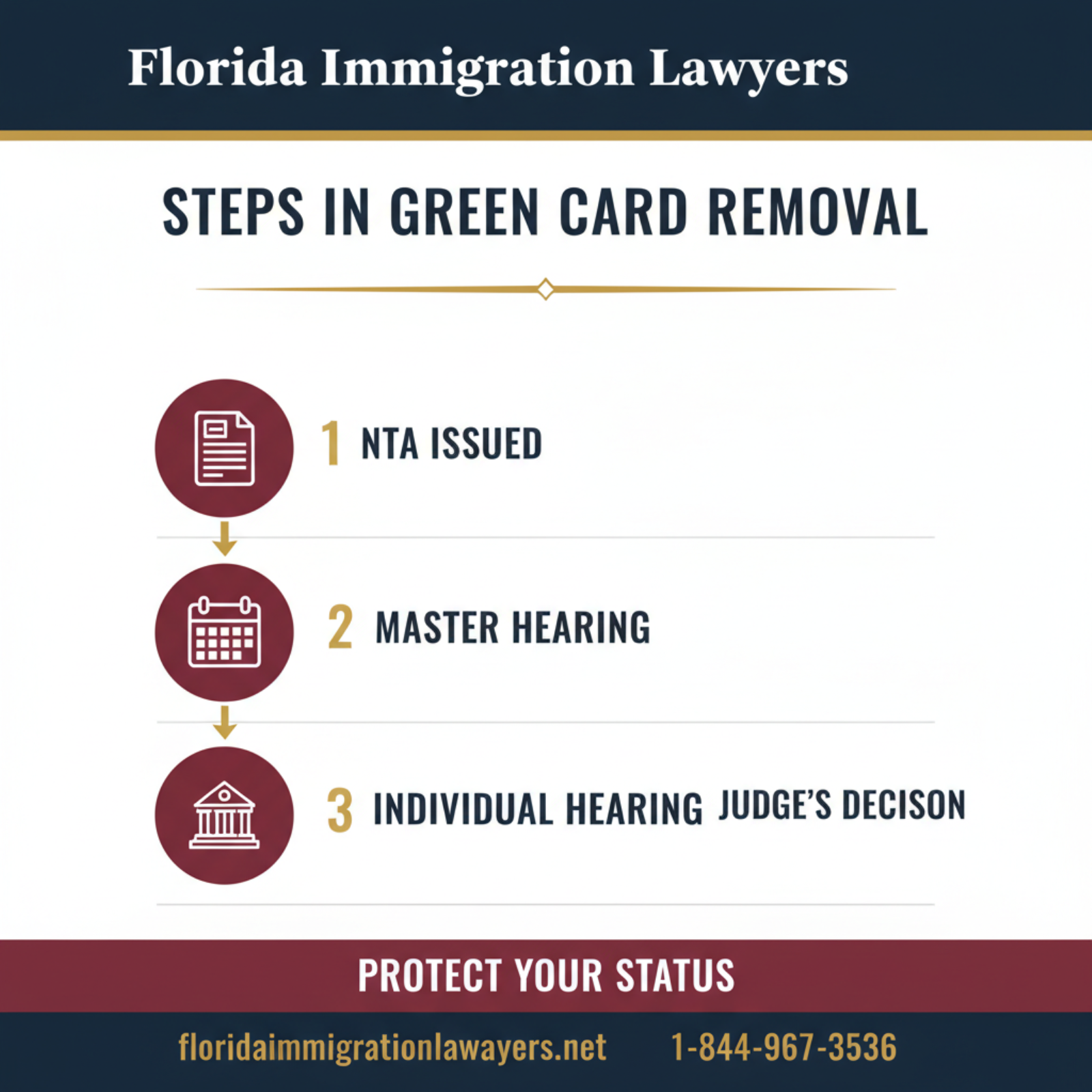
USCIS will notify you of their decision. If approved, you will receive a new 10-year permanent resident card. If USCIS has concerns, they might issue a Request for Evidence (RFE) or a Notice of Intent to Deny (NOID). If your petition is denied, USCIS will typically issue a Notice to Appear (NTA), placing you in USCIS green card removal proceedings. At this point, you will need a skilled deportation defense lawyer to represent you before an immigration judge.
Essential Documents for Your I-751 Petition
A well-prepared I-751 petition is the cornerstone of a successful removal of conditions. Gathering comprehensive documentation is paramount. Here's a checklist of documents you should consider including:
- Copy of your conditional Permanent Resident Card (front and back).
- Copy of your spouse's birth certificate or U.S. passport (if applicable).
- Copy of your marriage certificate.
- Copies of birth certificates for any children born of the marriage.
- Documentation of joint ownership of property (deeds, mortgages, leases).
- Documentation of joint financial assets (bank statements, credit card statements, investment accounts).
- Copies of joint federal and state income tax returns for the past two to three years.
- Copies of utility bills in both names at the same address.
- Copies of life insurance policies, health insurance, or other insurance policies listing each other as beneficiaries.
- Affidavits from at least two people who have personal knowledge of your marriage and can attest to its bona fide nature.
- Photographs of you and your spouse together over time, with family, and friends, attending events.
- Any other relevant documentation demonstrating the ongoing nature of your marital relationship.
- If filing a waiver: divorce decree, police reports (for abuse), medical records, or other evidence supporting your waiver claim.
This list is not exhaustive, and the specific documents required can vary based on your unique circumstances. A family immigration attorney can help you tailor your evidence package.
Timeline and Processing Expectations for I-751 in 2026
The processing time for Form I-751 can vary significantly. USCIS processing times are subject to change based on caseloads, policy updates, and available resources. As of 2026, applicants should anticipate that the process could take anywhere from 12 to 24 months, or even longer in some complex cases. It is essential to check the official USCIS website for the most current processing times.
Upon filing your I-751, USCIS will issue a receipt notice, Form I-797C, Notice of Action. This notice typically extends your conditional permanent resident status for 48 months beyond the expiration date on your green card. This extension allows you to continue working and traveling while your petition is pending. However, you should always carry your expired green card along with the I-797C notice as proof of your extended status.
If your I-751 is denied, you will typically receive a Notice to Appear (NTA) in immigration court. This is the official start of USCIS green card removal proceedings. The timeline for these proceedings can also be lengthy, often taking years due to court backlogs, particularly in busy courts like Miami. During this time, you have the right to legal representation and to present your case to an immigration judge. Our firm has extensive experience in the Florida immigration courts, including those in Miami and Orlando, representing individuals in removal proceedings.
Cost Factors and Fee Breakdown
Understanding the costs associated with the I-751 petition and potential removal proceedings is crucial for planning. The main costs include USCIS filing fees and, if applicable, legal fees for attorney assistance.
- USCIS Filing Fees: There is a mandatory filing fee for Form I-751, plus a biometrics fee. These fees are subject to change, so it is vital to check the official USCIS website for the most up-to-date amounts before filing. USCIS does not typically offer fee waivers for Form I-751 unless you are filing as a battered spouse or child.
- Legal Fees: Hiring an experienced Florida immigration lawyer is an investment in your future. Legal fees can vary depending on the complexity of your case. A simple joint petition will generally cost less than a waiver petition due to divorce or abuse, which requires extensive legal work. If your case escalates to USCIS green card removal proceedings, legal fees will be significantly higher due to the need for court appearances, extensive legal research, and detailed defense strategies.
During your free consultation with Florida Immigration Lawyers, we can discuss potential costs and provide a clearer understanding of what to expect for your specific situation. We believe in transparency and helping you make informed decisions.
Do not navigate this process alone. The stakes are too high. Contact Florida Immigration Lawyers today to secure experienced legal guidance for your I-751 petition or removal defense. Our team is ready to assist you.
Common Mistakes to Avoid During Removal of Conditions
Avoiding common pitfalls can significantly increase your chances of a successful outcome and prevent USCIS green card removal proceedings. Here are some critical mistakes to steer clear of:
-
Missing the Filing Deadline: Failing to file Form I-751 within the 90-day window before your conditional green card expires is a severe mistake. This can lead to automatic termination of your status and immediate placement into removal proceedings.
-
Submitting Insufficient Evidence: USCIS requires substantial proof that your marriage is bona fide. Providing only a few documents or weak evidence can lead to RFEs, NOIDs, or even denial, triggering removal proceedings.
-
Failing to Update Your Address with USCIS: If you move, you must notify USCIS within 10 days using Form AR-11. Missing important notices from USCIS because they were sent to an old address can lead to denials or even removal orders in absentia.
-
Ignoring Requests for Evidence (RFEs): If USCIS sends an RFE, it means they need more information. Failing to respond fully and on time will almost certainly lead to a denial of your I-751 petition.
-
Not Disclosing All Relevant Information: Always be truthful and disclose all information, including any criminal history or previous immigration issues. Concealing information can lead to allegations of fraud or misrepresentation, with severe consequences.
-
Attempting to Handle Complex Waivers Alone: If you are filing a waiver due to divorce, abuse, or extreme hardship, the legal arguments and evidence required are highly complex. Without legal expertise, you risk making critical errors that could result in denial.
-
Assuming Conditions are Automatically Removed: Conditional residency is not permanent. You must actively file Form I-751 and prove your marriage is genuine. Conditions are never removed automatically.
-
Attending an Interview Unprepared: If called for an interview, being unprepared or giving inconsistent answers can raise red flags. An attorney can help you prepare for common questions and ensure you present a clear, consistent story.
-
Not Seeking Legal Counsel Early Enough: Many people wait until they receive an RFE, NOID, or NTA before consulting an attorney. Engaging a Florida immigration attorney early can prevent many of these issues from arising in the first place.
-
Lying or Misrepresenting Facts to USCIS: Any form of misrepresentation or fraud can lead to permanent bars from immigration benefits and severe legal repercussions, including criminal charges in some cases. Always be honest.
When a Florida Immigration Lawyer Becomes Crucial
While some straightforward I-751 petitions may be filed without legal assistance, there are many situations where the expertise of a Florida immigration lawyer is not just helpful but absolutely essential. Especially when facing USCIS green card removal proceedings, legal representation can be the difference between staying in the U.S. and deportation.
You should consider contacting Florida Immigration Lawyers immediately if:
- You are divorced or separated from your spouse and need to file a waiver.
- You are a victim of domestic violence or extreme cruelty and need to file a VAWA-based waiver.
- USCIS has sent you a Request for Evidence (RFE) or a Notice of Intent to Deny (NOID).
- You have any criminal history, no matter how minor, as this can impact your eligibility.
- USCIS has denied your I-751 petition and issued a Notice to Appear (NTA) in immigration court.
- You have received a Notice to Appear (NTA) for any other reason, initiating deportation defense.
- You have concerns about your ability to prove your marriage is bona fide.
- You are preparing for an I-751 interview and want to ensure you are fully prepared.
- You have previously had immigration issues or a complex immigration history.
Our firm specializes in navigating the intricacies of immigration law in Florida, including representing clients in Homestead, Miami, and throughout the state. We can help you prepare a strong I-751 petition, respond to USCIS inquiries, and provide aggressive defense in immigration court.
About Florida Immigration Lawyers
Florida Immigration Lawyers is a leading law firm dedicated to providing exceptional legal representation to immigrants across Florida. With years of experience and a deep understanding of U.S. immigration law, our attorneys are committed to helping individuals and families achieve their immigration goals. We pride ourselves on offering compassionate, client-focused service.
Our comprehensive services include assistance with family-based immigration, business immigration, naturalization, asylum, and robust deportation defense. We understand the challenges and anxieties that come with immigration processes, especially when facing something as serious as USCIS green card removal proceedings. Our team is equipped to handle even the most complex cases, advocating tirelessly on your behalf.
When you choose Florida Immigration Lawyers, you choose a partner who will stand by you every step of the way. We offer free consultations, are available 24/7, and serve clients in all parts of Florida. Your future in the U.S. is our priority. Call us today at 1-844-967-3536.
Sources and References
- U.S. Citizenship and Immigration Services (USCIS)
- Executive Office for Immigration Review (EOIR)
- Immigration and Nationality Act (INA) Section 216: Conditional Permanent Resident Status
- 8 U.S.C. Chapter 12 - Immigration and Nationality Act (e.g., 8 U.S.C. 1229a for Removal Proceedings)
- 8 CFR Part 216: Conditional Basis of Lawful Permanent Residence
- USCIS Policy Manual: Volume 6, Part B, Chapter 5 (Petitions to Remove Conditions on Residence)
This article provides general legal information and is not intended as legal advice. Every case is unique, and outcomes depend on specific facts and circumstances. Contact an attorney for advice about your particular situation.
Facing USCIS green card removal proceedings can be one of the most stressful experiences of your life. But you don't have to face it alone. Florida Immigration Lawyers is here to provide the expert guidance and tenacious representation you deserve. Protect your right to live and work in Florida. Call us today at 1-844-967-3536 for a free, confidential consultation. Se Habla Español - Estamos aquí para ayudarle.
Florida Immigration Lawyers
Legal Team
Our experienced attorneys at Florida Immigration Lawyers have been serving clients across Florida for over 20 years. We specialize in immigration, personal injury, criminal defense, workers compensation, and family law.