USCIS Green Card Removal Proceedings: Florida Guide 2026
Navigating USCIS green card removal proceedings in Florida requires careful attention to detail and a deep understanding of immigration law. This comprehensive guide from Florida Immigration Lawyers explains the I-751 process, including deadlines, required documents, and what to expect if you're facing conditional green card removal. Learn about common mistakes to avoid, how to prepare for interviews, and when to seek expert legal assistance to protect your permanent residency. With a focus on Florida-specific contexts, we provide actionable advice to help you successfully remove conditions on your green card and avoid deportation. Schedule a free consultation with our experienced attorneys today.
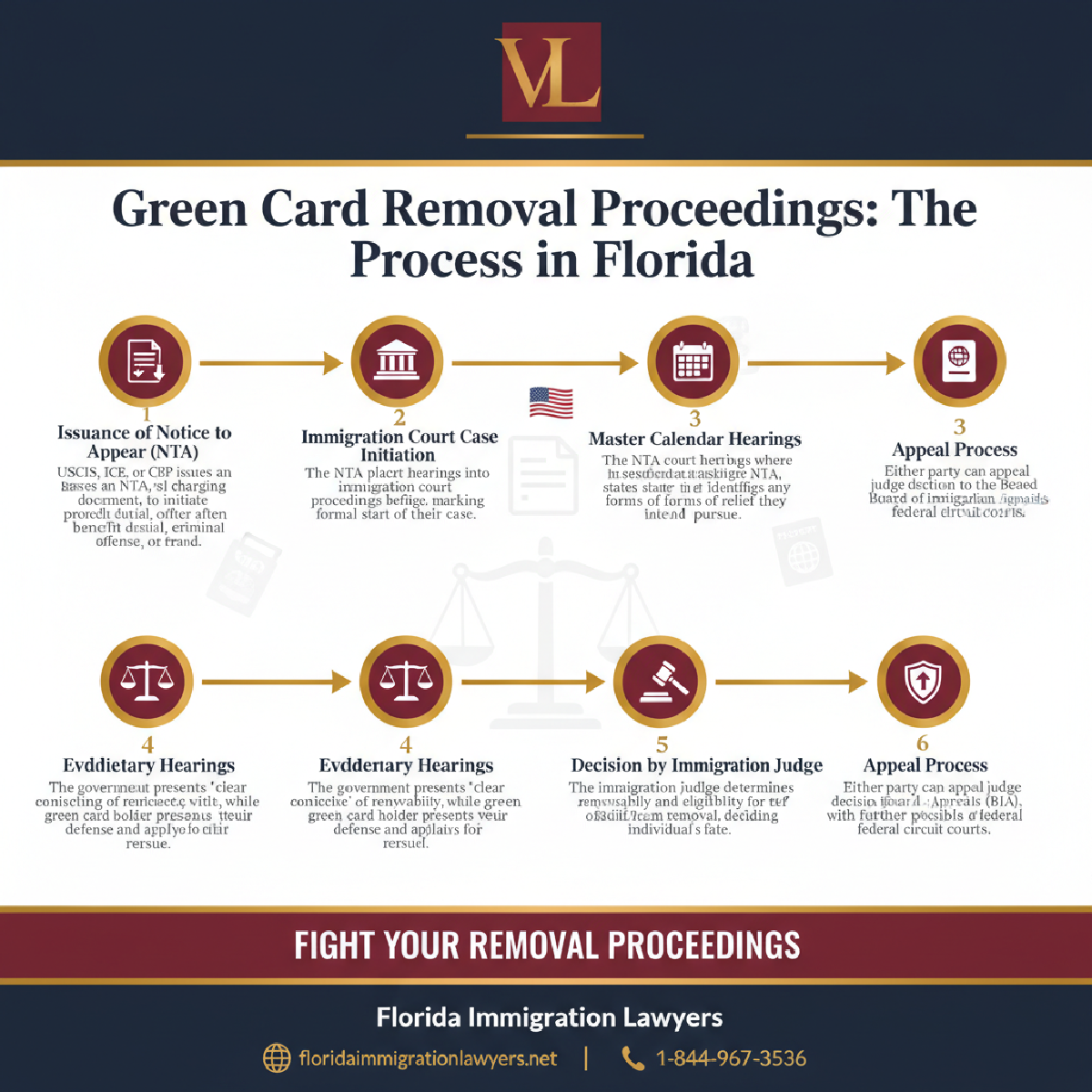
If you hold a conditional green card and fail to remove conditions, you could face USCIS green card removal proceedings. This typically involves filing Form I-751, Petition to Remove Conditions on Residence, within 90 days before your conditional green card expires. Failure to file or an I-751 denial can lead to a Notice to Appear (NTA) in immigration court, initiating deportation proceedings. Seeking legal counsel is crucial to protect your residency.
- Conditional green cards require filing Form I-751.
- Failure to file or denial can lead to removal proceedings.
- File within 90 days before your conditional green card expires.
- Legal representation significantly improves your chances.
- Florida Immigration Lawyers can guide you through this complex process.
Are you living in Florida with a conditional green card, feeling uncertain about your future? Many individuals who obtain permanent residency through marriage or investment initially receive a conditional green card, valid for two years. As this period nears its end, you face a critical juncture: the process to remove these conditions and secure your permanent residency. Ignoring this vital step, or making errors in the application, can unfortunately lead to serious consequences, including USCIS green card removal proceedings.
Understanding the complexities of the I-751 process is paramount. It's not just about submitting forms; it's about proving the legitimacy of your marriage or investment to USCIS. For those in West Palm Beach, Miami, Orlando, or anywhere across Florida, navigating these waters without expert guidance can feel overwhelming. We are here to demystify the process and help you understand your options and rights in all immigration matters.
Don't let the threat of USCIS green card removal proceedings jeopardize your life in Florida. Call Florida Immigration Lawyers at 1-844-967-3536 for a free consultation today. Our experienced team is ready to assist you.
Understanding Conditional Green Cards and Removal Proceedings in Florida
When you first receive your green card through certain categories, such as marriage to a U.S. citizen or lawful permanent resident, or through an investment visa, it often comes with a two-year conditional status. This conditional green card is a probationary period, designed to ensure the underlying basis for your residency is legitimate. For example, if your green card was based on marriage, USCIS wants to confirm that your marriage is genuine and not solely for immigration purposes.
This conditional green card status is governed by Section 216 of the Immigration and Nationality Act (INA), 8 U.S.C. § 1186a. This section outlines the requirements for conditional permanent resident status based on marriage, and the process for its removal. Additionally, regulations at 8 CFR Part 216 provide detailed guidance on these procedures. Understanding these legal frameworks is essential for navigating the process successfully.
The process to convert your conditional status to permanent residency is called "removal of conditions." This involves filing Form I-751, Petition to Remove Conditions on Residence, with U.S. Citizenship and Immigration Services (USCIS). This petition must be filed within the 90-day window immediately preceding the expiration date of your conditional green card. Missing this crucial deadline or having your I-751 denied can trigger serious immigration issues.
If USCIS determines you have not met the requirements for removal of conditions green card, or if you fail to file Form I-751, you may be placed in USCIS green card removal proceedings. This means you will receive a Notice to Appear (NTA) before an immigration judge in a Florida court, such as those in Miami or Orlando. The NTA formally begins the deportation process, placing your residency at significant risk. Understanding these stakes is the first step toward protecting your future in Florida.
What Triggers Removal Proceedings for Conditional Residents?
Several factors can lead to USCIS green card removal proceedings for conditional residents. The most common trigger is failing to file Form I-751 within the designated 90-day period before your conditional green card expires. This deadline is strict, and missing it without a valid excuse can automatically result in the termination of your conditional resident status.
Another significant trigger is the denial of your I-751 petition. USCIS might deny your petition if they find insufficient evidence to prove the bona fides of your marriage, or if they suspect fraud. Issues such as a divorce before filing, a history of domestic violence, or criminal convictions can also complicate your case and lead to a denial. In such scenarios, USCIS generally issues an NTA, sending your case to an immigration court for a formal hearing.
The Role of USCIS and Immigration Courts in Florida
USCIS is the agency responsible for adjudicating your I-751 petition. They review your application, evidence, and may conduct an interview to determine if your conditions should be removed. If USCIS denies your I-751 and decides to terminate your conditional resident status, they will typically issue a Notice to Appear (NTA) to the Executive Office for Immigration Review (EOIR), which oversees immigration courts.
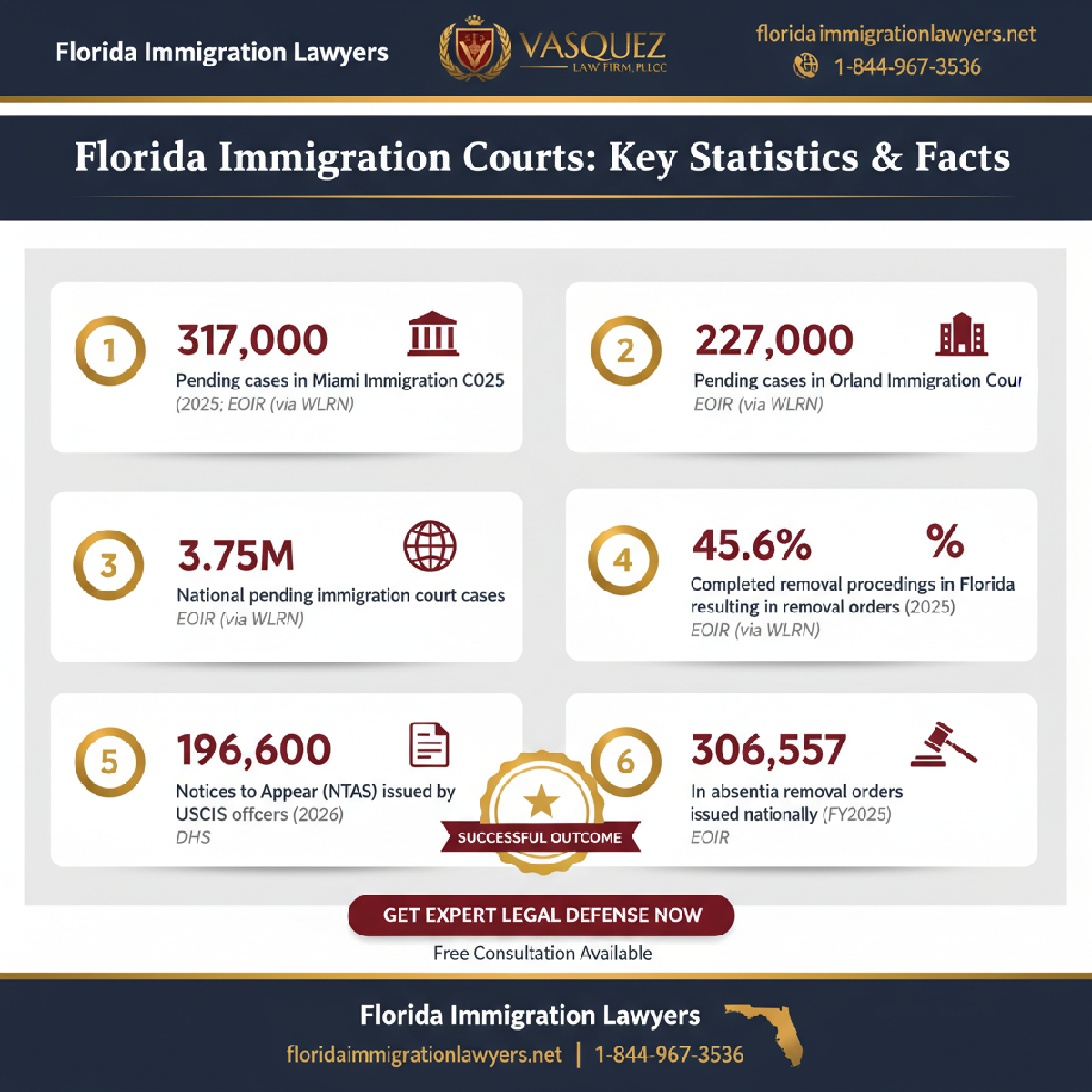
In Florida, immigration courts in cities like Miami and Orlando handle removal proceedings, overseen by the Executive Office for Immigration Review (EOIR). Once your case is referred to an immigration judge, your attorney can present arguments and evidence to demonstrate why your conditional status should be removed, or why you should be granted a waiver. This shift from an administrative review by USCIS to a judicial process in immigration court makes legal representation even more critical. For those who obtained a conditional green card through family immigration, this process is particularly poignant.
Navigating the I-751 Process: A Step-by-Step Guide for Florida Residents
Successfully removing the conditions on your green card requires careful preparation and adherence to USCIS guidelines. Here's a step-by-step guide to help you through the I-751 removal of conditions process, especially for those living in Florida.
- Gather Comprehensive Documentation: Begin collecting all necessary documents well in advance of your filing window. This includes evidence proving the legitimacy of your marriage, such as joint bank accounts, property deeds, utility bills, children's birth certificates, and affidavits from friends and family. The more evidence you have, the stronger your case will be. Consider gathering documents that show commingling of finances and shared responsibilities over the two-year conditional period.
- Complete Form I-751 Accurately: Fill out Form I-751, Petition to Remove Conditions on Residence, thoroughly and accurately. Ensure all questions are answered truthfully and completely. Any discrepancies or omissions could cause delays or lead to a Request for Evidence (RFE). If you are filing jointly with your spouse, both must sign the form.
- Prepare Supporting Evidence: Organize your supporting documents meticulously. Create a clear cover letter, an index of contents, and tab your exhibits for easy review by USCIS officers. This professional presentation can make a positive impression and streamline the review process, especially when dealing with a high volume of evidence.
- File Within the 90-Day Window: Submit your completed Form I-751, all supporting documentation, and the required fees to USCIS within the 90-day period before your conditional green card expires. Filing too early or too late can lead to rejection or even initiation of USCIS green card removal proceedings. Mark this deadline on your calendar and set reminders.
- Attend Biometrics Appointment: After filing, USCIS will send you a receipt notice (Form I-797C) and typically a notice for a biometrics appointment at a local Application Support Center (ASC), such as those serving West Palm Beach or Miami. You must attend this appointment to provide fingerprints, photographs, and a signature. This step is mandatory for background checks.
- Respond to RFEs or Interview Notices: USCIS may issue a Request for Evidence (RFE) if they need more information, or they might schedule an interview. Promptly and thoroughly respond to any RFE, providing all requested documents. If an interview is scheduled, prepare with your attorney to answer questions about your marriage and relationship.
- Receive Decision: Once USCIS has reviewed your petition and all evidence, they will issue a decision. If approved, you will receive a new 10-year permanent resident card. If denied, you will likely receive an NTA and be placed in removal proceedings, which will require immediate legal action.
Essential Documents for Your I-751 Petition: A Florida Checklist
Preparing a robust I-751 petition requires a comprehensive collection of documents. For residents of Florida, compiling strong evidence of a bona fide marriage is crucial to prevent issues that could lead to USCIS green card removal proceedings. This checklist will help you gather the necessary items:
- ✔ Copy of Your Conditional Green Card: Provide clear copies of both the front and back of your current conditional permanent resident card.
- ✔ Copy of Marriage Certificate: Include the official document from the state of Florida or the place where your marriage was legally solemnized.
- ✔ Birth Certificates of Children: If you have children born of the marriage, include their birth certificates to demonstrate shared family life.
- ✔ Joint Financial Records: Present a variety of documents showing commingled finances, such as joint bank account statements (checking, savings), joint credit card statements, and joint tax returns (IRS transcripts preferred). Also include joint mortgage or lease agreements, and joint utility bills (electricity, water, internet).
- ✔ Property Ownership: Provide deeds to jointly owned property in Florida, or lease agreements showing joint residency at the same address.
- ✔ Other Joint Documents: Include evidence like joint auto insurance or health insurance policies, and joint memberships (e.g., gym, clubs). Life insurance policies naming each other as beneficiaries and wills or estate plans that name each other are also strong evidence.
- ✔ Affidavits from Friends, Family, and Employers: Obtain sworn statements from individuals who can attest to the legitimacy of your marriage and relationship. These should explain how they know you and your spouse, and their observations of your shared life.
- ✔ Photographs: Submit a selection of photographs of you and your spouse together over time, especially with family and friends, showing shared experiences and milestones. Include dates and descriptions for clarity.
- ✔ Travel Itineraries and Tickets: Provide copies of travel itineraries and tickets from joint vacations or trips taken together.
- ✔ Correspondence: Include examples of mail or correspondence addressed to both spouses at the same address.
- ✔ Waiver-Specific Documents (if applicable): If you are filing a waiver due to divorce, abuse, or death of your spouse, you will need additional specific evidence related to your waiver request. This could include divorce decrees, police reports, or death certificates.
I-751 Processing Times and What to Expect in 2026
Understanding the potential timeline for your I-751 petition is important for managing expectations and planning your future in Florida. USCIS processing times can vary significantly based on the service center handling your case, current caseloads, and the complexity of your application. While exact guarantees are impossible, we can outline typical expectations for 2026 for 2 year green card removal cases.
Generally, after filing your I-751, you will receive a Form I-797C, Notice of Action, acknowledging receipt of your petition. This notice automatically extends your conditional resident status, and thus the validity of your green card, for a certain period, typically 24 months. This allows you to continue working and traveling while your petition is pending. However, USCIS has the discretion to adjust this extension period based on operational needs.
Historically, I-751 processing times have ranged from 12 to 36 months, or even longer in some complex cases. You can check the current processing times on the USCIS website for the specific service center handling your case. Be prepared for potential Requests for Evidence (RFEs) or an interview, which can extend the overall timeline. While waiting, ensure you keep all your personal and financial records updated. Staying informed and organized can help alleviate some of the stress associated with the waiting period.
What Happens if My I-751 is Pending Beyond 24 Months?
Even if your I-751 is pending for an extended period beyond the initial extension, your legal status generally remains protected. The I-797C receipt notice serves as temporary evidence of your continued lawful permanent resident status. If your initial extension period is nearing its end and your case is still pending, you may need to schedule an InfoPass appointment at a local USCIS field office, such as the one in West Palm Beach, to obtain a new temporary green card stamp (ADIT stamp) in your passport. This ensures you have valid proof of residency for travel and employment, which is crucial for maintaining your life in Florida.
Understanding the Costs of Removing Green Card Conditions in Florida
Navigating the immigration process involves various fees, and the I-751 petition is no exception. Understanding these cost factors is crucial for planning your budget and avoiding unexpected financial burdens that could complicate your journey. Please note that USCIS fees are subject to change, so always verify the latest amounts on the official USCIS website before filing.
The primary cost associated with the I-751 petition is the USCIS filing fee for Form I-751 itself. Additionally, there is a biometrics services fee. These fees are typically paid together when you submit your petition. If you are applying for a waiver due to divorce, abuse, or the death of your spouse, the government fees generally remain the same, but the complexity of your case might increase other costs, such as legal fees and the need for additional documentation.
Beyond the government filing fees, you should also consider potential costs for gathering supporting documentation. This might include fees for obtaining certified copies of marriage certificates, birth certificates, or court records. Translation services for any foreign language documents will also incur costs, as USCIS requires all non-English documents to be translated and certified. These seemingly small expenses can add up, so it's wise to budget for them carefully.
Legal Fees and Their Value
Engaging an experienced immigration attorney, like those at Florida Immigration Lawyers, is a significant investment that can offer immense value. While not mandatory, legal representation can dramatically improve your chances of a successful outcome and help you avoid USCIS green card removal proceedings. Attorneys charge fees for their expertise, which can vary based on the complexity of your case, the services required, and the firm's experience.
Legal fees typically cover services such as preparing and reviewing your petition, organizing evidence, responding to RFEs, preparing you for interviews, and representing you in immigration court if your case goes to removal proceedings. A free consultation with Florida Immigration Lawyers can help you understand the potential legal costs involved for your specific situation. This investment helps ensure your application is complete, accurate, and strategically presented, safeguarding your future in Florida.
Do not navigate this complex process alone. The stakes are too high. If you are facing uncertainties with your conditional green card or the threat of USCIS green card removal proceedings, contact Florida Immigration Lawyers today. Our dedicated team is here to provide the expert guidance you need to protect your status in Florida.
Common Mistakes to Avoid in Your I-751 Application
Making errors in your I-751 petition can have severe consequences, potentially leading to delays, denials, or even USCIS green card removal proceedings. Being aware of these common pitfalls can help you avoid them and strengthen your application for removal of conditions green card.
- Failing to File on Time: The most critical mistake is missing the 90-day filing window before your conditional green card expires. Filing too late can result in your conditional resident status being automatically terminated, leading to a Notice to Appear in immigration court and the initiation of deportation proceedings.
- Insufficient Supporting Evidence: Many applicants underestimate the amount and quality of evidence required to prove a bona fide marriage. A lack of joint documents, photographs, or affidavits can raise red flags for USCIS and lead to an RFE or denial, as they may question the legitimacy of your marriage.
- Inaccurate or Incomplete Forms: Errors, omissions, or inconsistencies on Form I-751 can cause significant delays. USCIS may send an RFE to request missing information, or even reject your application entirely, forcing you to refile and potentially miss deadlines.
- Not Updating USCIS of Address Changes: If you move after filing your I-751, failing to inform USCIS of your new address can result in you missing important notices, RFEs, or interview appointments. This can lead to your case being denied without your knowledge, as you won't receive critical communications.
- Ignoring Biometrics Appointments: Missing your scheduled biometrics appointment without properly rescheduling can lead to the abandonment and denial of your petition. Your fingerprints and photos are essential for background checks and identity verification by USCIS.
- Filing a Joint Petition After Divorce: If your marriage has ended in divorce or annulment before you file, you cannot file a joint petition with your former spouse. You must instead file for a waiver, providing specific documentation related to your changed marital status, which is a more complex process.
- Failing to Disclose Criminal History: Any arrests or convictions, even minor ones, must be disclosed on your application. Failing to do so can be considered misrepresentation and lead to severe immigration penalties, including a denial and placement in removal proceedings, or even criminal charges.
- Poorly Organized Documentation: Submitting a disorganized packet of documents can frustrate USCIS officers and make it difficult for them to review your evidence efficiently. A well-organized submission with a cover letter, a clear index, and tabbed exhibits can significantly help your case and create a positive impression.
- Assuming No Interview is Needed: While not all I-751 petitioners are interviewed, many are, especially if USCIS has questions or concerns about the provided evidence. Failing to prepare for a potential interview can lead to a poor impression and a less favorable outcome if you are unable to answer questions confidently and consistently.
- Not Seeking Legal Counsel: Attempting to navigate the I-751 removal of conditions process and potential USCIS green card removal proceedings without an attorney is a common mistake. An experienced lawyer can prevent errors, strengthen your case with compelling evidence, and represent you effectively in all stages.
When to Call Florida Immigration Lawyers for Your Green Card Case
The journey to permanent residency in Florida can be complex, and certain situations warrant the immediate attention of an experienced immigration attorney. If you find yourself in any of the following scenarios, contacting Florida Immigration Lawyers is highly recommended to protect your status and avoid USCIS green card removal proceedings.
- Approaching Your I-751 Filing Deadline: If your 90-day window to file Form I-751 is nearing, and you feel overwhelmed by the documentation or process, our firm can help ensure your petition is filed correctly and on time, minimizing the risk of a late filing.
- Divorce or Separation: If your marriage has ended or is ending, you cannot file a joint petition. You will need to file an I-751 waiver, which is a more complex process requiring specific legal arguments and evidence. We can guide you through this sensitive situation and help you explore your options.
- History of Abuse: If you or your child have been subjected to battery or extreme cruelty by your U.S. citizen or permanent resident spouse, you may be eligible for an I-751 waiver under the Violence Against Women Act (VAWA). This requires careful documentation and sensitive handling, which our attorneys are skilled in providing.
- Death of Your Spouse: If your U.S. citizen or permanent resident spouse has passed away, you can still file Form I-751 with a waiver. We can help you gather the necessary evidence and navigate this difficult time, ensuring your petition is properly submitted.
- Received a Request for Evidence (RFE): An RFE from USCIS indicates that your initial submission was incomplete or raised questions. Responding effectively and comprehensively to an RFE is crucial, and an attorney can help you provide the strongest possible response to address USCIS concerns.
- Received a Notice of Intent to Deny (NOID): A NOID is a serious warning that USCIS intends to deny your petition. This requires an immediate and robust legal response to prevent a denial and potential placement in removal proceedings. Our attorneys can help craft a compelling rebuttal.
- Received a Notice to Appear (NTA): If you have received an NTA, it means you are officially in USCIS green card removal proceedings. You absolutely need legal representation to defend your case before an immigration judge in Florida, as your permanent residency is at stake.
- Criminal History: Any past arrests, charges, or convictions can significantly complicate your immigration case. An attorney can assess the impact of your criminal record, advise on potential waivers or defenses, and represent you in court if necessary.
- Complex Evidence or Unique Circumstances: If your case involves unusual circumstances, a lack of traditional joint documents, or a history of immigration issues, an attorney can help strategize the best approach and present a compelling case to USCIS.
Our dedicated team at Florida Immigration Lawyers understands the nuances of immigration law and the specific challenges faced by conditional residents in Florida, including those in West Palm Beach and surrounding communities. We are committed to protecting your right to live and work in the U.S. Learn more about our immigration services and how we can support you.
Frequently Asked Questions About USCIS Green Card Removal Proceedings
Can a green card holder be in removal proceedings?
Yes, absolutely. Even lawful permanent residents, including those with conditional green cards, can be placed in removal proceedings. This often happens if USCIS determines that the conditions on a green card were not properly removed, if there's evidence of marriage fraud, or if a green card holder commits certain criminal offenses. For conditional residents, failing to file Form I-751 or having it denied is a common pathway to receiving a Notice to Appear (NTA) and being placed before an immigration judge. It's a serious situation that requires immediate legal intervention and expert guidance to defend your right to remain in the U.S.
How long does USCIS take to remove conditions on a green card?
The processing time for Form I-751, Petition to Remove Conditions on Residence, can vary significantly. Historically, these cases can take anywhere from 12 to 36 months, or even longer in some instances, depending on the specific USCIS service center handling your application and the complexity of your case. USCIS provides an automatic extension of your conditional resident status, typically for 24 months, upon receipt of your properly filed I-751. It is crucial to monitor current processing times on the USCIS website and to keep your receipt notice safe as proof of your extended status, especially if you need to travel or apply for employment.
How long does it take for I-751 to get approved?
The approval timeline for an I-751 petition is highly variable and depends on many factors. While some cases are approved relatively quickly, others can take several years. Factors influencing the timeline include the completeness of your application, the strength of your supporting evidence, whether an interview is required, and the current workload of the USCIS service center. After filing, you will receive a receipt notice, which extends your conditional green card. If your case is pending for an unusually long time, or if your extension is about to expire, consulting with an attorney is advisable to explore options for status inquiries or obtaining an ADIT stamp to ensure your travel and work authorization remain valid.
What are common I-751 denial reasons?
Several factors can lead to an I-751 denial, potentially triggering USCIS green card removal proceedings. Common reasons include insufficient evidence to prove a bona fide marriage, such as a lack of joint financial documents, shared property, or co-mingled lives. If USCIS suspects marriage fraud, the petition will likely be denied. Other reasons include failing to file the petition within the mandatory 90-day window, divorce or annulment of the marriage before filing (without a valid waiver), or a criminal record that makes the applicant inadmissible. Any material misrepresentation on the application can also lead to a denial. It is vital to present a strong, well-documented case.
What is the meaning of "green card removal proceedings"?
"Green card removal proceedings" refers to the legal process through which the U.S. government seeks to deport or remove a lawful permanent resident from the United States. For conditional green card holders, these proceedings are often initiated if they fail to remove the conditions on their residency, usually by not filing Form I-751 or if their I-751 petition is denied. Once an individual is placed in removal proceedings, they receive a Notice to Appear (NTA) and must appear before an immigration judge. This is a serious legal challenge that can result in the loss of permanent resident status and deportation from the U.S.
Can I travel internationally while my I-751 is pending?
Yes, generally you can travel internationally while your I-751 is pending, as long as you have valid proof of your extended status. Upon filing your I-751, USCIS will issue a Form I-797C, Notice of Action, which serves as a receipt and typically extends your conditional green card's validity for 24 months. You should carry this notice along with your expired conditional green card when traveling. If your I-797C extension is nearing its expiration, or if you need to travel beyond the extended period, you may need to visit a USCIS field office in Florida to get an Alien Documentation, Identification & Telecommunications (ADIT) stamp in your passport as further proof of your status.
What if my spouse refuses to sign the I-751 petition?
If your U.S. citizen or permanent resident spouse refuses to sign the joint I-751 petition, you may still be able to file for a waiver of the joint filing requirement. There are several grounds for a waiver, including divorce or annulment of the marriage, if you entered the marriage in good faith but your spouse died, or if you or your child were subjected to battery or extreme cruelty by your spouse. Filing a waiver is more complex than a joint petition and requires specific evidence and legal arguments. It is highly advisable to seek legal counsel from Florida Immigration Lawyers in such situations to ensure your case is properly presented and your rights are protected.
Is an interview always required for I-751?
No, an interview is not always required for Form I-751. USCIS may waive the interview requirement if they are satisfied with the evidence provided in your initial petition and believe they have enough information to make a decision. However, USCIS reserves the right to request an interview in any case. An interview is more likely if there are questions about the bona fides of your marriage, if your documentation is insufficient, or if there were issues in your initial immigration process. If an interview is scheduled, it's crucial to attend and be prepared to answer questions about your marriage, often with your spouse present if filing jointly, to ensure a favorable outcome.
About Florida Immigration Lawyers
Florida Immigration Lawyers is a leading law firm dedicated to providing comprehensive immigration services to individuals and families across the entire state of Florida. Our experienced attorneys understand the profound impact immigration matters have on our clients' lives. We are committed to offering compassionate, effective, and results-oriented legal representation. From navigating complex green card processes like the removal of conditions green card to defending clients in USCIS green card removal proceedings, our firm stands ready to assist.
We offer a wide range of services, including family-based immigration, business immigration, asylum, naturalization, and deportation defense. Choose us for our unwavering dedication, deep legal knowledge, and personalized approach to every case. We are available 24/7 and offer free consultations. Call us today at 1-844-967-3536 or visit https://www.floridaimmigrationlawyers.net/contact. We proudly serve clients in West Palm Beach, Miami, Orlando, and all Florida communities, with bilingual services to meet your needs.
This article is for general informational purposes only and does not constitute legal advice. Immigration laws change frequently and are highly complex. For advice specific to your unique situation, please consult with a qualified immigration attorney. Do not rely solely on the information presented here for making legal decisions.
Protecting your right to live and thrive in Florida is our priority. If you are concerned about USCIS green card removal proceedings or need assistance with your I-751 petition, don't delay. Contact Florida Immigration Lawyers for a free consultation. Call us now at 1-844-967-3536 and let us help you secure your future.
Florida Immigration Lawyers
Legal Team
Our experienced attorneys at Florida Immigration Lawyers have been serving clients across Florida for over 20 years. We specialize in immigration, personal injury, criminal defense, workers compensation, and family law.