Trump Gold Card Citizenship Florida: Real Pathways to U.S. Status
Many Floridians inquire about the 'Trump Gold Card Citizenship,' but this concept is not an official U.S. immigration program. As of 2026, real pathways to U.S. green card status and citizenship are governed by the Immigration and Nationality Act. This comprehensive guide clarifies common misconceptions and details legitimate routes such as family-based petitions, employment visas, and the EB-5 investor program. We outline essential documents, processing timelines, and cost factors, emphasizing the importance of legal counsel. Florida Immigration Lawyers helps you navigate these complexities, offering expert guidance for your journey to residency and naturalization. Avoid common mistakes and secure your future with trusted legal support.
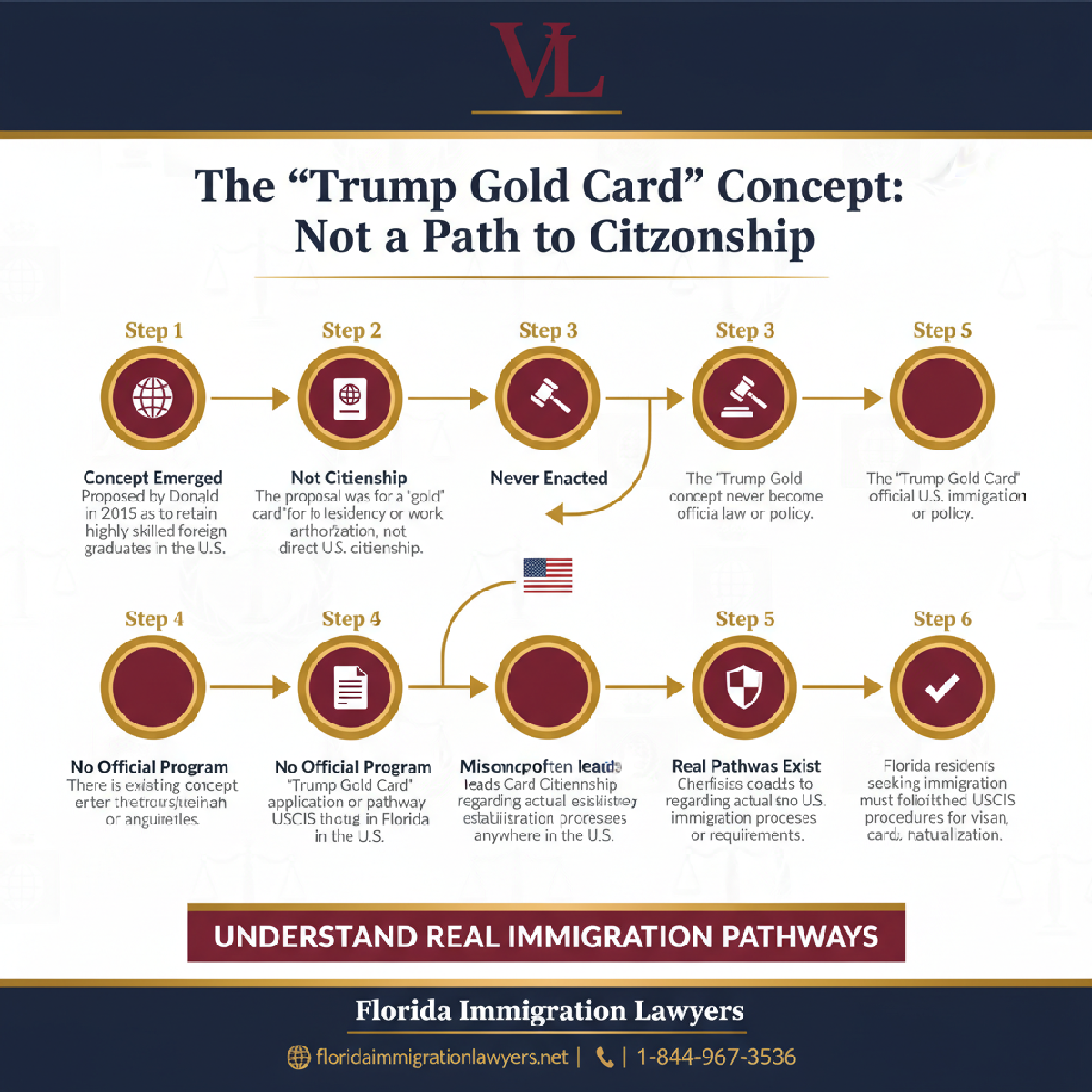
The concept of a 'Trump Gold Card Citizenship' is widely discussed but does not represent an official U.S. government immigration program as of 2026. Real pathways to U.S. residency and citizenship in Florida involve established legal processes through USCIS, such as family-based petitions, employment visas like the EB-5 investor program, or naturalization. It's crucial to rely on accurate information and legal guidance.
- No official 'Trump Gold Card' program for citizenship exists.
- U.S. immigration is governed by the Immigration and Nationality Act.
- Legitimate paths include family, employment, and investment visas.
- Green Card is lawful permanent residency; citizenship is naturalization.
- Consult a Florida immigration lawyer for accurate guidance.
In the vibrant state of Florida, many individuals and families dream of making the United States their permanent home. With diverse communities across Orlando, Miami, and Tampa, questions often arise about the quickest or most unique routes to residency and citizenship. Recently, there has been a buzz around the idea of a 'Trump Gold Card Citizenship,' leading many to wonder if such a pathway truly exists.
It's vital to separate fact from fiction when navigating the complex world of U.S. immigration law. Misinformation can lead to costly mistakes and significant delays in your immigration journey. Understanding the legitimate processes is the first step towards achieving your goals.
This article aims to clarify the misconceptions surrounding the 'Trump Gold Card Citizenship' in Florida. We will explore the actual, established pathways to U.S. green card status and eventual citizenship. Our goal is to provide you with reliable information, helping you understand what to expect and how to proceed legally and effectively.
Do not let rumors or unofficial information derail your dreams. For personalized advice and to ensure your immigration journey is on the right track, we urge you to seek professional legal guidance. Call Florida Immigration Lawyers at 1-844-967-3536 for a free consultation and let our experienced team help you understand your options.
Understanding the "Trump Gold Card Citizenship" Myth in Florida
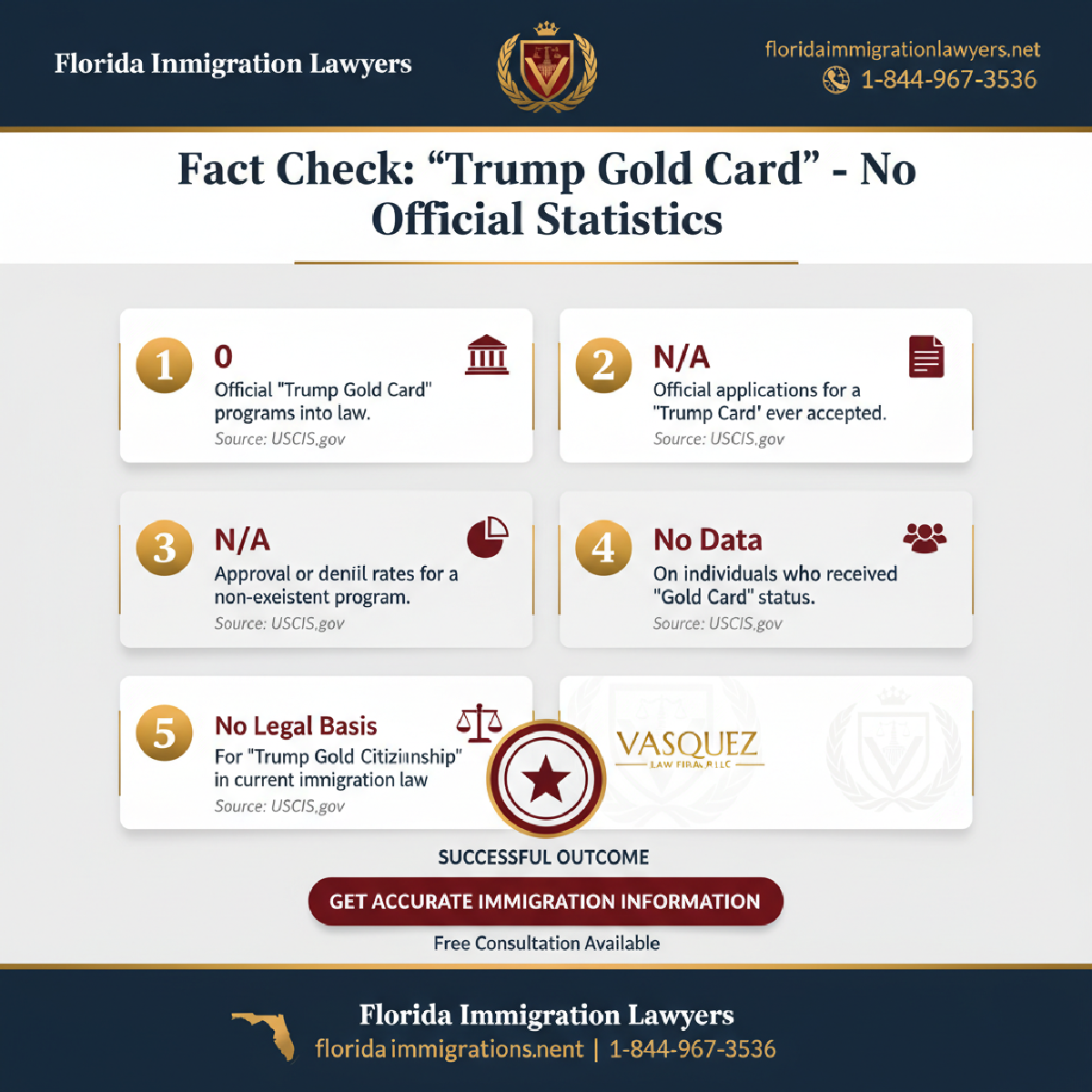
The phrase "Trump Gold Card Citizenship" has circulated in various discussions, often creating confusion among prospective immigrants. It's important to state clearly: as of 2026, there is no official, government-recognized U.S. immigration program or visa category specifically named the "Trump Gold Card Citizenship" that grants expedited residency or citizenship.
This concept often stems from political rhetoric, proposals that did not become law, or even misunderstandings related to political fundraising initiatives. Unlike a green card, which grants lawful permanent residency, or naturalization, which confers U.S. citizenship, the "Trump Gold Card" is not a pathway defined by the Immigration and Nationality Act (INA).
U.S. immigration law is governed by federal statutes and regulations. Any legitimate pathway to a green card or citizenship must be established through legislation passed by Congress and implemented by agencies like U.S. Citizenship and Immigration Services (USCIS) and the Department of State. While past administrations or political figures may propose new systems, these must go through a rigorous legal process to become reality.
For those living in Florida, especially in areas like Orlando with a significant immigrant population, it's crucial to distinguish between political discussions and actual immigration law. Relying on unofficial sources for something as critical as your immigration status can lead to severe consequences, including visa denials, financial losses, and even deportation proceedings.
Our firm, Florida Immigration Lawyers, is dedicated to providing accurate and up-to-date information. We help clients navigate the real, complex immigration processes. If you hear about a program like the "Trump Gold Card Citizenship," always verify its legitimacy with trusted legal professionals or official government websites like USCIS.gov.
Real Pathways to U.S. Green Card Status in Florida
Achieving a green card, or lawful permanent residency, is typically the first major step towards U.S. citizenship for most immigrants. There are several well-established categories under which individuals can qualify for a green card. These pathways are consistent across the United States, including Florida, and are governed by federal law, specifically the Immigration and Nationality Act (INA).
Understanding these legitimate routes is essential for anyone seeking to live and work permanently in Florida. Each pathway has specific eligibility criteria, application forms, and processing times. Our experienced Florida immigration lawyers can help you determine the best path for your unique situation.
Family-Based Green Cards in Florida
One of the most common ways to obtain a green card is through family sponsorship. U.S. citizens and lawful permanent residents can petition for certain eligible relatives. This pathway emphasizes the importance of family unity, a value deeply held in Florida's diverse communities.
- Immediate Relatives of U.S. Citizens: This category includes spouses, unmarried children under 21, and parents of U.S. citizens who are at least 21 years old. There is no visa quota for immediate relatives, often leading to faster processing.
- Family Preference Categories: These categories are subject to annual numerical limits and involve longer waiting periods, depending on the country of origin. They include adult children and siblings of U.S. citizens, and spouses and unmarried children of lawful permanent residents.
The process typically begins with filing Form I-130, Petition for Alien Relative, with USCIS. Once approved and a visa number is available (for preference categories), the relative can apply for adjustment of status within the U.S. or consular processing abroad. To learn more about this process, visit our family immigration page.
Employment-Based Green Cards and the EB-5 Program
For individuals with specific skills, professional qualifications, or the ability to invest significantly in the U.S. economy, employment-based green cards offer a viable route. Florida, with its growing economy and diverse industries, is an attractive destination for these immigrants. This category includes various preferences, from extraordinary ability individuals to skilled workers.
A notable pathway for wealthy individuals, often confused with concepts like the "Trump Gold Card," is the EB-5 Immigrant Investor Program. This program (INA 203(b)(5)) allows foreign investors to obtain a green card by investing capital in a U.S. commercial enterprise. The investment must create or preserve at least 10 full-time jobs for qualifying U.S. workers.
The standard investment amount is currently $1,050,000, but it can be reduced to $800,000 if the investment is made in a Targeted Employment Area (TEA), which includes rural areas or areas with high unemployment. Florida offers many such opportunities, making the EB-5 investor visa Florida option particularly appealing for some.
The EB-5 process involves filing Form I-526, Immigrant Petition by Alien Entrepreneur, followed by adjustment of status or consular processing. After two years of conditional permanent residency, investors file Form I-829 to remove conditions. This complex process requires meticulous planning and legal expertise.
Essential Documents for Immigration Applications
Regardless of the specific pathway you pursue, thorough documentation is paramount for any U.S. immigration application. Incomplete or inaccurate submissions are among the leading causes of delays and denials. This checklist outlines the types of documents generally required, though your specific case may demand more or fewer items.
Always ensure all foreign language documents are accompanied by certified English translations. Furthermore, all copies of documents should be clear and legible. Preparing your documents meticulously can significantly streamline your green card application process.
Here is a general checklist of essential documents:
- ✓ Identification Documents: Valid passport, birth certificate for all applicants, national identity cards.
- ✓ Proof of Relationship: Marriage certificates, birth certificates of children, adoption decrees (for family-based petitions).
- ✓ Financial Support Evidence: Form I-864, Affidavit of Support, along with tax returns, employment verification letters, and bank statements from the sponsor.
- ✓ Medical Examination: Completed Form I-693, Report of Medical Examination and Vaccination Record, by a USCIS-approved civil surgeon.
- ✓ Police Clearance Certificates: From all countries where you have lived for a certain period since age 16.
- ✓ Photographs: Recent, passport-style color photographs for all applicants.
- ✓ Biometrics: Fingerprints, photographs, and signature collected by USCIS.
- ✓ Petition Forms: Such as Form I-130 (family) or Form I-140 (employment), and Form I-485, Application to Register Permanent Residence or Adjust Status.
- ✓ Educational and Professional Records: Diplomas, transcripts, professional licenses, and letters of recommendation (for employment-based visas).
- ✓ Investment Documentation: Business plans, escrow agreements, source of funds evidence (for EB-5 investors).
The Journey to U.S. Citizenship: What Floridians Need to Know
Once you have successfully obtained your green card and established lawful permanent residency in Florida, the next milestone for many is becoming a U.S. citizen through naturalization. This process grants you full rights and responsibilities as an American citizen, including the right to vote and hold a U.S. passport.
The U.S. citizenship requirements are clearly defined by the Immigration and Nationality Act. While the "Trump Gold Card Citizenship" implies a shortcut, naturalization is a structured legal process.
- Meet Eligibility Criteria: Generally, you must be at least 18 years old and a lawful permanent resident for at least five years. If you are married to a U.S. citizen, this period may be reduced to three years, provided you meet other specific conditions (INA 316, 8 U.S.C. 1427). You must also demonstrate continuous residence and physical presence in the U.S. and your state (Florida) for a specified period.
- Demonstrate Good Moral Character: USCIS will review your background to ensure you have maintained good moral character during your residency. This includes having no serious criminal record and adhering to U.S. laws.
- Pass English and Civics Tests: You must demonstrate an ability to read, write, and speak basic English. You also need to pass a civics test demonstrating knowledge of U.S. history and government. There are exceptions for age and disability.
- File Form N-400: Complete and submit the Application for Naturalization to USCIS. This form is a critical part of the green card application process for eventual citizenship.
- Attend Biometrics Appointment: You will be scheduled to provide your fingerprints, photograph, and signature.
- Attend Naturalization Interview: A USCIS officer will review your application, test your English and civics knowledge, and ask questions about your eligibility. This interview typically takes place at a local USCIS field office, such as the one in Orlando, Florida.
- Receive Decision and Attend Oath Ceremony: If your application is approved, you will be invited to an Oath of Allegiance ceremony, where you will officially become a U.S. citizen.
Our firm regularly assists Floridians with their naturalization applications, ensuring all U.S. citizenship requirements are met. Find out more on our dedicated citizenship page.
Timeline and Processing Expectations for Immigration Applications
One of the most common questions our clients ask is, "How long will this take?" The truth is, immigration processing times are highly variable and depend on numerous factors. There is no "Trump Gold Card Citizenship" fast track, and legitimate processes follow established bureaucratic timelines.
Factors influencing processing times include:
- Case Type: Family-based petitions, employment-based visas, and naturalization applications each have different average timelines.
- Visa Bulletin Availability: For preference categories in family and employment-based immigration, visa availability can add years to the wait, depending on your country of origin and priority date. You can check the Visa Bulletin on Travel.State.Gov.
- USCIS Workload: The volume of applications received by USCIS and the specific service center or field office (e.g., California Service Center vs. Texas Service Center, or the local Orlando Field Office) can significantly impact processing speed.
- Application Completeness: Incomplete applications or requests for evidence (RFEs) will inevitably prolong the process.
- Background Checks: All applicants undergo rigorous security and background checks, which can vary in duration.
While we cannot provide exact timelines, USCIS does publish average processing times for various forms, which you can check on their website. It is crucial to manage your expectations and understand that patience is a key component of the immigration journey. A Florida immigration lawyer can help you understand realistic expectations for your specific case and keep you informed of any changes.
Cost Factors and Fee Breakdown for Immigration Processes
Pursuing a green card or U.S. citizenship involves various costs, which can be categorized into government filing fees, associated third-party costs, and legal fees. It is important to budget for these expenses realistically. The notion of a "Trump Gold Card Citizenship" often implied a direct purchase, which is not how U.S. immigration works.
Government fees are set by USCIS and are subject to change. It is critical to always check the most current fee schedule on the official USCIS website before filing any application.
- USCIS Filing Fees: These are fees for submitting petitions (e.g., Form I-130, I-140), applications (e.g., Form I-485, N-400), and biometrics services. For example, the fee for Form N-400, Application for Naturalization, covers the processing of your application.
- Medical Examination Fees: All adjustment of status and naturalization applicants must undergo a medical examination by a USCIS-approved civil surgeon. The cost for this examination varies by provider and is paid directly to the civil surgeon.
- Translation and Document Procurement Costs: If your supporting documents are not in English, you will need to pay for certified translations. You may also incur costs for obtaining official copies of birth certificates, marriage licenses, or police records.
- Attorney Fees: Hiring an experienced Florida immigration lawyer is an investment in the success and efficiency of your case. Legal fees cover professional services such as eligibility assessment, document preparation, representation during interviews, and responding to USCIS requests. While optional, legal representation significantly reduces the risk of errors and increases the likelihood of a positive outcome.
Be wary of any claims that suggest you can simply pay a large sum for "Trump Gold Card Citizenship" or expedited status without following established legal procedures. These are often scams. Always consult with a reputable attorney to understand the true costs and legitimate processes.
Do not navigate this process alone. The complexities of U.S. immigration law demand expert attention to detail and up-to-date knowledge. Contact Florida Immigration Lawyers today for the guidance you need.
Common Mistakes to Avoid in Your Immigration Journey
Navigating the U.S. immigration system can be daunting, and even minor errors can lead to significant setbacks. Being aware of common pitfalls can help you avoid unnecessary delays or even denials. Here are crucial mistakes to avoid, especially when dealing with complex processes or rumors like the "Trump Gold Card Citizenship."
- Believing in Unofficial Programs or Scams: The biggest mistake is falling for promises of a quick or unofficial "Trump Gold Card Citizenship" or similar programs. Always verify information with official sources like USCIS or a trusted immigration attorney. Scams can lead to financial loss and jeopardize your legal standing.
- Submitting Incomplete or Inaccurate Applications: Forms filled out incorrectly or missing required information are a primary cause of Requests for Evidence (RFEs) or outright denials. Double-check every field and attach all necessary supporting documents.
- Missing Deadlines: Immigration processes are time-sensitive. Failing to respond to USCIS requests or file applications by their deadlines can result in the abandonment of your case or loss of eligibility.
- Lack of Sufficient Supporting Documentation: Providing insufficient evidence to support your claims (e.g., proof of relationship, financial stability, or investment source for EB-5) can weaken your case significantly. Always provide thorough and compelling documentation.
- Failure to Disclose All Relevant Information: Hiding or misrepresenting information, especially regarding criminal history or previous immigration violations, can lead to charges of fraud and severe penalties, including a permanent bar from the U.S. Be completely honest with your attorney and USCIS.
- Not Updating Your Address with USCIS: If you move, you must notify USCIS within 10 days using Form AR-11. Failure to do so can result in missed notices, interviews, or decisions, leading to delays or case closure.
- Traveling Internationally Without Proper Advance Parole: If you have a pending adjustment of status application, leaving the U.S. without an Advance Parole document can be considered an abandonment of your application. Always consult your attorney before making travel plans.
- Misunderstanding Continuous Residence Requirements for Naturalization: For citizenship, you must meet strict continuous residence and physical presence requirements in the U.S. and your state (Florida). Extended absences can break this continuity.
- Failing to Maintain Legal Status: If you are applying for adjustment of status, it is critical to maintain your underlying nonimmigrant status until your green card is approved, unless you are an immediate relative of a U.S. citizen.
- Poor Interview Preparation: Being unprepared for your USCIS interview can lead to misunderstandings or an inability to articulate your case effectively. Practice answering common questions and review your application thoroughly.
- Not Seeking Legal Counsel for Complex Cases: Attempting to navigate complicated immigration matters, such as those involving criminal history, previous denials, or investment visas, without the guidance of an experienced Florida immigration lawyer is a high-risk approach.
When to Call a Florida Immigration Lawyer
While some immigration processes may seem straightforward, the U.S. legal system is incredibly intricate. The presence of rumors like the "Trump Gold Card Citizenship" further highlights the need for professional guidance. Knowing when to consult a Florida immigration lawyer can be the difference between success and significant challenges.
You should consider calling Florida Immigration Lawyers if any of the following scenarios apply to you:
- Confusion about Eligibility: If you are unsure which green card or citizenship pathway applies to your situation, or if you have questions about specific U.S. citizenship requirements.
- Complex Case History: This includes previous visa denials, prior deportations, or any history of criminal offenses, even minor ones. These situations often require specialized legal strategies to overcome.
- Investment-Based Visas: The EB-5 investor visa program is highly complex, involving significant financial investments and strict business plan requirements. Expert legal advice is essential for success.
- Responding to RFEs or NOIDs: If USCIS sends you a Request for Evidence (RFE) or a Notice of Intent to Deny (NOID), it is crucial to respond accurately and thoroughly, which an attorney can help with.
- Deportation or Removal Proceedings: If you or a loved one are facing deportation defense, immediate legal intervention is critical.
- Seeking Asylum or Refugee Status: These cases are incredibly sensitive and require expert legal representation.
- Any Doubts or Concerns: If you simply feel overwhelmed or uncertain about any aspect of your immigration journey, a free consultation can provide clarity and peace of mind.
Our attorneys at Florida Immigration Lawyers are well-versed in all facets of immigration law. We serve clients across Florida, including Orlando, Miami, and Tampa, providing diligent and compassionate representation. We are ready to help you navigate the complexities and avoid pitfalls, ensuring your case is handled with the utmost care and professionalism. Contact us today.
Frequently Asked Questions About Immigration and Citizenship
Is the Trump Gold Card a citizenship?
No, the "Trump Gold Card" is not an official U.S. government program that grants citizenship. It's a concept that has circulated, sometimes referencing political discussions or even commercial products, but it does not represent a legitimate pathway to U.S. citizenship or even a green card. Real citizenship requires naturalization after meeting specific legal requirements, typically following a period as a lawful permanent resident. Relying on such unofficial concepts can lead to serious immigration complications and financial losses, so it is vital to consult only official USCIS resources or experienced legal professionals.
What is the Gold Card citizenship initiative?
The "Gold Card citizenship initiative" is not a recognized program by USCIS or the U.S. Department of State. While various proposals for new immigration systems or investor visas have been discussed over the years, none have materialized under the name "Gold Card citizenship" to offer expedited citizenship. It's crucial for anyone seeking to immigrate to rely on official information from government sources like Justice.gov for immigration courts or USCIS.gov for general processes. Any claims of such an initiative should be met with extreme skepticism and verified by a qualified immigration attorney.
How many golf courses does Trump own in Florida?
The number of golf courses owned by Donald Trump in Florida is a matter of public record for his business enterprises, but it is entirely unrelated to U.S. immigration law or the process of obtaining a green card or citizenship. Information about his private business holdings has no bearing on immigration pathways or eligibility. Questions about his personal or business assets should not be confused with official immigration policies or programs. Immigration processes are governed by federal statutes and regulations, not private ownership.
How much does it cost to get your citizenship in Florida?
The cost of U.S. citizenship (naturalization) in Florida typically involves government filing fees for Form N-400, Application for Naturalization, and biometrics fees. These fees are set by USCIS and are subject to change, so it's essential to check the current fee schedule on the official USCIS website. Additionally, applicants may incur costs for a medical examination by an approved civil surgeon, certified translations of foreign documents, and legal fees if they choose to hire an immigration attorney for assistance and representation. Specific fee amounts are not provided here due to their fluctuating nature.
What are the main pathways to a Green Card in Florida?
The main pathways to a Green Card, or lawful permanent residency, for individuals in Florida include family-based petitions (e.g., spouses, children, parents of U.S. citizens or Green Card holders), employment-based visas (e.g., skilled workers, professionals, or investors like through the EB-5 program), asylum or refugee status, and the Diversity Visa Lottery. Each pathway has distinct eligibility criteria, application forms, and processing requirements. The specific path you qualify for depends on your unique circumstances, background, and relationships.
Can I get a Green Card through investment in Florida?
Yes, you may be eligible for a Green Card through investment, primarily via the EB-5 Immigrant Investor Program. This program requires investing a specific amount of capital (currently $800,000 or $1,050,000, depending on the area) in a U.S. commercial enterprise that creates or preserves at least 10 full-time jobs for qualifying U.S. workers. Florida, with its vibrant economy and designated Targeted Employment Areas, offers many opportunities for EB-5 investments. This is a complex process best navigated with an experienced immigration attorney.
What are the requirements for U.S. citizenship?
To apply for U.S. citizenship through naturalization, you generally must be at least 18 years old, be a lawful permanent resident (Green Card holder) for at least 5 years (or 3 years if married to a U.S. citizen), demonstrate continuous residence and physical presence in the U.S. and your state (Florida), show good moral character, and pass English and civics tests. There are exceptions and nuances to these requirements, such as for military personnel or individuals with certain disabilities. It is advisable to consult a lawyer to confirm your specific eligibility.
How long does the naturalization process take in Florida?
The naturalization process timeline in Florida can vary significantly, typically ranging from 6 months to over a year, or even longer in some complex cases. Factors influencing the timeline include the specific USCIS field office processing your application (e.g., Orlando, Miami, Tampa), the completeness of your application, and current USCIS backlogs. You can check average processing times for Form N-400 on the USCIS website. An immigration attorney can help manage expectations and monitor your case status.
Why is legal counsel important for immigration applications?
An experienced Florida immigration lawyer, like those at Florida Immigration Lawyers, can provide invaluable assistance by accurately assessing your eligibility, preparing and filing all necessary forms and documents, representing you during interviews, and addressing any potential issues or complexities that arise. This significantly reduces the risk of errors, delays, or denials, ensuring your application has the best chance of success. The intricate nature of immigration law makes professional guidance almost indispensable for many applicants, especially in a state like Florida with diverse immigration needs.
What is the difference between a Green Card and citizenship?
A Green Card grants you lawful permanent residency in the U.S., allowing you to live and work permanently. However, you remain a citizen of your home country and may still be subject to certain restrictions, and can potentially be deported under specific circumstances. U.S. citizenship, obtained through naturalization, grants full rights and responsibilities, including the right to vote, hold certain federal jobs, and travel with a U.S. passport. Citizens cannot be deported and can petition for more family members, among other benefits, representing the highest form of immigration status.
About Florida Immigration Lawyers
Florida Immigration Lawyers is a leading law firm dedicated to providing comprehensive and compassionate immigration legal services across the entire state of Florida. With offices strategically located to serve diverse communities including Orlando, Miami, and Tampa, our experienced attorneys are committed to helping individuals and families navigate the complexities of U.S. immigration law.
We offer a wide range of services, including assistance with green card applications, family-based immigration, employment visas, naturalization, asylum claims, and deportation defense. Our team understands the profound impact immigration matters have on our clients' lives and works tirelessly to achieve positive outcomes.
Why choose Florida Immigration Lawyers? We pride ourselves on our deep legal expertise, personalized approach, and unwavering dedication to our clients. We offer free consultations to assess your unique situation and provide clear, actionable advice. Our bilingual team is available 24/7, ensuring you have access to critical legal support whenever you need it.
Let us be your trusted advocate in your immigration journey. Contact us today for a free consultation at 1-844-967-3536 or visit our website at https://www.floridaimmigrationlawyers.net. We are here to help you achieve your American dream.
This article is for general informational purposes only and does not constitute legal advice. Immigration laws change frequently. For advice specific to your situation, please consult with a qualified immigration attorney.
Navigating the path to U.S. residency or citizenship in Florida requires accurate information, diligent preparation, and often, expert legal guidance. While the idea of a "Trump Gold Card Citizenship" captures attention, your success truly lies in understanding and adhering to the established legal frameworks.
Do not leave your immigration future to chance or misleading information. Our dedicated team at Florida Immigration Lawyers is ready to provide the clear, professional, and empathetic support you deserve. We offer free consultations to help you understand your options and develop a robust strategy.
Take the definitive step towards securing your future in the United States. Call Florida Immigration Lawyers today at 1-844-967-3536 for your free, no-obligation consultation. Let us help you turn your aspirations into reality.
Florida Immigration Lawyers
Legal Team
Our experienced attorneys at Florida Immigration Lawyers have been serving clients across Florida for over 20 years. We specialize in immigration, personal injury, criminal defense, workers compensation, and family law.