TPS Honduras Extension 2026 Florida: Your Essential Guide
The TPS Honduras extension 2026 brings crucial updates for Honduran nationals in Florida. Driven by ongoing litigation like <em>Ramos v. Mayorkas</em>, TPS for Honduras is currently extended until at least July 5, 2025, with further extensions anticipated. This guide provides comprehensive information on eligibility, the re-registration process, required documents, and critical timelines. We also address common mistakes to avoid and highlight when expert legal assistance from Florida Immigration Lawyers is essential. Ensure your status is protected by understanding the latest developments and seeking professional guidance. We offer free consultations to help you navigate this complex process.
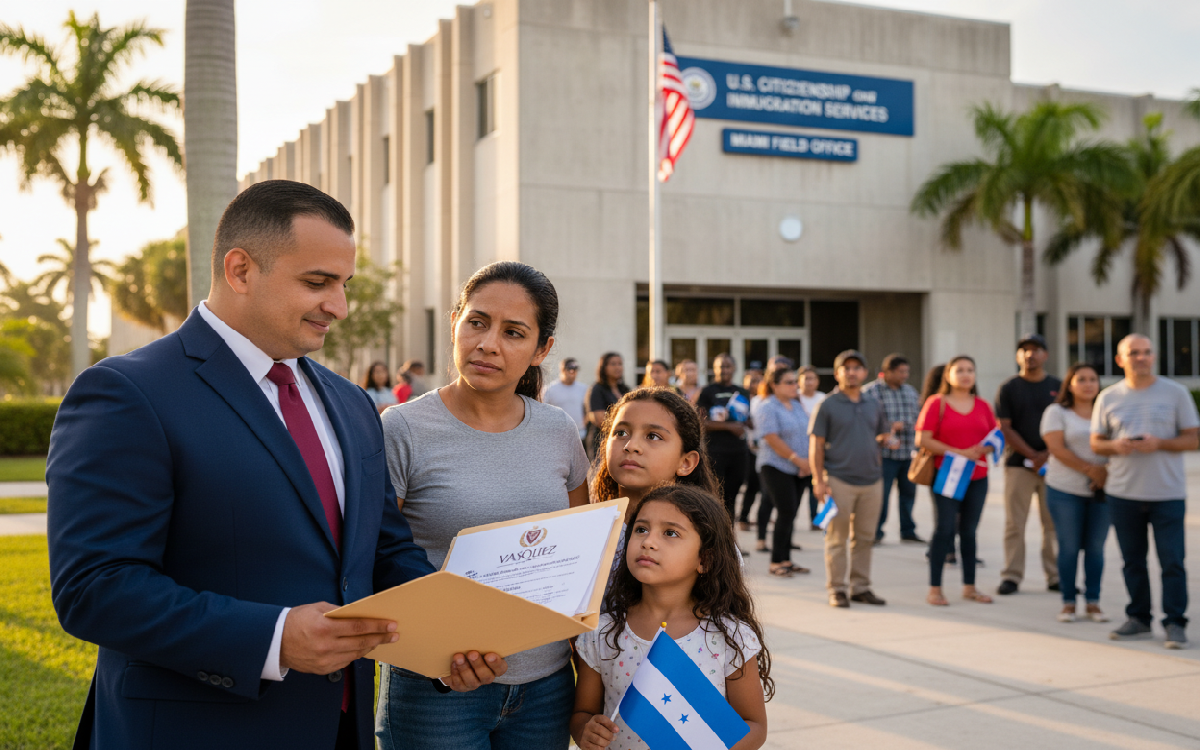
The Temporary Protected Status (TPS) for Honduras has been extended through litigation, currently valid until at least July 5, 2025, with potential further extensions into 2026 and beyond. This means eligible Honduran nationals in Florida can continue to live and work legally. Re-registration is crucial to maintain status, and employment authorization documents (EADs) are automatically extended.
- TPS for Honduras is extended through litigation (Ramos v. Mayorkas)
- Current validity period extends until at least July 5, 2025.
- Re-registration is mandatory to maintain your TPS benefits.
- EADs are automatically extended, but check for official Federal Register notices.
- Consult an immigration lawyer for personalized guidance on the TPS Honduras extension 2026.
Navigating the complexities of immigration law can feel overwhelming, especially when your status depends on ongoing legal developments. If you are a Honduran national living in Florida, you understand the vital importance of Temporary Protected Status (TPS). The news of the TPS Honduras extension 2026 brings both relief and questions about what comes next for you and your family.
At Florida Immigration Lawyers, we understand your concerns. Our dedicated team is here to provide clarity and expert legal guidance through every step of this process. This comprehensive guide will break down the latest updates, explain eligibility, outline the re-registration process, and highlight how we can help you secure your future in Florida. Do not face this journey alone. Call Florida Immigration Lawyers at 1-844-967-3536 for a free consultation today to discuss your specific situation.
Understanding the TPS Honduras Extension 2026 in Florida
Temporary Protected Status (TPS) offers a lifeline to individuals from certain countries facing extraordinary conditions that prevent their safe return. For Honduras, this designation was initially made in 1999 following Hurricane Mitch. Since then, it has been extended multiple times, most recently due to ongoing litigation.
The current validity of TPS for Honduras is largely driven by the injunctions issued in the Ramos v. Mayorkas lawsuit. While the Department of Homeland Security (DHS) had previously intended to terminate TPS for Honduras, court orders have mandated continued extensions. As of our current understanding in early 2026, these extensions mean TPS for Honduras is valid until at least July 5, 2025, with further extensions anticipated based on the court's review and any subsequent DHS actions. This effectively means that eligible Honduran nationals can expect their status to remain protected through the early part of TPS Honduras extension 2026 and potentially beyond.
For the vibrant Honduran community in Florida, from Tampa to Miami, these extensions are critical. They allow individuals to continue working, contributing to our economy, and living without fear of deportation. Our firm actively monitors all official announcements from USCIS and the Federal Register to ensure our clients have the most up-to-date information regarding their status and the re-registration periods. This litigation-driven extension demonstrates the dynamic nature of immigration law, underscoring the need for constant vigilance and expert legal counsel.
Under the Immigration and Nationality Act (INA) Section 244, codified at 8 U.S.C. § 1254a, the Secretary of Homeland Security has the authority to grant TPS. While the original intent for termination was announced, the courts have intervened, ensuring that individuals who have relied on TPS for years continue to have protection.
Who is Eligible for TPS Honduras Extension?
Maintaining your TPS status requires meeting specific criteria and adhering to re-registration guidelines. Generally, eligibility for the TPS Honduras extension 2026 applies to individuals who have continuously maintained their TPS since the initial designation or a subsequent re-registration period.
You must be a national of Honduras (or a person without nationality who last habitually resided in Honduras). You must have been continuously physically present in the United States since January 5, 1999, which was the most recent designation date for Honduras. Additionally, you must have been continuously residing in the U.S. since that same date.
Crucially, you must not have been convicted of any felony or two or more misdemeanors committed in the United States. Certain other inadmissibility grounds, such as those related to national security or terrorism, also disqualify applicants. It is essential to understand that even minor legal issues can complicate your TPS renewal. If you have any criminal history, no matter how minor it seems, you should consult with an immigration attorney immediately.
The re-registration process is mandatory. Failing to re-register within the designated window, even if your country's TPS designation is extended, can lead to loss of status. This is not an automatic process, and proactive steps are required from your end. Understanding these eligibility requirements is the first critical step in securing your extended TPS.
Step-by-Step Guide to Re-registering for TPS Honduras
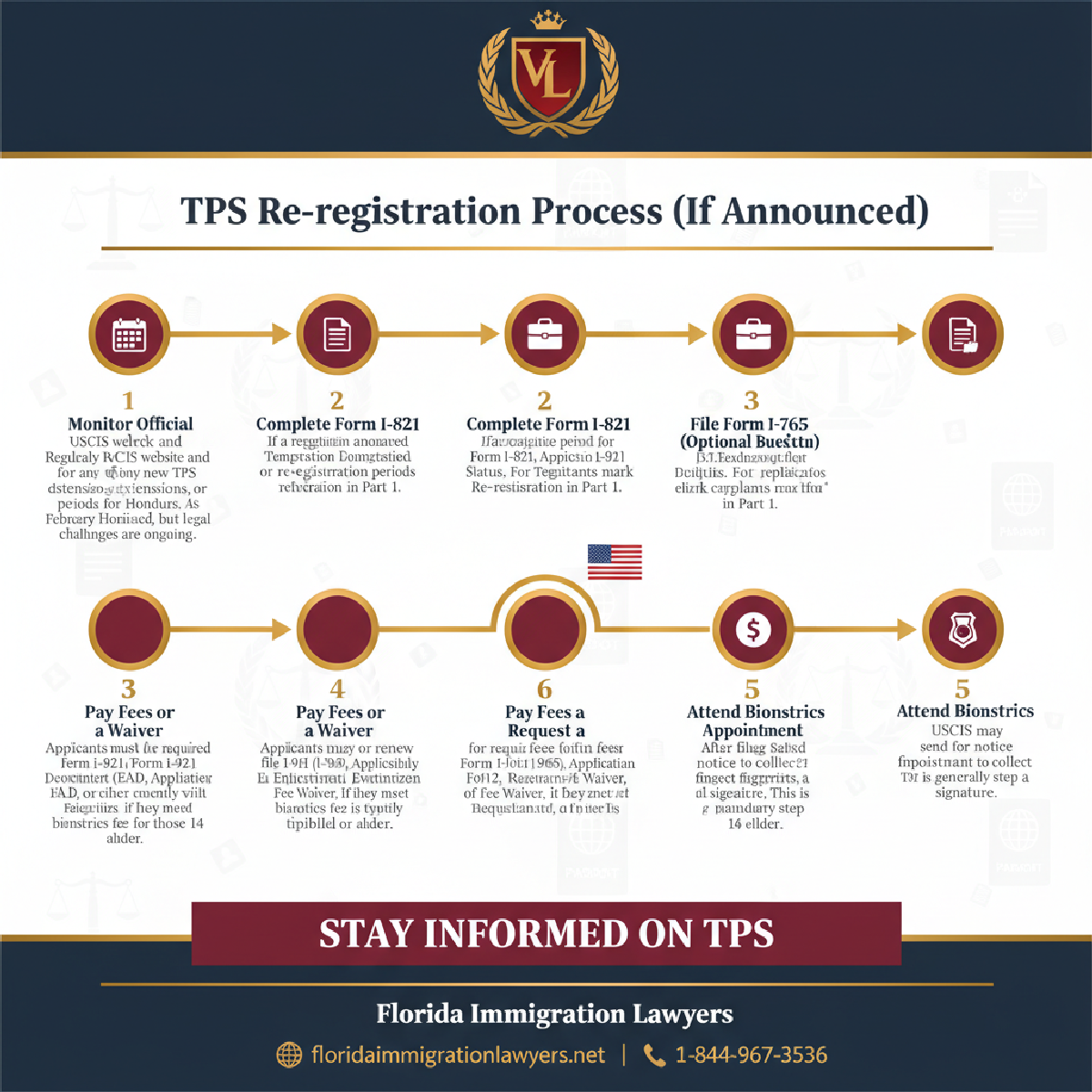
Re-registering for TPS Honduras, especially with the TPS Honduras extension 2026 in mind, follows a structured process. Following these steps carefully will help ensure your application is processed efficiently:
- Determine Your Eligibility: Before starting, confirm you meet all the requirements for TPS re-registration, including continuous physical presence and residence, and a clean criminal record. Review any new Federal Register notices for updated guidelines specific to the current extension.
- Gather Required Forms: The primary form for TPS re-registration is Form I-821, Application for Temporary Protected Status. If you also wish to renew your Employment Authorization Document (EAD), you must file Form I-765, Application for Employment Authorization. If you have any grounds of inadmissibility, you may need to file Form I-601, Application for Waiver of Grounds of Inadmissibility, and potentially Form I-212, Application for Permission to Reapply for Admission into the United States After Deportation or Removal.
- Collect Supporting Documents: Assemble all necessary documentation to prove your identity, nationality, continuous residence, and physical presence. This includes identification documents, birth certificates, utility bills, school records, and employment records. Ensure all documents are translated into English if they are in another language.
- Pay Filing Fees or Apply for a Fee Waiver: Each form typically requires a filing fee. Check the USCIS website for current fee amounts, as they can change. If you cannot afford the fees, you may be eligible to apply for a fee waiver by submitting Form I-912, Request for Fee Waiver.
- File Your Application with USCIS: Mail your complete application packet, including all forms, supporting documents, and fees (or fee waiver request), to the correct USCIS filing address. Ensure you send it within the official re-registration period announced in the Federal Register.
- Attend Biometrics Appointment: After filing, USCIS will send you a notice to attend a biometrics appointment at an Application Support Center (ASC). This appointment is crucial for fingerprinting and photographs. Do not miss it, as it is a mandatory part of the process.
- Await Decision and Receive New EAD: USCIS will review your application. Processing times vary, so regularly check your case status online using the receipt number provided by USCIS. If approved, you will receive a new EAD, allowing you to continue working legally in the U.S.
Essential Documents for Your TPS Honduras Re-registration
A complete and accurate submission of documents is vital for a successful TPS re-registration. Missing or incorrect documentation can lead to delays or even denial. Here is a checklist of documents you will typically need for your TPS Honduras extension 2026 application:
- Form I-821, Application for Temporary Protected Status: The primary application form.
- Form I-765, Application for Employment Authorization (if renewing EAD): Essential for continued work authorization.
- Form I-912, Request for Fee Waiver (if applicable): For those who cannot afford the filing fees.
- Proof of Identity and Nationality:
- Copy of your Honduran birth certificate.
- Copy of your Honduran passport (if available).
- Any national identity document from Honduras.
- Proof of Continuous Residence in the U.S. since January 5, 1999:
- Utility bills (electricity, water, gas) in your name.
- Rental agreements or mortgage statements.
- School records for yourself or your children.
- Employment records, pay stubs, or W-2 forms.
- Bank statements.
- Medical records.
- Affidavits from individuals who can attest to your presence.
- Proof of Continuous Physical Presence in the U.S. since January 5, 1999: This often overlaps with continuous residence documents.
- Two passport-style photos.
- Any previous TPS approval notices or EADs.
- Certified copies of court dispositions for any arrests or convictions (if applicable).
- Translations of any non-English documents: Each translation must be certified by the translator.
Remember to keep copies of everything you submit to USCIS for your records. Organizing your documents meticulously will streamline the process and help you avoid common pitfalls.
TPS Honduras Extension 2026 Timeline and Processing Expectations
Understanding the timeline for the TPS Honduras extension 2026 is crucial for planning your future in Florida. The specific re-registration period is announced by USCIS in the Federal Register. It is imperative to file your application within this designated window to maintain your status.
Currently, due to the Ramos v. Mayorkas litigation, the validity of TPS for Honduras has been extended. The most recent extensions have typically granted validity until at least July 5, 2025, for those who maintain their status. While DHS had initially planned to terminate TPS, the court orders have provided ongoing relief, meaning further extensions into 2026 are highly probable as the litigation progresses or new decisions are made. This means that work authorization documents (EADs) associated with TPS Honduras have also been automatically extended, often through specific dates (e.g., through November 18, 2025, or later, depending on the latest Federal Register notice).
USCIS processing times can vary significantly. You can monitor current processing times for Form I-821 and Form I-765 on the official USCIS website at www.uscis.gov/processing-times. Factors such as the volume of applications, staffing levels, and the complexity of individual cases all influence how long it takes to receive a decision. While awaiting a new EAD, the automatic extension provisions allow you to continue working. Always refer to the latest Federal Register notice for the exact automatic extension dates for your EAD.
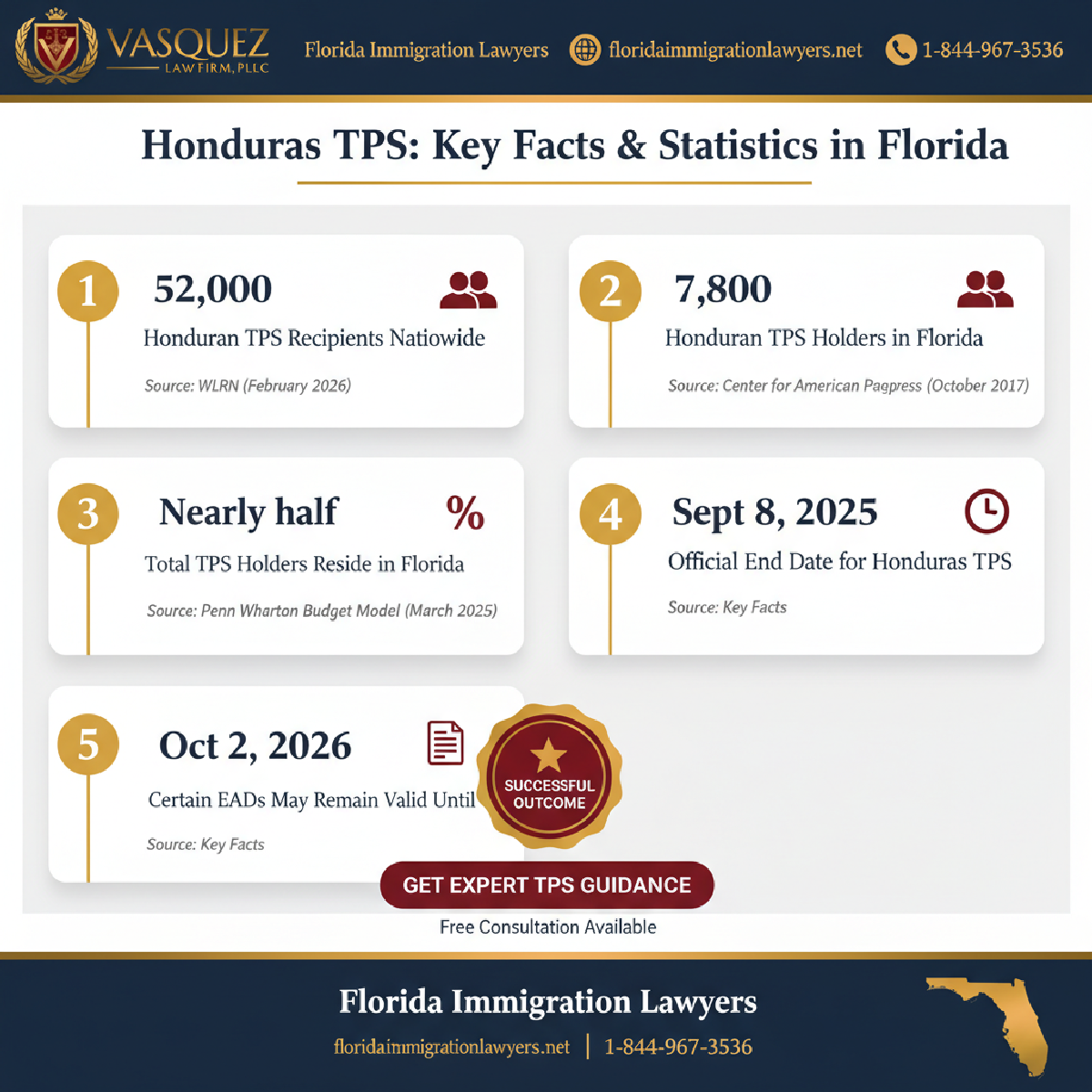
Staying informed and filing promptly are your best strategies for navigating these timelines. Our firm provides up-to-the-minute information to our clients, ensuring they are aware of any changes or updates that could impact their TPS status in Florida.
Cost Factors and Fee Breakdown for TPS Applications
When preparing for your TPS Honduras extension 2026, it is important to understand the associated costs. These typically include government filing fees and, if you choose, legal fees for attorney assistance. Please note that USCIS filing fees are subject to change, so always check the official USCIS website for the most current amounts.
The primary government fees you will likely encounter are for Form I-821, Application for Temporary Protected Status, and Form I-765, Application for Employment Authorization. There is also a biometrics services fee. If you are renewing your EAD, you will generally pay the fee for Form I-765 and the biometrics fee. The fee for Form I-821 may be waived for re-registrants, but this can vary, so always confirm with USCIS guidelines.
For individuals who demonstrate an inability to pay, USCIS offers a fee waiver option by filing Form I-912, Request for Fee Waiver. Eligibility for a fee waiver is based on specific income guidelines or receipt of means-tested benefits. It is crucial to submit strong evidence to support your fee waiver request, as a denied waiver can delay your application or even lead to rejection if fees are not subsequently paid.
Beyond government fees, consider the investment in legal representation. While not mandatory, having an experienced immigration lawyer from Florida Immigration Lawyers can save you time, reduce stress, and prevent costly mistakes. Our fees cover comprehensive assistance, from preparing and reviewing all forms and documents to representing you in communications with USCIS. We provide transparent fee structures during your free consultation, ensuring you understand all costs involved.
Common Mistakes to Avoid During Your TPS Honduras Application
Applying for the TPS Honduras extension 2026 requires precision and attention to detail. Even minor errors can lead to significant delays or a denial of your application. Here are some common mistakes we see and how to avoid them:
- Filing Late: The most critical mistake is failing to re-register within the designated period. Missing the deadline, even by a day, can result in the loss of your TPS status. Always monitor Federal Register notices for the official re-registration window.
- Incomplete Forms: Leaving fields blank or not answering questions fully can cause USCIS to reject your application. Double-check every section of Form I-821 and Form I-765.
- Incorrect Filing Fees or Missing Fee Waiver: Submitting the wrong fee amount or forgetting to include a valid fee waiver request will lead to rejection. Verify current fees on the USCIS website and ensure your fee waiver documentation is robust.
- Missing Supporting Documents: Failing to include all required evidence, such as proof of identity, nationality, or continuous residence, can halt your application. Use a checklist to ensure all documents are included.
- Not Updating Your Address with USCIS: If you move, you must notify USCIS within 10 days using Form AR-11. Failing to do so means you might miss critical notices or appointments, potentially jeopardizing your case.
- Providing Inconsistent Information: Any discrepancies between your current application and previous immigration filings can raise red flags. Ensure all information is consistent and accurate across all documents.
- Ignoring Criminal History: Even minor arrests or convictions must be disclosed. Attempting to hide criminal history can lead to severe immigration consequences, including denial and potential deportation proceedings.
- Not Seeking Legal Advice for Complex Cases: If you have a criminal record, previous immigration violations, or other complex issues, attempting to navigate the process alone is risky. An experienced attorney can identify potential problems and strategize solutions.
- Failing to Keep Copies of Your Application: Always make a complete copy of your entire application packet before mailing it. This serves as your record and can be invaluable if issues arise.
- Assuming Automatic Extension for EAD Without Verification: While EADs are often automatically extended, the specific dates vary. Always check the latest Federal Register notice to confirm the exact automatic extension period for your EAD.
When to Call a Florida Immigration Lawyer for TPS Assistance
While the re-registration process for TPS Honduras extension 2026 might seem straightforward for some, many individuals face unique challenges that necessitate expert legal intervention. At Florida Immigration Lawyers, we are committed to providing comprehensive support to Honduran nationals across Florida, including Tampa, Orlando, and Miami, ensuring your status is protected.
You should consider contacting our firm immediately if any of the following apply to your situation:
- Criminal History: Even minor arrests or convictions can significantly complicate your TPS eligibility. Our attorneys can assess your record and advise on potential waivers or defense strategies.
- Previous Immigration Issues: If you have prior deportation orders, denials of immigration benefits, or other complex immigration history, attempting to re-register alone is highly risky.
- Difficulty Proving Continuous Residence or Physical Presence: If you lack sufficient documentation to prove your continuous presence or residence in the U.S. since the required dates, we can help you gather alternative evidence.
- Late Filing Concerns: If you believe you have missed the re-registration deadline or are worried about filing on time, we can explore any available options.
- Questions About Travel: If you need to travel outside the U.S. while on TPS, our lawyers can guide you through the advance parole process to ensure your safe return.
- Confusing USCIS Notices: If you receive a Request for Evidence (RFE) or a Notice of Intent to Deny (NOID), it is a red flag. Our team can help you understand and respond effectively.
- Seeking Adjustment of Status: If you are exploring pathways beyond TPS, such as adjustment to permanent residency, our firm can evaluate your eligibility and guide you through the integrated process.
Our experienced immigration lawyers at Florida Immigration Lawyers understand the nuances of TPS, including the impact of ongoing litigation like Ramos v. Mayorkas. We are here to simplify the process, protect your rights, and help you achieve peace of mind. Your future in Florida is important, and we are dedicated to helping you secure it. Contact us for a free consultation.
Frequently Asked Questions About TPS Honduras Extension 2026
Here are answers to common questions about the TPS Honduras extension 2026 and your status in Florida.
Will TPS be extended in 2026?
Yes, based on current litigation, specifically the injunctions in Ramos v. Mayorkas, TPS for Honduras has been extended and is expected to continue into 2026. The most recent extensions typically grant validity until at least July 5, 2025. While the Department of Homeland Security had initially sought to terminate TPS for Honduras, court orders have continuously prevented this, leading to ongoing extensions. It is crucial to monitor official USCIS announcements and Federal Register notices for the precise validity dates and re-registration periods that will govern status through 2026 and potentially beyond.
Is TPS for Honduras going to be extended?
Yes, due to ongoing litigation and court orders, the Temporary Protected Status for Honduras has been extended. These extensions are not new designations but continuations of the existing status, ensuring protection for eligible Honduran nationals. The legal battles have paused previous termination plans, allowing TPS holders to maintain their status. While the situation remains dynamic, current legal frameworks indicate continued extensions, providing a measure of stability for Honduran TPS beneficiaries in Florida and across the U.S.
Can TPS Honduras still work till November 18th, 2025?
Yes, employment authorization documents (EADs) for eligible TPS Honduras beneficiaries have been automatically extended. The specific validity date for this automatic extension has been announced in Federal Register notices. For example, previous notices extended EADs through November 18, 2025. It is vital to check the latest Federal Register notice or USCIS guidance to confirm the current automatic extension date for your EAD, as these dates can be updated. This automatic extension allows you to continue working legally while your re-registration application is pending.
Did they extend TPS for 5 years?
No, the current extensions for TPS Honduras are not typically for a fixed period of five years. Instead, they are generally shorter, often 18-month extensions, mandated by court injunctions related to the Ramos v. Mayorkas lawsuit. These extensions are issued incrementally as the legal process unfolds. While the cumulative effect might be a long period of protection, each extension is distinct and requires adherence to re-registration guidelines. Always refer to official USCIS and Federal Register announcements for the exact duration of each extension period.
What is the Ramos v. Mayorkas lawsuit?
The Ramos v. Mayorkas (formerly Ramos v. Nielsen) lawsuit is a class-action lawsuit filed on behalf of TPS beneficiaries from several countries, including Honduras, Nicaragua, El Salvador, and Sudan. It challenged the prior administration's decision to terminate TPS designations for these countries. The lawsuit's injunctions have prevented DHS from terminating TPS for these nations, leading to the series of extensions we see today. This litigation has been instrumental in preserving TPS for thousands of individuals in Florida and nationwide, including those affected by the TPS Honduras extension 2026.
How does the extension affect my EAD?
The extension of TPS for Honduras directly impacts your Employment Authorization Document (EAD). USCIS typically issues Federal Register notices that automatically extend the validity of EADs for eligible TPS beneficiaries. This means that even if the expiration date on your physical EAD card has passed, you may still be authorized to work if you meet the criteria outlined in the latest notice. Employers should accept these automatically extended EADs. It's crucial to carry your expired EAD along with a copy of the Federal Register notice detailing the automatic extension.
Can I apply for TPS for the first time?
Generally, new TPS applications are only accepted during an initial designation period or a re-designation of a country's TPS. For Honduras, the current extensions are for re-registration, meaning they are primarily for individuals who already have TPS. However, there can be exceptions for individuals who meet certain criteria, such as those who were minors or were unable to apply during previous registration periods. If you believe you have a valid reason for a late initial filing, it is highly recommended to consult with an experienced immigration attorney at Florida Immigration Lawyers.
What if I have a criminal record?
A criminal record can significantly complicate your TPS application or re-registration. TPS eligibility criteria specifically exclude individuals convicted of certain crimes, including any felony or two or more misdemeanors. Even minor offenses can raise concerns. It is absolutely critical to disclose all arrests and convictions, even if they were expunged or occurred many years ago. An immigration lawyer can assess the nature of your criminal record, determine its impact on your TPS eligibility, and advise if any waivers are possible or if other immigration relief might be available to you.
About Florida Immigration Lawyers
Florida Immigration Lawyers is a leading immigration law firm dedicated to serving individuals and families across the entire state of Florida. With offices and a strong presence throughout the region, including Tampa, Orlando, and Miami, we are committed to providing exceptional legal representation and compassionate support to our clients.
Our experienced team specializes in a wide range of immigration matters, including Temporary Protected Status (TPS), asylum, deportation defense, family-based immigration, business immigration, and naturalization. We understand the profound impact immigration issues have on your life and future, and we approach every case with diligence, empathy, and a deep understanding of complex immigration laws.
We pride ourselves on our client-focused approach, offering bilingual services to ensure clear communication and personalized strategies. When you choose Florida Immigration Lawyers, you gain a dedicated advocate who will fight tirelessly for your rights and guide you through every legal challenge. We are available 24/7 to answer your questions and offer free, confidential consultations.
For reliable and effective immigration legal services, trust Florida Immigration Lawyers. Visit our website at www.floridaimmigrationlawyers.net or call us today at 1-844-967-3536.
This article is for general informational purposes only and does not constitute legal advice. Immigration laws change frequently. For advice specific to your situation, please consult with a qualified immigration attorney.
The TPS Honduras extension 2026 offers continued hope and stability for thousands of Honduran nationals in Florida. However, navigating the re-registration process and understanding the nuances of litigation-driven extensions can be challenging. Do not risk your status by attempting to go it alone or relying on outdated information.
Florida Immigration Lawyers is here to be your trusted partner. Our experienced team will ensure your application is accurate, complete, and filed on time, protecting your right to live and work in the U.S. We offer free consultations to evaluate your case and provide clear, actionable advice.
Take the proactive step to secure your future. Contact Florida Immigration Lawyers today at 1-844-967-3536 for your free consultation. Let us help you navigate the path forward with confidence.
Florida Immigration Lawyers
Legal Team
Our experienced attorneys at Florida Immigration Lawyers have been serving clients across Florida for over 20 years. We specialize in immigration, personal injury, criminal defense, workers compensation, and family law.