Public Charge Rule Florida: Navigating Immigration in 2026
For Florida immigrants in 2026, understanding the public charge rule is essential for green card and visa applications. This comprehensive guide demystifies the immigration rule, explaining its impact on Florida benefits considerations and how to navigate the assessment process. We cover key factors like age, health, family status, assets, education, and specific government benefits that are considered. Learn about the step-by-step process, essential documents, and common mistakes to avoid. Florida Immigration Lawyers provides expert guidance to help you protect your immigration journey and achieve your goals. Contact us for a free consultation to ensure your application is robust and compliant.
The public charge rule is a crucial U.S. immigration law that assesses if non-citizens are likely to become primarily dependent on government assistance. For Florida immigrants in 2026, understanding this rule is vital for green card and visa applications. It evaluates factors like age, health, family status, assets, and education to determine inadmissibility, aiming to ensure self-sufficiency.
- Evaluates an applicant's self-sufficiency.
- Impacts green card and visa applications.
- Considers specific cash-based government benefits.
- Applies to many, but not all, immigrant categories.
- Legal guidance is crucial for navigating its complexities.
Imagine building a new life in Florida, pursuing your dreams, and then facing a complex immigration hurdle. The public charge rule is one such challenge, often misunderstood but critical for those seeking to live and work legally in the U.S. in 2026. This federal immigration rule can significantly impact your journey towards a green card or visa.
This comprehensive guide will demystify the public charge rule, explaining its impact on Florida immigrants, specific Florida benefits considerations, and how to navigate the assessment process. We aim to equip you with the knowledge needed to protect your immigration journey and achieve your goals in Florida. Understanding this rule is not just about compliance; it's about securing your future.
If you have immediate concerns or need personalized advice about the public charge rule, do not hesitate. Call Florida Immigration Lawyers at 1-844-967-3536 for a free consultation. Our experienced team is ready to assist you in Gainesville and across the state.
Understanding the Public Charge Rule: A Florida Perspective
The public charge rule is rooted in U.S. immigration law under the Immigration and Nationality Act (INA) Section 212(a)(4). This provision allows immigration officials to deny visas or green cards to individuals deemed likely to become a "public charge"--primarily dependent on certain government assistance. This immigration rule has a long history, with its interpretation evolving over time to focus on self-sufficiency.
The 2022 final rule, which remains in effect for 2026, clarified the specific types of government benefits that are considered. This offers more predictability for Florida immigrants compared to previous, more expansive interpretations. The rule's purpose is to ensure that non-citizens can support themselves and their families without relying heavily on taxpayer-funded programs.
Key Factors in a Public Charge Determination
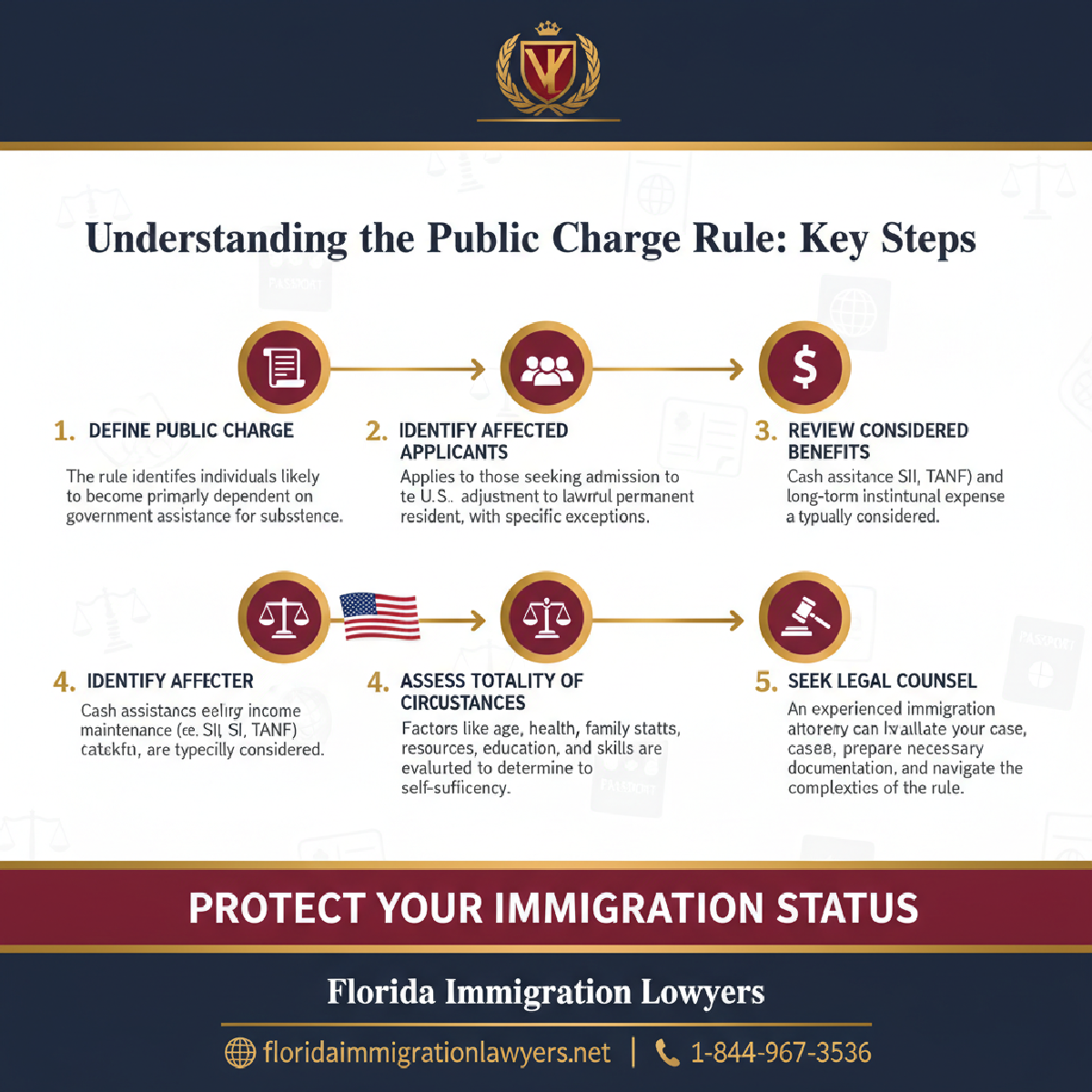
When assessing whether an individual is likely to become a public charge, USCIS considers the "totality of the circumstances." This means they look at a range of factors rather than just one. According to 8 CFR 212.21(c), these factors include:
- Age: Both very young and very old applicants may face closer scrutiny.
- Health: A medical condition requiring extensive and costly public care could be a factor.
- Family Status: The size of your household and the number of dependents.
- Assets, Resources, and Financial Status: Your income, savings, property, and other financial holdings.
- Education and Skills: Your level of education, job skills, and English language proficiency.
No single factor is determinative; instead, USCIS weighs all these elements together to form a comprehensive picture of your potential for self-sufficiency. Strong positive factors can often outweigh minor negative ones.
What Benefits Are Considered and Which Are Not?
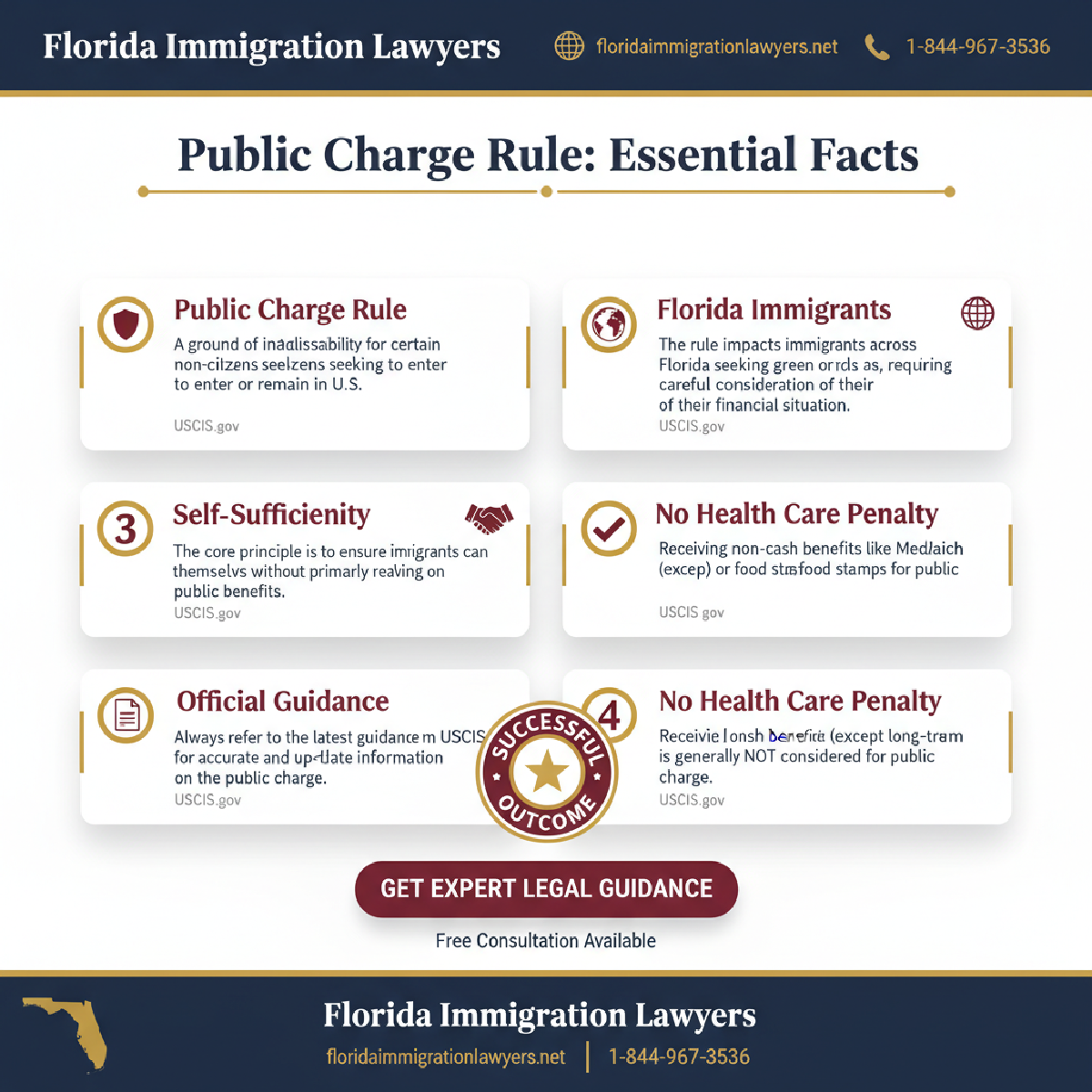
It's vital for Florida immigrants to understand which specific Florida benefits trigger the public charge assessment. The current rule is narrower than some past versions, focusing on direct cash assistance and long-term institutional care. The following benefits ARE considered for public charge purposes:
- Supplemental Security Income (SSI)
- Temporary Assistance for Needy Families (TANF)
- State, Tribal, territorial, or local cash assistance programs for income maintenance
- Long-term institutional care (e.g., in a nursing home or mental health institution) paid for by the government
Conversely, many commonly used benefits are NOT considered. This list is extensive and provides significant relief for many families. These benefits include:
- Medicaid (except for long-term institutionalization)
- Children's Health Insurance Program (CHIP)
- Supplemental Nutrition Assistance Program (SNAP, or food stamps)
- Housing assistance
- Women, Infants, and Children (WIC) program
- Student loans and grants
- Disaster relief
- Foster care and adoption assistance
- Head Start
- Emergency medical care
- Immunizations and testing for communicable diseases
The distinction is crucial. Many Florida immigrants can access essential services without fear of `inadmissibility grounds` due to the public charge rule. For detailed guidance, consult the USCIS Policy Manual on Public Charge.
Navigating the Public Charge Assessment Process
The public charge assessment is an integral part of many immigration applications. Understanding the steps involved can help you prepare thoroughly and reduce anxiety. This process typically applies when you are applying for a green card (adjustment of status) within the U.S. or an immigrant visa at a U.S. consulate abroad.
-
Determine Applicability: First, confirm if the public charge rule applies to your immigration category. Certain groups, like refugees, asylees, and victims of trafficking (T and U visa holders), are exempt from this assessment. Verify your status to avoid unnecessary steps or concerns. For example, individuals seeking asylum are not subject to this rule.
-
Gather Financial Documentation: Collect comprehensive proof of income, assets, and financial stability. This includes tax returns from the last three years, bank statements, property deeds, investment account statements, and letters verifying employment. The more robust your financial picture, the stronger your case against potential `inadmissibility grounds`.
-
Complete Form I-864, Affidavit of Support: If applicable, a U.S. citizen or lawful permanent resident sponsor must file this form, demonstrating their ability to financially support you. This is crucial for many family immigration cases. The sponsor must meet specific income thresholds, typically 125% of the federal poverty guidelines for their household size. A strong I-864 significantly mitigates public charge concerns.
-
Attend Interviews: Be prepared to discuss your financial situation, employment history, education, and potential reliance on Florida benefits during your interview. This could be at a USCIS office in Florida (such as Orlando, Miami, or Tampa) or a U.S. consulate abroad. Answer all questions honestly and provide clear, concise information.
-
Respond to Requests for Evidence (RFEs): If USCIS needs more information to make a determination, they will send an RFE. This is common when the initial documentation is insufficient. Timely and thorough responses, often with the help of an attorney, are essential to avoid delays or denials of your application for a `green card public charge` assessment.
Essential Documents for Your Public Charge Review
Preparing a complete set of documents is paramount for a successful immigration application involving the public charge rule. A well-organized submission reduces the likelihood of Requests for Evidence (RFEs) and can expedite processing. Here is a checklist of commonly required documents:
- ✓ Form I-485, Application to Register Permanent Residence or Adjust Status (if adjusting status in the U.S.).
- ✓ Form I-864, Affidavit of Support (and all supporting documents from your sponsor, including tax returns, employment letters, and proof of assets).
- ✓ Proof of your income and employment: Tax transcripts for the last three years, recent pay stubs, and employment verification letters.
- ✓ Assets documentation: Bank statements, property deeds, investment account statements, and retirement account summaries.
- ✓ Debts documentation: Loan statements (mortgage, car, student), credit card statements, and any other significant liabilities.
- ✓ Health insurance information: Proof of private or employer-sponsored health insurance coverage.
- ✓ Education and skills documentation: Diplomas, transcripts, professional licenses, certifications, and vocational training certificates.
- ✓ Any evidence demonstrating self-sufficiency, such as job offers, business plans, or significant community involvement in Florida.
- ✓ A detailed personal statement explaining any gaps in employment, past use of specific Florida benefits, or plans for future financial stability.
Public Charge Rule Timeline and Processing Expectations in Florida
The timeline for a public charge rule assessment is intertwined with the overall processing time of your immigration application, whether it's for a green card or an immigrant visa. These timelines can vary significantly based on several factors, and it's important for Florida immigrants to manage their expectations.
Factors Affecting Processing Times
Several elements influence how long your case might take:
- Application Type: Family-based petitions, employment-based petitions, and adjustment of status applications each have different processing queues.
- Completeness of Application: A thoroughly prepared application with all required documentation from the outset can prevent delays.
- Responsiveness to RFEs: Prompt and comprehensive responses to any Requests for Evidence are critical.
- Interview Scheduling: The availability of interview slots at USCIS field offices or consular posts can impact your timeline.
- Current USCIS Backlogs: National and local backlogs at USCIS processing centers and field offices (like those in Orlando, Miami, or Tampa) can extend waiting periods.
Florida-Specific Considerations
Florida, with its large and diverse immigrant population, sees a high volume of immigration applications. While Gainesville does not have a USCIS field office, residents typically file their applications with the National Benefits Center or attend interviews at offices in Jacksonville, Orlando, or Tampa. These offices can have varying processing times. It's advisable to check the USCIS website for current processing times, as they are updated regularly.
For adjustment of status cases, which typically involve a public charge assessment, average processing times can range from 10-24 months or even longer in some instances. Consular processing abroad may follow different schedules. Patience and meticulous preparation are key to navigating these timelines effectively.
Understanding Cost Factors and Fees Related to Public Charge
There isn't a direct "public charge fee" that you pay separately. Instead, the assessment is part of the broader application process for a visa or green card, and its associated costs are integrated into those fees. Understanding these financial aspects is crucial for Florida immigrants planning their immigration journey.
Associated Costs for Your Application
The primary expenses you will encounter include:
- USCIS Filing Fees: These are the most significant costs. For example, filing Form I-485, Application to Register Permanent Residence or Adjust Status, involves a substantial fee. These fees change periodically, so always check the official USCIS website for the most current amounts.
- Biometrics Fees: A separate fee is typically required for biometric services (fingerprints, photos, signature) as part of your application process.
- Medical Examination Fees: All applicants for adjustment of status must undergo a medical examination by a USCIS-approved civil surgeon. The cost for this exam is paid directly to the civil surgeon and varies by provider.
- Attorney Fees: While not mandatory, hiring an experienced immigration lawyer from Florida Immigration Lawyers can be a wise investment. Our legal expertise ensures your application is strong, complete, and fully compliant with the complex public charge rule, potentially saving you from costly delays or denials.
- Translation Costs: If any supporting documents are not in English, certified translations will be required. These services incur additional costs.
- Travel Costs: Depending on your location in Florida, you may incur travel expenses for appointments at USCIS field offices (e.g., in Orlando or Miami) or for your medical exam.
Careful budgeting and preparation for these costs are essential. Remember, attempting to save on legal fees by navigating the process alone can lead to costly mistakes and potentially jeopardize your immigration future.
Do not navigate this complex public charge rule process alone. The stakes are too high. Contact Florida Immigration Lawyers today to ensure your application is robust and addresses all potential inadmissibility grounds. Our team is dedicated to guiding Florida immigrants through every step, offering personalized advice tailored to your specific situation and helping you avoid common pitfalls. Call 1-844-967-3536 for a free consultation.
Common Mistakes to Avoid with the Public Charge Rule
-
Misunderstanding the Definition of "Public Charge": Many immigrants mistakenly believe that any use of government benefits, such as SNAP or Medicaid, will lead to inadmissibility. Consequences: Unnecessary fear, avoiding vital assistance, and making uninformed decisions that could impact health or well-being.
-
Failing to Disclose All Relevant Information: Hiding past benefit use or financial struggles, even if you think they are minor, can be seen as misrepresentation. Consequences: Application denial, potential fraud accusations, and future `inadmissibility grounds` that are difficult to overcome.
-
Ignoring the Affidavit of Support (Form I-864): For many family-based cases, a robust I-864 from a qualified sponsor is absolutely critical. Consequences: Application denial if the sponsor does not meet income requirements, fails to provide adequate documentation, or the form is incomplete.
-
Not Demonstrating Sufficient Financial Resources: Providing insufficient evidence of your own or your sponsor's ability to be self-sufficient. Consequences: USCIS may deem you likely to become a public charge, leading to a denial of your `green card public charge` application.
-
Delaying Responses to Requests for Evidence (RFEs): RFEs require prompt and thorough responses within the specified timeframe. Consequences: Case delays, potential denial of your application, and having to restart the entire application process, costing more time and money.
-
Failing to Update USCIS on Material Changes: Significant changes in employment, income, family status, or address should be reported to USCIS. Consequences: Misinformation in your file, potential denial based on outdated information, or lost communications.
-
Not Seeking Legal Counsel: Attempting to navigate the complex public charge rule without expert legal guidance. Consequences: Errors, missed deadlines, or overlooking critical details that lead to `inadmissibility grounds` and jeopardizing your immigration goals.
-
Assuming Exemptions Apply Without Confirmation: Believing you are exempt from the public charge rule without verifying your specific immigration category. Consequences: Proceeding incorrectly, leading to delays or denial when the rule actually applies to your case.
-
Providing Inconsistent Information: Discrepancies between your application forms, interview answers, or supporting documents. Consequences: Credibility issues, potential fraud review, and significant damage to your case.
-
Focusing Only on Income: While income is important, USCIS considers the "totality of the circumstances," including age, health, education, and skills. Consequences: Presenting an incomplete picture of self-sufficiency, which might not fully address all aspects of the `immigration rule`.
When to Call a Florida Immigration Lawyer
The complexities of the public charge rule mean that professional legal guidance can be invaluable. While some cases may seem straightforward, even minor missteps can have significant consequences. It is always wise to consult with an attorney from Florida Immigration Lawyers, particularly in these scenarios:
- You have a complex financial situation, are self-employed, or have multiple income sources that need careful presentation.
- You or your family members have previously used Florida benefits that might be considered under the public charge rule, and you need to understand their impact.
- You have concerns about potential inadmissibility grounds due to health issues or other personal circumstances.
- You receive a Request for Evidence (RFE) from USCIS related to the public charge assessment or your financial situation.
- You are applying for family immigration where the sponsor's income is borderline, or there are complexities with the Affidavit of Support.
- You are an asylum seeker or refugee needing to understand the specific exemptions that apply to your situation.
- You are facing deportation defense proceedings where the public charge rule might be a contributing factor to your removal.
- You simply want peace of mind that your application is as strong and compliant as possible.
Florida Immigration Lawyers offers comprehensive legal services for all immigration matters. Our experienced `attorneys` understand the nuances of the public charge rule and its application in Florida. We serve clients in Gainesville, Orlando, Miami, and throughout the state, providing tailored strategies to protect your future.
Frequently Asked Questions About the Public Charge Rule in Florida
What is the public charge rule for immigrants?
The public charge rule is a provision under U.S. immigration law, specifically INA 212(a)(4), that allows immigration officials to deny visas or green cards to individuals deemed likely to become primarily dependent on certain government benefits. This determination is based on a "totality of the circumstances" test, evaluating factors like age, health, family status, assets, education, and skills. It's crucial for Florida immigrants to understand which specific Florida benefits are considered and which are not. The rule aims to ensure that immigrants can be self-sufficient in the U.S.
Can cops ask for immigration status in Florida?
While not directly related to the public charge rule, this is a common concern for Florida immigrants. In Florida, law enforcement officers generally cannot ask about immigration status unless they have a reasonable suspicion that a person has committed a crime, or if they are enforcing specific state laws that interact with federal immigration enforcement. However, local police cannot enforce federal immigration laws independently without specific agreements or warrants. Always know your rights, and consult an attorney if you face such a situation. Your rights as an immigrant are important, and understanding them is key.
What is the new immigration law in Florida 2025?
As of 2026, Florida continues to grapple with state-level immigration rule changes. While federal immigration rule governs public charge, Florida periodically enacts its own laws that can impact immigrants, such as those related to employment, transportation, or access to certain services. For example, some Florida laws have focused on E-Verify requirements or restrictions on certain types of identification. It is essential for Florida immigrants to stay informed about both federal and state legislative developments. Florida Immigration Lawyers keeps abreast of these changes to provide the most current advice.
What is the public charge rule for November 2025?
The public charge rule implemented in December 2022 (following a period of flux) remains in effect for 2026. This rule reverts to the 1999 interim field guidance, focusing primarily on cash assistance and long-term institutionalization at government expense. It does not consider benefits like SNAP, Medicaid (non-long-term), housing assistance, or WIC. This consistency provides more clarity for Florida immigrants compared to previous iterations. For the most up-to-date information, always refer to uscis.gov, as policies can be subject to change.
Is Medicaid a public charge?
Generally, no. Under the current public charge rule, the receipt of Medicaid benefits is typically NOT considered in a public charge determination. The significant exception is long-term institutional care paid for by the government. Routine medical care, even if covered by Medicaid, does not count. This is an important distinction for Florida immigrants who rely on healthcare services, ensuring they can access necessary medical attention without fear of jeopardizing their immigration status.
How does the public charge rule affect green card applicants?
The public charge rule primarily applies to individuals applying for `green cards` (adjustment of status) within the U.S. or for immigrant visas abroad. If an applicant is deemed likely to become a public charge, they can be found inadmissible and denied their `green card public charge` application. The "totality of the circumstances" test is applied to assess this likelihood, making a strong application and understanding the immigration rule vital for Florida immigrants seeking permanent residency. This rule is a major hurdle for many.
Are there any exemptions to the public charge rule?
Yes, several categories of non-citizens are exempt from the public charge rule. These include refugees, asylees, certain victims of domestic violence (VAWA self-petitioners), victims of trafficking (T visa holders), victims of qualifying criminal activity (U visa holders), and certain special immigrant juveniles. It's crucial to determine if your specific situation falls under an exemption. Florida Immigration Lawyers can help assess your eligibility for these critical exemptions, which can significantly simplify your immigration process.
What if I have used Florida benefits in the past?
Past receipt of benefits that are NOT considered under the public charge rule (like SNAP or most Medicaid) will generally not negatively impact your application. If you received benefits that ARE considered (like SSI or TANF), it will be weighed as part of the "totality of the circumstances." However, it is just one factor, and other positive factors can outweigh it. Transparency and a strong overall case are key for Florida immigrants. Consulting an attorney can help you present your history in the best light.
How long does the public charge review take?
The public charge review is part of the overall application process for a `green card` or immigrant visa, so its "timeline" is tied to the processing time of your main application. This can vary widely, from several months to over two years, depending on the USCIS office, the complexity of your case, and current backlogs. Providing all necessary documentation upfront can help expedite the process for Florida immigrants. Always monitor USCIS processing times for the most current estimates.
What is an Affidavit of Support (Form I-864) and why is it important for public charge?
Form I-864, Affidavit of Support, is a legally enforceable contract an individual signs to accept financial responsibility for the applicant. It is required for most family-based immigrants and some employment-based immigrants. The sponsor must demonstrate income at or above 125% of the federal poverty guidelines. A strong I-864 is a critical positive factor in overcoming potential public charge concerns, showing that the applicant will not become a burden on the U.S. government. This form is a cornerstone of many `green card public charge` applications.
About Florida Immigration Lawyers
Florida Immigration Lawyers is a leading law firm dedicated to serving the diverse immigrant communities across Florida. We understand that navigating U.S. immigration law, including complex provisions like the public charge rule, can be daunting. Our mission is to provide expert legal guidance and compassionate support to help you achieve your immigration dreams.
We specialize in a wide array of immigration matters, including family immigration, business immigration, asylum, deportation defense, and citizenship processes. Our experienced attorneys are well-versed in the latest `immigration rule` changes and their application to Florida immigrants.
Why choose us? We offer personalized, results-driven legal representation. We are available 24/7 and provide free consultations, ensuring that you can get the help you need when you need it most. Serving all of Florida, from Gainesville to Miami, we are your trusted partners in immigration. Visit our website at floridaimmigrationlawyers.net or call us at 1-844-967-3536.
This article is for general informational purposes only and does not constitute legal advice. Immigration laws change frequently. For advice specific to your situation, please consult with a qualified immigration attorney.
Navigating the public charge rule and other immigration rule complexities requires expert legal guidance. Don't leave your future to chance by attempting to navigate these intricate laws alone. For peace of mind and professional representation that understands the unique needs of Florida immigrants, contact Florida Immigration Lawyers today. Call us at 1-844-967-3536 for a free, confidential consultation. Let us help you achieve your immigration goals in Florida with confidence and clarity.
Florida Immigration Lawyers
Legal Team
Our experienced attorneys at Florida Immigration Lawyers have been serving clients across Florida for over 20 years. We specialize in immigration, personal injury, criminal defense, workers compensation, and family law.