Oxford Historian Faces Deportation Florida: Your Defense Guide
When an Oxford historian faces deportation in Florida, it underscores the critical need for robust legal defense against removal. This comprehensive guide covers the complex deportation process, common grounds for removal, essential documents for defense, and typical timelines in Florida immigration courts. Learn about the crucial role of an experienced immigration lawyer in navigating these challenges, avoiding common mistakes, and understanding your rights. Florida Immigration Lawyers offers free consultations to help you protect your future in the U.S. Contact us today for expert guidance.

Facing deportation, as in the hypothetical case of an Oxford historian in Florida, is a serious legal challenge requiring immediate action. It means the U.S. government is attempting to remove a non-citizen from the country, often due to visa violations, criminal offenses, or other immigration infractions. Understanding your rights and building a strong defense are crucial to preventing removal.
- Deportation proceedings are complex and require legal expertise.
- Immediate legal consultation is vital to assess your specific situation.
- Many defenses exist, including asylum, cancellation of removal, or waivers.
- Gathering all relevant documents promptly can strengthen your case.
- Never attend an immigration court hearing without legal representation.
Introduction: Navigating Deportation Challenges in Florida
Imagine a scenario where a renowned academic, perhaps an Oxford historian, finds themselves facing deportation from Florida. This thought-provoking situation highlights a critical reality for many non-citizens across our state. The threat of removal from the U.S. can arise from various circumstances, impacting individuals from all walks of life, even those with significant contributions.
This article aims to demystify the complex world of immigration deportation, especially for those in Florida, including Hialeah and surrounding areas. We will explore the common reasons for deportation, the legal process involved, and the crucial steps you can take to defend your right to remain in the United States. Our goal is to provide a comprehensive guide that empowers you with knowledge and clarity during such a challenging time.
Understanding the intricacies of U.S. immigration law is paramount. If you or someone you know is facing the daunting prospect of deportation, it is essential to seek professional guidance immediately. Call Florida Immigration Lawyers at 1-844-967-3536 for a free consultation. Our experienced team is ready to help you navigate these complex legal waters.
Overview: Understanding Deportation and Removal Proceedings in Florida
Deportation, officially known as 'removal proceedings,' is the legal process by which the U.S. government orders a non-citizen to leave the country. These proceedings are handled by the Executive Office for Immigration Review (EOIR) within the Department of Justice, specifically in immigration courts. For residents of Florida, this often means appearing before the Miami Immigration Court or other regional courts.
The reasons for initiating removal proceedings are diverse. They can range from overstaying a visa, violating terms of admission, or committing certain criminal offenses, to issues related to misrepresentation on immigration forms. Even minor infractions can trigger a serious review of your immigration status.
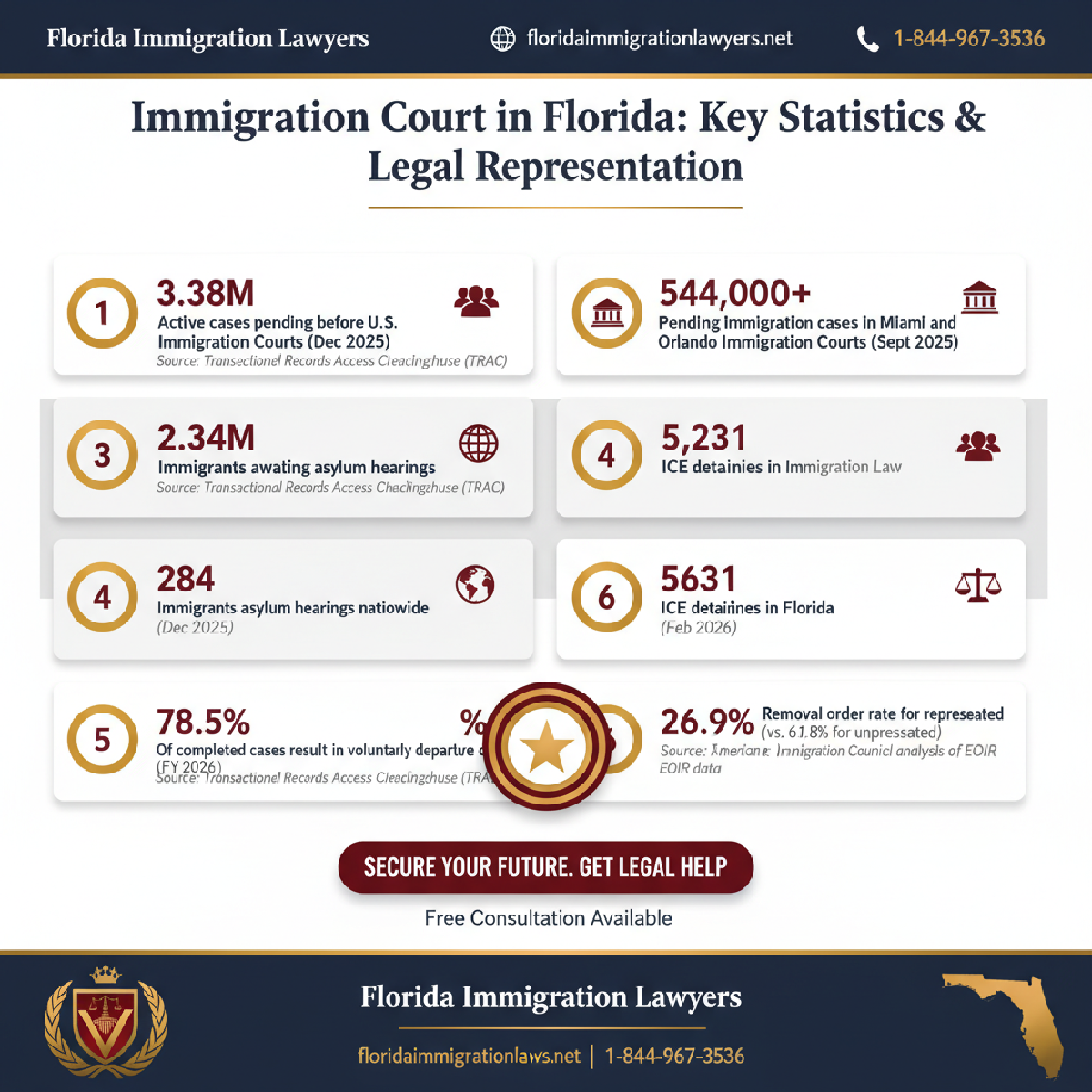
Florida, with its diverse population and bustling ports of entry, sees a significant number of immigration cases. According to recent data, immigration courts in Florida handle thousands of cases annually, underscoring the widespread impact of these laws. Understanding the legal framework, such as the Immigration and Nationality Act (INA), is crucial for anyone facing these challenges.
The process can be lengthy and emotionally taxing. It involves multiple hearings, presentation of evidence, and legal arguments. Having a knowledgeable legal team on your side, like Florida Immigration Lawyers, can make a significant difference in the outcome of your case.
We understand the unique pressures faced by individuals in Florida, including those in communities like Hialeah, who might be grappling with these issues. Our firm is committed to providing compassionate and effective legal representation to protect your future in the U.S.
Common Grounds for Deportation
Several actions or circumstances can make a non-citizen deportable under U.S. law. These grounds are outlined in the Immigration and Nationality Act (INA).
Common reasons include:
- Visa Violations: Overstaying a visa, violating the terms of a non-immigrant visa (e.g., working without authorization on a tourist visa).
- Criminal Offenses: Convictions for certain crimes, particularly aggravated felonies, crimes involving moral turpitude (CIMT), and drug-related offenses.
- Immigration Fraud: Misrepresentation or fraud in obtaining a visa or other immigration benefit.
- Security Grounds: Engaging in activities deemed a threat to national security.
- Unlawful Entry: Entering the U.S. without inspection or parole.
Each ground for deportation has specific legal definitions and consequences. For example, an aggravated felony conviction often leads to mandatory detention and limited options for relief from removal, as per INA § 237(a)(2)(A)(iii).
The Role of USCIS and ICE
While USCIS (U.S. Citizenship and Immigration Services) generally handles applications for immigration benefits, and ICE (U.S. Immigration and Customs Enforcement) is responsible for enforcing immigration laws, their roles can intersect in deportation cases.
USCIS might deny an application and refer a case to ICE for removal proceedings, especially if an individual has overstayed their authorized period. ICE agents are responsible for apprehending individuals suspected of being deportable and initiating the Notice to Appear (NTA) process, which formally begins removal proceedings in immigration court.
Understanding which agency is involved in your case is crucial for developing an appropriate legal strategy. Your attorney can help clarify these distinctions and guide you through the correct channels.
Step-by-Step Guide: What Happens When You Face Deportation
Facing deportation can feel overwhelming, but understanding the typical process can help you prepare. Here is a general step-by-step guide to removal proceedings:
- Notice to Appear (NTA) Issuance: The process typically begins when ICE issues a Notice to Appear (NTA). This document formally charges you with being deportable and orders you to appear before an immigration judge. The NTA will specify the alleged grounds for your removal.
- Master Calendar Hearing: Your first appearance in immigration court is usually a Master Calendar Hearing. This is a preliminary hearing where you, your attorney, and the immigration judge discuss the charges, admit or deny allegations, and identify potential forms of relief from deportation. You will also confirm your language preference and receive a date for your individual hearing.
- Pleadings and Relief from Removal: At the Master Calendar Hearing, you will formally respond to the charges. Your attorney will help you determine if you are eligible for any forms of relief, such as asylum, withholding of removal, protection under the Convention Against Torture (CAT), cancellation of removal for certain non-permanent residents (INA § 240A(b), 8 U.S.C. § 1229b), or adjustment of status.
- Individual Hearing (Merits Hearing): If you seek relief from removal, the judge will schedule an Individual Hearing. This is a longer, more detailed hearing where you and your attorney present evidence, call witnesses, and offer testimony to support your claim for relief. The government's attorney (ICE counsel) will also present their case.
- Decision by Immigration Judge: After the Individual Hearing, the immigration judge will issue a decision. The judge may grant the relief you requested, order your removal, or allow you voluntary departure. This decision is typically delivered orally in court and then followed by a written order.
- Appeals Process: If you or the government are dissatisfied with the immigration judge's decision, you generally have the right to appeal to the Board of Immigration Appeals (BIA). The BIA reviews the judge's decision for legal errors. Further appeals can be made to the U.S. Circuit Court of Appeals. This process is complex and has strict deadlines, making legal counsel essential.
- Enforcement of Order: If all appeals are exhausted and an order of removal stands, ICE is responsible for enforcing that order. This involves arranging your departure from the United States.
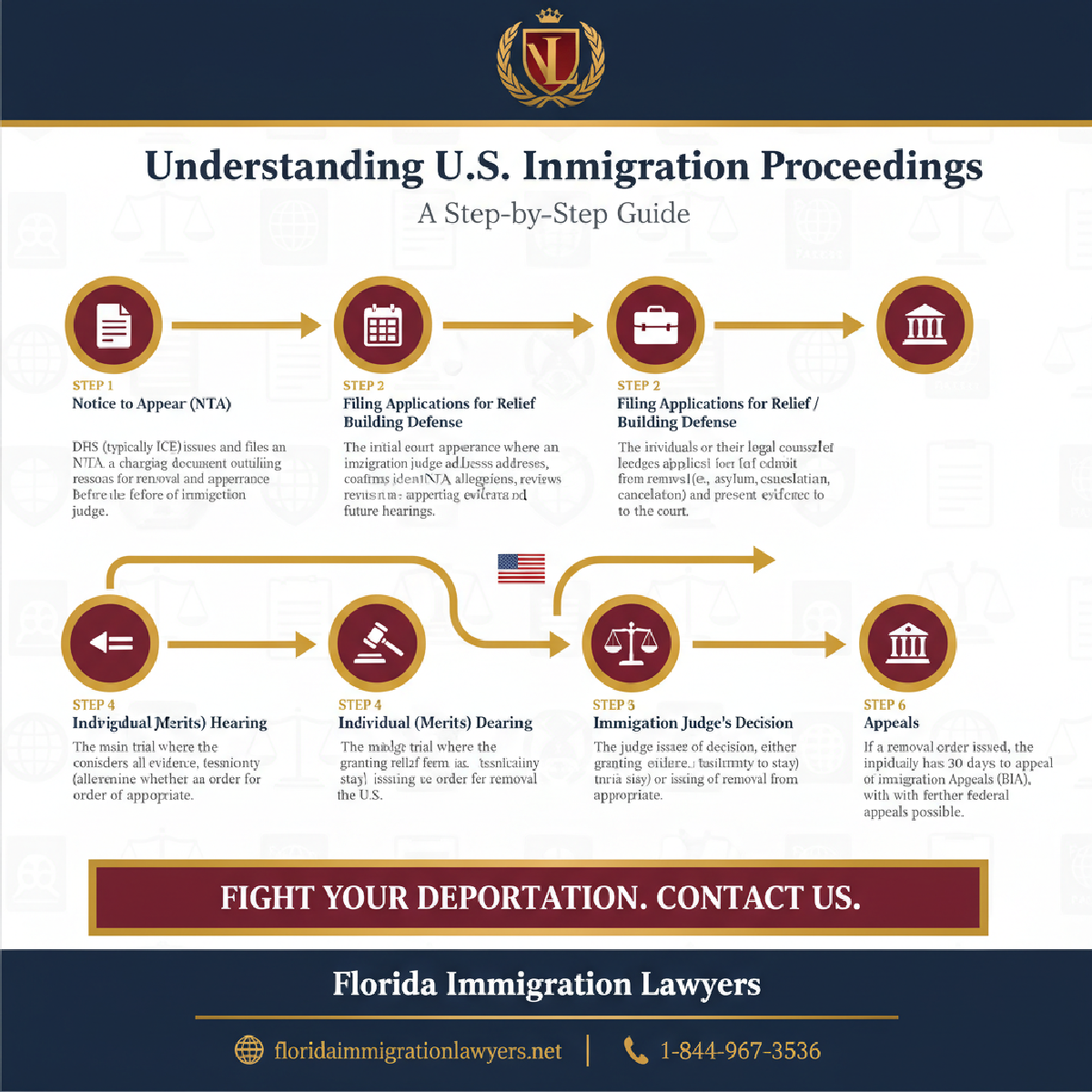
Throughout this entire process, legal representation is not just helpful, it is often critical. An experienced deportation defense lawyer understands the nuances of immigration law and can advocate effectively on your behalf.
Document Checklist for Deportation Defense
A strong defense against deportation relies heavily on compelling evidence. Gathering the right documents promptly is crucial. Here is a general checklist of documents you may need:
- ✔️ Identity Documents: Passport, birth certificate, national ID from your home country.
- ✔️ Immigration Documents: Visa, I-94 Arrival/Departure Record, green card (if applicable), previous USCIS notices or receipts, copies of all past immigration applications.
- ✔️ Proof of Residence in U.S.: Leases, utility bills, mail showing your address in Florida, especially in areas like Hialeah.
- ✔️ Proof of Family Ties: Birth certificates of U.S. citizen or LPR children/spouses, marriage certificates, family photos, affidavits from family members.
- ✔️ Employment History: Pay stubs, W-2 forms, employment letters, tax returns.
- ✔️ Financial Records: Bank statements, property deeds, mortgage statements.
- ✔️ Educational Records: Diplomas, transcripts, enrollment verification.
- ✔️ Medical Records: Proof of significant medical conditions, especially if seeking humanitarian relief.
- ✔️ Character References: Letters from employers, community leaders, religious figures, friends, and family attesting to your good moral character.
- ✔️ Police Records/Court Dispositions: For any arrests or convictions, even if expunged or dismissed. This is critical for assessing eligibility for waivers.
- ✔️ Evidence of Hardship: Documents demonstrating extreme and unusual hardship to qualifying relatives if you are deported.
- ✔️ Asylum/Withholding of Removal Evidence: If applicable, evidence of persecution or fear of persecution in your home country (e.g., news articles, police reports, human rights reports).
This list is not exhaustive, and the specific documents required will vary based on the grounds for deportation and the type of relief you are seeking. Your attorney from Florida Immigration Lawyers will provide a tailored list for your specific case.
Timeline and Processing Expectations in Florida Immigration Courts
The timeline for deportation proceedings in Florida, like elsewhere in the U.S., can vary significantly. Immigration courts are often backlogged, leading to lengthy waits between hearings and final decisions.
Here's what you can generally expect:
- Initial NTA to Master Calendar Hearing: This can take anywhere from a few weeks to several months, depending on court dockets and whether you are detained.
- Master Calendar Hearings: You may have one or more Master Calendar Hearings, usually spaced several weeks or months apart, to address preliminary matters.
- Individual Hearing Scheduling: Once relief is sought, an Individual Hearing could be scheduled months, or even years, after your initial Master Calendar. The Miami Immigration Court, for instance, often has cases scheduled far in advance.
- Decision and Appeals: After an Individual Hearing, the judge's decision might take a few weeks to be issued. If appealed to the BIA, that process can take another 6-12 months or more. Appeals to federal circuit courts can add significantly more time.
Factors influencing these timelines include:
- The complexity of your case and the type of relief sought.
- The current backlog of the immigration court.
- Your detention status (detained cases often move faster).
- The availability of judges and court resources.
It's important to prepare for a potentially long process. Your Florida Immigration Lawyers attorney will keep you informed about realistic timelines and any developments in your case. Proactive preparation and prompt responses to court requests can sometimes help expedite certain stages.
Cost Factors and Fee Breakdown for Deportation Defense
Understanding the financial aspects of deportation defense is crucial. Legal fees are a significant component, but other costs may also arise during the process. While we cannot provide specific fee amounts, here’s a general breakdown of what to consider:
- Attorney Fees: These vary based on the complexity of your case, the experience of your lawyer, and the amount of work involved. A flat fee or hourly rate might be charged. Cases involving multiple forms of relief, extensive evidence gathering, or appeals will generally incur higher fees.
- Filing Fees: USCIS and EOIR charge fees for certain applications for relief (e.g., application for adjustment of status, waivers). These fees are subject to change and are non-refundable. Your attorney can advise you on the current fees applicable to your situation.
- Expert Witness Fees: In some cases, particularly asylum or complex waiver applications, expert testimony (e.g., from country condition experts or psychologists) may be beneficial, incurring additional costs.
- Translation and Interpretation Fees: If documents need to be translated into English or if you require an interpreter for attorney meetings or court hearings (though courts provide interpreters for hearings), these costs may apply.
- Travel and Miscellaneous Expenses: Costs for obtaining documents, postage, or travel to court if you live far from the Miami Immigration Court or other relevant venues.
At Florida Immigration Lawyers, we believe in transparency regarding legal costs. During your initial free consultation, we can discuss our fee structure and help you understand the potential financial commitment for your specific deportation defense case. We are dedicated to making quality legal representation accessible.
Do not navigate this process alone. Contact Florida Immigration Lawyers today.
Common Mistakes to Avoid in Deportation Proceedings
Deportation proceedings are fraught with potential pitfalls. Avoiding common mistakes can significantly improve your chances of a favorable outcome. Here are some critical errors to steer clear of:
- Ignoring a Notice to Appear (NTA): Failing to appear for a scheduled court hearing, even if you did not receive the NTA, can lead to an 'in absentia' removal order. This means you are ordered deported without a hearing, making it incredibly difficult to reopen your case.
- Lying to Immigration Officials or in Court: Any false statements or misrepresentations, whether to ICE, USCIS, or an immigration judge, can be considered immigration fraud. This can lead to severe penalties, including a permanent bar from future immigration benefits.
- Failing to Disclose Criminal History: Attempting to conceal past arrests or convictions, even minor ones, will almost certainly be discovered. Full disclosure allows your attorney to address these issues proactively and explore potential waivers or defenses.
- Missing Deadlines: Immigration proceedings involve strict deadlines for filing applications, submitting evidence, and appealing decisions. Missing a deadline can result in the forfeiture of your right to relief or appeal.
- Not Seeking Legal Counsel: Representing yourself in immigration court is extremely risky. Immigration law is complex, constantly changing, and judges expect adherence to legal procedures. An attorney understands the law and can identify potential defenses or forms of relief you might not know about.
- Voluntarily Departing Without Legal Advice: While voluntary departure can be an option, agreeing to it without understanding the consequences can be a mistake. It might waive your right to appeal or have other long-term immigration consequences.
- Not Gathering Sufficient Evidence: A weak case often stems from insufficient documentation. Failing to provide comprehensive evidence to support your claims for relief, such as hardship or persecution, can lead to denial.
- Assuming All Lawyers Are Alike: Immigration law is a specialized field. Consulting with a general practice attorney who lacks specific experience in deportation defense can be detrimental. Seek a lawyer who regularly practices immigration law.
- Changing Your Address Without Notifying EOIR: You are legally required to inform the immigration court of any change in your mailing address. Failure to do so can result in missed notices and potentially an in absentia removal order.
- Overlooking Potential Relief Options: Many individuals are unaware of the various forms of relief available to them, such as cancellation of removal, asylum, or waivers. An experienced attorney can identify all possible avenues for defense.
- Discussing Your Case with Others: Be cautious about discussing the specifics of your case with anyone other than your attorney. Information shared with others, especially those who are not legal professionals, could be misinterpreted or used against you.
- Not Understanding Your Rights: Knowing your rights during an encounter with ICE or other law enforcement is crucial. You have the right to remain silent and the right to an attorney. Exercising these rights properly can protect your case.
When to Call a Lawyer: Your Advocate in Florida
The moment you receive any notice from an immigration authority, whether it's a Notice to Appear (NTA) or a query about your status, is the moment to contact an immigration attorney. Delaying can severely limit your options and complicate your defense.
You should specifically call Florida Immigration Lawyers if:
- You Receive a Notice to Appear (NTA): This is the official start of deportation proceedings. Do not try to handle this alone.
- You Are Detained by ICE: If you or a loved one is in ICE custody in Florida, immediate legal intervention is critical to explore bond options and begin defense strategies.
- You Have a Criminal Conviction: Certain criminal offenses can trigger deportation, even if you are a lawful permanent resident. An attorney can assess the immigration consequences of your conviction.
- You Believe You Are Eligible for Asylum or Other Relief: If you fear returning to your home country or have strong ties to the U.S. that could qualify you for cancellation of removal, an attorney can help you prepare a compelling case.
- Your Visa Application Was Denied or Your Status Is Questioned: A denial or a notice of intent to revoke your status can be a precursor to removal proceedings.
- You Have Been Ordered Removed and Wish to Appeal: The appeals process is highly technical and requires expert legal knowledge.
Florida Immigration Lawyers specializes in deportation defense and has extensive experience representing individuals across Florida, including Hialeah, Miami, Orlando, and Tampa. We understand the specific challenges faced by our community and are dedicated to providing aggressive and compassionate representation. Our attorneys are well-versed in the latest immigration laws and court procedures, ready to fight for your right to stay in the United States.
Frequently Asked Questions About Deportation in Florida
Q1: Which Indian historian from Oxford faces deportation for spending too much time on research in India?
The well-known case involves Dr. Manikarnika Dutta, an Indian historian and academic affiliated with Oxford University. She faced deportation from the UK due to issues with exceeding the allowable time spent outside the UK while on a specific visa, despite her extensive research abroad being central to her academic work. This situation highlights how strict immigration rules regarding physical presence can impact even highly accomplished individuals. While this specific case occurred in the UK, it serves as a powerful reminder for anyone in Florida on a U.S. visa that maintaining compliance with all visa terms, including duration of stay and travel restrictions, is critical to avoiding similar immigration challenges in the United States.
Q2: Who is Manikarnika Dutta?
Manikarnika Dutta is an Indian historian who gained public attention when she faced deportation from the United Kingdom. She was pursuing advanced academic research and had affiliations with Oxford University. Her case became emblematic of the challenges academics and researchers can face when their work requires extensive travel and time spent outside the country where their visa is held. The UK Home Office cited her extended periods of research in India as a violation of her visa conditions, leading to the deportation threat. Her situation sparked a wider debate about immigration policies affecting international scholars and the need for flexibility in academic visa categories.
Q3: Has Indian historian Manikarnika Dutta been ordered to leave the UK?
Yes, Dr. Manikarnika Dutta was indeed ordered to leave the UK by the Home Office. The order stemmed from her exceeding the maximum allowable days outside the UK under her specific visa category, which was a point-based system visa. Despite her arguments that her extensive research travel was integral to her academic work and beneficial to the UK's academic standing, the Home Office maintained its strict application of immigration rules. Her case garnered significant media attention and support from the academic community, highlighting the stringent nature of immigration regulations even for individuals contributing significantly to their host country.
Q4: What are the primary reasons someone might face deportation in Florida?
In Florida, as across the U.S., common reasons for deportation include overstaying a visa, violating visa terms (like working without authorization), committing certain criminal offenses (especially aggravated felonies or crimes involving moral turpitude), immigration fraud, or entering the country without inspection. Even minor legal infractions can sometimes trigger removal proceedings, particularly if there are prior immigration issues. The U.S. government takes these matters seriously, and the consequences can be life-altering. It is essential to understand that any interaction with law enforcement, even for minor issues, can potentially expose an individual to immigration enforcement actions.
Q5: Can I fight a deportation order if I am in Florida?
Absolutely. You have the right to fight a deportation order. There are several forms of relief available, depending on your specific circumstances. These can include asylum, withholding of removal, protection under the Convention Against Torture, cancellation of removal for lawful permanent residents or non-permanent residents, and various waivers. The specific defense strategy will depend on the grounds for your deportation, your immigration history, and your personal circumstances, such as family ties in the U.S. Consulting with an experienced immigration attorney in Florida is crucial to determine your eligibility for these defenses and build a strong case.
Q6: What is the role of an immigration lawyer in a deportation case?
An immigration lawyer plays a critical role in deportation cases. They can assess the charges against you, identify potential defenses and forms of relief, prepare and file necessary applications, gather evidence, represent you in immigration court hearings, and appeal adverse decisions. A lawyer acts as your advocate, ensuring your rights are protected and that you present the strongest possible case. Navigating the complex legal system, understanding legal precedents, and meeting strict deadlines are all areas where an experienced attorney provides invaluable assistance. They can also help you understand the nuances of laws like the INA and 8 CFR.
Q7: How long do deportation proceedings typically take in Florida?
The duration of deportation proceedings in Florida can vary significantly, ranging from several months to several years. Factors influencing the timeline include the complexity of your case, the type of relief you are seeking, the current backlog of the immigration court (e.g., Miami Immigration Court often has extensive dockets), and whether you are detained. Detained cases generally proceed faster. Appeals to the Board of Immigration Appeals or federal circuit courts can add substantial time to the process. Your attorney can provide a more realistic estimate based on the specifics of your individual case and current court conditions.
Q8: What happens if I lose my deportation case?
If you lose your deportation case and all appeals are exhausted, the immigration judge's order of removal becomes final. At this point, U.S. Immigration and Customs Enforcement (ICE) is responsible for enforcing the order, which means you will be physically removed from the United States. The consequences can also include a bar from re-entering the U.S. for a certain period, or in some cases, permanently. It is crucial to exhaust all legal avenues and seek expert advice throughout the process to avoid this outcome. Even after a final order, there may be very limited extraordinary remedies available, which only an experienced attorney can assess.
About Florida Immigration Lawyers
Florida Immigration Lawyers is a leading immigration law firm dedicated to serving individuals and families across the entire state of Florida. With a deep understanding of U.S. immigration law and a commitment to our clients, we provide comprehensive legal services in various immigration matters.
Our services include, but are not limited to, deportation defense, asylum claims, family-based immigration, business immigration, citizenship and naturalization, and visa applications. We pride ourselves on offering compassionate, client-focused representation, ensuring that you receive personalized attention and strategic advice tailored to your unique situation.
We understand that immigration challenges can be stressful and life-altering. That's why our team of experienced attorneys is available 24/7 to provide support and guidance. We offer free consultations to help you understand your options and begin building a strong case. When you choose Florida Immigration Lawyers, you choose a dedicated advocate committed to protecting your rights and helping you achieve your immigration goals.
Contact us today:
- Phone: 1-844-967-3536
- Website: https://www.floridaimmigrationlawyers.net
- Serving: All of Florida, including Hialeah, Miami, Orlando, Tampa, and Jacksonville.
This article is for general informational purposes only and does not constitute legal advice. Immigration laws change frequently. For advice specific to your situation, please consult with a qualified immigration attorney.
Secure Your Future in Florida: Contact Us Today
The prospect of deportation can be incredibly frightening, but you do not have to face it alone. Whether your case involves complex visa issues, criminal allegations, or a need for asylum, the stakes are too high to navigate the U.S. immigration system without expert legal guidance. Florida Immigration Lawyers is here to provide the dedicated and effective representation you need to protect your rights and future.
Our team is ready to listen to your story, explain your options clearly, and develop a robust defense strategy tailored to your circumstances. We serve clients across all of Florida, offering accessible and professional legal support.
Take the crucial first step towards securing your stay in the United States. Call Florida Immigration Lawyers today at 1-844-967-3536 for a free, confidential consultation. Let us be your trusted partner in this challenging journey.
Florida Immigration Lawyers
Legal Team
Our experienced attorneys at Florida Immigration Lawyers have been serving clients across Florida for over 20 years. We specialize in immigration, personal injury, criminal defense, workers compensation, and family law.