Immigration for 2026 Winter Olympics Ice Hockey in Florida
For those connected to the 2026 Winter Olympics Ice Hockey, including athletes and support staff, understanding U.S. immigration laws is vital, especially with Florida’s role as a key training and residency hub. This guide details essential visa categories like P-1 and O-1, outlines a step-by-step application process, and provides a crucial document checklist. Learn about processing timelines, cost factors, and common mistakes to avoid. Florida Immigration Lawyers offers expert guidance for your temporary stay USA, ensuring compliance with USCIS regulations. Secure your journey to the Olympics with professional legal support in Florida.
For individuals connected to the 2026 Winter Olympics Ice Hockey, including athletes, coaches, and support staff, understanding U.S. immigration laws is crucial, especially if your journey brings you to Florida. While the games are in Milano Cortina, many may train, reside, or transit through Florida, requiring specific visas like the P-1 or O-1. Expert legal guidance is essential to navigate these complex temporary stay USA requirements and ensure compliance with USCIS regulations.
- Secure appropriate visas (P-1, O-1, B-1/B-2) for Olympic-related activities.
- Florida serves as a significant hub for training and residency for many international sports professionals.
- Strict adherence to USCIS guidelines and deadlines is paramount for a successful application.
- Consulting Florida Immigration Lawyers can streamline your application and address unique challenges.
- Plan well in advance for processing times and necessary documentation.
Imagine the roar of the crowd, the thrill of competition, and the global stage of the 2026 Winter Olympics Ice Hockey. For athletes, coaches, trainers, and essential support staff, this event represents the pinnacle of their careers. While the games themselves will unfold in Milano Cortina, Italy, your path to the Olympics, or your life afterward, might very well lead you through the vibrant state of Florida.
Florida, with its world-class training facilities and diverse international community, often serves as a temporary home or a critical transit point for those involved in elite sports. Navigating the complex landscape of U.S. immigration law to ensure a smooth stay, whether for training, family visits, or potential long-term residency, can be daunting. Understanding the specific visa requirements and application processes is paramount for anyone connected to the 2026 Winter Olympics Ice Hockey who has ties to Florida.
This comprehensive guide will illuminate the various immigration pathways available, outline critical steps, and highlight potential pitfalls. Our goal is to provide you with clear, actionable information to help you or your team successfully manage your immigration needs. Don't leave your Olympic dream to chance by overlooking crucial legal details. For personalized guidance and to ensure your immigration journey is as seamless as your performance on the ice, Call Florida Immigration Lawyers at 1-844-967-3536 for a free consultation. We are here to help you navigate these intricate legal waters.
Understanding Immigration Pathways for 2026 Winter Olympics Ice Hockey Participants in Florida
The 2026 Winter Olympics Ice Hockey tournament, set to captivate audiences in Milano Cortina, Italy, will draw thousands of individuals from around the globe. While the competition is not in Florida, many athletes, coaches, support staff, media personnel, and even their families often have significant connections to the Sunshine State. Florida is home to major NHL teams like the Florida Panthers in Sunrise and the Tampa Bay Lightning, making it a natural hub for ice hockey training, recovery, and residency for professionals and aspiring Olympians.
These individuals often require specific U.S. visas to enter and stay in the country, even temporarily. The type of visa needed depends on your role and the nature of your activities in the U.S. Understanding these distinctions is the first critical step in your immigration journey. Whether you are an elite athlete, a dedicated coach shaping future champions, a crucial medical professional ensuring peak performance, or a journalist covering the event, your specific circumstances dictate your immigration pathway.
For elite athletes and sports teams participating in the 2026 Winter Olympics Ice Hockey, the P-1 visa is generally the most appropriate category. This visa is specifically designed for internationally recognized athletes and entertainers who come to the U.S. to perform. Coaches and essential support personnel accompanying P-1 visa holders may also be eligible for P-1S visas, allowing them to provide critical assistance to the athletes. For individuals with extraordinary ability in the sciences, arts, education, business, or athletics, the O-1 visa might be an option, especially for those whose achievements transcend the typical P-1 criteria and require a higher level of recognition.
Family members, including spouses and unmarried children under 21, may be eligible for derivative visas (P-4 or O-3) to accompany the principal visa holder, allowing families to remain together during these important times. For those visiting for business purposes, such as media coverage, team officials attending crucial meetings, or scouts observing talent, a B-1 business visitor visa may suffice. Tourists and family members simply visiting for leisure would typically apply for a B-2 tourist visa. Each category has distinct requirements and limitations that must be carefully considered and adhered to.
Florida's role as a premier sports training ground and a desirable place to live means that many Olympic hopefuls and professionals will interact with U.S. immigration processes right here in the state. From initial visa applications to potential adjustments of status for those seeking a more permanent stay, Florida Immigration Lawyers are well-versed in assisting individuals with diverse immigration needs. We understand the nuances of sports-related immigration and the critical importance of timely and accurate filings with USCIS, ensuring your focus remains on your Olympic goals.
A Step-by-Step Guide to Securing Your Olympic-Related Visa for a Temporary Stay USA
Navigating the U.S. visa application process can be complex, but a structured approach can help ensure success. For those involved with the 2026 Winter Olympics Ice Hockey, securing the correct visa for a temporary stay USA is paramount. Here is a general step-by-step guide to help you understand the process and prepare thoroughly:
-
Identify Your Visa Category: The first crucial step is to determine which nonimmigrant visa category best fits your situation. Are you an athlete (P-1), an individual of extraordinary ability (O-1), a business visitor (B-1), or a tourist/family visitor (B-2)? Understanding your precise role related to the 2026 Winter Olympics Ice Hockey and your planned activities in Florida will guide this decision. Incorrect categorization can lead to significant delays or outright denials, making this initial assessment critical.
-
Gather Required Documentation: Once your visa category is identified, you must meticulously collect all necessary supporting documents. This typically includes a valid passport, official letters of invitation from recognized sports bodies, comprehensive evidence of your international recognition or Olympic participation, detailed employment contracts, and robust proof of financial solvency. For P-1 or O-1 visas, extensive evidence of your achievements, awards, and the temporary nature of your stay is required to demonstrate eligibility.
-
File Necessary Petitions (if applicable): For certain visa types, such as the P-1 and O-1, a U.S. employer or agent must first file a petition on your behalf with U.S. Citizenship and Immigration Services (USCIS). This involves submitting Form I-129, Petition for a Nonimmigrant Worker, along with all supporting documentation that substantiates your eligibility. USCIS must approve this petition before you can proceed to apply for the visa at a U.S. Embassy or Consulate abroad. You can find more information on filing requirements and forms at www.uscis.gov, the official website for USCIS.
-
Complete the Online Visa Application (DS-160): All nonimmigrant visa applicants must complete the Electronic Nonimmigrant Visa Application, Form DS-160. This comprehensive online form collects biographical and other detailed information about you and your specific travel plans. Accuracy is absolutely critical, as any discrepancies or inconsistencies can cause significant issues during your interview and potentially delay your visa issuance. Ensure all details are consistent with your supporting documents and prior applications.
-
Schedule and Attend Your Visa Interview: After completing the DS-160 and paying the application fee, you will schedule an interview at a U.S. Embassy or Consulate in your home country or country of residence. During the interview, a consular officer will meticulously review your application and documents and ask questions about your purpose of travel, your intent to return to your home country, and your connection to the 2026 Winter Olympics Ice Hockey. Prepare thoroughly, practice answering questions clearly, and be ready to articulate your reasons for seeking entry to the U.S.
-
Await Visa Issuance and Enter the U.S.: If your visa application is approved, your passport will be stamped with the visa, allowing you to travel to the U.S. Upon arrival at a U.S. port of entry, a Customs and Border Protection (CBP) officer will review your documents and determine your admissibility and authorized period of stay. Even with a valid visa, final entry is at the discretion of the CBP officer, highlighting the importance of proper preparation. Understanding the specifics of business immigration and temporary visas is vital for a smooth entry and adherence to regulations.
Essential Document Checklist for Olympic Athlete Visas and Support Staff
A meticulous approach to documentation is crucial for any immigration application, especially for those seeking Olympic athlete visas or support staff visas. Missing or incorrect documents are a common cause of delays or denials. Ensure you have the following ready and organized for your application related to the 2026 Winter Olympics Ice Hockey:
- Valid Passport: Your passport must be valid for at least six months beyond your intended period of stay in the United States, and it should contain blank pages for the visa stamp.
- DS-160 Confirmation Page: The confirmation page generated after successfully submitting your online Nonimmigrant Visa Application, which includes a barcode.
- Visa Interview Appointment Confirmation: Proof of your scheduled interview at the U.S. Embassy or Consulate, including the date, time, and location.
- Photographs: One or more recent passport-style photographs (typically taken within the last six months) meeting specific U.S. Department of State requirements regarding size, background, and facial expression.
- Approved Petition (Form I-797): For P-1 or O-1 visas, you must have the original or a copy of the Form I-797, Notice of Action, indicating USCIS approval of your petition. This is a critical document for your visa interview.
- Official Letters of Invitation: Letters from sports federations, Olympic committees, or U.S. host organizations detailing your participation in the 2026 Winter Olympics Ice Hockey or related activities, including dates, locations, and your specific role.
- Evidence of International Recognition (P-1/O-1): Comprehensive documentation proving your sustained international acclaim, such as major awards, press clippings, media coverage, testimonials from recognized experts, or performance records demonstrating your exceptional abilities.
- Employment Contracts or Agreements: Detailed contracts outlining your role, terms of employment, duration of stay in the U.S., and compensation, if applicable, from a U.S. entity.
- Proof of Financial Support: Bank statements, letters from sponsors, or other evidence demonstrating you have sufficient funds to support yourself and any accompanying family members during your stay in the U.S. without becoming a public charge.
- Evidence of Intent to Depart: Documents proving strong ties to your home country, such as property deeds, family commitments, employment letters indicating your return, or enrollment in educational programs abroad. This helps demonstrate your nonimmigrant intent.
- Curriculum Vitae (CV) or Resume: A detailed document outlining your professional and athletic history, achievements, and relevant experience.
- Any Prior U.S. Visas or Immigration Documents: If you have previously traveled to the U.S., bring relevant documentation, including old passports with expired visas, I-94 records, or previous petition approvals.
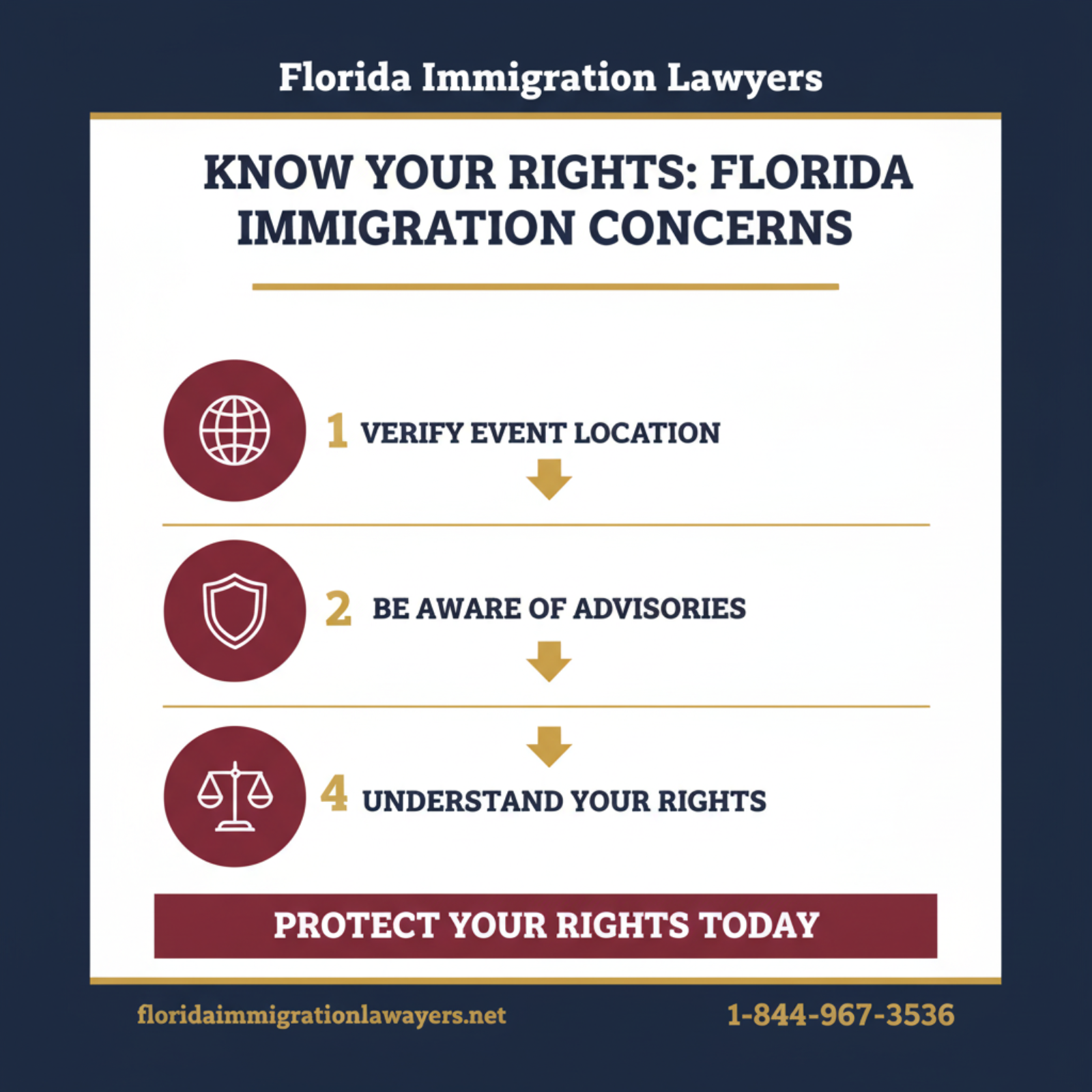
Timeline and Processing Expectations for Sports Visa Requirements
The timeline for obtaining sports visa requirements can vary significantly based on several factors, including the specific visa category, the volume of applications, and the processing capacity of USCIS and U.S. Embassies/Consulates worldwide. For individuals connected to the 2026 Winter Olympics Ice Hockey, understanding these expectations is vital for timely planning and avoiding unnecessary stress.
For P-1 and O-1 visa petitions (Form I-129) filed with USCIS, standard processing times can range from a few weeks to several months. These times are highly subject to change based on current caseloads and policy updates and can often be found on the USCIS website. It is always advisable to check current processing times well in advance of your intended travel date to Florida. For those with truly urgent needs, USCIS offers a premium processing service for Form I-129, which guarantees a decision within 15 calendar days for an additional fee. This can significantly expedite the initial petition approval, which is often a bottleneck in the overall process.
After USCIS approves the petition, the next step is consular processing at a U.S. Embassy or Consulate abroad. Appointment wait times for visa interviews can vary widely by location and season. In some countries, appointments may be available within days, while in others, you might wait several weeks or even months due to high demand. It is crucial to monitor the embassy or consulate's website for the most current wait times and availability. Once interviewed, the visa is typically issued within a few business days, though administrative processing can sometimes extend this period, requiring patience.
For B-1/B-2 visitor visas, which do not require an underlying petition, the process generally involves completing the DS-160, paying fees, and attending an interview. Wait times for these interviews also fluctuate and should be checked. We strongly recommend initiating your visa application process as early as possible, ideally several months before your planned travel for the 2026 Winter Olympics Ice Hockey or related activities in Florida. Proactive planning helps mitigate risks associated with unexpected delays and ensures you have ample time for any unforeseen requests for evidence.
Understanding the intricacies of these timelines and the specific asylum processes if an individual faces unique circumstances during their stay, highlights the importance of legal counsel. For example, athletes from politically unstable regions might have additional considerations beyond typical sports visas. Our team can help you navigate these complexities and provide realistic expectations based on current processing trends and legal requirements. The regulations governing P visas, for instance, are detailed in 8 CFR 214.2(p), providing a comprehensive framework for eligibility and duration of stay.
Cost Factors and Fee Breakdown for Immigration Applications
The cost of pursuing U.S. immigration, particularly for specialized sports visa requirements, involves various fees that can accumulate. For individuals associated with the 2026 Winter Olympics Ice Hockey, understanding these financial commitments upfront is essential for budgeting and planning. It is important to remember that these fees are subject to change by government agencies, so always verify the latest amounts on official government websites before making any payments.
The primary costs typically include:
- USCIS Filing Fees: For petitions like Form I-129 (Petition for a Nonimmigrant Worker), there is a base filing fee that must be submitted with your application. This fee is paid directly to U.S. Citizenship and Immigration Services when the petition is submitted.
- Premium Processing Fee: If you opt for expedited processing of your Form I-129 petition, USCIS charges an additional premium processing fee. This service guarantees a decision within a specific timeframe (usually 15 calendar days) but represents a significant extra cost, often chosen for urgent travel needs related to the 2026 Winter Olympics Ice Hockey.
- DS-160 Application Fee: All nonimmigrant visa applicants, including those for B-1, B-2, P-1, and O-1 visas, must pay a non-refundable application fee. This fee is paid directly to the U.S. Department of State before scheduling your interview at a U.S. Embassy or Consulate. You can find current fee schedules and payment instructions on the U.S. Department of State website.
- SEVIS I-901 Fee: While less common for P-1/O-1 visas, F-1 (student) and J-1 (exchange visitor) visa applicants must pay a SEVIS fee to support the Student and Exchange Visitor Information System. This is generally not applicable for Olympic athlete visas unless there's an unusual program involvement that triggers this requirement.
- Attorney Fees: Retaining an experienced immigration lawyer, such as those at Florida Immigration Lawyers, involves legal fees for their professional services. These fees cover expert guidance, meticulous petition preparation, thorough document review, strategic communication with government agencies, and representation throughout the entire process. While an upfront cost, legal expertise can save significant time, prevent costly mistakes, and substantially increase the likelihood of approval for your 2026 Winter Olympics Ice Hockey related immigration case.
- Medical Examination Fees: Depending on your visa type and country of origin, a medical examination by a USCIS-approved physician may be required to ensure you meet health standards. These fees are paid directly to the examining doctor and are separate from government filing fees.
- Travel and Accommodation Costs: Consider additional expenses for traveling to the U.S. Embassy or Consulate for your interview, as well as any necessary travel within the U.S. for training camps in Florida or competitions leading up to the 2026 Winter Olympics Ice Hockey.
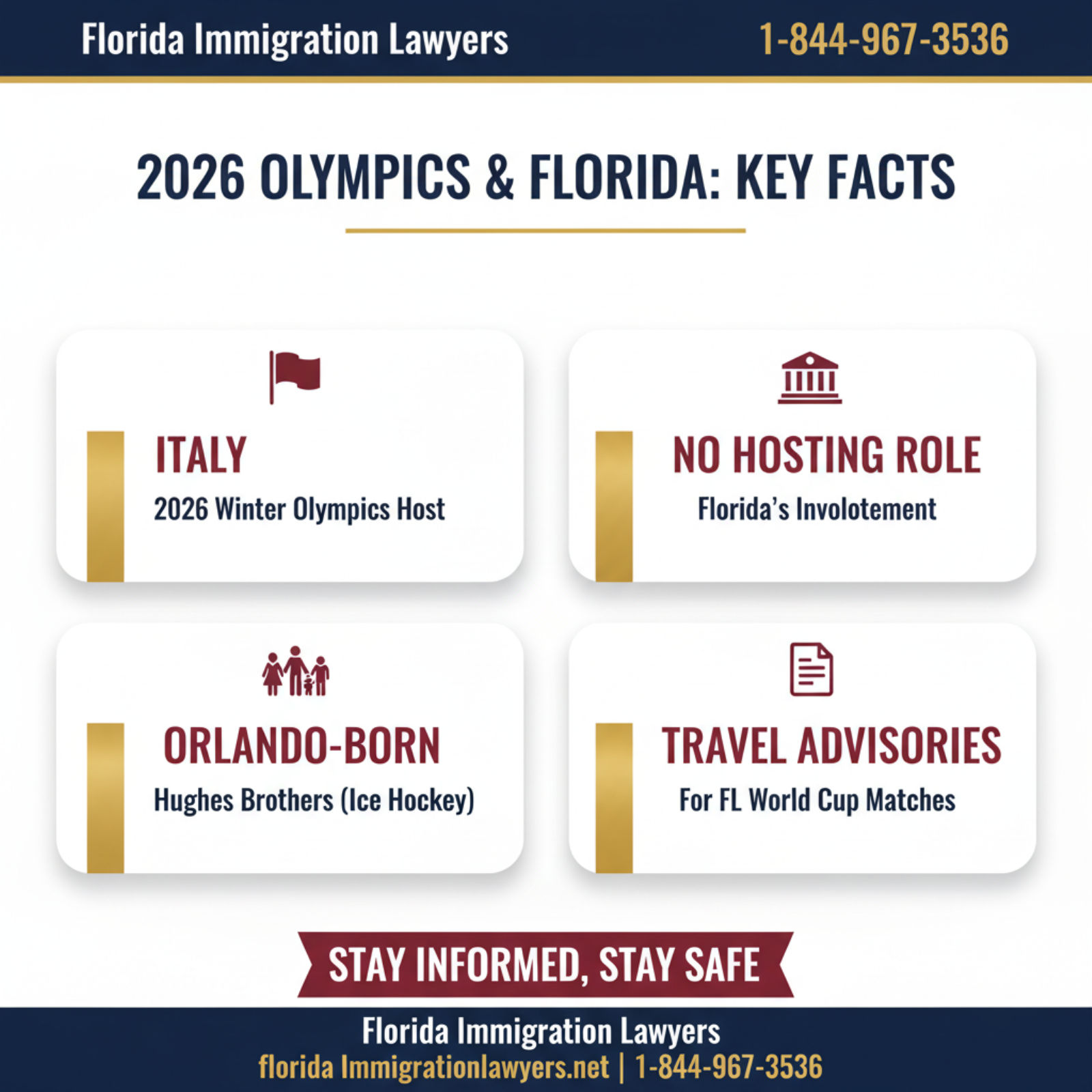
It is crucial to budget comprehensively and understand that these fees are typically non-refundable regardless of the outcome of your application. Always consult the official USCIS and Department of State websites for the most current fee information. Our firm provides transparent fee structures and discusses all potential costs with you during your free consultation, ensuring you have a clear financial picture.
The journey to the 2026 Winter Olympics Ice Hockey is demanding enough without the added stress of complex immigration procedures. Whether you are an athlete, coach, or support staff, ensuring your legal status in the U.S. is secure is paramount. Do not navigate this process alone. Contact Florida Immigration Lawyers today for dedicated support and peace of mind. We are ready to assist you every step of the way.
Common Mistakes to Avoid in Your Immigration Journey for the 2026 Winter Olympics
The U.S. immigration system is notoriously complex, and even minor errors can lead to significant delays, requests for evidence (RFEs), or even outright denials. For those involved with the 2026 Winter Olympics Ice Hockey who have immigration needs in Florida, avoiding common pitfalls is critical. Here are some key mistakes to watch out for, along with their potential consequences:
-
Ignoring Deadlines and Filing Late: USCIS and Department of State deadlines are strict and non-negotiable. Missing a filing date for a petition or an RFE response can result in the automatic denial of your application, forcing you to restart the entire process, incur additional costs, and experience significant delays in your travel or stay related to the 2026 Winter Olympics Ice Hockey.
-
Submitting Incomplete or Inaccurate Documentation: Providing insufficient evidence or making errors on forms is a leading cause of RFEs and denials. Every question must be answered truthfully and completely, and all required supporting documents must be included. A single missing document or an inconsistency can stall your entire application for a temporary stay USA, requiring more time and effort to correct.
-
Misrepresenting Information: Any false statements, fraudulent documents, or intentional omissions can lead to severe consequences. These include a permanent bar from entering the United States, criminal charges, and civil penalties. Always be truthful and transparent in all your interactions with immigration authorities, as integrity is paramount.
-
Choosing the Wrong Visa Category: Applying for a B-1 business visa when your activities warrant a P-1 athlete visa, or vice-versa, will likely lead to denial because you do not meet the specific criteria for the chosen category. Each visa type has specific eligibility criteria that must be met, making proper categorization crucial for sports visa requirements.
-
Failing to Prove Nonimmigrant Intent: For most temporary visas, you must demonstrate to the consular officer that you have strong ties to your home country and intend to return there after your authorized stay in the U.S. Failure to provide sufficient evidence of ties abroad (e.g., property, family commitments, employment) can result in a denial, as officers must be convinced you are not seeking to immigrate permanently.
-
Overstaying Your Authorized Period of Stay: Remaining in the U.S. beyond the date permitted by your I-94 record, even by a single day, can lead to serious immigration consequences. These include accruing unlawful presence, which can bar you from re-entering the U.S. for several years, and can make future visa applications extremely difficult.
-
Not Disclosing Prior Immigration Violations: Attempting to conceal past visa denials, deportations, arrests, or other immigration issues will almost certainly be discovered during background checks. This can result in a permanent ban from the U.S. for misrepresentation. Honesty, even about negative history, is the best policy, as some issues may be overcome with proper legal guidance.
-
Traveling Without Necessary Advance Parole or Permits: If you have a pending adjustment of status application, or certain other immigration processes, leaving the U.S. without proper advance parole can be considered an abandonment of your application and can prevent your re-entry into the country, disrupting your Olympic-related plans.
-
Failing to Update USCIS on Address Changes: If you move within the U.S. while your application is pending, you are legally required to notify USCIS within 10 days using Form AR-11. Failure to do so can mean missing critical notices and decisions, potentially leading to the denial of your application or even deportation defense issues if you cannot prove receipt of important communications.
-
Not Consulting an Experienced Immigration Lawyer: Attempting to navigate the U.S. immigration system without legal counsel is perhaps the biggest mistake. An experienced attorney can identify the correct visa, prepare a strong petition, anticipate challenges, and represent your best interests, especially when dealing with complex cases like family immigration alongside your demanding Olympic goals. This expertise is invaluable for peace of mind and successful outcomes.
When to Call Florida Immigration Lawyers for Your 2026 Winter Olympics Immigration Needs
The journey to the 2026 Winter Olympics Ice Hockey is a monumental undertaking, and ensuring your immigration status is handled correctly is crucial. While some straightforward visitor visa applications might be manageable on your own, many situations warrant the expertise of a dedicated immigration attorney. Florida Immigration Lawyers are here to provide the specialized guidance you need, especially given Florida's unique role as a hub for international sports and related immigration matters.
You should consider contacting us if you encounter any of the following specific scenarios, which often indicate the need for professional legal intervention:
- Complex Visa Categories: If you require a P-1 (athlete), O-1 (extraordinary ability), or other specialized employment-based visa for your role with the 2026 Winter Olympics Ice Hockey, the application process is intricate and highly document-intensive. Our attorneys excel in preparing robust petitions that highlight your qualifications and achievements to USCIS effectively.
- Prior Immigration Issues: If you have ever been denied a U.S. visa, overstayed a previous visa, or had any other immigration violations, navigating new applications becomes significantly more challenging. We can assess your history, identify potential waivers, and strategize the best approach to overcome past obstacles and present a strong case.
- Urgent Processing Needs: If you have tight deadlines for training camps or competitions in Florida leading up to the 2026 Winter Olympics Ice Hockey, we can help you explore premium processing options and work diligently to expedite your application where legally possible, minimizing delays.
- Accompanying Family Members: Bringing your family to Florida requires careful planning for derivative visas (P-4, O-3, or B-2). We ensure all family applications are consistent, properly supported, and submitted in conjunction with the principal applicant's petition to facilitate their entry.
- Seeking Longer-Term Stay or Residency: If your time in Florida after the 2026 Winter Olympics Ice Hockey sparks an interest in a more permanent stay, we can advise on potential pathways for adjustment of status, green cards, or even citizenship options, helping you understand the long-term implications.
- Received a Request for Evidence (RFE) or Notice of Intent to Deny (NOID): These notices from USCIS indicate deficiencies in your application that require a detailed response. Responding correctly and comprehensively within the strict timeframe is critical, and our legal team can help formulate a compelling and compliant response to save your application.
- Facing Deportation or Removal Proceedings: In unfortunate circumstances, individuals may face removal from the U.S. Our firm provides aggressive deportation defense and can represent you vigorously in immigration court, fighting to protect your right to stay.
- Uncertainty About Documentation: If you are unsure which documents are required, how to obtain them, or how to present them effectively to meet USCIS standards, our expertise ensures a complete and strong application package, reducing the risk of RFEs or denials.
Don't wait for a problem to arise. Proactive legal counsel can prevent many common immigration issues before they escalate. Our dedicated attorneys are committed to providing clear, empathetic, and effective legal solutions for your unique situation. Contact Florida Immigration Lawyers today to discuss your specific needs related to the 2026 Winter Olympics Ice Hockey and your time in Florida, ensuring a smooth and successful immigration journey.
At Florida Immigration Lawyers, we are a premier immigration law firm dedicated to serving individuals, families, and businesses across the entire state of Florida. Our mission is to provide compassionate, effective, and results-driven legal representation for all immigration matters. We understand that every immigration journey is unique and can be filled with hope, challenges, and uncertainty.
Our team of experienced attorneys specializes in a wide array of immigration services, including family-based visas, employment-based visas (such as P-1 and O-1 for athletes and extraordinary individuals), deportation defense, asylum, naturalization, and citizenship. We pride ourselves on offering personalized attention and strategic advice tailored to your specific circumstances, ensuring you receive the highest quality legal support available.
Why choose Florida Immigration Lawyers? We combine deep legal knowledge with a profound commitment to our clients. We are available 24/7 to address your urgent concerns and offer free, confidential consultations to help you understand your options without financial obligation. Our bilingual staff ensures that language is never a barrier to receiving exceptional legal service. From our offices in Miami and throughout Florida, we are dedicated to helping you achieve your American dream and navigate the complexities of U.S. immigration law.
Your future in Florida and the U.S. matters to us. Let us be your trusted legal partners, providing the expertise and support you need. Reach out to us at 1-844-967-3536 or visit our website at https://www.floridaimmigrationlawyers.net to schedule your free consultation today.
Sources and References
- U.S. Citizenship and Immigration Services (USCIS)
- U.S. Department of State - Bureau of Consular Affairs
- Executive Office for Immigration Review (EOIR)
- 8 U.S.C. Chapter 12 - Immigration and Nationality Act (INA)
- INA § 101(a)(15)(P) - Definition of "P" nonimmigrant
- INA § 101(a)(15)(O) - Definition of "O" nonimmigrant
- 8 CFR 214.2(p) - Regulations for P nonimmigrants
- 8 CFR 214.2(o) - Regulations for O nonimmigrants
This article provides general legal information and is not intended as legal advice. Every case is unique, and outcomes depend on specific facts and circumstances. Contact an attorney for advice about your particular situation. Immigration laws are subject to change, and this content may not reflect the most current legal developments.
Do not let immigration complexities overshadow your connection to the 2026 Winter Olympics Ice Hockey. Whether you are an athlete, coach, or support staff with ties to Florida, securing the right legal guidance is paramount for a smooth journey. Contact Florida Immigration Lawyers today at 1-844-967-3536 for a free, confidential consultation. Our experienced team is ready to provide the clarity and support you deserve. Se Habla Español - Estamos aquí para ayudarle.
Need help with Immigration?
Our Florida immigration attorneys offer free consultations. Call today or schedule online.
Frequently Asked Questions
Florida Immigration Lawyers
Legal Team
Our experienced attorneys at Florida Immigration Lawyers have been serving clients across Florida for over 20 years. We specialize in immigration, personal injury, criminal defense, workers compensation, and family law.