Immediate Relative Petition Florida: Your 2026 Guide to Family Green Cards
For U.S. citizens in Florida, sponsoring an immediate relative for a Green Card is a direct path to permanent residency. This guide details the 2026 process for immediate relative petitions, covering Form I-130, eligibility, required documents, timelines, and costs. Learn about the distinctions between immediate and preference relatives, and discover common mistakes to avoid. Whether your family member is in Coral Springs or abroad, understanding this complex family immigration process is crucial. Florida Immigration Lawyers offer free consultations to help you navigate your immediate relative petition in Florida.
An immediate relative petition in Florida allows U.S. citizens to sponsor close family members for a Green Card, offering a direct path to permanent residency without numerical limitations. This process primarily involves filing Form I-130, Petition for Alien Relative, with USCIS. Understanding eligibility and required documentation is crucial for a successful application.
- U.S. citizens can sponsor spouses, unmarried children under 21, and parents.
- Immediate relatives are exempt from annual Green Card quotas, speeding up the process.
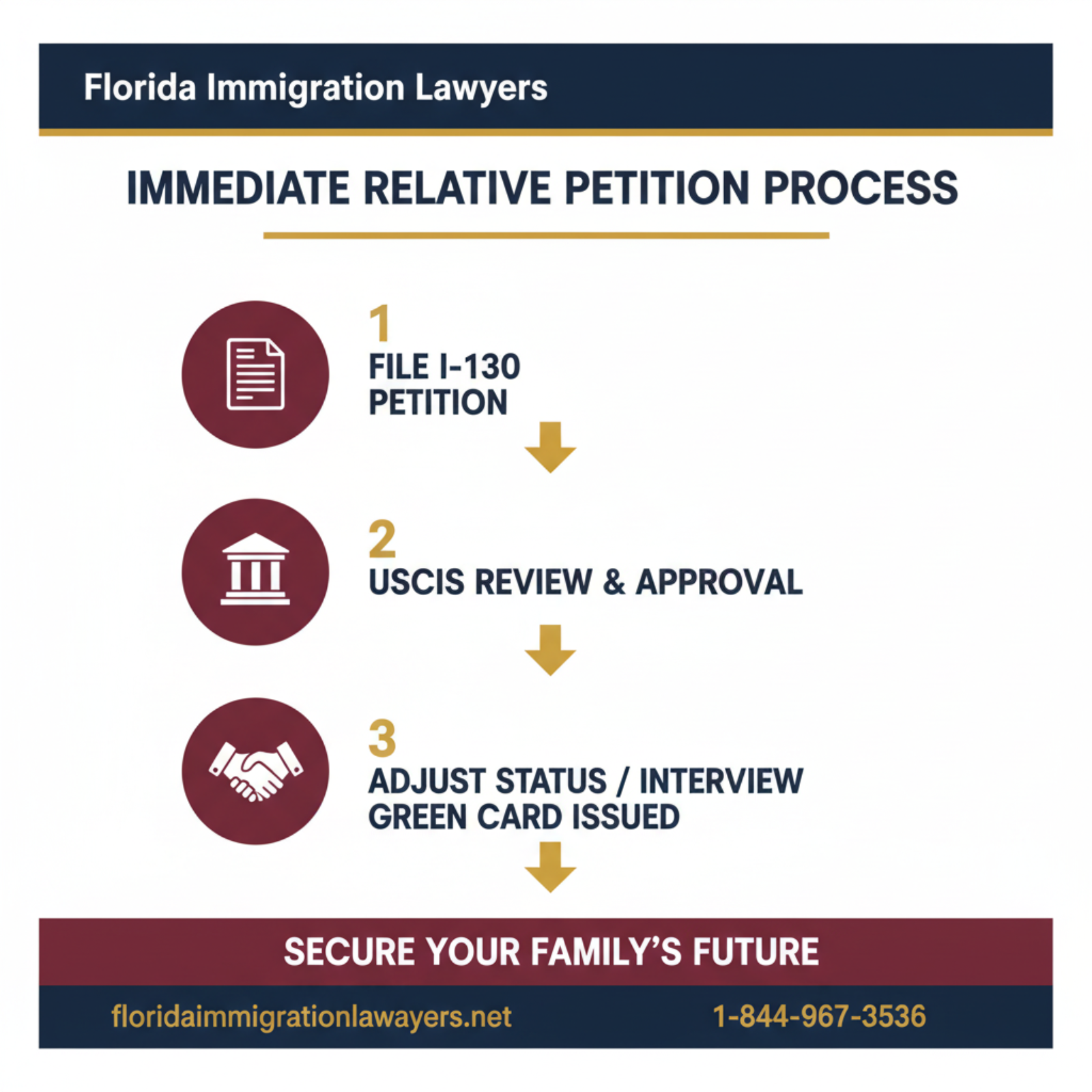
- The process typically begins with Form I-130, followed by adjustment of status or consular processing.
- Accurate documentation and adherence to USCIS guidelines are essential.
- Consulting a Florida immigration lawyer can significantly streamline your petition.
Are you a U.S. citizen in Florida hoping to bring your closest family members to live with you permanently? The journey to reunite with your loved ones, such as a spouse, parent, or unmarried child under 21, often begins with an immediate relative petition Florida. This crucial step can pave the way for them to obtain a Green Card and build a new life in the United States.
Navigating the complex landscape of U.S. immigration law can feel overwhelming. From understanding eligibility criteria to compiling extensive documentation, each stage requires meticulous attention to detail. This comprehensive guide will walk you through the entire immediate relative petition process, specifically tailored for families in Florida.
We will cover everything from the initial filing of Form I-130 to potential timelines and common pitfalls. Our goal is to empower you with the knowledge needed to pursue your family's immigration goals with confidence. If you are ready to start this important process or have specific questions, we encourage you to **Call Florida Immigration Lawyers at 1-844-967-3536 for a free consultation** today.
Understanding the Immediate Relative Petition Process in Florida
The U.S. immigration system prioritizes certain family relationships, classifying them as "immediate relatives." This special category offers a distinct advantage: there are no annual numerical limits on the number of Green Cards issued to immediate relatives. This means your petition won't be subject to lengthy waiting lists based on visa availability, unlike other family-based categories.
In Florida, like the rest of the nation, an immediate relative petition is a foundational step for U.S. citizens to sponsor their:
- Spouses
- Unmarried children under 21 years of age
- Parents (if the U.S. citizen petitioner is at least 21 years of age)
This process is distinct from preference categories, which apply to more distant relatives or adult children and siblings, and often involve significant waiting periods. For an immediate relative petition Florida, the focus is on establishing the bona fide nature of the relationship between the U.S. citizen petitioner and the foreign national beneficiary. This is critical for the success of your family immigration case.
The journey typically begins with filing Form I-130, Petition for Alien Relative, with U.S. Citizenship and Immigration Services (USCIS). This form serves as the official request to recognize the qualifying family relationship. Once approved, the beneficiary can then apply for a Green Card, either through Adjustment of Status if they are already in the U.S., or through Consular Processing if they are abroad. This complex journey is best navigated with expert help, such as that provided by Florida Immigration Lawyers, ensuring compliance with all immigration laws.
Who Qualifies as an Immediate Relative?
As mentioned, the definition of an immediate relative is very specific under immigration law. It includes your spouse, your unmarried child who is under 21, and your parent, provided you are at least 21 years old to petition for a parent. These definitions are strictly applied by USCIS.
For example, if you are a U.S. citizen living in Tampa, you can petition for your spouse. However, you cannot petition for your married child as an immediate relative, nor can you petition for a child who is 21 or older as an immediate relative. These relationships fall under different, often quota-limited, family preference categories.
Immediate Relative vs. Preference Relative: Key Differences
The distinction between immediate relatives and preference relatives is significant. Immediate relatives are not subject to the numerical limitations that apply to other family-based immigration categories. This means that once the I-130 petition is approved, an immigrant visa or Green Card is generally available without a waiting period, assuming all other eligibility requirements are met.
Preference relatives, on the other hand, include adult children (married or unmarried over 21), siblings of U.S. citizens, and spouses and unmarried children of lawful permanent residents. These categories are subject to annual quotas, resulting in potentially long waiting times, sometimes many years, depending on the country of origin and the specific preference category. This makes the immediate relative petition Florida a highly sought-after path for many families.
Step-by-Step Guide to Filing Your Immediate Relative Petition in Florida
The process of sponsoring an immediate relative for a Green Card in Florida involves several distinct stages. Each step requires careful attention to detail and adherence to USCIS regulations. Here is a general outline of the process:
-
File Form I-130, Petition for Alien Relative: As a U.S. citizen, your first step is to file Form I-130 with USCIS. This form establishes the qualifying relationship between you (the petitioner) and your family member (the beneficiary). You must include supporting documentation proving your U.S. citizenship and the bona fide nature of your relationship.
For example, if you are petitioning for your spouse in Miami, you would submit your marriage certificate, birth certificate (proving your citizenship), and evidence of a legitimate marriage, such as joint bank accounts, photos, and affidavits. This initial filing typically goes to a USCIS Lockbox facility.
-
USCIS Processes the I-130 Petition: Once USCIS receives your I-130, they will send you a receipt notice (Form I-797C, Notice of Action). They will then review the petition and supporting evidence. If necessary, USCIS may send a Request for Evidence (RFE) if they need more information.
The processing times can vary significantly, but during this stage, USCIS is primarily verifying the relationship. You can check the status of your petition online using the receipt number provided.
-
Concurrent Filing (if applicable): If your immediate relative beneficiary is already in the United States and entered legally, they may be eligible to file Form I-485, Application to Register Permanent Residence or Adjust Status, concurrently with or after the I-130 petition. This is known as "Adjustment of Status."
This allows the beneficiary to apply for their Green Card without leaving the U.S. It's a common path for spouses of U.S. citizens residing in Florida. Additional forms like I-765 (Employment Authorization) and I-131 (Advance Parole) can also be filed concurrently.
-
Consular Processing (if applicable): If your immediate relative beneficiary is outside the United States, or is not eligible for Adjustment of Status, their Green Card application will be processed through Consular Processing. After I-130 approval, USCIS forwards the petition to the National Visa Center (NVC).
The NVC will collect necessary documents and fees, then schedule an interview at a U.S. Embassy or Consulate in the beneficiary's home country. This is a common path for parents or children residing abroad, including those seeking to join family in Coral Springs.
-
Interview and Decision: For Adjustment of Status cases, the petitioner and beneficiary will typically attend an interview at a local USCIS office in Florida, such as the one in Miami or Orlando. For Consular Processing, the beneficiary will attend an interview abroad.
During the interview, an immigration officer will verify the information provided and assess the eligibility of the beneficiary. A decision is usually made shortly after the interview, leading to Green Card approval or visa issuance.
Each stage of the immediate relative petition Florida journey requires diligence. Missing documents or incorrect information can lead to delays or even denials. An experienced Florida immigration lawyer can help you prepare thoroughly for each step, from initial filing to interview preparation, ensuring your application meets all legal standards.
Essential Documents for Your Immediate Relative Green Card Application
A complete and accurately prepared set of documents is paramount for a successful immediate relative petition Florida. The specific documents required will vary slightly based on the relationship and whether the beneficiary is adjusting status in the U.S. or undergoing consular processing abroad. However, here is a general checklist of commonly required items:
- Proof of U.S. Citizenship:
- U.S. Birth Certificate (long-form)
- U.S. Passport
- Certificate of Naturalization (Form N-550 or N-570)
- Certificate of Citizenship (Form N-560 or N-561)
- Proof of Qualifying Relationship:
- For Spouses: Marriage certificate, joint bank statements, joint utility bills, joint leases/mortgages, birth certificates of common children, photos, affidavits from friends/family.
- For Children: Child's birth certificate listing U.S. citizen parent, marriage certificate of parents (if applicable), adoption decrees (if applicable).
- For Parents: U.S. citizen's birth certificate listing parent, marriage certificate of parents (if applicable).
- Biographic Documents for Beneficiary:
- Birth Certificate
- Passport (if applicable)
- Visa and I-94 Arrival/Departure Record (if in U.S.)
- Marriage/Divorce Certificates (if applicable)
- Financial Sponsorship Documents:
- Form I-864, Affidavit of Support, signed by the U.S. citizen petitioner (and potentially a joint sponsor).
- Federal income tax returns (most recent three years), W-2s, 1099s, and employment letters for the petitioner.
- Proof of assets (bank statements, property deeds) if income is insufficient.
Step-by-Step Process Guide - Medical Examination:
- Form I-693, Report of Medical Examination and Vaccination Record, completed by a USCIS-approved civil surgeon (for Adjustment of Status).
- Similar medical exam reports for Consular Processing, completed by panel physicians.
- Background and Security Checks:
- Police certificates from countries where the beneficiary has lived (for Consular Processing).
- Court and prison records (if applicable).
- Military records (if applicable).
- Photos: Passport-style photographs for both petitioner and beneficiary.
Each document must be accurate, current, and submitted as required by USCIS or the NVC. Foreign language documents must be accompanied by certified English translations. Errors or omissions in this crucial stage can cause significant delays or even denial of your family green card. Working with Florida Immigration Lawyers can ensure your documentation is robust and complete, supporting your I-130 petition process.
Immediate Relative Petition Timelines and What to Expect in Florida
One of the most common questions families in Coral Springs and across Florida have is, "How long will this take?" While immediate relatives are not subject to visa backlogs, the entire process still involves several stages, each with its own processing time. These timelines can fluctuate based on USCIS workload, the specific service center handling your petition, and the completeness of your application.
Current Processing Times for I-130
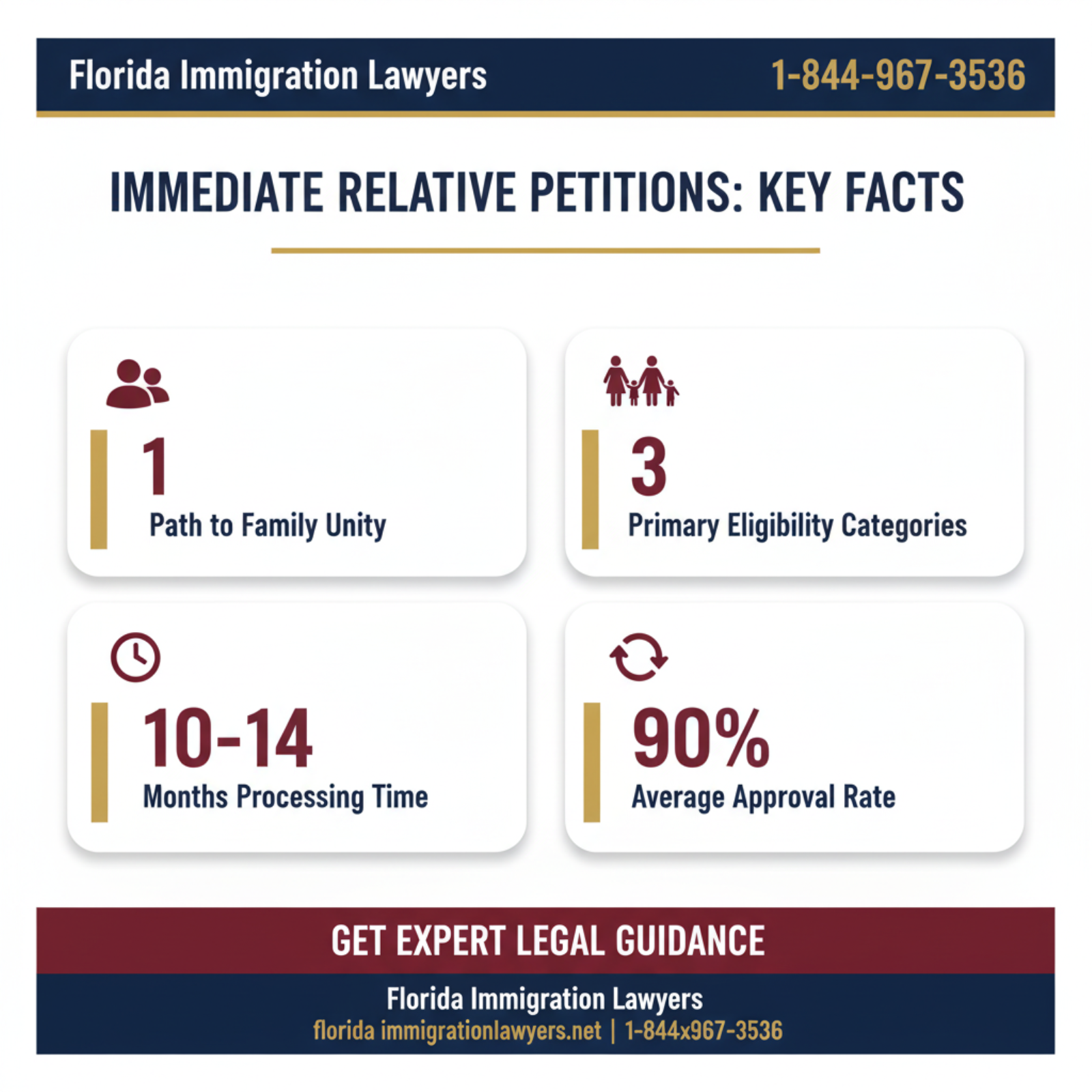
The initial Form I-130, Petition for Alien Relative, is typically processed by USCIS. As of early 2026, processing times for I-130 petitions for immediate relatives can range from **7 to 15 months**, though this is an estimate and subject to change. You can always check the most up-to-date processing times directly on the USCIS website by selecting the form type and the service center.
Factors that can influence I-130 processing include the complexity of your case, whether an RFE is issued, and general USCIS operational efficiency. A well-prepared petition with clear, strong evidence of the relationship can help prevent delays.
Adjustment of Status vs. Consular Processing Timelines
Once the I-130 is approved, the next stage depends on whether your beneficiary is adjusting status in the U.S. or undergoing consular processing abroad.
- Adjustment of Status (AOS): If the beneficiary is already in the U.S. and files Form I-485, the total processing time from I-485 filing to Green Card approval can range from **10 to 24 months**, including biometric appointments, potential RFEs, and the interview. This can vary by local USCIS field office (e.g., Miami Field Office or Orlando Field Office).
- Consular Processing: For beneficiaries abroad, after NVC processing (which can take 2-4 months to gather documents and fees), the interview at the U.S. Embassy or Consulate is scheduled. The total time from I-130 approval to visa issuance can range from **6 to 12 months**, depending on embassy workload and the beneficiary's ability to attend the interview promptly.
It is important to remember that these are general estimates. The overall immediate relative green card journey could take anywhere from **1 to 2.5 years** from the initial I-130 filing to final Green Card approval or visa issuance. This is why patience and meticulous preparation are crucial for any immediate relative petition Florida.
Understanding the Costs of an Immediate Relative Petition
Pursuing an immediate relative petition Florida involves various fees. These costs are set by government agencies and are subject to change. It is crucial to budget for these expenses to avoid unexpected financial hurdles during your family immigration journey. While we cannot provide exact amounts as they frequently change, we can outline the typical fee categories.
USCIS Filing Fees
The primary government fees include:
- Form I-130, Petition for Alien Relative: This is the initial filing fee for the petition itself.
- Form I-485, Application to Register Permanent Residence or Adjust Status: If your beneficiary is adjusting status in the U.S., this fee is significant and often includes the biometric services fee.
- Biometrics Services Fee: This fee covers fingerprinting and background checks. For I-485 filers, it's typically included in the I-485 fee. For consular processing, it's sometimes part of the NVC fees.
- Form I-765, Application for Employment Authorization: This is often filed concurrently with I-485 to allow the beneficiary to work while awaiting their Green Card.
- Form I-131, Application for Travel Document (Advance Parole): Also often filed concurrently with I-485, allowing the beneficiary to travel internationally.
For beneficiaries undergoing consular processing, additional fees include the Immigrant Visa Application Processing Fee paid to the National Visa Center (NVC) and the USCIS Immigrant Fee paid after visa issuance but before entry to the U.S.
Other Potential Costs
Beyond government filing fees, you should also anticipate other expenses:
- Medical Examination Fees: A required medical exam by a USCIS-approved civil surgeon (for AOS) or panel physician (for consular processing). These fees vary by provider and location in Florida.
- Document Translation Fees: If any supporting documents are not in English, certified translations are required, incurring additional costs.
- Postage and Courier Fees: For sending applications and documents securely.
- Attorney Fees: While not mandatory, hiring an experienced Florida immigration lawyer is a significant investment that can save you time, stress, and potential costly mistakes. Legal fees vary based on the complexity of the case and the services provided.
It is important to check the USCIS website for the most current fee schedule. These fees are generally non-refundable, even if your petition is denied. Planning for these costs is an essential part of the I-130 petition process, ensuring you are financially prepared for each stage.
The journey to secure an immediate relative green card for your loved ones is filled with critical deadlines and complex legal requirements. Do not navigate this process alone. **Contact Florida Immigration Lawyers today** for dedicated support and expert guidance through every step of your immediate relative petition Florida.
Common Mistakes to Avoid in Your Immediate Relative Petition
Filing an immediate relative petition Florida can be a complex undertaking, and even minor errors can lead to significant delays or even denial. Being aware of common pitfalls can help you avoid them and ensure a smoother process for your family immigration case. Here are some critical mistakes to watch out for:
-
Incomplete or Inaccurate Forms: Failing to answer all questions on Form I-130 or other required forms, or providing incorrect information, is a frequent cause of RFEs and delays. Ensure every field is filled out truthfully and completely.
Consequence: Receipt of a Request for Evidence (RFE), significant delays, or outright denial if information is materially false or misleading.
-
Insufficient Proof of Relationship: USCIS requires robust evidence that your relationship is genuine and not solely for immigration purposes. For spouses, this means more than just a marriage certificate; it includes shared financial documents, photos, and affidavits.
Consequence: USCIS may doubt the bona fides of the relationship, leading to an RFE, interview scrutiny, or denial, especially in cases of marriage fraud suspicion.
-
Lack of Financial Sponsorship (I-864 Issues): The petitioner must demonstrate the financial ability to support the beneficiary. Failing to meet the poverty guidelines or submitting an incomplete Form I-864, Affidavit of Support, is a major issue.
Consequence: Denial of the Green Card application if the beneficiary is deemed likely to become a "public charge."
-
Missing or Incorrect Supporting Documents: Sending applications without all necessary birth certificates, marriage licenses, divorce decrees, or certified translations can halt the process. Always double-check the USCIS instructions.
Consequence: RFEs, delays, and potential denial if crucial evidence is never provided.
-
Failing to Disclose All Immigration History: Any prior immigration applications, entries, or issues must be fully disclosed. Hiding information, even unintentional omissions, can be considered misrepresentation.
Consequence: Accusations of misrepresentation, which can lead to a permanent bar from the U.S. and denial of the current petition.
-
Ignoring Deadlines: USCIS and NVC provide deadlines for responding to RFEs or submitting documents. Missing these deadlines can result in the denial of your petition.
Consequence: Petition denial, requiring you to start the entire process over and pay fees again.
-
Not Updating Address Changes: If you or your beneficiary move, you must inform USCIS and the NVC of your new address within 10 days. Failure to do so can result in missed notices and appointments.
Consequence: Missed interview notices, RFEs, or other critical communications, leading to delays or denial due to "abandonment" of the application.
-
Incorrect Filing Location: USCIS has different filing addresses (Lockbox facilities) depending on the form and your state of residence. Sending your petition to the wrong address will cause significant delays.
Consequence: Your petition will be returned or significantly delayed, requiring re-filing.
-
Beneficiary Overstaying Visa (for AOS): While immediate relatives have some flexibility, if a beneficiary entered legally but overstayed, they may still face issues if they don't qualify for adjustment of status. Understanding eligibility for adjustment is key.
Consequence: Potential denial of Adjustment of Status if not eligible, requiring consular processing with possible bars to re-entry.
-
Lack of Legal Review: Attempting to navigate the entire I-130 petition process without legal counsel can lead to overlooking critical details, especially for complex cases or those with prior immigration issues.
Consequence: Increased risk of errors, delays, and denials that could have been avoided with professional guidance.
These mistakes highlight why having an experienced Florida immigration lawyer from Florida Immigration Lawyers by your side is invaluable. We help clients in Coral Springs and throughout Florida avoid these common pitfalls, ensuring their immediate relative green card applications are submitted correctly the first time.
When to Call a Florida Immigration Lawyer
While this guide provides a comprehensive overview of the immediate relative petition Florida, the nuances of immigration law are vast and constantly evolving. There are many scenarios where the expertise of a qualified Florida immigration lawyer becomes not just helpful, but essential. Florida Immigration Lawyers are here to assist you.
You should strongly consider contacting our firm if any of the following situations apply to your case:
- Complex Relationship Dynamics: If your relationship involves unique circumstances, such as prior marriages, step-relationships, or cultural considerations that may be difficult to explain to USCIS.
- Previous Immigration Violations: If either the petitioner or beneficiary has a history of overstaying visas, unlawful entry, prior deportations, or other immigration infractions. These issues often require waivers and detailed legal arguments.
- Criminal History: Any criminal arrests or convictions for either party, regardless of severity, can significantly impact eligibility and may require legal intervention.
- Previous Denials or RFEs: If you have previously attempted to file an I-130 petition process or other immigration application that was denied, or if you've received an RFE that you're unsure how to address.
- Financial Sponsorship Concerns: If the U.S. citizen petitioner does not meet the income requirements for the Affidavit of Support (Form I-864) and you need to explore options like a joint sponsor.
- Beneficiary in Removal Proceedings: If your family member is currently facing deportation or removal proceedings, immediate legal action is critical.
- Child Beneficiaries Nearing 21: If your unmarried child is approaching their 21st birthday, understanding the Child Status Protection Act (CSPA) is vital to ensure they remain eligible as an immediate relative.
- Unsure About Eligibility: If you are simply unsure whether your family member qualifies as an immediate relative or which immigration path is best for your situation.
- Desire for Peace of Mind: Even in straightforward cases, the reassurance of having an expert guide you through the process, review all documents, and prepare you for interviews can be invaluable.
Florida Immigration Lawyers has extensive experience assisting families throughout Florida, including Coral Springs, Miami, Orlando, and Tampa, with their immediate relative petition Florida cases. We understand the local USCIS procedures and are dedicated to helping you achieve your family green card goals. Our team is committed to providing compassionate and effective legal representation, ensuring your rights are protected and your application is meticulously prepared. Do not hesitate to reach out for professional guidance.
Frequently Asked Questions (FAQs) About Immediate Relative Petitions in Florida
Here are answers to some common questions we receive regarding immediate relative petitions, particularly for those in Florida:
Who qualifies for immediate relative status?
Immediate relatives are defined as spouses of U.S. citizens, unmarried children under 21 years of age of U.S. citizens, and parents of U.S. citizens (where the U.S. citizen is at least 21 years old). This category does not include siblings or married children, who fall under family preference categories.
What is the processing time for immediate relatives?
While immediate relatives are exempt from visa backlogs, the entire process still takes time. Form I-130 processing can range from 7 to 15 months. If adjusting status in the U.S., the I-485 can take an additional 10 to 24 months. Consular processing abroad typically takes 6 to 12 months after I-130 approval. Overall, expect 1 to 2.5 years from start to finish.
Who comes under immediate family for I-130?
For the purpose of an I-130 petition, "immediate family" specifically refers to the spouse, unmarried child under 21, or parent of a U.S. citizen. These are the only relationships that qualify for the immediate relative category under U.S. immigration law.
What is the difference between immediate relative and preference relative?
The key difference is numerical limitation. Immediate relatives are not subject to annual Green Card quotas, meaning a visa is immediately available once the I-130 is approved. Preference relatives (e.g., married children, siblings, adult children of U.S. citizens, or family members of Green Card holders) are subject to annual quotas, leading to potentially long waiting periods based on their priority date and country of origin.
Can I travel internationally while my immediate relative petition is pending?
If you are the U.S. citizen petitioner, you can generally travel freely. If you are the beneficiary in the U.S. and have applied for Adjustment of Status (I-485), you should not travel internationally without first obtaining Advance Parole (Form I-131). Departing the U.S. without Advance Parole can be considered abandonment of your I-485 application. Beneficiaries abroad must wait for their immigrant visa to be issued.
About Florida Immigration Lawyers
At Florida Immigration Lawyers, we are dedicated to helping individuals and families across Florida achieve their immigration dreams. With years of specialized experience in U.S. immigration law, our firm understands the unique challenges and opportunities that arise for those seeking to live and work in the United States. We serve clients throughout the state, including Coral Springs, Miami, Orlando, Tampa, Jacksonville, and Fort Lauderdale, providing compassionate and effective legal representation.
Our comprehensive services cover a wide range of immigration matters, from family-based petitions like the immediate relative petition Florida, to employment visas, asylum claims, and deportation defense. We pride ourselves on offering personalized attention, clear communication, and strategic advice tailored to your specific situation. Our goal is to simplify complex legal processes and guide you toward a successful outcome.
Why choose Florida Immigration Lawyers? We offer **free consultations** to discuss your case and provide an honest assessment of your options. Our team is available **24/7** to address your urgent concerns, understanding that immigration issues often require immediate attention. We are committed to upholding the highest standards of legal ethics and client advocacy. Trust us to be your dedicated partner in your immigration journey.
Contact us today to learn how we can assist you. Call **1-844-967-3536** or visit our website at https://www.floridaimmigrationlawyers.net. Se Habla Español.
Sources and References
- U.S. Citizenship and Immigration Services (USCIS)
- U.S. Department of State - Bureau of Consular Affairs (travel.state.gov)
- Executive Office for Immigration Review (EOIR) - U.S. Department of Justice
- 8 U.S.C. Chapter 12 - Immigration and Nationality Act (INA)
- 8 U.S.C. § 1151(b)(2)(A)(i) - Immediate Relatives Defined
- 8 CFR Part 204 - Petitions for Alien Relatives; Petitions for Orphan Aliens
- USCIS Policy Manual, Volume 7, Part B - Immigrant Petitions (I-130 and I-360)
This article provides general legal information and is not intended as legal advice. Every case is unique, and outcomes depend on specific facts and circumstances. Contact an attorney for advice about your particular situation.
Reuniting with your family through an immediate relative petition Florida is a life-changing endeavor. Ensure your application is handled with the utmost care and expertise. For a **free, confidential consultation** and unparalleled legal support, reach out to Florida Immigration Lawyers today. Call us at **1-844-967-3536**. **Se Habla Español - Estamos aquí para ayudarle.**
Need help with Immigration?
Our Florida immigration attorneys offer free consultations. Call today or schedule online.
Frequently Asked Questions
Florida Immigration Lawyers
Legal Team
Our experienced attorneys at Florida Immigration Lawyers have been serving clients across Florida for over 20 years. We specialize in immigration, personal injury, criminal defense, workers compensation, and family law.