Naturalization Ceremony ICE Concerns Florida: Your Guide to Safety
Attending your naturalization ceremony in Florida, particularly in areas like Kissimmee, can bring a mix of excitement and legitimate concerns about the potential presence of U.S. Immigration and Customs Enforcement (ICE). While ICE typically targets individuals with criminal warrants or prior removal orders, understanding your rights and preparing meticulously is paramount. This guide from Florida Immigration Lawyers addresses common naturalization ceremony ICE concerns, offering a step-by-step approach to ensure a smooth and worry-free experience. Learn about document checklists, processing timelines for 2026, and crucial mistakes to avoid. We empower you with knowledge to navigate this significant milestone confidently.
Attending your naturalization ceremony in Florida can bring excitement, but also valid concerns about potential U.S. Immigration and Customs Enforcement (ICE) presence. While ICE typically focuses on individuals with criminal warrants or final removal orders, understanding your rights and preparing thoroughly is crucial. Most ceremonies proceed without incident, especially for those with clear records.
- Always carry your USCIS ceremony notice and Green Card.
- Know your rights: you have the right to remain silent and to speak with an attorney.
- Avoid bringing individuals with active immigration issues to the ceremony.
- Consult an immigration lawyer if you have any past legal or immigration concerns.
- Remember, naturalized citizens are generally protected from deportation.
The day of your naturalization ceremony in Florida should be a moment of immense pride and celebration. You have worked hard, navigated complex legal pathways, and are on the cusp of becoming a U.S. citizen. However, for many, this joyous occasion can be overshadowed by anxieties, particularly concerning the potential presence of U.S. Immigration and Customs Enforcement (ICE) agents.
In Florida, a state with a dynamic immigration landscape, these concerns are particularly salient. You may have heard stories or read news reports that fuel these fears. This comprehensive guide from Florida Immigration Lawyers aims to address your naturalization ceremony ICE concerns, providing clarity, practical advice, and peace of mind as you approach this significant milestone. We will help you understand the process, your rights, and how to prepare effectively for your ceremony in Kissimmee or anywhere else in Florida. Call Florida Immigration Lawyers at 1-844-967-3536 for a free consultation today.
Understanding Naturalization and Potential ICE Presence in Florida
Naturalization is the process by which a lawful permanent resident (Green Card holder) voluntarily becomes a U.S. citizen. It represents the culmination of years of living in the United States, contributing to society, and demonstrating good moral character. The Oath of Allegiance ceremony is the final step in this transformative journey.
While naturalization ceremonies are generally celebratory events, it is understandable why concerns about ICE might arise. In Florida, recent initiatives like Operation Tidal Wave and increased collaboration between local law enforcement and ICE through 287(g) agreements have heightened awareness of immigration enforcement activities. This context can lead to anxieties for individuals attending official government functions, including naturalization ceremonies.
It is important to understand that ICE's primary mission is to enforce immigration laws against individuals who pose a threat to public safety or national security, or those who have violated immigration laws. Their presence at a naturalization ceremony is typically not random. If ICE agents are present, it is usually because they have specific intelligence or a warrant for an individual attending or accompanying someone to the event. This might involve individuals with unaddressed criminal histories, outstanding deportation orders, or those suspected of immigration fraud.
For most applicants who have successfully passed all naturalization interviews and background checks, the ceremony proceeds without incident. Your application has already been thoroughly vetted by U.S. Citizenship and Immigration Services (USCIS). However, remaining informed and prepared is always the best approach, especially in areas like Kissimmee, Florida, where communities are diverse and immigration matters are frequently discussed. The Immigration and Nationality Act (INA) outlines the comprehensive framework for naturalization, specifically INA 316 (8 U.S.C. 1427), which details the general requirements for eligibility.
Your Step-by-Step Guide to a Smooth Naturalization Ceremony
Preparation is key to reducing stress and ensuring your naturalization ceremony goes smoothly. By following these steps, you can focus on the significance of the day rather than potential worries.
-
Review Your N-400 Application and Interview Details: Before the ceremony, take time to re-read your naturalization application (Form N-400) and recall any discussions from your interview. Ensure all information remains accurate and that you have not had any new arrests or significant life changes since your interview. Any discrepancies could raise red flags.
-
Understand the Oath of Allegiance: Familiarize yourself with the Oath of Allegiance. This is the core of the ceremony, where you pledge loyalty to the United States. Being prepared to recite or affirm this oath confidently will make the experience more meaningful and less stressful.
-
Gather All Required Documents: You will receive an Appointment for Oath of Allegiance (Form N-445) from USCIS. This form lists the specific documents you must bring, including your Green Card. Double-check this list carefully and organize your documents the day before. Do not forget your valid state-issued identification.
-
Arrive Early and Prepared: Plan to arrive at the ceremony location well in advance of the scheduled time. This allows for security checks, finding parking, and settling in without rushing. Dress in appropriate attire, as this is a formal and solemn occasion.
-
Know Your Rights: While concerns about ICE are typically unwarranted for most applicants, it is always important to know your rights. If approached by any law enforcement officer, you have the right to remain silent and the right to speak with an attorney. You are not required to answer questions without legal counsel present, especially if you feel uncomfortable or unsure. Remember that you are about to become a U.S. citizen, granting you significant protections.
-
Avoid Bringing Individuals with Immigration Issues: If you have family members or friends who have unresolved immigration issues, outstanding warrants, or final orders of removal, it is generally advisable for them not to accompany you to a USCIS facility or a federal building where the ceremony is held. This precaution helps prevent any unintended complications for your loved ones.
-
Celebrate Responsibly: Once you take the oath, you are officially a U.S. citizen! Celebrate this momentous achievement. Remember to apply for a U.S. passport or passport card soon after to have additional proof of your new citizenship status. This will also provide ease of travel.
Essential Document Checklist for Your Naturalization Ceremony
The Form N-445, Notice of Naturalization Oath Ceremony, is your most critical document for the big day. It will explicitly detail what you need to bring. However, here is a general checklist of items typically required or highly recommended:
- Your Permanent Resident Card (Green Card): You must surrender this card at the ceremony.
- The Form N-445, Notice of Naturalization Oath Ceremony: This is your official invitation and instruction sheet.
- Any Re-entry Permits or Refugee Travel Documents: If you possess these, you must return them.
- Valid State-Issued Identification: Such as your driver's license or state ID card.
- Two Passport-Style Photos: Although often not required at the ceremony itself if submitted previously, it is good to have them just in case.
- Any USCIS documents related to your naturalization application (N-400) that you were instructed to bring.
- A list of any travel outside the U.S. since your interview, if applicable.
- A list of any arrests or citations since your interview, even if dismissed.
- Your Social Security card (for reference, not to be surrendered).
- Pen to complete any last-minute forms.
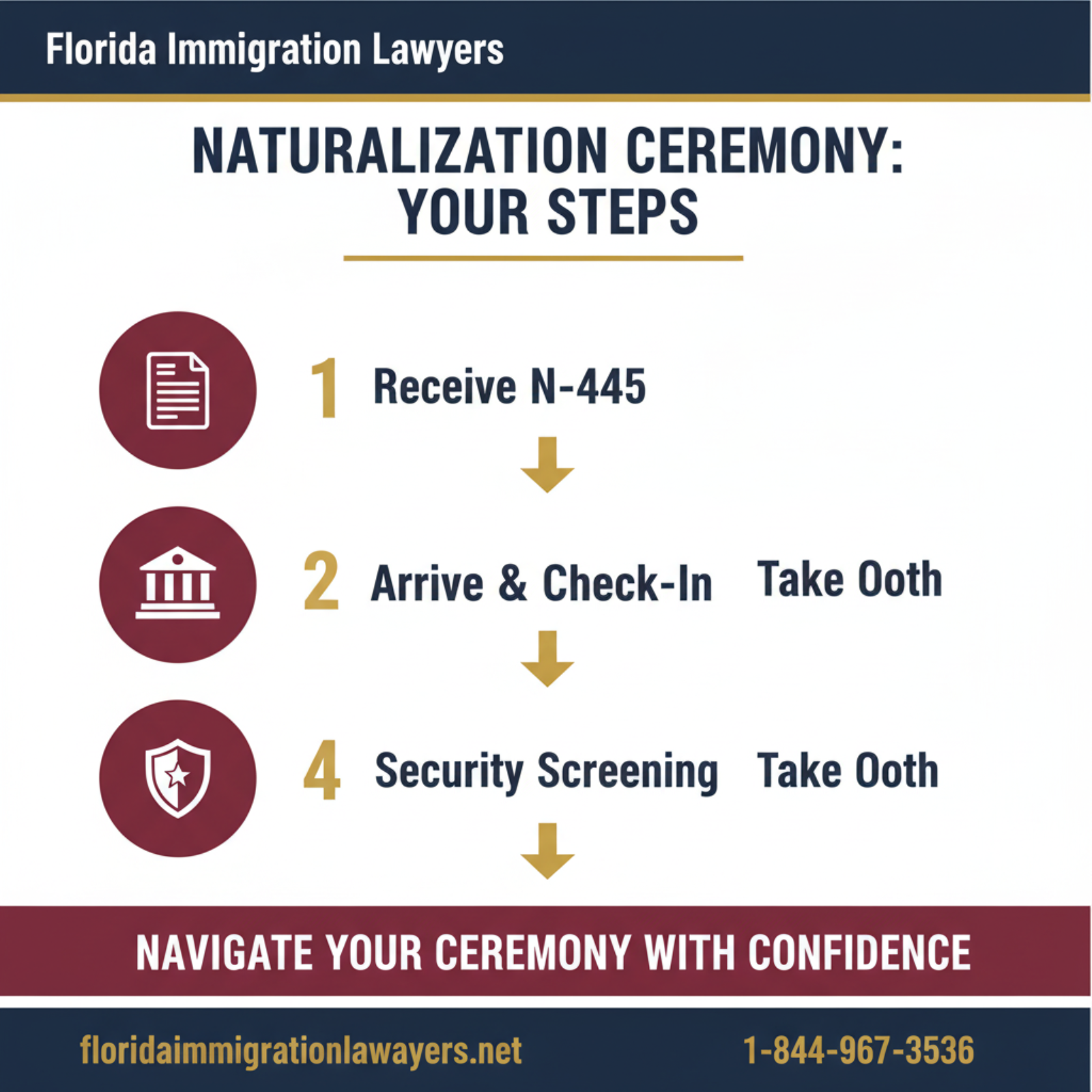
Ensure all documents are easily accessible and organized. Creating a folder specifically for your ceremony documents can help reduce stress on the day itself.
Naturalization Ceremony Timeline and Processing Expectations for 2026
The journey to naturalization involves several stages, and understanding the typical timeline can help manage expectations. While processing times can vary based on the USCIS field office and individual case complexities, here is a general overview for 2026:
After filing Form N-400, Application for Naturalization, you can expect to receive a receipt notice within a few weeks. The next step is typically the biometrics appointment, which usually occurs within 3-5 weeks of filing. Following biometrics, there is a waiting period for background checks to clear. This can be the longest stage of the process, taking several months, or sometimes even over a year, depending on various factors.
Once background checks are complete, you will be scheduled for your naturalization interview. This interview is a critical step where a USCIS officer reviews your application, tests your English and civics knowledge, and confirms your eligibility. If your interview is successful, you will typically receive a decision notice shortly thereafter. Sometimes, the oath ceremony is scheduled on the same day as the interview (especially for smaller offices or specific circumstances), but more commonly, you will receive a separate Form N-445 notice for a future oath ceremony.
The time between a successful interview and the oath ceremony notice can range from a few weeks to several months. USCIS aims to schedule oath ceremonies efficiently, but administrative backlogs or facility availability can cause delays. In some rare instances, naturalization ceremonies can be canceled or postponed due due to unforeseen circumstances, such as facility issues, national emergencies, or if new information arises regarding an applicant's eligibility. If this happens, USCIS will typically reschedule your ceremony and send a new notice.
You can monitor your case status online through the USCIS website using your receipt number. For Florida residents, specific USCIS field offices like those in Orlando, Tampa, or Miami will handle your case. Processing times for each office can be found on the USCIS website, offering a more localized estimate. For example, individuals in Kissimmee will typically fall under the Orlando Field Office's jurisdiction.
Cost Factors and Fee Breakdown for Naturalization
The naturalization process involves certain fees that applicants should be aware of. While specific amounts are subject to change, understanding the general cost structure is important for financial planning. USCIS fees are periodically updated, so always check the official USCIS website for the most current fee schedule.
The primary cost is the filing fee for Form N-400, Application for Naturalization. This fee covers the processing of your application. Additionally, there is a biometrics services fee, which covers the cost of fingerprinting and background checks. These two fees are typically paid together when you submit your N-400 application. It is crucial to use the correct payment method and ensure the payment amount is accurate to avoid rejection or delays.
In some cases, applicants may be eligible for a fee waiver or a reduced fee. Eligibility for fee waivers is generally based on income levels or receipt of certain public benefits. If you believe you qualify, you must submit Form I-912, Request for Fee Waiver, or Form I-942, Request for Reduced Fee, along with your N-400 application and supporting documentation. Consulting with an attorney can help you determine if you are eligible for these options.
Beyond USCIS fees, you might incur other costs. These can include legal fees if you choose to hire an immigration attorney to assist with your application or represent you. While not mandatory, legal representation can be invaluable, especially for complex cases, those with past criminal history, or individuals who have faced previous immigration challenges. Other potential costs might involve obtaining necessary documents, translation services, or travel expenses for interviews and ceremonies.
Do not navigate this process alone. Contact Florida Immigration Lawyers today to discuss your naturalization journey and how we can support you.
Common Mistakes to Avoid During Your Naturalization Journey
The naturalization process is meticulous, and even minor errors can lead to significant delays or even denial. Avoiding these common mistakes is crucial for a successful outcome:
-
Providing Inaccurate or Inconsistent Information: All information on your N-400 application must be truthful and consistent with previous immigration filings. Any discrepancies, even unintentional ones, can lead to accusations of misrepresentation or fraud. This can result in denial and potential legal consequences.
-
Failing to Disclose All Arrests or Citations: You must disclose ALL arrests, citations, or charges, no matter how minor or old, and regardless of whether they were dismissed or expunged. Failure to do so can be considered a lack of good moral character, leading to denial and potentially denaturalization if citizenship is obtained. This is a common pitfall.
-
Missing Deadlines or Appointments: USCIS operates on strict timelines. Missing a Request for Evidence (RFE) deadline, an interview, or a biometrics appointment can cause significant delays or even lead to your application being denied. Always respond promptly to all USCIS communications.
-
Not Meeting Residency Requirements: Applicants must meet specific continuous residency and physical presence requirements. Miscalculating these periods or spending too much time outside the U.S. can jeopardize your eligibility. Careful tracking of your travel dates is essential.
-
Lack of Good Moral Character: Certain actions can demonstrate a lack of good moral character, which is a fundamental requirement for naturalization. These include criminal offenses, failure to pay taxes, or child support. Consult an attorney if you have any concerns in this area.
-
Failing the English or Civics Test: While you get a second chance, failing these tests can prolong the process. Ensure you prepare adequately for both, unless you qualify for an exemption based on age and length of residency or a medical disability. Resources are available on the USCIS website.
-
Not Updating USCIS of Address Changes: You are legally required to inform USCIS of any change of address within 10 days of moving. Failure to do so can result in missed notices, leading to delays or even application abandonment. This is a simple but critical administrative step.
-
Assuming Past Immigration Issues are Resolved: If you have had previous deportation proceedings, asylum applications, or other complex immigration history, do not assume these issues are fully resolved or will not impact your naturalization. A thorough review of your immigration file is often necessary.
-
Bringing Prohibited Items to the Ceremony: Adhere to all security guidelines for the ceremony location. Bringing prohibited items can cause delays and unnecessary complications. Check the N-445 notice for specific instructions.
-
Not Seeking Legal Counsel for Complex Cases: Attempting to navigate a complex naturalization case without an attorney can be a costly mistake. If you have any doubts about your eligibility or background, professional legal advice is invaluable.
When to Call a Florida Immigration Lawyer
While many naturalization cases are straightforward, certain situations warrant the expertise of an experienced immigration attorney. If any of the following apply to you, we strongly recommend reaching out to Florida Immigration Lawyers:
- Criminal History: Even minor arrests, charges, or convictions can complicate your naturalization application. An attorney can assess the impact of your criminal record on your good moral character requirement and advise on the best course of action.
- Previous Immigration Violations: If you have ever been placed in deportation or removal proceedings, had an asylum claim denied, or faced other immigration issues, legal counsel is essential. These past events can significantly affect your eligibility.
- Long Periods Outside the U.S.: If you have spent significant time outside the United States, an attorney can help determine if you have met the continuous residency and physical presence requirements for naturalization.
- Concerns About ICE: If you have any specific concerns about ICE targeting you at your ceremony, perhaps due to a family member's past issues or unverified information, an attorney can provide tailored advice and potentially represent you.
- Denied Naturalization Application: If your N-400 application has been denied, an attorney can help you understand the reasons for denial and explore options for appeal or refiling.
- Complex Application: If your case involves complex legal issues, such as military service, specific exemptions, or unique family situations, an attorney can ensure all aspects are properly addressed.
- Fear of the Interview or Process: If anxiety about the interview, civics test, or general process is overwhelming, an attorney can prepare you, attend the interview with you, and advocate on your behalf.
Florida Immigration Lawyers has extensive experience assisting individuals throughout Florida, including Kissimmee, in successfully achieving U.S. citizenship. We understand the nuances of the law and are committed to protecting your rights. Our citizenship and immigration practice areas are designed to provide comprehensive support.
Frequently Asked Questions (FAQ) about Naturalization and ICE
Can ICE deport you if you're a naturalized citizen?
Once you are a naturalized U.S. citizen, you are generally protected from deportation. However, in rare circumstances, citizenship can be revoked through a process called denaturalization, typically if it's proven that you obtained citizenship fraudulently or through willful misrepresentation of material facts. This is an extremely serious and complex legal process, outlined in INA 340 (8 U.S.C. 1451), and not a common occurrence.
Do naturalized citizens have to worry about ICE?
After becoming a naturalized U.S. citizen, your concerns about ICE should significantly diminish. As a citizen, you possess the full rights and protections afforded by the U.S. Constitution. ICE's jurisdiction does not extend to U.S. citizens unless there is a suspicion of fraud in obtaining citizenship. For most naturalized citizens, ICE is not a concern.
What proof of citizenship is ICE looking for?
ICE agents are looking for proof of lawful immigration status or U.S. citizenship. If you are a naturalized citizen, your Certificate of Naturalization and a U.S. passport are the strongest forms of proof. Always carry identification that reflects your current status. Before naturalization, your Green Card is your primary proof of lawful permanent residency.
Why do they cancel an oath ceremony for citizenship?
Oath ceremonies for citizenship can be canceled for various reasons. These may include administrative errors, facility issues, national emergencies, or, in some cases, if new adverse information comes to light about an applicant's eligibility that requires further review. If your ceremony is canceled, USCIS will typically notify you by mail with instructions on rescheduling.
About Florida Immigration Lawyers
Florida Immigration Lawyers is a leading immigration law firm dedicated to serving individuals and families across the entire state of Florida. With a deep understanding of U.S. immigration law and a compassionate approach, our experienced attorneys are committed to providing exceptional legal representation and personalized guidance.
We offer a wide range of immigration services, including family-based immigration, business immigration, asylum claims, deportation defense, and naturalization. Our firm prides itself on its client-focused philosophy, ensuring that your unique needs and goals are at the forefront of our strategy. We understand the complexities and emotional weight of immigration matters, and we are here to simplify the process for you.
Choosing Florida Immigration Lawyers means choosing a team that is available 24/7 to address your concerns. We offer free, confidential consultations to help you understand your options without financial commitment. Our attorneys are not only skilled legal advocates but also empathetic advisors who will stand by you every step of the way. We serve all of Florida, from Kissimmee to Miami, Orlando to Tampa, and beyond. Visit our attorneys page to learn more about our dedicated legal team.
Sources and References
- U.S. Citizenship and Immigration Services (USCIS) - Naturalization Information
- Executive Office for Immigration Review (EOIR)
- U.S. Immigration and Customs Enforcement (ICE)
- 8 U.S.C. Chapter 12 - Immigration and Nationality Act (INA)
- INA Section 316 (8 U.S.C. 1427) - Requirements for Naturalization
- INA Section 340 (8 U.S.C. 1451) - Revocation of Naturalization
- 8 CFR Part 316 - General Requirements for Naturalization
This article provides general legal information and is not intended as legal advice. Every case is unique, and outcomes depend on specific facts and circumstances. Contact an attorney for advice about your particular situation.
Your journey to U.S. citizenship is a momentous achievement, and you deserve to celebrate it without undue fear. Let Florida Immigration Lawyers provide the expert guidance and peace of mind you need. Our team is ready to assist you with any questions or concerns regarding your naturalization ceremony or any other immigration matter. Reach out for your free consultation today by calling 1-844-967-3536. Se Habla Español - Estamos aquí para ayudarle.
Frequently Asked Questions
Florida Immigration Lawyers
Legal Team
Our experienced attorneys at Florida Immigration Lawyers have been serving clients across Florida for over 20 years. We specialize in immigration, personal injury, criminal defense, workers compensation, and family law.