Japan Immigration News 2026: What Florida Residents Need to Know
For Florida residents, staying informed about Japan immigration news in 2026 is vital for anyone planning to visit, work, or live in Japan. This comprehensive guide details various visa categories, the step-by-step application process, essential document checklists, and expected timelines. We also highlight common mistakes to avoid and when professional legal assistance from Florida Immigration Lawyers can make a critical difference. Learn how evolving Japanese policies affect Floridians from Homestead to Miami, and ensure your application is prepared correctly. Get expert advice to navigate international immigration complexities effectively and securely.
Japan's immigration landscape is continually evolving, and staying updated on Japan immigration news is crucial for Florida residents interested in visiting, working, or relocating there in 2026. These changes can affect visa types, application processes, and eligibility requirements. Understanding these updates ensures a smoother experience for individuals and families from areas like Homestead, Florida, considering a move or extended stay in Japan.
- Japan's visa policies are dynamic; always check official sources.
- Various visa categories exist for tourism, work, study, and family.
- The application process involves specific documentation and steps.
- Consulting an experienced immigration lawyer can prevent common mistakes.
- Florida residents have access to the Consulate-General of Japan in Miami for visa services.
Are you a Florida resident, perhaps from the vibrant community of Homestead, dreaming of exploring Japan, pursuing a career there, or reuniting with family? The world of international immigration can seem complex and ever-changing. Staying informed about Japan immigration news is essential, especially as policies can shift year by year.
This comprehensive guide from Florida Immigration Lawyers will walk you through the latest developments in Japan's immigration policies for 2026. We will cover visa categories, application processes, and vital considerations for Floridians. Our goal is to equip you with the knowledge you need to navigate this journey successfully.
Do not let uncertainty deter your international aspirations. For personalized guidance and expert assistance with your immigration needs, whether related to Japan or the U.S., call Florida Immigration Lawyers at 1-844-967-3536 for a free consultation today. We are here to help you understand your options and protect your interests.
Overview of Japan's Immigration Landscape and Florida Connections
Japan, a nation renowned for its rich culture, technological innovation, and stunning natural beauty, has been progressively opening its doors to foreign talent and visitors. The country faces demographic challenges, prompting a strategic push to attract skilled workers and foster international exchange. This has led to various reforms in its immigration policies.
Florida, with its diverse population and strong international ties, has a significant interest in these developments. Many Floridians, including those in Homestead and the greater Miami area, seek opportunities in Japan for tourism, education, and employment. Our state's economic and cultural connections with Japan are continuously strengthening, making this topic highly relevant.
The Consulate-General of Japan in Miami serves as a critical resource for Florida residents. It provides essential consular services, including visa processing, making it the primary point of contact for most applicants in our state. Understanding their requirements and procedures is paramount for a successful application.
While this article focuses on Japan, it is also important for Florida residents to understand their status under U.S. immigration law. For general definitions of nonimmigrant status within the U.S. context, refer to 8 U.S.C. § 1101(a)(15), which outlines various categories like visitors, students, and temporary workers.
Understanding Japan Visa Categories for Florida Residents
Japan offers a range of visa categories tailored to different purposes of stay. For Florida residents planning their trip or move, identifying the correct visa is the first crucial step. Each category has distinct requirements and application procedures.
Common Non-Immigrant Visas
These visas are for temporary stays and are the most frequently sought by Floridians. They include:
- Temporary Visitor Visa: For tourism, short business trips, visiting relatives, or attending conferences for up to 90 days. This is often the starting point for many individuals.
- Working Visa: For individuals engaging in specific professional activities in Japan. Categories include highly skilled professionals, engineers, specialists in humanities/international services, and intra-company transferees.
- Student Visa: For those planning to study at Japanese language schools, universities, or other educational institutions. This requires acceptance from a recognized institution.
- Cultural Activities Visa: For individuals engaging in non-remunerative artistic or academic activities, such as traditional Japanese arts or academic research.
Long-Term & Family-Related Visas
For those considering a more permanent move or family reunification, other options exist:
- Spouse or Child of a Japanese National Visa: For immediate family members of Japanese citizens. This category facilitates family unity and is often a path to longer residency.
- Long-Term Resident Visa: For specific cases determined by the Minister of Justice, such as Japanese descendants or individuals with special circumstances.
- Highly Skilled Professional Visa: Designed to attract top talent, offering preferential immigration treatment, including longer periods of stay and potential for permanent residency.
Choosing the right visa category is paramount. Misinterpreting your purpose of stay can lead to complications or even visa denial. Our team at Florida Immigration Lawyers can help you understand which visa best suits your goals.
Navigating the Japan Visa Application Process: A Step-by-Step Guide
Applying for a Japan visa from Florida typically involves a structured process that requires careful attention to detail. This guide outlines the general steps you will need to follow.
-
Determine Your Visa Type and Requirements
Before anything else, clearly define your purpose for traveling to Japan. Based on your objective, identify the specific visa category that applies to you. Once identified, thoroughly research the detailed requirements for that visa on the official website of the Consulate-General of Japan in Miami. Ensure you meet all eligibility criteria, including financial stability and criminal record checks.
-
Gather All Required Documents
This is a critical step. Collect every document specified for your chosen visa category. This typically includes your passport, visa application form, passport-sized photos, and documents proving your purpose of visit. For working or student visas, you will also need a Certificate of Eligibility (COE) issued by the Ministry of Justice in Japan. All documents must be current and valid.
-
Complete the Visa Application Form
Fill out the official Japan visa application form accurately and completely. Ensure that all information provided matches your supporting documents. Any discrepancies can cause delays or lead to rejection. Pay close attention to sections regarding your travel history and previous visa applications.
-
Submit Your Application to the Consulate-General of Japan in Miami
As a Florida resident, you will submit your application to the Consulate-General of Japan in Miami. Check their website for specific submission methods, which may include in-person appointments or mail-in options. Be prepared to pay any applicable visa fees at the time of submission. Remember that fees can change, so always verify the current amount.
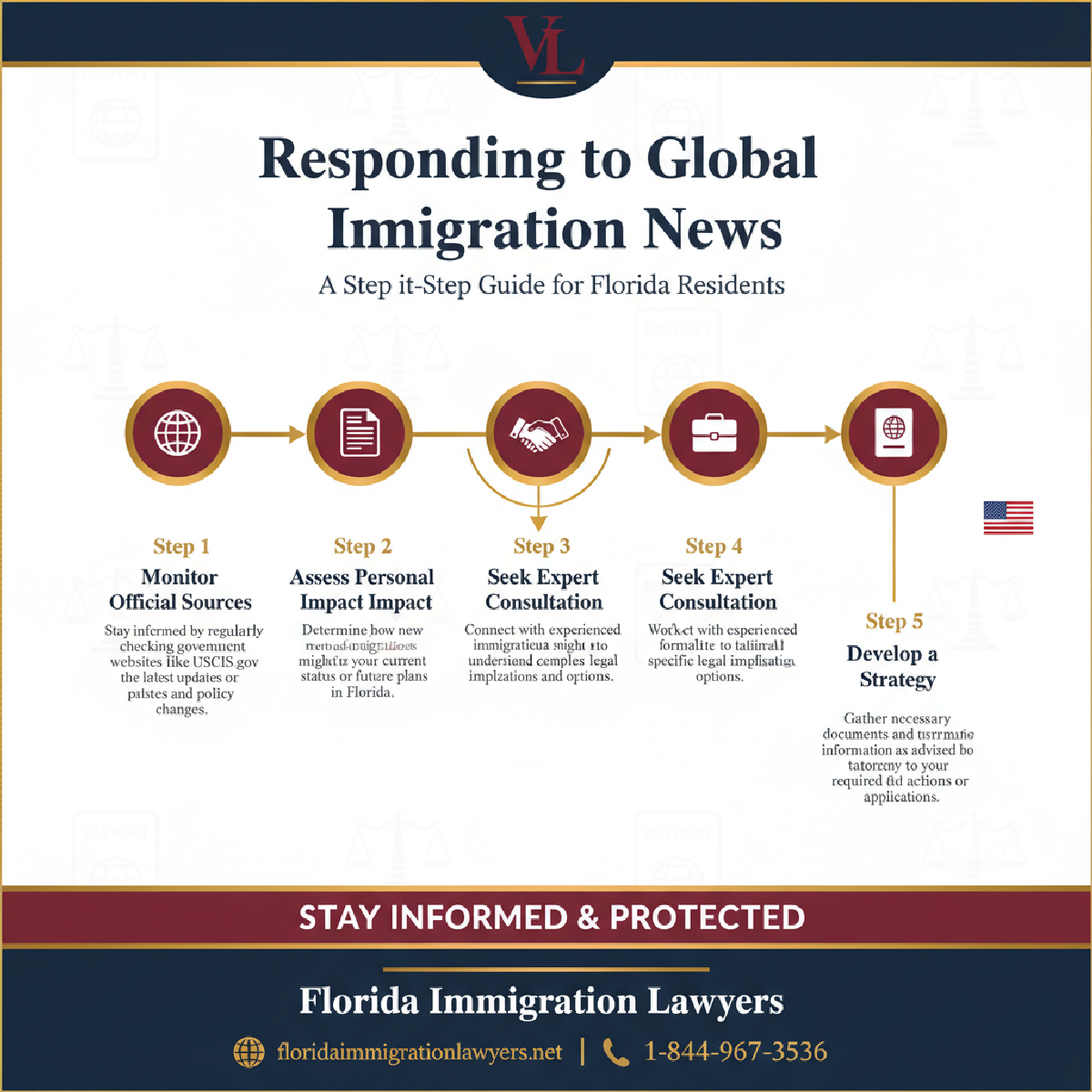
Step-by-Step Process Guide -
Attend an Interview (If Required)
Depending on your visa type and individual circumstances, you may be required to attend an interview at the Consulate. This is an opportunity for consular officers to clarify information on your application and assess your intent. Be honest and prepared to discuss your travel plans and reasons for visiting Japan.
-
Receive Your Visa Decision
After processing, the Consulate will inform you of their decision. If approved, your visa will be affixed to your passport. Review the visa sticker carefully to ensure all details, such as validity dates and entry type, are correct. If denied, you may receive a reason for the denial, and it is crucial to understand this before considering reapplication.
Essential Document Checklist for Japan Visa Applicants
The success of your Japan visa application largely depends on submitting a complete and accurate set of documents. While specific requirements vary by visa type, here is a general checklist of commonly requested items:
- ✔ Valid Passport: Must have at least six months validity remaining beyond your intended stay and sufficient blank pages for the visa.
- ✔ Visa Application Form: Duly completed and signed.
- ✔ Passport-Sized Photographs: Recent, clear, and meeting specific size and background requirements.
- ✔ Certificate of Eligibility (COE): Required for most long-term visas (work, student, family). This is obtained by your sponsor in Japan.
- ✔ Proof of Financial Means: Bank statements, employment letters, or sponsor letters demonstrating sufficient funds to cover your expenses in Japan.
- ✔ Travel Itinerary: Flight reservations (not purchased tickets, typically), accommodation bookings, and a detailed plan of your activities in Japan.
- ✔ Letter of Invitation/Guarantee: If applicable, from a Japanese host, company, or educational institution.
- ✔ Proof of Employment/Enrollment: Letters from your employer or school in Florida.
- ✔ Criminal Record Check: May be required for certain long-term visa categories.
- ✔ Marriage Certificate/Birth Certificate: For family-related visas.
Timeline and Processing Expectations for Japan Visas
Understanding the typical processing times for Japan visas can help Florida residents plan their travel effectively. Processing times can vary significantly based on the visa category, the completeness of your application, and the volume of applications at the Consulate-General of Japan in Miami.
For most temporary visitor visas, processing can take anywhere from 5 business days to 2 weeks, assuming all documents are in order. However, for work, student, or family-related visas that require a Certificate of Eligibility (COE), the overall process can be much longer. Obtaining the COE itself from Japan can take 1 to 3 months or even more. Once the COE is issued, the visa stamping process at the Consulate typically takes a few days to a couple of weeks.
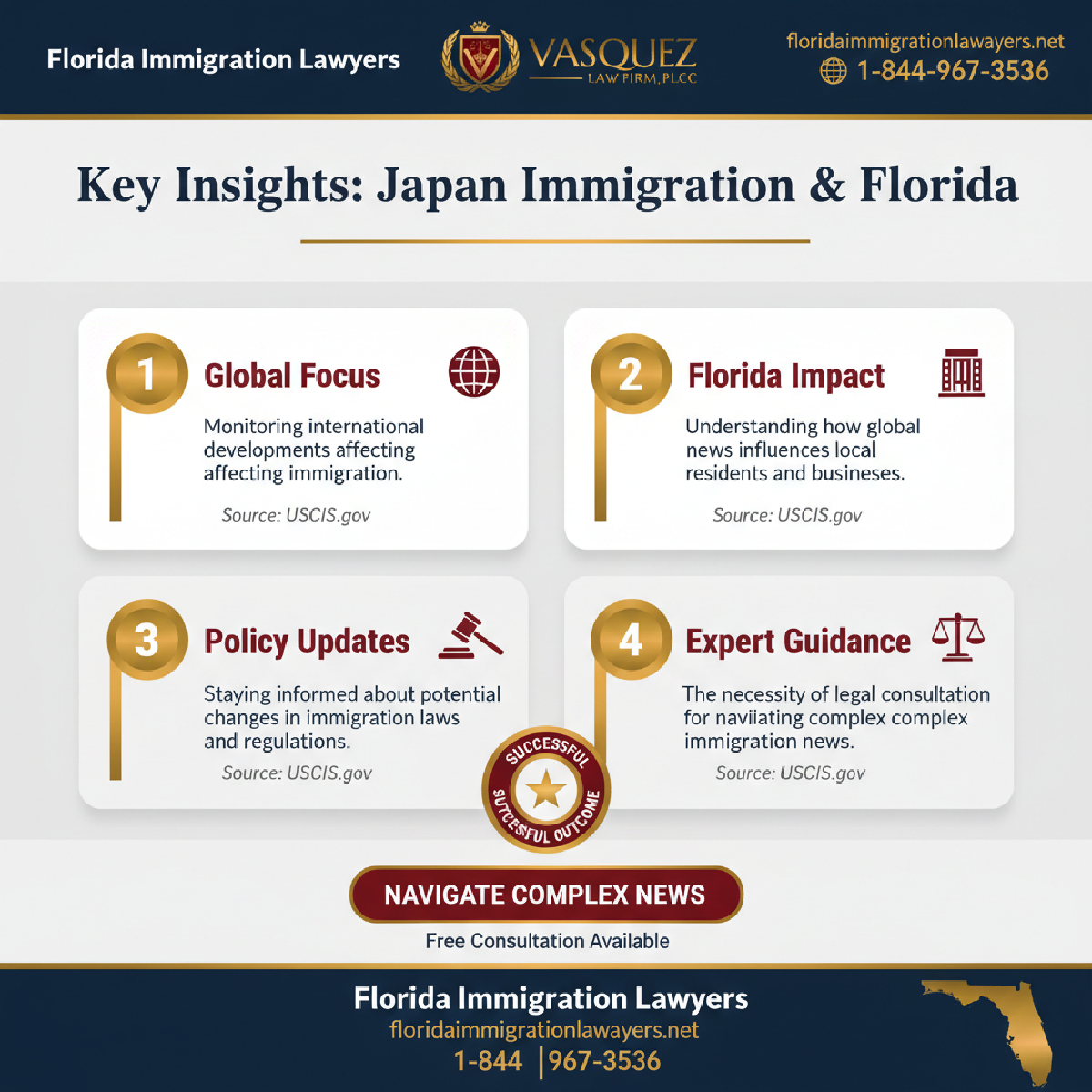
It is always advisable to apply well in advance of your intended travel date, ideally at least 2-3 months for complex visas. Factors such as national holidays in Japan or the U.S., peak travel seasons, or requests for additional documentation can extend these timelines. Always check the Consulate's official website for the most current processing estimates and holiday schedules.
Cost Factors and Fee Breakdown for Japan Immigration
The financial aspect of immigrating to or visiting Japan involves several costs beyond just the visa fee. Florida residents should budget carefully for these expenses.
Visa Application Fees: The Japanese government charges a fee for visa processing. These fees are subject to change and vary by visa type and nationality. It is crucial to check the Consulate-General of Japan in Miami's website for the most up-to-date fee schedule. These fees are typically non-refundable, even if your application is denied.
Legal Consultation Fees: Engaging an experienced immigration lawyer, like those at Florida Immigration Lawyers, is an investment that can save you time and prevent costly mistakes. Our fees cover expert advice, document review, application preparation, and representation, ensuring your application is as strong as possible. We offer a free initial consultation to discuss your specific needs.
Translation and Document Preparation Costs: You may need to translate certain documents into Japanese or English by certified translators. There might also be costs associated with obtaining official copies of birth certificates, marriage licenses, or academic transcripts.
Travel and Living Expenses: Factor in the cost of flights to Japan, accommodation, daily living expenses, health insurance, and any initial settlement costs. These can vary significantly depending on your lifestyle and the duration of your stay.
Miscellaneous Fees: This could include postage for mailing documents, notary fees, or fees for expedited services if available and needed. Always anticipate a buffer for unexpected costs.
Do not navigate this process alone. The complexities of international immigration, combined with specific requirements for Japan, can be daunting. Contact Florida Immigration Lawyers today at 1-844-967-3536 to ensure your application is handled with precision and care. We are committed to helping Florida residents achieve their immigration goals.
Common Mistakes to Avoid in Your Japan Visa Application
Applying for a Japan visa can be a detailed process. Many Florida residents encounter avoidable pitfalls that lead to delays or denials. Here are some common mistakes and their consequences:
- Incomplete Applications: Submitting an application with missing forms or unanswered questions is a guaranteed way to receive a rejection. The Consulate will not process incomplete submissions, wasting your time and effort.
- Incorrect Document Submission: Providing outdated passports, uncertified copies when originals are required, or documents that do not meet specific formatting guidelines (e.g., photo size) will lead to immediate refusal. Pay close attention to every detail.
- Missing Deadlines: Failing to submit your application within the stipulated timeframe, especially for COE-based visas, can jeopardize your entire plan. Ensure you start early and adhere to all deadlines.
- Providing False or Inconsistent Information: Any inaccuracies or fabrications on your application, even seemingly minor ones, can result in a permanent ban from applying for a Japanese visa. Honesty and consistency across all documents are paramount.
- Not Understanding Visa Requirements: Assuming general knowledge is enough without checking the specific requirements for your visa category. Each visa type has unique criteria, and a lack of understanding can lead to applying for the wrong visa or failing to meet conditions.
- Overstaying a Previous Visa: If you have previously overstayed a visa in Japan or any other country, it can negatively impact future applications. This demonstrates a disregard for immigration laws and can lead to inadmissibility.
- Ignoring Changes in Policy: Immigration laws and requirements are dynamic. Relying on outdated information from previous years or unofficial sources can lead to errors. Always consult the official Consulate website for the latest Japan immigration news and updates.
- Trying to Self-Represent Complex Cases: While simple tourist visas might be manageable, complex cases involving work, family reunification, or past immigration issues greatly benefit from professional legal advice. Attempting to handle these alone often leads to complications.
- Lack of Financial Preparedness: Not demonstrating sufficient funds to support your stay in Japan is a common reason for denial. You must provide clear and verifiable proof of financial stability to avoid issues.
- Inadequate Travel Insurance: While not always a direct visa requirement, not having comprehensive travel and health insurance can be a significant oversight. It protects you from unforeseen medical emergencies or travel disruptions in Japan.
When to Call a Lawyer for Japan Immigration Matters
While some straightforward visa applications might be manageable on your own, many situations warrant the expertise of an immigration attorney. Florida Immigration Lawyers are uniquely positioned to assist you, even with matters concerning international travel to Japan, especially when they intersect with your U.S. immigration status or future plans.
Consider seeking legal counsel from our firm if you encounter any of the following scenarios:
- Complex Visa Categories: If you are applying for a work visa, a highly skilled professional visa, or a long-term resident visa, the requirements are often intricate and demand precise documentation.
- Previous Visa Denials: If your previous Japan visa application was denied, understanding the reasons for denial and strategizing a successful reapplication is crucial.
- Criminal History: Any past criminal record, even minor offenses, can impact your eligibility for a Japanese visa. An attorney can advise on potential inadmissibility and how to address it.
- Family Sponsorship Challenges: If you are sponsoring a family member or being sponsored, especially for long-term residency, navigating the documentation and proving relationships can be complex. We also specialize in family immigration matters within the U.S.
- Unclear Eligibility: If you are unsure which visa category applies to your situation or if you meet the eligibility criteria, a lawyer can provide clarity.
- Concerns about U.S. Immigration Status: If your travel to Japan could potentially affect your U.S. visa, green card, or citizenship application, it is vital to consult an attorney. We ensure your international travel plans do not jeopardize your status in Florida.
- Desire for Long-Term Residency or Permanent Stay: Planning for extended stays or permanent relocation requires foresight and thorough understanding of both Japanese and U.S. immigration laws.
Our experienced attorneys at Florida Immigration Lawyers understand the nuances of immigration law. We can help you prepare a robust application, anticipate potential issues, and represent your best interests. Even if your primary goal is Japan, understanding the broader immigration landscape is key. For example, understanding what constitutes an 'immigrant' or 'nonimmigrant' is fundamental in both U.S. and international contexts, often defined in foundational legal texts like 8 CFR Part 214 for U.S. nonimmigrants.
Frequently Asked Questions About Japan Immigration and Florida Connections
Why is Japan bringing in immigrants?
Japan is increasingly facing demographic challenges, including a declining birthrate and an aging population. To address labor shortages, particularly in sectors like healthcare, manufacturing, and IT, and to maintain economic growth, the Japanese government has been implementing policies to attract more foreign workers and highly skilled professionals. These measures aim to diversify the workforce and stimulate the economy. This shift represents a significant change in Japan's traditionally homogenous society, reflecting a pragmatic approach to future sustainability.
How many Japanese live in Florida?
According to recent estimates, the Japanese population in Florida is relatively modest but growing, with several thousand residents. Major concentrations are found in metropolitan areas like Miami-Dade, Broward, Palm Beach, and Orlando, as well as communities like Homestead, due to business connections, educational opportunities, and cultural appeal. These communities often host Japanese cultural events, language classes, and businesses, strengthening the ties between Florida and Japan. The presence of the Consulate-General of Japan in Miami also supports this community.
Is Japan paying people to move there and have kids?
While Japan is not directly paying people to move there and have kids on a national scale, the government and local municipalities have introduced various incentives to combat its declining birthrate and encourage family growth. These initiatives often include financial subsidies for childcare, housing support for families, and benefits for new parents, particularly in rural areas or regions facing significant depopulation. These programs are primarily aimed at both Japanese citizens and long-term foreign residents already living in Japan, rather than as a direct immigration incentive for international newcomers.
Is Japan still accepting immigrants?
Yes, Japan is still accepting immigrants, particularly those who can contribute to its economy and society. The country has specific visa programs designed for skilled workers, highly skilled professionals, students, and individuals with family ties to Japanese citizens or long-term residents. While Japan maintains a selective immigration policy, it is actively seeking foreign talent to fill labor gaps and foster innovation. The process requires meeting strict criteria and navigating a detailed application, often with the help of a sponsor in Japan.
How do I apply for a Japan visit visa from Florida?
Florida residents apply for a Japan visit visa through the Consulate-General of Japan in Miami. The process typically involves completing an application form, providing a valid passport, recent photos, a detailed travel itinerary, and proof of sufficient funds. Depending on your nationality and purpose, additional documents like an invitation letter may be required. It is crucial to check the Consulate's official website for the most current requirements and submission procedures, as these can change. Starting your application well in advance of your travel date is highly recommended.
What is the role of the Japan Consulate in Miami?
The Consulate-General of Japan in Miami serves as the official diplomatic mission for Japanese citizens and a resource for U.S. citizens in Florida, Puerto Rico, and the U.S. Virgin Islands. Its primary roles include providing consular services to Japanese nationals, issuing visas to foreign nationals wishing to travel to Japan, promoting cultural exchange, and fostering economic ties between Japan and its jurisdiction. For Florida residents, it is the essential point of contact for all Japan visa applications and related inquiries.
Can Florida Immigration Lawyers help with Japan visas?
While Florida Immigration Lawyers primarily specialize in U.S. immigration law, our expertise extends to advising clients on the complexities of international travel and how it may intersect with their U.S. immigration status. We can provide guidance on understanding visa requirements, ensuring your U.S. status remains secure while planning international trips, and connecting you with resources for Japan-specific immigration. We are here to offer comprehensive support for your broader immigration journey, including understanding how global immigration policies affect Florida residents.
What are common reasons for Japan visa denials?
Common reasons for Japan visa denials include submitting incomplete or incorrect documentation, failing to prove sufficient financial means to support your stay, having a questionable travel history (e.g., previous overstays), providing inconsistent information, or failing to convince consular officers of your genuine intent to return to your home country. A criminal record or previous deportation from Japan or any other country can also lead to denial. It is essential to ensure your application is meticulously prepared and truthful.
Are there Japanese cultural centers or classes in Florida?
Yes, Florida offers several opportunities to engage with Japanese culture and language. Major cities like Miami, Orlando, and Tampa often have cultural organizations, community centers, and universities that offer Japanese language classes, cultural workshops, and events. The Morikami Museum and Japanese Gardens in Delray Beach is a prominent example, showcasing Japanese art, culture, and nature. These resources help foster a deeper understanding and appreciation of Japan within the Florida community, especially for those considering a visit or move.
About Florida Immigration Lawyers
Florida Immigration Lawyers is a leading law firm dedicated to providing comprehensive immigration legal services to individuals and families across the entire state of Florida. With a deep understanding of complex immigration laws, our experienced attorneys are committed to delivering personalized, compassionate, and effective legal representation.
We specialize in a wide range of immigration matters, including family-based petitions, employment visas, asylum, deportation defense, citizenship applications, business immigration, and more. Our firm prides itself on its client-focused approach, ensuring that every client receives the attention and dedicated advocacy they deserve. We serve all of Florida, including Homestead and surrounding communities.
Why Choose Florida Immigration Lawyers?
- Experienced Attorneys: Our team possesses extensive knowledge of U.S. immigration law and its intricacies.
- Bilingual Services: We offer services in both English and Spanish to cater to Florida's diverse population.
- Client-Centered Approach: Your goals are our priority, and we work tirelessly to achieve the best possible outcome for your case.
- Accessible Support: We are available 24/7 to address your urgent questions and concerns.
- Free Consultations: We offer a free initial consultation to discuss your case and provide clear guidance on your options.
Let us be your trusted partner in navigating the immigration system. Contact us today.
Phone: 1-844-967-3536
Website: https://www.floridaimmigrationlawyers.net
This article is for general informational purposes only and does not constitute legal advice. Immigration laws change frequently. For advice specific to your situation, please consult with a qualified immigration attorney.
Understanding Japan immigration news and its implications for Florida residents is just one piece of a larger global puzzle. Whether your journey takes you across oceans or involves establishing roots right here in Florida, expert legal guidance is invaluable. Do not leave your future to chance. Contact Florida Immigration Lawyers for a free consultation at 1-844-967-3536 and let our dedicated team help you achieve your immigration goals.
Florida Immigration Lawyers
Legal Team
Our experienced attorneys at Florida Immigration Lawyers have been serving clients across Florida for over 20 years. We specialize in immigration, personal injury, criminal defense, workers compensation, and family law.