Immigration Policy News Florida: What You Need to Know in 2026
Stay informed on the latest immigration policy news affecting Florida in 2026. This comprehensive guide from Florida Immigration Lawyers covers evolving state and federal laws, their impact on residents in West Palm Beach and across the state, and proactive steps you can take. We discuss key documents, potential processing changes, and common mistakes to avoid. Understanding these developments is crucial for your immigration journey. Contact Florida Immigration Lawyers for a free consultation to navigate these complexities with expert legal guidance.
Immigration policy news in Florida for 2026 indicates a dynamic legal landscape influenced by state and federal actions. These changes can significantly impact residents, particularly in areas like West Palm Beach and across Florida. Staying informed is crucial for anyone navigating immigration processes, as policies may affect eligibility, processing times, and legal strategies. Proactive legal guidance is often essential to adapt effectively.
- Florida's immigration policies continue to evolve with state legislative actions.
- Federal policy shifts also directly influence immigration matters within Florida.
- Changes can impact various aspects, from employment to family-based petitions.
- Consulting an experienced Florida immigration lawyer is vital for personalized advice.
- Timely information and preparation are key to successfully adapting to new rules.
Are you an immigrant, a family member of an immigrant, or an employer in Florida feeling uncertain about the latest immigration policy news? The legal landscape surrounding immigration in our state is constantly shifting, with new policies and enforcement priorities emerging regularly. For individuals and businesses across Florida, from Miami to Jacksonville, and right here in West Palm Beach, these changes can create significant anxiety and confusion.
Understanding the nuances of Florida's immigration laws and how they interact with federal regulations is paramount. This comprehensive guide will explore the key immigration legal changes 2026 impacting residents throughout Florida. We aim to provide clarity on recent developments, discuss their potential effects, and outline proactive steps you can take to protect your interests and those of your loved ones.
Navigating complex immigration policies requires expert knowledge and dedicated support. If you have immediate concerns about how recent USCIS updates Florida or state legislative actions affect your situation, do not hesitate. Call Florida Immigration Lawyers at 1-844-967-3536 for a free consultation. Our team is ready to provide the clarity and guidance you need.
Understanding Florida's Evolving Immigration Policy News in 2026
Florida has been at the forefront of state-level immigration legislation, often introducing policies that complement or diverge from federal directives. The year 2026 continues this trend, with ongoing discussions and potential implementations of new laws affecting various aspects of immigrant life. These developments are critical for anyone living in or considering moving to Florida.
Recent immigration policy news highlights the state's efforts to influence immigration enforcement and services. These state-specific laws can have profound implications for undocumented immigrants, asylum seekers, and even legal residents. Understanding these local impacts is just as important as knowing federal law, especially for those in communities like West Palm Beach.
Our firm, Florida Immigration Lawyers, closely monitors these legislative shifts. We understand that these changes can impact employment, housing, healthcare access, and even interactions with local law enforcement. Staying informed is your first line of defense against potential challenges.
The Interplay of State and Federal Immigration Law in Florida
Immigration law in the United States is primarily federal, governed by agencies like USCIS, ICE, and CBP. However, states like Florida often pass their own laws that can significantly affect immigrants within their borders. These state laws can range from employment verification requirements to restrictions on services for undocumented individuals.
For instance, Florida has implemented laws regarding E-Verify and the transportation of undocumented immigrants. These state-level mandates, while not directly altering federal immigration status, can create a challenging environment for many. The complexity arises from navigating both sets of rules simultaneously, making expert legal advice invaluable.
Keeping abreast of these dual legal systems is a core part of our practice. We help clients in West Palm Beach and across Florida understand how both federal and state Florida immigration law apply to their unique circumstances. This dual approach ensures comprehensive protection and informed decision-making.
Navigating Policy Changes: A Proactive Approach for Florida Residents
When new immigration policy news emerges, it is natural to feel overwhelmed. However, a proactive approach can help mitigate potential negative impacts. Understanding the steps you can take to prepare and adapt is essential for protecting your status and future in Florida.
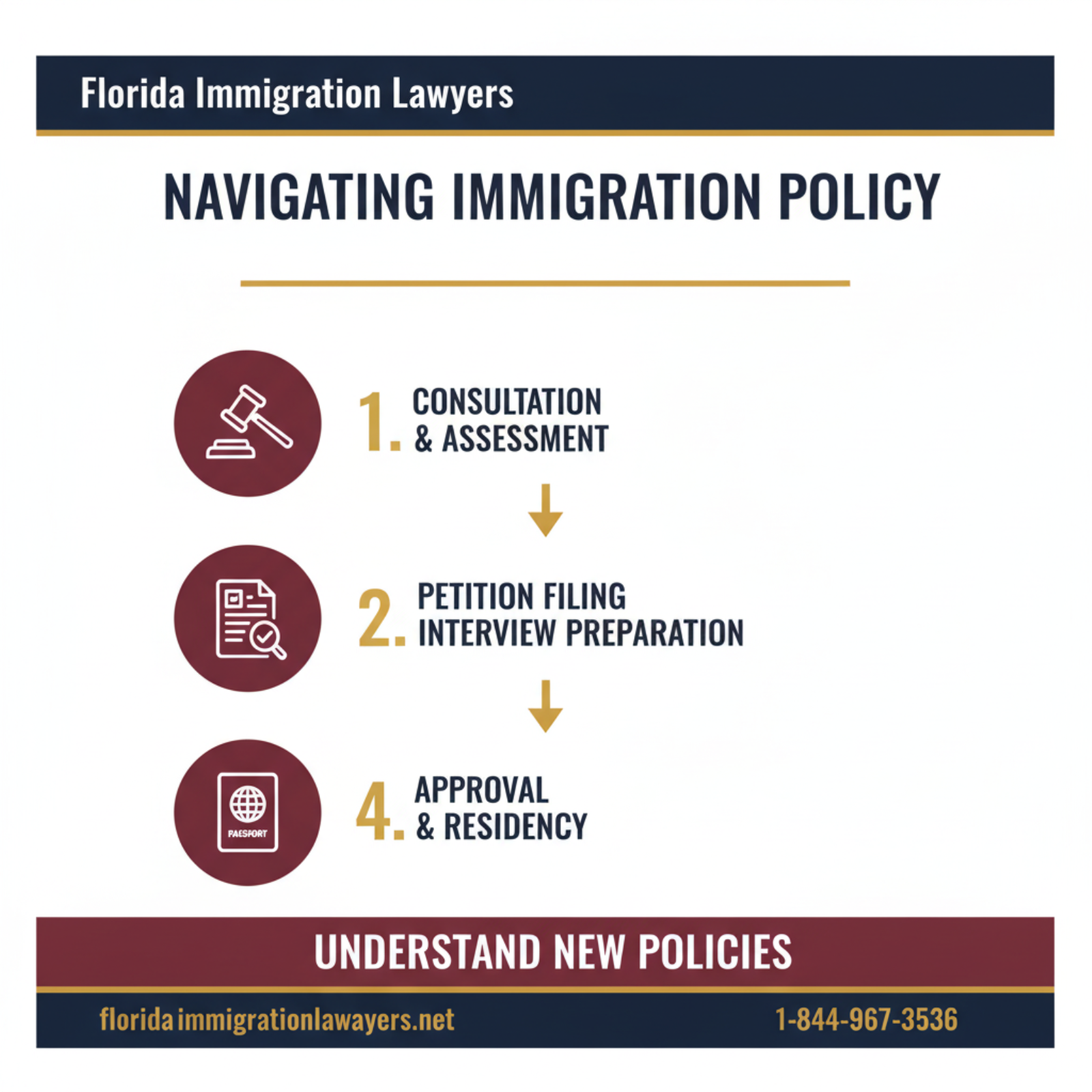
This section outlines a general framework for how individuals and families can respond to the evolving immigration landscape. Remember, these steps are general and should always be followed by personalized legal consultation. Our firm is here to guide you through each stage, ensuring your actions are well-informed and strategic.
- Stay Informed Through Reliable Sources: Regularly check official government websites like USCIS.gov for federal updates and the Florida Legislature website for state laws. Be wary of misinformation from unofficial channels. Authentic USCIS updates Florida are crucial for accurate information.
- Assess Your Current Immigration Status: Understand your exact legal standing in the U.S. and Florida. This includes knowing your visa type, expiration dates, and any conditions attached to your status. A clear understanding is the foundation for any proactive strategy.
- Consult with an Experienced Immigration Lawyer: The most critical step is to seek professional legal advice. An attorney specializing in Florida immigration law can evaluate your specific situation in light of new policies. They can identify potential risks and opportunities unique to your case.
- Gather and Organize Important Documents: Proactively collect all personal and immigration-related documents. This includes passports, visas, birth certificates, marriage certificates, employment records, and any correspondence from immigration authorities. Having these readily available can save time and stress.
- Understand Potential Impacts on Employment: If new policies affect employment verification or licensing, understand your employer's obligations and your rights. Businesses in West Palm Beach and other Florida areas must comply with state and federal employment laws, which can be complex.
- Review Family Immigration Plans: For those with family members in different immigration statuses, evaluate how new policies might affect family-based petitions. Changes could impact eligibility or processing times for relatives seeking to join you in Florida. You can learn more about family immigration on our website.
- Prepare for Potential Enforcement Changes: Be aware of any shifts in immigration enforcement priorities or practices. Knowing your rights if approached by immigration officials is vital. This preparation can provide peace of mind in uncertain times.
Key Documents and Information for Immigration Processes
Regardless of the specific immigration policy news, having your documentation in order is always a cornerstone of any immigration strategy. A well-organized set of documents can expedite processes and prevent common delays. This checklist provides a general overview of essential items you should gather and keep secure.
It is important to remember that specific applications or legal defenses, such as asylum claims or deportation defense, may require additional, highly specific evidence. Your Florida Immigration Lawyers attorney will provide a tailored list based on your individual needs.
- Proof of Identity and Nationality: Passports, national ID cards, birth certificates.
- Proof of Legal Status: Visas, I-94 records, Green Cards (Form I-551), employment authorization documents (EADs), previous approval notices (e.g., I-797).
- Financial Documents: Tax returns, pay stubs, bank statements, affidavits of support (Form I-864).
- Civil Documents: Marriage certificates, divorce decrees, adoption papers, death certificates.
- Educational Records: Diplomas, transcripts, professional licenses.
- Employment Records: Letters from employers, offer letters, pay stubs, W-2s, I-9 forms.
- Medical Records: Vaccination records, medical examination results (Form I-693).
- Police Records/Court Dispositions: For any arrests or convictions, even if expunged.
- Proof of Relationship: Birth certificates of children, marriage certificates, photos, joint bank accounts, utility bills in both names.
- Evidence of Residence: Utility bills, lease agreements, property deeds in Florida.
- Any Correspondence from USCIS or other Agencies: Keep all notices, receipts, and requests for evidence (RFEs).
Impact of 2026 Immigration Policy News on Processing Times and Future Outlook
The immigration policy news of 2026, both at the state and federal levels, can have a direct impact on the efficiency and speed of immigration processes. Changes in enforcement priorities, resource allocation, and legislative mandates often lead to fluctuations in processing times across various application types. This is particularly relevant for those dealing with citizenship or business immigration applications.
For example, increased enforcement at the border or within the interior of Florida may divert resources from adjudicating applications at USCIS field offices in cities like Orlando or Miami. This can result in longer waits for interviews, background checks, and final decisions. It is crucial to set realistic expectations and plan accordingly.
While specific timelines are always subject to change, the general outlook for 2026 suggests continued vigilance will be necessary. Policies can be introduced, challenged, and modified rapidly. Our firm advises clients in West Palm Beach and throughout Florida to prepare for potential delays and to submit the most complete applications possible to avoid RFEs that further prolong processing.
USCIS Updates and Their Effect on Florida Applicants
USCIS, the U.S. Citizenship and Immigration Services, frequently updates its policies, forms, and processing procedures. These USCIS updates Florida directly affect applicants in our state. For instance, changes to fee schedules, interview waiver policies, or even the requirements for specific forms can significantly alter an applicant's journey.
In 2026, we anticipate USCIS to continue adapting to new federal directives and operational challenges. Monitoring their official website (USCIS.gov) is essential, but interpreting these changes and understanding their practical implications often requires legal expertise. Florida Immigration Lawyers helps bridge this gap for our clients.
Understanding Potential Costs and Fees in Florida Immigration Processes
Navigating the immigration system involves various costs beyond legal fees, which are an important consideration for many individuals and families. These costs can include government filing fees, biometric service fees, medical examination fees, and translation costs. It is important to budget for these expenses when planning your immigration journey in Florida.
Government filing fees for various applications (e.g., I-130, I-485, N-400) are set by USCIS and are subject to change. While we cannot provide specific amounts here due to their fluctuating nature, it's critical to check the most current fee schedule on the USCIS website (USCIS.gov) before filing. These fees are non-refundable, even if your application is denied.
Beyond government fees, you may incur costs for obtaining certified translations of foreign documents, securing expert evaluations for educational credentials, and travel expenses for interviews. A transparent discussion of all potential costs is part of our commitment to clients at Florida Immigration Lawyers. We believe in empowering you with all necessary information to make informed decisions.
The complexities of immigration policy news and the ever-changing legal landscape can be daunting. Do not navigate this process alone. Contact Florida Immigration Lawyers today to ensure your case is handled with precision and care. We are here to advocate for your rights and guide you every step of the way.
Common Mistakes to Avoid in Florida Immigration Cases
Even small errors can lead to significant delays or even denials in immigration processes. Being aware of these common pitfalls, especially in light of evolving immigration policy news, is crucial for applicants in Florida. Avoid these mistakes to strengthen your case:
- Ignoring New Policy Updates: Failing to stay informed about recent immigration policy news or USCIS updates Florida can lead to submitting outdated forms or missing critical deadlines. This can result in application rejections or requests for further evidence.
- Providing Inaccurate or Inconsistent Information: Any discrepancies between your application forms, interviews, or previous immigration records can raise red flags. Always be truthful and consistent; inconsistencies can lead to accusations of misrepresentation and severe consequences.
- Missing Deadlines: Immigration processes are strict about deadlines. Missing a deadline for an RFE (Request for Evidence), an appeal, or an interview can result in automatic denial or case closure, often without a chance to reopen.
- Failing to Disclose Criminal History: Even minor arrests or convictions, regardless of whether they were expunged or happened years ago, must be disclosed. Concealing information can lead to allegations of fraud and permanent bars from immigration benefits.
- Not Seeking Legal Counsel: Attempting to navigate complex Florida immigration law without an experienced attorney is a common and often costly mistake. A lawyer can identify issues, prepare strong arguments, and avoid errors you might not foresee.
- Submitting Incomplete Applications or Insufficient Evidence: USCIS often issues RFEs for incomplete applications. This significantly prolongs processing times and, if not adequately addressed, can lead to denial. Always provide all requested evidence and documentation.
- Traveling Internationally Without Consulting an Attorney: Leaving the U.S. while an application is pending or if you have certain immigration issues can trigger bars to re-entry or lead to the abandonment of your application. Always consult your attorney before making travel plans.
- Not Updating Address with USCIS: If you move while your case is pending, you must update your address with USCIS within 10 days. Failure to do so can mean missing crucial notices, interview appointments, or RFEs, leading to case abandonment.
- Falling Victim to Notario Fraud: "Notarios públicos" in some cultures are lawyers, but in the U.S., they are not. Relying on unqualified individuals for legal advice or assistance can lead to incorrect filings, lost money, and irreversible damage to your immigration case.
- Not Preparing for Interviews: Interviews with USCIS or an immigration judge are critical. Failing to prepare adequately, understand the questions, or provide consistent answers can jeopardize your application or defense.
While this article provides valuable general information, immigration policy news and individual circumstances are highly specific. There are numerous situations where the expertise of a dedicated immigration attorney from Florida Immigration Lawyers becomes not just helpful, but absolutely essential. Our team is particularly experienced in assisting clients in West Palm Beach and across Florida with complex immigration matters.
You should call a lawyer if you:
- Have questions about how recent immigration legal changes 2026 specifically impact your eligibility for a visa, Green Card, or citizenship.
- Have received a Request for Evidence (RFE), Notice of Intent to Deny (NOID), or a denial notice from USCIS.
- Are facing deportation or removal proceedings in an immigration court in Florida, such as the ones in Miami or Orlando.
- Have a complex immigration history, including previous denials, overstays, or criminal records.
- Are unsure about which forms to file or how to gather the necessary supporting documentation for your application.
- Need assistance with asylum applications or humanitarian relief.
- Are an employer seeking to understand compliance with Florida immigration law regarding hiring foreign workers or E-Verify.
- Wish to explore options for family-based petitions or business immigration visas.
Do not wait for a crisis to seek legal help. Proactive consultation can prevent costly mistakes and provide peace of mind. Our attorneys are ready to review your case and provide strategic advice tailored to your needs. Visit our attorneys page to learn more about our experienced legal team.
About Florida Immigration Lawyers
Florida Immigration Lawyers is a premier immigration law firm dedicated to serving individuals, families, and businesses throughout the entire state of Florida. With a deep understanding of both federal and state Florida immigration law, we provide compassionate, effective, and results-oriented legal representation. Our mission is to help our clients successfully navigate the complexities of the U.S. immigration system, regardless of the latest immigration policy news.
Our experienced team handles a wide array of immigration matters, including family-based visas, employment-based visas, deportation defense, asylum, naturalization, and DACA. We pride ourselves on offering personalized attention, clear communication, and strategic solutions tailored to each client's unique circumstances. Whether you are in West Palm Beach, Orlando, Miami, or any other part of Florida, our firm is equipped to assist you.
Choosing Florida Immigration Lawyers means choosing a partner who understands your journey. We are available 24/7 to answer your urgent questions and offer free consultations to discuss your case. Let us be your trusted guide through the immigration process. Contact us at 1-844-967-3536 or visit our website at https://www.floridaimmigrationlawyers.net to learn more about how we can help you achieve your immigration goals.
Sources and References
- U.S. Citizenship and Immigration Services (USCIS)
- Executive Office for Immigration Review (EOIR)
- U.S. Department of State - Bureau of Consular Affairs
- 8 U.S.C. Chapter 12 - Immigration and Nationality Act (INA)
- 8 CFR - Code of Federal Regulations, Title 8 (Aliens and Nationality)
- INA § 212 - General Classes of Aliens Ineligible to Receive Visas and Ineligible for Admission; Waivers of Inadmissibility
- INA § 237 - General Classes of Deportable Aliens
This article provides general legal information and is not intended as legal advice. Every case is unique, and outcomes depend on specific facts and circumstances. Contact an attorney for advice about your particular situation.
Understanding the latest immigration policy news is critical, but applying it to your individual case requires expert legal insight. Do not face the complexities of immigration law alone. Florida Immigration Lawyers is here to provide the dedicated and knowledgeable representation you deserve. Call us today for a free, confidential consultation at 1-844-967-3536. Se Habla Español - Estamos aquí para ayudarle.
Need help with Immigration?
Our Florida immigration attorneys offer free consultations. Call today or schedule online.
Frequently Asked Questions
Florida Immigration Lawyers
Legal Team
Our experienced attorneys at Florida Immigration Lawyers have been serving clients across Florida for over 20 years. We specialize in immigration, personal injury, criminal defense, workers compensation, and family law.