Immigration Court Proceedings in Florida: Your 2026 Guide
Navigating immigration court proceedings in Florida can be an overwhelming experience, impacting your future and ability to remain in the U.S. This comprehensive guide, updated for 2026, demystifies the complex process, from understanding removal proceedings and the role of the EOIR to preparing essential documents and managing timelines. We delve into common mistakes to avoid and highlight when expert legal counsel is critical. Whether you're in Coral Springs, Miami, Orlando, or anywhere in Florida, our insights aim to empower you with the knowledge needed to face an immigration judge. Discover how Florida Immigration Lawyers can provide the dedicated support and strategic advocacy necessary for a favorable outcome in your immigration court case.
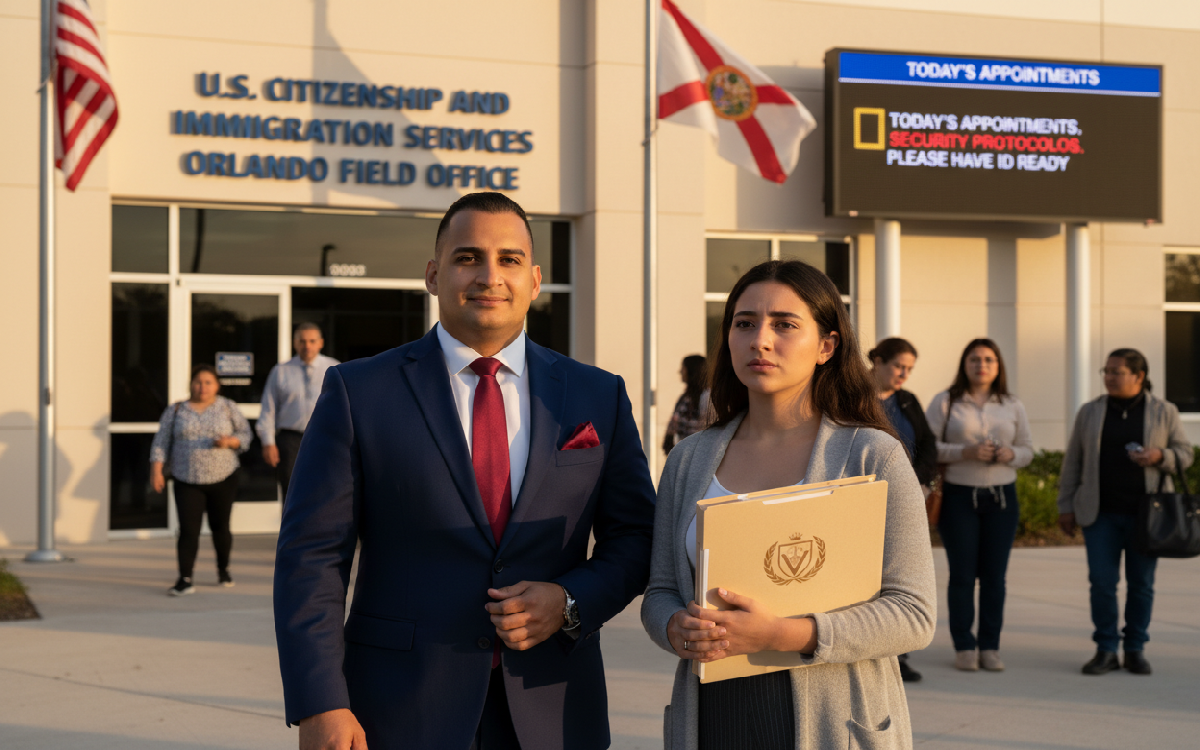
Immigration court proceedings in Florida involve a legal process overseen by an Immigration Judge to determine an individual's immigration status, often leading to a decision on whether they can remain in the U.S. or face removal. These proceedings are part of the Executive Office for Immigration Review (EOIR) system and require meticulous preparation and understanding of complex laws. Seeking legal counsel is crucial for a strong defense.
- Immigration courts in Florida handle cases like removal, asylum, and bond.
- Proceedings begin with a Notice to Appear (NTA) and involve multiple hearings.
- Preparation, evidence, and legal representation significantly impact outcomes.
- The process can be lengthy and requires strict adherence to deadlines.
- Consulting an experienced attorney is vital for navigating these complex cases.
Imagine receiving official documents demanding your presence in immigration court. The fear and uncertainty can be overwhelming, especially when your future in Florida is at stake. Many individuals and families in Coral Springs and across Florida find themselves facing this daunting reality, often due to complex immigration laws and enforcement actions.
This comprehensive guide, updated for 2026, will demystify immigration court proceedings in Florida. We will explore the process, what to expect, essential documents, and how to protect your rights. Our goal is to provide clarity and empower you with the knowledge you need to navigate this challenging journey.
Do not face the complexities of immigration court alone. Call Florida Immigration Lawyers at 1-844-967-3536 for a free consultation and let our experienced team guide you through every step of your case.
Understanding Immigration Court Proceedings in Florida
When we talk about immigration court, we are referring to a specialized judicial system within the U.S. Department of Justice's Executive Office for Immigration Review (EOIR). This system is distinct from federal courts or state courts, focusing specifically on cases involving non-citizens and their eligibility to remain in the United States.
In Florida, individuals may find themselves in removal proceedings Florida at courts located in Miami, Orlando, or Pompano Beach. There's also the Krome Service Processing Center Immigration Court, which primarily handles cases for detained individuals. Each of these locations serves a vast and diverse population, reflecting Florida's role as a key entry point and home for many immigrants.
The primary purpose of an immigration court proceeding is to determine whether an individual is removable from the United States and, if so, whether they are eligible for any form of relief from removal. This process is governed by the Immigration and Nationality Act (INA), specifically INA § 240 (8 U.S.C. § 1229a), which outlines the procedures for removal proceedings.
Cases before an immigration judge Florida can involve various scenarios, including individuals who overstayed their visas, entered without inspection, committed certain crimes, or are seeking asylum. The complexity of these cases necessitates a thorough understanding of immigration law and procedure, which is where specialized legal counsel becomes invaluable.
The EOIR system, including its regulations found in 8 CFR Part 1003, ensures that due process is provided to all respondents. However, the legal landscape is constantly evolving, making it critical to stay informed about the latest policies and court decisions. Our firm, Florida Immigration Lawyers, keeps abreast of these changes to best serve our clients across the state.
The Step-by-Step Journey Through Florida Immigration Court
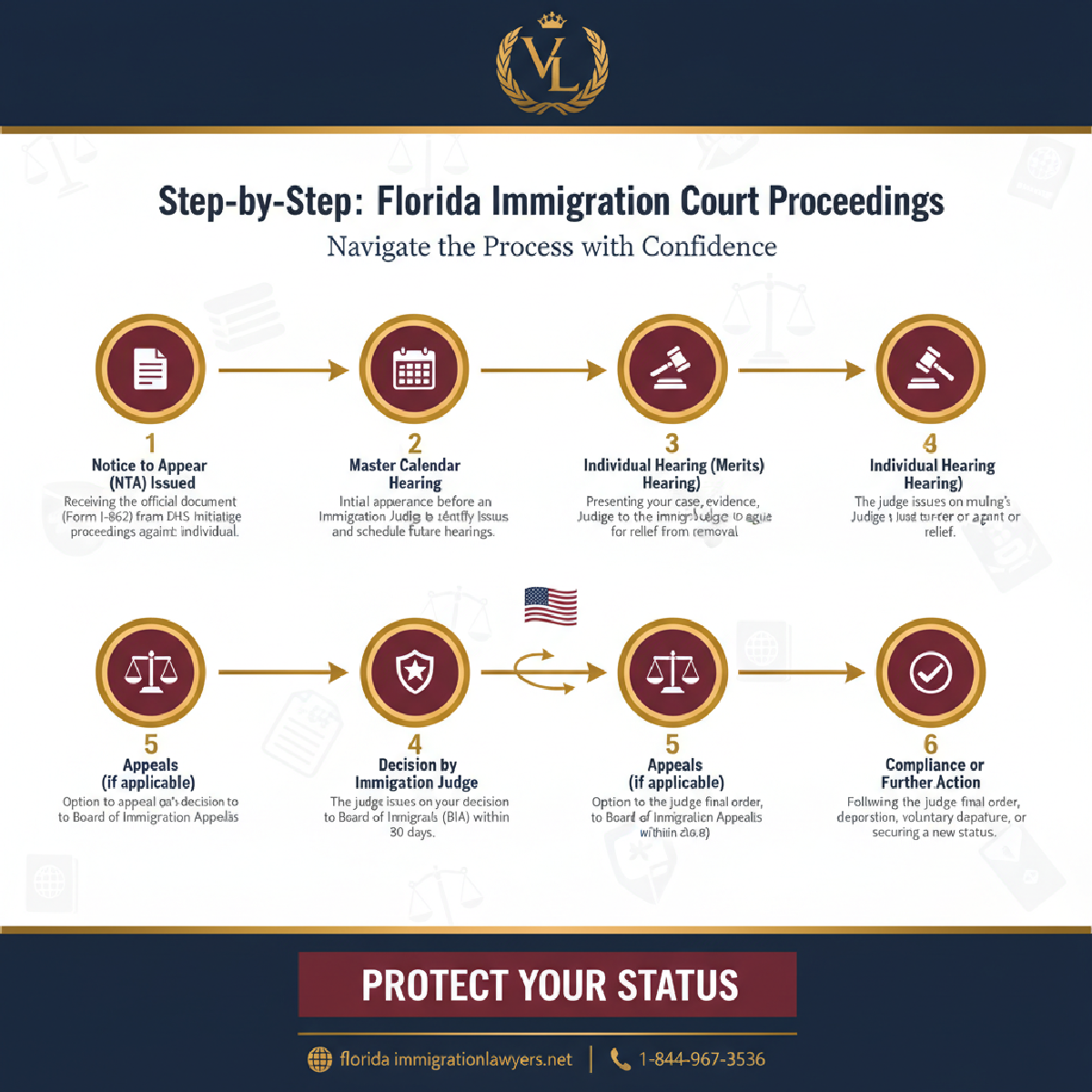
Navigating the immigration court system can feel like moving through a maze. Understanding each stage of the process is essential for anyone facing removal proceedings Florida. Here's a general overview of what you can typically expect:
- Issuance of a Notice to Appear (NTA): Your journey in immigration court officially begins when you receive a Form I-862, Notice to Appear (NTA). This document outlines the U.S. government's allegations against you, explaining why they believe you are removable from the United States. It also specifies the date and location of your first hearing.
- Master Calendar Hearing (MCH): This is usually your first appearance before an immigration judge Florida. MCHs are generally brief, procedural hearings where you acknowledge receipt of the NTA, plead to the allegations and charges, and inform the court if you intend to seek relief from removal. The judge will also set deadlines for filing applications and supporting documents.
- Filing Applications for Relief: If you are eligible for relief from removal, such as asylum, adjustment of status, cancellation of removal, or a waiver, you must file the appropriate application by the deadline set by the immigration judge. This is a critical stage where a strong legal strategy and comprehensive documentation are paramount.
- Individual Hearing (Merits Hearing): This is the main trial in immigration court. During an Individual Hearing, you and your attorney present your case, offer evidence, call witnesses, and provide testimony to support your application for relief. The government attorney (DHS counsel) will also present their case and may cross-examine you and your witnesses.
- Decision by the Immigration Judge: After reviewing all evidence and testimony, the immigration judge will issue a decision. The judge may grant your application for relief, allowing you to remain in the U.S., or deny it, leading to an order of removal. This decision can sometimes be delivered orally at the end of the hearing or in writing at a later date.
- Appeals Process: If either you or the government disagrees with the immigration judge's decision, you generally have 30 days to file an appeal with the Board of Immigration Appeals (BIA). The BIA reviews the judge's decision for legal errors. Further appeals may be possible to a federal circuit court of appeals, though these are more complex and less common.
Each step in this process is complex and carries significant consequences. Having an experienced attorney from Florida Immigration Lawyers by your side is essential, especially when dealing with critical stages like removal proceedings. We can help you understand the charges and develop a robust defense strategy. You can learn more about our defense services at /practice-areas/deportation-defense.
Essential Documents for Your Immigration Court Case
Preparing for immigration court requires meticulous organization and the presentation of compelling evidence. The specific documents needed will vary depending on the nature of your case and the relief you are seeking. However, a general checklist often includes the following:
- ✓ Identity and Nationality Documents: Passport, birth certificate, national identity card.
- ✓ Marriage and Family Documents: Marriage certificates, divorce decrees, birth certificates of children, evidence of family relationships.
- ✓ Prior Immigration Documents: I-94 arrival/departure records, visa stamps, previous applications, Notices to Appear (NTAs).
- ✓ Criminal Records: Any arrest records, court dispositions, or probation documents, even if charges were dropped or expunged. Full disclosure is crucial.
- ✓ Financial Records: Tax returns, bank statements, pay stubs, evidence of property ownership, particularly for relief like cancellation of removal.
- ✓ Evidence of Ties to the U.S.: Mortgage statements, lease agreements, utility bills, school records of children, letters from community leaders or employers.
- ✓ Asylum-Specific Evidence: Affidavits from witnesses, country condition reports, news articles, medical records of persecution, human rights reports, expert testimony.
- ✓ Affidavits and Character Letters: Statements from friends, family, employers, or community members attesting to your good moral character and positive contributions.
- ✓ Medical Records: Any documents related to medical conditions, especially if seeking humanitarian relief or waivers based on health.
It is vital to provide original documents or certified copies when requested. All foreign language documents must be accompanied by a certified English translation. Your attorney from Florida Immigration Lawyers will help you compile and organize these crucial pieces of evidence to build the strongest possible case for your immigration court hearing.
Navigating Timelines and Processing Expectations in Florida Immigration Courts
One of the most common questions individuals have about immigration court is, "How long will my case take?" The answer, unfortunately, is rarely straightforward. The duration of immigration court proceedings can vary significantly, ranging from a few months to several years, depending on numerous factors.
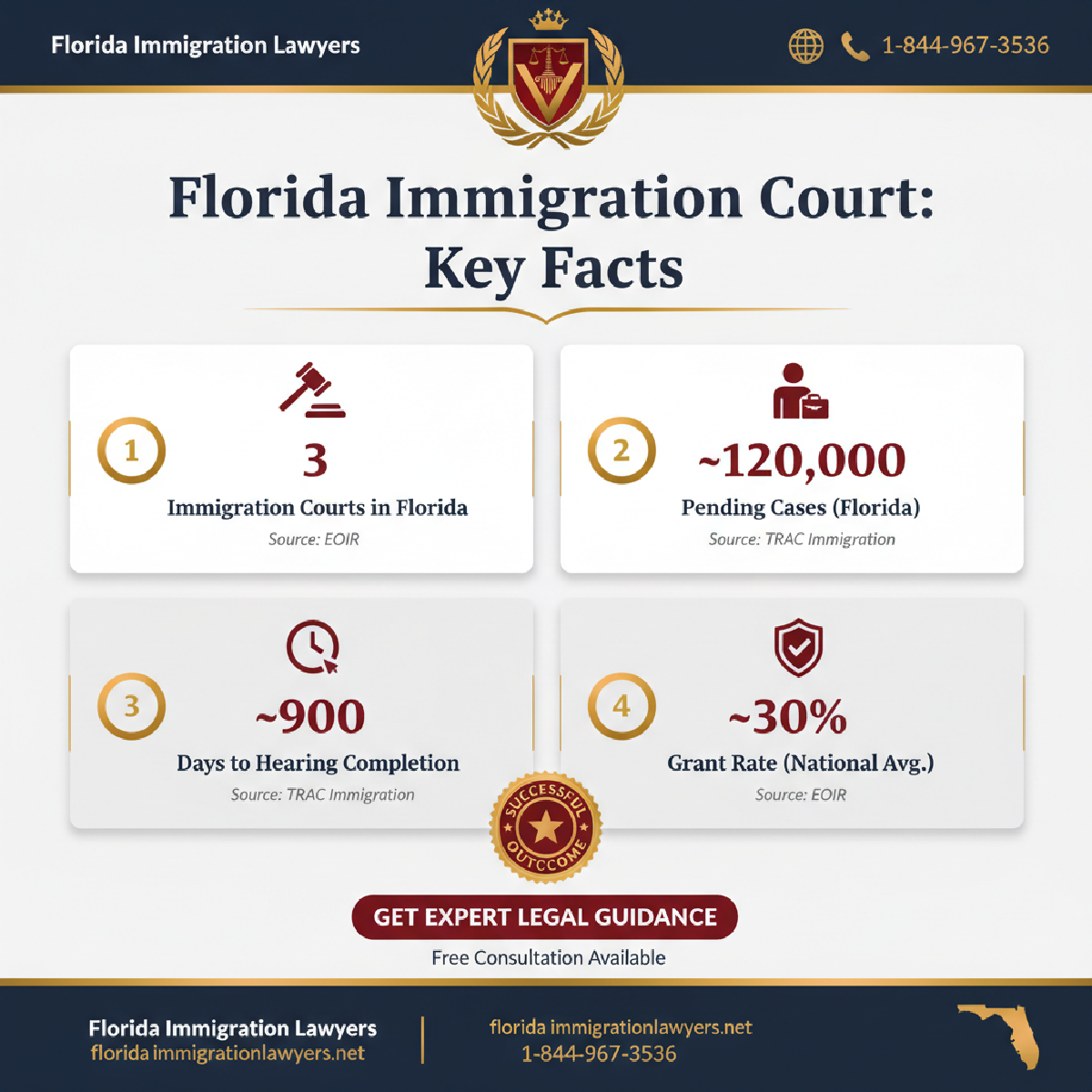
Factors influencing timelines include the complexity of your case, the type of relief sought, the volume of cases at your specific Florida immigration court (e.g., Miami vs. Orlando), the availability of the immigration judge, and whether your case involves detention. Currently, many Florida immigration courts face substantial backlogs, leading to extended waiting periods for hearings.
For instance, a simple bond hearing might be resolved in weeks, while a complex asylum claim or a cancellation of removal proceedings Florida case could stretch for years, involving multiple Master Calendar Hearings and potentially several Individual Hearings. These delays can be frustrating, but they also highlight the importance of thorough preparation and consistent legal representation.
The Executive Office for Immigration Review (EOIR) provides general information and statistics on case processing, but individual case timelines are highly unpredictable. You can check the status of your immigration court case status using the EOIR's automated phone system or online portal. For more information, you can visit the official EOIR website at justice.gov/eoir.
While the wait can be daunting, it's crucial to use this time wisely. Work closely with your attorney to gather all necessary evidence, prepare your testimony, and address any potential challenges. Proactive engagement and meticulous preparation are key to navigating these extended timelines successfully.
Cost Factors and Fee Breakdown for Immigration Court Cases
Understanding the potential costs associated with immigration court proceedings is an important part of financial planning for your future in Florida. These costs typically fall into several categories, and while specific amounts can vary, it's wise to be prepared.
The most significant expense for many individuals is often attorney fees. Legal representation from an experienced immigration lawyer is invaluable for navigating the complexities of removal proceedings and presenting a strong case. Fees can vary based on the attorney's experience, the complexity of your case, and the estimated time commitment. Florida Immigration Lawyers offers transparent fee structures and discusses all costs upfront during your initial consultation.
Beyond legal fees, there are various government filing fees. While we cannot provide specific amounts here as they are subject to change by USCIS and EOIR, applications for relief such as adjustment of status or waivers typically require a fee. It's important to check the most current fee schedule on the USCIS website at uscis.gov or consult with your attorney.
Other potential costs include fees for obtaining necessary documents (like birth certificates or criminal records), translation services for foreign language documents, expert witness fees if specialized testimony is required, and travel expenses for court appearances. These ancillary costs can add up, so budgeting for them is important.
While the costs associated with immigration court can seem substantial, investing in experienced legal representation is often the most critical step to protect your right to live and work in the U.S. Many individuals find that the peace of mind and improved chances of a favorable outcome outweigh the financial investment.
Do not navigate this process alone. Contact Florida Immigration Lawyers today for dedicated legal support and a clear path forward. Our team is ready to assist you with your immigration court case.
Common Mistakes to Avoid in Immigration Court Proceedings
Facing an immigration judge can be intimidating, and even minor errors can have severe consequences. Being aware of common pitfalls can significantly improve your chances of a positive outcome in immigration court. Here are crucial mistakes to avoid:
- Missing Court Dates: Failing to appear for any scheduled immigration court hearing, whether a Master Calendar or Individual Hearing, can result in an automatic Order of Removal (deportation) issued in absentia. It is extremely difficult to reopen such a case. Always know your next court date and location.
- Failing to Update Your Address: If you move, you are legally required to notify the EOIR immigration court and USCIS of your new address within five business days using Form EOIR-33/IC. Failure to do so means you might not receive crucial notices, leading to missed hearings and potential removal orders.
- Providing Inconsistent or False Information: Any discrepancies in your testimony or applications, whether intentional or accidental, can damage your credibility with the immigration judge. This can lead to a denial of relief and may even result in accusations of fraud, which carry severe penalties.
- Inadequate Evidence or Documentation: Your case relies heavily on supporting evidence. Failing to provide comprehensive and persuasive documents, or submitting them late, can weaken your position significantly. Always work with your attorney to gather and organize all necessary proof.
- Not Understanding the Charges Against You: The Notice to Appear (NTA) details the government's allegations. If you do not fully understand why you are in removal proceedings, you cannot effectively defend yourself. Your attorney can explain the legal basis for the charges and help you craft a response.
- Missing Filing Deadlines: The immigration judge sets strict deadlines for filing applications for relief and supporting documents. Missing these deadlines, even by a day, can result in the denial of your application without review.
- Attempting Self-Representation: While you have the right to represent yourself, immigration court is a highly complex legal environment. Without legal training, you risk making critical errors, missing legal arguments, or failing to present your case effectively, which often leads to an unfavorable outcome.
- Failing to Disclose Criminal History: Even minor arrests or convictions, regardless of how old or whether they were expunged, must be fully disclosed to the immigration court and your attorney. Concealing such information can severely jeopardize your case and lead to charges of misrepresentation.
- Not Preparing for Testimony: Your testimony is a crucial part of your case. Being unprepared, nervous, or unable to articulate your story clearly can undermine your credibility. Practice with your attorney to ensure you can confidently present your narrative.
When to Call a Lawyer for Your Immigration Court Case
The complexities of immigration court proceedings make legal representation not just beneficial, but often absolutely essential. While some individuals may attempt to navigate the system alone, the risks are generally too high, especially when your future in Florida is on the line. Here are specific scenarios where calling an experienced immigration lawyer is critical:
- You Have Received a Notice to Appear (NTA): This is the first and most crucial sign that you need legal counsel. An NTA means the government intends to remove you from the U.S., triggering removal proceedings. An attorney can analyze the charges and develop a defense strategy from the outset.
- You Are Detained by ICE: If you or a loved one is detained by Immigration and Customs Enforcement (ICE), securing legal help immediately is paramount. An attorney can work to get you released on bond and represent you in detention immigration court hearings.
- You Are Seeking Asylum or Withholding of Removal: Asylum claims are incredibly complex, requiring detailed evidence of persecution and a deep understanding of international and domestic asylum law. An attorney specializing in asylum can build a compelling case. Learn more at /practice-areas/asylum.
- You Have a Criminal Record: Even minor criminal offenses can have severe immigration consequences, potentially making you inadmissible or deportable. An attorney can assess the impact of your criminal history and explore potential waivers or defenses.
- Your Case Involves Complex Legal Issues: If your case involves waivers, appeals, or intricate legal arguments, attempting to handle it without professional guidance is highly risky. An attorney has the expertise to navigate these nuances effectively.
- You Are Considering an Appeal: If an immigration judge has issued an unfavorable decision, the window for appeal is very short. An attorney can quickly evaluate the grounds for appeal and file the necessary documents with the Board of Immigration Appeals (BIA).
Florida Immigration Lawyers has extensive experience representing clients in immigration court across Florida, including cases involving deportation defense. We understand the local court systems and the specific challenges faced by individuals in Coral Springs and surrounding areas. Our team is dedicated to protecting your rights and fighting for your ability to remain in the United States. Don't hesitate to reach out for expert guidance.
Frequently Asked Questions About Immigration Court Proceedings
What does it mean to be in immigration court proceedings?
Being in immigration court proceedings means that the U.S. government, typically through the Department of Homeland Security (DHS), has initiated legal action to determine your immigration status. This usually involves issuing a Notice to Appear (NTA), which alleges that you are removable from the United States. You will then appear before an immigration judge who will hear your case, consider evidence, and decide whether you can remain in the U.S. or will be ordered removed. This process can be lengthy and complex, requiring careful attention to legal details and deadlines.
How to look up immigration court hearings?
You can look up your immigration court case status and hearing information using the Executive Office for Immigration Review (EOIR) automated case information system. You can call 1-800-898-7180 (toll-free) and enter your A-number (Alien Registration Number) to get information on your next scheduled hearing, its location, and the judge assigned. The EOIR also has an online portal for certain case statuses. It's crucial to regularly check your case status, as court dates can sometimes change. Always verify information through official EOIR channels.
How long do immigration court proceedings take?
The duration of immigration court proceedings varies significantly, often taking months to several years. Factors influencing the timeline include the complexity of your case, the type of relief you seek (e.g., asylum cases are often longer), the caseload of the specific immigration court in Florida (Miami and Orlando courts have high volumes), and whether you are detained or non-detained. Backlogs in the system mean that many individuals face extended waits between hearings. Patience and consistent legal counsel are essential throughout this prolonged process.
Can ICE deport you if you are in removal proceedings?
Yes, ICE can deport you if you are in removal proceedings, but only under specific circumstances. If an immigration judge issues a final order of removal against you, and you have exhausted all appeals or waived your right to appeal, then ICE can carry out that order. If you are detained, ICE may also deport you if you are denied bond or if your case is expedited. However, as long as your case is ongoing and a final order has not been issued, or you have a pending appeal, you generally cannot be deported immediately. Always consult with an attorney to understand your specific situation.
What is a Master Calendar Hearing in immigration court?
A Master Calendar Hearing (MCH) is typically the first appearance you will make before an immigration judge. It is primarily a procedural hearing. During an MCH, the judge will confirm your identity, ensure you received the Notice to Appear (NTA), ask you to admit or deny the allegations in the NTA, and inquire about any forms of relief from removal you intend to pursue. The judge will then set deadlines for filing applications and schedule your next hearing, which might be another MCH or an Individual Hearing. This is an important organizational stage for your case.
What is an Individual Hearing (Merits Hearing)?
An Individual Hearing, also known as a Merits Hearing, is the substantive trial phase in immigration court. This is where you and your attorney present your full case for relief from removal. You will offer testimony, introduce evidence, and may call witnesses to support your claims (e.g., demonstrating a fear of persecution for an asylum claim). The government attorney will also present their arguments and may cross-examine you and your witnesses. The immigration judge will consider all the information presented before making a final decision on your eligibility for relief.
Can I represent myself in immigration court?
While you have the legal right to represent yourself in immigration court, it is strongly discouraged. Immigration law is incredibly complex, with intricate statutes, regulations, and case precedents that can be overwhelming for someone without legal training. Self-represented individuals often struggle to understand the charges against them, identify eligible forms of relief, gather appropriate evidence, and present their case effectively to an immigration judge. The consequences of errors can be severe, including an order of removal. Professional legal counsel significantly increases your chances of a favorable outcome.
What happens if I miss my immigration court date?
Missing an immigration court date, whether a Master Calendar Hearing or an Individual Hearing, is one of the most serious mistakes you can make. If you fail to appear without a valid reason, the immigration judge will likely issue an Order of Removal (deportation order) in absentia. This means you will be ordered deported without having your case heard. Reopening an in absentia order is extremely difficult and requires demonstrating exceptional circumstances for your absence. It's critical to always know your court dates and attend them or have your attorney appear on your behalf.
What is the role of an immigration judge?
An immigration judge (IJ) is a federal administrative judge who presides over cases in immigration court. Their primary role is to conduct fair and impartial hearings, apply immigration law to the facts presented, and make decisions regarding whether non-citizens are removable from the U.S. and whether they qualify for any forms of relief from removal. The IJ also manages the court's docket, sets deadlines, and ensures due process for all parties. They act as both judge and jury, making factual findings and legal conclusions.
How can Florida Immigration Lawyers help with my immigration court case?
Florida Immigration Lawyers provides comprehensive legal support for individuals facing immigration court proceedings throughout Florida. Our experienced attorneys can represent you from the moment you receive a Notice to Appear (NTA) through all stages, including Master Calendar and Individual Hearings, and potential appeals to the Board of Immigration Appeals (BIA). We help you understand the charges, identify eligible forms of relief, gather crucial evidence, prepare compelling testimony, and navigate complex legal arguments. Our goal is to protect your rights and tirelessly advocate for your ability to remain in the United States.
About Florida Immigration Lawyers
Florida Immigration Lawyers is a leading immigration law firm dedicated to serving individuals and families across the entire state of Florida. With a deep understanding of U.S. immigration law and a commitment to our clients, we provide compassionate and effective legal representation for a wide range of immigration matters.
Our experienced attorneys specialize in complex cases, including removal proceedings, asylum claims, family-based immigration, business immigration, and naturalization. We pride ourselves on offering personalized attention, clear communication, and strategic advocacy to achieve the best possible outcomes for our clients.
Why choose Florida Immigration Lawyers? We offer free, confidential consultations, are available 24/7 to address urgent concerns, and possess a proven track record of success. Our bilingual team ensures that language is never a barrier to accessing expert legal advice. Let us be your trusted partner in navigating the intricacies of immigration law. Visit our attorneys page at /attorneys or contact us directly at /contact.
Phone: 1-844-967-3536
Website: https://www.floridaimmigrationlawyers.net
This article is for general informational purposes only and does not constitute legal advice. Immigration laws change frequently. For advice specific to your situation, please consult with a qualified immigration attorney.
Facing immigration court in Florida requires experienced legal guidance. Don't risk your future or the future of your family. Call Florida Immigration Lawyers at 1-844-967-3536 for a free, confidential consultation and secure the representation you deserve today.
Florida Immigration Lawyers
Legal Team
Our experienced attorneys at Florida Immigration Lawyers have been serving clients across Florida for over 20 years. We specialize in immigration, personal injury, criminal defense, workers compensation, and family law.