Green Card Holders Issued New Warning: Florida Legal
Green card holders in Florida, including communities like Naples, are facing renewed calls to understand and protect their lawful permanent resident status. While no single 'new law' has been enacted, increased scrutiny from immigration authorities and stricter enforcement of existing regulations constitute a significant 'new warning.' This guide provides essential information on your rights, responsibilities, and how to navigate potential challenges. Learn about crucial documents, common mistakes to avoid, and when to seek legal counsel to safeguard your status. Florida Immigration Lawyers offers free consultations to help you understand these evolving guidelines and protect your future.

Green card holders in Florida face renewed calls to understand and protect their lawful permanent resident status, especially concerning travel and interactions with immigration authorities. Recent advisories emphasize carrying proper documentation and knowing your rights to avoid potential issues. Staying informed and seeking legal counsel is crucial for navigating these updated expectations and safeguarding your status in 2026.
- Always carry your physical green card (Form I-551).
- Understand your rights when interacting with immigration officials.
- Be aware of potential travel restrictions and re-entry requirements.
- Seek legal advice immediately if you encounter any challenges.
- Keep your contact information updated with USCIS.
Are you a green card holder living in Florida, perhaps in Naples or a surrounding community, feeling a sense of uncertainty about your status? Recent discussions and advisories suggest a renewed focus on lawful permanent residents, leading many to ask: have green card holders been issued a new warning? The answer involves understanding evolving immigration landscapes and the importance of vigilance. We understand your concerns and are here to provide clarity.
This comprehensive guide will explain the potential 'new warnings' for green card holders issued new warning in Florida, detailing what you need to know to protect your status, travel safely, and avoid common pitfalls. We will cover everything from required documentation to legal rights and when to seek professional help. For immediate assistance or to discuss your specific situation, call Florida Immigration Lawyers at 1-844-967-3536 for a free consultation. Our team is ready to support you.
Understanding the 'New Warning' for Green Card Holders in Florida
For many lawful permanent residents (LPRs) across Florida, from the vibrant communities of Miami to the serene shores of Naples, recent years have brought an increased awareness of immigration enforcement. While there may not be a single, new legislative act targeting green card holders, the collective message from various agencies points to heightened scrutiny and a strong emphasis on compliance. This constitutes a significant 'new warning' for green card holders.
This heightened awareness stems from evolving government policies and a renewed focus on immigration integrity. It's a reminder that green card status, while robust, comes with responsibilities. Understanding these responsibilities is key to maintaining your lawful presence in the United States, especially in a state like Florida with its large and diverse immigrant population.
Evolving Immigration Enforcement Landscape
The immigration enforcement landscape is dynamic and subject to frequent changes, often influenced by federal policy shifts. Agencies like U.S. Customs and Border Protection (CBP) and Immigration and Customs Enforcement (ICE) continue to enforce existing laws with varying degrees of intensity. This means that LPRs must remain current on their obligations.
For instance, the requirement to carry your green card at all times is not new, but its enforcement might be more stringent. This vigilance underscores why Florida immigration lawyer expertise is more critical than ever. We help you understand these nuances and protect your interests effectively.
Increased Scrutiny at Ports of Entry
One of the most common areas where green card holders might encounter this 'new warning' is at U.S. ports of entry, including Florida's busy international airports like Miami International (MIA) and Orlando International (MCO). CBP officers have the authority to conduct thorough inspections of all arriving individuals, including LPRs. They may ask detailed questions about your travel history, residency, and even your social media activity.
Secondary inspection, while not an arrest, can be a lengthy and intimidating process. It's crucial to know your rights during these interactions. An experienced Florida immigration lawyer can advise you on how to prepare for international travel and what to do if you face extensive questioning upon re-entry.
Special Considerations for Florida Residents
Florida, with its extensive coastline and proximity to international waters, is a unique environment for immigration matters. Our state is home to a significant number of LPRs, and immigration policies can have a profound impact on communities from Jacksonville to the Florida Keys. The USCIS Field Offices in Miami, Tampa, Orlando, and Jacksonville serve a vast population, making accurate information vital.
For example, if you reside in Naples, your daily life and travel plans might intersect with various immigration touchpoints. The importance of USCIS guidance Florida specific to LPRs cannot be overstated. Our firm stays abreast of these regional considerations to provide targeted advice.
Navigating Your Rights and Responsibilities: A Step-by-Step Guide
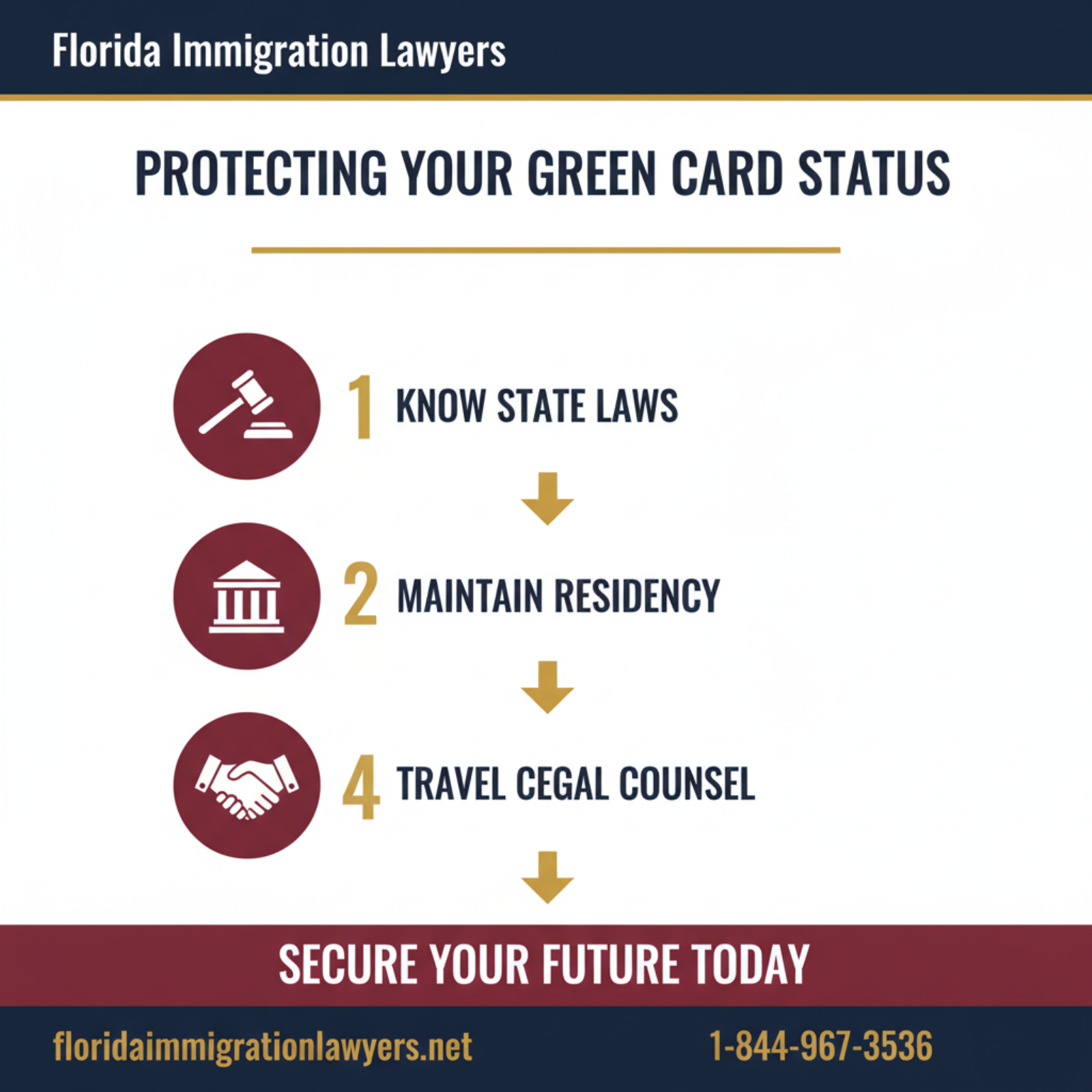
As a green card holder, understanding your rights and fulfilling your responsibilities are essential for maintaining your status. This proactive approach can help you avoid many of the potential pitfalls associated with the 'new warning' for LPRs. Our legal team emphasizes preparedness and informed decision-making.
- Always Carry Your Green Card (Form I-551): Federal law, specifically 8 U.S.C. § 1304(e), requires all LPRs aged 18 and older to carry their green card at all times. Failure to do so can lead to detention, questioning, or even arrest. Keep your physical card safe and accessible, but do not carry other sensitive documents like your passport unless traveling.
- Know Your Rights During Interactions with Authorities: You have the right to remain silent when questioned by immigration officers, except for providing your name, address, and showing your green card. You also have the right to consult an attorney. Do not sign anything you do not understand, and do not make false statements.
- Avoid Criminal Activity: Certain criminal convictions can lead to severe immigration consequences, including deportation. Even minor offenses can sometimes trigger removal proceedings. Consult a Florida immigration lawyer immediately if you are arrested or charged with any crime, regardless of its perceived severity.
- Update Your Address with USCIS: If you move, you must notify USCIS of your new address within 10 days, as mandated by 8 CFR Part 265. Failure to do so can result in missed notices, fines, or even deportation. Use Form AR-11, Alien's Change of Address Card, or update online.
- Understand Abandonment of Residence: Spending extended periods outside the U.S. can raise questions about your intent to maintain permanent residency. Generally, absences of six months to one year might trigger scrutiny, and absences of over one year typically require a re-entry permit. Consult with an attorney before planning long trips.
- Seek Legal Counsel Promptly for Complex Issues: If you receive a Notice to Appear (NTA), face secondary inspection, or have any doubts about your status, contact an attorney immediately. Early intervention by a qualified Florida immigration lawyer can often prevent more serious issues.
Essential Documents for Green Card Holders: Your Checklist
Having the correct documentation readily available is a cornerstone of protecting your status as a green card holder. This is especially true when traveling or interacting with immigration officials in Florida. A comprehensive document checklist can provide peace of mind and ensure compliance.
- Valid Green Card (Form I-551): This is your primary proof of lawful permanent residency. Ensure it is not expired; if it is, apply for renewal well in advance.
- Valid Passport: While your green card allows re-entry to the U.S., a valid passport from your country of citizenship is often required for international travel itself.
- Re-entry Permit (Form I-131, if applicable): If you plan to be outside the U.S. for one year or more, you generally need a re-entry permit. This document helps preserve your LPR status and facilitates your return.
- Proof of Domicile in the U.S.: Documents like utility bills, bank statements, lease agreements, property deeds, and tax returns can demonstrate your continued ties to the U.S. and Florida. These are especially useful if questions arise about abandonment of residency.
- Travel History Records: Keeping a record of your entry and exit dates can be helpful, particularly if CBP questions your time spent abroad.
- Employment Authorization Document (EAD), if applicable: While your green card itself authorizes employment, some LPRs may also have an EAD.
- Marriage Certificate or Birth Certificates (if applicable): If you are traveling with family or your status is based on a family relationship, these documents may be useful.
Timeline and Processing Expectations for LPR Issues
Understanding potential timelines and processing expectations is crucial for green card holders, especially when navigating issues that could impact their status. These timelines vary significantly based on the specific situation, whether it's renewing a green card, applying for a re-entry permit, or addressing potential challenges to your LPR status. The USCIS guidance Florida offices provide often includes general processing times, but individual cases can differ.
Processing Times for Re-entry Permits or Waivers
If you need a re-entry permit (Form I-131) for extended travel, the processing can take several months. It's essential to file this application before you depart the U.S. USCIS processing times fluctuate, so checking the official USCIS website for current estimates is always recommended. For complex issues requiring a waiver of inadmissibility, the process can be even longer, often extending beyond a year, depending on the specific waiver type and case complexity. A Florida immigration lawyer can help you prepare and track these applications.
What to Expect During Secondary Inspection
Should you be directed to secondary inspection upon re-entry at a Florida airport or other port of entry, be prepared for a potentially lengthy wait. This process can take anywhere from a few minutes to several hours. Officers may review your documents, question your travel history, and verify your residency. While you have rights during this process, remaining calm and cooperative (within the bounds of your rights) is advisable. If you feel your rights are being violated or you are being pressured to sign something, clearly state that you wish to speak with an attorney.
Cost Factors and Legal Fee Considerations
Navigating immigration challenges as a green card holder in Florida can involve various costs. These typically include government filing fees for certain applications and professional legal fees for attorney assistance. It's important to understand these potential expenses upfront.
Government filing fees, such as those for renewing a green card (Form I-90) or applying for a re-entry permit (Form I-131), are set by USCIS and are subject to change. These fees must be paid directly to the government agency. While we cannot list specific amounts here due to their fluctuating nature, current fees are always available on the official USCIS website.
Legal fees for a Florida immigration lawyer depend on the complexity of your case and the services required. A simple consultation to understand the 'new warning' for green card holders issued new warning in Florida might involve a flat fee. More extensive services, such as representation during secondary inspection, responding to a Notice to Appear, or filing complex waivers, will incur higher costs. Many firms, including Florida Immigration Lawyers, offer free initial consultations to discuss your situation and outline potential legal costs. Investing in legal counsel can often prevent more costly problems down the line, especially when facing potential deportation risks green card holders might encounter.
Do not navigate this complex immigration process alone. The stakes are high, and professional legal guidance can make all the difference. Contact Florida Immigration Lawyers today to ensure your rights are protected and your questions are answered. We are here to provide steadfast support for green card holders across Florida.
Common Mistakes to Avoid as a Green Card Holder in Florida
As a green card holder, vigilance and accurate information are your best defense against potential complications. Many issues arise from common oversights or misunderstandings. Avoiding these mistakes can significantly reduce your deportation risks green card holders might face.
- Not Carrying Your Physical Green Card: This is a common error with serious consequences. Failure to carry your Form I-551 can lead to detention and questioning by immigration authorities, as per 8 U.S.C. § 1304(e).
- Failing to Update Your Address with USCIS: Moving without notifying USCIS on Form AR-11 within 10 days can result in you missing critical notices, jeopardizing your immigration status, and potentially incurring penalties under 8 CFR Part 265.
- Spending Too Much Time Outside the U.S.: Extended absences (generally over six months) can be interpreted as abandoning your permanent residency. This can lead to issues upon re-entry and even loss of your green card status.
- Committing Certain Crimes: Even seemingly minor offenses can have severe immigration consequences, potentially leading to deportation proceedings under INA Section 237. Always consult an attorney if you are arrested.
- Misrepresenting Facts to Immigration Officials: Providing false information or making fraudulent statements to any immigration officer can result in charges of fraud and immediate revocation of your green card. Honesty is crucial.
- Failing to Renew an Expired Green Card: While your LPR status doesn't expire, the physical card does. An expired card can cause travel difficulties, employment issues, and problems proving your lawful status. Apply for renewal well in advance using Form I-90.
- Ignoring Notices from USCIS or ICE: Disregarding official correspondence from immigration agencies can lead to missed deadlines, automatic denials, or even warrants for your arrest. Always respond promptly, ideally with legal counsel.
- Signing Documents You Don't Understand: Never sign any document presented by immigration officials if you do not fully comprehend its contents or implications. You have the right to an attorney.
- Not Seeking Legal Advice for Complex Issues: Attempting to navigate complicated immigration matters without professional help can lead to irreversible errors, increased costs, and negative outcomes.
- Traveling with an Invalid or Expired Passport: Although your green card facilitates re-entry, a valid passport from your country of citizenship is often required for travel to and from other countries.
- Not Understanding Conditional Green Card Requirements: If you have a two-year conditional green card, failing to file Form I-751 (Petition to Remove Conditions) within the required timeframe will result in the termination of your status.
- Assuming Old Laws Still Apply: Immigration laws and enforcement priorities are constantly changing. What was true a few years ago might not be true today. This highlights the importance of staying informed and seeking current advice.
When to Call a Florida Immigration Lawyer
Knowing when to seek professional legal assistance is paramount for green card holders, especially in light of the 'new warning' for LPRs. While general information is helpful, your specific situation may require tailored advice. Florida Immigration Lawyers are here to provide the expertise you need.
You should immediately contact a Florida immigration lawyer if you:
- Are detained or questioned extensively at a U.S. port of entry (secondary inspection) or by ICE within Florida.
- Receive a Notice to Appear (NTA) in immigration court, such as those in Miami or Orlando.
- Are arrested or charged with any crime, even a misdemeanor, as this can have serious deportation risks green card holders often overlook.
- Are considering or have already had an extended absence from the U.S. (six months or more) and are concerned about abandonment of residency.
- Have a conditional green card and the two-year period is approaching, or you have unique circumstances for filing Form I-751.
- Receive any official notice from USCIS or ICE that you do not fully understand or that raises concerns about your status.
- Are unsure about your rights during an interaction with immigration officials.
- Wish to naturalize and become a U.S. citizen but have concerns about your eligibility or past issues.
Our firm specializes in helping green card holders navigate complex situations. We can provide clear USCIS guidance Florida residents need, protect your rights, and work towards the best possible outcome for your case. Your peace of mind is our priority.
Frequently Asked Questions (FAQ) for Green Card Holders
Many green card holders have pressing questions about their status and potential risks. Here, we address some common concerns, offering clarity on topics often associated with a 'new warning' for LPRs.
Are immigrants with green cards in danger of being deported?
While holding a green card provides significant protection, it does not grant absolute immunity from deportation. Green card holders can be deported for various reasons, including committing certain crimes, misrepresenting facts to immigration authorities, or abandoning their U.S. residency. Understanding and adhering to immigration laws is crucial to minimize deportation risks green card holders face.
Is ICE arresting green card holders?
Yes, Immigration and Customs Enforcement (ICE) can and does arrest green card holders. This typically occurs if there is a suspicion that an LPR has committed a deportable offense, has violated immigration laws, or has an outstanding order of removal. These arrests often happen during enforcement operations or at ports of entry. Knowing your rights if approached by ICE is vital.
Are green card holders getting their green cards revoked?
Green cards can be revoked under specific circumstances. Common reasons include committing certain crimes, immigration fraud, abandonment of U.S. residency, or failing to meet the requirements of a conditional green card. The revocation process usually involves a hearing before an immigration judge. It is critical to seek legal counsel if you receive any notice regarding potential revocation.
What's the new law for green card holders?
As of early 2026, there isn't a single, overarching 'new law' that fundamentally changes the rights or responsibilities of green card holders. However, the 'new warning' refers to increased enforcement of existing laws, heightened scrutiny at ports of entry, and a stronger emphasis on compliance with requirements like carrying your green card and updating your address. This evolving enforcement climate necessitates greater awareness and preparedness for LPRs.
About Florida Immigration Lawyers
Florida Immigration Lawyers is a leading immigration law firm dedicated to serving individuals and families across the entire state of Florida. With offices strategically located to assist clients from Naples to Pensacola, we understand the unique challenges faced by immigrants and green card holders in our diverse communities. Our mission is to provide compassionate, effective, and results-driven legal representation.
Our experienced attorneys specialize in a wide range of immigration services, including general immigration matters, deportation defense, family-based immigration, citizenship applications, and asylum cases. We pride ourselves on offering personalized attention and strategic advice tailored to your specific needs.
Why choose Florida Immigration Lawyers? We offer free consultations, are available 24/7 for urgent matters, and our team is fully bilingual (English and Spanish) to ensure clear communication. We are committed to protecting your rights and guiding you through every step of the complex immigration process. Visit our website at https://www.floridaimmigrationlawyers.net or call us at 1-844-967-3536 to learn how we can help you.
Sources and References
- U.S. Citizenship and Immigration Services (USCIS)
- Executive Office for Immigration Review (EOIR)
- U.S. Department of State - Bureau of Consular Affairs
- 8 U.S.C. § 1304 - Certificate of alien registration or alien registration receipt card
- 8 U.S.C. § 1305 - Contents of certificate
- Immigration and Nationality Act (INA) Section 237 - Deportable Aliens
- 8 CFR Part 265 - Notices of changes of address
This article provides general legal information and is not intended as legal advice. Every case is unique, and outcomes depend on specific facts and circumstances. Contact an attorney for advice about your particular situation.
Protecting your green card status is paramount, especially with evolving immigration guidelines. Don't leave your future to chance. The experienced team at Florida Immigration Lawyers is dedicated to providing comprehensive legal support to green card holders throughout Florida, including Naples, Miami, Orlando, and Tampa. We understand the nuances of immigration law and are here to guide you every step of the way. Call us today at 1-844-967-3536 for a free, confidential consultation. Se Habla Español - Estamos aquí para ayudarle.
Do Not Navigate This Process Alone
Our experienced immigration attorneys are ready to fight for you. Get a free, confidential consultation today.
Se Habla Español
Or leave your details and we’ll call you:
Free Evaluation in 24 Hours
Or talk to us right now

AI voice assistant — available 24/7
FreeFrequently Asked Questions

William J. Vásquez
Founding Attorney · Vasquez Law Firm
U.S. Air Force veteran and immigration attorney with years of hands-on U.S. immigration experience. J.D., NCCU School of Law. AILA member. Admitted to the 4th, 5th, and 11th Circuit Courts.
Available 24/7 - Free Evaluations
Reviewed for legal accuracy by William J. Vásquez
Licensed in North Carolina; U.S. immigration is federal practice.
Related Legal Services
Our Florida immigration attorneys can help you with immigration practice areas, free immigration consultation and experienced immigration attorneys. Call today at 1-844-967-3536 for a free consultation.
Related Links
Related Topics
Free Legal Consultation
Discuss your case with our experienced attorneys. We're available 24/7.
Se Habla Español - Estamos aquí para ayudarle.
Related Articles
K-3 Visa Timeline in Florida: What to Expect
Learn the K-3 visa timeline process in Florida, including steps, costs, and documentation. Understand your options in 2026 with guidance from Florida Immigration Lawyers.
Military Naturalization Expedited in Florida Bases
Explore military naturalization options for families at Florida bases, including parole in place benefits in Miami. Learn how to expedite your application with expert guidance from Florida Immigration Lawyers.
Finding Immigration Legal Help in North Florida
Discover how to find an immigration lawyer in Orlando offering a free consultation. Understand the services available and why choosing Florida Immigration Lawyers can make a difference in your case.
CR-1 Visa Attorney Orlando: Spousal Immigration Experts
Navigating the CR-1 and IR-1 visa process in Orlando can be challenging. Learn about the steps, requirements, and how Florida Immigration Lawyers can assist you with your spouse's immigration journey.