Green Card Holder ICE Detention in Florida: Your Rights
Discover what green card holder ICE detention means in Florida, your critical rights, and the step-by-step process of navigating immigration proceedings. This guide covers common reasons for detention, essential documents for your defense, and potential timelines. Learn about the importance of legal counsel and how Florida Immigration Lawyers can fight for your freedom and right to remain in the U.S. Avoid common mistakes and understand when immediate legal intervention is necessary. We offer free consultations and serve all of Florida.
Green card holders, also known as lawful permanent residents, can indeed be detained by ICE in Florida for various reasons, including certain criminal convictions or alleged immigration violations. While a green card provides significant protections, it does not grant absolute immunity from detention or deportation. Understanding your rights and the legal process is crucial for effective defense and seeking release.
- Green card holders can face ICE detention.
- Detention often relates to criminal history or immigration issues.
- You have rights, including the right to legal counsel.
- Seeking experienced legal help is critical for defense and release.
- The process involves bond hearings and immigration court.
Imagine receiving an unexpected knock at your door or being stopped at an airport, only to find yourself in the custody of U.S. Immigration and Customs Enforcement (ICE), despite holding a valid green card. For many lawful permanent residents in Florida, this is a terrifying reality. The assumption that a green card offers complete protection from detention can be misleading, leaving individuals and their families in a state of confusion and distress.
This comprehensive guide from Florida Immigration Lawyers aims to demystify the complex world of green card holder ICE detention in Florida. We will walk you through what detention means, your fundamental rights, the steps involved in the detention process, and how our dedicated team can provide crucial legal support. Do not face this challenge alone. Call Florida Immigration Lawyers at 1-844-967-3536 for a free consultation to discuss your specific situation immediately.
Understanding Green Card Holder ICE Detention in Florida
A green card, or Form I-551, signifies your status as a lawful permanent resident (LPR) in the United States. While this status grants many rights and privileges, it does not automatically shield you from immigration enforcement actions, including detention and potential deportation. ICE, operating under the Department of Homeland Security, has the authority to detain LPRs under specific circumstances.
The primary reasons for green card holder ICE detention often involve criminal convictions, even minor ones, or violations of immigration law. These can range from re-entry issues after international travel to allegations of fraud in obtaining your green card. It is a serious situation that requires immediate and informed legal action.
Common Grounds for Detention and Deportation
Several factors can lead to an LPR being placed in ICE detention. The Immigration and Nationality Act (INA) outlines the grounds of deportability. These include but are not limited to:
- Certain Criminal Convictions: Aggravated felonies, crimes involving moral turpitude, drug offenses, and firearms offenses are common triggers. Even minor offenses can sometimes lead to detention if interpreted broadly.
- Violations of Immigration Law: This could involve marriage fraud, misrepresentation on immigration documents, or failing to maintain permanent resident status.
- Security-Related Grounds: Involvement in terrorist activities or other national security concerns.
- Entry Without Inspection: While most green card holders entered legally, certain historical entries can sometimes be revisited.
In Florida, ICE operates several field offices and detention facilities. These include facilities in Miami, Orlando, and Tampa, which process and house detainees from across the state, including those picked up in Tallahassee and surrounding areas. The immigration courts, such as the one in Orlando, handle cases for many Florida residents. Understanding your rights when interacting with ICE is paramount.
Navigating the ICE Detention Process: A Step-by-Step Guide
Being placed in green card holder ICE detention can be disorienting. Knowing the general steps involved can help you prepare and empower your legal defense. Each case is unique, but the overall process typically follows a structured path.
-
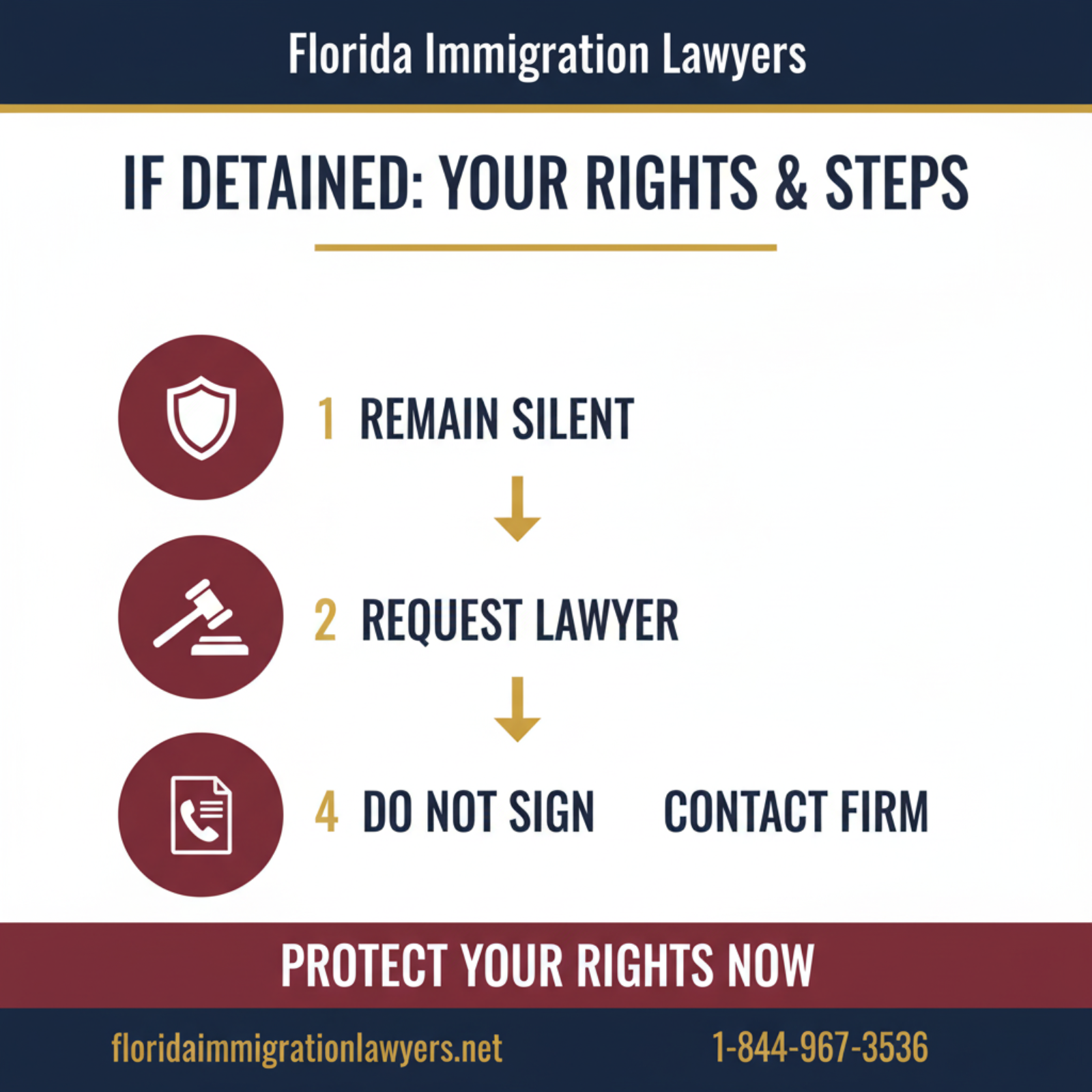
Initial Arrest and Processing: If detained, ICE agents will typically transport you to a detention facility. During this initial phase, you will be fingerprinted, photographed, and interviewed. It is critical to remember your right to remain silent and your right to speak with an attorney before answering substantive questions. You should not sign any documents, especially those related to voluntary departure, without legal counsel.
ICE must issue a Notice to Appear (NTA), Form I-862, which formally charges you with deportability and initiates removal proceedings before an immigration judge. This document is crucial for your defense.
-
Bond Hearing Eligibility: Not all green card holders are eligible for a bond hearing. Under INA § 236(c) (8 U.S.C. § 1226(c)), certain criminal convictions can lead to mandatory detention, meaning an immigration judge cannot set a bond for your release. However, if you are not subject to mandatory detention, you may be eligible to request a bond hearing. An immigration judge will then determine if you pose a flight risk or a danger to the community and set a bond amount.
Our firm, Florida Immigration Lawyers, regularly represents clients in bond hearings, arguing for their release and presenting evidence of their ties to the community.
-
Immigration Court Proceedings: Your case will proceed through immigration court, typically starting with a Master Calendar Hearing. This is a preliminary hearing where you acknowledge the charges on the NTA, designate an attorney, and inform the judge of your intent to seek relief from removal. Subsequent Individual Hearings are where evidence is presented, witnesses testify, and legal arguments are made regarding your eligibility for various forms of deportation defense.
These proceedings can be complex, often requiring detailed knowledge of immigration law, including INA sections and relevant case law. Having an experienced immigration lawyer is essential.
-
Seeking Release: Beyond bond, other avenues for release may exist, such as parole for certain individuals, particularly those with serious health conditions or compelling humanitarian factors. Your attorney can explore all possible options to secure your release from ICE detention.
-
Deportation Defense Strategies: If found deportable, various forms of relief may be available. These can include waivers of inadmissibility/deportability (e.g., INA § 212(h) or § 237(a)(1)(H)), cancellation of removal for LPRs (INA § 240A(a)), or asylum if you fear persecution in your home country. Each form of relief has specific eligibility requirements that must be met.
The strategic selection and vigorous pursuit of appropriate defenses are crucial. Your legal team at Florida Immigration Lawyers will work tirelessly to protect your right to remain in the U.S.
Essential Documents for Your Defense in ICE Detention
Having the right documents readily available can significantly strengthen your defense and expedite the process if you or a loved one faces green card holder ICE detention. These documents help establish your identity, legal status, and ties to the U.S.
- Your Permanent Resident Card (Form I-551, the green card itself).
- Your passport and birth certificate from your country of origin.
- Marriage certificate, if applicable, and birth certificates for U.S. citizen children or spouse.
- Any relevant criminal court documents, including arrest records, charging documents, and disposition records.
- Proof of residence in Florida, such as utility bills, lease agreements, or property deeds.
- Tax returns and employment history records, demonstrating your contributions to the U.S. economy.
- Medical records, especially if you have chronic health conditions requiring ongoing care.
- Letters of support from family, friends, and community members attesting to your good character and ties.
- Any previous immigration documents, such as approval notices for your green card or other visas.
It is wise to keep copies of these vital documents in a secure, accessible place and inform a trusted family member or friend of their location. For more information on maintaining your legal status, visit the U.S. Citizenship and Immigration Services (USCIS) website.
Timelines and Expectations for ICE Detention Cases in Florida
The duration of green card holder ICE detention and the overall timeline for removal proceedings can vary significantly. There is no fixed period, and cases can range from a few weeks to several months, or even longer, depending on numerous factors.
Factors influencing timelines include the complexity of your case, the volume of cases in the immigration court where your hearing is scheduled (e.g., the Orlando Immigration Court often has a significant backlog), the availability of evidence and witnesses, and whether appeals are filed. Cases involving criminal convictions or complex legal issues generally take longer to resolve.
Our attorneys at Florida Immigration Lawyers prioritize efficient case management, working diligently to gather necessary documentation and present a strong defense promptly. While we cannot guarantee specific timelines, we keep our clients informed every step of the way, setting realistic expectations for the process.
Understanding Cost Factors and Legal Fees
Navigating green card holder ICE detention involves various potential costs. These typically include legal representation fees, bond amounts, and filing fees for any applications for relief from removal.
- Legal Representation: Hiring an experienced immigration attorney is an investment in your freedom and future. Legal fees can vary based on the complexity of the case, the attorney's experience, and the services required (e.g., bond hearings, individual merits hearings, appeals). Florida Immigration Lawyers offers transparent fee structures and will discuss all costs upfront during your consultation.
- Bond Amounts: If eligible for bond, the immigration judge will set an amount. This can range from a few thousand dollars to tens of thousands, depending on the individual's circumstances, criminal history, and ties to the community. The bond must be paid in full to secure release.
- Filing Fees: Certain applications for relief from removal, such as waivers or motions, may require filing fees payable to USCIS or the Executive Office for Immigration Review (EOIR).
While the costs can seem daunting, the potential consequences of facing ICE detention and deportation without skilled legal representation are far greater. Investing in legal counsel is often the most critical decision you can make.

Do not navigate this process alone. Contact Florida Immigration Lawyers today to ensure your rights are protected and your case is handled with the expertise it deserves.
Common Mistakes Green Card Holders Make in ICE Detention
Facing green card holder ICE detention is incredibly stressful, and it is easy to make mistakes that can jeopardize your case. Being aware of these common pitfalls can significantly improve your chances of a favorable outcome.
-
Talking to ICE Agents Without a Lawyer: Anything you say can be used against you. You have the right to remain silent and to speak with an attorney. Do not discuss your immigration status, criminal history, or how you entered the U.S. without legal counsel present. This is perhaps the most critical mistake to avoid.
-
Signing Documents You Do Not Understand: ICE agents may present documents for your signature, including voluntary departure forms. Signing these without understanding their implications can waive your rights to a hearing or appeal, leading to immediate deportation. Always insist on speaking with a lawyer first.
-
Failing to Disclose Past Criminal History: Attempting to hide or misrepresent past criminal convictions, even minor ones, can severely damage your credibility with the immigration judge and make it harder to obtain relief. Be honest with your attorney, who can then build the strongest possible defense.
-
Not Having Important Documents Readily Available: Lack of access to your green card, passport, or other vital records can delay your case and make it harder to prove your identity and eligibility for relief. Keep copies in a safe place with a trusted family member.
-
Missing Court Dates: Failing to appear for a scheduled immigration court hearing can result in an in absentia order of removal, leading to immediate deportation without a chance to present your case. Always confirm your hearing dates and times.
-
Not Appealing an Adverse Decision: If an immigration judge denies your relief, you typically have a limited time to appeal the decision to the Board of Immigration Appeals (BIA). Missing this deadline can make the judge's decision final and lead to deportation. Your attorney can advise on appealability.
-
Believing a Green Card Makes You Immune to Deportation: While a green card offers significant protections, it is not absolute. Certain criminal convictions or immigration violations can lead to removal proceedings. Understanding this reality is crucial for proactive defense.
-
Failing to Update Your Address with USCIS/EOIR: If you move, you are legally required to notify USCIS and the Executive Office for Immigration Review (EOIR) within 10 days. Failure to do so can result in missed court notices and an in absentia removal order. (See 8 CFR 1003.15a(d)).
-
Accepting Voluntary Departure Without Legal Advice: While voluntary departure can seem like an easier option, it has significant consequences, including bars to future re-entry. Always consult an attorney before agreeing to it.
-
Not Seeking Bond Review: If initially denied bond or if the bond amount is too high, your attorney may be able to file a motion to reconsider or appeal the bond decision, especially if new evidence becomes available.
When to Call Florida Immigration Lawyers for ICE Detention Help
The moment you or a loved one faces green card holder ICE detention, time is of the essence. Prompt legal intervention can significantly impact the outcome of your case. Do not delay in seeking professional assistance.
You should immediately call Florida Immigration Lawyers if:
- You or a family member has been detained by ICE.
- You have received a Notice to Appear (NTA) in immigration court.
- You are a green card holder facing criminal charges that could impact your immigration status.
- You have been denied bond or believe your bond amount is unreasonably high.
- You have a complex immigration history or previous deportation orders.
- You are unsure of your rights when interacting with immigration enforcement.
- You are considering appealing an adverse decision from an immigration judge.
Our experienced attorneys understand the nuances of immigration law, particularly as it applies to green card holders in Florida. We are prepared to act quickly, visit detention centers, and advocate fiercely on your behalf. We serve clients across Florida, including Tallahassee, Miami, Orlando, and Tampa, offering dedicated legal support in challenging times. Our goal is to protect your right to remain in the U.S. and reunite families.
About Florida Immigration Lawyers
Florida Immigration Lawyers is a leading immigration law firm dedicated to serving individuals and families across the entire state of Florida. With years of experience and a deep understanding of U.S. immigration law, our firm is committed to providing compassionate, effective, and results-driven legal representation.
We specialize in a broad range of immigration matters, including immigration defense, deportation defense, asylum claims, family-based immigration, business immigration, and citizenship applications. Our team is known for its meticulous attention to detail, strategic approach, and unwavering commitment to our clients' success.
Why choose Florida Immigration Lawyers? We offer personalized attention, a thorough understanding of Florida-specific immigration challenges, and a proven track record of fighting for our clients' rights. We are available 24/7 to address urgent matters and provide free consultations to help you understand your options. Your immigration journey is our priority. Visit our website at https://www.floridaimmigrationlawyers.net or call us at 1-844-967-3536.
Sources and References
- U.S. Citizenship and Immigration Services (USCIS)
- U.S. Immigration and Customs Enforcement (ICE)
- Executive Office for Immigration Review (EOIR)
- 8 U.S.C. Chapter 12 - Immigration and Nationality Act (INA)
- INA § 236 (8 U.S.C. § 1226) - Apprehension and Detention of Aliens
- INA § 237 (8 U.S.C. § 1227) - Deportable Aliens
- 8 CFR Part 1003.15a(d) - Change of Address
- 8 CFR Part 236 - Apprehension and Detention of Aliens
This article provides general legal information and is not intended as legal advice. Every case is unique, and outcomes depend on specific facts and circumstances. Contact an attorney for advice about your particular situation.
If you or a loved one is facing green card holder ICE detention in Florida, do not wait. Your future and freedom depend on swift, informed action. Contact Florida Immigration Lawyers today for a free consultation. Call us now at 1-844-967-3536. Se Habla Español - Estamos aquí para ayudarle.
Frequently Asked Questions
Florida Immigration Lawyers
Legal Team
Our experienced attorneys at Florida Immigration Lawyers have been serving clients across Florida for over 20 years. We specialize in immigration, personal injury, criminal defense, workers compensation, and family law.