Visa Bulletin 2026 Predictions: Florida Priority Dates & Wait Times
Get crucial insights into the Visa Bulletin 2026 predictions and how they will impact priority dates and wait times for immigrants in Florida. This comprehensive guide covers everything from understanding visa categories and monitoring monthly bulletins to preparing essential documents and avoiding common mistakes. Learn about the factors influencing visa availability and what to expect for family-sponsored and employment-based visas. Florida Immigration Lawyers provides expert advice to navigate these complex regulations, offering free consultations to help you plan your immigration path effectively. Stay informed and prepared for the dynamic changes in immigration policy affecting Florida residents.
The Visa Bulletin 2026 provides crucial insights into the availability of immigrant visas, impacting Florida priority dates and future green card applicants. Predictions suggest varied movement across categories, influenced by demand, annual limits, and legislative actions. Staying informed and consulting legal experts is essential for navigating potential wait times and planning your immigration path effectively.
- The Visa Bulletin determines when immigrant visas become available.
- Priority dates are critical for tracking your place in the visa queue.
- 2026 predictions indicate potential shifts in wait times for various categories.
- Consulting an immigration attorney is vital for personalized guidance.
- Proactive preparation of documents can save time once your date is current.
Visa Bulletin 2026 Predictions: Florida Priority Dates & Wait Times
Are you an immigrant in Florida anxiously awaiting your turn for a green card? Understanding the Visa Bulletin 2026 predictions is crucial for planning your future. This monthly publication from the U.S. Department of State dictates when aspiring immigrants can apply for a green card, based on their visa category and country of chargeability.
For many families and professionals in Jacksonville and across Florida, monitoring these updates is a source of both hope and uncertainty. The movement of priority dates directly impacts how long you might have to wait. Our goal is to demystify this complex process and provide actionable insights for your journey.
Navigating these predictions and the broader immigration landscape can be challenging. We are here to help you understand what the future may hold. Call Florida Immigration Lawyers at 1-844-967-3536 for a free consultation today.
Understanding the Visa Bulletin 2026 and Your Immigration Future in Florida
The Visa Bulletin is a vital resource for anyone pursuing an immigrant visa to the United States. It outlines the availability of immigrant visas for both family-sponsored and employment-based categories. Each month, it lists cutoff dates that determine who is eligible to move forward with their application.
For Florida residents, these updates are particularly important given our state's diverse immigrant population. Whether you are in Miami, Orlando, Tampa, or Jacksonville, the impact of the Visa Bulletin 2026 will directly affect your path to permanent residency. Understanding how these dates work is the first step in a successful application.
What Are Priority Dates and Why Do They Matter?
Your priority date is essentially your place in line for an immigrant visa. For family-sponsored preferences, it is the date the Form I-130 (Petition for Alien Relative) was properly filed with USCIS. For employment-based preferences, it is generally the date the Form I-140 (Immigrant Petition for Alien Worker) was filed, or the date the labor certification application was accepted for processing.
When your priority date becomes 'current' according to the Visa Bulletin, it means a visa is available for you. This allows you to file your Adjustment of Status application (Form I-485) if you are in the U.S., or proceed with consular processing if you are abroad. Delays in priority date movement directly translate to longer wait times.
Key Factors Influencing Visa Bulletin Movement
Several factors contribute to the movement, or lack thereof, of cutoff dates in the Visa Bulletin. Congress sets annual numerical limits for immigrant visas, as outlined in the Immigration and Nationality Act (INA) sections 201 and 202. These limits are then distributed among various preference categories and countries.
The interplay of high demand in specific categories and countries against these statutory limits creates backlogs. Per-country limits also mean that countries with high immigration rates, like India, China, Mexico, and the Philippines, often experience significantly longer wait times. Economic conditions, policy changes, and even global events can also indirectly influence visa demand and processing speeds.
Navigating Visa Bulletin Predictions 2026: A Step-by-Step Guide for Florida Applicants
Staying informed and prepared is key to successfully navigating the immigration process, especially when dealing with fluctuating priority dates. Here's a step-by-step guide for Florida residents monitoring the Visa Bulletin 2026.
Understand Your Visa Category and Priority Date: First, confirm your specific family-sponsored (F1, F2A, F2B, F3, F4) or employment-based (EB-1, EB-2, EB-3, EB-4, EB-5) visa category. Your priority date is listed on your I-797 approval notice for the I-130 or I-140 petition. Knowing this is fundamental to tracking your eligibility.
Monitor the Monthly Visa Bulletin: The U.S. Department of State publishes the Visa Bulletin around the middle of each month, typically for the following month. You can find this on the Travel.State.Gov website. Pay close attention to both the 'Dates for Filing' and 'Final Action Dates' charts, as USCIS determines which chart to use for Adjustment of Status applications each month.
Consult with an Experienced Immigration Attorney: The nuances of the Visa Bulletin and its predictions can be complex. An attorney can help you understand how your specific situation aligns with the bulletin's movements. They can interpret Visa Bulletin April 2026 predictions or Visa Bulletin February 2026 updates in the context of your case.
Proactively Prepare Your Application Documents: Even if your priority date is not yet current, you can begin gathering the necessary documents. This includes birth certificates, marriage certificates, police clearances, and financial documents. Being prepared will allow you to act quickly once your date becomes current, reducing potential delays.
File Your Adjustment of Status or Consular Processing Application: Once your priority date is current according to the applicable chart, you can proceed with filing your Form I-485 (Adjustment of Status) with USCIS if you are in the U.S. If you are outside the U.S., you will proceed with consular processing through the National Visa Center (NVC) and a U.S. Embassy or Consulate abroad. Timeliness is crucial.
Specific Predictions for 2026: What Florida Residents Can Expect
Predicting exact movements for the Visa Bulletin 2026 is challenging, as it depends on various factors including visa demand, annual allocations, and USCIS processing capacities. However, based on historical trends and current backlogs, we can anticipate some general outlooks.
For many employment-based categories, especially EB-2 and EB-3 for certain high-demand countries, long wait times are likely to persist. The Visa Bulletin March 2026 predictions and those for subsequent months may show incremental advancements, but significant leaps are often rare. Family-sponsored categories also face considerable backlogs, particularly F2B and F3.
While the Visa Bulletin January 2026 might have offered early indicators, the overall trend for 2026 suggests continued vigilance. Applicants in Florida should prepare for a dynamic environment. Your attorney can provide more tailored insights as each monthly bulletin is released.
Essential Document Checklist for Visa Applications Affected by Priority Dates
Having your documents organized and ready is critical for a smooth immigration process. This general checklist covers common documents required for Adjustment of Status (I-485) or Consular Processing applications once your priority date is current. Always consult with your attorney for a personalized list specific to your case.
- Copy of your passport biographical page
- Birth certificate (for applicant and all derivative family members)
- Marriage certificate (if applicable)
- Divorce decrees or death certificates for previous spouses (if applicable)
- Medical examination report (Form I-693) completed by a USCIS-approved civil surgeon
- Affidavit of Support (Form I-864) and supporting financial documents from the petitioner
- Evidence of your legal entry into the U.S. (Form I-94, visa stamp, entry/exit records)
- Copies of all previous visa petitions (I-130, I-140) and approval notices (I-797)
- Two passport-style photographs
- Police certificates from countries where you have lived for 6 months or more after age 16
- Court and prison records (if applicable)
- Employment authorization documents (EAD) and advance parole documents (AP) if previously issued
- Proof of bona fide relationship for family-based petitions (photos, joint accounts, etc.)
- Job offer letter and qualifications for employment-based petitions
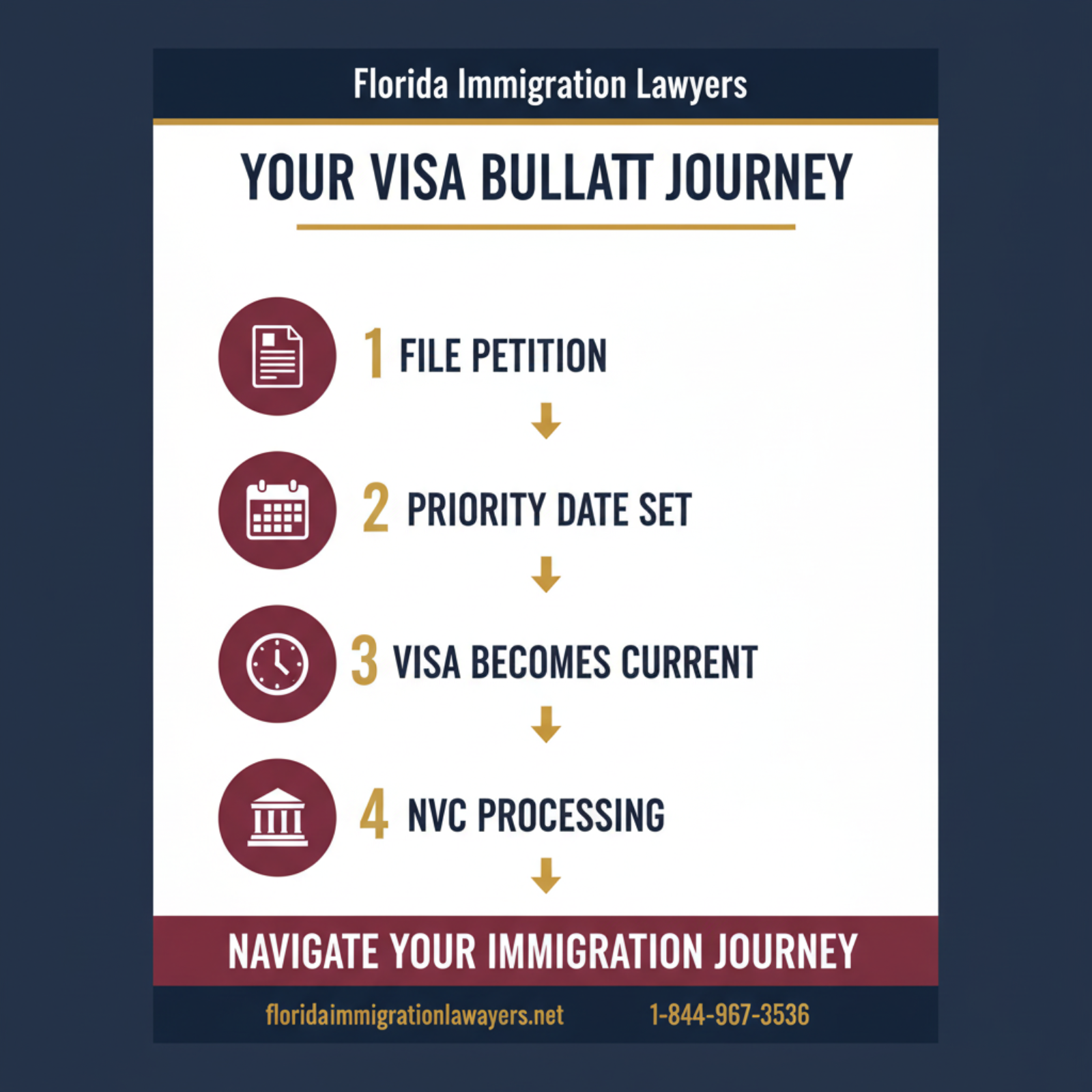
Understanding Timelines and Processing Expectations for 2026 Visa Applicants in Florida
The total time it takes to get a green card involves multiple stages, from petition filing to final adjudication. The Visa Bulletin 2026 primarily dictates the waiting period for a visa number to become available, but actual processing times after that can vary significantly.
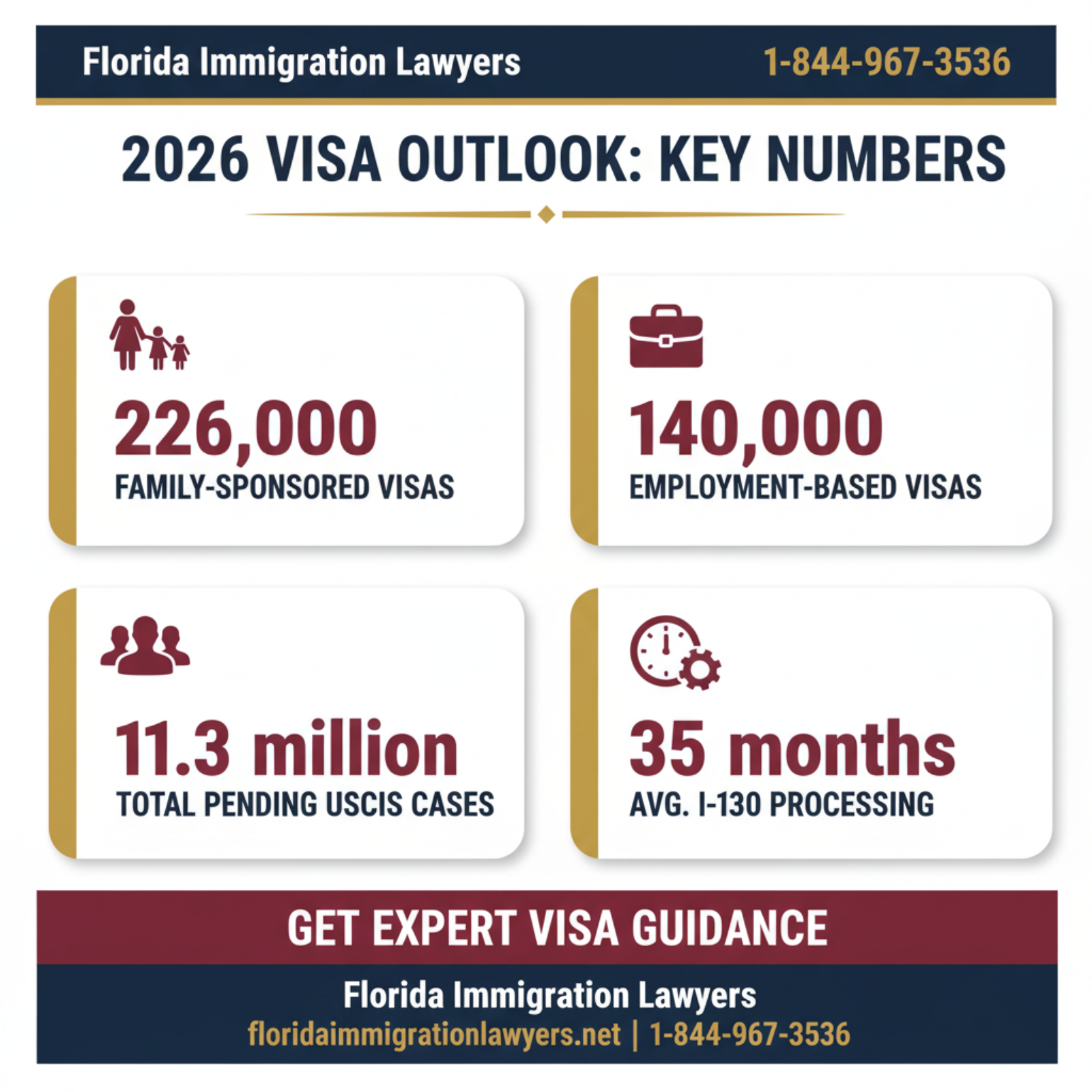
USCIS processing times for Form I-485 (Adjustment of Status) can range from several months to several years, depending on the service center, visa category, and individual case complexities. For Florida residents, this often means interacting with USCIS field offices in locations like Orlando, Miami, or Tampa, which have their own caseloads and processing speeds.
Factors that can influence your personal timeline include the accuracy and completeness of your application, responses to Requests for Evidence (RFEs), background checks, and interview scheduling. While some cases may move quickly, others might experience unexpected delays. It's essential to set realistic expectations and maintain open communication with your legal team.
Cost Factors and Fee Breakdown for Immigration Processes
Pursuing an immigrant visa involves various fees, and understanding these costs upfront is important for financial planning. While specific fee amounts are subject to change by USCIS and other agencies, we can outline the general categories of expenses you can expect.
The primary costs include USCIS filing fees for forms such as the I-130, I-140, I-485, I-765 (work authorization), and I-131 (travel document). There are also fees for biometric services and the medical examination conducted by a civil surgeon. For consular processing, you will pay fees to the National Visa Center (NVC) and the U.S. Embassy or Consulate.
Beyond government fees, you should also budget for legal fees if you choose to hire an immigration attorney. While this is an additional expense, the expertise of a lawyer can be invaluable in avoiding costly mistakes and navigating complex legal requirements. Other potential costs include translation services for foreign documents and travel expenses for interviews, especially for consular processing.
Do not navigate this process alone. Contact Florida Immigration Lawyers today to ensure your application is handled correctly and efficiently.
Common Mistakes Florida Immigrants Make When Tracking the Visa Bulletin
Understanding and acting on the Visa Bulletin is critical, yet many common errors can cause significant delays or even denials. Avoiding these mistakes is paramount for Florida immigrants.
Misinterpreting Priority Dates: Many applicants confuse the date their petition was filed with the date their visa becomes available. Your priority date is fixed, but its 'current' status changes monthly based on the Visa Bulletin. Misunderstanding this can lead to missed filing opportunities or unnecessary anxiety.
Not Distinguishing Between 'Dates for Filing' and 'Final Action Dates': The Visa Bulletin has two charts for preference categories. USCIS determines which chart (Dates for Filing or Final Action Dates) applicants can use to file Form I-485 each month. Using the wrong chart or not checking USCIS's monthly guidance can lead to rejection of your application.
Failing to Monitor the Bulletin Monthly: The Visa Bulletin changes every month, sometimes with significant advancements or retrogressions. Relying on outdated information or checking sporadically can cause you to miss when your priority date becomes current, potentially delaying your application by months or even years.
Delaying Document Preparation: Waiting until your priority date is current to start gathering documents is a common mistake. Collecting birth certificates, marriage licenses, police records, and financial statements can take time, especially if they need to be translated or apostilled. Proactive preparation prevents last-minute rushes and errors.
Assuming 'Current' Means Immediate Approval: A current priority date simply means a visa number is available for you to file your application. It does not guarantee approval. Your application still undergoes thorough review, background checks, and potentially an interview. The process continues after filing.
Not Consulting an Immigration Attorney: The immigration system is complex, and the Visa Bulletin is just one piece of it. Attempting to navigate it without legal guidance can lead to critical errors, missed deadlines, or failure to understand eligibility requirements. An attorney provides expert interpretation and strategy.
Missing a Request for Evidence (RFE) Deadline: If USCIS sends an RFE, it means they need more information. Failing to respond comprehensively and on time can lead to a denial. These requests are common, and an attorney can help you provide the strongest possible response.
Providing Inaccurate or Inconsistent Information: Any discrepancies in your application materials, whether intentional or accidental, can raise red flags with USCIS. This can lead to delays, RFEs, or even accusations of misrepresentation, jeopardizing your case.
Ignoring Per-Country Limits: Applicants from high-demand countries face specific per-country limits, which can significantly impact their wait times. Overlooking these limits can lead to unrealistic expectations about when their priority date will become current.
Relying on Unofficial Sources for Information: While online forums and social media can offer community support, they are not authoritative sources for immigration law or Visa Bulletin predictions. Always refer to official government websites (like USCIS.gov and Travel.State.Gov) or consult a qualified attorney.
When to Call Florida Immigration Lawyers: Your Partner in Jacksonville and Across Florida
While this article provides general information about the Visa Bulletin 2026 predictions, your individual situation is unique. The complexities of immigration law, combined with the nuances of priority dates and visa availability, often require professional legal guidance. Florida Immigration Lawyers are here to assist you.
You should consider contacting an attorney if:
- Your priority date is approaching, and you need help preparing your Adjustment of Status or consular processing application.
- You have a complex immigration history, such as previous denials, criminal records, or unlawful presence.
- You receive a Request for Evidence (RFE) or Notice of Intent to Deny (NOID) from USCIS.
- You are unsure which visa category is appropriate for your situation or how to calculate your priority date correctly.
- There are changes in your life circumstances (marriage, divorce, new job) that might impact your application.
- You are concerned about potential deportation or removal proceedings, especially if your visa status is uncertain.
- You need assistance with specific practice areas like family-based immigration, employment-based visas, asylum claims, or deportation defense.
Our experienced team understands the specific challenges faced by immigrants in Florida, including navigating local USCIS field offices and immigration courts in cities like Orlando and Miami. We are dedicated to providing personalized legal strategies to help you achieve your immigration goals.
Frequently Asked Questions About the Visa Bulletin 2026
Will USCIS speed up in 2026?
USCIS processing times are influenced by many factors, including budget, staffing levels, and application volume. While USCIS continually works to improve efficiency, it's difficult to predict a definitive speed-up in 2026. Applicants should prepare for current processing norms and monitor official updates from USCIS.gov.
Will the Visa Bulletin move in 2026?
Yes, the Visa Bulletin is a dynamic document that moves every month. However, the extent of movement (advancement or retrogression) varies significantly by visa category and country. Some categories may see slow, incremental progress, while others might experience longer periods of stagnation, especially for high-demand countries.
Does the Visa Bulletin predict future availability?
The Visa Bulletin itself does not make explicit predictions for future months. It presents the current cutoff dates based on visa availability and demand. However, immigration attorneys and analysts often make informed predictions based on historical trends, visa usage rates, and legislative outlooks. These are projections, not guarantees.
Will there be a green card lottery in 2026?
The Diversity Visa (DV) Program, commonly known as the green card lottery, is an annual program mandated by Congress. It typically allocates 55,000 visas to individuals from countries with historically low rates of immigration to the U.S. Based on past patterns, it is highly probable that a DV-2026 or DV-2027 program will be announced for applications in 2026, though specific details are released by the Department of State annually.
About Florida Immigration Lawyers
Florida Immigration Lawyers is a premier law firm dedicated to serving the immigration needs of individuals and families across the entire state of Florida. With offices located strategically to serve communities from Jacksonville to Miami, we pride ourselves on providing compassionate, effective, and results-driven legal representation.
Our team of highly skilled attorneys specializes in a wide range of immigration matters, including family-based visas, employment-based visas, asylum, naturalization, and deportation defense. We understand the profound impact immigration issues have on your life and are committed to guiding you through every step of the legal process.
When you choose Florida Immigration Lawyers, you gain a partner who is available 24/7 to address your concerns. We offer free consultations to discuss your case and provide clear, honest advice. Our commitment is to protect your rights and help you achieve your American dream. Visit our attorneys page or contact us directly to learn more.
Sources and References
- U.S. Citizenship and Immigration Services (USCIS)
- U.S. Department of State - Visa Bulletin
- 8 U.S.C. Chapter 12 - Immigration and Nationality Act (INA sections 201, 202, 203)
- 22 CFR Part 42 - Visas: Documentation of Immigrants Under the Immigration and Nationality Act
This article provides general legal information and is not intended as legal advice. Every case is unique, and outcomes depend on specific facts and circumstances. Contact an attorney for advice about your particular situation.
Understanding the Visa Bulletin 2026 predictions is just the beginning of your immigration journey. Don't leave your future to chance. Our dedicated team at Florida Immigration Lawyers is ready to provide the expert guidance you need. Schedule your free consultation today by calling 1-844-967-3536. Se Habla Español - Estamos aquí para ayudarle.
Frequently Asked Questions
Florida Immigration Lawyers
Legal Team
Our experienced attorneys at Florida Immigration Lawyers have been serving clients across Florida for over 20 years. We specialize in immigration, personal injury, criminal defense, workers compensation, and family law.