Green Card Holder ICE Detention in Florida: Your Rights & Defense
Green card holders in Florida face unique challenges, including the risk of ICE detention. This article from Florida Immigration Lawyers provides crucial information on why detention occurs, your fundamental rights, and a step-by-step guide on what to do if detained. We cover essential documents, processing timelines, and cost factors, emphasizing the importance of legal representation. Learn to avoid common mistakes and understand when to seek expert legal help to protect your status and fight against deportation. Our firm serves all of Florida, including Homestead, offering dedicated support for complex immigration cases.
Green card holders, also known as lawful permanent residents (LPRs), can be detained by ICE in Florida for various reasons, including certain criminal convictions, immigration violations, or issues upon re-entry. While LPRs have more rights than undocumented individuals, they are not immune to detention or deportation. Understanding your rights and having immediate legal representation is crucial to challenge detention and avoid removal from the U.S.
- Always assert your right to remain silent and to speak with an attorney.
- Do not sign any documents without legal review.
- Immediate legal counsel is vital for bond hearings and defense.
- Certain criminal offenses can lead to mandatory detention without bond.
- Gather all personal and immigration documents promptly.
Imagine returning to your home in Homestead, Florida, after a family vacation, only to be stopped by immigration officials at the airport. Or perhaps you're pulled over for a minor traffic infraction, and suddenly, you find yourself in the custody of U.S. Immigration and Customs Enforcement (ICE). For many lawful permanent residents (LPRs) – green card holders – this scenario is a terrifying reality. The assumption that a green card offers absolute protection from immigration detention is a dangerous misconception.
This comprehensive guide from Florida Immigration Lawyers will demystify the complex world of green card holder ICE detention in Florida. We will explore the common reasons for detention, outline your crucial rights, and provide a step-by-step approach to navigating this challenging process. Understanding these aspects is vital for protecting your future in the United States.
If you or a loved one is facing green card holder ICE detention in Florida, do not wait. Immediate action can make a significant difference. Call Florida Immigration Lawyers at 1-844-967-3536 for a free consultation with our experienced legal team. We are here to help you understand your options and fight for your freedom.
Understanding Green Card Holder ICE Detention in Florida
A green card signifies your status as a lawful permanent resident, granting you the right to live and work permanently in the United States. However, this status is not entirely immune to challenges. Certain actions or events can trigger ICE detention, potentially leading to deportation proceedings.
The primary reasons for a green card holder ICE detention often involve criminal offenses or violations of immigration law. Even minor offenses, especially if repeated, can escalate into serious immigration consequences. For example, aggravated felonies, as defined by immigration law (INA § 101(a)(43), 8 U.S.C. § 1101(a)(43)), almost always lead to mandatory detention and removal.
In Florida, a state with significant immigration activity, ICE maintains a strong presence. Detention centers like Krome Service Processing Center near Miami or Glades County Detention Center frequently house individuals facing immigration charges. Understanding why and how ICE operates in areas like Homestead is crucial for residents.
Common Triggers for Detention
Several factors can lead to an LPR being detained by ICE. Criminal convictions are a leading cause. These can range from drug offenses and crimes involving moral turpitude to domestic violence or firearms violations. It is important to remember that immigration law defines crimes differently than criminal law.
Other triggers include certain immigration violations, such as misrepresenting facts on immigration applications, failing to register an address change, or attempting to re-enter the U.S. after a prior deportation. Issues arising at ports of entry, such as airports or seaports, can also result in detention if border officials suspect inadmissibility.
For example, an LPR might be detained at Miami International Airport upon returning from international travel if they have an undisclosed criminal history or if there's a question about their admissibility. These situations highlight the need for vigilance and legal preparedness for all green card holders in Florida.
Mandatory vs. Discretionary Detention
ICE detention can be categorized as either mandatory or discretionary. Mandatory detention applies to certain categories of non-citizens, including LPRs, who have committed specific crimes or are deemed a flight risk or danger to the community. Under INA § 236(c) (8 U.S.C. § 1226(c)), many criminal convictions, particularly aggravated felonies, make a person subject to mandatory detention without bond.
Discretionary detention, on the other hand, allows ICE more flexibility. In these cases, an immigration judge may have the authority to grant bond, permitting the detained individual to be released while their immigration case proceeds. The ability to argue for bond is a critical aspect of defense in these situations.
The distinction between mandatory and discretionary detention is complex and often depends on the specific details of a person's criminal record and immigration history. An experienced Florida immigration lawyer can analyze your situation to determine if you are eligible for bond and represent you in court.
What to Do If a Green Card Holder is Detained by ICE in Florida: A Step-by-Step Guide
Being detained by ICE is a frightening experience, but knowing your rights and having a plan can empower you. This guide provides actionable steps for green card holders and their families in Florida.
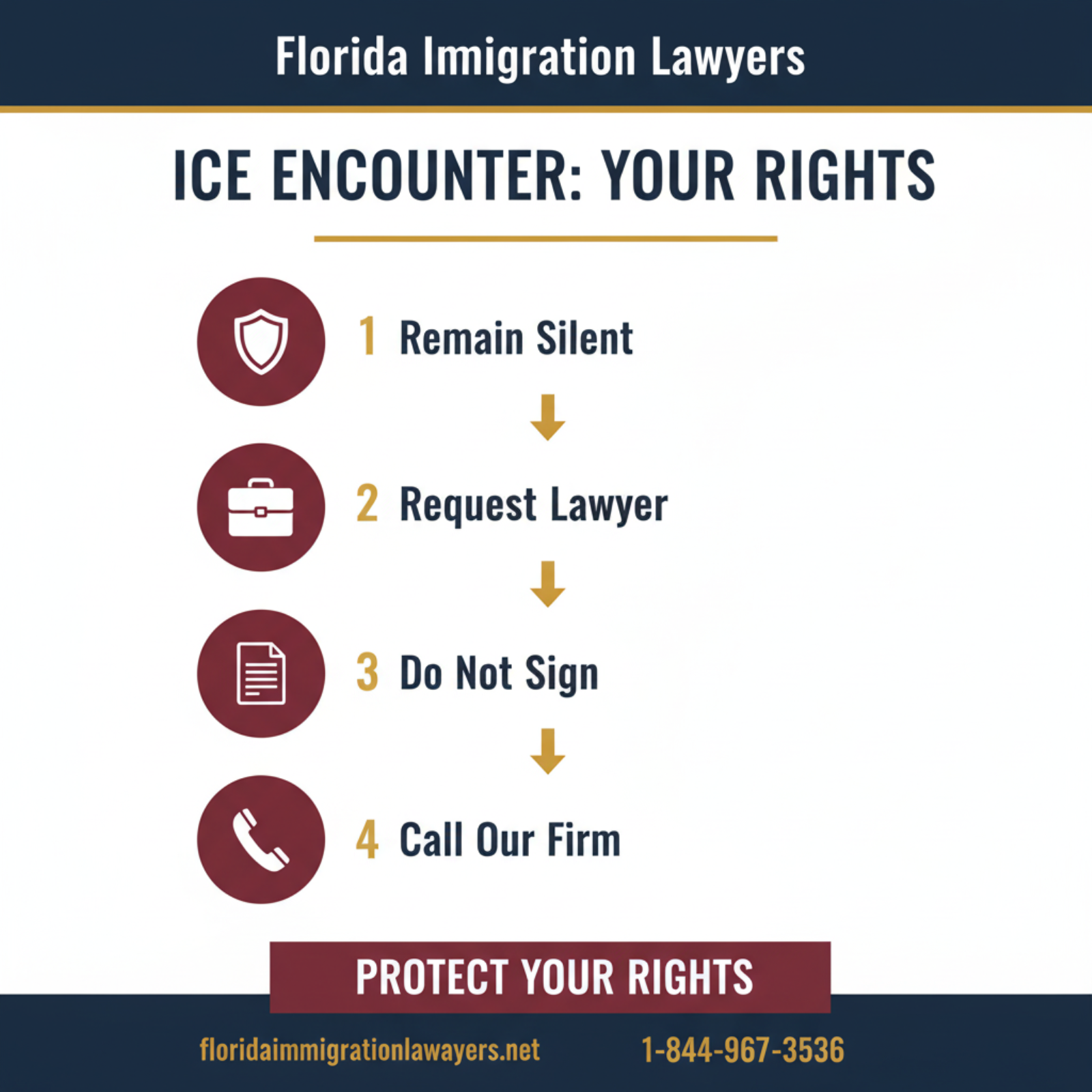
- Remain Silent and Request a Lawyer: You have the right to remain silent. Do not answer questions about your immigration status, birthplace, or how you entered the U.S. without a lawyer present. Clearly state, "I wish to remain silent, and I want to speak with my attorney." Remember, anything you say can be used against you in immigration court.
- Do Not Sign Anything: ICE agents may present documents for you to sign, such as a "Voluntary Departure" form (Form I-407, Record of Abandonment of Lawful Permanent Resident Status) or a "Stipulated Order of Removal." Signing these documents without legal advice can result in immediate deportation or the relinquishment of your green card rights. Always insist on reviewing documents with your lawyer before signing.
- Identify Yourself and Your "A-Number": You must state your name and "A-Number" (Alien Registration Number) if asked. This number is unique to you and is on your green card. Providing this information is generally required, but do not offer additional details about your immigration history or criminal record.
- Contact Family/Friends Immediately: If possible, inform a trusted family member or friend about your detention location. They can then contact a qualified immigration attorney on your behalf. Provide them with your full name, date of birth, and A-Number, as this information is essential for your lawyer.
- Gather Essential Documents: Once legal counsel is involved, work with your family to gather all relevant documents. These include your green card, passport, birth certificate, marriage certificate, and any past immigration applications or court documents. Having these readily available will expedite your legal defense.
- Prepare for a Bond Hearing (If Eligible): If you are not subject to mandatory detention, your attorney will work to schedule a bond hearing before an immigration judge. At this hearing, your lawyer will argue for your release on bond, presenting evidence of your ties to the community, lack of flight risk, and good moral character. Factors like significant family in Homestead, Florida, and stable employment can be crucial.
- Understand Your Immigration Court Process: Your case will proceed through immigration court, typically starting with a Master Calendar Hearing. This is a procedural hearing where charges are explained. This will be followed by an Individual Hearing, where evidence is presented and arguments are made. Your attorney will guide you through each step, preparing you for court appearances and helping you understand the legal strategies involved in your defense against deportation.
Essential Documents for Your ICE Detention Defense
When facing green card holder ICE detention, having access to critical documents can significantly impact your case. These documents help establish your identity, immigration history, and ties to the United States. Ensure your family knows where these documents are stored.
- Green Card (Form I-551): Your primary proof of lawful permanent resident status.
- Passport and Birth Certificate: Essential for verifying identity and nationality.
- Marriage Certificate and Birth Certificates of U.S. Citizen/LPR Children: Demonstrates strong family ties in the U.S. and may be crucial for certain relief applications.
- Financial Records: Bank statements, property deeds, and employment letters can show financial stability and community ties, which are important for bond eligibility.
- Tax Returns: Proof of consistent employment and tax contributions to the U.S. economy.
- Criminal Records (if any): It is vital to provide your attorney with all arrest records, court dispositions, and sentencing documents, even for old or seemingly minor offenses. Your lawyer needs this information to assess your eligibility for relief and prepare your defense.
- Past Immigration Documents: Copies of all previous immigration applications (e.g., Form I-130, I-485, I-765, I-140), approval notices, and any past court orders or decisions.
- Letters of Support: From family, friends, employers, or community leaders attesting to your good character and contributions to the community in Florida.
- Proof of Residence in Florida: Utility bills, lease agreements, or property records showing your long-term residence in areas like Homestead or throughout Florida.
Navigating the Detention Timeline and Processing Expectations
The timeline for green card holder ICE detention cases can vary widely depending on the complexity of the case, the specific charges, and the immigration court's caseload. However, understanding the general stages can help manage expectations.
Initial Processing and Interview
Upon detention, you will undergo initial processing, including fingerprinting, photographs, and an interview by ICE agents. During this interview, remember your right to remain silent and request a lawyer. ICE will typically issue a Notice to Appear (NTA), which formally outlines the charges against you and schedules your first immigration court hearing.
Detention facilities in Florida, such as the Krome Service Processing Center in Miami-Dade County, are equipped to handle these initial stages. Your family should try to locate you quickly by using the ICE Online Detainee Locator System.
Bond Hearings and Release
If you are eligible for bond, your attorney will typically request a bond hearing. This hearing usually occurs within a few weeks of detention. An immigration judge will decide whether to grant bond and set the amount, considering factors like flight risk, danger to the community, and your ties to Florida.
Successfully obtaining bond allows for release from detention while your immigration case proceeds. This is a crucial step, as it enables you to work closely with your attorney and prepare your defense from outside detention. A lawyer from Florida Immigration Lawyers can present a compelling argument for your release.
Immigration Court Proceedings
After a bond decision, your case will move through the immigration court system. This includes Master Calendar Hearings, which are administrative, and Individual Hearings, which are similar to trials. These hearings can take months or even years to conclude, especially if there are appeals to the Board of Immigration Appeals (BIA).
Throughout this process, your attorney will represent you, present evidence, call witnesses, and argue against your removal. The goal is to demonstrate your eligibility for various forms of relief from removal, such as cancellation of removal for LPRs (INA § 240A(a), 8 U.S.C. § 1229b(a)).
Cost Factors and Fee Breakdown in ICE Detention Cases
Legal representation for green card holder ICE detention cases involves various costs. Understanding these financial aspects upfront can help you plan and make informed decisions during a stressful time.
Legal Fees for Representation
Legal fees typically include a retainer fee, which is an upfront payment to secure the attorney's services. Following the retainer, fees may be structured hourly or as a flat fee for specific stages of the case, such as a bond hearing or a full deportation defense. The complexity of your case, the attorney's experience, and the duration of the proceedings will influence these costs.
Florida Immigration Lawyers offers free initial consultations to discuss your case and provide a clear understanding of potential legal fees. We believe in transparency and will ensure you are fully informed about the financial aspects of your defense.
Immigration Bond Amounts
If an immigration judge grants bond, you or your family will need to pay the specified amount to ICE to secure your release. Bond amounts vary significantly, typically ranging from a few thousand dollars to tens of thousands, depending on the individual's flight risk, criminal history, and ties to the community. Factors like stable employment in Florida and deep family roots in Homestead can positively influence the bond amount.

The bond is returned once your immigration case is concluded, provided you attend all scheduled court hearings. Failure to appear will result in forfeiture of the bond.
Additional Costs
Beyond legal fees and bond, there may be other costs. These can include application fees for any forms of relief sought (though many detention cases do not involve new applications), fees for obtaining certified copies of documents, or costs for expert witness testimony if needed. Your attorney will discuss all potential costs with you as your case progresses.
Do not navigate this process alone. The complexities of immigration law and the severe consequences of detention require expert guidance. Contact Florida Immigration Lawyers today to protect your rights and future.
Common Mistakes Green Card Holders Make During ICE Detention
Navigating ICE detention is fraught with potential pitfalls. Avoiding these common mistakes can significantly improve your chances of a positive outcome.
- Talking to ICE without a Lawyer: Any statements made to ICE agents without legal counsel can be used against you. This is one of the most critical errors. Always assert your right to remain silent and request an attorney immediately.
- Signing Documents Without Understanding: Never sign any document presented by ICE without your attorney's review. You might unknowingly sign away your rights, agree to voluntary departure, or admit to deportability, making your defense much harder.
- Not Disclosing All Past Arrests/Convictions to Your Lawyer: Even if a criminal charge was dismissed, expunged, or occurred years ago, it is crucial to disclose everything to your immigration attorney. Withholding information can severely compromise your defense strategies, as ICE will likely have access to these records.
- Failing to Appeal Adverse Decisions: If an immigration judge makes an unfavorable decision, there are often strict deadlines to file an appeal with the Board of Immigration Appeals (BIA). Missing these deadlines can lead to a final order of removal.
- Not Knowing Your A-Number: Your Alien Registration Number (A-Number) is essential for locating you in detention and for your lawyer to access your immigration file. Not knowing it can delay legal assistance.
- Providing False Information: Lying to immigration officials or providing false documents can lead to additional charges, including fraud, and make you inadmissible or deportable. Honesty with your attorney is paramount.
- Giving Up Hope and Agreeing to Self-Deport: The detention environment is stressful and isolating. Some individuals, feeling overwhelmed, agree to self-deport. This decision can have permanent consequences, including bars to future re-entry. Always consult with an attorney before making such a profound decision.
- Ignoring Notices to Appear (NTAs): If you are released from detention and receive an NTA, it is a formal charge to appear in immigration court. Ignoring it can lead to an in absentia removal order, meaning you are ordered deported without a hearing.
- Not Having an Emergency Plan: Green card holders, especially those with any past issues, should have an emergency plan. This includes knowing which attorney to call, where important documents are, and who will care for children or property if detained.
- Relying on Non-Attorney Advice: Seeking advice from "notarios" or individuals not qualified to practice immigration law can lead to severe negative consequences, including deportation. Only trust licensed attorneys for legal immigration advice.
When to Call Florida Immigration Lawyers for ICE Detention Help
The moment you or a loved one faces green card holder ICE detention, time is of the essence. Prompt legal intervention can be the difference between release and prolonged detention or even deportation. Florida Immigration Lawyers are here to provide the immediate and expert assistance you need.
Specific Scenarios Requiring Legal Help
- Initial Detention: If you or a family member has just been detained by ICE, an attorney can immediately work to locate the individual, ascertain the reason for detention, and begin preparing for a bond hearing.
- Bond Hearings: Successfully arguing for bond requires a deep understanding of immigration law and court procedures. Our lawyers are adept at presenting compelling cases to immigration judges, highlighting your ties to the Florida community and demonstrating you are not a flight risk.
- Removal Proceedings: If an NTA has been issued, you are in removal (deportation) proceedings. Our firm specializes in deportation defense, exploring all possible forms of relief, such as cancellation of removal for LPRs, waivers, or asylum claims.
- Criminal Charges Leading to Detention: If your detention stems from criminal charges, you need an attorney who understands the intersection of criminal and immigration law. We can work to mitigate the immigration consequences of criminal offenses.
- Re-entry Issues: If you were detained at a port of entry upon returning to the U.S., our lawyers can challenge allegations of inadmissibility and fight for your right to re-enter.
- Complex Immigration History: For individuals with previous immigration violations, old orders of removal, or complex family-based petitions, an experienced attorney is crucial to navigate these intricate details.
Warning Signs and Red Flags
Be vigilant for warning signs that may indicate a risk of ICE detention. These include receiving a Notice to Appear (NTA), any contact from ICE agents, or having a criminal record, even if it seems minor or was expunged. If you have any concerns about your immigration status or past legal issues, proactive consultation with an attorney is always recommended.
At Florida Immigration Lawyers, we understand the fear and uncertainty that come with ICE detention. Our dedicated team is committed to protecting the rights of green card holders across Florida, including those in Homestead, Miami, Orlando, and Tampa. We provide compassionate, aggressive, and effective legal representation to ensure the best possible outcome for your case.
About Florida Immigration Lawyers
Florida Immigration Lawyers is a leading immigration law firm dedicated to serving individuals and families throughout Florida. With years of specialized experience, our attorneys are passionate advocates for immigrant rights, providing comprehensive legal services in all areas of immigration law.
We understand the unique challenges faced by immigrants in Florida and are committed to offering personalized, effective, and compassionate legal representation. Our firm is proud to offer bilingual services, ensuring that all clients receive clear communication and understanding regardless of language barriers.
Our Services Include:
- Deportation Defense and Removal Proceedings
- Bond Hearings and Detention Release
- Family-Based Immigration
- Employment-Based Immigration
- Asylum and Refugee Status
- Citizenship and Naturalization
- Visa Applications and Consular Processing
Why Choose Florida Immigration Lawyers?
- Expertise: Our attorneys possess in-depth knowledge of complex immigration laws and stay updated on all changes, including those anticipated in 2026.
- Client-Centered Approach: We prioritize your needs, providing empathetic support and clear communication throughout your legal journey.
- Proven Track Record: We have a history of successfully defending clients in complex immigration cases, including ICE detention and deportation.
- Florida Focus: Serving all of Florida, we are familiar with local immigration courts and detention centers, including those impacting communities like Homestead.
- Availability: We are available 24/7 for emergencies, understanding that immigration issues often require immediate attention.
If you need expert legal assistance, contact us today. Our dedicated team is ready to help. You can reach Florida Immigration Lawyers at 1-844-967-3536 or visit our website at https://www.floridaimmigrationlawyers.net. We offer free consultations to assess your situation and outline your best legal path forward.
Sources and References
- U.S. Citizenship and Immigration Services (USCIS)
- U.S. Immigration and Customs Enforcement (ICE)
- Executive Office for Immigration Review (EOIR)
- 8 U.S.C. Chapter 12 - Immigration and Nationality Act (INA)
- INA § 101(a)(43) - Definition of Aggravated Felony
- INA § 212(a) - Grounds of Inadmissibility
- INA § 236(c) - Apprehension and Detention of Aliens; Mandatory Detention
- INA § 237(a) - Grounds of Deportability
- INA § 240A(a) - Cancellation of Removal for Certain Permanent Residents
- 8 CFR - Code of Federal Regulations, Title 8 (Aliens and Nationality)
This article provides general legal information and is not intended as legal advice. Every case is unique, and outcomes depend on specific facts and circumstances. Contact an attorney for advice about your particular situation.
Do not face the overwhelming challenges of green card holder ICE detention alone. Your future in Florida and the United States depends on experienced legal counsel. Our team at Florida Immigration Lawyers is ready to stand by your side, providing aggressive and compassionate representation.
Contact Florida Immigration Lawyers today at 1-844-967-3536 for your free consultation. Se Habla Español - Estamos aquí para ayudarle.
Frequently Asked Questions
Florida Immigration Lawyers
Legal Team
Our experienced attorneys at Florida Immigration Lawyers have been serving clients across Florida for over 20 years. We specialize in immigration, personal injury, criminal defense, workers compensation, and family law.