Green Card Holder ICE Detention in Florida: Your Rights & Defense
If you're a green card holder in Florida facing ICE detention, understanding your rights and the legal process is paramount. This guide from Florida Immigration Lawyers explains why detention occurs, details the step-by-step process, provides a crucial document checklist, and outlines key mistakes to avoid. Learn about bond eligibility, immigration court proceedings, and when to seek immediate legal counsel. With the complexities of immigration law, expert representation is essential to protect your permanent residency. We offer free consultations and dedicated deportation defense services across Florida. Don't face ICE alone.
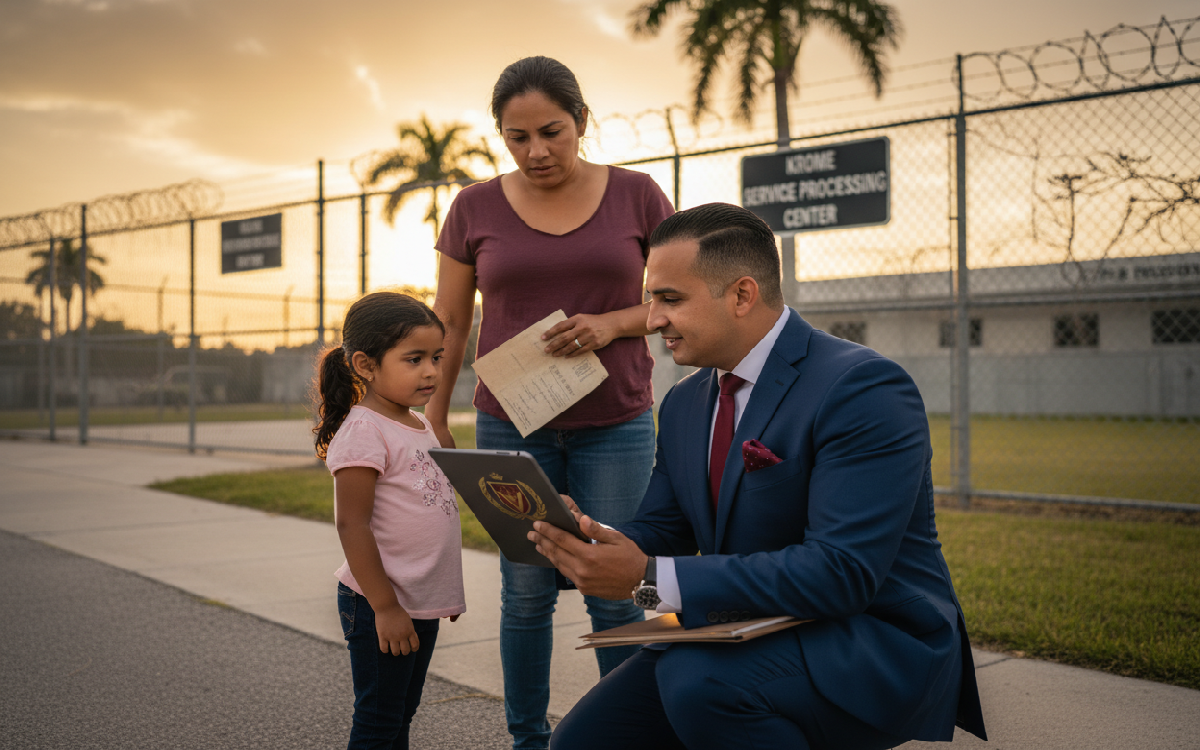
If you are a green card holder detained by U.S. Immigration and Customs Enforcement (ICE) in Florida, it's crucial to understand your rights. Even with a green card, certain actions, particularly criminal convictions or violations of immigration law, can lead to detention and potential deportation. You have the right to remain silent, speak with an attorney, and may be eligible for bond. Immediate legal counsel is vital to protect your status.
- Green card holders can face ICE detention for specific reasons.
- Knowing your rights, including the right to an attorney, is paramount.
- Bond eligibility may offer a path to release from detention.
- Criminal convictions are a primary trigger for ICE action.
- Consulting an experienced immigration lawyer Florida is essential.
Imagine living your life in Florida, a permanent resident, when suddenly you face the frightening reality of detention by U.S. Immigration and Customs Enforcement (ICE). For many green card holders, this scenario is a source of profound anxiety. You might be wondering, "Can ICE really detain someone with a green card?" The answer, unfortunately, is yes, under certain circumstances.
Navigating the complexities of immigration law, especially when facing detention, can feel overwhelming. This comprehensive guide from Florida Immigration Lawyers is designed to empower you with critical information. We will explore why a green card holder ICE detention might occur in Florida, outline your fundamental rights, detail the detention process, and explain how expert legal representation can make a crucial difference. Do not face this challenging situation alone. Call Florida Immigration Lawyers at 1-844-967-3536 for a free consultation. We are here to help protect your future and your status.
Understanding Green Card Holder ICE Detention in Florida
Even as a lawful permanent resident, commonly known as a green card holder, you are not entirely immune to immigration enforcement actions. U.S. immigration laws are complex and can lead to detention and deportation proceedings under specific conditions. Understanding these conditions is the first step in protecting your legal status.
ICE has the authority to detain green card holders for various reasons. These often relate to criminal convictions, violations of immigration law, or issues uncovered during re-entry into the U.S. The key is that your green card grants you permanent residency, but not absolute immunity from removal. This is a critical distinction that many residents in Florida often misunderstand.
One common trigger for green card holder ICE detention is a criminal offense. Certain crimes, particularly "crimes involving moral turpitude" (CIMT) or "aggravated felonies," can make a green card holder deportable. These definitions can be broad and may include offenses that seem minor in state criminal courts. It is vital to consult with an attorney immediately if you face any criminal charges.
ICE operates throughout Florida, from bustling Miami to the state capital of Tallahassee. Their presence means that encounters can happen anywhere, including at airports, during routine traffic stops, or even at home. Knowing your rights and the potential risks is crucial for every green card holder.
The ICE Detention Process for Green Card Holders: A Step-by-Step Guide
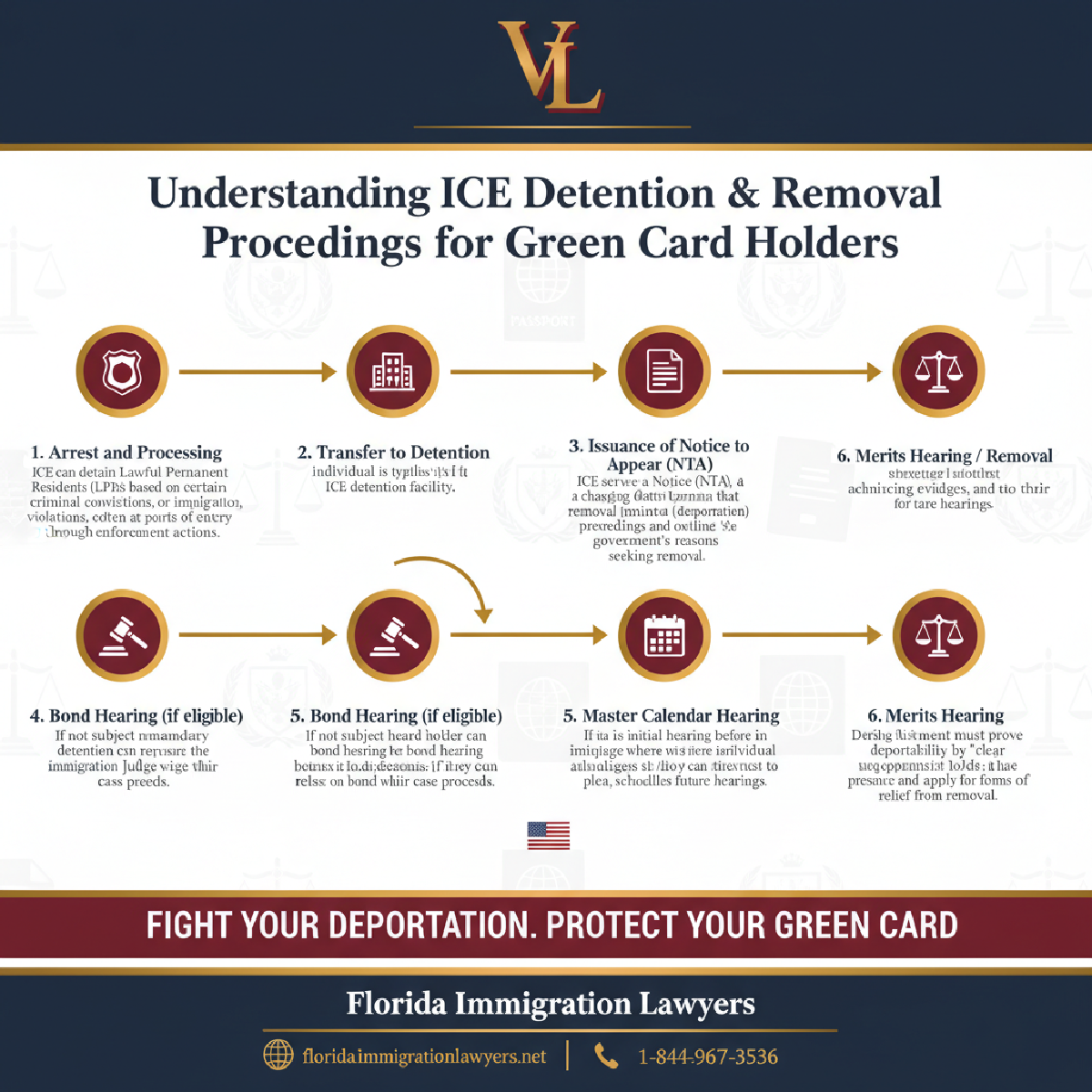
When a green card holder is detained by ICE in Florida, the situation can escalate quickly. Understanding the typical sequence of events can help you prepare and respond effectively. Here is a general outline of the process you might encounter:
-
Initial Encounter and Arrest
An encounter with ICE can occur in various settings. This might be at a port of entry, during a targeted raid, or after being released from local law enforcement custody following a criminal arrest. ICE agents must identify themselves and state the purpose of their visit. If you are arrested, you should be informed of the reasons for your detention.
-
Processing and Transfer to a Detention Facility
Following arrest, you will be processed. This involves fingerprinting, photographing, and collecting personal information. You will then likely be transferred to an immigration detention facility. In Florida, common facilities include the Krome Service Processing Center in Miami or the Baker County Detention Center. During this time, ICE will assess your immigration history and eligibility for release.
-
Issuance of a Notice to Appear (NTA)
The Notice to Appear (NTA) is a crucial document. It formally initiates removal proceedings against you in immigration court. The NTA will specify the charges against you, explaining why the government believes you are deportable. It will also indicate the date and location of your initial hearing before an immigration judge. This document is your first official notice of a court case.
-
Bond Hearing Eligibility Assessment
Upon receiving an NTA, ICE will determine if you are eligible for bond. Not all green card holders are eligible for bond; those with certain criminal convictions may face mandatory detention, as per INA Section 236(c) (8 U.S.C. § 1226(c)). If you are eligible, you may request a bond hearing before an immigration judge. An attorney can argue for a reasonable bond amount, or even for release on your own recognizance.
-
Immigration Court Proceedings
Your case will proceed through immigration court. This involves multiple hearings, where an immigration judge will review the evidence, hear arguments from your attorney and the government's attorney, and ultimately decide if you are deportable. You have the right to present evidence, call witnesses, and cross-examine government witnesses. This is where your deportation defense Florida strategy is critical.
-
Potential Appeals and Final Decision
If the immigration judge orders your removal, you typically have the right to appeal the decision to the Board of Immigration Appeals (BIA). Further appeals may be possible to a federal circuit court. Conversely, if the judge terminates proceedings or grants relief, you can be released from detention and retain your green card. The appeals process is complex and requires specialized legal knowledge.
Essential Document Checklist for Green Card Holder Detention Defense
Having the right documents readily available can significantly aid your defense if you or a loved one faces green card holder ICE detention. Organizing these materials beforehand can save valuable time and provide your immigration lawyer with the necessary tools to advocate for you.
Here is a checklist of documents that are typically crucial:
- ✅ Your Permanent Resident Card (Green Card, Form I-551)
- ✅ Any and all passports you possess, current and expired
- ✅ Birth certificates for yourself and immediate family members
- ✅ Marriage certificates, if applicable
- ✅ Divorce decrees, if applicable
- ✅ Records of all past and current addresses
- ✅ Employment history and pay stubs
- ✅ Tax returns for the past several years
- ✅ Medical records, especially if you have serious health conditions
- ✅ School records for yourself and any children
- ✅ Police reports, court dispositions, and sentencing documents for ALL arrests and convictions, even minor ones (this is critically important for deportation defense Florida)
- ✅ Proof of community ties in Florida (e.g., utility bills, property deeds, letters from community leaders)
- ✅ Any prior immigration applications or petitions (e.g., I-130, I-485, N-400)
- ✅ Notices from USCIS or immigration court
Gathering these documents can be daunting, but it is an investment in your future. Your attorney will use these to build a robust defense.
Timeline and Processing Expectations for ICE Detention Cases
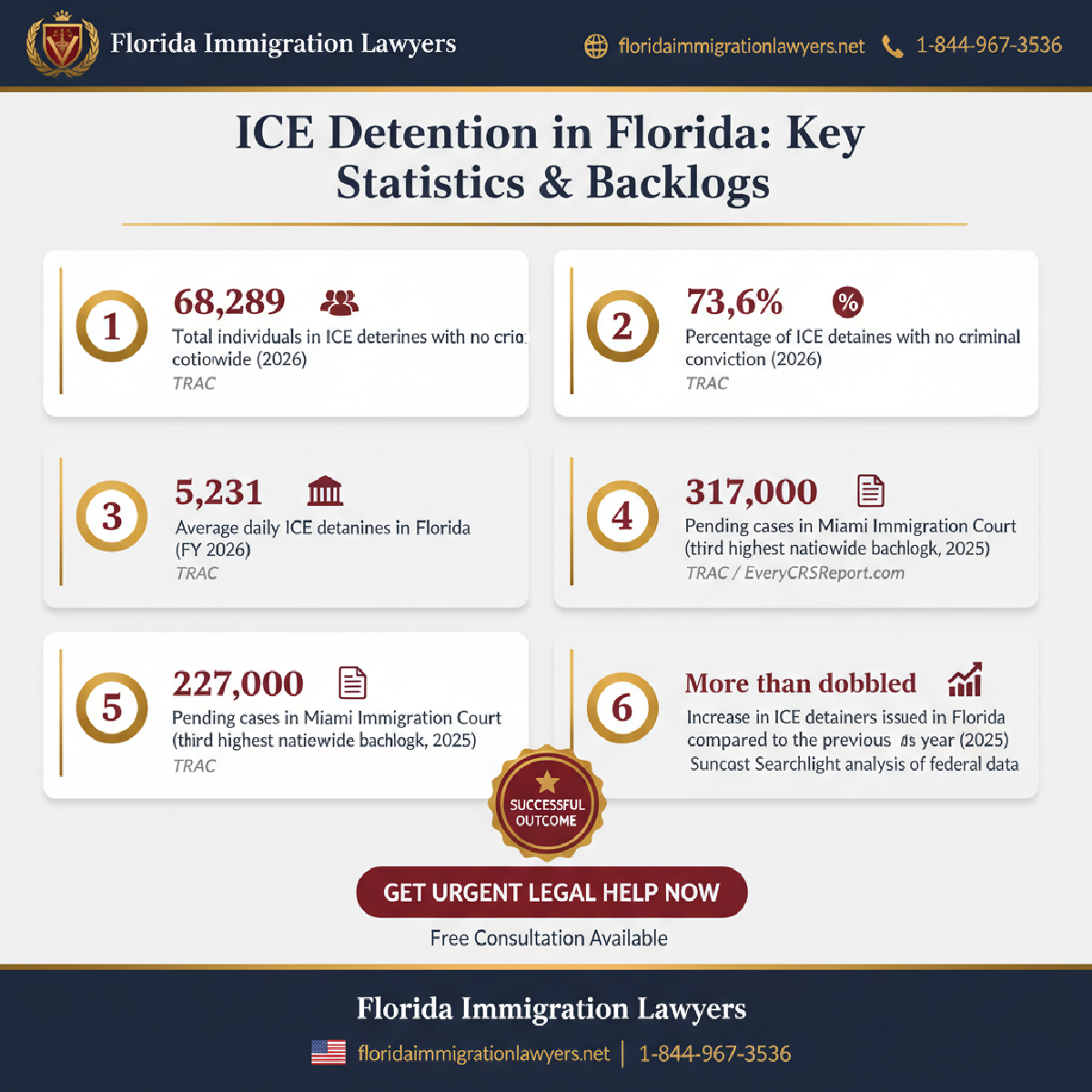
The timeline for green card holder ICE detention cases in Florida can vary dramatically based on several factors. These include the complexity of your case, the specific charges, the immigration court's caseload, and whether you are eligible for bond. There is no single predictable timeline.
If you are eligible for a bond hearing, it typically occurs within a few weeks of detention. However, court backlogs can sometimes extend this wait. The bond amount itself will depend on your flight risk and danger to the community, as assessed by the immigration judge. A skilled immigration lawyer Florida can argue for a lower bond or release without bond.
Once removal proceedings begin, the entire process can take months, or even years, to resolve. Initial master calendar hearings are brief, but individual hearings, where evidence is presented, are scheduled further apart. Appeals to the BIA can add another year or more to the process. Patience and persistent legal advocacy are vital.
For those facing mandatory detention, the timeline can be even more stressful, as release on bond is not an option. In such cases, the focus shifts entirely to winning the underlying deportation case as quickly and effectively as possible. Understanding these general timelines helps manage expectations during this difficult period.
Cost Factors and Fee Breakdown in ICE Detention Cases
Facing green card holder ICE detention involves various potential costs. These are not just legal fees but can also include bond amounts, government filing fees, and other related expenses. Transparency regarding these costs is important, and Florida Immigration Lawyers is committed to clarity for our clients.
Legal fees for an immigration lawyer Florida will depend on the complexity of your case and the services required. This can range from representation at a bond hearing to full representation through multiple court hearings and potential appeals. During your free consultation, our firm can discuss a fee structure tailored to your specific situation.
Government filing fees are generally not extensive for detention cases, as the primary fees are associated with the underlying immigration applications or waivers, not the detention itself. However, if you need to file specific motions or applications for relief from removal, there might be associated USCIS fees. (Note: Specific fee amounts change frequently and are not provided here, but can be found on uscis.gov).
Bond amounts, if applicable, are set by an immigration judge and can range from a few thousand dollars to tens of thousands. This money is returned once your case concludes, provided you attend all court hearings. However, paying a high bond can be a significant financial burden for families. We help argue for the lowest possible bond.
Do not navigate this process alone. The stakes are incredibly high when facing green card holder ICE detention. Having dedicated legal counsel can significantly improve your chances of a favorable outcome. Contact Florida Immigration Lawyers today to schedule your free consultation and discuss your options. We are ready to stand by your side.
Common Mistakes to Avoid During ICE Detention
When dealing with ICE detention, especially as a green card holder, certain missteps can severely jeopardize your case. Avoiding these common mistakes is critical for a successful defense.
- Speaking to ICE without an Attorney: Anything you say can be used against you. Politely state you wish to remain silent and want to speak with your lawyer. This is your constitutional right.
- Signing Documents You Don't Understand: Never sign any document presented by ICE or other authorities without fully understanding its contents and implications, especially if it waives your rights or agrees to voluntary departure.
- Lying to Immigration Officials: Providing false information can lead to severe penalties, including criminal charges and permanent bars from future immigration benefits. Always be truthful, but exercise your right to remain silent when necessary.
- Failing to Disclose Past Criminal History: Even minor arrests or convictions from years ago can impact your case. Withholding this information from your attorney prevents them from building a complete and effective deportation defense Florida.
- Missing Court Hearings: Failing to appear for any scheduled immigration court hearing can result in an "in absentia" removal order, making it extremely difficult to reopen your case and leading to immediate deportation.
- Not Carrying Your Green Card: Lawful permanent residents are required by law (8 U.S.C. § 1304(e)) to carry their green card (Form I-551) at all times. Failure to do so can lead to detention and questioning.
- Ignoring Notices from USCIS or Immigration Court: These documents contain critical dates and instructions. Ignoring them can lead to missed deadlines, automatic denials, or removal orders.
- Traveling Internationally with Pending Issues: If you have an active NTA or other immigration issues, international travel can be risky and may lead to detention upon re-entry, or even denial of re-entry. Always consult an immigration lawyer Florida before traveling.
- Assuming Your Green Card Protects You from Everything: While a green card grants permanent residency, it does not grant citizenship. Certain criminal acts or prolonged absences from the U.S. can lead to loss of status and deportation.
- Not Seeking Legal Counsel Early: The sooner you engage an experienced immigration attorney, the more options you may have for your defense. Delay can limit strategies and make your situation more challenging.
When to Call a Lawyer for ICE Detention
The moments following an ICE encounter or detention are critical. If you or a loved one is a green card holder facing potential ICE detention in Florida, contacting an attorney immediately is not just advisable-it's essential. Do not wait for your situation to worsen.
You should call Florida Immigration Lawyers if:
- ICE agents contact you or visit your home/workplace. Early intervention can often prevent detention or prepare you for it.
- You are arrested for any criminal offense, no matter how minor. Even minor convictions can have major immigration consequences. We can work with your criminal defense attorney.
- A loved one has been detained by ICE. We can quickly ascertain their location, eligibility for bond, and begin preparing their defense.
- You receive a Notice to Appear (NTA) from ICE. This means removal proceedings have begun, and you need immediate legal representation for your deportation defense Florida.
- You are a green card holder facing re-entry issues at a U.S. port of entry. This is a common trigger for detention.
- You have questions about your rights as a green card holder in the current immigration climate. Proactive legal advice is always better than reactive.
Florida Immigration Lawyers specializes in defending green card holders against detention and deportation. Our experienced team understands the nuances of immigration law and the specific challenges faced by residents in Tallahassee and across Florida. We are dedicated to protecting your rights and fighting for your ability to remain in the U.S. Contact us.
Frequently Asked Questions About Green Card Holder ICE Detention
How can ICE detain green card holders?
ICE can detain green card holders if they are deemed deportable or inadmissible under U.S. immigration law, primarily found in the Immigration and Nationality Act (INA). Common reasons include convictions for certain criminal offenses, such as aggravated felonies or crimes involving moral turpitude, violating terms of their green card status, or committing fraud during their immigration process. Detention can occur upon re-entry to the U.S., during a targeted enforcement action, or after release from state or local criminal custody. The authority for detention is outlined in sections like INA 236 (8 U.S.C. § 1226).
What is the new law for green card holders in 2026?
As of February 2026, there isn't a single "new law" drastically altering the fundamental rights of green card holders that has been enacted or fully implemented. Immigration law is dynamic, with frequent policy changes and court rulings that can affect enforcement and benefits. However, the general framework regarding deportability and inadmissibility for green card holders remains largely consistent with the INA. It is crucial for green card holders in Florida to stay informed about policy shifts and always consult with an immigration lawyer Florida to understand how any new directives or judicial decisions might impact their specific situation. We closely monitor legislative and policy changes to provide the most current advice.
Can you be deported with a green card for a DUI?
Yes, a DUI (Driving Under the Influence) conviction can potentially lead to deportation for a green card holder, though it is not always a direct path. While a single, simple DUI conviction typically does not qualify as an "aggravated felony" or a "crime involving moral turpitude" on its own, multiple DUI convictions, or a DUI combined with other aggravating factors (like injury to another person, driving without a license, or child endangerment), could trigger deportability. Additionally, a DUI conviction might affect future naturalization applications. The specific circumstances of your conviction and state law in Florida play a significant role. It is critical to consult with a lawyer who understands both criminal and immigration law to assess your risk.
Are green card holders eligible for Medicaid in Florida?
Generally, lawful permanent residents (green card holders) in Florida may be eligible for Medicaid, but there are specific conditions and waiting periods. Federal law typically requires a five-year waiting period after obtaining qualified immigrant status before being eligible for most federal means-tested public benefits, including Medicaid. However, there are exceptions for certain groups, such as refugees, asylees, or those with specific medical emergencies. Florida's Medicaid program also has income and resource limits. Eligibility can be complex and depends on your specific immigration category, length of residency, and financial situation. It's best to check with the Florida Department of Children and Families or consult with an attorney specializing in public benefits or immigration.
What are my rights if ICE detains me in Tallahassee?
If detained by ICE in Tallahassee or anywhere in Florida, you have fundamental rights. You have the right to remain silent and do not have to answer questions about your immigration status or country of origin. You have the right to speak with an attorney, and you should request one immediately. Do not sign any documents without understanding them and consulting with a lawyer. You also have the right to make a phone call. ICE must provide you with a list of free legal services. Remember your "A-number" (Alien Registration Number) if you know it, as this helps your attorney locate you quickly. Always carry your green card and present it if asked.
Can a green card holder be detained at a Florida airport?
Yes, a green card holder can be detained at a Florida airport, such as Miami International Airport or Orlando International Airport, especially upon returning from international travel. This often occurs if Customs and Border Protection (CBP) officers discover issues that raise questions about your admissibility or deportability. Reasons can include past criminal convictions that were not previously disclosed, extended absences from the U.S. that may be seen as abandonment of residency, or issues with travel documents. If detained at an airport, you have the same rights as in other ICE encounters: remain silent, request an attorney, and do not sign anything without legal review. An immigration lawyer Florida can help you prepare for re-entry if you have concerns.
How can I find out if a loved one is in ICE detention in Florida?
If a loved one is detained by ICE in Florida, you can use the Online Detainee Locator System (ODLS) provided by ICE on their website (ice.gov/locator). You will need their A-number (Alien Registration Number) or biographical information including their first name, last name, and country of birth. This system can help you locate which detention facility they are in. Once located, you should contact an immigration attorney immediately. Florida Immigration Lawyers can assist in finding your loved one and initiating legal representation to protect their rights and pursue their release.
What is mandatory detention for green card holders?
Mandatory detention, as outlined in INA Section 236(c) (8 U.S.C. § 1226(c)), applies to certain non-citizens, including green card holders, who have committed specific criminal offenses. If you are subject to mandatory detention, ICE generally cannot release you on bond, and an immigration judge also lacks the authority to set a bond. This means you must remain in ICE custody throughout your removal proceedings. The types of crimes that trigger mandatory detention are typically aggravated felonies or certain drug offenses. Facing mandatory detention makes legal representation even more critical, as the focus shifts entirely to challenging your deportability in court.
About Florida Immigration Lawyers
At Florida Immigration Lawyers, we understand the immense stress and uncertainty that comes with immigration challenges, especially when facing green card holder ICE detention. As a leading immigration law firm serving all of Florida, including Tallahassee, Miami, Orlando, and Tampa, we are dedicated to providing compassionate, effective, and aggressive legal representation. Our experienced attorneys specialize in a wide range of immigration matters, from family-based petitions and business immigration to complex deportation defense and asylum cases.
We pride ourselves on our deep knowledge of U.S. immigration law and our commitment to our clients. When you choose Florida Immigration Lawyers, you gain a powerful advocate who will fight tirelessly to protect your rights and help you achieve your immigration goals. We offer bilingual services to ensure clear communication and understanding throughout your legal journey.
Contact us today for a free consultation to discuss your case. We are available 24/7 to provide the guidance and support you need. Phone: 1-844-967-3536 Website: https://www.floridaimmigrationlawyers.net Serving all of Florida with dedicated immigration legal services.
This article is for general informational purposes only and does not constitute legal advice. Immigration laws change frequently. For advice specific to your situation, please consult with a qualified immigration attorney.
If you or a loved one is a green card holder facing the complexities of ICE detention in Florida, immediate action is crucial. Do not risk your future by attempting to navigate these challenging waters alone. Florida Immigration Lawyers is here to provide the expert legal guidance and robust defense you need. Call us today at 1-844-967-3536 for a free, confidential consultation. Let us help you protect your rights and your ability to remain in the U.S.
Florida Immigration Lawyers
Legal Team
Our experienced attorneys at Florida Immigration Lawyers have been serving clients across Florida for over 20 years. We specialize in immigration, personal injury, criminal defense, workers compensation, and family law.