Green Card Holder ICE Detention Florida: Your Rights & Defense
For green card holders in Florida, an ICE detention can be a terrifying experience, often triggered by criminal convictions or immigration violations. Understanding your rights, from remaining silent to seeking legal counsel, is paramount. This comprehensive guide details the ICE detention process, from initial apprehension and the Notice to Appear (NTA) to bond hearings and immigration court proceedings. We provide a crucial document checklist, outline timelines, and discuss cost factors. Learn about common mistakes to avoid and when to call an experienced immigration lawyer in Gainesville or across Florida. Florida Immigration Lawyers offers dedicated support for deportation defense and protecting permanent resident rights.
- Green card holders can be detained by ICE for specific reasons.
- You have rights, including the right to an attorney.
- Detention often leads to deportation proceedings.
- Legal representation is critical for your defense.
- Understanding the process is key to protecting your status.
Imagine living your life in Gainesville, Florida, as a lawful permanent resident, working, raising your family, and contributing to your community. Suddenly, you or a loved one is approached by Immigration and Customs Enforcement (ICE) and taken into custody. This is a frightening reality for many green card holders in Florida, and it raises urgent questions about rights, legal options, and the path forward. Understanding green card holder ICE detention is vital for anyone holding a permanent resident card.
At Florida Immigration Lawyers, we understand the profound anxiety and uncertainty that comes with an ICE detention. Our dedicated team is here to provide clarity and robust legal defense. We believe every individual deserves fair treatment and a strong advocate. If you or someone you know is facing green card holder ICE detention in Florida, do not hesitate. Call Florida Immigration Lawyers at 1-844-967-3536 for a free consultation immediately. We are ready to help you understand your situation and explore your legal options.
Understanding Green Card Holder ICE Detention in Florida
Being a green card holder, or lawful permanent resident, grants you many privileges and a pathway to U.S. citizenship. However, it does not provide absolute immunity from immigration enforcement. In Florida, as across the nation, ICE has the authority to detain individuals who are considered removable under U.S. immigration law. This can be a shock for those who believe their green card offers complete protection.
Why are Green Card Holders Detained?
Several factors can lead to a green card holder ICE detention. The most common reasons involve specific criminal convictions or violations of immigration law. These are often outlined in the Immigration and Nationality Act (INA). For instance, certain "crimes involving moral turpitude" (CIMTs) or aggravated felonies can make a permanent resident deportable and subject to mandatory detention.
Even minor brushes with the law, if misinterpreted or elevated, can trigger ICE involvement. It is crucial to remember that a state criminal charge can have severe federal immigration consequences. This is why understanding the interplay between criminal law and immigration law is so critical for permanent residents in Florida.
The Role of ICE in Florida
Immigration and Customs Enforcement (ICE) operates throughout Florida, with field offices in areas like Miami, Tampa, and Orlando. Their mission includes identifying, apprehending, and removing noncitizens who pose a threat to national security, public safety, or border security. This mandate extends to lawful permanent residents who are deemed deportable. ICE agents may encounter individuals during traffic stops, at courthouses, or through targeted enforcement actions.
Your Rights During ICE Encounters
Even if you are a green card holder, you have specific rights if encountered by ICE. You have the right to remain silent and not answer questions about your immigration status or country of origin. You also have the right to speak with an attorney before answering any questions. Do not sign anything without legal counsel. Remember, carrying your green card at all times is generally recommended, but presenting it does not waive your right to silence or legal counsel.
Navigating the ICE Detention Process for Green Card Holders
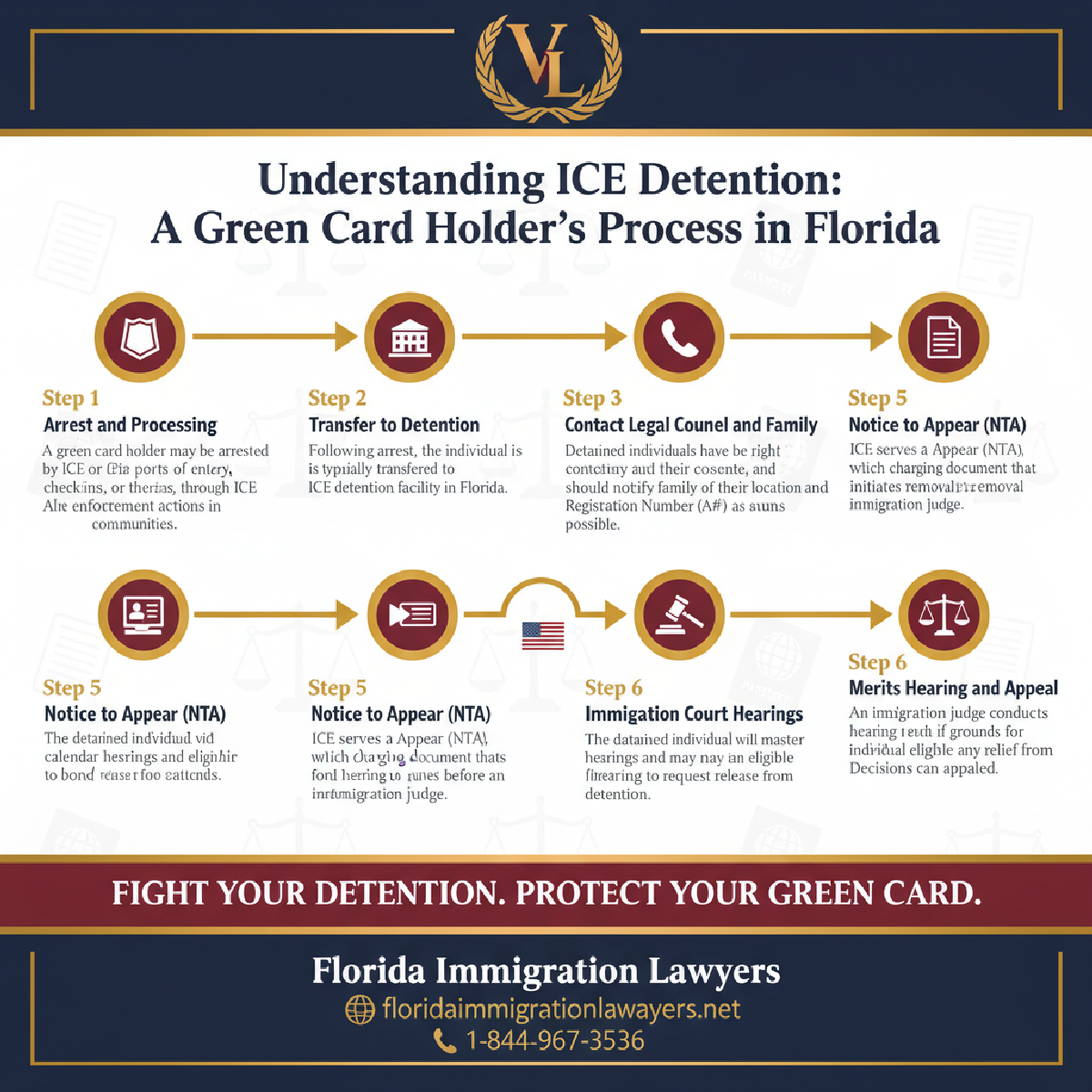
If you or a loved one is detained by ICE in Florida, understanding the typical steps can help demystify a scary situation. The process can be complex and intimidating, highlighting the need for experienced legal guidance from a Florida immigration lawyer.
-
Initial Detention and Processing:
When ICE detains a green card holder, they are typically taken to an ICE processing center or a local jail contracted by ICE. In Florida, this could be facilities like Krome Service Processing Center or Baker County Detention Center. During processing, your identity and immigration status will be verified. You will be fingerprinted and interviewed. It is vital to state your right to an attorney at this stage. -
Issuance of a Notice to Appear (NTA):
If ICE determines you are removable, they will issue a Notice to Appear (NTA). This document formally charges you with being deportable and initiates removal proceedings in immigration court. The NTA will specify the alleged grounds for your deportability and schedule your first hearing, often called a Master Calendar Hearing. Understanding the charges in your NTA is the first step in building a defense. -
Custody Determination and Bond Hearing:
Some green card holders may be eligible for release on bond, while others face mandatory detention without bond. Mandatory detention often applies to individuals with certain criminal convictions, as per INA 236(c) (8 U.S.C. § 1226(c)). If you are eligible for bond, your attorney can request a bond hearing before an immigration judge. The judge will consider factors like your ties to the community, criminal history, and flight risk when determining bond eligibility and amount. -
Immigration Court Proceedings:
Your case will proceed through immigration court, typically involving Master Calendar Hearings and Individual Hearings. During Master Calendar Hearings, the judge will confirm receipt of the NTA, allow you to admit or deny charges, and schedule future hearings. Individual Hearings are where evidence is presented, witnesses may testify, and the judge makes a final decision on your removability and any relief from removal you may seek. These proceedings can be lengthy and require meticulous preparation. -
Seeking Relief from Removal:
Even if found deportable, green card holders may be eligible for various forms of relief from removal. Common forms include cancellation of removal for certain permanent residents (INA 240A(a)), adjustment of status if eligible, or asylum if you fear persecution. The specific relief available depends heavily on your individual circumstances, immigration history, and criminal record. An experienced immigration lawyer in Gainesville or elsewhere in Florida can assess your eligibility. -
Appeals Process:
If the immigration judge denies your relief or orders your removal, you typically have the right to appeal the decision to the Board of Immigration Appeals (BIA). Further appeals may be possible to a U.S. Court of Appeals. The appeals process is highly technical and requires a deep understanding of immigration law and precedent.
Essential Documents for Your Green Card Holder ICE Detention Defense
Having the right documents readily available can significantly strengthen your defense and expedite the legal process. Prepare these items if possible or ensure a trusted family member knows where to find them.
- ✅ Your Green Card (Form I-551): Proof of your lawful permanent resident status.
- ✅ Passport and Birth Certificate: Identity and nationality documents.
- ✅ Any Immigration Documents: Copies of all past immigration applications, approvals, and correspondence from USCIS (e.g., I-130, I-485, N-400).
- ✅ Criminal Records (Certified Dispositions): If you have any arrests or convictions, obtain certified court dispositions for every single case, even if charges were dropped or expunged. This is crucial for your deportation defense Florida.
- ✅ Proof of Residence in Florida: Utility bills, lease agreements, property deeds, showing your ties to the community, especially in areas like Gainesville.
- ✅ Proof of Employment: Pay stubs, employment letters, tax returns (W-2s, 1099s) demonstrating your economic contributions.
- ✅ Family Information: Marriage certificates, birth certificates of U.S. citizen or green card holder children/spouse, showing family ties.
- ✅ Medical Records: Any records of serious medical conditions, especially if detention could exacerbate them.
- ✅ Evidence of Rehabilitation: If applicable, proof of community service, counseling, or positive life changes after past issues.
Timeline and Processing Expectations for ICE Detention Cases
The timeline for a green card holder ICE detention case can vary significantly. It depends on factors like the complexity of your case, the specific immigration court's caseload in Florida (e.g., Orlando Immigration Court), and whether you are eligible for bond.
Initial Stages:
- Detention to NTA: This can happen within hours or a few days of apprehension.
- NTA to Master Calendar Hearing: Often takes several weeks to a few months, depending on court dockets.
Court Proceedings:
- Master Calendar Hearings: You may have one or several, typically spaced a few weeks to a few months apart.
- Individual Hearings: If your case proceeds to an Individual Hearing, it could be scheduled many months, sometimes over a year, after your first Master Calendar Hearing, especially in busy courts.
- Total Case Duration: A full removal proceeding, including appeals, can last from several months to several years. This extended timeline underscores the importance of consistent legal representation.
Factors Influencing Speed:
- Mandatory Detention: If you are subject to mandatory detention, the process might move faster as there's no bond hearing to schedule.
- Court Backlogs: Immigration courts, including those in Florida, often face significant backlogs, which can delay hearings.
- Legal Strategy: A well-prepared legal strategy can sometimes help streamline the process or identify opportunities for quicker resolution.
Cost Factors and Fee Breakdown in ICE Detention Cases
Navigating a green card holder ICE detention case involves various financial considerations. These costs can include legal fees, bond amounts, and potential filing fees for applications for relief. It is important to understand these aspects upfront.
Legal Fees:
Legal fees for deportation defense Florida can vary widely based on the complexity of your case, the experience of your attorney, and the amount of work involved. Some attorneys charge hourly rates, while others offer flat fees for specific stages or the entire case. A comprehensive defense, especially one involving multiple hearings and appeals, will naturally incur higher costs. Many firms, including Florida Immigration Lawyers, offer free initial consultations to discuss fees.
Immigration Bond:
If an immigration judge grants bond, the amount can range from a few thousand dollars to tens of thousands. This money is held by the Department of Homeland Security and is returned if you attend all your court hearings. It is not a fine, but rather a guarantee of your appearance. Bond amounts are determined on a case-by-case basis.
Filing Fees:
If your attorney identifies a form of relief from removal for which you are eligible, you may need to file specific applications with USCIS or the immigration court. These applications often come with associated filing fees. For example, an application for cancellation of removal (Form EOIR-42B) may have a fee. These fees are subject to change, so always check the latest USCIS fee schedule at uscis.gov.
Do not navigate this complex and emotionally draining process alone. The stakes are incredibly high when facing green card holder ICE detention and potential deportation. You need an experienced advocate by your side. Contact Florida Immigration Lawyers today for dedicated legal support. Our team is ready to fight for your rights and your future in Florida.
Common Mistakes to Avoid During Green Card Holder ICE Detention
Making errors during an ICE detention can severely jeopardize your case and potentially lead to deportation. Being aware of these common pitfalls can help you protect your rights and improve your chances of a positive outcome.
-
Failing to Assert Your Right to Remain Silent:
Many individuals, out of fear or confusion, answer questions from ICE agents without legal counsel. Remember, anything you say can be used against you in immigration court. Politely state, "I choose to remain silent and wish to speak with my attorney." -
Signing Documents Without Understanding Them:
ICE agents may present documents for your signature, including waivers of rights or voluntary departure forms. Never sign anything you do not fully understand or without consulting an attorney. Signing a voluntary departure order could waive your right to a hearing and lead to immediate removal. -
Not Carrying Your Green Card:
While you have rights, lawful permanent residents are generally required to carry proof of their status (Form I-551, your green card) at all times. Not having it can lead to prolonged detention while your status is verified. (8 U.S.C. § 1304(e)). -
Lying to Immigration Officials:
Providing false information to ICE or an immigration judge can lead to severe penalties, including criminal charges and permanent bars from future immigration benefits. Always be truthful, but do so with the guidance of an attorney. -
Missing Court Hearings:
Failure to appear at any scheduled immigration court hearing can result in an "in absentia" removal order, meaning you are ordered deported without being present. This is extremely difficult to reverse. Always keep track of your court dates. -
Not Disclosing Full Criminal History to Your Attorney:
Even if you believe a past arrest or conviction is minor or expunged, it can have significant immigration consequences. Be completely honest with your immigration lawyer Gainesville about all interactions with law enforcement. Full disclosure allows your attorney to build the strongest possible defense. -
Attempting to Self-Represent in Immigration Court:
Immigration law is incredibly complex, with constantly changing regulations and judicial precedents. Representing yourself, especially while detained, dramatically reduces your chances of success. An attorney understands the nuances of the law and can identify available relief. -
Failing to Gather Supporting Documents:
As outlined in the checklist, having key documents ready can be crucial. Delays in providing certified criminal dispositions or proof of ties to the U.S. can weaken your case or prolong your detention. -
Not Informing Family of Detention:
If detained, try to inform a family member or trusted friend immediately. They can then contact an attorney on your behalf and begin gathering necessary information. ICE is generally required to allow you to make a phone call. -
Not Understanding Grounds of Deportability:
Many green card holders are unaware of the specific criminal acts or violations that can lead to deportation. Educate yourself on the general grounds, and if detained, ensure your attorney explains the specific charges against you from the NTA. (INA 237, 8 U.S.C. § 1227).
When to Call a Florida Immigration Lawyer
Facing green card holder ICE detention is not a situation to handle alone. The complexities of immigration law, combined with the stress of detention, make legal representation not just helpful, but often essential. Here are specific scenarios when you absolutely need to call an attorney:
- You or a loved one has been detained by ICE: This is the most critical time. Immediate legal intervention can ensure your rights are protected from the outset. A lawyer can often visit you in detention.
- You have received a Notice to Appear (NTA): The NTA is the start of removal proceedings. An attorney can explain the charges, help you respond, and identify potential defenses or forms of relief.
- You have a criminal record, even a minor one: Any past interaction with law enforcement, even arrests without conviction, can impact your immigration status. An attorney can assess the immigration consequences of your criminal history.
- You are eligible for an immigration bond: An attorney can argue for your release on bond, present evidence of your ties to the community, and negotiate with ICE if necessary.
- You are seeking relief from removal: Whether it's cancellation of removal, adjustment of status, or asylum, an attorney can determine your eligibility and prepare a compelling case.
- You are considering an appeal: The appeals process is highly technical. An experienced attorney is crucial for navigating the Board of Immigration Appeals and potentially federal courts.
Florida Immigration Lawyers specializes in deportation defense Florida and protecting the rights of permanent residents. We serve individuals throughout the state, including Gainesville, Orlando, Miami, and Tampa. Our dedicated team is prepared to provide aggressive advocacy and compassionate guidance through every step of the process. Visit our attorneys page to learn more about our team.
FAQ: Green Card Holder ICE Detention in Florida
Can ICE legally detain a green card holder?
Yes, ICE can legally detain a green card holder under specific circumstances. While permanent residents have more protections than undocumented individuals, they are not immune to detention and deportation. Common reasons for detention include certain criminal convictions, such as aggravated felonies or crimes involving moral turpitude, as well as violations of immigration law. The law specifies grounds of deportability, and if ICE believes a green card holder meets these grounds, detention can occur. It is crucial to understand that a green card does not provide absolute immunity from immigration enforcement.
Can I sue ICE for detaining me as a citizen?
If you are a U.S. citizen and were mistakenly detained by ICE, you generally have legal recourse. U.S. citizens cannot be lawfully detained or deported by ICE. Such a detention would be a violation of your constitutional rights. You may be able to file a civil lawsuit for damages, seek habeas corpus relief, or pursue other legal remedies. However, proving U.S. citizenship and demonstrating the unlawful nature of the detention can be complex. It is absolutely essential to seek immediate legal counsel from an experienced attorney if you are a U.S. citizen wrongfully detained by ICE.
Who is at risk of being deported?
Several categories of individuals, including green card holders, are at risk of being deported. For green card holders, the primary risks stem from certain criminal convictions (e.g., aggravated felonies, drug offenses, crimes involving moral turpitude), marriage fraud, or failing to maintain their permanent resident status. Non-permanent residents, such as those on visas or undocumented individuals, face higher risks for various immigration violations, overstaying visas, or any criminal activity. It's a complex area of law, and risk factors can change. Consulting an immigration attorney is the best way to assess individual risk.
What is the new rule for green card holders?
Immigration laws and policies are constantly evolving, and there isn't one single "new rule" that universally applies to all green card holders at any given time. Policies from the Department of Homeland Security (DHS) or executive orders can impact enforcement priorities, detention guidelines, or eligibility for certain benefits. For example, recent administrations have shifted enforcement priorities, potentially affecting who ICE targets for detention. It is always advisable to consult up-to-date information from official sources like uscis.gov and to speak with an immigration attorney about any specific "new rules" or policy changes that might affect your status.
Can I be deported if I have a green card?
Yes, holding a green card does not make you immune to deportation. While a green card grants you lawful permanent resident status, you can still be deported if you commit certain crimes or violate immigration laws. Common grounds for deportation include convictions for aggravated felonies, certain drug offenses, crimes involving moral turpitude, national security concerns, or marriage fraud. The U.S. government views the green card as a privilege that can be revoked under specific circumstances outlined in the Immigration and Nationality Act (INA).
How long can ICE hold a green card holder?
The length of ICE detention for a green card holder can vary significantly. If a green card holder is subject to mandatory detention (e.g., due to certain criminal convictions under INA 236(c)), they may be held without bond until their removal proceedings are concluded. This could take months or even years, especially if appeals are pursued. If not subject to mandatory detention, an immigration judge may set a bond, allowing for release. There isn't a fixed time limit, but federal courts have sometimes intervened in prolonged detention cases, particularly if detention becomes indefinite without a clear path to removal.
What happens at an ICE bond hearing?
At an ICE bond hearing, an immigration judge determines if a detained individual is eligible for release on bond and, if so, sets the bond amount. For green card holders, the judge considers factors such as ties to the community (family, employment, property), criminal history, flight risk, and whether the individual poses a danger to the community. Your attorney will present evidence and arguments to demonstrate that you are not a flight risk or a danger and that you deserve to be released. The goal is to secure the lowest possible bond amount, or release without bond.
Can a green card holder get a public defender in immigration court?
No, generally, there is no right to a court-appointed attorney (public defender) in immigration court, even for green card holders. Immigration proceedings are considered civil, not criminal, matters. While you have the right to legal representation, you must typically secure and pay for your own attorney. Some non-profit organizations may offer pro bono legal services, but these resources are limited. This makes retaining a private attorney, like those at Florida Immigration Lawyers, crucial for your defense in removal proceedings.
About Florida Immigration Lawyers
Florida Immigration Lawyers is a premier law firm dedicated to serving the diverse immigration needs of individuals and families across the entire state of Florida. From Gainesville to Miami, Orlando to Tampa, our experienced attorneys provide exceptional legal guidance and tenacious advocacy. We understand that immigration matters are often life-changing, which is why we approach every case with empathy, professionalism, and a deep commitment to our clients' success.
Our firm offers a comprehensive range of immigration services, including deportation defense Florida, family-based immigration, business immigration, asylum, naturalization, and visa applications. We pride ourselves on offering personalized strategies tailored to each client's unique circumstances. When you choose Florida Immigration Lawyers, you choose a team that is available 24/7, ready to provide free consultations and stand by your side through every challenge. Your future in Florida is our priority. Call us today at 1-844-967-3536 or visit https://www.floridaimmigrationlawyers.net.
If you or a loved one is facing the daunting prospect of green card holder ICE detention in Florida, remember that you do not have to face it alone. The legal team at Florida Immigration Lawyers is here to provide the experienced and compassionate representation you deserve. Protect your rights and your future. Call us now at 1-844-967-3536 for a free, confidential consultation. Let us help you navigate this challenging time.
Florida Immigration Lawyers
Legal Team
Our experienced attorneys at Florida Immigration Lawyers have been serving clients across Florida for over 20 years. We specialize in immigration, personal injury, criminal defense, workers compensation, and family law.