DACA News 2026 Florida: Navigating Renewals & Future...
For DACA recipients in Florida, 2026 brings continued focus on renewals amidst ongoing legal challenges. This comprehensive guide from Florida Immigration Lawyers provides vital information on DACA news 2026, covering renewal processes, eligibility, and essential steps to protect your status. Understand processing timelines, cost factors, and common mistakes to avoid. While new applications remain on hold, timely renewals are crucial. Our Coral Springs-focused firm offers expert legal guidance for Dreamers across Florida. Contact us for a free consultation to ensure your DACA renewal is handled with precision.

For DACA recipients in Florida, 2026 brings continued focus on renewals amidst ongoing legal challenges. While new applications remain on hold, current beneficiaries must meticulously prepare their renewal requests to maintain work authorization and protection from deportation. Staying informed on DACA news 2026 from USCIS is crucial for all Dreamers across Florida.
- DACA renewals are still being processed by USCIS.
- New DACA applications are generally not being accepted.
- Legal challenges continue to impact DACA's long-term future.
- Timely renewals are essential to maintain your status.
- Consulting an immigration lawyer is highly recommended.
As we navigate 2026, the Deferred Action for Childhood Arrivals (DACA) program remains a lifeline for hundreds of thousands of young people across the United States, including many in Florida. If you are a DACA recipient, or a Dreamer in Coral Springs or elsewhere in Florida, you understand the constant uncertainty surrounding your future.
The legal landscape for DACA is complex and ever-changing, making it challenging to keep up with the latest developments. This comprehensive guide from Florida Immigration Lawyers aims to provide you with the most up-to-date information on DACA news 2026, helping you understand your rights and responsibilities. We will cover renewal processes, eligibility requirements, and vital steps to protect your status.
Do not face these critical decisions alone. Call Florida Immigration Lawyers at 1-844-967-3536 for a free consultation today. Our experienced team is ready to assist you in Coral Springs and throughout Florida.
Understanding DACA in 2026: What Florida Dreamers Need to Know
The Deferred Action for Childhood Arrivals (DACA) program, established in 2012, offers temporary protection from deportation and work authorization to eligible undocumented immigrants who came to the U.S. as children. For over a decade, DACA has allowed beneficiaries to pursue education, build careers, and contribute significantly to Florida's economy and communities.
However, DACA has faced persistent legal and political challenges. As of early 2026, the program's ability to accept new applications remains blocked by federal court orders. This means that if you have never received DACA before, USCIS is generally not processing initial requests, only renewals.
For current DACA recipients in Florida, the most critical aspect of DACA news 2026 is the continued importance of timely renewals. Failing to renew your DACA status and employment authorization document (EAD) can lead to loss of protection and work eligibility. This could place you at risk of deportation.
Florida is home to a significant population of DACA recipients, with thousands residing in areas like Coral Springs, Miami, Orlando, and Tampa. These individuals contribute immensely to our state's vibrancy. Understanding the current status of DACA and planning for your renewal is paramount for your continued stability in Florida.
The legal battles surrounding DACA often originate in federal courts, including those in Texas, which can have nationwide implications. Decisions from courts, such as the U.S. Court of Appeals for the Fifth Circuit, frequently shape USCIS policy. This makes monitoring latest news on DACA 2026 from official sources essential.
DACA Renewal Process 2026: A Step-by-Step Guide for Florida Residents
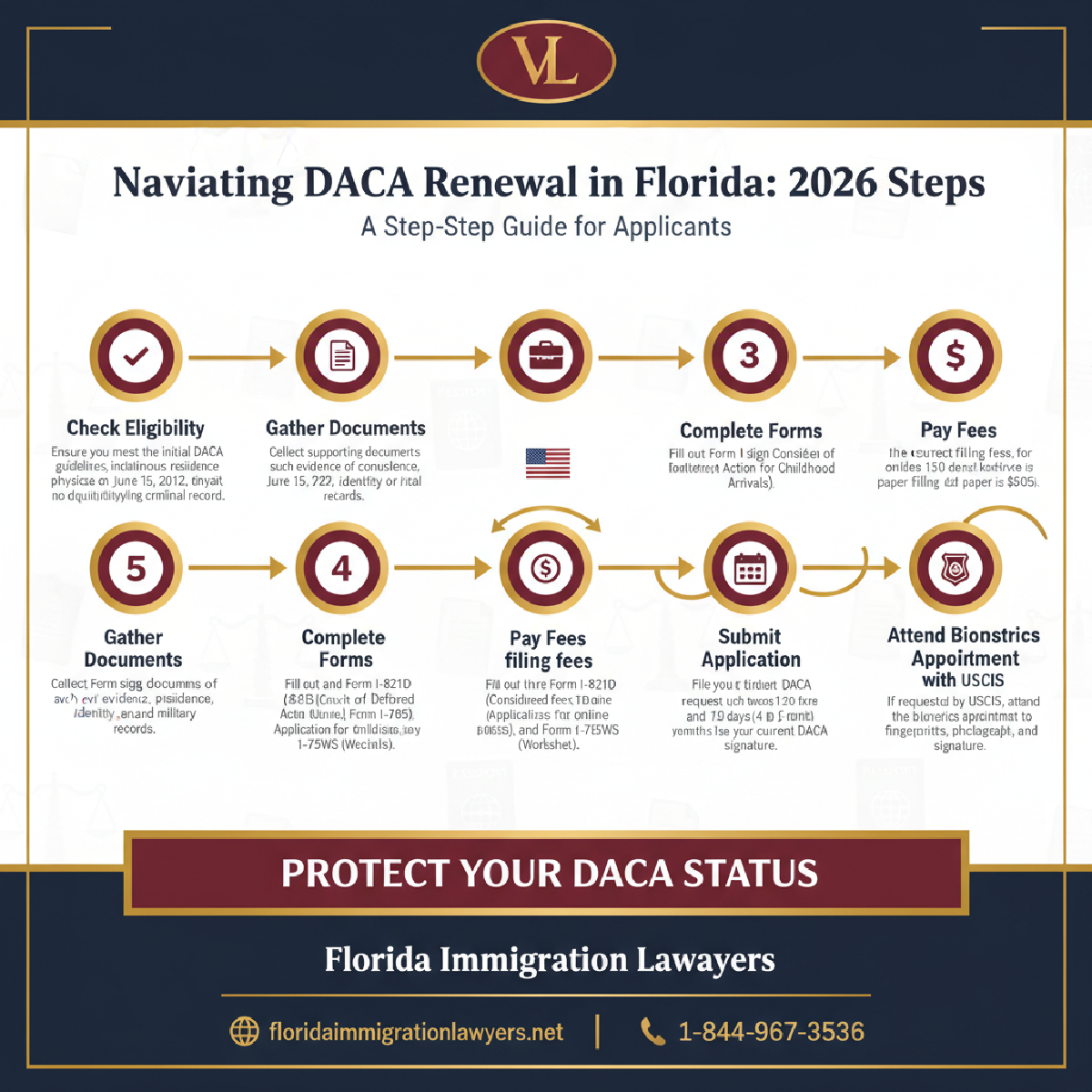
Renewing your DACA status is a critical step to maintain your protection and work authorization. The process requires careful attention to detail and adherence to USCIS guidelines. Here's a general step-by-step guide for DACA recipients in Florida:
-
Determine Your Eligibility for Renewal
You must meet the DACA eligibility requirements you met for your initial DACA request. This includes not having departed the U.S. without advance parole since August 15, 2012, and not having been convicted of a felony, a significant misdemeanor, or three or more other misdemeanors. You also must not pose a threat to national security or public safety. USCIS checks these criteria for every renewal.
-
Gather Required Documents
Collect all necessary supporting documentation. This typically includes copies of your previous DACA approval notices, your current Employment Authorization Document (EAD), and any documents proving continuous residence or addressing any criminal history since your last DACA approval. A comprehensive checklist is provided below.
-
Complete Forms I-821D, I-765, and I-765 Worksheet
You will need to complete Form I-821D, Consideration of Deferred Action for Childhood Arrivals, Form I-765, Application for Employment Authorization, and the I-765 Worksheet. Ensure all sections are filled out accurately and completely. Any errors or omissions can lead to delays or rejection. Always use the most current forms available on the USCIS website.
-
Prepare Your Filing Fees
The DACA renewal process involves specific filing fees. These fees are subject to change, so always check the official USCIS website for the most current amounts. You generally submit a single payment covering both the I-821D and I-765 applications. Fee waivers are rarely granted for DACA renewals, but you can explore fee exemptions if applicable.
-
Submit Your Application Packet
Mail your complete application packet, including all forms, supporting documents, and fees, to the appropriate USCIS Lockbox Facility. The correct Lockbox address depends on where you live. For Florida residents, it's typically the Chicago Lockbox. Double-check the USCIS website for the precise mailing address to avoid misdirection.
-
Attend Biometrics Appointment (If Required)
After USCIS receives your application, you may receive a notice to appear for a biometrics appointment at an Application Support Center (ASC). This appointment is for collecting your fingerprints, photograph, and signature. It is a mandatory step in the process. Ensure you attend on time and bring the required identification.
-
Monitor Your Case Status
You can track the status of your DACA renewal application online using the receipt number provided by USCIS. Keep all correspondence from USCIS, including receipt notices and requests for additional evidence. If you move, promptly update your address with USCIS to ensure you receive all important communications.
Essential DACA Renewal Documents Checklist for Florida Applicants
Gathering the correct documents is crucial for a successful DACA renewal. Missing items can cause significant delays. Here’s a general checklist of what you should prepare:
- ✅ Completed Form I-821D: Consideration of Deferred Action for Childhood Arrivals.
- ✅ Completed Form I-765: Application for Employment Authorization.
- ✅ Completed Form I-765 Worksheet: Required for DACA-based EAD applications.
- ✅ Two Passport-Style Photos: Taken within 30 days of filing.
- ✅ Copy of Your Current EAD Card: Both front and back.
- ✅ Copy of Your Last DACA Approval Notice (Form I-797): If available.
- ✅ Copy of Your Previous DACA Approval Notice: From your initial approval.
- ✅ Proof of Continuous Residence: Documents showing you have resided in the U.S. since your last DACA approval, especially if you have had any issues or gaps. Examples include utility bills, school records, employment records, or bank statements.
- ✅ Evidence of Physical Presence on August 15, 2012: If not previously submitted or if there are new concerns.
- ✅ Evidence of Entry Before Age 16: If not previously submitted.
- ✅ Proof of Education or Military Service: High school diploma, GED certificate, transcripts, or military discharge papers, if applicable.
- ✅ Certified Court Dispositions: If you have had any arrests, charges, or convictions since your last DACA approval, regardless of how minor you perceive them to be.
- ✅ Payment for Filing Fees: Check or money order payable to 'U.S. Department of Homeland Security' for the correct amount.
DACA Processing Timelines and Expectations for 2026
Understanding processing times is vital for DACA recipients in Florida to avoid gaps in employment authorization. USCIS processing times can vary significantly based on workload, policy changes, and national security considerations. While USCIS aims for efficient processing, delays can occur.
Typically, USCIS recommends filing your DACA renewal application 120 to 150 days before your current DACA and EAD expire. This timeframe generally allows for sufficient processing without a lapse in your work authorization. However, it is always wise to apply as early as possible within this window.
You can check estimated processing times on the USCIS website for Form I-821D and Form I-765. These times are updated regularly and can provide a general idea of what to expect. Keep in mind that these are estimates, and individual cases may take longer or shorter.
Factors that can influence your DACA renewal timeline include: the volume of applications USCIS receives, whether your case requires a Request for Evidence (RFE), and potential background check delays. If you receive an RFE, respond promptly and thoroughly to prevent further delays. Staying updated on USCIS DACA news can provide insights into current processing trends.
For DACA recipients in Coral Springs and other Florida cities, a lapse in your employment authorization can have serious consequences, including job loss. Therefore, proactive planning and timely submission are your best defense against processing delays. We recommend keeping copies of everything you submit.
DACA Renewal Cost Factors and Fee Breakdown in Florida
Renewing your DACA status comes with specific governmental filing fees. These fees are set by USCIS and are subject to change. It is crucial to verify the current fees directly on the USCIS website before submitting your application. As of our last update, the total fee typically covers both the Form I-821D and Form I-765.
The fee structure generally includes the biometric services fee and the application fee for the Employment Authorization Document (EAD). USCIS requires a single payment for both components. You can pay by money order, personal check, cashier's check, or by credit card using Form G-1450, Authorization for Credit Card Transactions.
While USCIS sometimes offers fee waivers for other immigration benefits, DACA renewals generally do not qualify for a fee waiver. However, in very limited circumstances, you may be eligible for a fee exemption. These exemptions are rare and require specific criteria, such as being homeless, having a severe disability, or having an income below 150% of the federal poverty guidelines and unable to pay. It is best to consult with an attorney to assess if you qualify for an exemption.
Beyond the government filing fees, you may also incur other costs associated with your DACA renewal. These can include expenses for passport-style photos, postage, and potentially legal fees if you choose to work with an immigration attorney. While not mandatory, legal assistance can be invaluable in ensuring your application is complete and accurate.
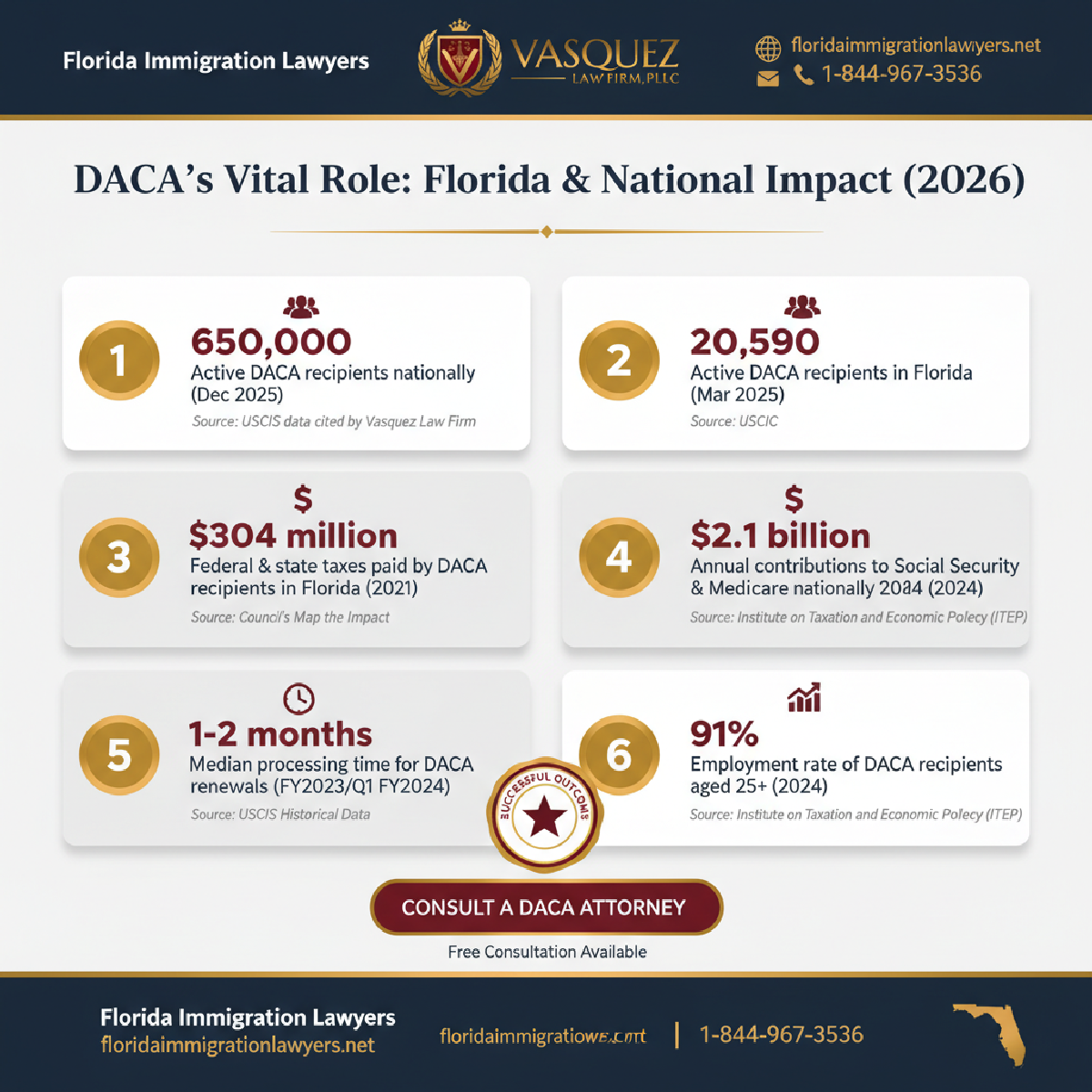
Investing in legal guidance from Florida Immigration Lawyers can save you time, stress, and potential pitfalls, especially with the intricate nature of DACA news 2026. Our firm offers transparent fee structures for DACA renewal assistance. We can help you understand all cost factors involved in your case.
Do not navigate this process alone. Contact Florida Immigration Lawyers today to ensure your DACA renewal is handled with precision and care. We serve clients across Florida, including Coral Springs, and are here to help.
Avoiding Common DACA Renewal Mistakes in Florida
The DACA renewal process, while seemingly straightforward, is prone to errors that can lead to significant delays or even denial. Avoiding these common mistakes is crucial for DACA recipients in Florida:
-
Filing Too Late or Too Early
Submitting your renewal application outside the recommended 120-150 day window before expiration can be problematic. Filing too late risks a lapse in your work authorization, while filing too early might result in rejection. Always adhere to USCIS guidelines for timely submission.
-
Incomplete or Inaccurate Forms
Even minor omissions or errors on Forms I-821D, I-765, or the I-765 Worksheet can trigger a Request for Evidence (RFE) or outright denial. Double-check every field for accuracy, ensuring all questions are answered completely and truthfully. Reviewing your previous applications can help maintain consistency.
-
Using Outdated Forms
USCIS frequently updates its forms. Using an old version can lead to rejection. Always download the latest forms directly from the USCIS website before preparing your application. This ensures compliance with current requirements.
-
Incorrect Filing Fees
Filing with the wrong fee amount is a common reason for rejection. Fees can change, so verify the exact amount on the USCIS website and ensure your payment method (check, money order, credit card) is correctly prepared. Do not send cash.
-
Failure to Disclose Arrests or Convictions
Even minor interactions with law enforcement, arrests without charges, or expunged convictions must be disclosed. Failing to provide certified court dispositions for any criminal history since your last DACA approval can be detrimental. USCIS conducts thorough background checks.
-
Lack of Supporting Documentation
While DACA renewals often require less new documentation than initial applications, you must still provide copies of your current EAD, approval notices, and any documents demonstrating continuous residence or addressing new eligibility concerns. Ensure all required documents from the checklist are included.
-
Mailing to the Wrong Address
USCIS has specific Lockbox Facilities for different application types and states of residence. Sending your application to the incorrect address will cause significant delays. Always verify the correct mailing address on the USCIS website for DACA renewals from Florida.
-
Not Updating Address with USCIS
If you move to a new address, you must inform USCIS within 10 days using Form AR-11. Failure to do so can result in you missing important notices, RFEs, or even your biometrics appointment notice, which can jeopardize your application.
-
Assuming Automatic Renewal
DACA status is not automatically renewed. It is a temporary benefit that requires proactive application and approval every two years. Never assume your status will extend without your active participation in the renewal process.
-
Not Consulting Legal Counsel for Complex Cases
If you have any criminal history, travel history outside the U.S. without advance parole, or other complex issues, attempting to renew DACA without legal guidance is risky. An attorney can help navigate these complexities and present your case effectively.
When to Seek Legal Counsel for Your DACA Case in Florida
While some DACA renewals may seem straightforward, certain situations warrant the immediate attention of an experienced immigration lawyer. The intricacies of daca news 2026 and the evolving legal landscape make professional guidance invaluable. Florida Immigration Lawyers are here to assist you.
You should consider contacting our firm if you:
- Have any criminal history: Even minor arrests, charges, or convictions, including traffic offenses beyond a simple ticket, can impact your DACA eligibility. A lawyer can assess the severity and help you provide the necessary documentation.
- Traveled outside the U.S. without Advance Parole: Unauthorized travel can lead to automatic denial of DACA renewal and potential inadmissibility issues.
- Have a gap in your continuous residence: If there's any question about your continuous residence in the U.S. since your last DACA approval, an attorney can help you gather compelling evidence.
- Received a Request for Evidence (RFE) or Notice of Intent to Deny (NOID): These notices indicate that USCIS requires more information or intends to deny your application. A lawyer can help you craft a comprehensive and timely response.
- Are unsure about any aspect of the DACA renewal process: The peace of mind that comes from professional assistance is invaluable, especially with the stakes involved.
- Are considering other immigration pathways: DACA provides temporary relief, but an attorney can discuss potential long-term solutions, such as family-based immigration, employment-based visas, or asylum, for which you may be eligible.
Our attorneys at Florida Immigration Lawyers understand the unique challenges faced by Dreamers in Coral Springs and across Florida. We stay abreast of the latest USCIS DACA news and legal developments to provide you with informed and compassionate representation. Our goal is to protect your future and help you navigate the complexities of U.S. immigration law, including deportation defense and citizenship processes. We can also provide guidance on general immigration matters.
Frequently Asked Questions About DACA in 2026
What will happen to DACA recipients in 2026?
As of early 2026, DACA recipients are generally able to continue renewing their deferred action and employment authorization documents. However, the program remains subject to ongoing legal challenges, primarily from a lawsuit in Texas that has halted new applications. The long-term future of DACA is uncertain and could be impacted by future court rulings or legislative action. It is crucial for recipients to stay informed, particularly regarding Department of Justice updates, and to renew their DACA status diligently to maintain their protections. Florida Immigration Lawyers closely monitors these developments to advise our clients effectively.
Can DACA recipients be in Florida?
Yes, DACA recipients can legally reside in Florida. The DACA program grants eligible individuals deferred action from deportation, meaning they are not considered to be in an unlawful status for immigration enforcement purposes while their DACA is active. This allows DACA recipients to live, work with an EAD, and attend school in Florida, just like in any other state. Florida is home to a significant DACA population, and these individuals contribute greatly to our state's economy and culture. However, DACA does not grant lawful immigration status or a path to U.S. citizenship.
Why is DACA taking so long in 2026?
DACA processing times in 2026 can vary due to several factors. These include the sheer volume of applications USCIS receives, staffing levels at processing centers, and the complexity of individual cases. Legal challenges also introduce uncertainty, sometimes leading to policy adjustments that can affect processing. Additionally, background checks and requests for additional evidence can extend timelines. USCIS processing times are always estimates, and it's essential for applicants to file well in advance of their expiration dates and to respond promptly to any USCIS requests. Consulting an attorney can help expedite issues if delays become excessive.
Is USCIS accepting new DACA applications?
Generally, no. As of early 2026, U.S. Citizenship and Immigration Services (USCIS) is generally not accepting initial DACA applications from individuals who have never before received DACA. This is due to federal court orders that have placed an injunction on the program's ability to process new requests. USCIS is primarily only processing DACA renewal applications for individuals who have previously been granted deferred action. The legal landscape on this issue is dynamic, so it is vital to check the official USCIS website regularly for the most current policy updates regarding new DACA applications.
What are the DACA eligibility requirements for renewal?
To renew DACA, you must have previously been granted DACA. You must not have departed the United States without advance parole on or after August 15, 2012. You must also not have been convicted of a felony, a significant misdemeanor, or three or more other misdemeanors. Additionally, you must not pose a threat to national security or public safety. Your continuous residence in the U.S. since your last DACA approval is also a key factor. An attorney can help you assess if you meet all current DACA eligibility requirements.
How can I check my DACA case status?
You can check your DACA case status online using the receipt number provided by USCIS after you submit your application. Visit the USCIS Case Status Online tool and enter your 13-character receipt number. This tool will provide you with updates on the progress of your application. It is important to keep your receipt notice safe and to regularly check your status for any changes or requests for further action. If you have concerns about delays, contacting Florida Immigration Lawyers can provide clarity.
What happens if my DACA expires before I renew?
If your DACA expires before your renewal is processed, you will lose your deferred action status and your employment authorization. This means you will no longer be protected from deportation and will lose your legal ability to work in the U.S. This can have severe consequences, including job loss and increased risk of immigration enforcement action. It is critical to file your renewal application within the recommended timeframe of 120 to 150 days before expiration to avoid any lapse in your status. Prompt action is always advised.
Can DACA recipients apply for a green card?
DACA itself does not provide a direct pathway to a green card or U.S. citizenship. However, some DACA recipients may be eligible for a green card through other immigration avenues, such as marriage to a U.S. citizen, family-sponsored petitions, or employment-based petitions, if they meet specific criteria. The process can be complex, often requiring legal guidance, especially concerning lawful entry or advance parole. Consulting with an experienced immigration attorney at Florida Immigration Lawyers is essential to explore any potential pathways to permanent residency beyond DACA.
Are there any new legislative efforts for Dreamers in 2026?
Legislative efforts to provide a permanent solution for Dreamers, including DACA recipients, are ongoing but have faced significant political hurdles. While there may be discussions and proposals in Congress in 2026, the passage of comprehensive immigration reform or a standalone Dream Act remains uncertain. Advocates continue to push for a pathway to citizenship for these individuals. It is important for DACA recipients in Florida to stay informed about these developments, as any legislative change could dramatically impact their future. Florida Immigration Lawyers monitors federal legislative news for our clients.
About Florida Immigration Lawyers
Florida Immigration Lawyers is a leading immigration law firm dedicated to serving individuals and families across the entire state of Florida. With offices located strategically, we provide comprehensive legal services to immigrants and their loved ones, ensuring their rights are protected and their voices are heard. We are deeply committed to offering empathetic and effective legal representation.
Our experienced attorneys specialize in a wide range of immigration matters, including DACA renewals, family-based visas, business immigration, asylum claims, deportation defense, and citizenship applications. We understand the complexities of immigration law and strive to provide personalized solutions tailored to your unique situation. We also offer robust general immigration services.
Why choose Florida Immigration Lawyers? We offer free consultations to discuss your case, are available 24/7 to answer your urgent questions, and have a proven track record of success. Our bilingual team ensures clear communication and culturally sensitive support for all our clients. Your future is our priority.
Contact us today for a free consultation: 1-844-967-3536 or visit our website: https://www.floridaimmigrationlawyers.net. Let us be your trusted legal partner in Florida.
This article is for general informational purposes only and does not constitute legal advice. Immigration laws change frequently. For advice specific to your situation, please consult with a qualified immigration attorney.
The landscape of DACA in Florida for 2026 requires vigilance and informed action. Do not jeopardize your future by navigating this complex process alone. Florida Immigration Lawyers is here to provide the expert legal guidance you need.
Protect your DACA status and secure your future. Call us today at 1-844-967-3536 for a free, confidential consultation. Our dedicated team is ready to help you in Coral Springs and across Florida.
Do Not Navigate This Process Alone
Our experienced immigration attorneys are ready to fight for you. Get a free, confidential consultation today.
Se Habla Español
Frequently Asked Questions
Florida Immigration Lawyers
Immigration Attorney | Founder, Vasquez Law Firm
U.S. Air Force veteran and immigration attorney with thousands of cases resolved. J.D., NCCU School of Law. AILA member. Admitted to the 4th, 5th, and 11th Circuit Courts.
Available 24/7 - Free Evaluations
Related Legal Services
Our Florida immigration attorneys can help you with experienced immigration attorneys, business immigration and asylum protection. Call today at 1-844-967-3536 for a free consultation.
Related Links
Related Topics
Free Legal Consultation
Discuss your case with our experienced attorneys. We're available 24/7.
Se Habla Español - Estamos aquí para ayudarle.
Related Articles
Stokes Interview: Navigating Marriage Fraud in Florida
A Stokes interview is a specialized, separate interview conducted by USCIS when there are suspicions of marriage fraud in a green card application. This rigorous process involves individual questioning of spouses, focusing on inconsistencies in their testimonies to determine the authenticity of their marital bond. For couples in Florida, navigating this high-stakes interview requires meticulous preparation, extensive documentation, and often the strategic guidance of an experienced immigration lawyer. Understanding the process, preparing for detailed questions, and presenting a strong case are crucial for overcoming marriage fraud allegations and securing your immigration future. Florida Immigration Lawyers stands ready to assist you.
Immigration Attorney Gainesville: North Florida Legal Help
For those in Gainesville, Alachua County, and throughout North Florida, navigating U.S. immigration law requires expert guidance. An experienced immigration attorney can simplify complex processes, from family-based petitions and employment visas to critical asylum claims and deportation defense. This comprehensive guide outlines the essential services provided by an immigration attorney, details necessary documentation, clarifies processing timelines, and discusses associated costs. We also highlight common mistakes to avoid and crucial scenarios where legal counsel is indispensable. Florida Immigration Lawyers serves all of Florida, including Gainesville and St. Petersburg, providing dedicated legal support to help you achieve your immigration goals. Contact us for a free consultation to discuss your specific needs.
Military Naturalization Expedited at Florida Bases
Explore expedited military naturalization processes for service members at Florida bases like MacDill. Learn about eligibility, steps, and common mistakes. Contact Florida Immigration Lawyers for a free consultation.
Protect Yourself from Immigration Scams in Florida
Learn how to protect against immigration scams in Florida, focusing on St. Petersburg. This guide covers identifying scams, verifying credentials, and getting legal help. Call Florida Immigration Lawyers at 1-844-967-3536 for assistance.
