Canada Immigration News Today: Florida Updates & Legal Guidance
Canadian citizens in Florida need to stay informed on U.S. immigration laws and news. While often enjoying visa-free short visits, extended stays or work require specific U.S. visas like TN, L-1, E-2, or family-based options. Understanding the step-by-step application process, essential documentation, and potential costs is crucial. Common mistakes, such as overstaying or working without authorization, can lead to severe consequences. Florida Immigration Lawyers provides comprehensive assistance for Canadians navigating these complex pathways in Florida. Contact us for a free consultation to ensure compliance and pursue your immigration goals.
What is the latest Canada immigration news today impacting Florida? While Canada's immigration policies primarily affect those moving to Canada, changes in U.S. immigration policy and travel advisories can significantly impact Canadian citizens residing in or traveling to Florida. Staying updated on these developments is crucial for maintaining legal status and understanding your options in the U.S.
- U.S. immigration laws for Canadians are distinct from Canadian policies.
- Canadians often have specific non-immigrant visa options for extended stays.
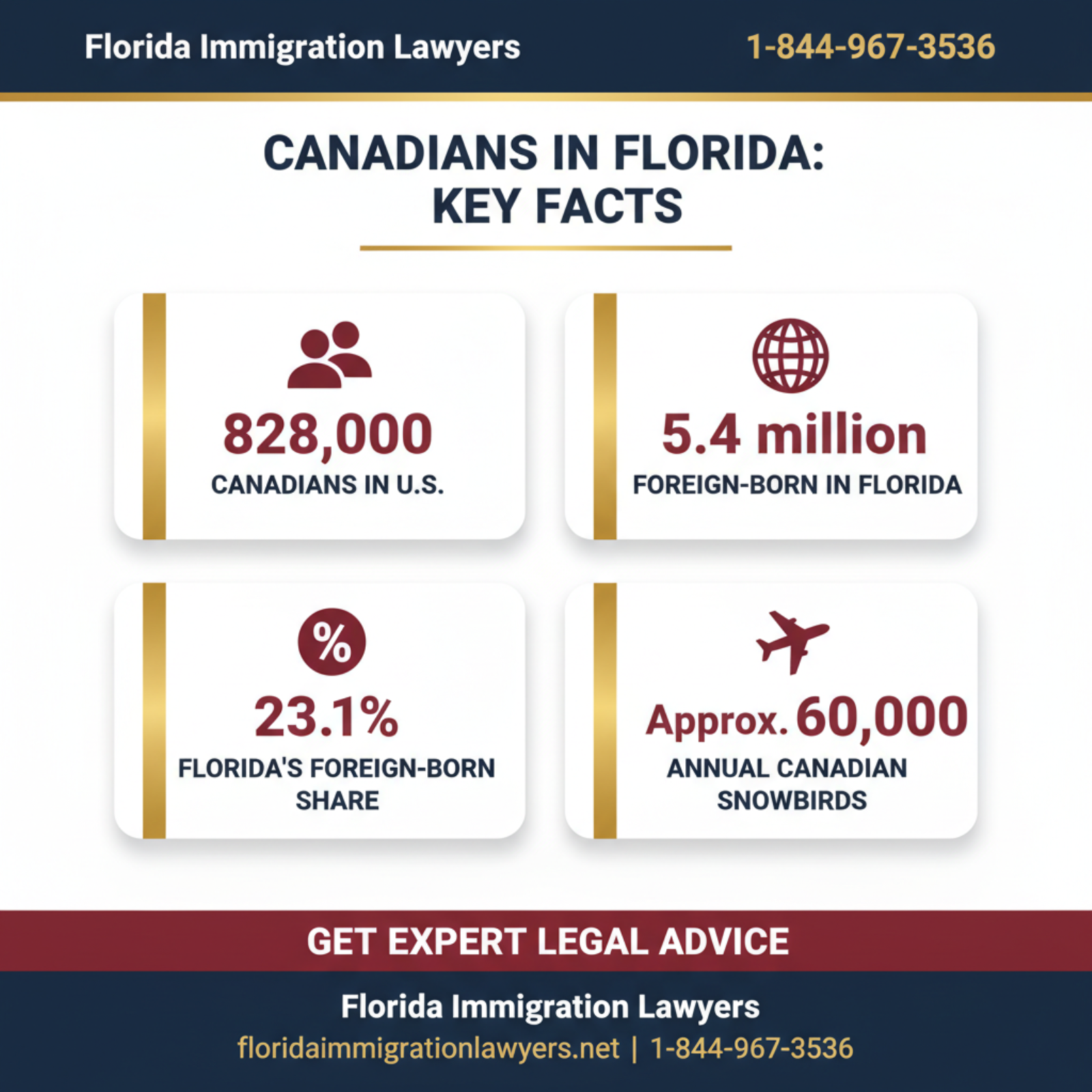
- Florida's unique demographics mean many Canadians live or visit here.
- Consulting an attorney helps navigate complex U.S. immigration rules.
Are you a Canadian citizen living in, working in, or frequently visiting Florida? Perhaps you're considering a more permanent move to the Sunshine State. Understanding the latest immigration news and how it impacts your status in the United States is vital. Navigating the complexities of U.S. immigration law, especially with ongoing changes, can be challenging and overwhelming.
This comprehensive guide will explore current immigration trends relevant to Canadians in Florida, clarify common pathways for extended stays, and highlight critical legal considerations. We will discuss the types of visas available, the application process, and potential pitfalls to avoid. For personalized advice and to ensure your compliance, call Florida Immigration Lawyers at 1-844-967-3536 for a free consultation. Our experienced team is ready to assist you.
Understanding U.S. Immigration Rules for Canadian Citizens in Florida
For many Canadian citizens, the thought of moving to Florida or extending a stay is appealing. However, U.S. immigration law treats Canadian citizens differently than those from other countries. While Canadians generally enjoy visa-free entry for tourism or business visits, longer-term residency or employment requires specific U.S. visas or immigration pathways.
Recent canada immigration news today often focuses on Canada's internal policies. However, it is essential for Canadian residents in Florida to monitor U.S. immigration policy changes. These changes can affect everything from visa categories to border crossing procedures. Our firm, Florida Immigration Lawyers, regularly tracks these developments to provide timely advice.
Common U.S. Visa Options for Canadians in Florida
Canadians seeking to live, work, or study in Florida for an extended period typically need to apply for a specific non-immigrant or immigrant visa. The choice of visa depends entirely on your purpose and qualifications. Common options include:
- B-1/B-2 Visas (Visitor Visas): While Canadians do not typically need a visa stamp for short visits, the B-1 (business) and B-2 (tourism) categories define permissible activities and duration. Generally, Canadians can stay for up to six months without a formal visa application. However, it's crucial not to overstay your authorized period, as this can have severe consequences for future entries.
- TN Visas (NAFTA Professionals): This highly sought-after non-immigrant visa is specifically for Canadian and Mexican citizens who qualify as professionals under the North American Free Trade Agreement (NAFTA), now USMCA. It allows qualified individuals to work in specific professions in the U.S., often for employers in Florida. Eligibility requires a job offer in a designated profession and specific educational or licensure credentials.
- L-1 Visas (Intracompany Transferees): For Canadian executives, managers, or specialized knowledge employees transferring to a U.S. office of their same company, the L-1 visa is a viable option. Many international companies have branches or headquarters in Florida, making this a common pathway. This visa facilitates internal transfers within multinational corporations.
- E-2 Visas (Treaty Investors): Canadian citizens who invest a substantial amount of capital in a U.S. business, including those in Florida, may be eligible for an E-2 treaty investor visa. This visa allows investors and their employees to live and work in the U.S. The investment must be "substantial" and create jobs, not just be a marginal investment.
- Family-Based Immigration: If you have a qualifying U.S. citizen or lawful permanent resident family member, you may be eligible for a family-sponsored immigrant visa. This is a common path for Canadians seeking permanent residency. These visas are subject to annual quotas and can involve long waiting periods. Learn more about your options for family immigration.
Staying informed about these options is critical. For current U.S. immigration policies and requirements, always refer to official sources like the U.S. Citizenship and Immigration Services (USCIS) website. They provide the most up-to-date information on forms, fees, and processing procedures relevant to immigration to the U.S.
Addressing Common Questions for Canadians in Florida
Many Canadians have specific questions about their ability to live or travel in Florida. Let's clarify some common inquiries:
- Can a Canadian move to Florida? Yes, a Canadian can move to Florida, but it requires obtaining the appropriate U.S. visa or green card. Simply driving across the border and deciding to stay permanently is not permissible under U.S. law. You must qualify for one of the immigration pathways discussed above.
- How long can Canadians stay in Florida? For tourism or business visits (B-1/B-2 status), Canadians are typically admitted for up to six months. However, the exact duration is determined by the Customs and Border Protection (CBP) officer at the port of entry. For other visa types, the stay is determined by the visa's validity and purpose.
- Is Canada warning travelers going to the U.S. about new registration requirements? Both the Canadian and U.S. governments issue travel advisories. It is always prudent for Canadian citizens to check travel.state.gov and official Canadian government travel sites for any new entry requirements or advisories before traveling to the U.S. This ensures you are prepared for any changes in border procedures.
- Is Canada accepting immigrants from the USA? While our focus is on U.S. immigration for Canadians, it's worth noting that Canada has its own distinct immigration system. Individuals from the U.S. interested in moving to Canada would need to apply through Canadian immigration programs, such as Express Entry, which operate independently of U.S. immigration laws.
Step-by-Step Guide to Extended Stays for Canadian Citizens in Florida
If you are a Canadian citizen planning an extended stay or seeking immigration to Florida, understanding the process is paramount. Each visa category has specific requirements, but a general framework applies. This guide outlines the typical steps involved, emphasizing the need for precision.
- Determine Your Eligibility and Visa Category: Your first step is to identify the most appropriate visa for your situation. Our Florida immigration lawyer team can help you assess your options and determine the best pathway for your goals. This initial assessment is crucial to avoid applying for an unsuitable visa.
- Gather Required Documentation: Once you've chosen a visa, meticulously collect all necessary documents. Specific lists vary greatly by visa type, and accuracy is key. Ensure all documents are current and meet USCIS or Department of State specifications.
- Complete and File Petitions (if applicable): For many employment-based or family-based visas, a U.S. employer or family member must file a petition on your behalf with USCIS. This typically involves forms like Form I-129 for non-immigrant workers or Form I-130 for family members. The process often begins with the filing of Form I-130, Petition for Alien Relative, for family-based cases.
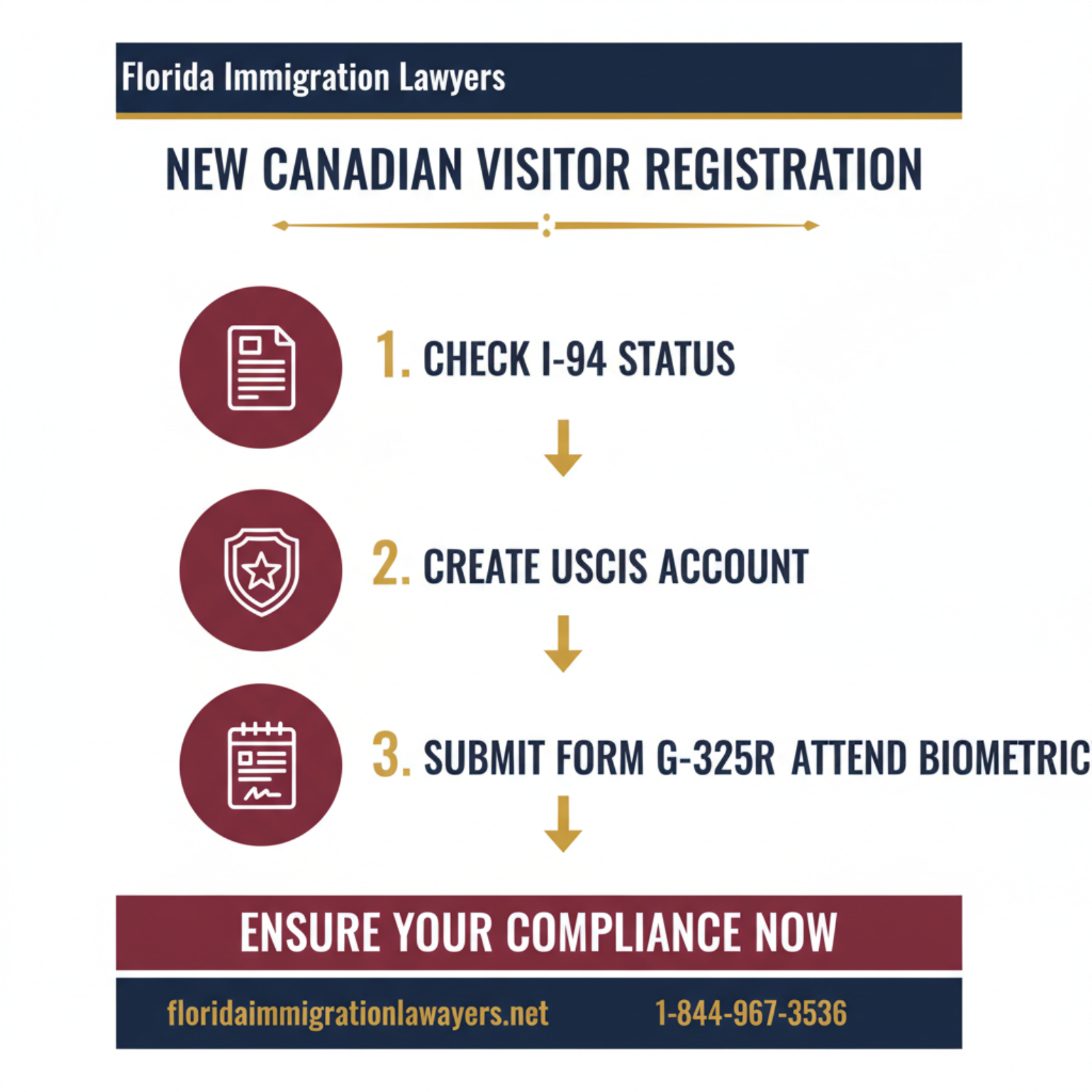
- Attend Biometrics Appointment: If required, you will receive a notice to attend a biometrics appointment at an Application Support Center (ASC). This involves fingerprinting and photography for background checks and security clearances. In Florida, ASCs are located in cities like Orlando, Tampa, and Miami, making access convenient for residents across the state.
- Attend Visa Interview (Consular Processing): For most visas, you will need to attend an interview at a U.S. consulate or embassy in Canada. This is a critical step where a consular officer will review your application and determine your eligibility. Be prepared to answer questions about your intentions, qualifications, and ties to Canada.
- Receive Visa and Enter the U.S.: If your interview is successful, your visa will be stamped in your passport. You can then travel to the U.S. and present your visa at a port of entry. Customs and Border Protection (CBP) officers make the final decision on admission and duration of stay.
- Maintain Status and Compliance: Once in Florida, it is crucial to adhere to the terms of your visa. This includes not overstaying your authorized period, only engaging in permitted activities, and notifying USCIS of any address changes using Form AR-11. Failure to maintain status can lead to serious consequences, including deportation defense issues and future bars to entry. Understanding 8 U.S.C. § 1227 (INA 237) related to deportable aliens is essential.
Navigating these steps requires precision and a thorough understanding of immigration law. For comprehensive support, consider consulting with a knowledgeable Tallahassee immigration assistance provider like Florida Immigration Lawyers. Our firm serves clients throughout Florida, including the Tallahassee area, ensuring you have expert guidance every step of the way.
Essential Document Checklist for Canadian Immigrants to Florida
Preparing an accurate and complete set of documents is one of the most critical aspects of any U.S. immigration application. Missing or incorrect documentation can cause significant delays or even lead to denial. While specific requirements vary by visa type, here is a general checklist of commonly requested items for Canadian citizens Florida bound. Always provide certified copies where originals are not explicitly requested.
- Valid Canadian Passport (with at least six months validity beyond your intended stay)
- Birth Certificate (original or certified copy, translated if not in English)
- Marriage Certificate (if applicable, original or certified copy, translated if not in English)
- Educational Degrees, Diplomas, and Transcripts (with evaluations if foreign credentials)
- Professional Licenses or Certifications (for TN or L-1 visas, proving professional qualifications)
- Letters of Employment from current and previous employers (detailing job duties, salary, and employment dates)
- Detailed Resume or Curriculum Vitae (highlighting relevant experience and qualifications)
- Financial Statements (bank statements, tax returns, proof of assets, demonstrating financial stability)
- Proof of U.S. Employer Sponsorship (e.g., Form I-129, Petition for a Nonimmigrant Worker, or Form I-130, Petition for Alien Relative, approval notices)
- Proof of Investment (for E-2 visas, including a comprehensive business plan, evidence of funds transfer, and source of funds documentation)
- Police Certificates/Criminal Record Checks (from all countries of residence since age 16, for six months or more)
- Medical Examination Results (if required for immigrant visas, conducted by a USCIS-approved civil surgeon)
- Photographs (passport-style, meeting strict USCIS specifications regarding size, background, and facial expression)
- Any previous U.S. visa stamps or entry/exit records (Form I-94 records)
Always check the specific instructions for your visa category on the U.S. Department of State website or USCIS. An experienced Florida immigration lawyer can help you compile and review your documents to ensure everything is in order, minimizing the risk of RFEs or denials. They can also assist with properly completing forms, such as those governed by 8 CFR Part 204 for petitions.
Timeline and Processing Expectations for Canadians in Florida
The processing times for U.S. immigration applications can vary significantly, depending on the visa category, the specific USCIS service center or consulate, and current caseloads. It is important to have realistic expectations and plan accordingly, especially when considering a move to Florida in 2026.
Typical Processing Duration
- Non-Immigrant Visas (e.g., TN, L-1, E-2): These visas can sometimes be processed relatively quickly, especially if applying at a U.S. port of entry (for TN status) or through premium processing (for L-1). Standard processing at a U.S. consulate in Canada can range from a few weeks to several months.
- Family-Based Immigrant Visas: These often have the longest processing times, ranging from one to several years. This is due to annual quotas and priority date backlogs, especially for certain categories. The process involves USCIS petition approval, National Visa Center (NVC) processing, and a consular interview.
- Adjustment of Status: If you are already in the U.S. and eligible to adjust your status to a lawful permanent resident, processing times at Florida USCIS field offices (like Miami, Orlando, or Tampa) can also vary, typically from several months to over a year.
Factors Affecting Processing Times
Several factors can influence how long your application takes. These include the completeness of your application, timely responses to Requests for Evidence (RFEs), security checks by various agencies, and the volume of applications at a given time. Economic conditions or changes in immigration enforcement priorities can also impact processing.
While Canada immigration news today might not directly impact U.S. processing times, broader geopolitical events or changes in U.S. immigration policy can have indirect effects. Always refer to the official USCIS website for the most current processing times, which are updated regularly. Working with a dedicated Florida immigration lawyer can help you understand current timelines and prepare for potential delays, ensuring your application is as strong as possible.
Cost Factors and Fee Breakdown for U.S. Immigration
Pursuing U.S. immigration from Canada involves various costs beyond just travel expenses. These fees are subject to change by the U.S. government, so it's crucial to check current amounts on official government websites before filing. While we cannot provide exact figures due to their fluctuating nature, here's a breakdown of typical cost factors you should anticipate.
Government Filing Fees
- USCIS Petition Fees: These are paid when an employer or family member files a petition on your behalf (e.g., Form I-129, Petition for a Nonimmigrant Worker, or Form I-130, Petition for Alien Relative). These fees can range from a few hundred to over a thousand dollars depending on the petition type.
- Visa Application Fees (MRV Fee): Paid to the Department of State for processing your visa application at a consulate. This is typically a non-refundable fee for the consular interview.
- Biometrics Fees: A separate fee for the fingerprinting and background check appointment at an Application Support Center. This fee covers the cost of identity verification and security checks.
- Immigrant Visa Fee: Required for those approved for permanent residency before entering the U.S. This fee is paid to USCIS after your immigrant visa is issued by the consulate.
- Adjustment of Status Fee: If applying for a green card while in the U.S., this consolidated fee covers the application (Form I-485), biometrics, and often includes the fees for work authorization (Form I-765) and travel permits (Form I-131).
Additional Potential Costs
- Medical Examination Fees: If required for immigrant visas, these are paid directly to authorized civil surgeons. The cost can vary by provider and location in Florida.
- Translation Services: If any of your supporting documents are not in English, certified translations will be needed. These services incur separate costs.
- Educational Credential Evaluations: For certain employment-based visas (like TN), you may need an independent evaluation of your foreign academic credentials to confirm their U.S. equivalency.
- Travel Expenses: Costs for travel to consular interviews in Canada, biometrics appointments in Florida, or to the U.S. itself should be factored into your budget.
- Legal Fees: Engaging an experienced Florida immigration lawyer is an investment in ensuring your application is accurate, complete, and submitted effectively. While not mandatory, legal representation significantly increases your chances of success and can prevent costly mistakes, saving you time and money in the long run. Our firm offers transparent fee structures and free initial consultations.
Remember that these government fees are generally non-refundable, even if your application is denied. It is essential to budget carefully and ensure you meet all financial requirements for your chosen visa category. Consulting with a legal professional can help you understand the full financial scope.
Do not navigate this complex process alone. Contact Florida Immigration Lawyers today to discuss your specific situation and learn how our expertise can benefit you.
Common Mistakes Canadian Citizens Make in U.S. Immigration
Navigating U.S. immigration can be fraught with potential missteps, especially for Canadian citizens accustomed to easier cross-border travel. Avoiding these common mistakes is crucial for a successful outcome and protecting your ability to live or visit Florida. Being proactive and informed can prevent significant future complications.
- Overstaying Your Authorized Period: Even by a single day, overstaying a B-1/B-2 visitor stay can lead to accrual of unlawful presence. This can result in future bars to re-entry (3-year or 10-year bars), making it difficult or impossible to return to Florida or the U.S. in the future. Always check your I-94 record for your authorized departure date.
- Working Without Proper Authorization: Engaging in employment without a specific work visa (like TN, L-1, or H-1B) is a serious violation of U.S. immigration law. This can lead to deportation, future visa denials, and a ban from the U.S. Always ensure you have the correct authorization before accepting any job in Florida.
- Misrepresenting Your Intentions at the Border: When entering the U.S., always be truthful about your purpose of visit. Stating you are visiting for tourism while secretly planning to work or reside permanently can lead to immediate denial of entry, cancellation of your visa (if you have one), and a ban from the U.S. This falls under INA Section 212(a)(6)(C)(i) for misrepresentation.
- Failing to Disclose Criminal History: Any past criminal convictions, no matter how minor, must be disclosed accurately on visa applications and at the border. Failure to do so can be considered fraud and result in severe immigration consequences, including permanent ineligibility.
- Submitting Incomplete or Incorrect Documentation: An application with missing forms, incorrect information, or insufficient supporting documents will almost certainly be delayed, receive a Request for Evidence (RFE), or be denied. This wastes valuable time and money. Accuracy and thoroughness are paramount.
- Ignoring Changes in Immigration Law: U.S. immigration laws and policies, including those affecting canada immigration news today, are dynamic. Failing to stay informed about updates can lead to non-compliance or missed opportunities. For example, changes to the H-1B lottery or green card processing can impact many.
- Assuming Canadian Rules Apply: Many Canadians mistakenly believe that their ease of travel means easy immigration. U.S. immigration law is entirely separate and far more stringent for long-term stays or residency. Do not assume your Canadian citizenship grants you automatic rights to live or work in the U.S.
- Not Seeking Legal Counsel: Attempting to navigate complex visa applications or immigration challenges without the guidance of an experienced Florida immigration lawyer significantly increases the risk of errors and unfavorable outcomes. An attorney can spot potential issues before they become problems.
- Not Updating Address with USCIS: If you are in the U.S. on a non-immigrant visa and move within Florida (e.g., from Tallahassee to Miami), you are generally required to notify USCIS of your new address within 10 days using Form AR-11. Failure to do so can result in fines or even jail time under 8 U.S.C. § 1305 (INA 265).
- Lack of Financial Preparedness: Not demonstrating sufficient financial means to support yourself and your dependents in the U.S. can lead to visa denial. This is particularly relevant for investor visas or if you are not sponsored by an employer.
- Improperly Using ESTA or Visa Waiver Program: While Canadians don't use ESTA, the principle applies: using a visitor status (B-1/B-2) with an intent to immigrate is considered visa fraud. Always match your intent with your visa type.
These mistakes can have lasting negative impacts on your ability to live, work, or even visit the U.S. in the future. Protecting your immigration future requires diligence and professional guidance from a trusted legal partner.
When to Call a Lawyer for Your Florida Immigration Needs
While some immigration processes appear straightforward, the reality is often complex and filled with legal nuances. Knowing when to seek professional legal assistance can be the difference between success and significant challenges. Our Florida Immigration Lawyers are here to help, offering expert guidance tailored to your specific situation.
Specific Scenarios Requiring Legal Help:
- Complex Visa Applications: If your situation doesn't fit a standard category, or if you have a unique professional background requiring a specialized visa like an O-1 (Extraordinary Ability) or P visa (Athletes/Entertainers).
- Prior Denials or Immigration Issues: If you've previously been denied a visa, had an overstay, or faced any immigration violations. An attorney can help analyze the reasons for denial and strategize a new approach.
- Criminal History: Any criminal record, no matter how old or minor, can complicate your immigration case and requires expert legal review. Many waivers are available, but they require skilled advocacy.
- Deportation or Removal Proceedings: If you have received a Notice to Appear (NTA) in immigration court, immediate legal representation is critical for your deportation defense. Time is of the essence in these cases.
- Business Immigration: Establishing a business in Florida or transferring employees requires careful planning and compliance with complex business immigration laws. Explore our services for business immigration.
- Family Immigration Challenges: When family relationships are complex, or there are issues with petitions, an attorney can streamline the process and address any legal hurdles. This includes navigating preference categories and priority dates.
- Asylum Claims: If you are a Canadian citizen seeking asylum in the U.S. due to persecution, this is a highly specialized area requiring expert legal guidance. Learn more about asylum.
- Uncertainty About Eligibility: If you are unsure which visa pathway is best for you or if you meet the eligibility criteria for a specific visa. A lawyer can provide a clear assessment and recommend the most viable options.
- Path to Citizenship: When you are ready to pursue U.S. citizenship, an attorney can help you understand the naturalization process and ensure you meet all requirements, including residency and good moral character. Learn more about citizenship.
Warning Signs and Red Flags:
- Receiving a Request for Evidence (RFE) or Notice of Intent to Deny (NOID) from USCIS.
- Longer than expected processing times without clear explanation.
- Conflicting information from different sources or online forums.
- Feeling overwhelmed or confused by the complex forms and ever-changing requirements.
- Concerns about potential fraud or misrepresentation in your application history.
Our experienced team at Florida Immigration Lawyers provides comprehensive legal services for all aspects of U.S. immigration law, including family visas, employment visas, investor visas, naturalization and citizenship applications, and deportation defense. We serve clients across Florida, including Tallahassee, Miami, Orlando, and Tampa, offering local expertise with a statewide reach. Do not hesitate to contact us for support.
About Florida Immigration Lawyers
Florida Immigration Lawyers is a premier law firm dedicated to providing exceptional immigration legal services across the entire state of Florida. Our team of highly skilled and compassionate attorneys understands the profound impact immigration matters have on individuals and families. We are committed to guiding our clients through the intricate landscape of U.S. immigration law with integrity, expertise, and a personalized approach.
We offer a wide range of services, including family-based petitions, employment visas, investor visas, naturalization and citizenship applications, deportation defense, and asylum claims. Our firm prides itself on personalized attention, strategic advocacy, and a deep commitment to achieving the best possible outcomes for our clients. Whether you are seeking to reunite with family, pursue career opportunities, or find safety in the U.S., we are your trusted legal partners.
Our firm is available 24/7 to address your urgent immigration concerns. We offer free consultations to help you understand your options and develop a clear strategy. Call us today at 1-844-967-3536 or visit our website at https://www.floridaimmigrationlawyers.net to learn more about how we can assist you. We are proud to serve communities throughout Florida, from the capital city of Tallahassee to the bustling metropolises of Miami and Orlando, and the vibrant Tampa Bay area.
Sources and References
- U.S. Citizenship and Immigration Services (USCIS)
- U.S. Department of State - Bureau of Consular Affairs
- Executive Office for Immigration Review (EOIR)
- 8 U.S.C. Chapter 12 - Immigration and Nationality Act (INA) - e.g., INA sections
- 8 CFR (Code of Federal Regulations pertaining to immigration)
- United States-Mexico-Canada Agreement (USMCA) - formerly NAFTA, relevant for TN visas
This article provides general legal information and is not intended as legal advice. Every case is unique, and outcomes depend on specific facts and circumstances. Contact an attorney for advice about your particular situation.
If you are a Canadian citizen with immigration questions in Florida, do not hesitate to seek expert legal guidance. The complexities of U.S. immigration law require a nuanced approach and precise execution. Call Florida Immigration Lawyers today at 1-844-967-3536 for a free, confidential consultation. We are here to help you navigate your immigration journey successfully and efficiently. Se Habla Español - Estamos aquí para ayudarle.
Florida Immigration Lawyers
Legal Team
Our experienced attorneys at Florida Immigration Lawyers have been serving clients across Florida for over 20 years. We specialize in immigration, personal injury, criminal defense, workers compensation, and family law.