Canada Immigration News Today: What Florida Residents Need to Know
For Canadians planning to move or reside in Florida, staying updated on **Canada immigration news today** and U.S. immigration policies is vital. This comprehensive guide covers essential visa options, application processes, and critical considerations for a smooth transition. Learn about nonimmigrant and immigrant pathways, required documentation, and what to expect regarding processing times and costs. We also address common questions like how long Canadians can stay in Florida and the requirements for permanent residency. Avoid common mistakes and understand when professional legal assistance is indispensable. Florida Immigration Lawyers offers expert guidance for all your immigration needs across Florida, including Hialeah. Schedule a free consultation to navigate the complexities with confidence.
Staying informed about Canada immigration news today is crucial for Canadian citizens in Florida and those considering a move. While direct immigration from Canada to the U.S. falls under U.S. law, Canadian policy changes or travel advisories can impact cross-border movement. Understanding visa requirements, processing times, and potential policy shifts is vital for a smooth transition or extended stay in Florida.
- Canadians typically need specific visas for long-term stays or work in the U.S.
- Travel advisories from Canada can affect trips abroad, including to Florida.
- U.S. immigration laws, enforced by USCIS, govern entry and residency.
- Seeking guidance from a Florida immigration lawyer is highly recommended.
- Policy changes in either country can impact immigration pathways.
Florida, with its vibrant culture and economic opportunities, has long been a popular destination for Canadians. Whether you are a snowbird, a professional seeking new career paths, or looking to reunite with family, understanding the latest Canada immigration news today and U.S. immigration policies is paramount. The dynamic nature of immigration law means staying informed is not just helpful, but essential for your plans in 2026 and beyond.
Navigating the complexities of cross-border movement between Canada and the United States requires careful attention to legal requirements. This comprehensive guide will explore current trends, visa options, and critical considerations for Canadians eyeing Florida. We will cover everything from temporary visas to pathways for permanent residency, ensuring you have the knowledge to make informed decisions.
Do not attempt to navigate these intricate legal waters alone. The experienced team at Florida Immigration Lawyers is here to provide expert guidance tailored to your unique situation. Call Florida Immigration Lawyers at 1-844-967-3536 for a free consultation and let us help you achieve your immigration goals in Florida.
Understanding Canada-Florida Immigration: An Overview
The relationship between Canada and Florida is unique, characterized by strong economic ties, tourism, and a significant Canadian expatriate community. Many Canadians consider Florida their second home, while others seek permanent residency or employment opportunities. This close connection means that developments in immigration policy, both in Canada and the U.S., can have a direct impact on individuals and families.
While Canada's immigration policies primarily govern entry into Canada, changes in their travel advisories or internal policies can influence the decisions of Canadians planning to travel or relocate. For those moving to Florida, the focus shifts entirely to U.S. immigration law, which dictates who can enter, for how long, and under what conditions. Understanding this distinction is the first step in a successful immigration journey.
The Unique Relationship Between Canada and Florida
Florida boasts a large Canadian population, particularly in areas like Fort Lauderdale, Orlando, and even Hialeah. Canadians contribute significantly to Florida's economy through tourism, real estate investments, and business ventures. This deep integration means that any shifts in travel regulations or economic policies in either country can ripple across the border, affecting many lives.
For instance, changes in Canadian healthcare policies for citizens abroad or updated travel warnings from Global Affairs Canada can influence how and when Canadians travel to Florida. Similarly, U.S. policies on visas, border control, and residency directly determine the feasibility of long-term stays. Keeping an eye on Canada immigration news today from official Canadian sources is therefore a prudent practice, even when focusing on U.S. entry.
Key Immigration Pathways for Canadians to the U.S.
Canadians generally enjoy visa-exempt status for short tourist or business visits to the U.S. However, for longer stays, employment, or permanent residency, specific visas are required. Common pathways include nonimmigrant visas for temporary stays and immigrant visas for those seeking green cards.
Nonimmigrant options often utilized by Canadians include the TN (NAFTA Professional) visa for certain professions, E-1/E-2 visas for treaty traders and investors, and L-1 visas for intra-company transferees. Family-based immigrant visas, sponsored by U.S. citizen or lawful permanent resident relatives, are also a significant route for many. Each pathway has distinct eligibility criteria and application processes.
Navigating U.S. Immigration for Canadians: A Step-by-Step Guide
The process of immigrating to the U.S. from Canada, or even securing a long-term temporary visa, involves several critical steps. Following these steps carefully and ensuring all requirements are met is essential for a successful outcome. This guide provides a general overview, but individual circumstances may require additional actions.
- Determine Your Immigration Goal: First, clarify whether you seek temporary residency (e.g., work, study, extended visit) or permanent residency (a Green Card). Your goal will dictate the appropriate visa category and application process. For example, a professional might pursue a TN visa, while a spouse of a U.S. citizen would apply for a family-based immigrant visa.
- Identify the Correct Visa Category: Based on your goal, research the specific U.S. visa category that applies to you. This might involve exploring options like the TN visa for professionals under NAFTA (now USMCA), H-1B for specialized occupations, E-1/E-2 for traders/investors, or family-sponsored visas. Each category has unique requirements and limitations.
- Gather Required Documentation: Once the visa category is identified, compile all necessary documents. This typically includes passports, birth certificates, marriage certificates, educational transcripts, employment letters, financial records, and any other evidence supporting your eligibility. Ensure all documents are current and accurately reflect your situation.
- File the Initial Petition (if applicable): For many employment-based or family-based visas, a U.S. employer or relative must first file a petition (e.g., Form I-129 for nonimmigrants, Form I-130 for immigrants) with U.S. Citizenship and Immigration Services (USCIS). This petition establishes your eligibility for the visa classification.
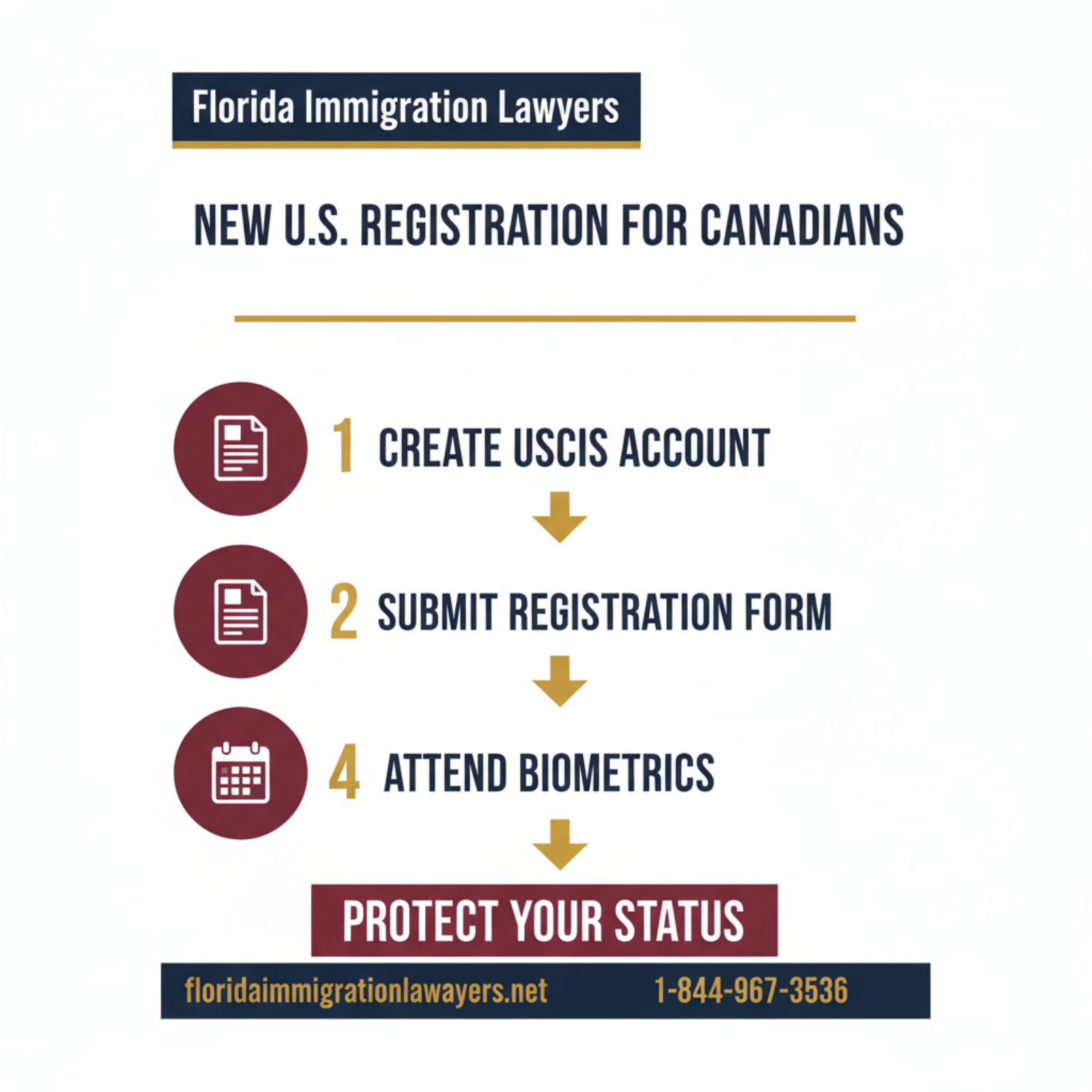
- Attend Interviews and Biometrics: Depending on the visa type, you may need to attend an interview at a U.S. Embassy or Consulate in Canada or a USCIS office in the U.S. if you are adjusting status. You will also likely undergo a biometrics appointment to provide fingerprints and photographs for background checks.
- Undergo Medical Examination: Immigrant visa applicants, and sometimes certain nonimmigrant applicants, must undergo a medical examination performed by a USCIS-approved physician. This ensures you meet health-related admissibility standards.
- Receive Visa Approval and Entry: Upon approval, if applying from Canada, you will receive your visa stamp in your passport. If adjusting status within the U.S., you will receive your Green Card or change of status notice. For those entering from Canada, present your valid passport and visa (if required) at the U.S. port of entry.
- Maintain Status and Comply with Laws: Once in the U.S., it is crucial to maintain your immigration status and comply with all U.S. laws. This includes adhering to visa terms, reporting changes of address, and filing taxes. For permanent residents, this also means understanding the requirements for maintaining your Green Card status.
Essential Documents for Your U.S. Immigration Application
Preparing a complete and accurate document package is a cornerstone of any successful immigration application. Missing or incorrect documents can lead to significant delays or even denials. Always refer to the specific USCIS instructions for your visa type, as requirements can vary greatly. Here is a general list of documents commonly required for various U.S. immigration processes:
- Valid Canadian Passport (and any previous passports)
- Birth Certificate
- Marriage Certificate (if applicable)
- Divorce Decrees or Death Certificates of former spouses (if applicable)
- Educational Degrees, Diplomas, Transcripts, and Professional Licenses
- Letters of Employment from current and previous employers
- Detailed Resume or Curriculum Vitae
- Evidence of Financial Support (bank statements, tax returns, employment letters)
- Police Certificates from countries where you have lived for six months or more since age 16
- Medical Examination Report (from a USCIS-approved physician)
- Proof of U.S. Petitioner's Status (e.g., U.S. birth certificate, naturalization certificate, Green Card)
- Forms specific to your visa category (e.g., I-129, I-130, DS-160, DS-260, I-485)
- Passport-style photographs meeting U.S. government specifications
- Any previous U.S. visa stamps or entry/exit records
Timelines and Processing Expectations for Canadian Applicants
Understanding USCIS processing times is critical for planning your move or extended stay in Florida. These timelines are estimates and can vary significantly based on the type of application, the specific USCIS service center or embassy handling your case, and current caseloads. It is important to manage your expectations and prepare for potential delays.
For nonimmigrant visas like the TN, processing can sometimes be expedited at a port of entry or through premium processing with USCIS, potentially taking days or weeks. However, other nonimmigrant visas, like H-1B, are subject to annual caps and lottery systems, making the timeline much longer and less predictable. Family-based immigrant visas can take anywhere from several months to many years, depending on the visa preference category and the country of chargeability.
You can check the estimated processing times on the USCIS website. These times are regularly updated, but they are not guarantees. Factors such as requests for evidence (RFEs), background checks, and administrative processing can all extend your waiting period. Planning well in advance and submitting a thorough application package can help mitigate some delays. For applicants in Florida, certain local USCIS field offices, like the one serving Hialeah, may have specific processing nuances.
Cost Factors and Fee Breakdown for Immigration Applications
The financial aspect of U.S. immigration is a significant consideration for many Canadians. Application fees are mandatory and non-refundable, and they can vary depending on the type of petition or application. It is important to budget not only for government fees but also for other associated costs, such as legal fees, medical exams, and document translation.
USCIS fees are subject to change, so always consult the most current fee schedule on the official USCIS website before filing. Typically, fees are required for filing petitions (e.g., Form I-129, I-130), applications (e.g., Form I-485, DS-260), biometrics services, and the Affidavit of Support. Some visas also involve additional fees, like the USCIS Immigrant Fee for those receiving an immigrant visa abroad.
Beyond government fees, you should also account for costs associated with obtaining necessary documents, such as birth certificates or police records. Legal fees for retaining a qualified Florida immigration lawyer are an investment in the success and efficiency of your application. While not always mandatory, legal representation can save you time, stress, and potential pitfalls, especially with complex cases or in sensitive areas like Hialeah.
The journey through U.S. immigration can be filled with unforeseen challenges and complex legal requirements. Trying to navigate these processes without experienced legal support can lead to costly mistakes and significant delays. We understand the specific concerns Canadians face when moving to or residing in Florida.
Do not navigate this process alone. Contact Florida Immigration Lawyers today. Our dedicated team is ready to provide the personalized assistance you need to make your Florida immigration dreams a reality.
Addressing Your Questions: FAQ for Canadians in Florida
Many Canadians have common questions when considering a move or extended stay in Florida. Here we address some of the most frequently asked questions, providing clarity on typical scenarios.
How long can Canadians stay in Florida?
Canadian citizens generally do not require a visa for short tourist or business visits to the U.S., typically up to six months. Upon entry, a U.S. Customs and Border Protection (CBP) officer will determine the length of your authorized stay, usually stamped in your passport or noted on your I-94 record. For longer stays, work, or study, a specific U.S. visa is required.
Is Canada still accepting US immigrants?
Yes, Canada continues to accept immigrants from the U.S. and around the world, actively encouraging skilled workers, family members, and those seeking refuge. Canada has its own comprehensive immigration system with various programs like Express Entry, Provincial Nominee Programs, and family sponsorship. This falls under Canadian law, separate from U.S. immigration regulations, but it is part of the broader Canada immigration news today landscape.
Can a Canadian just move to Florida?
No, a Canadian cannot simply 'move' to Florida without proper authorization. While short visits are typically visa-exempt, establishing residence, working, or studying in Florida requires a specific U.S. visa or Green Card. Attempting to reside permanently without legal status can lead to serious immigration consequences, including deportation and bars from future entry.
What's the current immigration situation in Canada?
The current immigration situation in Canada in 2026 generally reflects a commitment to welcoming newcomers, with ongoing efforts to address labor shortages and demographic needs. Canada regularly updates its immigration targets and programs, often making headlines in Canada immigration news today. Policies are designed to be responsive to economic and social factors, making it a dynamic landscape for potential immigrants.
Common Mistakes to Avoid in Your Immigration Journey
Navigating U.S. immigration can be complex, and even small errors can lead to significant setbacks. Being aware of common pitfalls can help you avoid unnecessary delays or denials.
- Overstaying Your Authorized Period: Remaining in the U.S. beyond the date permitted by your I-94 record, even by a single day, can result in your visa being automatically voided. It can also lead to bars from re-entry for several years, making future travel to Florida or other U.S. destinations extremely difficult.
- Misrepresenting Information on Forms: Providing false or misleading information, whether intentionally or unintentionally, on any immigration document can be considered fraud. This can lead to a permanent bar from entering the U.S. and severe legal consequences. Always be truthful and accurate.
- Working Without Authorization: Engaging in unauthorized employment while on a tourist visa or a visa that does not permit work is a serious violation of U.S. immigration law. This can lead to deportation, future visa denials, and a permanent bar from adjusting status to a Green Card.
- Failing to Disclose Criminal History: Any past arrests, charges, or convictions, even minor ones, must be fully disclosed on immigration applications. Failure to do so can result in a finding of inadmissibility, even if the offense itself would not have prevented your entry.
- Ignoring Requests for Evidence (RFEs): If USCIS sends an RFE, it means they need more information or clarification. Failing to respond adequately or on time can lead to the denial of your petition or application. Always address RFEs promptly and comprehensively.
- Incorrectly Filling Out Forms: Immigration forms are highly specific. Simple errors, such as incorrect dates, missing signatures, or unchecked boxes, can cause your application to be rejected or returned, leading to significant delays. Always double-check every detail.
- Not Keeping Copies of All Submitted Documents: It is crucial to retain copies of every document you submit to USCIS, including the application forms, supporting evidence, and correspondence. This record is vital for future reference, appeals, or if documents are lost.
- Assuming Visa-Exempt Status for All Activities: While Canadians are generally visa-exempt for short tourist visits, this does not extend to all activities. Activities like working, studying, or establishing a permanent residence require specific visas. Assuming otherwise can lead to severe penalties.
- Failing to Update Contact Information: Moving to a new address and not updating USCIS can result in missed notices, RFEs, or interview appointments. This can lead to your case being denied without your knowledge. Always update your address promptly via Form AR-11.
- Not Consulting a Qualified Immigration Attorney: Attempting to navigate complex U.S. immigration laws without legal counsel is a common mistake. An experienced Florida immigration lawyer can identify potential issues, ensure compliance, and significantly increase your chances of success.
When to Call a Florida Immigration Lawyer
While some immigration processes may seem straightforward, the reality is often far more intricate. U.S. immigration law is constantly evolving, and a minor oversight can have major consequences. Knowing when to seek professional legal assistance can be the difference between success and significant setbacks. Our team at Florida Immigration Lawyers serves individuals and families across Florida, including Hialeah, Miami, and Orlando.
You should consider contacting a Florida immigration lawyer if you:
- Are unsure which visa category applies to your specific situation or long-term goals.
- Have a complex immigration history, such as previous visa denials, overstays, or criminal records.
- Need assistance with employment-based visas, where employer sponsorship and specific requirements are critical.
- Are applying for family-based immigration and need help navigating preference categories and lengthy waiting lists.
- Have received a Request for Evidence (RFE) or a Notice of Intent to Deny (NOID) from USCIS.
- Are facing deportation or removal proceedings and require aggressive defense.
- Wish to understand the path to U.S. citizenship after obtaining permanent residency.
- Are seeking asylum or refugee status due to fear of persecution.
- Are a business owner looking to invest or transfer employees to the U.S. under business immigration visas.
- Want to ensure your family immigration application is handled correctly and efficiently.
Our firm provides comprehensive immigration services, ensuring that your application is meticulously prepared and filed. We stay updated on all relevant Canada immigration news today and U.S. policy changes to offer the most current and effective legal strategies. Do not take chances with your future in Florida; let our expertise guide you.
About Florida Immigration Lawyers
Florida Immigration Lawyers is a leading immigration law firm dedicated to serving individuals, families, and businesses throughout Florida. With a deep understanding of U.S. immigration law and a commitment to our clients, we provide personalized and effective legal solutions. Our mission is to navigate the complexities of the immigration system on your behalf, ensuring your rights are protected and your goals are achieved.
We offer a broad range of immigration services, including visa applications, Green Card petitions, citizenship and naturalization, deportation defense, and asylum claims. Our attorneys are highly skilled and empathetic, recognizing the profound impact immigration matters have on our clients' lives. We pride ourselves on clear communication, strategic advocacy, and unwavering support.
Choosing Florida Immigration Lawyers means choosing a partner who is accessible, knowledgeable, and dedicated. We offer free consultations and are available 24/7 to address your urgent concerns. Our firm serves all of Florida, from Hialeah to Jacksonville, ensuring that expert legal assistance is always within reach. Visit our website or call us at 1-844-967-3536 to speak with an attorney today. You can also learn more about our experienced attorneys and their commitment to client success.
Sources and References
- U.S. Citizenship and Immigration Services (USCIS)
- U.S. Department of State - TN NAFTA Professionals
- Executive Office for Immigration Review (EOIR)
- 8 U.S.C. Chapter 12 - Immigration and Nationality Act (INA)
- Immigration and Nationality Act (INA) Section 214(e) - TN Visas
- Code of Federal Regulations (CFR) - Title 8, Aliens and Nationality
This article provides general legal information and is not intended as legal advice. Every case is unique, and outcomes depend on specific facts and circumstances. Contact an attorney for advice about your particular situation.
Your journey to Florida, whether temporary or permanent, deserves the highest level of legal expertise and care. Do not leave your future to chance. The complexities of U.S. immigration law, combined with potential shifts in Canada immigration news today, necessitate experienced guidance. Our team is ready to assist you.
Take the crucial first step towards securing your immigration future in Florida. Call Florida Immigration Lawyers at 1-844-967-3536 for a free consultation today. Se Habla Español - Estamos aquí para ayudarle.
Need help with Immigration?
Our Florida immigration attorneys offer free consultations. Call today or schedule online.
Frequently Asked Questions
Florida Immigration Lawyers
Legal Team
Our experienced attorneys at Florida Immigration Lawyers have been serving clients across Florida for over 20 years. We specialize in immigration, personal injury, criminal defense, workers compensation, and family law.