Abrego Garcia Deportation: Florida Due Process & Your Rights
Understanding the Abrego Garcia deportation case offers crucial insights into the complexities of U.S. immigration law and removal proceedings. For those in Florida facing similar challenges, knowing your due process rights and how to mount an effective defense is paramount. This guide from Florida Immigration Lawyers provides a comprehensive overview of the deportation process, essential documentation, timelines, and cost factors. We emphasize the critical role of legal representation to navigate these intricate legal battles successfully. Learn about common mistakes to avoid and when to seek professional legal help to protect your future and ensure your rights are upheld in Florida's immigration courts. Contact us for a free consultation.
The Abrego Garcia deportation case highlights the complex nature of removal proceedings in the U.S. immigration system. In Florida, individuals facing deportation have critical due process rights, including the right to a fair hearing and the opportunity to present a defense. Understanding these rights and the legal process is essential for anyone facing similar challenges, emphasizing the need for skilled legal representation.
- Individuals facing deportation in Florida possess significant due process rights.
- Legal representation is crucial for navigating complex removal proceedings effectively.
- Various forms of relief from deportation may be available, depending on your specific circumstances.
- The immigration process can be lengthy and requires meticulous documentation and adherence to deadlines.
- Consulting with an experienced Florida immigration lawyer is vital to protect your rights.
Abrego Garcia Deportation: Understanding Your Rights in Florida
The prospect of deportation can be one of the most frightening experiences for non-citizens and their families in Florida. Cases like the widely discussed Abrego Garcia deportation situation underscore the critical importance of understanding your legal rights and the due process protections available under U.S. immigration law. Whether you are in Hollywood, Miami, Orlando, or anywhere else in the Sunshine State, facing removal proceedings requires immediate and informed action.
At Florida Immigration Lawyers, we understand the immense stress and uncertainty that deportation proceedings bring. This comprehensive guide will help you understand the deportation process, your rights, and how to build a strong defense in Florida. We aim to provide clear, actionable information so you can protect your future and that of your loved ones. Do not face this complex legal battle alone. Call Florida Immigration Lawyers at 1-844-967-3536 for a free consultation to discuss your specific situation and explore your options.
Understanding Abrego Garcia Deportation Cases in Florida: An Overview of Removal Proceedings
Deportation, officially known as removal proceedings, is the process by which the U.S. government seeks to expel a non-citizen from the country. These proceedings are initiated by U.S. Immigration and Customs Enforcement (ICE) and adjudicated by immigration judges within the Executive Office for Immigration Review (EOIR), a branch of the U.S. Department of Justice. In Florida, immigration courts are located in cities like Miami and Orlando, serving a diverse immigrant population across the state.
The Immigration and Nationality Act (INA) outlines the grounds for deportability, which can range from visa overstays and unlawful entry to criminal convictions and national security concerns. For instance, INA § 237 (8 U.S.C. § 1227) details various classes of deportable aliens. The due process clause of the Fifth Amendment to the U.S. Constitution guarantees certain rights to individuals in removal proceedings, including the right to a fair hearing, the right to present evidence, and the right to an attorney (though not at government expense).
Cases like the Abrego Garcia deportation highlight instances where individuals may face removal due to complex legal interpretations, alleged errors, or evolving immigration policies. It is crucial for anyone in Florida, especially in communities like Hollywood with significant immigrant populations, to be aware of their rights and to seek legal counsel promptly when confronted with an NTA (Notice to Appear) or detention by ICE. Understanding the charges against you and the potential avenues for relief is the first step in mounting an effective defense.
Navigating the Deportation Process: A Step-by-Step Guide in Florida
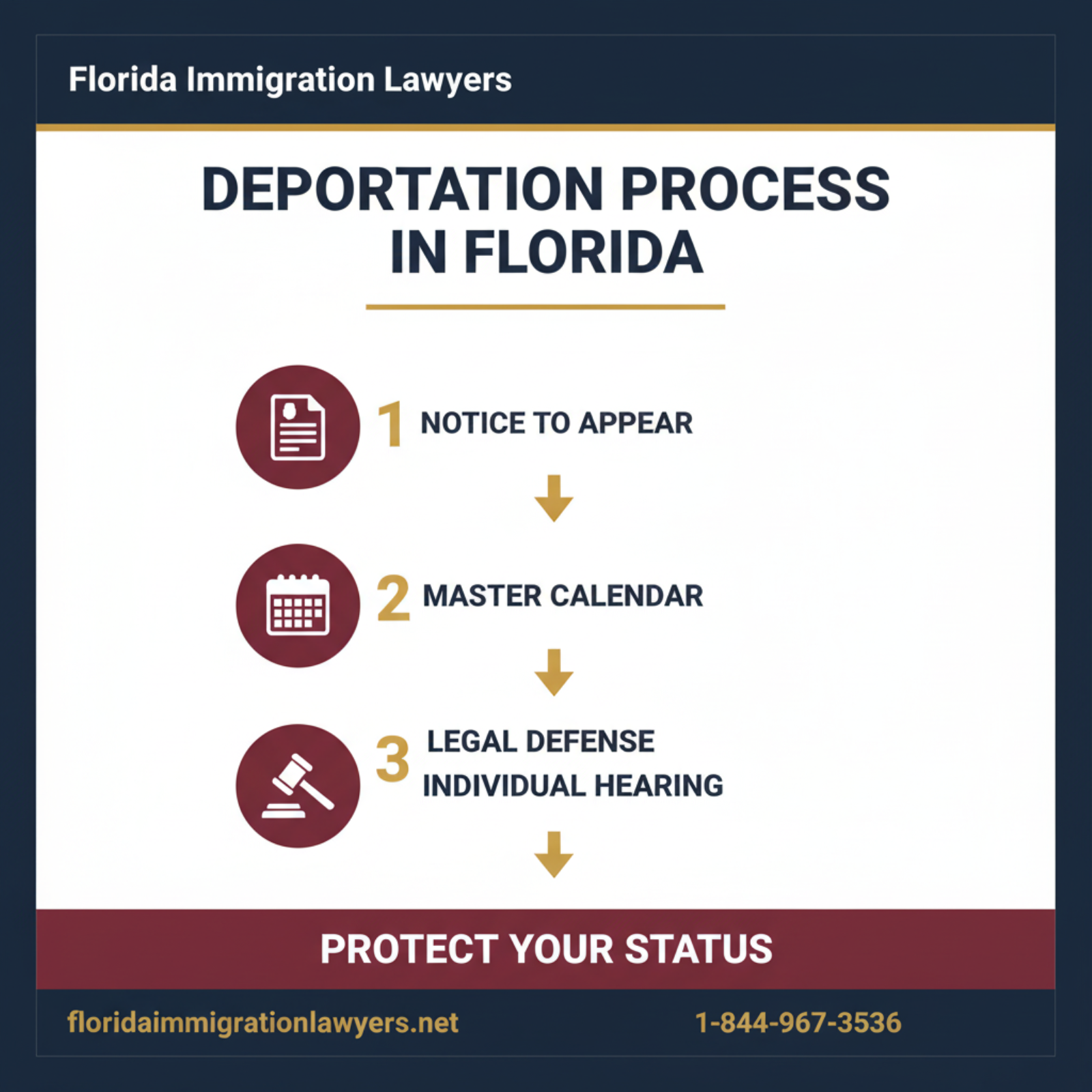
The deportation process can be intimidating and confusing, especially without proper legal guidance. Here is a general step-by-step overview of what you can expect in Florida, from the initial contact with immigration authorities to potential appeals:
-
Issuance of a Notice to Appear (NTA): Removal proceedings typically begin when ICE issues an NTA. This document formally charges a non-citizen with being removable from the U.S. and directs them to appear before an immigration judge. The NTA will specify the alleged grounds of deportability.
It is vital to review your NTA carefully with an attorney. Understanding the specific charges is critical for preparing your defense. Failing to appear in court as scheduled can lead to an order of deportation in absentia.
-
Master Calendar Hearing (MCH): This is the first court appearance before an immigration judge. During the MCH, the judge will confirm your identity, ensure you received the NTA, and ask you to admit or deny the allegations and concede or contest removability. You will also be asked to inform the court if you intend to seek any form of relief from removal.
This hearing is often brief, but it sets the stage for your entire case. Having an attorney present can help you understand the proceedings and make informed decisions, ensuring your responses do not inadvertently harm your case.
-
Seeking Relief from Removal: If you contest removability or seek relief, the judge will typically schedule an Individual Hearing. Before this, your attorney will help you identify and apply for any available forms of relief. Common types of relief include asylum, cancellation of removal for certain non-permanent residents, adjustment of status, waivers of inadmissibility, or voluntary departure.
The availability of relief depends heavily on your specific circumstances, immigration history, and eligibility criteria. For example, cancellation of removal requires demonstrating continuous physical presence in the U.S. for a specific period and showing exceptional and extremely unusual hardship to qualifying relatives. Learn more about deportation defense options.
-
Individual Hearing: This is essentially a trial where you and your attorney will present evidence, call witnesses, and argue your case before the immigration judge. The government attorney (ICE counsel) will also present their case. The judge will hear testimony, review documents, and make a decision on your eligibility for relief or whether you are removable.
This hearing can be lengthy and requires extensive preparation. Your attorney will help you gather all necessary documentation, prepare your testimony, and present your case persuasively.
-
Decision and Appeals: After the Individual Hearing, the immigration judge will issue a decision. If the judge denies relief and orders you removed, you generally have the right to appeal the decision to the Board of Immigration Appeals (BIA) within 30 days. If the BIA denies your appeal, you may be able to appeal to a U.S. Court of Appeals.
Appeals are complex and require a deep understanding of immigration law and procedure. An experienced attorney can assess the grounds for appeal and represent you effectively through the appellate process.
Essential Documents for Your Deportation Defense Checklist
Preparing a strong defense against deportation requires meticulous organization and the collection of comprehensive documentation. The specific documents needed will vary based on your grounds for removability and the type of relief you are seeking. However, a general checklist often includes:
- Identity and Nationality Documents: Passport, birth certificate, national ID cards, marriage certificates, children's birth certificates.
- Proof of Entry and Residence: I-94 arrival/departure records, visa stamps, prior immigration applications, utility bills, rental agreements, school records, employment records, bank statements.
- Financial Records: Tax returns (IRS transcripts are often preferred), W-2s, pay stubs, bank statements, proof of financial support for dependents.
- Medical and Mental Health Records: Especially crucial for asylum claims, U-visa applicants, or those seeking hardship waivers.
- Criminal History Records: Certified court dispositions for any arrests or convictions, even minor ones. It is vital to disclose all encounters with law enforcement.
- Evidence of Community Ties: Letters from community leaders, employers, religious figures, or family members attesting to your good character, contributions, and ties to the U.S. community.
- Documents for Specific Relief: If applying for asylum, detailed statements and evidence of persecution. For adjustment of status, documents related to your qualifying relative's status (e.g., U.S. citizen spouse's birth certificate). For cancellation of removal, proof of continuous physical presence and hardship.
- Affidavits: Sworn statements from family members, friends, or other individuals who can attest to your character, circumstances, or the hardship your removal would cause.
Thoroughness is key. Missing or incomplete documents can significantly delay your case or lead to a denial. Your attorney will help you identify all necessary documents and organize them effectively.
Deportation Case Timelines and Processing Expectations in Florida Immigration Courts
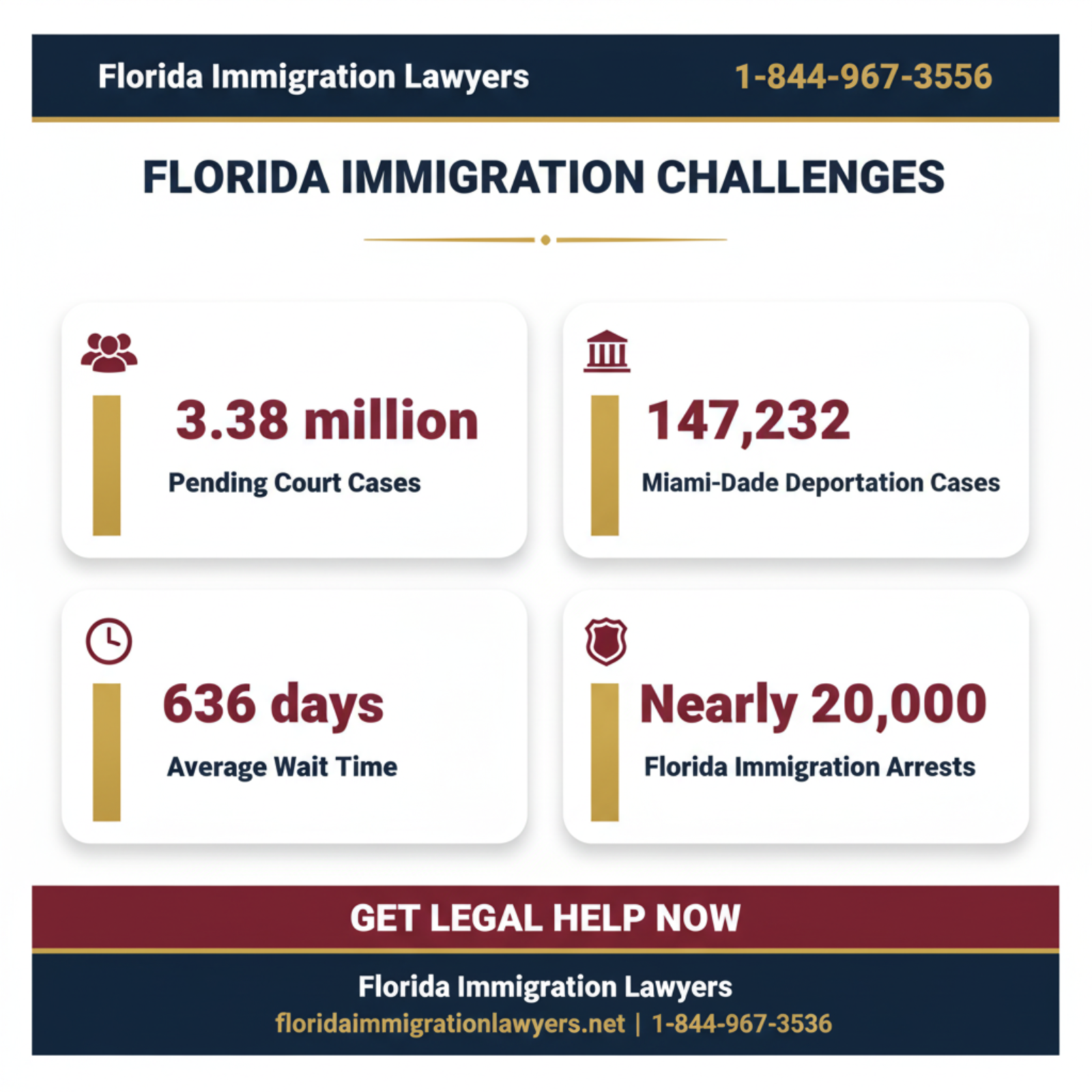
The timeline for a deportation case in Florida immigration courts can vary dramatically, ranging from a few months to several years. This variability is due to numerous factors, including the specific immigration court, the complexity of the case, the type of relief sought, and the current backlog of cases at the Executive Office for Immigration Review (EOIR).
Florida's immigration courts, particularly in busy locations like Miami, often experience significant backlogs. This means that scheduling for Master Calendar Hearings and especially Individual Hearings can take many months or even years. The number of cases an immigration judge is handling directly impacts how quickly your case can move forward.
Factors that can influence your case timeline include:
- Court Caseload: High volume courts will naturally have longer wait times.
- Type of Relief: Some forms of relief, such as asylum, may involve more extensive evidence gathering and longer hearings.
- Detention Status: Cases for individuals in immigration detention are often prioritized, potentially moving faster than non-detained cases.
- Attorney Preparedness: A well-prepared attorney can help ensure your case moves efficiently by filing documents promptly and being ready for hearings.
- Changes in Law or Policy: New regulations or policy shifts can impact processing times and case priorities.
While frustrating, the extended timelines can sometimes offer opportunities for your attorney to gather more evidence, strengthen your case, or explore new avenues for relief. You can generally check the status of your case with the EOIR online system. For accurate and up-to-date information, please refer to the official Executive Office for Immigration Review (EOIR) website.
Understanding Cost Factors and Legal Fees for Deportation Cases
Navigating a deportation case involves various costs, and understanding these from the outset is important for planning. The primary expenses typically include attorney fees and government filing fees. While Florida Immigration Lawyers offers free initial consultations, the costs for full representation will depend on the complexity and duration of your case.
-
Attorney Fees: Legal fees for deportation defense can vary widely based on the attorney's experience, the complexity of your case, and the specific services required. Some attorneys charge an hourly rate, while others may offer a flat fee for specific stages of the process or for the entire case. A complex case involving multiple forms of relief, appeals, or extensive evidence gathering will generally incur higher fees.
Investing in an experienced immigration attorney is an investment in your future. Quality legal representation can significantly increase your chances of a favorable outcome and help you avoid costly mistakes. Your attorney can discuss payment plans and fee structures during your consultation.
-
Government Filing Fees: While there are no fees to appear before an immigration judge for removal proceedings themselves, you will likely encounter fees if you apply for certain forms of relief from deportation. For example, applications for adjustment of status, waivers, or some types of work permits require filing fees paid to USCIS.
It is important to note that these fees can change, and specific amounts should always be verified on the official USCIS website. Fee waivers may be available for certain low-income individuals, but eligibility is strict and must be properly documented.
Key Statistics & Data -
Other Costs: Additional expenses might include fees for obtaining certified court documents, translation services for foreign-language documents, expert witness fees (if required), and travel expenses for court appearances or interviews. Your legal team will help you anticipate and manage these additional costs.
Do not let concerns about costs prevent you from seeking legal help. Many firms, including Florida Immigration Lawyers, offer flexible payment options. Contact us today to discuss your situation and learn how we can assist you.
Do not navigate this process alone. Contact Florida Immigration Lawyers today.
Common Mistakes to Avoid in Abrego Garcia Deportation Cases
Facing deportation is a serious matter, and even seemingly minor errors can have significant consequences. Avoiding these common mistakes can greatly improve your chances of a positive outcome:
-
Missing Deadlines: Immigration law is strict about deadlines for filing documents, responding to notices, and appealing decisions. Missing a deadline can result in the automatic denial of your application for relief or an order of removal in absentia. Always keep track of all dates and ensure timely submissions.
-
Providing False Information or Lying: Any misrepresentation or false statement made to an immigration officer or judge can lead to a finding of fraud. This can result in permanent bars from future immigration benefits and even criminal charges. Always be truthful and transparent, even about past mistakes.
-
Not Understanding the Notice to Appear (NTA): Many individuals fail to fully comprehend the charges listed on their NTA. If you do not understand why the government is seeking your removal, you cannot effectively defend yourself. Always review the NTA thoroughly with your attorney.
-
Failing to Gather Sufficient Evidence: A strong defense relies on compelling evidence. Not collecting all necessary documents, affidavits, or proofs of eligibility for relief can weaken your case. Begin compiling evidence as soon as possible with your attorney's guidance.
-
Leaving the U.S. Without Proper Authorization: If you are in removal proceedings, leaving the country without obtaining voluntary departure or another form of authorization can trigger a re-entry bar, making it difficult or impossible to return legally. Always consult your attorney before any international travel.
-
Not Updating Your Address with ICE/EOIR: If you move while your case is pending, you must notify the immigration court and ICE of your new address. Failure to do so can mean you miss critical notices or court dates, potentially leading to an order of deportation without your knowledge.
-
Representing Yourself Without Legal Expertise: While you have the right to represent yourself, immigration law is incredibly complex. Navigating court procedures, understanding legal arguments, and presenting evidence effectively without an attorney is extremely challenging and often leads to unfavorable outcomes. Legal representation is highly recommended.
-
Ignoring Minor Violations or Past Issues: What might seem like a minor traffic ticket or an old, dismissed criminal charge can sometimes have significant immigration consequences. It is crucial to disclose all past legal issues to your attorney so they can assess potential impacts on your case.
-
Failing to Appeal a Negative Decision on Time: If an immigration judge orders your removal, you typically have only 30 days to file an appeal with the Board of Immigration Appeals (BIA). Missing this critical deadline means the judge's decision becomes final, and you lose the opportunity to challenge it.
-
Not Understanding Grounds of Inadmissibility: Even if you are not deportable, you might be inadmissible to the U.S., which can prevent you from adjusting status or re-entering. Understanding both deportability and inadmissibility grounds is key to a comprehensive defense strategy. See INA § 212 (8 U.S.C. § 1182).
When to Call a Lawyer for Your Deportation Case in Florida
The moment you receive a Notice to Appear (NTA) or are detained by ICE, it is imperative to contact an immigration attorney. Early legal intervention can significantly impact the outcome of your case. Florida Immigration Lawyers are here to provide the expert guidance you need.
You should immediately call a lawyer if:
- You have received a Notice to Appear (NTA) for removal proceedings.
- You or a family member has been detained by ICE in Florida.
- You have a prior deportation order or have been previously removed from the U.S.
- You have criminal charges or convictions, even minor ones, that could affect your immigration status.
- You are seeking asylum or other forms of humanitarian relief.
- You believe you may be eligible for a waiver of inadmissibility or other forms of relief.
- You are unsure about your rights or the legal process in immigration court.
- You are facing an appeal to the Board of Immigration Appeals or federal court.
Our experienced attorneys specialize in deportation defense, asylum claims, and navigating complex immigration litigation. We serve clients throughout Florida, including Hollywood, Miami, Orlando, and across the state. Do not wait until it is too late. Protect your future by securing knowledgeable legal representation.
About Florida Immigration Lawyers
Florida Immigration Lawyers is a leading immigration law firm dedicated to serving individuals and families across the entire state of Florida. Our team of experienced attorneys is committed to providing compassionate, effective, and results-driven legal representation for all immigration matters, from complex deportation defense to family-based petitions and citizenship applications.
We understand the profound impact immigration issues have on your life. That is why we offer personalized attention, strategic legal advice, and unwavering advocacy for every client. Our services include deportation defense, asylum applications, visa petitions, green card processes, citizenship and naturalization, business immigration, and more. We pride ourselves on our deep understanding of U.S. immigration law and our dedication to protecting the rights and futures of our clients.
When you choose Florida Immigration Lawyers, you are choosing a partner who will stand by you every step of the way. We offer free consultations to assess your case and provide clear guidance. Our team is available 24/7 to address your urgent concerns. Let us put our expertise to work for you. Contact us today at 1-844-967-3536 or visit our website at https://www.floridaimmigrationlawyers.net. We are here to help you achieve your immigration goals.
Sources and References
- U.S. Citizenship and Immigration Services (USCIS)
- Executive Office for Immigration Review (EOIR)
- U.S. Immigration and Customs Enforcement (ICE)
- 8 U.S.C. Chapter 12 - Immigration and Nationality Act (INA)
- INA § 212 (8 U.S.C. § 1182) - Grounds for Inadmissibility
- INA § 237 (8 U.S.C. § 1227) - Grounds for Deportability
- INA § 240 (8 U.S.C. § 1229a) - Removal Proceedings
- 8 CFR Part 1003 - Executive Office for Immigration Review
This article provides general legal information and is not intended as legal advice. Every case is unique, and outcomes depend on specific facts and circumstances. Contact an attorney for advice about your particular situation. Immigration laws are subject to change, and this content reflects information as of its publication date.
If you or a loved one is facing deportation in Florida, remember that you have rights and options. Do not delay in seeking expert legal counsel. The dedicated team at Florida Immigration Lawyers is ready to provide the aggressive and compassionate representation you deserve. Call us today for a free consultation at 1-844-967-3536. Se Habla Español - Estamos aquí para ayudarle.
Frequently Asked Questions
Florida Immigration Lawyers
Legal Team
Our experienced attorneys at Florida Immigration Lawyers have been serving clients across Florida for over 20 years. We specialize in immigration, personal injury, criminal defense, workers compensation, and family law.