2026 Winter Olympics Ice Hockey: Florida Immigration Insights
Even though the 2026 Winter Olympics Ice Hockey games are in Italy, Florida remains a crucial state for individuals with immigration needs related to this global event. From world-class athletes seeking P-1 or O-1 visas for training or competition to media professionals and business sponsors, understanding U.S. immigration law is essential. This guide from Florida Immigration Lawyers explores various visa options, document requirements, processing timelines, and cost factors. We highlight the importance of avoiding common mistakes and knowing when to seek expert legal assistance. Our firm serves Homestead and all of Florida, offering comprehensive support for your immigration journey, ensuring you navigate the complexities with confidence.
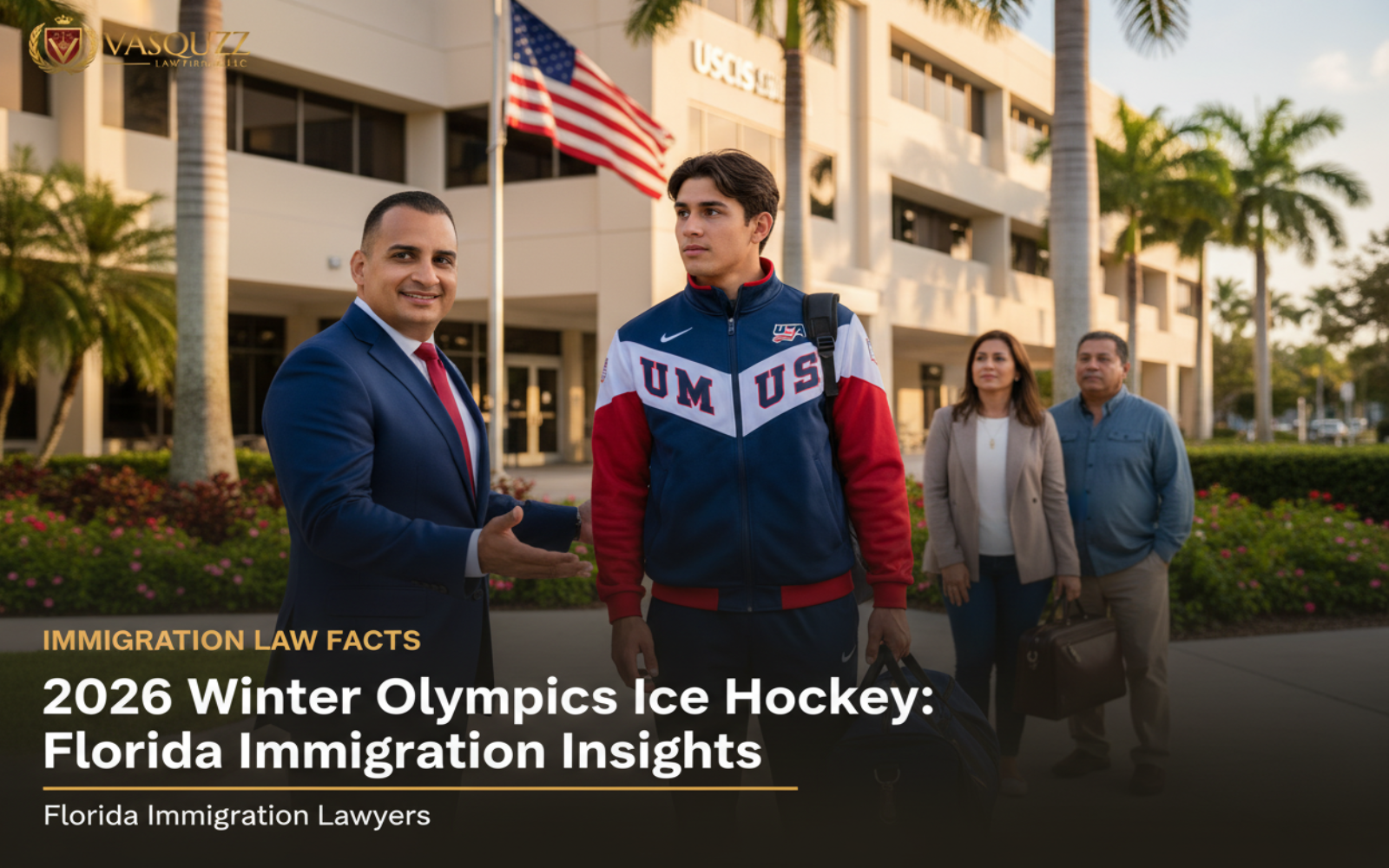
The 2026 Winter Olympics Ice Hockey, while held in Milano Cortina, can significantly impact individuals with immigration needs in Florida. Athletes, coaches, support staff, media, and even fans with complex situations may require specific visas or legal guidance. Florida's role as a major international hub means many Olympic-related individuals might reside, train, or conduct business here, necessitating expert immigration advice.
- Individuals connected to the 2026 Winter Olympics may need specific visa types for temporary stay or work in Florida.
- Florida Immigration Lawyers provides essential legal support for P-1, O-1, I, and B-category visas.
- Early planning and expert legal assistance are crucial for successful immigration applications.
- Understanding USCIS processing times and document requirements is vital for all applicants.
The excitement for the 2026 Winter Olympics Ice Hockey is building globally, and even though the games will be held in Milano Cortina, Italy, Florida remains a crucial nexus for international talent, business, and families. Our state, particularly areas like Homestead and the greater Miami-Dade region, is a vibrant melting pot where individuals from around the world live, train, and conduct business. This global connectivity means that many people with direct or indirect ties to the Olympic Games may find themselves needing expert immigration assistance right here in Florida.
Whether you are an athlete, a coach, a member of the media, a support staff professional, or a business investor looking to capitalize on the global attention, understanding U.S. immigration law is paramount. Navigating the complexities of visas, green cards, and other immigration processes can be daunting, especially with strict deadlines and evolving regulations. This comprehensive guide from Florida Immigration Lawyers will help you understand the potential immigration pathways and challenges related to the 2026 Winter Olympics Ice Hockey, offering crucial insights for those in Florida. For personalized guidance, call Florida Immigration Lawyers at 1-844-967-3536 for a free consultation.
Understanding Immigration for 2026 Winter Olympics Ice Hockey in Florida
Florida's unique position as a major international gateway and a hub for sports and entertainment means it plays a significant, albeit indirect, role in global events like the Winter Olympics. While the ice hockey games for Milano Cortina 2026 will take place overseas, many athletes, coaches, and associated personnel may reside in, train in, or travel through Florida. Our firm serves clients across the entire state, including Homestead, Miami, Orlando, and Tampa, addressing diverse immigration needs.
Individuals impacted could include U.S. citizens or permanent residents participating in the games, foreign athletes training with U.S. teams, international media covering the event from their U.S. bureaus, or foreign investors in sports-related businesses. Each of these scenarios presents distinct immigration requirements. Understanding these requirements is the first step towards a successful immigration journey.
For example, a foreign ice hockey player training with a U.S. team in preparation for the Olympics would need a specific type of visa. Similarly, a journalist based in Miami covering the lead-up to the 2026 Games might have different visa needs than a business executive sponsoring a team. Our team at Florida Immigration Lawyers specializes in tailoring immigration strategies to your specific situation, ensuring compliance with all U.S. Citizenship and Immigration Services (USCIS) regulations. We are here to assist with all aspects of immigration law.
Navigating Visa Options for Olympic-Related Personnel in Florida
For individuals connected to the 2026 Winter Olympics Ice Hockey who need to come to or remain in Florida, several visa categories may be applicable. The choice of visa depends heavily on the individual's role, their intent in the U.S., and their qualifications. It is crucial to select the correct visa to avoid delays or denials.
Here is a step-by-step guide to some common visa options:
-
P-1 Visas for Athletes and Entertainers
The P-1 visa is specifically designed for internationally recognized athletes, individually or as part of a team, who are coming to the U.S. to perform in a specific athletic competition or event. This category is highly relevant for ice hockey players and coaches with international acclaim. To qualify, you must demonstrate a high level of achievement in your sport.
The application process typically involves filing Form I-129, Petition for a Nonimmigrant Worker, along with extensive documentation proving your international recognition. This can include contracts, testimonials, awards, and evidence of participation in major leagues or events. The initial period of stay can be up to five years for individuals and up to one year for teams, with possible extensions. Consult USCIS guidelines for detailed requirements. (See INA § 101(a)(15)(P) for legal definition).
-
O-1 Visas for Individuals with Extraordinary Ability
The O-1 visa is for individuals who possess extraordinary ability in the sciences, arts, education, business, or athletics, or who have a demonstrated record of extraordinary achievement in the motion picture or television industry. This visa is often sought by top-tier Olympic athletes, highly acclaimed coaches, or key support personnel whose achievements are nationally or internationally recognized. This visa requires extensive documentation proving sustained national or international acclaim, such as major awards, publications, or high salaries.
The O-1 visa is more stringent than the P-1 but offers greater flexibility in terms of employment. It generally requires a U.S. employer or agent to petition on your behalf. An initial stay can be granted for up to three years, with one-year extensions possible. Our firm can assist with navigating the complex evidence requirements for this visa. We have extensive experience with business immigration cases.
-
I Visas for Media and Journalists
Journalists, media professionals, and film crews covering the 2026 Winter Olympics Ice Hockey, either from the U.S. or traveling internationally, typically use an I visa. This nonimmigrant visa is for representatives of foreign media, including members of the press, radio, film, or print industries, whose activities are essential to the foreign information medium. This includes reporters, editors, newscasters, and documentary filmmakers.
Applicants must demonstrate that they represent a bona fide foreign information medium and are coming to the U.S. solely to engage in their profession. While Florida may not host the games, many international news agencies have bureaus here, and their staff may travel to and from the U.S. to cover the event. The I visa allows a stay for the duration of the assignment. More information can be found at travel.state.gov.
-
B-1/B-2 Visas for Business Visitors and Tourists
For individuals whose involvement with the Olympics is more peripheral, such as business sponsors, scouts, family members of athletes, or general fans, a B-1 (business visitor) or B-2 (tourist) visa may be appropriate. A B-1 visa allows individuals to come to the U.S. for business activities that do not involve receiving a salary from a U.S. source, such as attending conferences, negotiating contracts, or consulting with business associates. For example, an international scout for an ice hockey team might use a B-1 visa.
A B-2 visa is for tourism, visiting family, or medical treatment. Family members of athletes or general spectators wishing to visit Florida before or after traveling to Milano Cortina would typically use a B-2 visa. These visas generally allow a stay of up to six months. It is crucial not to overstay your authorized period or engage in unauthorized employment. Our firm can also assist with family immigration matters.
Essential Document Checklist for Your Florida Olympic Immigration Application
Regardless of the specific visa category, a thorough and well-organized application package is critical for success. Missing documents or incorrect information can lead to significant delays or even denial. Here is a general checklist of documents commonly required for various immigration applications related to the 2026 Winter Olympics Ice Hockey in Florida:
- Valid Passport: Must be valid for at least six months beyond your intended period of stay in the U.S.
- Visa Application Forms: Properly completed and signed forms, such as Form DS-160 (Nonimmigrant Visa Application) or Form I-129 (Petition for a Nonimmigrant Worker).
- Photographs: Recent passport-style photographs meeting U.S. government specifications.
- Proof of International Recognition/Achievement: For P-1 or O-1 visas, this includes contracts, awards, media articles, testimonials from experts, league statistics, and evidence of participation in international events.
- Letters of Support/Sponsorship: From U.S. employers, agents, or sponsoring organizations detailing the purpose of your visit and your role.
- Travel Itinerary: Detailed plans for your stay, including dates, accommodations, and activities.
- Financial Proof: Evidence of sufficient funds to cover your expenses during your stay in the U.S.
- Educational and Professional Credentials: Diplomas, certifications, or licenses relevant to your field.
- Birth Certificate: Official certificate, often required for identity verification.
- Marriage Certificate: If applying with a spouse, required for family-based applications.
- Medical Examination Results: For certain visa types, a medical examination by an authorized physician is mandatory.
- Police Clearance Certificates: From your home country and any country where you have lived for a significant period.
- Any Previous Visa Denials or Immigration History: Full disclosure of past immigration issues is crucial.
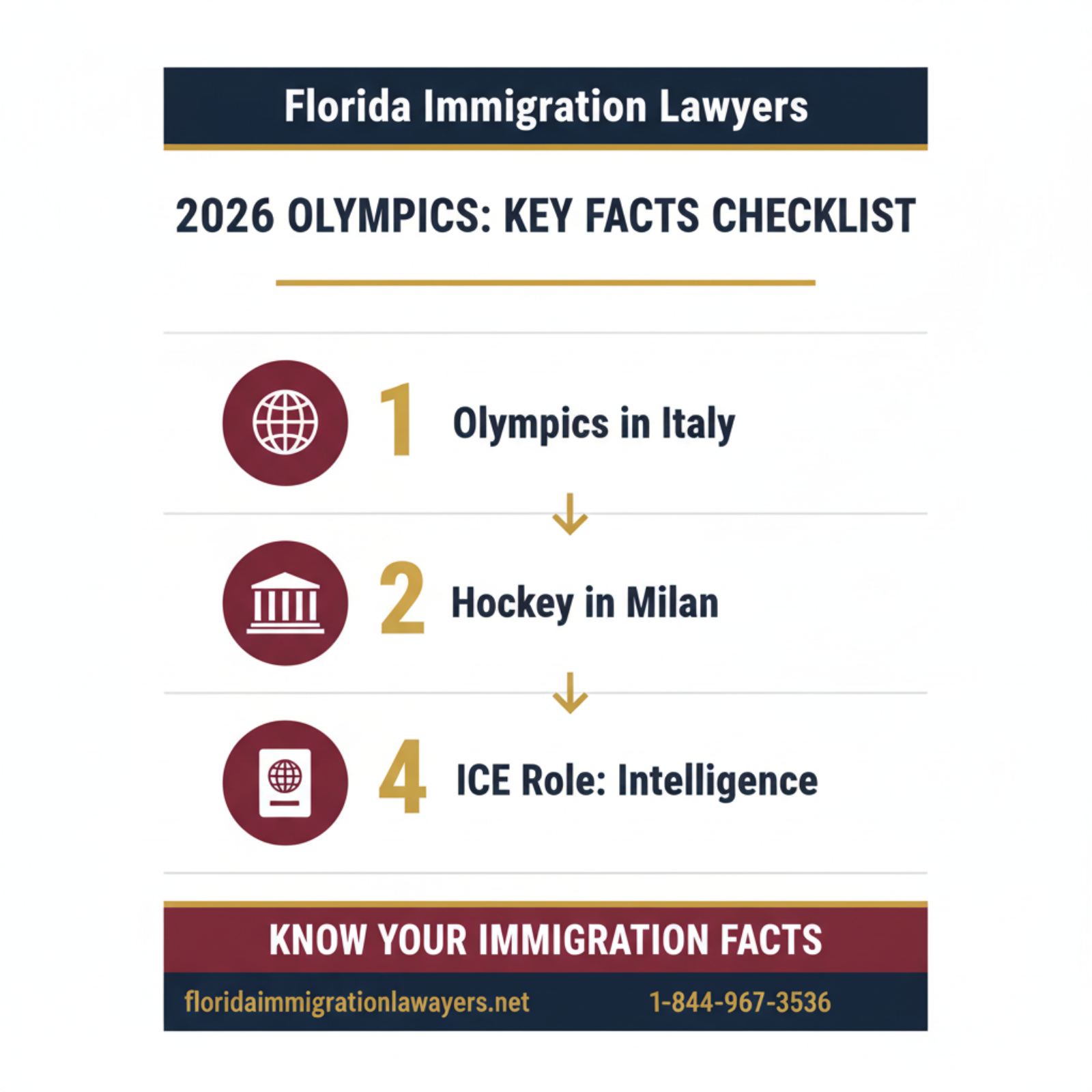
Timeline and Processing Expectations for Florida Immigration Cases (2026 Olympics Focus)
Understanding the processing times for immigration applications is vital, especially when linked to events like the 2026 Winter Olympics Ice Hockey. USCIS processing times can vary significantly based on the type of petition, the service center handling the case, and current caseloads. It is crucial to plan well in advance.
For most nonimmigrant visas, standard processing can take several months. For example, a Form I-129 petition for a P-1 or O-1 visa typically takes 2 to 6 months or more, depending on the service center. Consular processing abroad, after USCIS approval, adds further time for interviews and visa issuance. You can check current processing times on the USCIS website by selecting the appropriate form and field office/service center. For clients in Homestead, the USCIS Miami Field Office often handles certain local processes, while service centers handle petitions.
Premium Processing is an option available for certain employment-based petitions, including P-1 and O-1 visas. For an additional fee, USCIS guarantees processing within 15 calendar days. This can be invaluable for time-sensitive applications related to the Olympics. However, it does not guarantee approval, only expedited review. (Refer to 8 CFR § 214.2(p) for P visa regulations).
It is important to remember that these are general estimates, and individual cases may experience different timelines. Factors like Requests for Evidence (RFEs) or administrative processing can extend the duration. Florida Immigration Lawyers consistently monitors processing trends to provide our clients with the most up-to-date expectations and strategies.
Cost Factors and Fee Breakdown for Immigration Services in Florida
The financial aspect of immigration can be substantial, and understanding the various costs involved is important for planning. When pursuing a visa or other immigration benefit related to the 2026 Winter Olympics Ice Hockey, you will typically encounter several types of fees. Please note that specific filing fees are subject to change by USCIS and should always be verified on the official USCIS website.
- USCIS Filing Fees: These are mandatory fees paid directly to U.S. Citizenship and Immigration Services for processing your application. Examples include fees for Form I-129 (Petition for a Nonimmigrant Worker), Form DS-160 (Nonimmigrant Visa Application), and potentially premium processing fees.
- Attorney Fees: The cost for legal representation by an experienced immigration lawyer varies depending on the complexity of your case and the services required. Florida Immigration Lawyers offers transparent fee structures and provides clear estimates during your initial consultation.
- Biometrics Fees: If fingerprinting and background checks are required, a separate biometrics services fee is typically charged by USCIS.
- Medical Examination Fees: For visas requiring a medical exam, these fees are paid directly to the authorized civil surgeon. These costs can vary.
- Translation Fees: Any documents not in English must be accompanied by certified English translations, incurring additional costs.
- Travel and Miscellaneous Expenses: Costs associated with travel to interviews, document collection, and postage should also be factored in.
Investing in expert legal counsel can ultimately save you time, money, and stress by ensuring your application is correctly prepared and submitted. Our firm provides comprehensive support throughout the entire process.
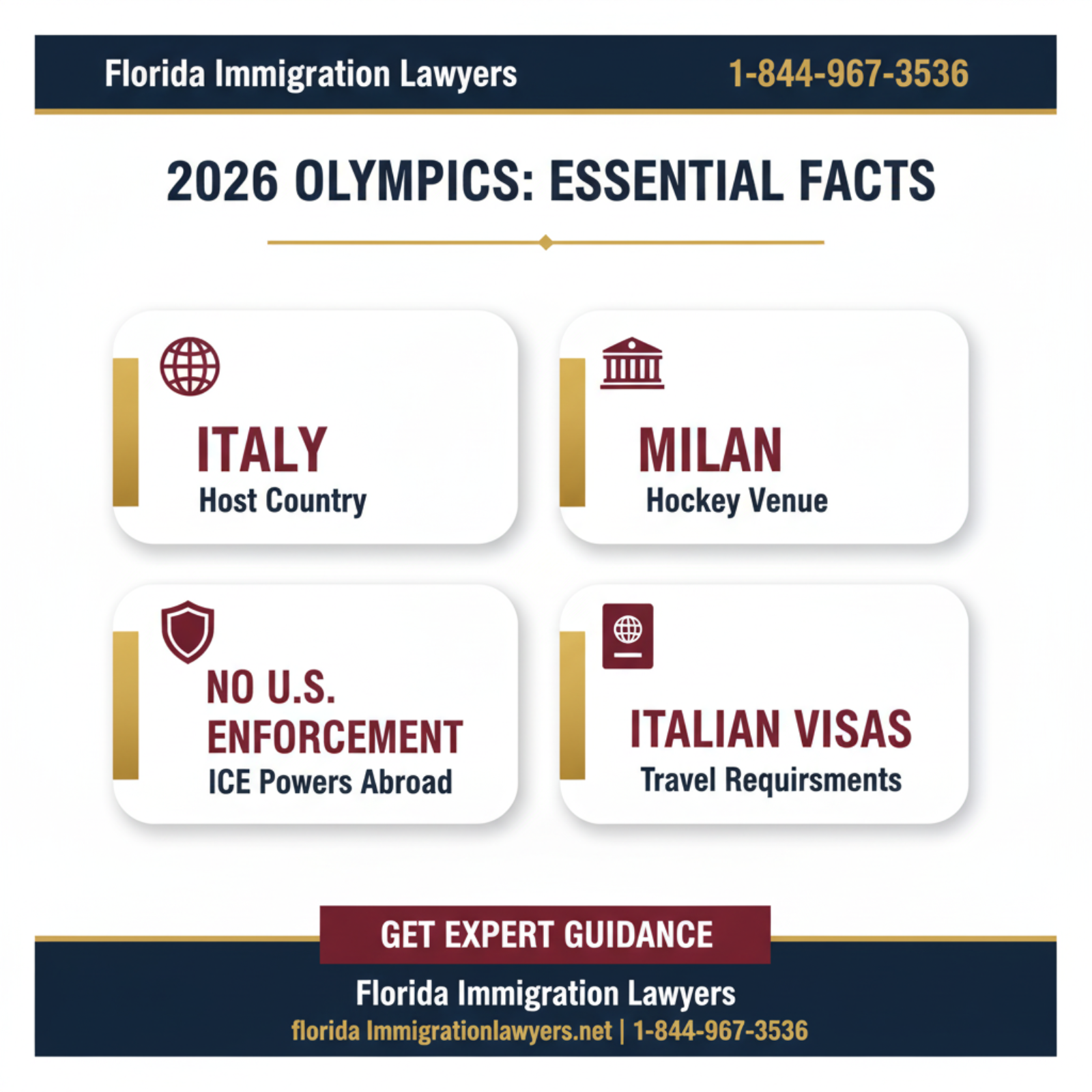
Do not navigate this process alone. Contact Florida Immigration Lawyers today.
Common Mistakes to Avoid in Your Immigration Journey
Navigating the U.S. immigration system, especially for complex cases related to international events like the 2026 Winter Olympics Ice Hockey, can be fraught with potential pitfalls. Avoiding common mistakes is crucial for a successful outcome. Here are some of the most frequent errors applicants make and their potential consequences:
- Submitting Incomplete or Incorrect Applications: Failing to fill out forms completely, missing required documents, or providing inaccurate information can lead to immediate rejection or a Request for Evidence (RFE), significantly delaying your case. This extends processing times and adds stress.
- Misrepresenting Information: Providing false or misleading information on any immigration form can result in severe penalties, including a permanent bar from entering the U.S. Always be truthful and accurate in all disclosures.
- Ignoring Deadlines: Immigration processes have strict deadlines for filing applications, responding to RFEs, or attending interviews. Missing a deadline can lead to the denial of your application or even deportation proceedings.
- Choosing the Wrong Visa Category: Applying for a visa that does not match your true purpose of travel or qualifications can lead to a denial. For example, trying to compete on a B-2 tourist visa is prohibited and can cause future immigration issues.
- Lack of Strong Supporting Evidence: Especially for P-1 or O-1 visas, insufficient evidence of your extraordinary ability or international recognition will result in a denial. Quality and quantity of evidence matter greatly.
- Not Disclosing Prior Immigration Issues or Criminal History: Attempting to hide past visa overstays, denials, or criminal records can be grounds for permanent inadmissibility. Transparency is essential, even if it means addressing challenging issues.
- Failing to Update USCIS on Address Changes: If you move while your application is pending, you must inform USCIS promptly. Failure to do so can result in missed notices, RFEs, or interview appointments, leading to denial.
- Overlooking Medical Examination Requirements: Some visa categories require a medical exam by an approved civil surgeon. Not completing this or failing to submit the results correctly can halt your application.
- Traveling Before Visa Approval: Leaving the U.S. while a change of status application is pending, or attempting to enter without the correct visa stamp, can jeopardize your application or lead to being denied entry.
- Not Consulting an Experienced Immigration Lawyer: The U.S. immigration system is incredibly complex. Attempting to navigate it without professional legal guidance is one of the biggest and most costly mistakes. An attorney can prevent errors, strategize your case, and represent your best interests.
When to Call a Lawyer for Your 2026 Winter Olympics Immigration Needs
While some immigration processes may seem straightforward, the nuances of U.S. immigration law can be incredibly intricate, especially when dealing with specific categories like those for athletes or individuals with extraordinary abilities. For anyone in Homestead, Miami, or anywhere in Florida contemplating immigration related to the 2026 Winter Olympics Ice Hockey, consulting an attorney is often the wisest decision. You should definitely call Florida Immigration Lawyers if you:
- Have a Complex Case: This includes situations with prior visa denials, criminal history, or unique circumstances that do not fit standard application categories.
- Need a P-1 or O-1 Visa: These visas require extensive documentation and a strong legal argument to prove eligibility. Our firm specializes in employment-based visas.
- Are Facing Deportation or Removal Proceedings: If you or a family member are at risk of being deported, immediate legal intervention is critical. We provide robust deportation defense.
- Require Assistance with Family Petitions: If you are a U.S. citizen or permanent resident looking to bring family members to the U.S. for an extended stay related to the Olympics, we can help with family immigration.
- Are Seeking Asylum: If you fear persecution in your home country and need protection in the U.S., our team handles asylum cases with compassion and expertise.
- Are Uncertain About Which Visa to Apply For: An attorney can assess your situation and recommend the most appropriate visa pathway, saving you time and money.
- Need Help with Citizenship or Naturalization: For those who have been long-term residents and are ready to take the next step.
Florida Immigration Lawyers has a proven track record of successfully guiding clients through complex immigration matters. Our experienced attorneys are dedicated to protecting your rights and achieving your immigration goals. We serve clients across all of Florida, and our deep understanding of both federal and local immigration processes, including those handled by the USCIS Miami Field Office, ensures comprehensive support. Do not hesitate to contact us for a consultation.
Frequently Asked Questions (FAQs)
Where is 2026 Winter Olympics hockey?
The ice hockey events for the 2026 Winter Olympics will be held in Milano Cortina, Italy. Specifically, the games will take place in Milan at the PalaItalia Santa Giulia and in Cortina d'Ampezzo at the Olympic Ice Stadium. While the events are overseas, Florida's international population and sports connections mean many individuals here may still be impacted by the Olympics, requiring immigration assistance.
What teams will play in 2026 Olympic hockey?
The specific national teams that will participate in the 2026 Winter Olympics ice hockey tournament are determined through qualification processes. Typically, top-ranked nations automatically qualify, with others earning spots through preliminary tournaments. The rosters will feature elite players from around the world, potentially including many NHL players if an agreement is reached between the NHL, NHLPA, and the IIHF. Final team rosters are usually announced closer to the event date.
Where do NHL teams play in Florida?
Florida is home to two National Hockey League (NHL) teams. The Florida Panthers play their home games at the Amerant Bank Arena in Sunrise, Florida, which is part of the greater Miami metropolitan area. The Tampa Bay Lightning play their home games at Amalie Arena in Tampa, Florida. Both teams have a strong presence in the Florida sports landscape and contribute to the state's vibrant hockey culture.
Has Lindsey Vonn qualified for the 2026 Olympics?
Lindsey Vonn, a highly decorated American alpine ski racer, officially retired from professional skiing in February 2019. Therefore, she has not qualified and is not expected to compete in the 2026 Winter Olympics. While her legacy in winter sports is immense, the 2026 Games will feature new generations of athletes. For active athletes and sports professionals who may be involved with the Olympics and have immigration needs in Florida, consulting with an immigration lawyer is advisable.
About Florida Immigration Lawyers
Florida Immigration Lawyers is a leading immigration law firm dedicated to serving individuals and families throughout Florida. With a deep understanding of U.S. immigration laws and policies, our experienced attorneys provide compassionate and effective legal representation for a wide range of immigration matters. We are committed to helping our clients achieve their American dreams, whether they are seeking temporary visas, permanent residency, or U.S. citizenship.
We offer comprehensive services including family-based immigration, employment visas (such as P-1 and O-1 for athletes and professionals), deportation defense, asylum claims, naturalization, and more. Our firm is known for its client-centered approach, meticulous attention to detail, and unwavering advocacy. We understand the challenges and anxieties that come with immigration processes, and we strive to provide clear communication and steadfast support every step of the way.
Why Choose Florida Immigration Lawyers?
- Experienced Attorneys: Our team comprises seasoned immigration lawyers with a proven track record of success.
- Client-Focused Approach: We prioritize your needs and tailor strategies to your unique circumstances.
- Comprehensive Services: From simple visa applications to complex deportation cases, we cover all areas of immigration law.
- Local Expertise: Serving clients across all of Florida, including Homestead, Miami, and surrounding areas, with knowledge of local USCIS offices and courts.
- Bilingual Support: We offer services in English and Spanish to ensure effective communication.
We are available 24/7 to answer your urgent questions and offer free consultations to discuss your case. Let us be your trusted partner in navigating the complexities of U.S. immigration law. Call Florida Immigration Lawyers today at 1-844-967-3536 or visit our website at https://www.floridaimmigrationlawyers.net.
Sources and References
- U.S. Citizenship and Immigration Services (USCIS)
- U.S. Department of State (travel.state.gov)
- Executive Office for Immigration Review (EOIR)
- 8 U.S.C. Chapter 12 - Immigration and Nationality Act (INA)
- INA § 101(a)(15)(P) - Definition of P Nonimmigrants
- 8 CFR § 214.2(p) - Regulations P-1 Nonimmigrants
This article provides general legal information and is not intended as legal advice. Every case is unique, and outcomes depend on specific facts and circumstances. Contact an attorney for advice about your particular situation.
Navigating the intricacies of U.S. immigration law requires expertise and precision. Whether your connection to the 2026 Winter Olympics Ice Hockey brings you to Florida for training, business, or family matters, our dedicated team is here to help. Don't leave your immigration future to chance. Contact Florida Immigration Lawyers today at 1-844-967-3536 for a free consultation. Se Habla Español - Estamos aquí para ayudarle.
Need help with Immigration?
Our Florida immigration attorneys offer free consultations. Call today or schedule online.
Frequently Asked Questions
Florida Immigration Lawyers
Legal Team
Our experienced attorneys at Florida Immigration Lawyers have been serving clients across Florida for over 20 years. We specialize in immigration, personal injury, criminal defense, workers compensation, and family law.