U Visa Attorney for Crime Victims
10 de octubre de 2026
Last updated: June 2025.
Someone hurt you. You called the police, gave a statement, maybe testified. Now you're staring at a form with a case number instead of your name on it, wondering if any of that cooperation will keep you in the country.
Maybe a detective in Miami-Dade has your case file right now. Maybe you reported to Broward County Sheriff's Office six months ago and haven't heard back since. Either way, the wait itself is not unusual.
The U visa exists for this situation: nonimmigrant status for crime victims who help police and prosecutors, created by 8 U.S.C. § 1101(a)(15)(U). Congress caps it at 10,000 principal petitions a year under INA § 214(p)(2). The paperwork runs through local police, a prosecutor's office, and one national USCIS service center in Vermont, and none of it moves fast.
A U visa attorney for crime victims helps a Florida crime victim who cooperated with law enforcement file Form I-918 for U nonimmigrant status. The attorney secures the required I-918 Supplement B certification from the certifying agency, files with USCIS's Vermont Service Center, and manages the multi-year waitlist created by the 10,000-visa annual cap under INA § 214(p)(2).
The Hard Truth
Does Reporting the Crime Guarantee U Visa Status?
No. Cooperating with police does not guarantee a certifying agency signs Form I-918 Supplement B, and a signed certification does not guarantee USCIS grants status. The decision to certify sits entirely with the law enforcement agency's discretion. No Florida statute forces a police department, sheriff's office, or state attorney to sign the form.
USCIS's adjudication is a separate decision on top of that. Because only 10,000 principal U visas can issue per fiscal year under INA § 214(p)(2), USCIS's own U Visa Resource page (uscis.gov, updated for fiscal year 2024) confirms that petitions filed now join a multi-year waitlist behind petitions filed in prior years, before any final adjudication happens. A Bona Fide Determination can bring work authorization and deferred action sooner, under 8 C.F.R. § 214.14 and USCIS policy issued in June 2021, but that is not the visa itself.
If someone tells you a police report or a filed petition guarantees a result, they are not describing how this process actually works.
What Happens If You Wait
What Does Waiting Actually Cost You?
Certifying agencies do not keep files open forever. A detective retires or transfers, a case gets archived, and the officer who has to sign your I-918 Supplement B six months from now may not be the one who took your statement. Miami-Dade State Attorney's Office and most Florida sheriff's offices process certification requests case by case, with no statutory deadline forcing a response, so a request that sits unanswered can sit unanswered for a long time.
If you are already in removal proceedings before an immigration judge at the Krome Service Processing Center Immigration Court or elsewhere, the clock runs differently. A judge can grant a continuance to allow a pending U visa petition to be adjudicated, under Matter of Sanchez Sosa, 25 I&N Dec. 807 (BIA 2012) and the Immigration Court Practice Manual, chapter 4, but only if you can show the petition is properly filed or diligently in progress. A removal order entered while you delay filing does not pause itself.
Children listed as derivatives on your petition can also age out. A child who turns 21 before your petition is approved may lose derivative eligibility depending on when the underlying petition was filed, so a delay of even a year can change who in your family qualifies.
Step-by-Step Process
How Does a U Visa Case Actually Move Through the System in Florida?
Step 1: Report the Crime and Cooperate
You must have been a victim of a qualifying crime, listed at 8 U.S.C. § 1101(a)(15)(U)(iii) and including domestic violence, sexual assault, and felonious assault, and have been helpful, be being helpful, or be likely to be helpful to the investigation or prosecution. Keep your police report number. You will need it for every step that follows.
Step 2: Request I-918 Supplement B Certification
Contact the certifying agency's victim services unit directly. In Miami-Dade, that is the Miami-Dade State Attorney's Office Victim Services Unit; in Broward County, requests generally route through the investigating detective's unit at Broward County Sheriff's Office; in the Orlando area, requests go to the Orange County Sheriff's Office Victim Advocate Unit. Put the request in writing and keep a copy, and follow up in writing every few weeks since there is no statewide Florida deadline for a response.
Step 3: File Form I-918 (and I-918A for Derivatives) with USCIS
File with the USCIS Vermont Service Center, the only office nationwide that adjudicates U visa petitions. Include the signed I-918 Supplement B, a personal statement describing the crime and your helpfulness, and evidence of any qualifying relationship for derivative family members. The USCIS Miami Field Office at 3141 SW 38th Ave does not adjudicate U visa petitions, but it handles related biometrics and, later, adjustment of status interviews.
Step 4: Bona Fide Determination and Work Authorization
Since June 2021, USCIS has run a Bona Fide Determination process that lets a petitioner with a properly filed, facially valid petition receive work authorization and deferred action before the petition reaches the front of the waitlist, per policy issued under 8 C.F.R. § 214.14. This is not the visa. It is a bridge while the petition waits.
Step 5: The Waitlist
Because the statutory cap limits principal petitions to 10,000 per fiscal year under INA § 214(p)(2), most petitions filed today wait years before final adjudication, per USCIS's own U Visa Resource page (uscis.gov, updated for fiscal year 2024). If you are also in removal proceedings, this is where a Sanchez Sosa continuance request usually becomes relevant.
Step 6: Adjustment of Status
After three years in U nonimmigrant status, if you continue to meet the statutory requirements, you can apply to adjust status to lawful permanent resident under INA § 245(m).
A Real-World Example
What Does This Look Like for an Actual Family?
This is a composite scenario built from common patterns our office sees, not a real client, and it does not describe a specific outcome.
Ana, a composite, called Broward County Sheriff's Office after a domestic assault and gave a full statement. Six weeks later, her attorney submitted a written I-918 Supplement B certification request to the investigating detective's unit, citing the case number from her police report. Three months passed with no response, so the office followed up in writing twice more before a supervisor's signature came back.
With the signed certification, the attorney filed Form I-918 with the USCIS Vermont Service Center, along with Ana's personal statement, medical records documenting the assault, and evidence of her two children's derivative eligibility on Form I-918A. Ana's biometrics appointment happened at the USCIS Miami Field Office several weeks later, and her attorney then requested a Bona Fide Determination, which is the point where she may become eligible for work authorization while the underlying petition keeps waiting.
As of this writing, petitions like Ana's join a multi-year queue behind petitions filed in earlier fiscal years, per USCIS's own published data. Her case has not been adjudicated. That wait, not a quick resolution, is the realistic middle stage of most U visa petitions filed in Florida today.
Who Handles These Cases?
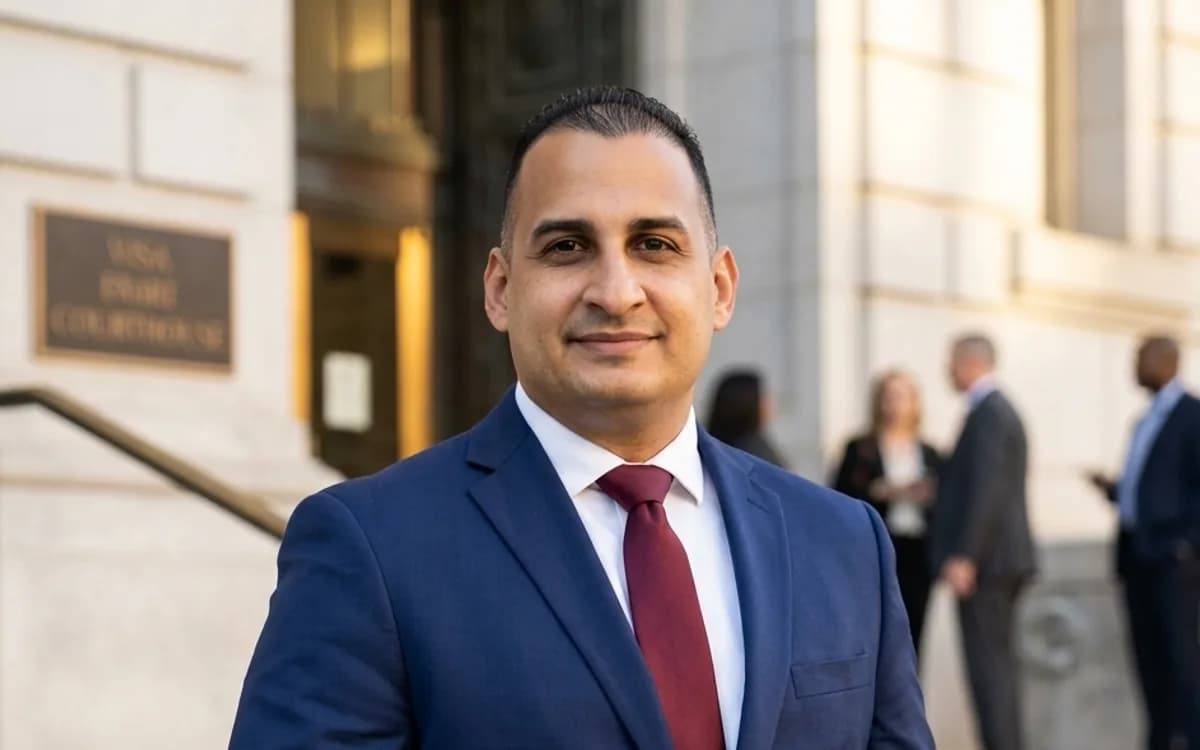
William J. Vasquez handles federal immigration matters, including U visa petitions, VAWA self-petitions, and removal defense before the Executive Office for Immigration Review. He is admitted to the North Carolina State Bar and to practice before the U.S. Courts of Appeals for the Fourth, Fifth, and Eleventh Circuits. Because U visa petitions, EOIR removal proceedings, and USCIS adjudications are federal matters, an attorney with federal immigration-bar standing can handle them regardless of state bar admission; this practice does not include Florida state-court representation or Florida state-law matters, which fall outside that scope.
Our office regularly submits and follows up on I-918 Supplement B certification requests with Victim Services Units across Miami-Dade, Broward, and Orange counties. That direct, repeated contact with local certifying agencies, not a general familiarity with immigration law, is what shapes how we set expectations with clients about certification timing.
Key Terms Explained
Key Terms Used on This Page
U nonimmigrant status (U visa): Status created by 8 U.S.C. § 1101(a)(15)(U) for victims of certain crimes who assist law enforcement, capped at 10,000 principal petitions per fiscal year under INA § 214(p)(2).
Form I-918: The petition a crime victim files with USCIS to request U nonimmigrant status. Form I-918A is the companion form filed for each qualifying derivative family member.
Form I-918 Supplement B: The law enforcement certification confirming a victim was helpful, is being helpful, or is likely to be helpful to an investigation or prosecution. Only a certifying official, such as a state attorney, police chief, or sheriff, can sign it.
Certifying agency: The police department, sheriff's office, state attorney's office, or other qualifying agency with authority to sign Form I-918 Supplement B. Each agency sets its own internal process for reviewing requests; there is no single statewide Florida procedure.
Bona Fide Determination: A USCIS review step, in place since June 2021, that can grant work authorization and deferred action to a petitioner whose petition appears properly filed and facially valid, before it reaches the front of the waitlist. See 8 C.F.R. § 214.14.
Waitlist: The queue of petitioners whose I-918 forms have been approved for waitlist placement but who cannot receive final U visa status until a visa number becomes available under the annual cap.
Derivative: A qualifying family member, such as a spouse or unmarried child under 21 at the time of filing, included on the principal petitioner's case through Form I-918A.
Continuance (Sanchez Sosa continuance): A request asking an immigration judge to pause removal proceedings while a U visa petition is pending, addressed in Matter of Sanchez Sosa, 25 I&N Dec. 807 (BIA 2012).
U visa vs. T visa: A U visa covers victims of a broader list of crimes who cooperate with law enforcement. A T visa, created for victims of human trafficking under 8 U.S.C. § 1101(a)(15)(T), has its own certification practice and a separate annual cap of 5,000 principal visas.
Adjustment of status: The application, available after three years in U status under INA § 245(m), to become a lawful permanent resident.
Florida Bar Board Certification in Immigration and Nationality Law: A credential the Florida Bar issues to attorneys who meet its own experience and examination requirements. It is distinct from federal immigration-bar admission, which is what actually authorizes an attorney to handle EOIR and USCIS matters nationwide, including U visa petitions.
Frequently Asked Questions
Q: What does a certifying agency actually look at before signing Form I-918 Supplement B? A: The agency checks whether you were a victim of a qualifying crime and whether you were helpful, are being helpful, or are likely to be helpful to the investigation or prosecution, per 8 U.S.C. § 1101(a)(15)(U)(iii). It does not have to consider whether you deserve immigration status, and Florida law does not require the agency to sign.
Q: What if a Florida police department or sheriff's office refuses to sign the certification? A: There is no statutory right to appeal a certifying agency's refusal to sign Form I-918 Supplement B. The practical options are usually to request a written explanation, ask a supervisor to review the request, or approach a different eligible certifying agency if more than one agency touched your case, such as a state attorney's office instead of the original police department.
Q: How long is the U visa waitlist right now? A: USCIS's own U Visa Resource page (uscis.gov, updated for fiscal year 2024) confirms that petitions filed today enter a multi-year queue behind previously filed petitions, because the 10,000 annual cap under INA § 214(p)(2) has not kept pace with filings for years. Check current USCIS processing times directly at egov.uscis.gov/processing-times rather than assuming a specific number of months.
Q: Can I get a U visa if the police never filed formal charges? A: Possibly. Certification depends on your helpfulness to an investigation or prosecution, not on whether charges were filed or a conviction resulted, so a case that was investigated but not prosecuted can still support certification.
Q: Can I self-petition if the police won't cooperate at all? A: You cannot file a U visa petition without a signed I-918 Supplement B from an eligible certifying agency; there is no self-petition pathway comparable to a VAWA self-petition. If law enforcement will not cooperate, ask whether your facts fit a different qualifying agency, or whether a VAWA self-petition or T visa is a better fit.
Q: Can I get a Florida driver's license while my U visa is pending? A: Florida issues driver's licenses only to applicants who show valid, current proof of lawful presence and, where applicable, employment authorization, per the Florida Department of Highway Safety and Motor Vehicles' licensing requirements (flhsmv.gov). A pending petition alone does not satisfy that requirement, but an approved Bona Fide Determination paired with a valid Employment Authorization Document generally does.
Q: What happens to my U visa petition if I am already in removal proceedings? A: Your attorney can ask the immigration judge for a continuance to allow USCIS to adjudicate the petition, under Matter of Sanchez Sosa and the Immigration Court Practice Manual. The judge weighs factors including how likely the petition is to be granted and whether you have shown diligence, so a properly documented, promptly filed petition strengthens the request.
Q: What does an attorney charge to handle a U visa case? A: Fees vary by case complexity, whether derivative family members are included, and whether removal proceedings are also pending, so ask for a written fee agreement before signing anything. Contingency fees do not apply to immigration matters, since there is no monetary recovery to share.
Q: Realistically, how long does the whole process take from filing to a green card? A: Assuming certification is signed without major delay, expect months for USCIS to process the initial filing and any Bona Fide Determination, then several years on the waitlist before final adjudication (per USCIS's fiscal year 2024 U Visa Resource page), then three years in U status before you can apply to adjust status under INA § 245(m). Total timelines of five to ten years from filing to permanent residency are common, not exceptional.
Clients who work with our office on U visa and VAWA matters often say the same thing: they wanted someone to explain what was actually happening at each stage, not just tell them to wait. We do not publish outcome statistics or success rates for immigration filings, because a certifying agency's decision and USCIS's adjudication are both outside any attorney's control, and any number claiming otherwise would not be verifiable. What clients can verify is how we communicate: written updates when a certification request goes out, when USCIS issues a receipt notice, and when anything changes on the waitlist.
None of this moves on your schedule. A certifying agency can take months to respond, and USCIS's waitlist is measured in years, not weeks. What you can control right now is whether your I-918 Supplement B request is submitted correctly, followed up on paper, and backed by a personal statement that actually documents your helpfulness to the investigation.
If you are a Florida crime victim trying to get a certification signed, already holding a signed I-918 Supplement B, or facing a removal hearing while a U visa petition is pending, talk to our U Visas for Crime Victims practice before your next certification follow-up or court date. Call our office or use our consultation request form to schedule a case review with William J. Vasquez's team.
- U Visas for Crime Victims: /practice-areas/u-visas-crime-victims
- VAWA Self-Petitions: /practice-areas/vawa-self-petitions
- T Visas for Trafficking Victims: /practice-areas/t-visas
- Removal Defense: /practice-areas/removal-defense
- Schedule a Consultation: /contact