Naturalization Ceremony ICE Concerns: Florida Immigration Insights 2026
Facing naturalization ceremony ICE concerns in Florida? Learn your rights and how to protect your journey to citizenship. Contact Florida Immigration Lawyers for a free consultation today.
Naturalization Ceremony ICE Concerns: Florida Immigration Insights
The journey to U.S. citizenship culminates in the naturalization ceremony, a moment of immense pride and significance for immigrants nationwide. For many in Florida, however, this celebratory occasion can be tinged with apprehension, particularly regarding the potential presence of U.S. Immigration and Customs Enforcement (ICE). While policies and enforcement priorities evolve, the underlying concern about ICE interactions at or around naturalization ceremonies remains a valid point of anxiety for many applicants and their families. This comprehensive guide aims to demystify these concerns, clarify your rights, and provide actionable insights for a smooth and successful path to becoming a U.S. citizen in Florida.
Understanding the nuances of immigration law and enforcement is crucial, especially in a state like Florida, which has a large and diverse immigrant population. Our goal is to empower you with knowledge, ensuring you can navigate this final step of your immigration journey with confidence and peace of mind. From preparation tips to knowing your legal protections, we're here to illuminate the path forward.
Understanding Naturalization Ceremonies and ICE Presence
A naturalization ceremony is the final step in becoming a U.S. citizen. During this solemn and joyful event, applicants take the Oath of Allegiance to the United States. Historically, there have been instances where ICE or other law enforcement agencies have conducted enforcement actions at or near courthouses, which are often venues for these ceremonies. This has naturally led to widespread concern among immigrant communities.
It's important to note that U.S. Citizenship and Immigration Services (USCIS) has generally maintained that naturalization ceremonies are celebratory events and that ICE enforcement actions inside the immediate ceremony space are rare and generally discouraged by current policy. However, the fear persists, particularly for individuals who may have family members or friends attending who are undocumented, or for those who themselves have complex immigration histories. While the direct presence of ICE agents inside the ceremonial hall is uncommon, applicants and their families often worry about encounters in public areas surrounding the venue, such as parking lots or building entrances. Staying informed about current policies and exercising caution is always advisable. For official information on naturalization, always refer to uscis.gov.
Your Rights During a Naturalization Ceremony
Knowing your rights is your most powerful tool against unwarranted fear and potential legal issues. Even as a green card holder awaiting naturalization, you have significant constitutional rights in the United States. These rights protect you from unlawful searches, seizures, and self-incrimination. Understanding how to assert these rights respectfully and effectively is paramount.
Before the Ceremony
Preparation is key. Ensure all your documentation is in order and that you've addressed any potential issues with your immigration record well in advance. If you have any lingering concerns about past arrests, minor infractions, or changes in your personal circumstances since your N-400 application, consult with an immigration attorney. They can help you understand how these might impact your naturalization and advise on the best course of action. Reviewing your application and ensuring all information is consistent and accurate is a critical pre-ceremony step. Having an attorney review your case can significantly reduce anxiety.
During the Ceremony
If you are approached by an ICE agent or any law enforcement officer at or near the ceremony venue, remember these crucial rights:
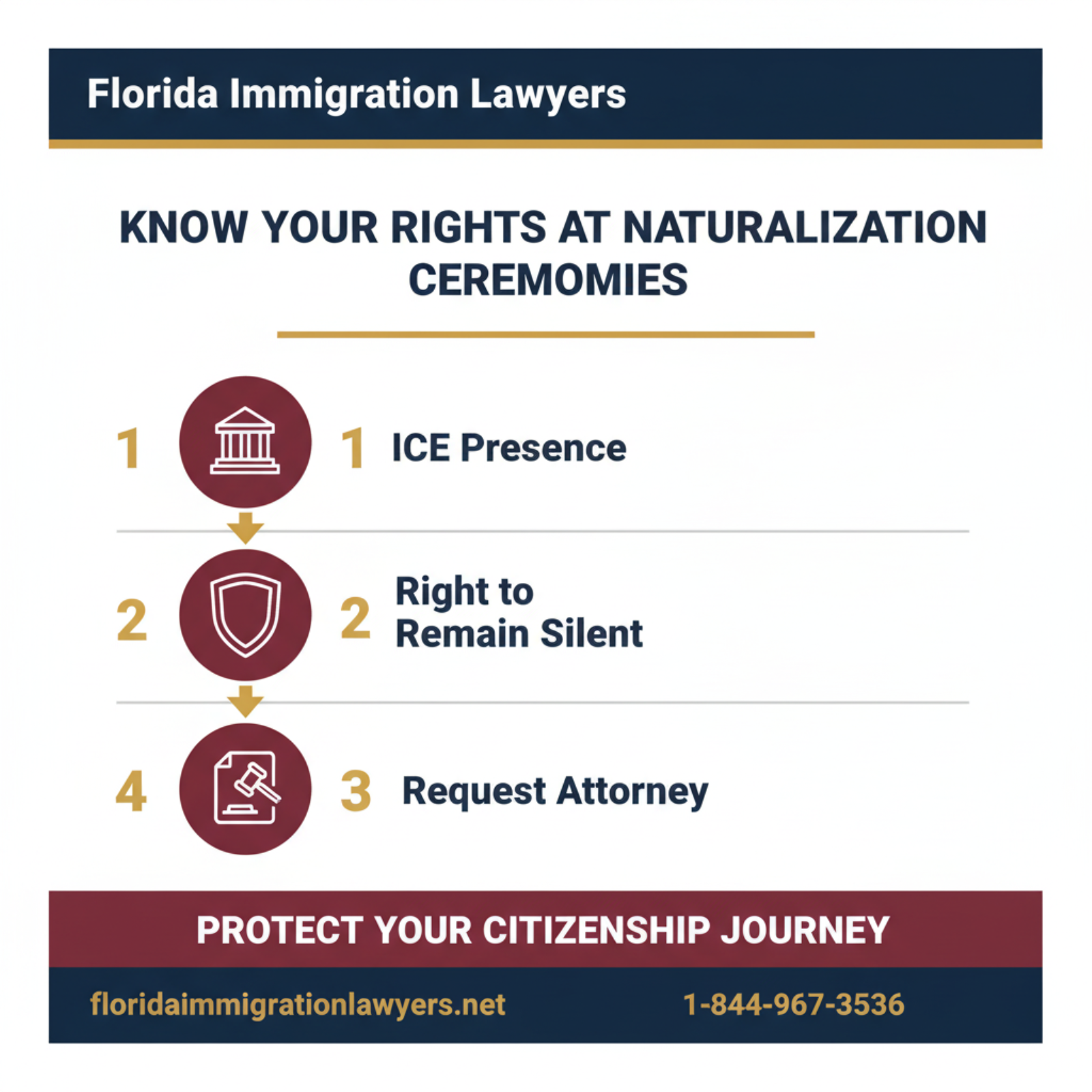
- You have the right to remain silent. You are not required to answer questions about your immigration status or country of origin. Simply state, "I wish to remain silent."
- You have the right to an attorney. If you are detained or questioned beyond basic identification, clearly state, "I want to speak to an attorney." Do not sign anything without legal counsel.
- Do not open your door to an ICE agent without a warrant. If agents come to your home, ask them to slide the warrant under the door. A warrant for arrest is different from a search warrant.
- Do not lie or present false documents. This can severely jeopardize your immigration future.
While naturalization ceremonies are typically safe environments, being prepared for any interaction is a testament to informed citizenship. For more information on your rights, resources are available from organizations and government agencies like the Department of Justice at justice.gov.
After the Ceremony
Once you take the Oath of Allegiance and receive your Certificate of Naturalization, you are officially a U.S. citizen. This grants you full constitutional protections and rights, including the right to vote, hold federal office, and travel with a U.S. passport. At this point, ICE generally has no jurisdiction over you unless there are extraordinary circumstances, such as denaturalization proceedings due to fraud in your application, which are exceedingly rare. It's important to keep your Certificate of Naturalization safe, as it is proof of your citizenship.
Preparing for Your Naturalization Ceremony in Florida
Thorough preparation can alleviate much of the stress associated with the naturalization ceremony. Beyond understanding your rights, practical steps can ensure a smooth and memorable experience.
Essential Documents to Carry
While you may have submitted many documents during your application process, it's wise to bring certain items to your ceremony:
- Your USCIS interview notice: This will confirm the date, time, and location.
- Your Permanent Resident Card (Green Card): You will be required to surrender this.
- Any re-entry permits or refugee travel documents: If applicable, these must also be surrendered.
- State-issued identification: Your driver's license or state ID.
- Your N-400, Application for Naturalization: A copy for your reference.
- Any documents requested by USCIS: Check your interview notice for specific instructions.
- Passport-style photos: If your notice requests them.
It's always better to be over-prepared than under-prepared. Double-check your notice for any specific instructions from USCIS regarding what to bring. You can find detailed checklists and preparation guides on the official USCIS website, uscis.gov, which is an invaluable resource for all stages of the naturalization process.
What to Avoid
To ensure your ceremony day goes smoothly, there are a few things to keep in mind:
- Avoid bringing unnecessary items: Large bags, weapons, or anything that could be perceived as a security risk.
- Do not arrive late: Plan to arrive well in advance of the scheduled time to account for traffic, parking, and security checks.
- Do not engage in arguments or confrontational behavior: Maintain a respectful demeanor with all officials and staff.
- Do not make false statements: Honesty and integrity are paramount throughout the entire naturalization process.
The Role of Immigration Attorneys in Naturalization
While many naturalization cases proceed without complications, the assistance of an experienced immigration attorney can be invaluable, especially if your case involves complexities. An attorney can:
- Review your N-400 application for accuracy and completeness.
- Identify and address potential issues related to good moral character, past criminal history, or prolonged absences from the U.S.
- Prepare you thoroughly for the naturalization interview, including civics and English tests.
- Represent you during the interview if necessary, or advise you on specific concerns.
- Provide guidance on what to expect at the ceremony and how to handle any unexpected interactions.
Having legal counsel provides an extra layer of security and peace of mind, ensuring that all legal requirements are met and that your rights are protected at every stage. If you have questions or concerns about your naturalization process, do not hesitate to reach out to our experienced attorneys. A free consultation can help clarify your situation and determine the best path forward.
Broader Immigration Landscape in Florida and Beyond
Florida's unique geographical position and diverse economy make it a focal point for immigration. The state has long been a destination for immigrants from Latin America, the Caribbean, and other parts of the world, contributing significantly to its cultural and economic fabric. However, this also means Florida is often at the forefront of evolving immigration policies and enforcement debates, which can directly or indirectly impact individuals on their path to citizenship.
Recent years have seen shifts in both federal and state-level immigration approaches. While naturalization is a federal process overseen by USCIS, state laws and local enforcement practices can create an environment of heightened awareness or concern for immigrant communities. For example, state policies regarding undocumented immigrants, or local law enforcement's cooperation with federal agencies, can contribute to the general atmosphere of apprehension. It's crucial for applicants and their families to stay informed not just about federal naturalization requirements, but also about the broader immigration context in Florida. This includes understanding the differences between federal immigration law and state-specific measures, which can sometimes be confusing or contradictory. The dynamic nature of immigration law means that policies can change, affecting everything from visa processing times to enforcement priorities. Staying updated through reliable sources like uscis.gov and travel.state.gov is essential. For those facing more severe challenges, understanding options like asylum or deportation defense becomes critical in this complex landscape. Our firm is dedicated to helping individuals navigate these intricate legal waters, providing clarity and robust representation amidst ever-changing regulations.
Seeking Legal Assistance for Immigration Matters
The journey to U.S. citizenship is a profound one, and while the naturalization ceremony marks its triumphant conclusion, navigating the complexities of immigration law can be daunting. From the initial application to the final oath, having knowledgeable legal guidance can make all the difference. Our firm specializes in various facets of immigration law, including general immigration services, asylum claims, and robust deportation defense.
We understand the anxieties that can accompany immigration proceedings, especially concerns about enforcement actions. Our dedicated team of immigration attorneys is committed to providing compassionate, effective, and personalized legal representation. Whether you have questions about your naturalization application, need assistance with a complex immigration issue, or simply seek peace of mind, we are here to help. Don't let uncertainty overshadow your path to citizenship or your life in the U.S. We invite you to reach out for a free consultation to discuss your specific situation and explore how we can assist you in achieving your immigration goals.
Becoming a U.S. citizen is a monumental achievement, representing a commitment to a new nation and a future filled with opportunities. By understanding your rights, preparing diligently, and seeking expert legal counsel when needed, you can approach your naturalization ceremony with confidence, ready to embrace your new citizenship without undue fear or apprehension.
¿Necesita ayuda con Inmigración?
Nuestros abogados de inmigración en Florida ofrecen consultas gratuitas. Llame hoy o programe en línea.
Preguntas Frecuentes
Vasquez Law Firm
Equipo Legal
Por más de 15 años, Vasquez Law Firm ha estado sirviendo a clientes en Florida. Nos especializamos en inmigración, lesiones personales, defensa criminal, compensación laboral y derecho familiar.